





Hello Heart Hero. You're going about a normal day, then your chest gives you a flutter that doesn't feel like anxiety, doesn't feel like exercise, and doesn't feel easy to explain. If you live with lupus, rheumatoid arthritis, or another autoimmune condition, that kind of moment can leave you stuck between “maybe it's nothing” and “maybe I should've called sooner.”
That uncertainty is real. Autoimmune symptoms can come and go, and heart symptoms can do the same, which makes short appointments feel painfully inadequate when the problem only shows up for a few seconds at a time. This guide keeps the language simple and the clinical reality honest, so you can understand what autoimmune heart conditions are, which rhythm changes matter, and what to record when you're trying to capture a moving target.
Welcome to Your Autoimmune Heart Health Guide
A woman with lupus notices a sudden thump in her chest while folding laundry. By the time she checks her pulse, it's already gone, and by dinner she's wondering whether she imagined it, whether it was stress, or whether her body is trying to tell her something more serious. That's the kind of moment many people with autoimmune disease know too well.
The heart can be affected in more than one way, and not all of those changes feel dramatic. Some involve the pericardium, the sac around the heart. Others affect the heart muscle itself, or the electrical system that keeps the rhythm steady. In autoimmune disease, those problems may come and go, which is why a normal-sounding office visit can miss the part that happens at home.
Practical rule: if the symptom is brief, random, and hard to describe, recording it matters more than trying to remember it later.
You'll see where inflammation can touch heart tissue, which autoimmune conditions are most tied to rhythm issues, and which ECG patterns are worth saving from a wearable device. You'll also see why intermittent arrhythmias can be frustratingly easy to miss, and why at-home rhythm capture can make a real difference when symptoms don't wait for clinic hours.
How Autoimmune Disease Can Affect Your Heart
Autoimmune disease turns the immune system inward, so the same defenses meant to protect you can start targeting heart tissue. For patients, that can feel confusing, because the first clue is often not a dramatic event, but a brief symptom that comes and goes.
What gets targeted
Autoimmune inflammation can involve the myocardium, the pericardium, the endocardium, and the heart's conduction pathways. Each part has a different job. The pericardium cushions the heart, the myocardium does the pumping, and the conduction system keeps the beat organized.
When immune cells and autoantibodies attack cardiac tissue, the result is not always one clear problem. Some people feel chest pain from pericardial inflammation. Others notice palpitations, skipped beats, or a heartbeat that suddenly feels irregular because inflammation has irritated the electrical system.
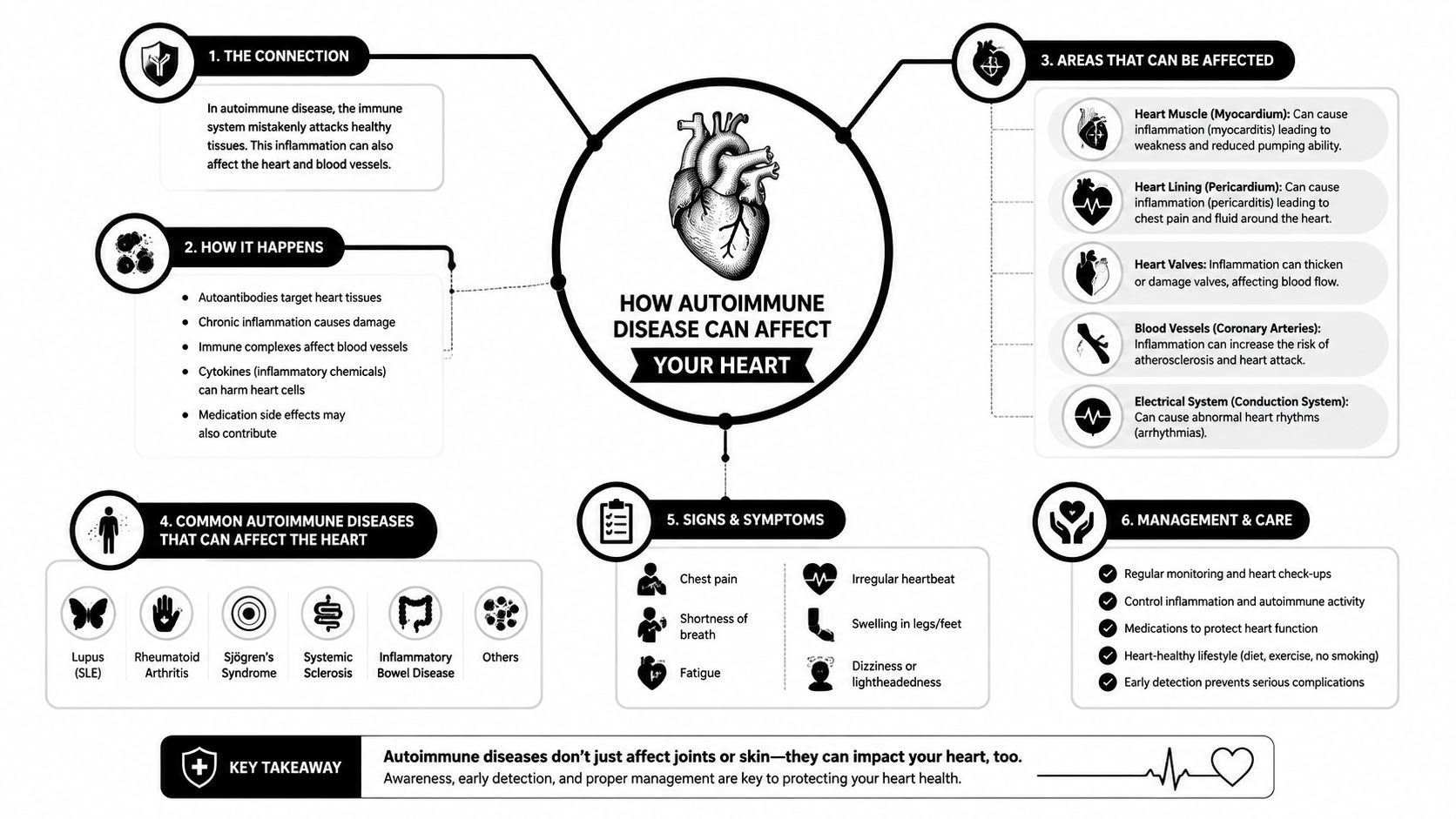
There is also an indirect pathway. Ongoing inflammation can raise broader cardiovascular risk while a separate flare affects heart rhythm at the same time. That is why a person may feel mostly fine during a clinic visit, then notice a flutter, a skipped beat, or a sudden change in chest sensation later at home.
Those brief rhythm changes are often the ones worth capturing. A wearable ECG can record what the pulse feels like in real time, which matters when symptoms fade before an appointment.
For a closer look at one common inflammatory pattern, this pericarditis overview is a helpful companion. The main point is straightforward. Autoimmune heart symptoms do not always arrive as crushing chest pain. They can begin as a flutter, a skipped beat, or a strange sensation that seems minor until you connect it to the rhythm underneath.
Common Autoimmune Heart Conditions Explained
Some autoimmune heart problems hit the muscle. Others irritate the lining around the heart. Others interfere with the wiring. Sorting them out helps you understand why one person feels chest pain while another notices palpitations, lightheadedness, or a pulse that suddenly seems out of step.
Autoimmune myocarditis and lupus-related pericarditis
Autoimmune myocarditis is inflammation of the heart muscle. When the muscle becomes inflamed, the heart can lose some of its efficiency and the electrical system can get noisy, which is why arrhythmias and reduced pumping strength can show up together. A more detailed discussion of that pattern is available in this myocarditis guide.
Lupus-related pericarditis usually feels different. The classic clue is sharp chest pain that worsens with deep breathing or lying flat, then eases when the person sits up or leans forward. Pericardial disease is a major theme in lupus, with pericardial involvement reported in around 50% of patients and pericarditis in about 20% to 25% (Houston Methodist review).
Cardiac sarcoidosis and antiphospholipid syndrome
Cardiac sarcoidosis can be harder to spot because it often behaves like a wiring problem first. Granulomas can involve the conduction system, which may lead to heart block or ventricular arrhythmias. The symptoms can look vague at first, fatigue, palpitations, or fainting spells that seem too nonspecific to connect to the heart.
Antiphospholipid syndrome brings a different concern. It's associated with valvular disease and thrombotic events, so the heart issue may be less about inflammation alone and more about abnormal clotting and valve injury. That means the person may notice chest symptoms, breathlessness, or rhythm changes that don't fit a simple “stress” explanation.
The Sunridge Medical heart disease program is one example of the kind of broader heart-health resource people often search for when they're trying to connect autoimmune disease with cardiovascular symptoms. It's still important to keep the condition-specific picture clear, because the likely rhythm problem depends on which autoimmune process is active.
| Condition | Primary Heart Structure Affected | Key Symptoms | Common Rhythm Issues |
|---|---|---|---|
| Autoimmune myocarditis | Heart muscle | Fatigue, chest discomfort, palpitations | Ventricular ectopy, conduction changes |
| Lupus-related pericarditis | Pericardium | Sharp pleuritic chest pain, positional pain | Sinus tachycardia, rhythm irritation during flares |
| Cardiac sarcoidosis | Conduction system and myocardium | Fainting, palpitations, fatigue | Heart block, ventricular arrhythmias |
| Antiphospholipid syndrome | Valves and clot-related structures | Breathlessness, chest symptoms, neurologic events | Rhythm changes related to structural strain |
If a symptom sounds “too vague,” that doesn't mean it's not real. It may mean the affected structure is electrical rather than structural.
Recognizing Heart Rhythm Changes and ECG Patterns
Autoimmune inflammation can disrupt the rhythm even before someone feels seriously ill. That's why a person may notice brief palpitations, a sudden pause in the beat, or unexplained fatigue and still have a useful ECG later, even if the episode passed quickly.
Symptoms that deserve attention
The symptoms that matter most are often the ones that seem inconsistent. A fast flutter that shows up at rest. A dizzy spell that passes in a minute. A stretch of fatigue that feels out of proportion to the day. Those aren't proof of a heart problem by themselves, but they are worth documenting when autoimmune disease is part of the picture.
A wearable ECG may show different patterns depending on the mechanism. Atrial fibrillation can appear as an irregularly irregular rhythm. Ventricular ectopy can look like premature beats that interrupt the normal pattern. Conduction blocks may show up as intervals or dropped beats that reflect slowed electrical travel.
What the strip can reveal
The simplest clinical language helps here. ST-segment changes can be seen with pericarditis, prolonged PR intervals can suggest delayed conduction, and irregular R-R patterns can mean the heartbeat is not spacing evenly. Those findings don't explain everything on their own, but they can help a clinician decide whether the rhythm episode is likely inflammatory, structural, or transient.
Practical rule: save the recording if the symptom and the strip happen at the same time. That pairing is often more useful than a perfect-looking ECG taken after you feel better.
The key question is not whether a single tracing looks dramatic. It's whether the tracing matches the symptom and fits your autoimmune history. If you're reviewing a wearable strip, that context matters just as much as the rhythm label itself. For readers who want a plain-language refresher on rhythm terms, this abnormal ECG guide helps translate common findings into clearer next steps.
Get your ECG checked by certified experts within minutes on the Qaly app.


Navigating the Diagnostic Pathway
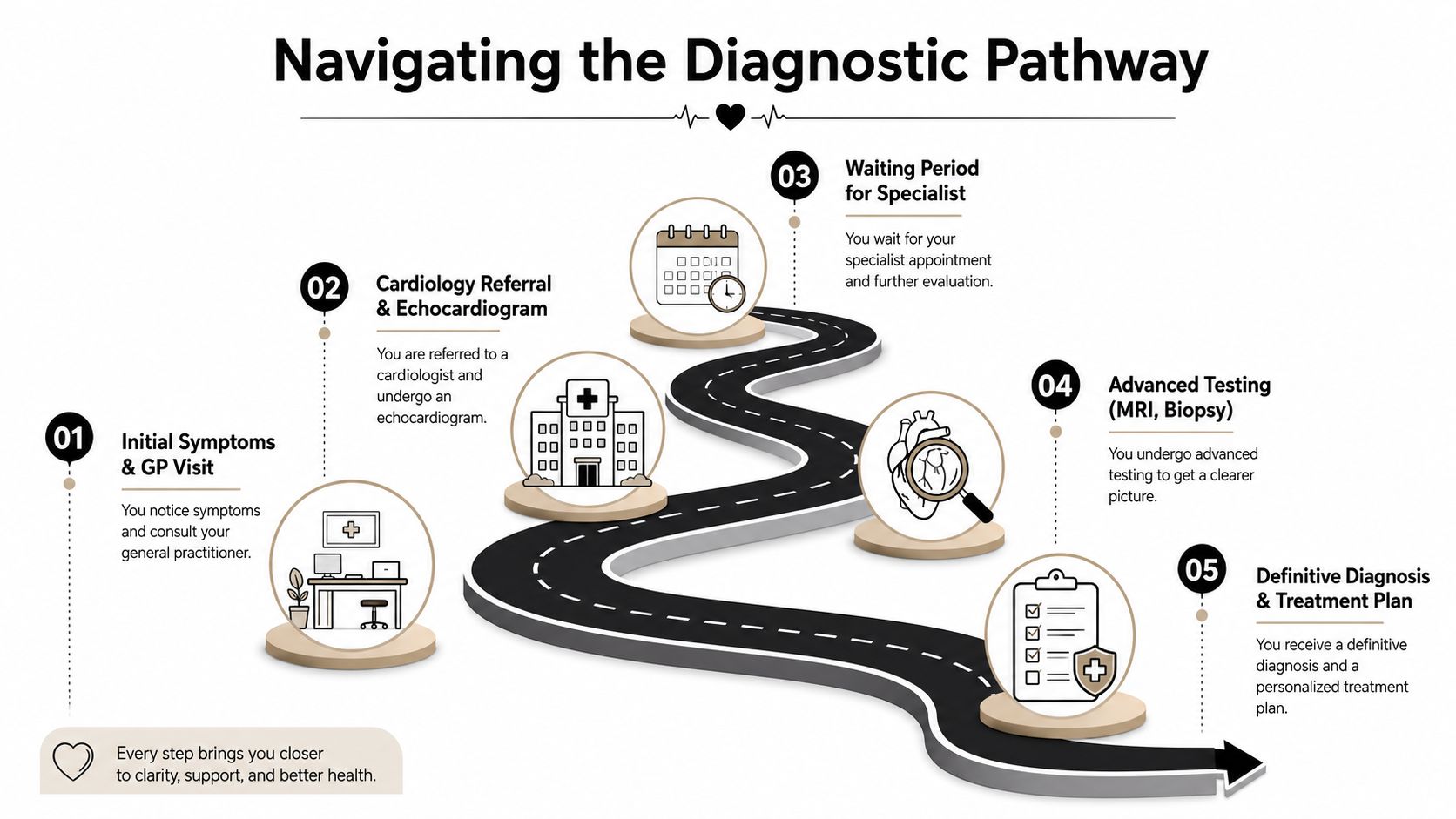
Getting a diagnosis can feel slow, especially when the symptom comes and goes. One visit may be normal. The next may be too late to catch the episode. That gap is one reason many autoimmune heart problems stay under the radar until someone brings in better evidence.
Blood work, echocardiograms, and cardiac MRI often come into the picture when clinicians suspect inflammation. In some situations, more advanced imaging is used to look for disease that doesn't show up clearly on routine testing. The frustrating part is that intermittent arrhythmias don't wait around for a brief appointment slot.
When you're trying to move the process forward, the most useful thing you can bring is a clean symptom record. Note the time, what you were doing, how long it lasted, and whether the rhythm felt fast, skipped, or irregular. If episodes happen during rest, after stress, or during a flare, write that down too.
A few questions help during appointments:
- What rhythm pattern are you trying to rule in or rule out?
- Would extended monitoring make sense if the symptoms are intermittent?
- Should rheumatology and cardiology share the same data set?
Cardio-rheumatology clinics can be especially helpful when symptoms overlap between inflammation and rhythm disturbance. The point isn't to push for every test at once. It's to make sure the right test is chosen for the symptom pattern you have, not the one that was easiest to observe in the office.
Taking Control with At-Home ECG Monitoring
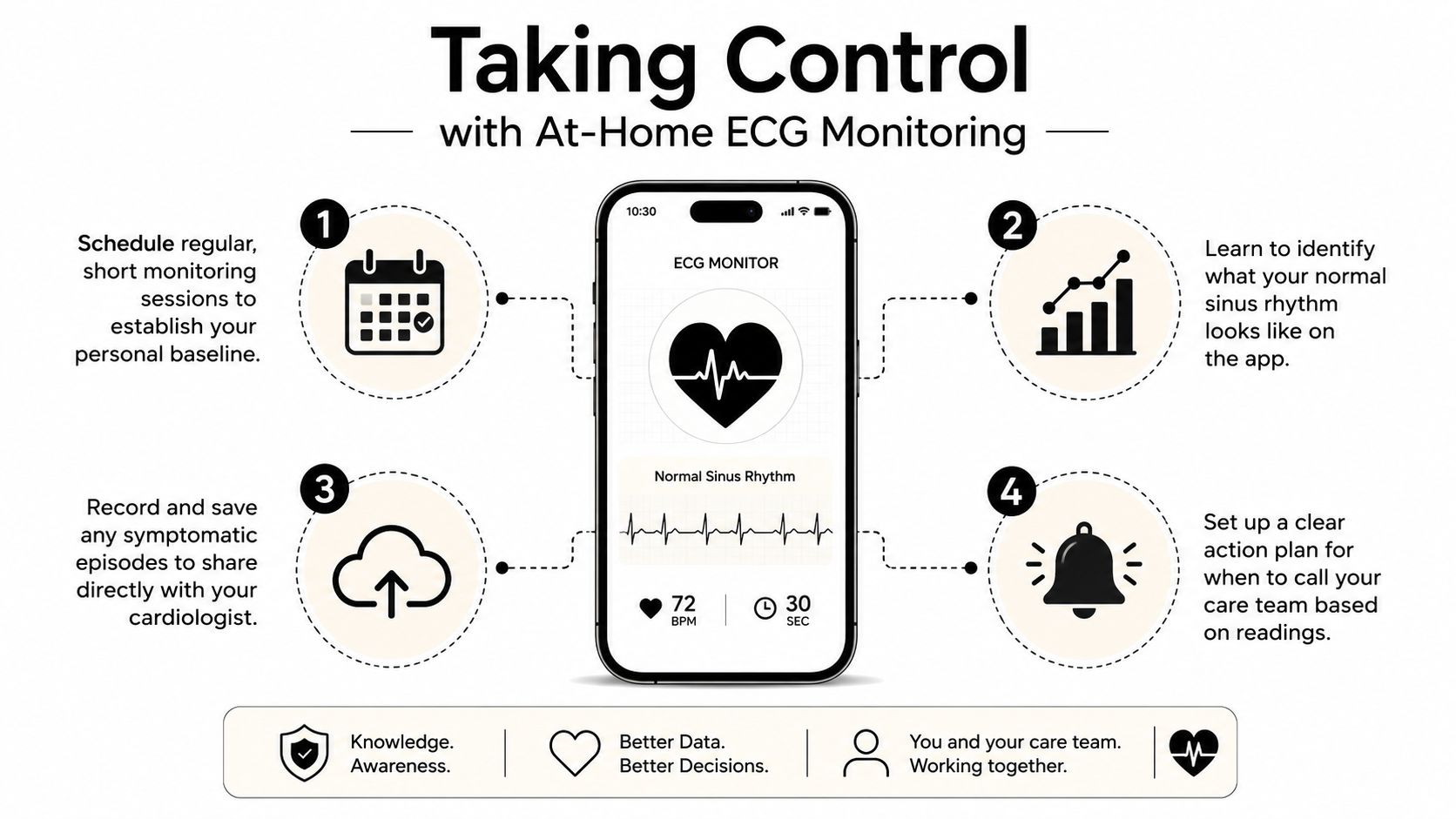
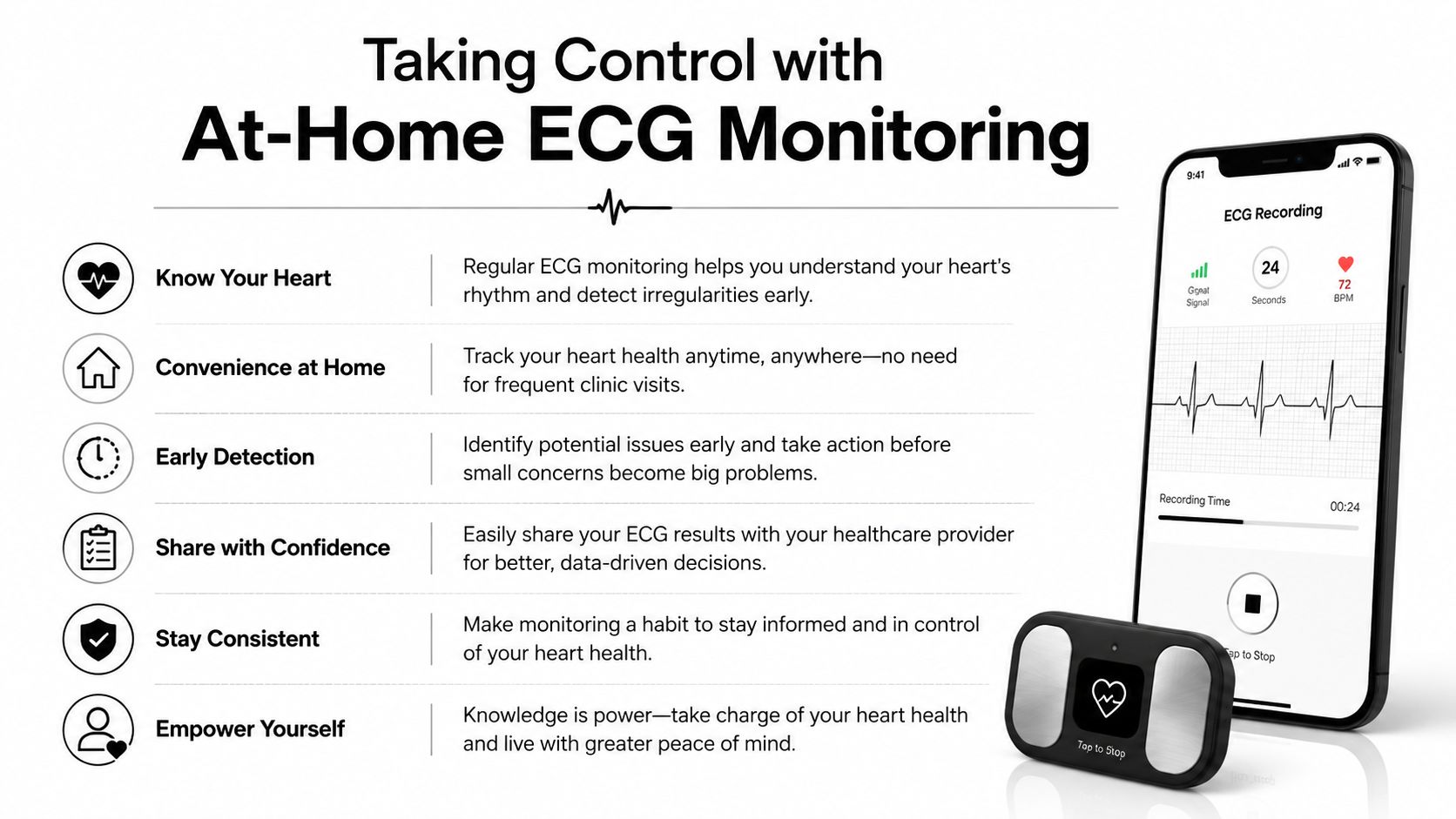
At-home ECG monitoring gives you something many appointments can't, time. It lets you catch the episode when it's happening, instead of hoping the rhythm misbehaves on schedule. For autoimmune heart conditions, that's especially valuable because flares and arrhythmias can be intermittent.
Why wearable ECGs can help
Smartwatch and portable monitor ECGs can catch transient rhythm changes that disappear before someone reaches urgent care. They're also useful for spotting patterns, such as symptoms that cluster around medication changes, stress, or autoimmune flares. That doesn't replace clinician review, but it does turn a vague complaint into a concrete record.
The most helpful habit is consistency. Short, repeated recordings build a baseline, which makes a new rhythm change easier to recognize later. People often feel more confident when they can compare a symptomatic strip with earlier normal recordings from the same device.
How to use the data well
Qaly is built for people who want their wearable ECGs organized, reviewed, and shared clearly with clinicians. The practical value is not just the strip itself, it's the combination of symptom logging, episode tagging, and a readable summary that helps a care team see the story behind the symptom.
A sustainable routine usually looks like this:
- Record during symptoms. Don't wait for a perfect reading, catch the episode as it happens.
- Keep a simple note. Write down posture, activity, and what the sensation felt like.
- Store the baseline. Normal recordings matter because they give you something to compare against later.
- Share the episode. A clean packet of data is easier for a clinician to act on than scattered memory.
If monitoring starts to make you more anxious, simplify the routine rather than abandoning it. A few planned checks are usually more useful than constant checking. For readers comparing device options, this home ECG machine guide is a straightforward place to start.
Practical rule: monitor to clarify uncertainty, not to chase every sensation.
Overlooked Risk Factors and Common Misconceptions
A lot of people assume autoimmune heart risk is the same for everyone, but that's not a safe assumption. The details of the autoimmune diagnosis, sex, disease activity, and inflammation control all matter. A 2025 American Heart Association news summary reported that women with common autoimmune diseases may face a higher death rate from heart disease and stroke than men with the same condition, even though rates fell in both groups (AHA news summary).
Another common misconception is that younger adults don't need to worry. Autoimmune myocarditis and rhythm disturbances can affect people who still feel otherwise healthy, so age alone doesn't rule out a cardiac problem. A normal routine ECG also doesn't settle everything when the symptom is intermittent.
The other trap is symptom overlap. Autoimmune flares can bring fatigue, chest discomfort, shortness of breath, and a racing pulse, which is exactly why many people talk themselves out of seeking help. If the episode is new, more intense, or paired with a rhythm change, it deserves a better look than “probably just my usual flare.”
Your Next Steps for Heart Health Confidence
One woman keeps thinking her chest flutter is stress until she starts writing down when it happens and notices it shows up after specific flares. She brings the notes and the ECG strips to her next appointment, and the conversation gets more focused, faster. That kind of shift is possible for you too.
Start with three steps. First, name your personal warning signs, such as palpitations, dizzy spells, or chest pain that changes with position. Second, set up a regular at-home ECG routine so you have baseline recordings before symptoms escalate. Third, make a simple plan for sharing episodes with your care team so the information doesn't stay scattered on your phone.
Autoimmune heart conditions can be managed better when they're recognized early and tracked clearly. If you're ready to turn uncertainty into a cleaner record, start building your baseline now, keep your symptom notes close, and consider a tool like Qaly to help you capture and organize the rhythm changes that matter most.
Noticing rhythm changes? Certified experts review your ECGs within minutes.


