




Hello Heart Hero. If you've been lying awake after feeling a flutter in your chest, scrolling through conflicting advice about estrogen and heart disease, you're not alone. One page says hormones protect the heart, another says they raise risk, and a third makes it sound as if the answer is simple when it really isn't.
A clearer answer starts with this. Estrogen can look helpful, harmful, or neutral depending on when it's used, what kind is used, and how it enters the body. That's why a woman in early menopause with hot flashes is in a very different situation from someone starting hormone therapy years later, or someone trying to figure out whether a racing heartbeat is hormonal, rhythm-related, or both.
If you like visual patterns, a good companion resource is the menstrual cycle hormone graph explained from Venus Health Co., because seeing hormone changes over time can make the heart-hormone connection easier to follow. The goal here is simple, to give you enough clarity to ask better questions and make calmer decisions.
Welcome to Your Heart Health Journey
Hello Heart Hero. A woman notices her heart skipping around during perimenopause, checks her smartwatch, and then gets hit with the same old confusion. One article says estrogen helps the heart, another says hormone therapy can raise cardiovascular risk, and the internet leaves her with more anxiety than answers.
That confusion makes sense. For years, women were told that estrogen was broadly protective, especially after menopause, and that belief stuck because the early observational data looked convincing. Later randomized trial evidence complicated the story, which is why the most honest answer today is nuanced rather than comforting in a simplistic way.
Practical rule: symptoms and prevention are not the same conversation. Estrogen may be considered for menopausal symptoms, but that does not mean it should be used to prevent heart disease.
If you've been trying to connect the dots between hormones, palpitations, and long-term heart health, start by learning the basics of hormone patterns and symptoms. A helpful companion for that kind of self-check is find estrogen deficiency symptoms, especially when you're trying to separate ordinary menopause changes from signs that deserve a closer look.
It also helps to compare what your body feels with what your rhythm data shows. If you're already tracking episodes on a wearable, a simple reference like symptoms of low estrogen can make those symptoms easier to discuss with a clinician without turning every flutter into a worst-case scenario.
The point isn't to scare you. It's to help you move from vague worry to informed attention, so you can understand what estrogen heart disease really means in your own life.
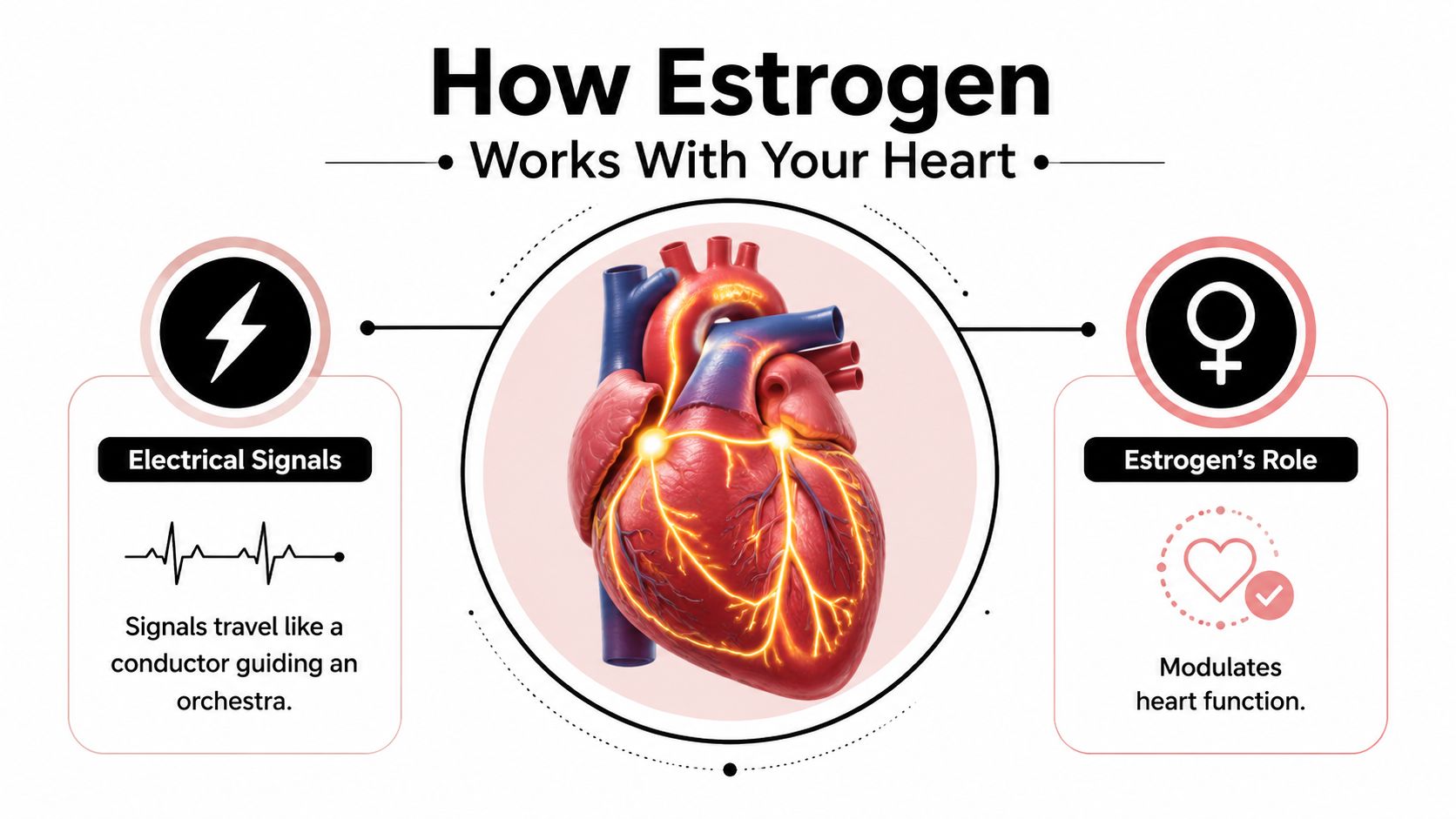
How Estrogen Works With Your Heart
Your heart doesn't just pump, it coordinates electrical signals with remarkable precision. An orchestra requires a conductor for its rhythm section, strings, and brass to keep time. Estrogen seems to support that system by helping blood vessels stay flexible and by influencing how the heart responds to stress.
When estrogen levels are steadier, the cardiovascular system often behaves more like a well-maintained machine. Blood vessels can respond more smoothly, and the whole system tends to be less stiff. When estrogen drops during menopause, that maintenance support changes, and the heart and vessels can become less forgiving.
Why vessel flexibility matters
Healthy arteries aren't rigid pipes. They expand and relax as pressure rises and falls, which helps the heart work efficiently. Estrogen has long been associated with that kind of vessel support, and that's one reason menopause can feel like a turning point for some women's cardiovascular health.
Lower estrogen doesn't cause one single heart problem. It changes the background conditions that can make blood pressure, cholesterol patterns, and vascular stiffness more important over time. That's why menopause is often a moment when women notice their heart health getting more attention.
Why symptoms can feel different
Some women notice palpitations, skipped beats, or a more noticeable heartbeat during hormonal shifts. Others feel fine and only learn about risk through screening or routine care. Both experiences are real, and neither one means estrogen is acting in a simple good or bad way.
If you're trying to understand your own symptoms, it can help to pair bodily awareness with practical education from sources like wrist heart rate monitor accuracy and to keep a calm, symptom-based record rather than guessing from one isolated reading. The goal is to notice patterns, not to obsess over every blip.
What the Research Really Shows
A lot of the early hope came from observational research. A major 1991 cohort study in the New England Journal of Medicine reported that current estrogen users had about half the risk of major coronary disease compared with never-users, with an age-adjusted relative risk of 0.51, and 0.40 for current unopposed oral conjugated estrogen NEJM cohort study.
A later review described how a 1997 meta-analysis pointed in a similar direction, with a summary relative risk for CHD of 0.70 for women who ever used estrogen and 0.66 for women who used estrogen plus a progestin. Those findings shaped clinical thinking for years, especially for women who were told hormone therapy might help the heart.
Then the randomized trials gave a different picture.
The Women's Health Initiative found that women receiving 0.625 mg estrogen plus 2.5 mg medroxyprogesterone for 5.2 years had more coronary heart disease events, 164 cases in the hormone group versus 122 on placebo, and stroke risk was higher too, with 127 cases and a hazard ratio of 1.41 AHA review of WHI findings. The later synthesis also reported a 13% increase in all CVD events over 5.6 years, with an 80% increase in CHD risk during the first year of therapy AHA review of WHI findings.
That is why simple slogans fail. Observational studies can be influenced by who chose hormone therapy in the first place, while randomized trials give a clearer look at cause and effect. The randomized data did not support hormone therapy as a general heart-protective strategy, even though symptoms may still be treated for other reasons.
For women tracking ECG markers while on hormone therapy, understanding your baseline QTc values is important, see our guide on normal QTc ranges for women. A clinician-friendly way to think about estrogen heart disease is that symptom care and cardiovascular prevention are not the same decision.
Timing Matters More Than You Might Think
The age at which hormone therapy starts changes the picture. Evidence summarized in major guidance says the cardiovascular effect of estrogen is strongly age- and timing-dependent, with more favorable vascular effects in early postmenopausal years and less favorable effects in older postmenopausal women, especially after age 60 timing guidance.
That timing rule is easy to misunderstand. It doesn't mean estrogen magically protects the heart if started early, and it definitely doesn't mean late start is a good strategy for heart prevention. It means the body's vascular response is different depending on how long menopause has been underway and what other risk factors are already in play.
Formulation and route change the risk picture
Not all hormone therapy behaves the same way. Newer guidance stresses that timing, formulation, and route matter, and that transdermal estradiol and micronized progesterone may differ from older oral synthetic formulations recent guidance on timing and route. That distinction matters because many older public explanations collapse all estrogen into one category.
The WHI estrogen-progestin arm is a good reminder of why route and formulation deserve attention. Coronary heart disease occurred at 0.37% per year versus 0.30% with placebo, for a relative risk of 1.29, and stroke was also higher at 0.29% vs 0.21% with a hazard ratio of 1.41 WHI timing analysis. Later evidence and guidance have pushed clinicians to think more carefully about who starts therapy, when they start, and what exact product they use.
Practical rule: if hormone therapy is being considered, the conversation should include age, years since menopause, route, and personal clot or stroke risk.
For many women, that discussion is less about whether estrogen is good or bad and more about whether the chosen therapy fits the clinical moment. That's a much more meaningful question.
Get your ECG checked by certified experts within minutes on the Qaly app.


Heart Rhythms, ECG Patterns, and What to Watch For
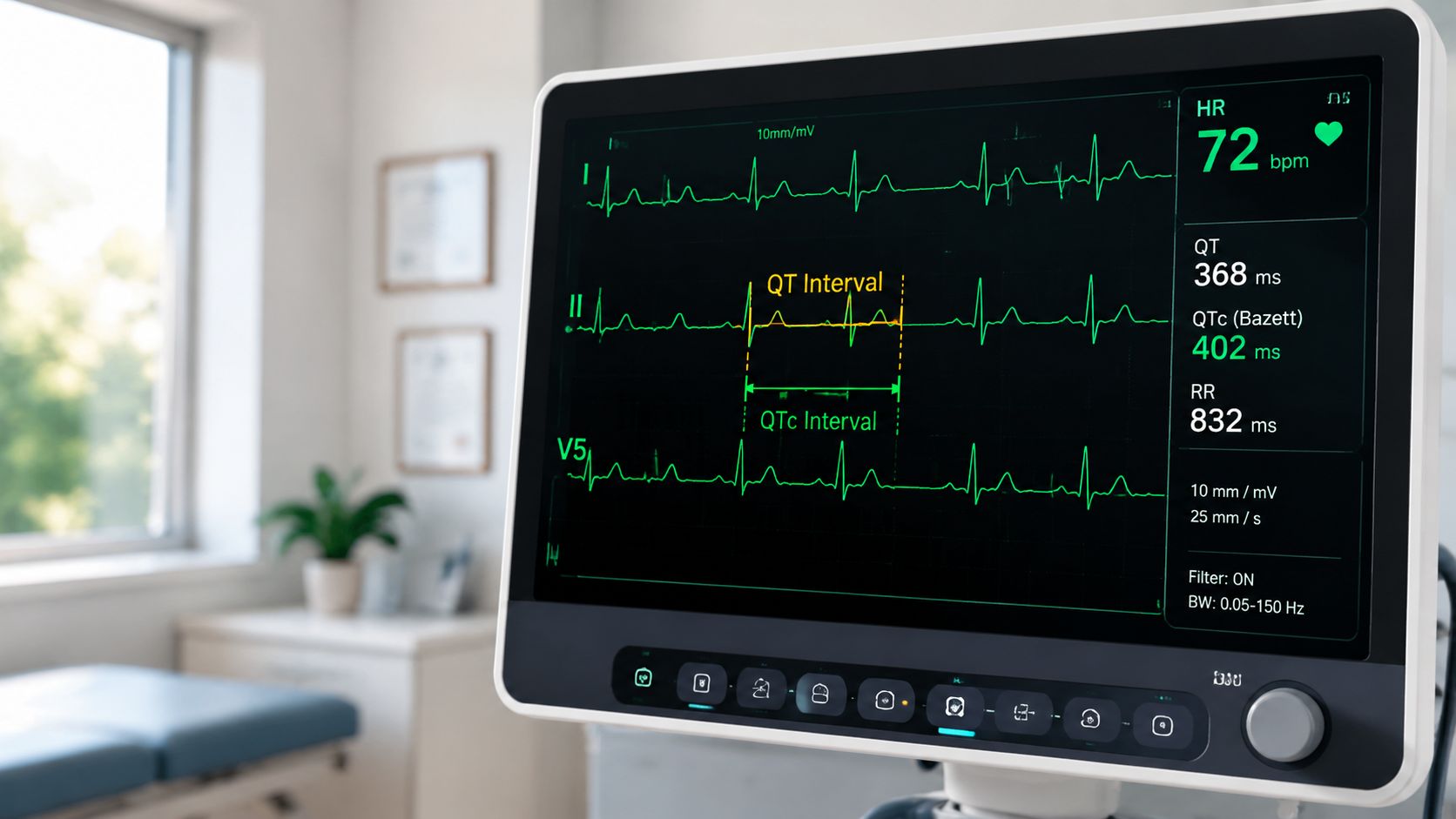
Estrogen doesn't only matter for long-term plaque and vessel health. It also influences the heart's electrical behavior, which is why some women notice rhythm changes around hormonal transitions, including perimenopause, menstruation, or starting and stopping hormone therapy. A prolonged QTc interval matters because it reflects how long the heart takes to recharge between beats, and that can raise arrhythmia concern.
The best way to think about this is to separate sensation from diagnosis. A flutter in the chest might be benign, a rhythm disturbance, or a response to stress, sleep loss, caffeine, or hormonal change. The symptom is real either way, but the cause needs context.
What deserves attention
A wearable ECG can be useful when symptoms repeat. Devices from Apple Watch, Fitbit, Samsung, Kardia, and similar platforms can capture a rhythm strip during the moment you feel the symptom, which is far more helpful than trying to remember the episode later.
If you want a plain-language overview of how QT changes are interpreted, QT prolongation causes is a useful reference point while you're learning what is normal for your own body. The key is not to self-diagnose from a single number, but to notice trends and symptom patterns that repeat.
Warning signs that should not be ignored
- Chest pressure or discomfort, especially if it feels new or different.
- Shortness of breath, dizziness, or nausea with palpitations.
- Repeated irregular rhythms that show up on your wearable instead of a one-off blip.
- Episodes that happen after medication changes, hormone changes, or during rest rather than exercise.
If you're using at-home ECG tools, a service like Qaly can turn a recording into a human-reviewed interpretation, including rhythms such as atrial fibrillation, SVT, PVCs, and WPW syndrome, which can make a follow-up visit much more productive.
Practical Steps to Monitor and Protect Your Heart
Good heart care starts with paying attention to what your body does, not what the loudest internet opinion says. If palpitations, unusual fatigue, or a racing pulse seem to cluster around hormonal shifts, write that down before your next appointment. Clear patterns help clinicians sort out what's likely hormonal, what's likely rhythm-related, and what deserves more testing.
A solid rhythm record is more useful than constant checking. Wearable ECGs can be very helpful, but compulsive scanning can feed anxiety instead of insight, so it helps to use them with a plan rather than every time you feel nervous.
A simple framework
- Track palpitations. Note when they happen, what you were doing, and whether stress, sleep, caffeine, or hormone changes were involved.
- Monitor rhythms. Save ECG strips from your wearable so your clinician can see what you saw.
- Check estrogen-related changes thoughtfully. If you're on or considering hormone therapy, ask how timing, route, and formulation fit your situation.
- Keep the basics in view. Movement, sleep, stress management, and heart-healthy eating still matter.
If you want a home-monitoring primer that stays practical rather than overwhelming, how to check heart health at home can help you build a routine around evidence instead of guesswork.
Major guidance says menopausal hormone therapy should not be used to prevent coronary heart disease, even though women in early menopause who are in good cardiovascular health may be candidates for symptom treatment guidance on prevention and symptom treatment. A major randomized-trial review also concluded that combined estrogen and progestogen should not be prescribed for the primary prevention of cardiovascular disease, and the U.S. Preventive Services Task Force recommends against using combined estrogen-progestin or estrogen alone for primary prevention of chronic conditions in postmenopausal people trial review and USPSTF position.
Practical rule: bring your symptom log, ECG history, and current medication list to the visit. Good decisions are easier when the data are in one place.
Moving Forward With Confidence
A woman in midlife often thinks she has to choose between trusting her body and trusting medicine. She doesn't. She can listen to her symptoms, use data wisely, and still ask for clearer guidance from clinicians who understand the difference between symptom relief and cardiovascular prevention.
That's the lesson of estrogen heart disease. Timing matters. Formulation matters. Route matters. Personal risk matters. Once you see those layers, the story stops sounding contradictory and starts sounding useful.
You don't need to solve every question today. You do need a next step that feels manageable, like writing down your symptoms, checking your blood pressure, reviewing your rhythm data, or asking whether your current hormone plan fits your heart-health profile.
If your palpitations keep bothering you, or if you want a clearer picture before your next cardiology or menopause visit, consider using Qaly to review your wearable ECGs so you can walk in with calm, concrete information and better questions.
Noticing palpitations during hormone shifts? Certified experts review your ECG within minutes.


