


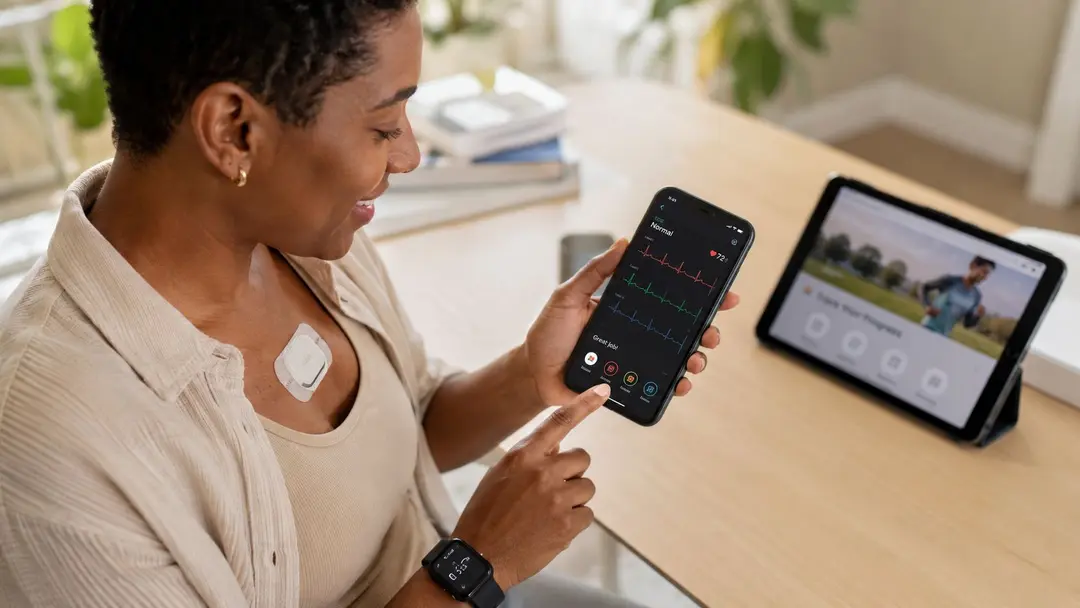


Hello Heart Hero. If you're staring at a smartwatch ECG, a Kardia tracing, or a night-time rhythm alert and thinking, “Is this meaningful, or am I just feeding my anxiety?”, you're not alone. A lot of people want care that feels clearer, faster, and less dismissive, especially when the healthcare system has already made them feel like they have to fight for answers.
The good news is that patient engagement strategies don't have to mean more noise. Done well, they help you share the right data, spot patterns sooner, and have calmer conversations with your care team. The strongest approaches are usually the ones that combine real-time sharing, continuous monitoring, and human interpretation, because raw ECG data by itself can be confusing without context or professional insight. That's exactly why wearable and at-home ECG users often do better when the technology fits into a real care workflow instead of sitting in isolation.
One reason this matters is that engagement isn't just a feel-good idea. A historical patient activation finding cited by the CDC showed that highly activated patients had about 43% lower 30-day post-discharge hospital utilization than the least activated group, which is a strong reminder that engagement can change actual outcomes, not just satisfaction (CDC Health Literacy Research Summary via Pabau). In practice, the question isn't whether engagement matters. It's which strategies help you feel informed without making you more overwhelmed.
1. Real-Time Data Sharing with Healthcare Providers
The fastest way to make a rhythm concern feel less vague is to bring your clinician something concrete. Instead of saying, “My heart felt off last week,” you can share an ECG recording, a timestamp, and a short note about what was happening when symptoms started. That turns a fuzzy memory into a clinical conversation.
For wearable and at-home ECG users, tools like Qaly can be especially helpful, as they let you collect traces over time and bring a cleaner summary to the appointment. Qaly's own explanation of remote monitoring shows how sharing health data before a visit can support more useful provider review (benefits of remote patient monitoring). If you've ever walked into a cardiology visit and forgotten half the details, this solves a very real problem.
A practical rhythm-sharing routine usually looks simple:
- Write a short symptom note first. Include what you felt, when it started, and what you were doing.
- Save the tracing immediately. Screenshots help when phone calls or telehealth visits are rushed.
- Ask how your clinician prefers data. Some offices want portal uploads, others want a summary message.
- Pair the trace with context. A log of sleep, caffeine, exercise, or stress makes interpretation easier.
Practical rule: a single ECG strip is useful, but a strip plus context is much better.
The trade-off is that more data isn't always better if it arrives without organization. Providers are more likely to act on a brief summary with a few meaningful recordings than on dozens of unlabeled strips. Real-time sharing works best when you're helping the clinician see the pattern, not dumping everything you've captured.
2. Continuous Symptom Monitoring and Pattern Recognition
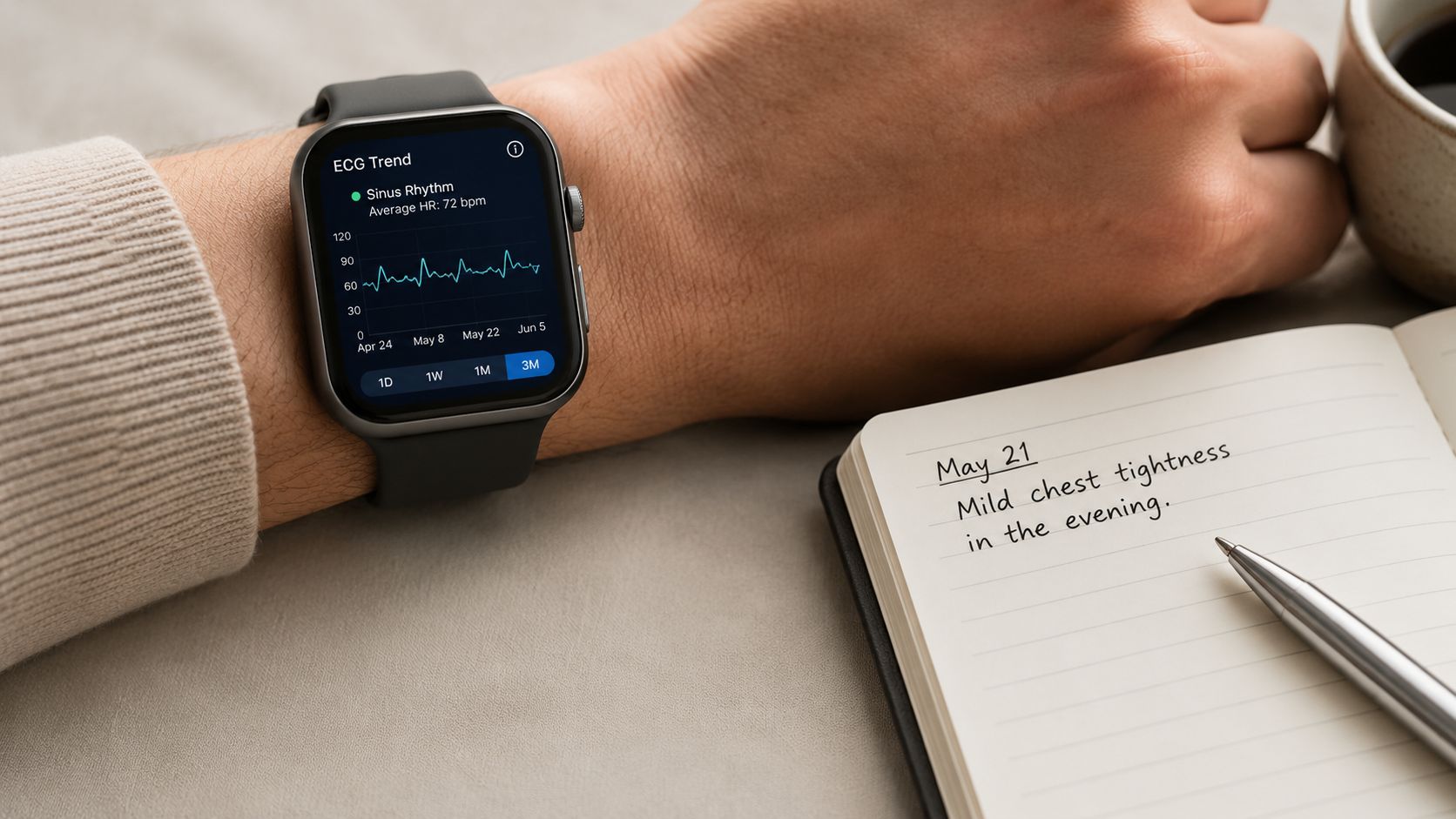
Some heart symptoms only make sense when you look at them over time. A single flutter after coffee might mean nothing. The same flutter happening every time you sleep poorly or feel stressed tells a different story. That's why continuous monitoring is one of the most practical patient engagement strategies for ECG users, it helps you move from guessing to pattern recognition.
The point isn't to stare at every reading all day. It's to create a rhythm of checking that lets trends emerge. For many people, that means morning and evening recordings, then a monthly review to see what repeated instead of reacting to every isolated abnormality. Qaly's continuous rhythm monitoring guidance fits that mindset well because it frames monitoring as an ongoing process, not a one-time test (continuous rhythm monitoring).
What makes this approach work
Continuous monitoring helps when you connect data to real life. A person with palpitations might notice spikes after caffeine, while someone starting a medication might see how interval values shift over time. People with a history of SVT often gain confidence when they can spot warning patterns before an episode fully starts.
Keep the routine simple enough that you'll still do it on busy days.
That's the main trade-off. More monitoring can bring more peace of mind, but it can also feed hypervigilance if every small variation feels like an emergency. The healthiest version of this strategy is structured, bounded, and reviewed in context. Monthly trends usually teach you more than hourly checking ever will.
3. Anxiety Reduction Through Instant Professional Reassurance
A skipped beat at bedtime can feel much larger than the reading itself, especially if a past concern was brushed aside. A wearable ECG can catch the moment, but anxiety often needs a fast human response to settle. Instant professional reassurance changes the experience because it gives people a clear interpretation before worry starts filling in the blanks.
That is why professional ECG review matters for wearable users and at-home monitor users. Qaly's fast, human-reviewed interpretation can help separate a benign rhythm change from something that needs follow-up, which is especially useful when fear is driving the next decision. Some users feel immediate relief after learning that a frightening sensation matched a PVC pattern rather than a dangerous arrhythmia, while others avoid repeated late-night checking once they have a clear answer. That same reassurance-focused approach is also useful in other anxious caregiving situations, including situations covered in Velma's dementia anxiety tips.
A practical reassurance workflow stays simple:
- Take the reading right away. Waiting usually gives anxiety more room to grow.
- Read the interpretation fully. The details matter, not just the headline.
- Save reassuring reports. They help when doubt returns later.
- Share the result with family if needed. Worry often spreads to the people nearby.
- Treat a normal tracing as useful data. It can calm the moment and support future decisions.
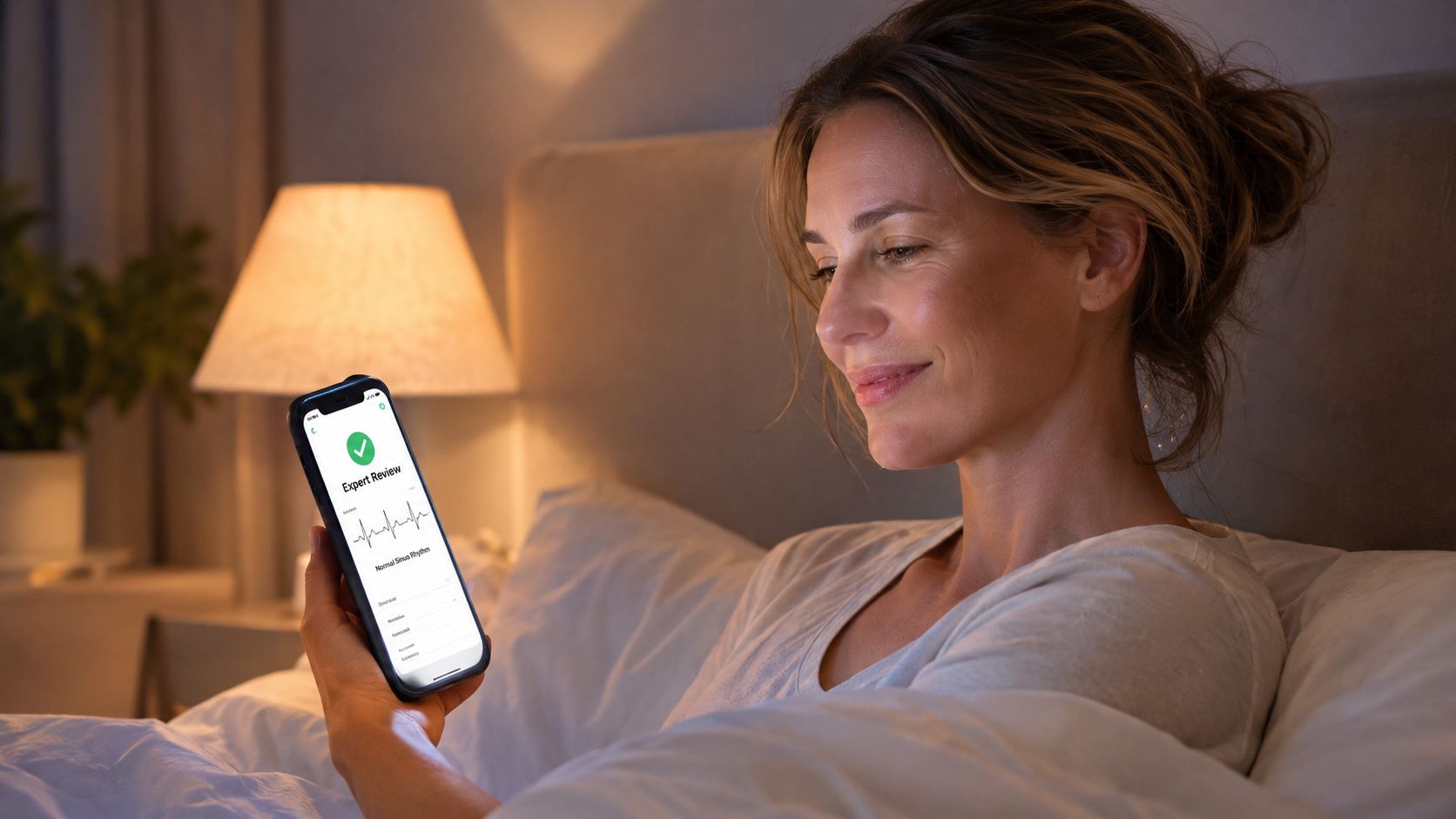
A normal tracing can be the most calming answer you get all week.
The trade-off is real. Fast reassurance can reduce panic, but it can also become a habit that turns every sensation into a test. The stronger approach is to use the reading with purpose, accept the result, and move on once the concern has been addressed. That keeps the tool helpful without letting it feed constant self-checking.
4. Medication Monitoring and Response Tracking
Starting a new cardiac medication can feel uncertain. You are told it should help, but day-to-day changes are often subtle, especially when symptoms come and go. Medication monitoring turns that uncertainty into a pattern you and your clinician can review together.
ECG interval tracking gives that conversation structure. PR, QRS, and QTc readings can show how your heart is responding, especially if your treatment plan includes antiarrhythmic drugs or QT-prolonging medications. Qaly's interval-focused reports help by putting the measurements next to human interpretation, so you are not left trying to decode the tracing on your own. For people managing care remotely, that shared view can make follow-up feel more grounded and less dependent on memory alone.
A clinician may also use those results to coordinate PA telehealth medication management when adjustments need to happen between visits.
Track before you change anything
A few habits make medication monitoring much more useful.
- Get baseline readings first. You need a starting point before you can judge change.
- Use a consistent schedule. Weekly or biweekly checks are common early on.
- Write down side effects. Fatigue, palpitations, or dizziness matter.
- Review trends, not one-offs. One odd reading does not define the whole treatment.
- Never adjust medication on your own. ECG data informs care, but it does not replace a clinician.
Data should support the prescription, not replace the prescriber.
The benefit here is clarity. You can bring objective evidence to the next conversation instead of relying only on how the medication felt on a particular day. The trade-off is overconfidence, because a wearable reading can make people think they have enough information to stop, start, or change a dose on their own. That creates avoidable risk. The better use of medication tracking is to show whether the medication is helping, causing side effects, or needs a different approach, then let the clinician make the call.
5. Post-Event Monitoring and Recovery Tracking
Recovery after a cardiac event or procedure can feel fragile. Even a normal stair climb can bring back fear that something is wrong again. Post-event monitoring helps because it gives you a way to see recovery instead of just hoping it's happening.
The AIR summary of an accountable care organization's home-visit approach is a useful reminder that engagement works best when it's personal and practical, not abstract. That program reported a 15 percent reduction in hospital admissions and higher patient satisfaction when home visits were used, and it also described follow-up support through dialysis centers and nurse navigator calls (AIR innovative patient engagement strategies). The exact setting may differ, but the principle is the same, patients do better when someone helps them connect recovery steps to actual life.
A recovery rhythm can include:
- Pre-discharge planning. Decide what to monitor before you leave care.
- Consistent reading times. Repetition makes trends easier to compare.
- Activity notes. Mark walks, workouts, or symptoms next to ECG data.
- Milestone tracking. First week without an episode matters.
- Regular updates. Monthly summaries can keep recovery visible to your team.
This approach is reassuring because it gives you evidence that stability is real. It can also be frustrating if you expect linear progress. Recovery often looks uneven, with good days and weird days mixed together. The point is not perfection. The point is documenting that the overall direction is improving.
6. Patient Education and Health Literacy Building
A confusing ECG reading can feel alarming fast. If you have never heard terms like PVC, SVT, or QTc interval before, a normal variation may look like a serious problem, and that uncertainty can drive unnecessary worry. Education helps by turning unknown labels into language you can use.
Strong engagement programs treat education as part of care, not an extra. A systematic review on patient engagement identifies patient education and self-management support as common strategies, along with shared decision-making and family or peer support, while active care is built on personalization, access, commitment, and therapeutic alliance (Impact of Patient Engagement on Healthcare Quality). That fits ECG users well, because once you understand your own rhythm data, every other step becomes easier to handle.
Qaly's work with health data analytics fits here too, because it helps users treat their readings as something to learn from, not just a signal to worry about.
Learn the language of your own tracing
Health literacy usually grows through repetition. One explanation rarely sticks on its own, especially when you are trying to make sense of a new device or an unexpected alert. A better approach is to read the interpretation, write down unfamiliar terms, and bring those questions to your provider later. Many people also keep a short glossary in a notes app so recurring terms stop feeling foreign.
A few practical moves help:
- Use reputable sources. Mayo Clinic and the American Heart Association are solid starting points.
- Revisit past reports. You will understand more the second time.
- Explain what you learned to family. Teaching is a strong memory test.
- Tie terms to your symptoms. That makes the information stick.
The trade-off is time. Education takes effort, and it can feel slow when you just want a clear answer. Still, even a small gain in understanding often lowers fear because the unknown gets smaller. For ECG users, that is part of the care, not a bonus.
Get your ECG checked by certified experts within minutes on the Qaly app.


7. Preventive Lifestyle Modification Based on Data Insights
Generic advice is easy to ignore. Personalized evidence is harder to dismiss. If you can see that caffeine, stress, poor sleep, or a hard workout reliably changes your rhythm, lifestyle changes stop being abstract wellness goals and become specific experiments.
That's why data-driven prevention is one of the most motivating patient engagement strategies. A wearable ECG gives you a chance to connect habits with heart behavior in a way that feels concrete. Qaly users often use this kind of feedback loop to test whether a trigger is real, then share the findings with their clinician so the plan feels more individualized.
Make one change at a time
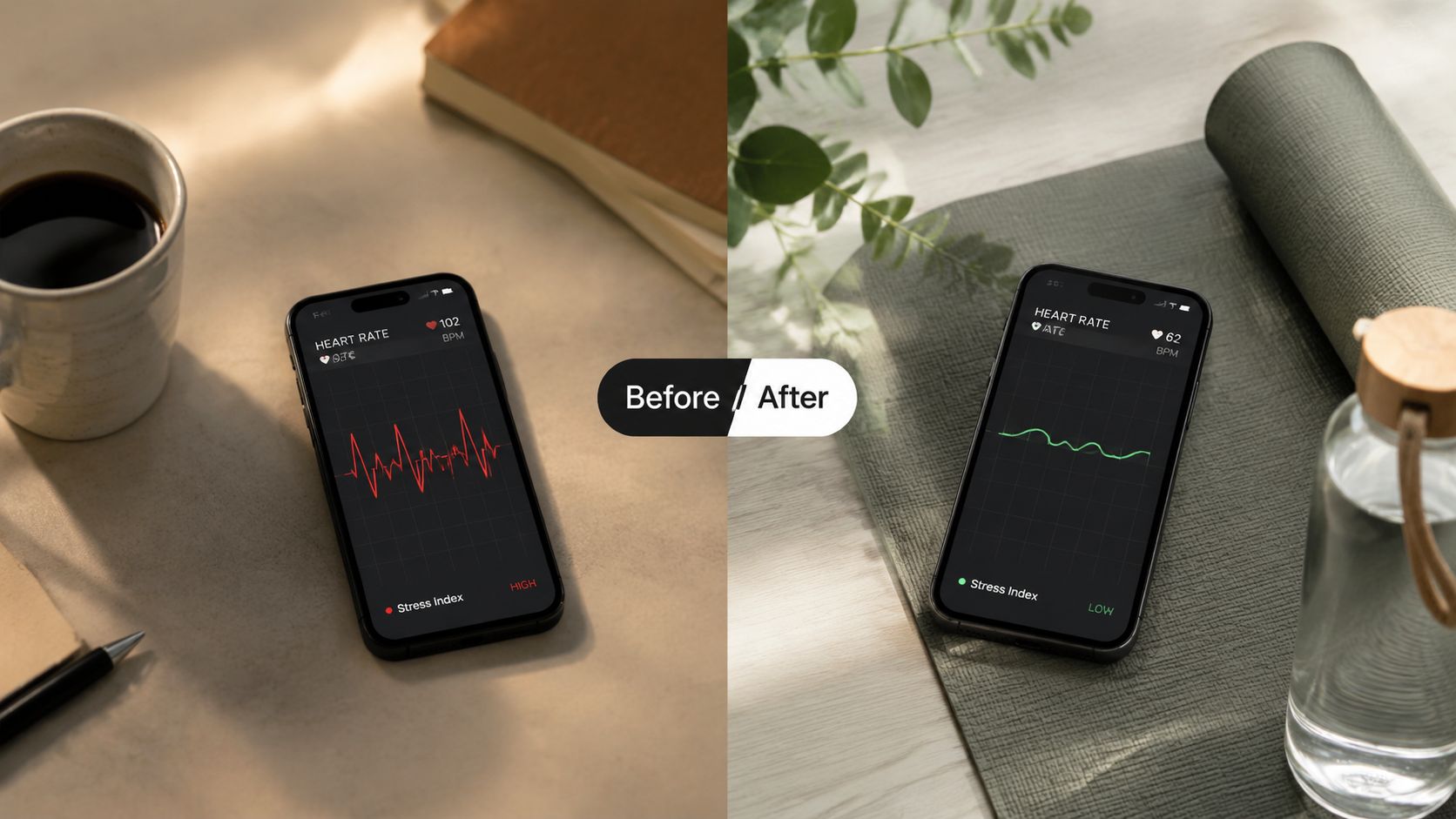
That's the part people often skip. If you quit caffeine, start meditating, change your sleep schedule, and begin exercising harder all in the same week, you won't know what helped. A simple two-week trial for one suspected trigger is much easier to interpret.
One change at a time gives you a cleaner answer and less frustration.
Lifestyle work also needs patience. Changes don't always show up overnight, and trying to force the result can create more stress than the intervention solves. The best use of this strategy is to compare before and after data, notice what genuinely helps, and keep the habits that support a calmer rhythm. That turns prevention into something measurable instead of moralizing.
8. Automated Alerts for Significant Changes or Concerning Patterns
Constant checking can wear people down. That's why smart alerts matter, they reduce the need to obsess over every reading while still flagging changes that deserve attention. A well-designed alert system gives you permission to live your life instead of staring at the screen.
Qaly's guidance on setting up high heart rate notifications for Apple Watch users is a useful example of how alerts can be configured without turning into alarm bells (high heart rate notifications on Apple Watch). The same logic applies to ECG alerts more broadly, use thresholds that match your condition, then let the system surface only what's meaningful.
Alerts should guide action, not panic
A practical alert setup usually includes:
- Clear thresholds. Your provider should help define what matters.
- A confirmation step. Take a fresh ECG when an alert appears.
- A calm response plan. Know when to message, monitor, or schedule follow-up.
- Threshold review. If alerts are too frequent, the system needs adjustment.
The key benefit is balance. You stay informed without being dragged into every fluctuation. The main risk is treating all alerts like emergencies. Most shouldn't be. Many should just start a timely conversation with your care team. That balance helps you stay engaged without becoming consumed by the data.
9. Community Support and Peer Engagement
Living with palpitations or an arrhythmia can feel isolating, especially when everyone around you seems to think you're overreacting. Peer support helps because it normalizes the emotional side of monitoring. You hear how other people handle uncertainty, what they ask their doctors, and how they stay steady when symptoms flare.
The best communities are specific. An AFib group, an SVT forum, or a wearable ECG support space usually gives better signal than a general health group, because the questions are closer to your actual experience. Peer support also works best when people treat it as support, not diagnosis.
Use the community for encouragement, not for final medical answers.
That distinction matters. People can share what helped them, but their bodies, medications, and histories may be completely different from yours. A good community also makes room for emotional honesty. Some days you'll want practical advice. Other days you'll just want to hear, “That happened to me too, and you're not the only one.”
The upside is resilience. The downside is misinformation, especially when someone sounds confident but isn't qualified to advise you. Stay close to condition-specific groups, check suggestions with your provider, and leave any space that pushes fear harder than facts. Good community support should make your life bigger, not more stressful.
10. Multi-Device Integration and Flexible Technology Compatibility
The right engagement tool is the one you will keep using. If an ECG workflow only works with one brand or one device, gaps show up quickly, and follow-through drops just as fast. Flexibility matters because people rely on different wearables, work within different budgets, and have different comfort levels with technology.
That is one reason Qaly's multi-device support fits real-world use. It can work alongside Apple Watch, Samsung, Fitbit, Kardia, Withings, and Holter data, so you do not have to rebuild your monitoring habit just because your hardware changes. If you also use a separate training or health device, pairing it with an interpretation layer can make the routine easier to maintain, including options like a proven wearable cardio workout for people who want a broader fitness setup around their rhythm tracking.
A flexible setup usually comes down to practical choices:
- Choose the device you'll wear consistently. Fancy features do not help if the device stays in a drawer.
- Test compatibility before buying. Do not assume every app supports every device.
- Keep a backup option. Hardware fails sometimes.
- Ask your cardiologist what they trust. Clinical confidence matters.
- Focus on usable insight, not specs alone. More features do not always mean better care.
There is a trade-off here. Flexibility can make the choice feel less definitive, especially if you want one clear answer before starting. That is still a workable position. You are not trying to win a gadget contest. You are trying to build a reliable path from rhythm data to understanding, and device compatibility is part of that path. For wearable users, accessibility supports engagement.
10-Point Comparison of Patient Engagement Strategies
| Strategy | 🔄 Implementation complexity | ⚡ Resource requirements | 📊 Expected outcomes | 💡 Ideal use cases | ⭐ Key advantages |
|---|---|---|---|---|---|
| Real-Time Data Sharing with Healthcare Providers | Moderate, EMR integration & provider workflow changes | Moderate, wearable + connectivity; provider review time | Faster diagnosis; documented longitudinal evidence | Pre-visit handoff; complex cases needing clinician review | Clinical-grade reports; reduces miscommunication, ⭐⭐⭐⭐ |
| Continuous Symptom Monitoring and Pattern Recognition | Moderate–High, continuous collection + analytics | High, wearable devices, storage, periodic professional interpretation | Detects intermittent arrhythmias; identifies triggers; preventive action | Patients with sporadic symptoms or long-term tracking needs | Reveals trends and triggers over time, ⭐⭐⭐⭐ |
| Anxiety Reduction Through Instant Professional Reassurance | Moderate, rapid human-review workflows & SLAs | High, staffed 24/7 technicians and fast turnaround systems | Rapid reassurance; fewer ER visits; reduced symptom anxiety | High-anxiety patients; nocturnal or acute symptom episodes | Immediate human review prevents unnecessary escalation, ⭐⭐⭐⭐ |
| Medication Monitoring and Response Tracking | Moderate, baseline setup and scheduled interval tracking | Moderate, regular ECGs, clinician oversight, baseline data | Early detection of drug effects; safer dosing; objective evidence | Patients starting/changing QT‑affecting or antiarrhythmic meds | Precise interval tracking for safety and dose optimization, ⭐⭐⭐⭐ |
| Post-Event Monitoring and Recovery Tracking | Moderate–High, intensive early monitoring and comparisons | High, frequent readings, pro review, coordination with cardiology | Reassurance during recovery; early complication detection; tracked progress | Post‑procedure or post‑event recovery (ablation, MI, cardioversion) | Supports safe return-to-activity with documented recovery, ⭐⭐⭐⭐ |
| Patient Education and Health Literacy Building | Low–Moderate, creation of patient-friendly narratives | Low–Moderate, content development and expert explanations | Greater understanding; reduced anxiety; better provider dialogue | Newly diagnosed patients; those seeking to understand their condition | Translates jargon into actionable knowledge, ⭐⭐⭐ |
| Preventive Lifestyle Modification Based on Data Insights | Moderate, correlation analytics and lifestyle logging | Moderate, consistent logging, time investment by patient | Personalized trigger identification; possible symptom reduction | Patients aiming for non‑pharmacologic improvements | Data-driven, personalized behavior change motivation, ⭐⭐⭐ |
| Automated Alerts for Significant Changes or Concerning Patterns | Moderate–High, threshold tuning + integration with review workflows | Moderate, algorithms, monitoring, clinician calibration | Timely detection; less obsessive self-monitoring; actionable notifications | Busy patients preferring passive monitoring; high-risk baselines | Balances vigilance with peace of mind; actionable alerts, ⭐⭐⭐⭐ |
| Community Support and Peer Engagement | Low, forum/platform setup and moderation | Low–Moderate, community management, moderation resources | Reduced isolation; practical peer tips; increased adherence | Patients seeking emotional support and lived-experience advice | Emotional support and shared practical strategies, ⭐⭐⭐ |
| Multi-Device Integration and Flexible Technology Compatibility | High, many device APIs, standardization, testing | High, engineering, QA, ongoing device support | Greater accessibility; continuous data across device changes | Users with varied devices or frequent device upgrades | Flexibility to use preferred devices; continuity of data, ⭐⭐⭐⭐ |
Putting Strategies Into Action
Now it's your turn to take control. Pick one engagement strategy to start today and build it into your routine, maybe that means logging symptoms with every ECG, sharing monthly summaries with your clinician, or setting alert thresholds that reduce unnecessary worry. Small, consistent habits usually work better than ambitious plans you won't keep.
If you're using a wearable or at-home ECG device, the biggest gains often come from combining three things, clear data, professional interpretation, and simple sharing. That combination helps you spot patterns, ask better questions, and stop relying on memory when your health feels uncertain. It also gives you something many anxious patients don't get enough of, reassurance that's based on actual information rather than guesswork.
Qaly fits naturally into that workflow because it offers human-reviewed ECG analysis, interval tracking, and device flexibility for people using consumer wearables or home ECG monitors. If you want a more organized way to understand palpitations, compare trends over time, and bring cleaner reports to your care team, try building your next rhythm check around a system you can stick with.
The next step is simple. Start with one reading, one note, and one shared summary, then see how much clearer your next conversation feels.
Want clearer ECG insights? Certified experts review your ECGs within minutes.


