

Is your heart's timing right? This tool helps you analyze your PR interval from an ECG. It's a simple way to see how well the top and bottom parts of your heart are communicating.
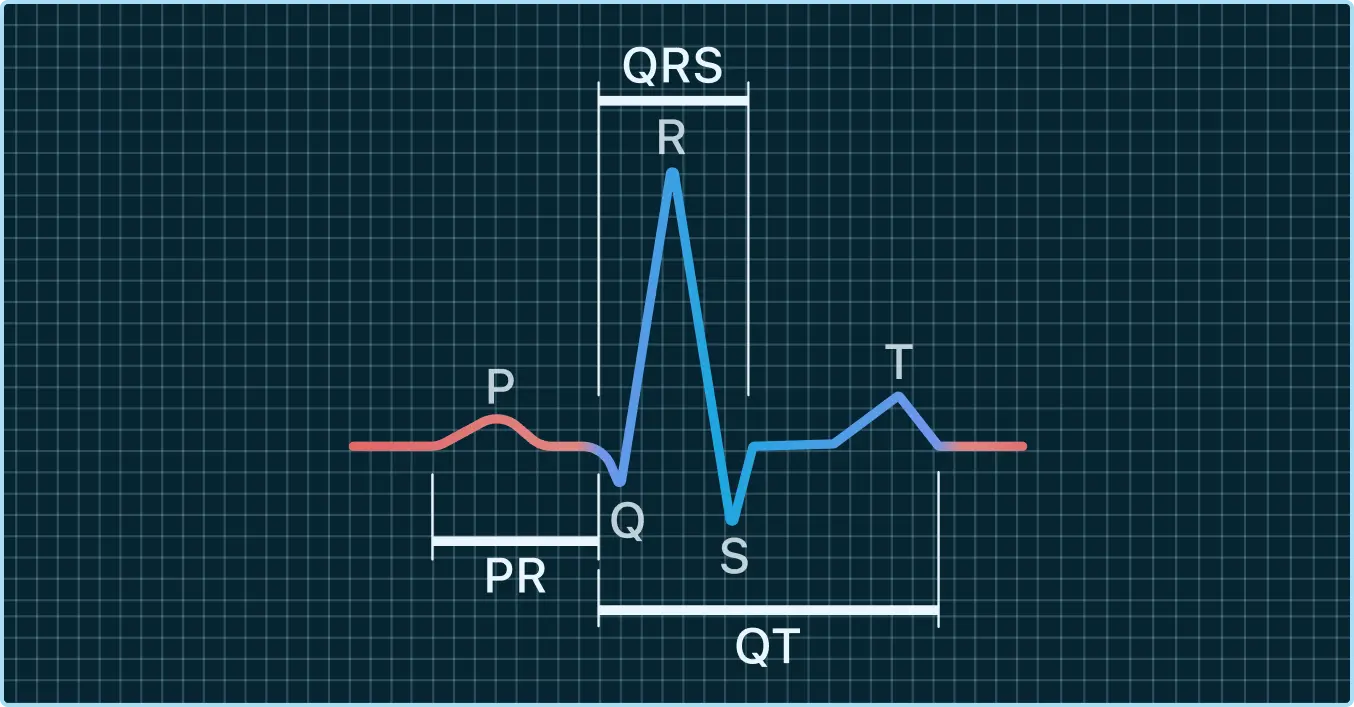
The PR Interval Calculator measures the time from the start of atrial depolarization to the beginning of ventricular depolarization. An abnormal PR interval can indicate conduction problems in your heart.
Your heart's electrical signal travels from the atria to the ventricles through the AV node. The PR interval measures this conduction time. When it's too long or too short, it may signal a block or an abnormal pathway—like a message that's delayed or taking a shortcut.
The PR interval measures the time from the beginning of the P wave (start of atrial depolarization) to the beginning of the QRS complex (start of ventricular depolarization). It represents the total time for the electrical signal to travel from the sinus node through the atria, AV node, and His-Purkinje system to begin activating the ventricles.
First-degree AV block (PR >200ms) is generally considered benign and often requires no treatment. However, it can sometimes progress to higher-degree blocks in certain conditions. It's more concerning if:
• The PR interval is very prolonged (>300ms)
• It's newly detected or progressive
• You have symptoms like dizziness or fatigue
• It's associated with other heart conditions
WPW is a condition where an extra electrical pathway (accessory pathway) connects the atria and ventricles, bypassing the normal AV node delay. This creates a short PR interval and a characteristic "delta wave" at the start of the QRS complex. While some people with WPW never have symptoms, others may experience episodes of rapid heart rate (SVT) that can be concerning. Treatment options include medications or catheter ablation of the accessory pathway.
Yes, several medications can prolong the PR interval by slowing AV node conduction:
• Beta-blockers: Metoprolol, atenolol, carvedilol
• Calcium channel blockers: Diltiazem, verapamil
• Digoxin: Especially at toxic levels
• Antiarrhythmics: Amiodarone, flecainide
Always inform your doctor about all medications you take, and never stop medications without medical guidance.
Well-trained endurance athletes often develop increased vagal (parasympathetic) tone as an adaptation to training. This high vagal tone slows conduction through the AV node, resulting in longer PR intervals, often exceeding 200ms. This is typically benign and reflects cardiac conditioning rather than disease. It often normalizes with exercise when sympathetic tone increases.
A short PR interval (<120ms) warrants medical evaluation because it may indicate:
• Pre-excitation syndrome (WPW, LGL) — risk of rapid arrhythmias
• Junctional rhythm — the heart's backup pacemaker is active
• Ectopic atrial rhythm — abnormal site of impulse origin
Your doctor may recommend additional testing, such as an echocardiogram or electrophysiology study, depending on your symptoms and other ECG findings.
On the Qaly app, send ECGs from your Apple Watch, Samsung Galaxy Watch, Fitbit Sense, Fitbit Charge 5, Withings Move ECG, Withings Scanwatch, Kardia, Wellue, WHOOP, Garmin Watch, or any other ECG device ❤️


Amazing comfort for any one struggling with heart issues.
Best peace of mind for your ❤

Extremely grateful for the person who reviewed my ECG.
To the pros reading my ECGs, thank you!
Life changing!
I looked for an app that uses real technicians, and not an algorithm to read my ECGs. Luckily, Qaly was there at the right time for me.


