


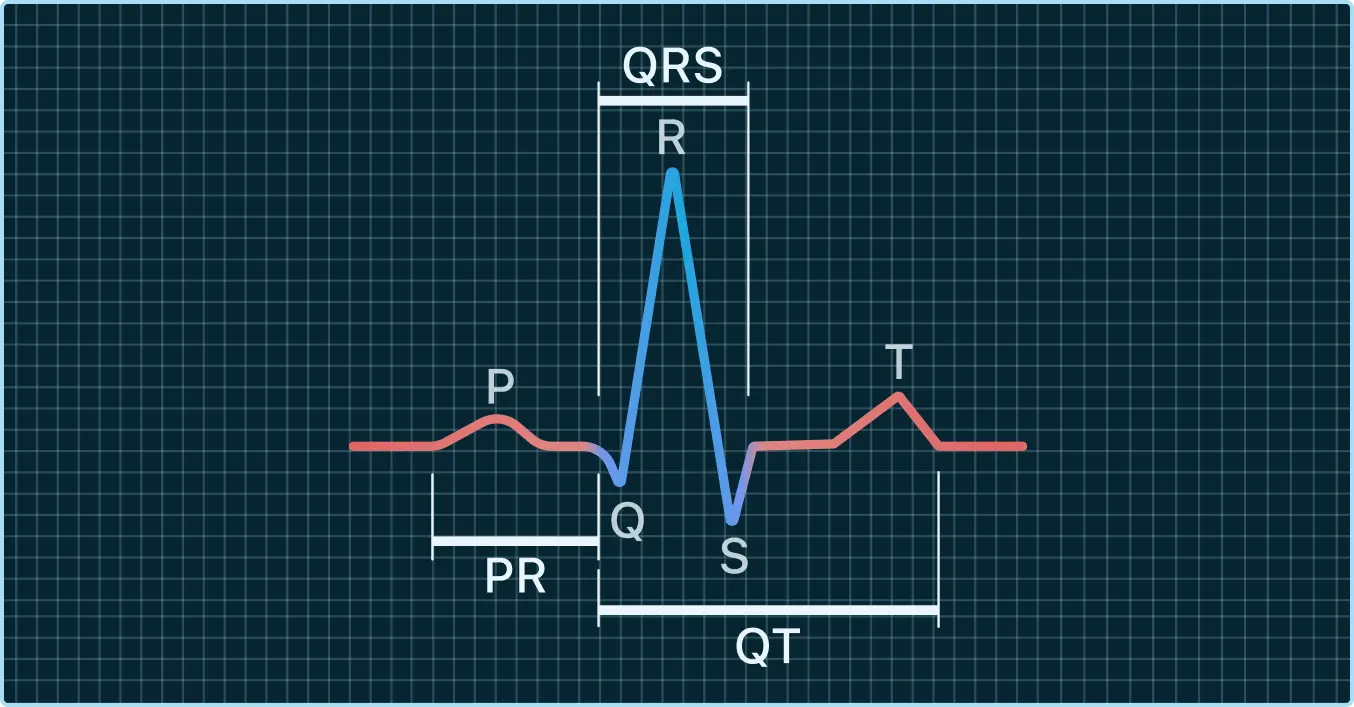
QRS Complex
The set of three waves (Q, R, and S) that appear as one big spike on the ECG. The QRS complex reflects the electrical impulse spreading through the ventricles (the lower chambers), causing them to contract and pump blood out to the body. It’s usually the tallest, most obvious part of the heartbeat on the ECG. Doctors often look at the width of the QRS spike – a narrow QRS means the ventricles are activated quickly and normally, whereas a wide QRS means the impulse is traveling more slowly or through an abnormal pathway. (A wide QRS can happen, for example, in a bundle branch block, where one side of the heart’s conduction highway is slowed.)
This definition is for general education, not a diagnosis. Talk to your clinician about your own ECG.


