





Key Takeaways

User Profile
Hello, heart hero. It starts suddenly: that terrifying feeling of a racing heart, chest tightness, and a wave of pure dread.
Is this a heart attack, or is my mind creating this chaos? If you've ever asked yourself "panic attack or heart issues," you are certainly not alone.
Navigating Your Health Concerns
This guide is for you, especially if you feel skeptical about traditional healthcare paths and are hunting for clearer answers. We get how confusing and frightening these powerful physical sensations can be. Our goal here is to give you clear, empathetic information to help you understand what might be happening in your body.
We’ll walk through the key differences between panic attack symptoms and the signs of heart trouble. Feeling more in control and less afraid starts with understanding your body, and that’s the first step toward finding some peace of mind.

The Confusing Overlap Between Panic and Heart Symptoms
It’s incredibly unsettling how much a panic attack can feel like a heart attack. Both can hit you with a pounding heart, shortness of breath, dizziness, and sharp chest pain, creating a perfect storm of fear and confusion.
This happens because your body’s “fight-or-flight” response, which is what gets triggered during a panic attack, floods your system with adrenaline. That powerful hormone surge mimics the physical stress of a genuine cardiac event, making it nearly impossible to tell the difference in the moment.
This intense overlap sends millions of people to the emergency room every year. In fact, studies show that up to 25% of people who go to the ER for chest pain are actually having a panic attack, a situation that unfortunately often spirals their anxiety even higher. You can learn more about how anxiety can cause chest pain symptoms in our detailed guide: Your Guide to Chest Pain Anxiety Symptoms. For anyone with a wearable device, a sudden heart rate spike alert can kickstart this exact cycle of worry.
Comparing Panic Attacks and Heart Conditions
Let's break down the key differences between a panic attack and a heart issue. Learning to tell these signals apart is a powerful first step toward understanding your body and, hopefully, reducing some of the fear that comes with these symptoms.
Symptom Checker: Panic Attack vs Heart Issue
Here is a look at common symptoms to help you see the key differences in how they typically show up.
- Chest Pain: In a panic attack, the pain is usually sharp, stabbing, and located in one specific spot. For a heart issue, it’s often described as a crushing pressure, squeezing, or a feeling of fullness.
- Pain Location: During a panic attack, the pain tends to stay in the center of the chest. With a heart issue, the pain can spread to the jaw, neck, back, or down one or both arms (often the left).
- Onset: A panic attack comes on suddenly and intensely, often without a clear physical reason. A heart issue can start slowly and get worse, or it can be sudden. It's often linked to physical activity.
- Duration: Panic attack symptoms peak quickly, usually within 10 minutes, and then start to fade. Heart issue symptoms are persistent and may get worse over time. They don't typically go away quickly on their own.
- Other Sensations: A panic attack often comes with a sense of impending doom, tingling, trembling, or feeling detached from reality. A heart issue may be accompanied by shortness of breath, nausea, cold sweats, or lightheadedness.
Keep in mind, this list is a guide, not a way to diagnose yourself. There's a lot of overlap, which is why getting a proper medical evaluation is so important if you're ever in doubt.
This diagram helps visualize how the brain's panic response can directly trigger physical heart symptoms, showing just how intertwined these experiences can be.
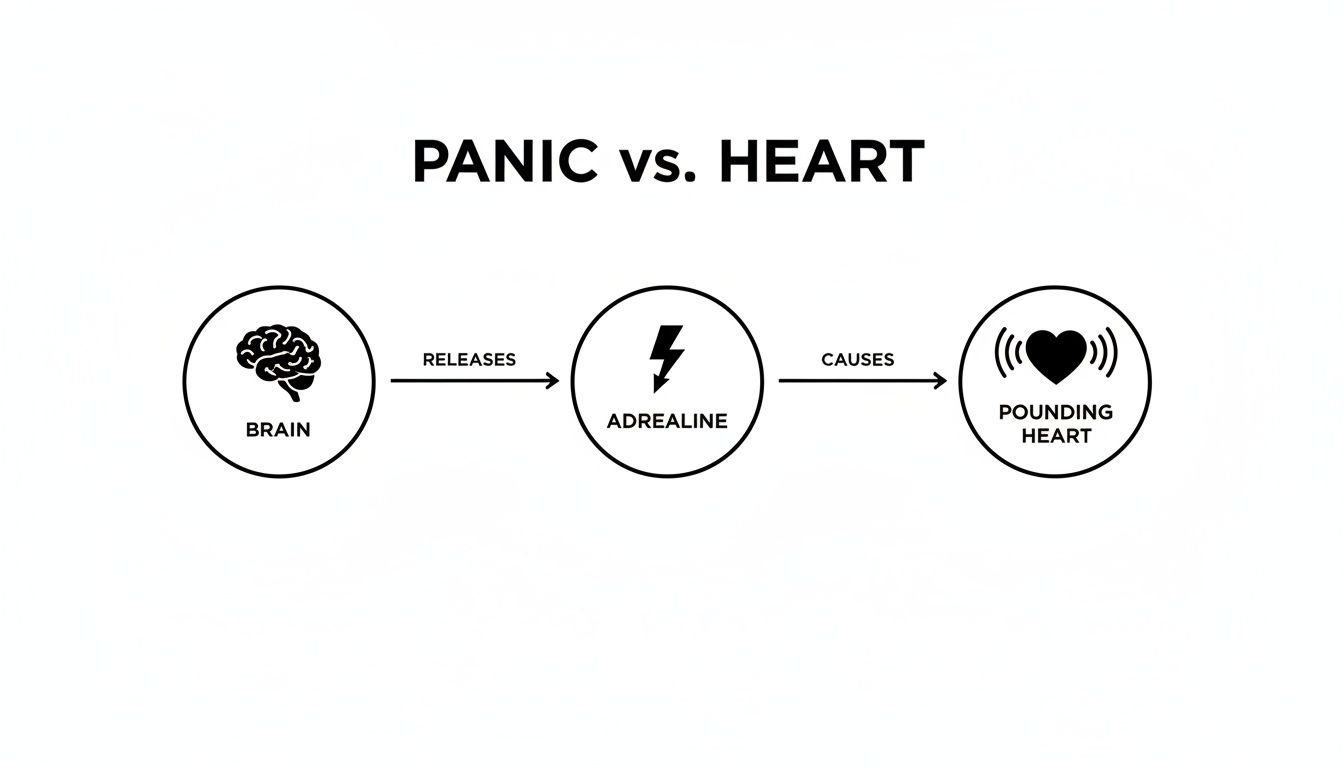
As you can see, a psychological trigger can set off a very real physical cascade, starting with an adrenaline surge from the brain that makes your heart pound.
Red Flag Symptoms That Require Immediate Medical Help
While it's helpful to know the differences between a panic attack and heart issues, some symptoms are absolute non-negotiables. Your well-being comes first, and when it comes to your heart, it's always better to be safe than sorry.
If you experience any of the following, please seek emergency medical help right away. Think of these as undeniable red flags that your body is sending up.
- Persistent Chest Pressure: This isn't just a fleeting, sharp pain. It’s a feeling of a heavy weight on your chest, a squeezing or crushing sensation that simply doesn't let up.
- Radiating Pain: The pain or discomfort isn't staying put. It starts in your chest and travels into your jaw, neck, back, or down your left arm.
- Breathlessness That Won't Quit: You feel profoundly short of breath, and trying to take calm, deep breaths brings absolutely no relief.
- Cold Sweats and Nausea: Suddenly breaking out in a cold sweat, especially when paired with chest pain, feeling sick to your stomach, or extreme, sudden fatigue.
- Loss of Consciousness: Fainting or feeling like you're about to pass out is a critical sign that something is wrong.
For a deeper dive into the different kinds of symptoms, you might be interested in our guide on heart arrhythmia symptoms.
Using Your Wearable ECG for Clearer Insights
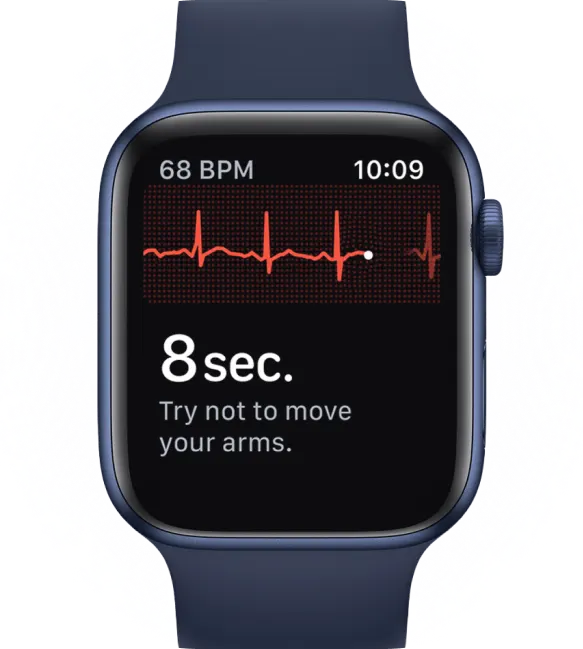
Your smartwatch can feel like a lifeline when you’re in the middle of a scary episode with your heart. But to turn that data from a source of more anxiety into a tool for real answers, you have to know how to capture a clean, useful ECG when symptoms strike.
When you feel palpitations, the first step is to sit down, rest your arm on something stable like a table, and stay as still as you can. This is key to getting a clear reading. The real challenge, though, is what comes next: making sense of that ECG without freaking yourself out. This is where getting an expert opinion is so important.
Instead of falling down a rabbit hole of self-diagnosis, you can instantly send your ECG from any device to Qaly’s certified human experts for analysis, 24/7. You get back a rapid, professional report that can turn your device into a tool for reassurance and give you concrete data to share with your doctor.
For more practical tips on getting the most out of your device, check out a cardiologist's guide to the smartwatch ECG.


How to Discuss Your Symptoms with Your Doctor
Walking into a doctor's office to discuss whether you're having panic attacks or a heart issue can be really intimidating. It's common to worry about being dismissed, but preparing for the conversation can make all the difference.
A great first step is to keep a symptom journal. Try to note the time of day, how long an episode lasts, the specific feelings you had, and any potential triggers you can identify.
This approach completely changes the conversation. Instead of just describing vague feelings, you can present hard data, like expert-reviewed ECGs captured right when your symptoms happened. This gives your doctor a much clearer picture and helps guide them toward an accurate diagnosis. Staying actively involved in managing your health is absolutely key, a point driven home in this fantastic guide on finding your voice at the GP.
When you come prepared, you're not just a patient; you're an advocate for your own health, building a collaborative relationship with your doctor. For more ideas on how to steer the conversation, check out these helpful questions to ask your cardiologist.
Frequently Asked Questions
When your body is sending confusing signals during moments of intense stress, it's hard to know what's going on. Here are some answers to common questions people have when trying to figure out if it's a panic attack or a heart issue.
Can a Panic Attack Cause Real Changes in My ECG?
Yes, absolutely. When you have a panic attack, your body's "fight-or-flight" response goes into overdrive and releases a flood of adrenaline. This can make your heart beat very fast, a rhythm known as sinus tachycardia.
While sinus tachycardia isn't a dangerous arrhythmia, it can look pretty scary on an ECG and feel even worse. An expert review of your ECG can tell the difference between this normal body response and more serious arrhythmias like AFib or SVT, giving you much-needed context and peace of mind.
If Symptoms Disappear After 20 Minutes, Does That Mean It Was a Panic Attack?
Often, yes, that’s a strong clue. Panic attacks usually come on fast, peak in intensity within about 10 minutes, and then slowly fade away over the next several minutes.
In contrast, symptoms of a heart attack typically don't resolve on their own and might stick around or even get worse. But this isn't a foolproof rule. The best thing you can do is capture these episodes with a wearable ECG and talk about the pattern with your doctor to officially rule out any underlying heart problem.
How Can I Calm Down During an Attack to Get a Clear ECG Reading?
It's incredibly difficult, but you can do it. First, find a safe spot to sit down. Try to focus on your breathing using a simple box breathing technique: inhale for four seconds, hold for four seconds, and then breathe out slowly for six seconds.
Taking a moment to steady yourself is not just for your nerves; it's a practical step toward getting a clear, useful ECG reading that can provide real answers.
Rest your arm on something stable, like a table, to keep it from moving around. Just taking this proactive step to capture the data can feel empowering when everything else feels chaotic.
What If My Doctor Dismisses My Concerns as "Just Anxiety?"
That's a valid fear, and it's so important to advocate for yourself. This is where having objective data becomes your most powerful tool. Show up to your appointment prepared with your symptom journal and expert-reviewed ECG reports.
You can start the conversation by saying something like, “I understand that anxiety could be a part of this. However, I took these ECGs during my episodes, and I’d really appreciate it if we could review them to rule out any cardiac cause for my symptoms.” If you still feel like you're not being heard, getting a second opinion is always a reasonable and responsible next step for your health.

At Qaly, we turn confusing ECG data into clear, expert-reviewed insights you can trust. Get peace of mind in minutes by having your wearable ECGs analyzed by certified professionals, 24/7.



.png)
.png)