


Key Takeaways

User Profile
Hello Heart Hero. You took an allergy pill because you wanted a normal day. Less sneezing, less itchy eyes, less congestion. Then your chest did something strange. A flutter. A thump. A little burst of fast beats that made you stop and think, wait, what was that?
That moment can feel much bigger than the symptom itself. A brief palpitation can trigger a whole spiral of questions, especially if you're already someone who notices body signals closely or you've felt brushed off before. You're not overreacting by wanting a clear answer.
Some people end up here after a single dose. Others have been taking allergy medicine for days and suddenly notice their heart feels more noticeable than usual at rest, while walking around the house, or while trying to sleep. If that sounds familiar, it helps to know that figuring out the cause usually starts with one simple question: which version of Zyrtec did you take?
That Sudden Flutter After Taking Allergy Medicine
A palpitation after allergy medicine is unsettling because the timing feels suspicious. You take the pill, then your heart feels odd, and your brain connects the dots instantly. Sometimes that connection is correct. Sometimes it's only part of the story.
Stress can make a normal heartbeat feel louder. Congestion can make you breathe differently and notice your chest more. Caffeine, dehydration, poor sleep, and anxiety can all pile onto the same day you took an allergy pill. But medication can matter too, which is why the label on the box matters so much here.
Practical rule: Before you assume "Zyrtec caused this," check whether the package says Zyrtec or Zyrtec-D.
That single letter changes the conversation. One product is usually a simple antihistamine. The other adds a decongestant that is much more likely to affect heart rate and blood pressure.
People often get lumped into the same online discussions even when they're taking different products. That creates confusion, especially for anyone trying to answer the question, can zyrtec cause heart palpitations. The short answer is yes, it can happen. But the stronger and more important answer is that the exact formulation often explains the difference between a mild concern and a more plausible medication trigger.
The Direct Answer About Zyrtec and Your Heart
Let's answer it plainly. Yes, Zyrtec can cause heart palpitations in some people, but plain Zyrtec is generally considered to have minimal cardiovascular effects. Clinical guidance also treats plain cetirizine as safer for heart patients than first-generation antihistamines or decongestant combinations like Zyrtec-D, while still advising caution for people with existing heart conditions or a history of palpitations (Wyndly on heart-safe allergy medicines).
That means two things can be true at once. First, your symptom is real and worth paying attention to. Second, plain Zyrtec usually isn't the most dramatic heart-active allergy medicine on the shelf.
The answer depends on the label
If your box says Zyrtec, you're taking cetirizine alone. If your box says Zyrtec-D, you're taking cetirizine plus a decongestant. That distinction matters more than is commonly understood.
Here's the simplest way to understand it:
- Plain Zyrtec: Usually low heart impact, though some people may notice palpitations or a faster heartbeat.
- Zyrtec-D: More likely to affect how your heart feels because the added decongestant can stimulate the cardiovascular system.
When to pause and take it seriously
Even with a low-risk medication, context matters. Be more cautious if you already have:
- A rhythm history: atrial fibrillation, SVT, or unexplained palpitations
- Blood pressure issues: especially if readings already run high
- Heart disease or heart failure: where even small medication effects may matter more
If that's you, don't panic. Just treat the symptom as information. The next step isn't guessing harder. It's identifying the exact product and tracking what your heart is doing when the symptom happens.
Why Some Allergy Medicines Affect Heart Rhythm
Allergy medicines don't all work the same way. That's where a lot of the confusion starts.
Locks and keys in the body
A simple analogy helps here. Think of your body as being covered in tiny locks called receptors. Chemicals in your body act like keys. Histamine is one of those keys, and during an allergy flare it opens locks that lead to sneezing, itching, watery eyes, and swelling.
Antihistamines work by getting in the way of that process. They block the histamine lock so the allergy signal doesn't cause as much trouble. That's useful. But some medications are more selective than others.
Older antihistamines were a bit clumsy. They didn't just block allergy-related locks. They also interacted with other systems, which is one reason they can make people sleepy or sometimes change how the heart feels. Newer drugs were designed to be more targeted.
Why newer antihistamines are usually gentler
Cetirizine, the ingredient in plain Zyrtec, is a second-generation antihistamine. It's generally regarded as safer for heart patients than first-generation antihistamines or decongestant combinations due to its minimal cardiovascular effects. Some people can still notice an increased heart rate or palpitations, especially if they already have heart issues, but its design is much more selective than older allergy medicines.
If you're trying to understand allergies from a broader whole-body perspective, this guide from Salus Natural Medicine on allergies offers a useful overview of common triggers and symptom patterns.
For readers who use wearable ECGs, one heart-related concept that often comes up is medication effects on electrical timing. If you've seen the term QT and want a plain-language explanation, this article on drugs that cause QT prolongation gives helpful background.
Plain cetirizine is usually less about stimulation and more about rare individual sensitivity. The decongestant versions are a different story.
Why this still feels alarming
Because your heart is one of the few organs you can feel. A dry mouth doesn't scare people the same way a skipped beat does. So even a mild, temporary medication effect can feel huge.
That doesn't mean your body is failing. It usually means your heart is giving you a sensation that deserves description, timing, and context. Those details matter more than fear does.
Zyrtec vs Zyrtec-D The Crucial Difference
You feel a flutter after an allergy pill, check your watch, and the label says Zyrtec. Then you notice one small letter you may have missed the first time. D.

That letter changes the question.
What plain Zyrtec contains
Zyrtec is cetirizine by itself. Cetirizine is an antihistamine. Its main job is to block the allergy signal that drives sneezing, itching, and a runny nose.
For the heart, plain cetirizine is usually the quieter medication. Some people still report feeling a fast or noticeable heartbeat, but that is not the pattern that causes the most confusion. The mix-up happens because many people say "Zyrtec" even though they took the version with a decongestant added.
What Zyrtec-D adds
Zyrtec-D combines cetirizine plus pseudoephedrine. Pseudoephedrine is the part that changes how the medicine can feel in your chest.
A simple way to picture it is this: cetirizine mainly turns down the allergy alarm, while pseudoephedrine presses on the body's alert system to open the nose. It shrinks swollen nasal blood vessels, which can help congestion. That same stimulant effect can also make the heart beat faster or harder, especially in people who are sensitive to stimulants or already have blood pressure or rhythm concerns.
For people using a smartwatch or wearable ECG, this distinction matters a lot. If you took plain Zyrtec, a medication effect on heart rhythm is possible but less likely. If you took Zyrtec-D, pseudoephedrine moves much higher on the suspect list because it is the ingredient more likely to cause a racing, pounding, or fluttering sensation.
Why the "D" matters more than the brand name
Brand names can hide the key clue. The active ingredients tell the full story.
If your symptoms started after Zyrtec-D, the decongestant deserves the closest look. If your symptoms started after plain Zyrtec, the medication still belongs on the list, but it is usually a weaker suspect than caffeine, stress, dehydration, illness, or an underlying rhythm tendency.
That is why this is really two separate questions hiding under one box design.
A quick self-check
Ask yourself:
- What does the front label say exactly? Look for "Zyrtec" versus "Zyrtec-D."
- Was congestion your main problem? If not, pseudoephedrine may have added stimulation you did not need.
- Do you have high blood pressure, prior palpitations, or a known arrhythmia? Those details make the decongestant more relevant.
- Did the flutter start soon after a dose? Timing helps sort out whether the medicine is a likely trigger.
If the package says Zyrtec-D and your palpitations began after taking it, pseudoephedrine is the first ingredient to question.
Regular Zyrtec and Zyrtec-D sit next to each other on the shelf, but they do not ask the same thing of your heart.
Understanding Your Palpitations Benign or Concerning
The word palpitations covers a lot of ground. It can mean a single hard beat. A skipped sensation. A brief flutter. A steady fast rhythm. Those aren't all the same thing, and learning to describe yours is one of the most useful things you can do.
What people often feel
A quick flip-flop or thump can be a premature beat. Many people feel these as a skipped beat, even though it's often an early beat followed by a pause and then a stronger beat. They can be unpleasant and still be benign.
A sensation of the heart running fast for minutes, especially at rest, is different. That may be sinus tachycardia, meaning a normal rhythm that's just faster than usual, or it may be another rhythm issue. The feeling alone can't always tell you which one it is.
What the reporting data showed
In a pharmacovigilance analysis of 737 reported arrhythmia cases linked to various medications, nonsedating antihistamines such as cetirizine were implicated in 43 instances, and the reporting odds ratio was 2.05 (95% CI: 1.45 to 2.89). Among all reported arrhythmia types, palpitations were the most common at 71.2%, with 525 cases reported as palpitations (pharmacovigilance analysis in PMC).
That doesn't mean every palpitation after Zyrtec is dangerous. It means palpitations are the symptom people most commonly notice and report.
When to get urgent help
Seek prompt medical care if palpitations come with:
- Fainting or near-fainting
- Chest pain or pressure
- Shortness of breath
- Severe dizziness or marked lightheadedness
- A sustained fast rhythm that won't settle
If you don't have those red flags, you usually have time to investigate calmly.
Most palpitations feel scarier than they are. The goal is to catch the rhythm, not to assume the worst.


Better descriptions lead to better answers
Try to describe the event like this:
- Timing: Did it start soon after the medication?
- Pattern: One thump, repeated flutters, or continuous racing?
- Context: At rest, walking, stressed, dehydrated, or after caffeine?
- Symptoms around it: dizziness, chest discomfort, breathlessness, or none
Those details can turn a vague scary experience into something your clinician can work with.
How to Monitor Your Heart with Confidence at Home
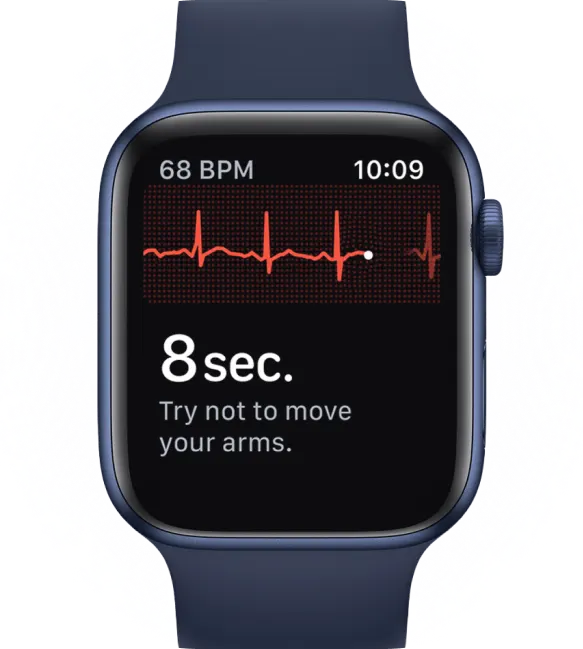
Palpitations are frustrating because they rarely happen on command. By the time you sit down to explain what you felt, the rhythm may already be back to normal. A home ECG can help you catch the event while it is happening, which is often far more useful than trying to reconstruct it later from memory.
A simple home protocol
Start by getting a calm baseline tracing on a day when you feel normal. Then, if symptoms show up after taking allergy medicine, record again as soon as you can.
That before-and-after comparison matters. It gives your clinician two snapshots of the same electrical system, one at rest and one during the problem. For people sorting out whether plain Zyrtec was harmless but Zyrtec-D set off a racing or fluttering feeling, that timing can be especially helpful.
If your device shows interval measurements such as PR, QRS, or QTc, treat them like dashboard gauges. They can add context, but they are not a diagnosis by themselves. What matters most at home is capturing the rhythm during symptoms, noting the exact product you took, and seeing whether the pattern repeats.
What to do in the moment
When symptoms start, keep the process simple:
- Sit or lie down if you feel shaky. A racing heart can trigger adrenaline, and adrenaline can make the whole episode feel worse.
- Record right away. A tracing during symptoms is usually much more useful than one taken 20 minutes later.
- Write down the setup. Include the medication name, whether it was Zyrtec or Zyrtec-D, the time you took it, and any extras like caffeine, exercise, poor sleep, stress, or dehydration.
- Notice how it felt. Was it a skipped beat, a short burst of fluttering, or a steady fast rhythm?
- Stop home monitoring and get urgent help if red flags appear. Fainting, chest pain, major shortness of breath, or severe dizziness need prompt medical care.
If you want a practical framework for using wearables well, this guide on how to check heart health at home walks through the basics.
Getting the tracing reviewed
Apple Watch, Fitbit, Kardia, and similar devices are good at capturing the moment. Interpreting the strip is the harder part.
A quick example helps here. A single early beat may feel like a heavy thump and turn out to be a PVC. A fast but regular rhythm might be sinus tachycardia from pseudoephedrine, stress, or both. To your body, those can feel equally alarming. On an ECG, they look very different.
One option is Qaly, which reviews wearable and at-home ECGs with certified cardiographic technicians and reports findings such as rhythm type and interval measurements including PR, QRS, and QTc.
That kind of review can help turn "my heart felt weird after allergy medicine" into something specific and usable. It also helps you sort out a question that matters in this article: whether you are reacting to standard cetirizine, or to the stimulant effect from the pseudoephedrine in Zyrtec-D.
Having a Productive Talk with Your Doctor
A lot of people worry they'll be dismissed if they say, "My chest fluttered after allergy medicine." That fear isn't irrational. Vague symptoms can lead to vague conversations.
You can make the visit more concrete.
What to bring
Bring three things:
- The exact medication box or a photo of it: This helps confirm whether it was Zyrtec or Zyrtec-D.
- Your symptom notes: Time of dose, time of symptoms, and anything else that may have contributed.
- Your ECG recordings if you have them: A captured event changes the conversation.
Phrases that help
You don't need to sound medical. You need to sound specific.
Try saying:
"I've been having palpitations after taking this allergy medicine, and I want to make sure we're talking about the exact product because I know Zyrtec and Zyrtec-D aren't the same."
Or:
"I recorded my rhythm during symptoms and brought the medication label, the timing, and my notes."
That frames you as a clear observer of your own body. Not as someone guessing wildly.
Questions worth asking
Ask practical questions like:
- Could pseudoephedrine be the trigger here?
- Would plain cetirizine or another non-decongestant option make more sense for me?
- Do my symptoms suggest benign premature beats, sinus tachycardia, or something that needs more workup?
- Should I avoid decongestants going forward?
If you want help preparing for that conversation, these questions to ask a cardiologist can help you organize the visit.
The goal isn't to win an argument. It's to walk in with enough detail that the appointment becomes useful.

If you want a calmer way to investigate palpitations from home, Qaly can help you review wearable ECG recordings taken during symptoms.



.png)
.png)