


Key Takeaways

User Profile
Hello Heart Hero. You took a Benadryl for itchy eyes, hives, a bug bite, or maybe because you just wanted to sleep. Then, not long after, your chest felt strange. Maybe it was a flutter. Maybe a hard thump. Maybe your heart seemed to race even though you were just sitting there.
That feeling can be unsettling fast. A lot of people are told Benadryl is simple, common, and harmless because it sits on pharmacy shelves without a prescription. But common doesn’t always mean gentle, especially if you’re sensitive to medications, already notice palpitations, or use a smartwatch to keep an eye on your heart.
If you’re skeptical and trying to figure this out for yourself, that makes sense. You want plain English, not vague reassurance. You also want to know whether what your watch is showing is meaningful or just noise. The good news is that Benadryl can affect the body in ways that are understandable once you know what to look for.
That Unexpected Flutter After Taking Benadryl
A familiar story goes like this. You take one pill. Your nose clears a bit, your eyes stop itching, and then your body feels heavy. A little later, you notice your heartbeat in a way you usually don’t. It might feel fast, uneven, or just more noticeable than normal.
That’s where a lot of worry starts. Was it anxiety. Was it the medicine. Was it a “real” heart issue that the medication brought out?
Why the feeling is so confusing
Benadryl can make you sleepy, foggy, and physically off balance. Those body changes can make a normal heartbeat feel dramatic. At the same time, Benadryl can also affect the heart itself, so the sensation isn’t always “just in your head.”
That mix is what makes the side effects of benadryl so tricky. A person can feel drowsy and wired at the same time. Your eyelids are heavy, but your chest feels busy.
You don't need to choose between dismissing the symptom and panicking about it. You can get curious and observe it carefully.
A practical example helps. Say someone takes Benadryl before bed because their allergies are acting up. Twenty minutes later, they feel a little dizzy getting up for water. Back in bed, they notice a stronger heartbeat and check their Apple Watch. The watch may show a normal rate, but the sensation still feels wrong. That can happen, and if that sounds familiar, this guide on palpitations with a normal heart rate may help you make sense of the disconnect.
What people often miss
Many readers assume a medicine either works on allergies or on the heart. Benadryl doesn’t fit neatly into one box. It can affect multiple systems at once, which is why the same pill can leave you with dry mouth, blurry vision, sleepiness, and a noticeable change in how your heart feels.
That doesn’t automatically mean danger. It does mean your body is reacting to more than allergy relief alone.
Why a Common Allergy Pill Can Affect Your Whole Body
Benadryl’s active ingredient is diphenhydramine. It’s a first-generation antihistamine, which means it blocks histamine, the chemical involved in many allergy symptoms. That part is the reason people reach for it when they’re sneezing, itching, or breaking out in hives.
The important part is that diphenhydramine doesn’t stop there.

The master key idea
Think of Benadryl like a master key. It opens the lock you want, which is the histamine lock. But it also fits another lock in the body, the acetylcholine system. When it blocks that second system, you get what doctors call anticholinergic effects.
That term sounds technical, but the actual effects are familiar:
- Sleepiness because the medicine reaches the brain
- Dry mouth because secretions drop
- Blurry vision because the eyes can be affected
- Constipation because the gut slows down
- Dizziness because the nervous system is not operating as smoothly
This is why one small pill can feel much bigger than “allergy medicine.”
Why that matters for everyday decisions
A lot of people use Benadryl casually. They take it for a rash, a cold-night stuffy nose, or as a sleep shortcut. But if you’re trying to sort out whether your symptoms are allergies in the first place, it helps to learn the basics before grabbing the strongest-feeling option on the shelf. A clear guide to understanding environmental allergy symptoms can make that decision easier.
Practical rule: If a medication makes multiple body systems feel different, don't judge it only by whether it helped the original symptom.
That broader-body effect is the key to understanding the side effects of benadryl. It’s not one clean, targeted medicine. It’s more like a medicine that touches several control panels at once.
Common Benadryl Side Effects Beyond Drowsiness
One thing is expected from Benadryl: Sleepiness. That reputation is deserved, but it’s only part of the story.
The side effects of benadryl often show up as a cluster. You feel drowsy, then a bit dizzy, then your mouth feels dry, and your vision seems slightly off. None of those may sound dramatic alone. Together, they can change how safely you move through your day.
The side effects people brush off
Some reactions are common enough that people stop taking them seriously:
- Dry mouth and dry eyes can make you feel uncomfortable and dehydrated
- Blurry vision can make reading, driving, or using stairs harder
- Constipation can become a real problem if you’re already prone to it
- Dizziness and grogginess can linger longer than expected
These effects all make sense once you know Benadryl has strong anticholinergic action. It isn’t just calming an allergy response. It’s also slowing and drying systems that usually run in the background.
The fall risk many families overlook
For older adults, the issue gets more serious. The American Geriatrics Society lists diphenhydramine on the Beers Criteria as a high-risk medication to avoid in older adults, and GoodRx notes that studies indicate it can increase fall risk by up to 50% in this group, contributing to over 3 million annual emergency visits for fall-related injuries among seniors in the United States.
That’s not a minor nuisance. It’s a safety problem.
Here’s why the risk climbs so quickly in someone over 65:
- Drowsiness slows reaction time
- Dizziness makes balance less reliable
- Blurred vision makes obstacles harder to judge
- Impaired coordination turns a routine trip to the bathroom into a hazard
If you care for an older parent or you are one, this matters a lot. A medicine taken for itching or sleep can end up creating a much bigger problem than the original symptom.
Safer thinking, not fear
This doesn’t mean every dose leads to a fall. It means older adults should treat Benadryl with caution, not familiarity. If someone already feels unsteady, uses a cane, wakes at night often, or has had prior falls, this medication deserves extra respect.
That’s one reason many clinicians prefer newer antihistamines for routine allergy symptoms. They tend to cause less sedation and less disruption to balance.
Benadryl and Your Heartbeat What to Watch For
The heart side of Benadryl is where many people get lost. They feel a flutter or racing pulse, search online, and end up buried under terms like QRS, QTc, and sodium channels.
Those terms are real, but the idea is simpler than it sounds. Your heart runs on electricity. Benadryl can interfere with that electrical timing.

The two electrical effects that matter
One effect involves sodium channels. Diphenhydramine’s cardiotoxicity is primarily caused by type IA sodium channel blockade, which slows electrical conduction and can widen the QRS complex on an ECG to over 100 to 120 ms, according to the American Academy of Emergency Medicine Resident and Student Association review on diphenhydramine cardiotoxicity.
The other effect involves potassium channels. The same review explains that diphenhydramine also blocks hERG potassium channels, which can prolong the QTc interval and increase the risk of a dangerous rhythm called torsade de pointes.
If that language feels abstract, think of it this way:
- Sodium channel problem means the heart’s signal travels more slowly
- Potassium channel problem means the heart takes longer to reset between beats
Both can make the rhythm less stable.
What it can feel like in real life
You won’t feel a “widened QRS.” You’ll feel symptoms.
A person might notice:
- A racing heartbeat
- Skipped or extra beats
- A fluttery chest feeling
- Lightheadedness
- A sense that the heart is beating strangely, even if the watch summary looks simple
Some people also develop sinus tachycardia, which is a fast regular rhythm. Others may feel more irregular sensations. If you’ve had symptoms that sound like that, this guide to heart arrhythmia symptoms can help you compare what you felt with common rhythm patterns.
If your watch says “inconclusive,” that isn't useless. It may simply mean the rhythm or tracing needs closer interpretation.

Why wearable users should care
An Apple Watch, Kardia, Fitbit, or Samsung watch can catch the moment a symptom happens. That’s useful. But the short device summary often doesn’t explain medication effects well.
A wearable tracing may show that something changed without clearly telling you whether the issue is heart rate, conduction speed, or repolarization timing. That’s why a Benadryl-related palpitation can feel very real even when the watch doesn’t hand you a neat answer.
The most important takeaway is this. If your symptoms started after Benadryl, it’s reasonable to consider the medication as part of the picture.
When to Worry Recognizing Serious Signs
There’s a big difference between “I feel off after taking Benadryl” and “I need urgent help.” Knowing that difference can calm anxiety and sharpen your judgment at the same time.
Mild sleepiness, dry mouth, or a brief awareness of your heartbeat can happen. Severe symptoms should not be brushed off as a quirky reaction.
Red flags that need urgent attention
The FDA issued a warning in 2020 about serious heart problems, seizures, and death linked to high doses of diphenhydramine, prompted by a social media trend that led to numerous emergency room visits and fatalities from overdose. The FDA warning also states that toxicity can occur at doses exceeding 1 gram in some situations, as described in the agency’s diphenhydramine safety alert.
Get emergency care right away if Benadryl use is followed by symptoms like these:
- Severe chest pain
- Shortness of breath
- Fainting or near-fainting
- Severe confusion or delirium
- A heartbeat that feels wildly fast, chaotic, or nonstop
- Seizure activity
- Unresponsiveness
These are not “wait and see for a few days” symptoms.
Why acting fast matters
High-dose diphenhydramine toxicity can affect the brain and heart at the same time. That combination is one reason overdose situations can turn dangerous quickly. If a person took far more than directed, mixed products without realizing both contained diphenhydramine, or is rapidly getting worse, emergency evaluation is the safest move.
If you’re unsure whether your symptom crosses the line, use a simple question. Are you uncomfortable, or are you unstable?
Decision point: If symptoms include fainting, severe breathing trouble, seizure, or a dramatically abnormal heartbeat, skip online searching and get emergency help.
If the issue is not severe but keeps recurring, this overview on when heart palpitations mean it’s time to see a doctor can help you think through next steps.
How to Monitor Heart Symptoms with Your Watch
If Benadryl made your heart feel different, your wearable can help you move from guessing to documenting. That matters because symptoms fade, memories blur, and doctor visits often happen long after the moment has passed.
A watch ECG won’t replace medical care. But it can capture a valuable snapshot right when the symptom happens.
What your wearable can catch
Benadryl’s anticholinergic properties can reduce vagal tone on the heart, commonly causing sinus tachycardia, meaning a heart rate over 100 bpm, and Healthline’s review of Benadryl side effects notes that in susceptible people or at high doses, this can progress to more serious rhythm problems related to QT prolongation.
That means your device may detect:
- A faster-than-usual heart rate
- A rhythm strip taken during a fluttering sensation
- Changes that trigger “inconclusive” or unusual watch feedback
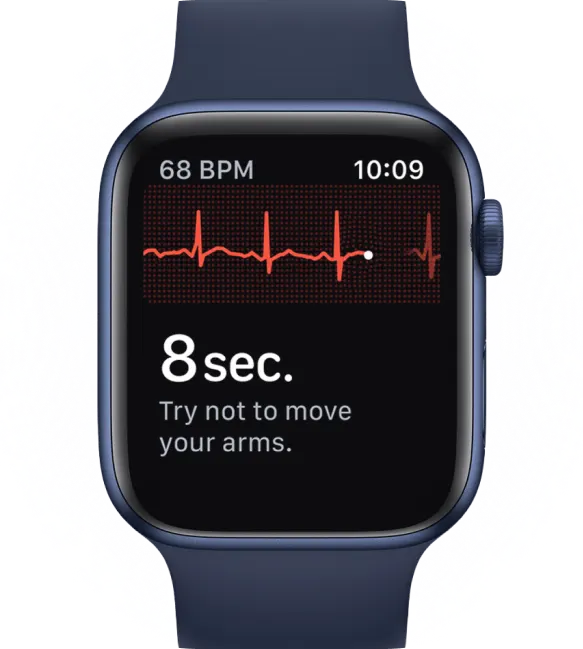
If you use an Apple Watch, it helps to know exactly how to start a recording quickly before the sensation passes. A simple tutorial on taking an ECG with your Apple Watch can make that process second nature.
A better way to record useful context
When symptoms happen, timing matters. Try this approach:
- Record the ECG as soon as symptoms start. Don’t wait until you’ve already calmed down.
- Note what you took and when. Write down “Benadryl” and the approximate time.
- Describe the sensation in plain language. Racing, skipping, pounding, fluttering, lightheaded.
- Repeat a recording later if the feeling changes. One tracing during symptoms and one after can be helpful.
Small habits like this make your data more meaningful. If you rely on your Apple Watch throughout the day, organizing your watch face for quick access can help. Some people like simple utility tweaks such as adding a countdown widget on Apple Watch to keep useful tools easy to reach.
What the watch won't tell you on its own
Consumer wearables are good at capturing a rhythm strip. They’re not always great at explaining medication-related nuance. A watch might label something as sinus rhythm, atrial fibrillation, high heart rate, or inconclusive, but it usually won’t walk you through the deeper interpretation in plain language.
That’s why your own symptom notes matter so much. The watch gives you the trace. Your notes provide the story.
The strongest setup is simple. Record the ECG, save it, write down what you felt, and compare episodes over time. That kind of pattern tracking can help you see whether the problem only happens after certain medications, only at night, or only when you’re already stressed, dehydrated, or overtired.
If your symptoms are intense, repetitive, or hard to interpret, getting a human review of your wearable ECG can add clarity that an automated label often misses.


Worried about a flutter or racing heartbeat after Benadryl? Upload your ECG to Qaly and get a clear, expert review from certified cardiographic technicians.



.png)
.png)