


Key Takeaways

User Profile
You check your pulse. It seems normal. Your watch says your heart rate is fine. And yet your chest just did something strange. A flutter. A hard thump. A pause that made you stop mid-sentence.
That gap between what you feel and what the numbers show is one of the most unsettling parts of palpitations but normal heart rate. It can make you wonder if you're missing something serious, or if someone will dismiss it as stress before listening closely.
Both reactions are understandable. You can feel something real even when the average beats per minute looks ordinary. And if your symptoms come and go, a quick office check may not catch the exact moment that matters.
What Are Palpitations If Not a Fast Heart Rate
A lot of people use the word "palpitations" to mean a racing heart. Sometimes that's true. But often, a palpitation is the sensation of your heartbeat, not necessarily a fast heartbeat.
That distinction matters.
You might be sitting on the couch and suddenly feel:
- A skipped beat that makes you inhale sharply
- A flutter in the chest or throat
- A single heavy thump that feels out of proportion
- A moment of pounding even though your watch still shows a normal rate
Those sensations can feel dramatic because you're noticing your heartbeat in a way you normally wouldn't.
Feeling it doesn't mean you're imagining it
Research suggests the sensation of palpitations isn't fully understood and can involve structures both inside and outside the heart. It also helps explain why about 30 to 40% of palpitation cases have a normal underlying rhythm but still cause ongoing distress, often with anxiety amplifying normal heartbeats, as described in this American Heart Association discussion of palpitation sensation.
That means two things can be true at once. Your rhythm may be normal at that moment, and your symptoms may still feel intense and disruptive.
Your body can send a very loud alarm even when the electrical signal is ordinary.
Many patients feel brushed off in this situation. They hear, "Your heart rate is normal," when what they need explained is, "Why did it feel like that?" Those are not the same question.
Why the sensation can feel so personal
Think about how you usually notice your breathing. Most of the day, you don't. But if you're anxious, lying in a quiet room, recovering from a stressful day, or hyper-focused on bodily sensations, you may suddenly feel every breath.
Heartbeats can work the same way.
Some people have an occasional extra beat. Others become unusually aware of a completely normal beat. If you've ever searched for skipped heart beats, you've probably seen how often people describe a strong drop, pause, or flip in the chest even when they aren't actually in a sustained fast rhythm.
A normal heart rate doesn't always answer the core question. That question is whether you're feeling a harmless but vivid sensation, a brief electrical hiccup, or something that deserves a closer look.
The Hidden Rhythms Behind Normal-Rate Palpitations
The easiest way to understand palpitations but normal heart rate is to stop thinking only about speed and start thinking about timing.
A heart can keep a normal average rate while still throwing in a beat that arrives early, feels odd, and grabs your attention.
The drummer analogy
Think of your heartbeat like a skilled drummer keeping a steady rhythm.
Most of the time, the beat is even and predictable. Then one drum hit lands a little early. The drummer quickly resets and goes right back to the original tempo. The overall song still averages the same pace, but you notice that one off-beat moment immediately.
That early beat is often an ectopic beat, such as a PVC or PAC. In plain language, it means a beat started from the wrong place at the wrong time.
-kardia.webp)
Why one odd beat feels so strong
The feeling often comes in a sequence:
- An early beat happens
- A brief pause follows
- The next beat feels stronger than usual
That stronger beat is often what people notice most. It can feel like a pound, a drop, or a brief "heart flip."
Practical rule: If your watch shows a normal heart rate but your chest felt one sharp thump or skip, timing may explain more than the average BPM does.
In a study of people who came to family practice with palpitations, 43% had cardiac causes and 40% were primarily arrhythmias, which shows how often a real rhythm issue sits behind the sensation, even when it isn't obvious during a routine snapshot exam, according to the AAFP review of palpitation causes.
That doesn't mean every palpitation is dangerous. It means a normal average rate doesn't rule out a brief electrical event.
The main hidden rhythms people feel
A few patterns commonly cause this mismatch between sensation and rate:
- PVCs can feel like a skip, thump, or sinking sensation.
- PACs are similar, but they start higher in the heart.
- Short SVT episodes may start and stop so abruptly that by the time you check your pulse, they're already gone.
If you're already tracking recovery, stress, or sleep, it may also help to understand how to improve heart rate variability, because nervous system activation can change how strongly you notice shifts in rhythm.
For people trying to make sense of frequent extra beats, learning about ectopic beat burden can be useful because frequency matters differently than a single isolated sensation.

Exploring Common and Often Harmless Palpitation Triggers
Sometimes the trigger isn't a dangerous rhythm problem. It's your body getting nudged into a more irritable, more noticeable state.
That can still feel awful. But it also means there may be things you can change.
Stress changes both the signal and the spotlight
Stress and anxiety don't just live in your thoughts. They affect adrenaline, muscle tension, breathing, and how closely you monitor bodily sensations.
That creates a double effect. Your heart may throw an occasional extra beat, and your brain may notice it more intensely.
A good analogy is sleeping in a quiet room with a dripping faucet. The drip might be small, but once your brain locks onto it, it feels impossible to ignore.
Everyday triggers that can stir things up
Several common factors can make palpitations more likely:
- Caffeine or nicotine can make heart cells more excitable in some people.
- Dehydration can leave you feeling shaky, aware of your pulse, and more prone to noticing brief rhythm changes.
- Poor sleep lowers your tolerance for bodily sensations and can make a minor blip feel much bigger.
- Alcohol can trigger palpitations in some people, especially later in the day or overnight.
None of those automatically means "harmless." But they are common reasons people notice flutters, thumps, or skips without having a constantly increased heart rate.
Electrolytes matter more than many people realize
Potassium and magnesium help heart cells fire and recover in an organized way. When those levels are off, the heart can become more electrically irritable.
One verified example is low potassium. Mild hypokalemia was linked to a 2.8 times higher chance of symptomatic palpitations in a meta-analysis summarized in this HealthPartners review on palpitation triggers.
In plain terms, low potassium can make extra beats more likely.
If palpitations cluster after a stomach bug, a sweaty workout, poor eating, a medication change, or several dehydrated days, electrolytes are worth thinking about.
A simple way to troubleshoot your pattern
Instead of asking, "Why is this happening to me?" try asking, "What tends to be true on the days this happens?"
Look for patterns like these:
- Late afternoon palpitations after several coffees and little water
- Nighttime thumps after alcohol, stress, or poor sleep
- More skipped sensations during illness, travel, or after heavy sweating
- A flare after medication changes such as diuretics or stimulants
You don't have to solve it all alone. But noticing the pattern gives you an advantage. It also gives a clinician something more useful than "it happens randomly."
Recognizing When Palpitations Need a Doctor's Attention
Most palpitations are not an emergency. Still, some combinations of symptoms deserve prompt medical attention because they suggest the heart rhythm may be affecting blood flow or signal a more serious underlying issue.
The hardest part is that the sensation itself can be dramatic even when the risk is low. That's why context matters more than fear.
When to take it more seriously
Seek urgent medical care if palpitations happen with:
- Chest pain or chest pressure
- Fainting or feeling close to fainting
- Shortness of breath that feels new or severe
- Marked dizziness
- A strong sense that you may pass out
- A family history of sudden cardiac death
- Palpitations that keep going and don't settle
Those details matter because they suggest the rhythm may be more than an isolated extra beat.
Chest pain, fainting, or severe breathlessness with palpitations should never be written off as "just anxiety" without proper evaluation.
Why frequency alone isn't the full story
People often ask, "If I feel this a lot, does that make it dangerous?"
Not necessarily. Some very noticeable palpitations are benign. Some infrequent ones still deserve attention because of the symptoms around them. The goal is to identify the rhythm, not guess from sensation alone.
For PVCs in particular, a burden over 10% of total heartbeats is linked to symptoms in 70 to 80% of cases, and ambulatory monitoring is important because how something feels doesn't reliably tell you how significant it is, according to this WebMD overview of PVC burden and symptoms.


A calm decision framework
If you're unsure how to respond in the moment, think in three buckets:
- Single brief thump, otherwise fine
Often less urgent, though still worth tracking if it repeats. - Repeated palpitations with no red flags
Make a non-urgent plan to document symptoms, triggers, and any available wearable ECGs. - Palpitations plus warning symptoms
Get medical help promptly.
That approach keeps you from minimizing symptoms that matter, but it also helps you avoid spiraling over every isolated skip.
Capturing Elusive Palpitations with Your Smartwatch
Many people find the usual healthcare path frustrating at this stage.
You feel something alarming at home. You finally get seen. The ECG in clinic is normal. The doctor says, "We didn't catch anything." You're left with the same symptoms and no explanation.
That doesn't always mean nothing happened. It often means the event was sporadic.
The rare-event capture problem
Palpitations often strike without warning and disappear quickly. That makes them hard to diagnose with a one-time office ECG.
This isn't just your imagination or bad luck. Routine checks miss these events 60 to 70% of the time, and symptom-triggered ECG recording with a wearable improves the chance of finding a brief or intermittent arrhythmia, as described in this PMC article on palpitations and monitoring limits.
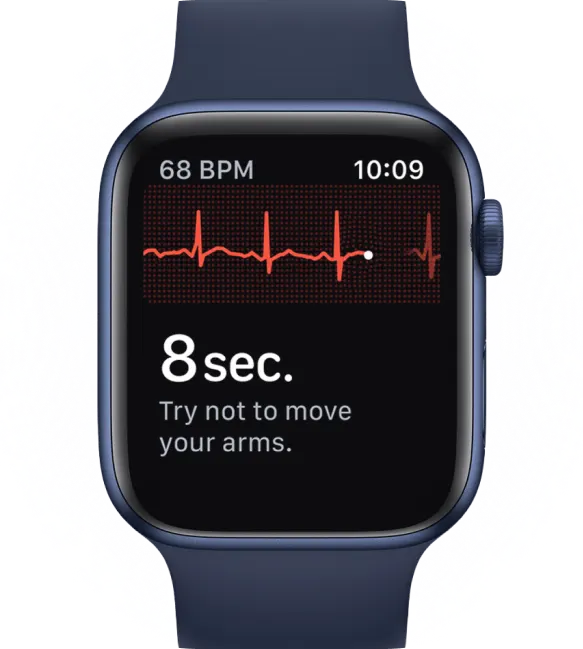
That's why your smartwatch or handheld ECG can be useful. Not because it replaces a doctor, but because it lets you record the exact moment that matters.
How to use your wearable well
If you have an Apple Watch, Kardia, Fitbit, Samsung device, or another consumer ECG tool, the most helpful habit is simple:
- Record during the symptom, not ten minutes later if possible
- Sit down first if you feel lightheaded
- Note what it felt like such as flutter, thump, racing, pause, or pounding
- Write down the context like caffeine, exercise, stress, dehydration, or waking from sleep
- Save repeated events so a pattern can be reviewed over time
That turns a scary moment into usable data.
Why this matters for skeptical patients
A lot of people lose trust after being told everything is fine when they know they felt something abnormal. Wearables help close that gap. They create a record that isn't based only on memory.
They can be especially helpful when symptoms come in specific life phases or body states. For example, hormone shifts can change how palpitations show up, and this guide on menopause heart palpitations causes, symptoms, and relief is useful if your episodes seem tied to that pattern.
If you want a practical overview of what these devices can and can't tell you, this cardiologist's guide to the smartwatch ECG helps set realistic expectations.
How Human-Reviewed ECGs Provide Clarity and Peace of Mind
A captured ECG is valuable. But a strip of lines on a screen doesn't automatically answer the question that matters most, which is "What was happening when I felt that?"
That's the interpretation gap.
Data is only the first half
Wearable ECGs are good at capturing a rhythm snapshot. Understanding whether that snapshot shows a PVC, sinus rhythm, artifact, SVT, or something else requires trained review.
Qaly is one option for that step. It connects wearable and at-home ECGs to certified cardiographic technicians who review recordings, identify arrhythmias, and provide interval readings with a narrative explanation. For people trying to understand palpitations but normal heart rate, that kind of review can turn a confusing recording into something you can discuss with your clinician. More context on this model appears in Qaly's overview of benefits of remote patient monitoring.
What reassurance should actually sound like
Good reassurance isn't "ignore it."
Good reassurance sounds more like this:
We looked at the rhythm during your symptom. Here's what it showed. Here's what it didn't show. Here's what would make us worry more.
That kind of clarity matters. It respects the fact that the symptom felt real, gives you language for what happened, and helps you decide what to monitor next instead of staying stuck in uncertainty.

If you've been dealing with palpitations but normal heart rate and want help making sense of wearable ECG recordings, Qaly offers human-reviewed analysis of at-home ECG.



.png)
.png)