




Key Takeaways

User Profile
Hello, Heart Hero. That sudden flutter, pause, or thump in your chest, what we call skipped heart beats, can be really unnerving. It often stops you in your tracks and makes you question your health. If you're feeling this, you're not alone, and wanting to understand what's happening is a great first step.
Your Guide to Understanding Heart Palpitations

Think of this guide as a friendly companion, here to translate confusing medical jargon into plain, clear language. We get it. Navigating healthcare can feel like a maze, and it’s easy to feel unheard or dismissed. Our goal is to empower you with real knowledge, not overwhelm you with complexity, so you can find solutions that feel right for you.
Together, we’ll explore what skipped heart beats actually are, uncover the common triggers behind them, and show you how to take a more active role in monitoring your heart’s unique rhythm. For many people, these sensations are more bothersome than dangerous, and getting to the root cause is the first step toward peace of mind. To dig deeper into what might be behind these flutters, check out our guide on what causes heart palpitations.
What You Will Learn
This journey is about giving you the tools to feel more in control of your health. Instead of feeling anxious about every little flutter, you'll gain the confidence to observe, understand, and know when to take action. Throughout this guide, we'll cover several key areas:
- The "Why" Behind the Flutter: We’ll break down the simple mechanics of what’s happening inside your chest during a skipped beat.
- Connecting the Dots: You'll learn how to spot common lifestyle factors, like stress or caffeine, that might be influencing your heart rhythm.
- Knowing When to Act: We'll clearly lay out the symptoms that are worth discussing with your doctor, helping you separate harmless flutters from more serious signs.
- Using Technology for Good: Discover how you can use modern tools, like at-home ECGs, to capture real data about your heart and have more productive conversations with your healthcare team.
The goal is simple: to transform anxiety into action. By understanding the patterns of your own body, you can shift from a place of worry to one of empowered self-management and informed decision-making.
Consider this your starting point for building a better relationship with your heart health.
What Actually Happens During a Skipped Heart Beat
That strange, unsettling feeling in your chest, a flutter, a thump, or a pause, can be pretty mystifying. To get a picture of what's going on, think of your heart’s electrical system as a skilled drummer, keeping a perfect, steady rhythm for your body. A skipped heart beat, which doctors often call a palpitation, is like a brief, unexpected hiccup in that rhythm.
Interestingly, the phrase "skipped heart beat" is a bit of a misnomer. Your heart doesn't usually miss a beat entirely. Instead, what you’re feeling is often a heartbeat that arrives just a little too early. This premature beat throws off the timing for a split second, creating that noticeable pause or thump before things get back on track.
Just understanding this can be incredibly reassuring. It reframes the event from something scary, like your heart stopping, to what it often is: a minor electrical fluke.
The Two Most Common Rhythm Hiccups
Most of these skipped beats fall into two main categories. The only real difference between them is where in the heart the early beat comes from.
Your heart has four chambers: two on top (the atria) and two on the bottom (the ventricles). A simple way to think about it is that the atria are the "opening act" that gets the blood ready, and the ventricles are the "main event," pumping blood out to the body. An early beat can pop up in either place.
- Premature Atrial Contractions (PACs): This happens when an early electrical signal fires from one of the upper chambers, the atria. It’s like a guitarist in the opening act hitting a note just a fraction of a second too soon. The main drummer (the ventricle) has to adjust, leading to a brief pause and then a stronger beat to get back in sync.
- Premature Ventricular Contractions (PVCs): This type of skipped beat starts down in one of the lower chambers, the ventricles. Picture the main drummer suddenly tossing in an extra, unscheduled drumbeat. It disrupts the flow and causes a similar sensation, a pause followed by a more forceful beat as your heart resets itself. You can learn more about this common occurrence in our detailed guide on Premature Ventricular Contractions (PVCs).
Both PACs and PVCs can create that fluttery or thumping feeling. While the names sound complicated, the idea is simple: it's just an early beat from either the top or bottom of your heart.
The feeling of a "skip" is actually the pause after the early beat, as your heart’s electrical system resets itself. The following beat often feels stronger because the ventricle has had slightly more time to fill with blood, so it pumps with more force.
You Are Far From Alone in This
If you experience skipped heart beats, it’s easy to feel worried and isolated. The reality is, these rhythm hiccups are incredibly common, even in people who are otherwise perfectly healthy. In fact, they often become more frequent as we get older.
Research on this can be a bit dense, but a large study found that a small percentage of adults, about 2.35%, had some form of baseline rhythm abnormality. Drilling down further, some studies have shown early beats from the upper chambers (like PACs) in about 60.8% of healthy individuals, while early beats from the lower chambers (like PVCs) were found in roughly 43.4%. You can explore more of this research on the American Heart Association Journals website.
This data brings home a crucial point: having a skipped heart beat is a shared human experience. For most people, these are completely benign events that don't point to any underlying disease. They're just part of the normal variation in the heart's amazing electrical system. The key is to understand your own patterns and know when it’s time to pay closer attention, which we'll cover next.
Identifying Common Triggers for Heart Flutters
More often than not, a fluttering heart isn't a sign of something serious. It's simply your body reacting to the world around you and the choices you make every day. The key is to start playing detective with your own health. When you can connect those skipped beats to specific routines or events, you gain a powerful sense of control.
Many people discover their heart flutters aren't random at all. They're often tied to a handful of common culprits in our daily lives. Let's walk through them so you can start connecting the dots and find a little more peace of mind.
The Powerful Link Between Stress and Your Heartbeat
Stress and anxiety are probably the single biggest triggers for skipped heart beats. When you're stressed, your body flips into "fight or flight" mode, flooding your system with hormones like adrenaline. This is a totally normal survival response meant to get you ready for a perceived threat, and part of that is making your heart beat faster and harder.
That hormonal surge can make your heart's electrical wiring a bit more "excitable," raising the odds of an early beat like a PAC or PVC. It’s not a sign of weakness; it's a direct physical reaction to what's going on in your head. The problem is, feeling that skipped beat can then kick off more anxiety, trapping you in a frustrating loop.
Dietary Culprits That Can Upset Your Rhythm
It's no secret that what you eat and drink can directly influence your heart's behavior. Certain things are well-known for stimulating the heart and can make those extra beats more likely.
- Caffeine: This is a major one. That stimulant in your morning coffee, tea, or energy drink makes your heart's electrical pathways more sensitive. If you notice more flutters after your daily brew, try cutting back for a bit to see if it helps.
- Alcohol: While it might feel like a relaxant, alcohol can actually irritate the heart muscle and throw off its normal electrical signals. For some people, even a moderate amount can trigger palpitations, sometimes hours after their last drink.
- Dehydration: Your heart relies on a fine-tuned balance of electrolytes like potassium and magnesium to keep a steady beat. When you're dehydrated, that balance gets skewed, which can easily provoke an early beat. Sometimes, the fix is as simple as drinking enough water.
Think of this as observation, not restriction. Try keeping a simple journal for a week or two. You might be surprised to see a clear pattern emerge between what you consume and how your heart feels.
The Impact of Sleep and Fatigue
Never, ever underestimate the power of a good night's sleep. When you're sleep-deprived, your body is under a lot of physical stress. This ramps up your stress hormones, just like emotional anxiety does, and can make your heart much more prone to palpitations.
Poor sleep just makes it harder for your nervous system to regulate your heart rhythm smoothly. If you consistently feel more skipped beats after a night of tossing and turning, making sleep a priority could be a game-changer. Aiming for 7 to 9 hours of quality sleep helps your entire body, heart included, to reset and function at its best. Simple things, like creating a relaxing bedtime routine, can make a world of difference for your sleep quality and your heart's rhythm.
By getting familiar with these common triggers, you can start making small, manageable tweaks to your lifestyle that often lead to fewer skipped beats and a much greater sense of well-being.


When Skipped Beats May Signal a Deeper Issue
While the vast majority of skipped heart beats are just harmless little flutters, it's smart to know which signs might suggest it’s time for a chat with your doctor. Think of it less as a reason to worry and more as a way to be a proactive partner in your own health. The context surrounding your palpitations is what really counts.
An isolated flutter that disappears as fast as it arrives is usually just background noise. But when those skipped beats bring friends to the party, other noticeable symptoms, your body might be trying to tell you something more. Paying attention to these signals helps you know exactly when to seek professional medical advice.
Recognizing Important Red Flags
The key is to look at the whole picture. A skipped beat by itself is one thing; a skipped beat paired with other physical sensations deserves a closer look. These symptoms are a clear sign that you should schedule a visit with your doctor to get checked out.
Here are some specific signs to watch for:
- Dizziness or Lightheadedness: Feeling woozy or like the room is spinning during an episode of palpitations.
- Fainting (Syncope): Actually losing consciousness is always a reason to seek immediate medical attention.
- Chest Pain or Discomfort: Any feeling of pressure, tightness, or pain in your chest that shows up with the skipped beats.
- Severe Shortness of Breath: Suddenly feeling winded or like you can't catch your breath when the palpitations hit.
If you experience any of these, it doesn't automatically mean something is seriously wrong, but they are important clues for your doctor. For a more detailed breakdown, our guide on when to see a doctor for heart palpitations offers some extra clarity.
A Closer Look at Atrial Fibrillation
Sometimes, what feels like simple skipped beats can be a sign of a more significant, underlying rhythm disorder. One of the most important ones to be aware of is Atrial Fibrillation, often just called AFib.
Instead of a single, early beat causing a brief flutter, AFib is a condition where the heart's upper chambers (the atria) beat chaotically and irregularly. This can feel like a rapid, fluttering, or quivering sensation in your chest that doesn't just go away. Unlike a simple PVC or PAC, AFib is a sustained irregular rhythm that needs a doctor's attention.
AFib is important to catch because, over time, it can increase the risk of other health issues, including stroke. Identifying it early means you and your doctor can create a plan to keep you safe and healthy.
The condition is more common than you might think. Atrial fibrillation is the most prevalent clinically diagnosed heart rhythm disorder in the United States, affecting an estimated 3 to 6 million people. Hospitalizations from AFib top 750,000 annually, and it disproportionately affects older adults. You can discover more insights about AFib facts and statistics on Healthline.com.
Recognizing these more serious signs isn’t about creating fear. It's about giving you the knowledge you need to take confident, proactive steps for your long-term health.
Using At-Home Monitoring to Understand Your Heart
We’ve all been there. You feel a strange flutter in your chest, but by the time you get a doctor's appointment weeks later, it’s long gone. It's a frustrating cycle that can leave you feeling dismissed and without any real answers.
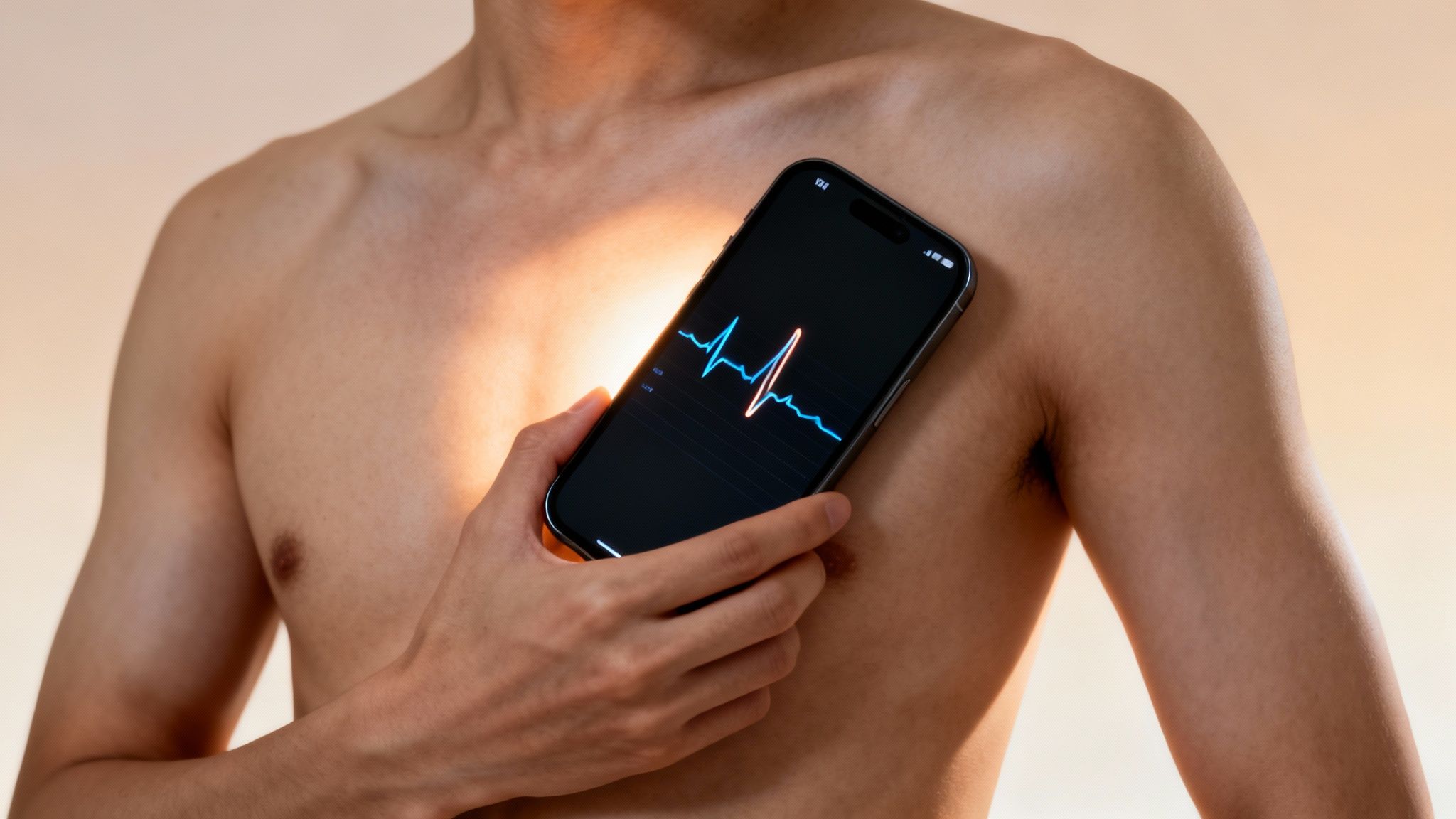
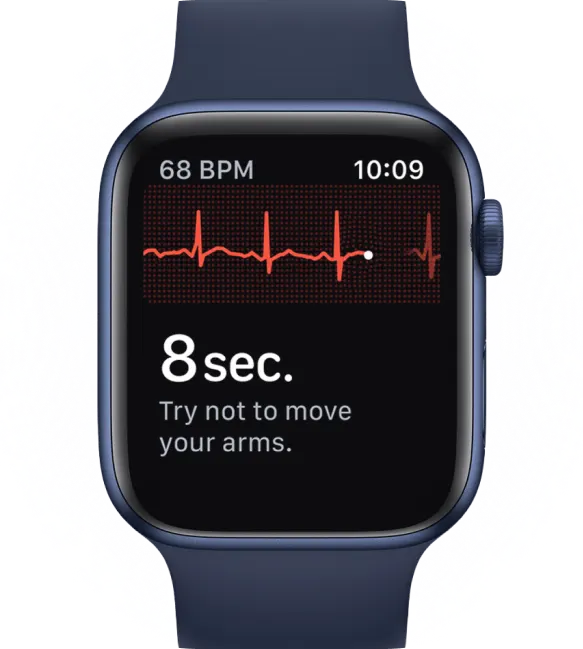
But here's the good news: modern technology, like the ECG function on your smartwatch, puts the power to gather information right in your hands. You can now take an active role in understanding your heart health by capturing its electrical activity the exact moment you feel one of those skipped beats. You no longer have to just describe a feeling; you can show the data behind it.
How At-Home ECGs Work for You
Think of an at-home ECG monitor, like the one on your watch, as your personal heart rhythm detective. The moment you feel a palpitation, you can simply place your finger on the sensor and record a single-lead electrocardiogram. This recording is a snapshot of your heart's electrical signals during that specific event.
Capturing this data is incredibly valuable. Instead of telling your doctor, "I felt a flutter yesterday," you can show them precisely what your heart's rhythm looked like. This transforms the conversation from a subjective discussion to an evidence-based one, making it much harder for your concerns to be brushed aside. To learn more about how these devices work, you can explore our guide on the portable electrocardiogram monitor.
This is a complete shift for anyone who's ever felt their symptoms weren't taken seriously. It provides concrete proof of what you're experiencing, arming you with more confidence and control over your health.
While a single skipped beat is often nothing to worry about, the presence of any red flag symptoms should always prompt a conversation with a healthcare professional.
From Raw Data to Clear Answers
Recording an ECG is just the first step. The real challenge is figuring out what those squiggly lines actually mean. This is where services that provide expert human review of your ECGs become so important, turning raw data into clear, understandable insights.
Instead of trying to interpret complex medical data on your own, you can have a certified professional analyze your recording. This bridges the gap between simply having the technology and actually understanding what it's telling you about your heart.
This kind of service is designed to give you both peace of mind and actionable information. Here’s a look at how it typically works:
- You Capture the Moment: The next time you feel a skipped heart beat, you record an ECG using your smartwatch or another at-home device.
- You Share Your ECG: You upload the recording through an app for professional analysis.
- An Expert Reviews It: A certified cardiographic technician reviews your ECG, looking for specific patterns and identifying any arrhythmias present.
- You Get a Clear Report: Within minutes, you receive a detailed report in plain English explaining what was found, such as "Premature Ventricular Contractions (PVCs) were observed."
This process demystifies your symptoms and arms you with the information you need. When you finally talk to your doctor, you can present them with a professional analysis of your skipped heart beats, ensuring a more productive and focused conversation about your health.
Your Path Forward to Managing Heart Health
Understanding what skipped heart beats are is the first, most powerful step you can take. Now, it's about turning that knowledge into confident action and building a plan that works for you. This is where you move forward with a sense of control, armed with the tools to manage your own heart health.
The key takeaway here is that most palpitations are just harmless flutters. You’d be surprised how much of a difference simple, consistent lifestyle adjustments can make. And for those moments when you need extra reassurance, modern monitoring tools are there to provide invaluable peace of mind. Let's walk through a few strategies you can start today.
Building Your Wellness Toolkit
Small, intentional changes can go a long way toward a calmer, more regular heart rhythm. Don't think of it as a huge, overwhelming task. Instead, treat these as little experiments in self-care to see what makes you feel best.
Here are a few proven strategies to get you started:
- Master Your Stress: Techniques like deep breathing or meditation are fantastic for calming your body's "fight or flight" response. This dials back the adrenaline that often triggers palpitations.
- Prioritize Restful Sleep: Aiming for 7 to 9 hours of quality sleep each night is a game-changer. It helps your nervous system keep your heart rhythm steady and regulated.
- Stay Well-Hydrated: Dehydration can throw off your electrolytes, like potassium and magnesium, which are absolutely essential for a steady heartbeat. Keeping up with your water intake is a simple but powerful fix.
- Moderate Your Stimulants: Pay close attention to how things like caffeine and alcohol affect your heart. For many people, simply cutting back can dramatically reduce how often they feel those skipped beats.
Remember, the goal isn't perfection, it's progress. By figuring out your personal triggers and making gentle adjustments, you start to transform anxiety into proactive, positive action.
It's also worth remembering that you're not alone in paying close attention to your heart's rhythm. In fact, one in three people worldwide will develop a potentially life-threatening heart rhythm disorder in their lifetime, making awareness and proactive management so important. The most common of these, atrial fibrillation (AFib), saw its global cases jump from 33.5 million in 2010 to 59 million in 2019. If you want to dive deeper into the numbers, you can read the full research about heart rhythm disorders.
Frequently Asked Questions About Skipped Heart Beats
Even after learning a bit about skipped heart beats, it's totally normal to still have some questions swirling around. Feeling this way is common, and getting clear on the details is a huge part of taking control of your heart health. We’ve pulled together some of the questions we hear most often to give you straightforward answers and a little more peace of mind.
Can Anxiety Cause Skipped Heart Beats Every Day?
Yes, it absolutely can. When you're dealing with chronic stress or anxiety, your body is basically stuck in a high-alert mode, pumping out extra stress hormones like adrenaline. These hormones can make your heart's electrical wiring a bit twitchy, making it more likely to fire off those extra beats day after day.
For a lot of people, the link is incredibly direct. As soon as they start actively managing their anxiety, whether through deep breathing, meditation, or even just a brisk walk, they notice their palpitations decrease significantly. It’s always a good idea to check in with your doctor, though, just to make sure anxiety is the primary cause.
Are Skipped Heart Beats a Sign of a Heart Attack?
This is a very common fear, but the short answer is almost always no. Skipped heart beats are an electrical rhythm issue. A heart attack, on the other hand, is a "plumbing" problem. It’s caused by a blockage that cuts off blood flow to the heart muscle.
The symptoms are also worlds apart. A heart attack typically involves intense chest pain or pressure, pain spreading to your arm or jaw, severe shortness of breath, and nausea. If you ever feel skipped beats along with these classic heart attack symptoms, that’s when you need to seek emergency medical help right away.
Key Takeaway: An isolated skipped beat is a rhythm event. Severe, crushing chest pain is a circulation event. Knowing the difference helps you respond appropriately without unnecessary panic.
How Many Skipped Heart Beats a Day Is Normal?
There really isn't a single magic number that applies to everyone. It's highly individual. Plenty of perfectly healthy people can have hundreds or even thousands of these early beats a day without any symptoms or underlying heart problems.
Doctors are usually less concerned with the raw count and more interested in the bigger picture. They look at the total percentage of irregular beats over a 24-hour period and, most importantly, whether those beats are causing symptoms like dizziness or fainting. If the number of skipped beats you’re feeling is worrying you, capturing them with an at-home monitor is the best way to give your doctor the concrete data they need.
Should I Go to the ER for a Skipped Heart Beat?
For a single flutter that goes away quickly and doesn't come with any other symptoms, a call to your regular doctor is usually all that’s needed. However, you should definitely head to the ER if your skipped heart beats show up with any serious red flags.
These warning signs include:
- Fainting or feeling like you are about to faint
- Severe dizziness or lightheadedness
- Chest pain or significant discomfort
- Serious difficulty catching your breath
Also, if the palpitations feel nonstop, are very rapid, and don’t resolve on their own, going to the ER is the safest move. It’s always better to be cautious when these specific symptoms pop up.

With Qaly, you can get your ECGs reviewed by certified experts in minutes, turning uncertainty into clear answers.



.png)
.png)