


Key Takeaways

User Profile
Hello Heart Hero. If you've ever felt your heart flutter, race, or skip a beat, you know how unsettling it can be. You might be wondering if something as common as anemia could be the culprit. The short answer is yes, anemia can absolutely cause heart palpitations.
Understanding Why Anemia Causes Heart Palpitations
We get it. This can be a worrying experience, and it's frustrating when you're searching for clear answers. You are not just imagining these sensations; there is a direct physiological reason behind them. Let's walk through it together so you can feel more in control of your heart health.
The chain reaction starts with anemia, which creates an extra burden on your heart. This overload is what leads to the sensation of palpitations.

Your Body's Response to Low Oxygen
When your body is anemic, it doesn't have enough healthy red blood cells to carry sufficient oxygen to all your tissues. Think of your blood as a delivery service and oxygen as the vital packages. With anemia, your delivery fleet is seriously understaffed.
To make up for this shortage, your heart has to go into overdrive. It starts pumping faster and harder to circulate the limited oxygen supply more quickly throughout your body. This extra workload is what you often feel as noticeable heart palpitations.
Your heart isn't malfunctioning; it's compensating. The palpitations you feel are a sign that your heart is working diligently to meet your body's oxygen demands with limited resources.
This connection becomes even more critical for people with existing heart conditions. To put it in perspective, anemia affects about 30% of people with stable heart failure, and that number jumps to a staggering 50% in those who are hospitalized. This is a massive leap compared to less than 10% in the general population. Because anemia cuts down the blood's oxygen-carrying capacity, the heart is forced to beat faster and harder to pick up the slack, often leading to those unsettling palpitations.
Common Signs and Symptoms
The experience of heart palpitations can feel different for everyone. For some, it’s a brief flutter. For others, it’s a more forceful, racing sensation. You might even notice them more when you're resting quietly or lying down.
Besides palpitations, anemia can bring on other classic symptoms that signal your body is running on empty, such as:
- Fatigue and Weakness: That persistent feeling of being tired, no matter how much you rest.
- Shortness of Breath: Getting winded from simple activities like walking up a flight of stairs.
- Dizziness or Lightheadedness: A sensation that you might faint or the room is spinning.
- Pale Skin: A noticeable loss of color, especially in your face, nail beds, and the inner part of your eyelids.
Recognizing this connection is the first step toward taking the mystery and the anxiety out of your symptoms. Let's keep exploring this relationship to help you understand the "why" behind what you're feeling.
The Link Between Low Iron and a Racing Heart
It’s a deeply unsettling feeling. Your heart is suddenly racing or fluttering, and you have no idea why. It can leave you wondering what’s going on inside your body. If you’ve started to suspect a link between anemia and these sensations, you’re definitely on the right track. Let's break down exactly how low iron and other deficiencies can make your heart work overtime.

Think of your red blood cells as a massive fleet of delivery trucks. The hemoglobin inside them is their cargo space, and their one critical job is to pick up oxygen from your lungs and deliver it to every single cell in your body. When you have anemia, you're facing a major logistics problem: you either have fewer trucks on the road, or the trucks you have don't have enough cargo space.
Because of this delivery shortage, your organs and tissues start sending out urgent SOS signals: "We need more oxygen, now!"
Your heart, the central dispatch for this whole operation, gets these frantic calls. Its only way to fix the problem is to speed everything up. It begins pumping faster and harder, trying to circulate the low-oxygen blood more quickly to make up for the shortfall.
This intense effort is exactly what you feel as heart palpitations or a racing heart (tachycardia). It's your heart doing its absolute best to meet the body's non-negotiable demands with severely limited resources.
Understanding this core mechanism is the first step toward taking the mystery and the anxiety out of your symptoms. You aren’t just imagining these flutters and thumps; there’s a clear physiological reason they’re happening.
Common Types of Anemia That Cause Palpitations
While most people think of iron when they hear "anemia," several different types can put this strain on your heart. They each have a different root cause, but the result is often the same: a stressed, overworked heart.
- Iron-Deficiency Anemia: By far the most common type, this happens when your body lacks the iron needed to produce enough hemoglobin. Without adequate hemoglobin, your red blood cells simply can't carry enough oxygen.
- Vitamin B12 Deficiency Anemia: Your body needs vitamin B12 to manufacture healthy red blood cells. A shortage of this nutrient can cause you to produce large, abnormally shaped cells that don’t work right, which again leads to an oxygen deficit. For a deeper look, check out our guide on vitamin B12 and heart palpitations.
- Folate Deficiency Anemia: Just like B12, folate (vitamin B9) is essential for red blood cell development. Without enough folate, your body can't produce enough healthy red blood cells, causing the same oxygen delivery problem.
The Sneaky Symptoms You Might Not Connect
Anemia is notorious for being a "great pretender." Its symptoms can often be so vague that they're easily dismissed or blamed on something else. This is especially true for pernicious anemia, a condition where the body can't absorb B12 properly.
Beyond the classic fatigue and paleness, you might be dealing with things that seem completely unrelated but are directly tied to the deficiency. Some of these less-obvious symptoms include:
- Brain fog or trouble concentrating.
- Tingling or numbness in your hands and feet.
- A sore or unusually smooth-looking tongue (glossitis).
- Tinnitus, which is a persistent ringing in your ears.
Realizing that these strange symptoms, along with your heart palpitations, could all stem from one root cause is incredibly empowering. It helps you move from a place of confusion and worry to one of clarity and taking proactive control of your health.
Palpitations Versus Arrhythmias on Your Wearable
You glance down at your Apple Watch or Fitbit and see a notification that stops you in your tracks: “Irregular Rhythm Detected.” That’s a message that can make anyone’s heart race, and we get how unsettling that moment can be. So, let’s clear up the confusion between what you’re feeling and what your watch might be seeing.
It’s incredibly helpful to know that there's a big difference between a palpitation and an arrhythmia, even though the words often get used together.
What You Feel Versus What the Doctor Diagnoses
A palpitation is simply a symptom. It’s your own personal awareness of your heartbeat. Maybe you feel a sudden flutter, a forceful pound, a brief skip, or a moment where your heart feels like it's racing. That sensation is the palpitation.
An arrhythmia, on the other hand, is a medical diagnosis. This means a doctor has confirmed that there’s an actual issue with your heart’s electrical rhythm, like Atrial Fibrillation (AFib) or Supraventricular Tachycardia (SVT).
Think of it like this: a sneeze is the symptom, but the diagnosis might be allergies or a cold. In the same way, the palpitation is what you feel, and an arrhythmia is just one of several possible underlying causes.
How Anemia Fits Into the Picture
So, where does anemia come in? Anemia is a classic cause of heart palpitations. That fast, pounding sensation is often just your heart's normal rhythm kicking into a higher gear, a state known as sinus tachycardia. It's actually a healthy response from your heart, which is working harder to pump oxygen-poor blood throughout your body. Our article on sinus tachycardia on your watch ECG dives deeper into what this rhythm looks like.
But here’s the catch. If anemia becomes severe or goes untreated for a long time, this constant overtime can put enough stress on the heart to trigger or worsen true arrhythmias. This risk is even higher for people who already have underlying heart conditions.
For example, studies have shown that in someone managing heart failure, developing new-onset anemia can more than double their risk of dangerous ventricular arrhythmias and sudden cardiac death. Those intense, pounding heartbeats are often the very thing that sets off alerts on your wearable. What starts as a simple compensation can escalate into something much more serious.
Using Your Wearable as a Health Detective
Your watch is a fantastic tool for gathering clues about what’s going on. It can help you start to piece together whether you’re dealing with a simple palpitation or a potential arrhythmia.
Here are a few scenarios to help you think through what you're feeling and seeing:
- The Quick Flutter: You stand up too fast and feel a little flutter for a few seconds. This is often just your heart adjusting and is usually nothing to worry about.
- The Sustained Race: You’re relaxing on the couch when your heart suddenly starts racing for several minutes, and you feel a little dizzy. Your watch captures a high heart rate during this episode.
- The Frequent Skips: All day, you keep feeling your heart "skip" a beat. You manage to catch a few of these moments on your watch's ECG app.
The real power of your wearable isn't just the alert it gives you; it's the data it captures. A single flutter is one thing, but frequent, sustained, or dizzying episodes recorded on your device are a clear signal that it's time to take a closer look.
This is where you can take charge of your health. Instead of just worrying about a notification, you can use that data proactively. This is where a service like Qaly can be a huge help. Certified technicians can analyze the ECGs from your watch and help you understand if you're seeing a benign palpitation from something like anemia or a more concerning arrhythmia. That clarity gives you the confidence to have a productive conversation with your doctor.
How to Investigate Your Symptoms and Find Answers
If you're dealing with unsettling heart palpitations and think anemia might be the cause, the first and most important step is to talk with your healthcare provider.
It can be hard to get answers when you feel like your concerns aren't being taken seriously. The best way to have a productive conversation with your doctor is to come prepared with objective data.
Starting Your Investigation
A doctor will almost certainly start with a simple blood test called a Complete Blood Count (CBC). This test gives a snapshot of your blood health, measuring things like your red blood cells and hemoglobin. A low hemoglobin level is the classic sign of anemia, giving you and your doctor a clear place to begin.
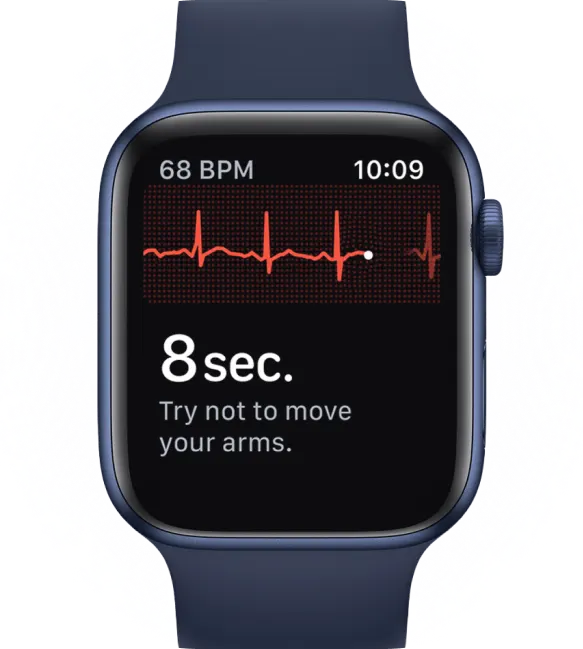
But the investigation doesn't have to end there, especially when it comes to understanding your heart symptoms. This is where personal ECG devices, like an Apple Watch or Kardia, can become powerful tools in your own hands.
Taking Control with At-Home ECGs
Think of your wearable ECG as being on call 24/7, ready to record your heart's activity the moment you feel something unusual. This is a huge leap forward from older heart monitoring methods. You can learn more about how modern wearables compare to traditional tools in our guide on the cardiac Holter monitor.
By taking an ECG every time that flutter, pound, or skip happens, you're no longer just describing a fleeting feeling from memory. You’re capturing real, analyzable evidence.
This one action turns a vague symptom into concrete data.
Capturing your palpitations with an ECG is the most powerful step you can take. It moves you from saying "I felt something" to showing "This is what my heart was doing." This shift is crucial for getting the right diagnosis and treatment.
Once you have that ECG recording, the next question is, what does it mean? Was it just a fast but normal heart rhythm caused by the anemia (sinus tachycardia), or was it a true arrhythmia that needs a different kind of medical attention? This is where getting a professional interpretation is essential.
Getting Answers You Can Trust
Waiting weeks for a specialist appointment can be a long and anxious time. And even then, getting just a few minutes with a doctor might leave you with more questions than answers.
Fortunately, services like Qaly were created to fill this gap. Using the Qaly app, you can have your ECG from your watch or Kardia device reviewed by a certified cardiographic technician, often within minutes, at any time of day.
Here’s how this process gives you more control:
- Instant Clarity: You receive a straightforward report that explains your heart rhythm, identifies if any arrhythmias were present, and measures key cardiac data.
- Reduced Anxiety: Instead of seeing an "irregular rhythm" alert and worrying for days, you get a quick, expert analysis for peace of mind.
- Data for Your Doctor: You can go to your next doctor’s appointment with a folder of professionally analyzed ECGs, making the conversation more collaborative and data-driven.
When you're armed with this kind of objective information, you transform from someone just describing a symptom into a partner in your own healthcare. You can show your doctor exactly what happened, backed by a credible interpretation. This is how you find real answers and start to take back control of your health.


When to Seek Urgent Care for Heart Palpitations
Most of the time, heart palpitations from anemia are just your body working overtime to compensate. But it's vital to know when your body is sending out a true distress signal. This isn't about causing alarm. It's about giving you the confidence to know the difference between a manageable symptom and a real emergency.
Think of it as learning your body's language. It's trying to tell you when the strain has become too much, and listening to those warnings is one of the most important things you can do for your health. Knowing when to act can be lifesaving.
The Clear Warning Signs
If your heart palpitations show up with any of the following symptoms, it's time to seek emergency medical care. Don't second-guess it or try to wait it out. These signs could mean the anemia is putting a dangerous amount of stress on your heart, or that a more serious arrhythmia is at play.
Here are the red flags to watch for:
- Severe Chest Pain: This isn't a dull ache. We're talking about a feeling of intense pressure, tightness, or a sharp, squeezing pain in your chest.
- Significant Shortness of Breath: This is being out of breath even when you're resting, not just after a bit of exertion.
- Dizziness or Feeling Faint: That powerful sensation that the room is spinning or that you're about to pass out.
- Loss of Consciousness: If you actually faint, it's always a medical emergency. Period.
When in doubt, it's always, always better to get checked out. For a more detailed breakdown, you can also read our guide on when to see a doctor for heart palpitations.
Why These Symptoms Are Critical
So, why are these particular symptoms so urgent? They're your body's loudest alarm bell, signaling that your heart and brain might not be getting enough oxygen to work properly. While anemia on its own can trigger palpitations, adding chest pain or fainting to the mix suggests the situation has gone from simple compensation to a critical problem.
This is a serious concern. Recent data paints a sobering picture: from 1999 to 2021, mortality from cardiac arrhythmias in anemic US adults more than doubled, jumping from 2.30 to 4.99 per 100,000 people. A staggering 43.3% of these deaths happened in hospitals, which underscores just how urgent these events are. These are the very arrhythmias that can feel like palpitations. You can dive into the full findings in this detailed study on arrhythmia mortality in anemia.
Trust your instincts. Your body knows when something is seriously wrong. If the palpitations feel dramatically different, more intense, or are paired with any of the red-flag symptoms above, seeking immediate help is the safest and smartest choice you can make.
Knowing these signs gives you the power to act quickly and get the right care at the right time. It's not about living in fear. It's about being prepared to protect your own heart health.
Your Action Plan for Managing Anemia
So, you’ve pinpointed anemia as the culprit behind your heart palpitations. Getting that confirmation is a huge step, and the path forward is much clearer now. The game plan is straightforward: help your body get its oxygen-carrying capacity back up to speed so your heart doesn't have to work overtime.
This is your practical action plan for getting there. We're going to tackle this from the inside out, focusing on treating the root cause of the anemia itself. For most people, that means getting on top of iron-deficiency anemia with a smart approach to diet, supplements, and a few lifestyle tweaks to support your heart during its recovery.
Rebuilding Your Iron Stores Through Diet
Your food is the foundation of your recovery. The focus now is to pack your daily meals with iron-rich foods, and the good news is there are plenty of powerful and delicious options to choose from.
It helps to know that iron comes in two forms in our food:
- Heme Iron: This is the superstar of iron absorption. It's found in animal products and is the most easily used by your body. Think lean red meat, poultry (especially the dark meat), and organ meats like liver.
- Non-Heme Iron: Found in plant-based foods, this type is a little trickier for your body to absorb, but it's still an incredibly important piece of the puzzle. You'll find it in beans, lentils, tofu, spinach, and fortified cereals.
Here's a pro tip: to get the most out of plant-based (non-heme) iron, you need to pair it with Vitamin C. It’s as simple as squeezing some lemon juice on your spinach salad or having a small glass of orange juice with your lentil soup. This simple trick can make a huge difference in how much iron your body actually absorbs.
While food is a powerful first line of defense, diet alone often isn’t enough to fix a significant iron deficiency. That's where supplements come in. But it's absolutely critical to approach them with care. Always follow your doctor's specific guidance on iron supplementation, because taking too much can be toxic.
Lifestyle Changes to Support Your Heart
While you're rebuilding your iron stores, making a few changes to your daily routine can make a world of difference in how you feel. The idea is to ease the overall strain on your heart while your body is busy getting back to balance.
Think of these as your support crew, helping to lighten the load on your system:
- Gentle Movement: Intense, heart-pounding exercise might feel like too much when you're anemic. Instead, focus on gentle activities like walking, stretching, or yoga. These get your circulation going without putting too much stress on your hard-working heart.
- Stress Management: Stress and anxiety are known triggers for palpitations, even without anemia in the mix. Bringing in calming practices like deep breathing exercises, meditation, or just spending quiet time in nature can help soothe your nervous system and dial down those heart flutters.
- Prioritize Hydration: When you're dehydrated, your blood volume drops, forcing your heart to pump harder. Make it a point to drink plenty of water throughout the day. This keeps your blood volume up and supports your heart's function.
This is where your wearable device becomes an incredible ally. As you put these changes into action, you can watch for real, tangible proof that your efforts are paying off. As your iron levels begin to climb, you should start to see your resting heart rate gradually decrease and the number of palpitations go down. This gives you that much-needed reassurance that you are absolutely on the right track.
Frequently Asked Questions About Anemia and Palpitations
It's totally normal to still have some questions buzzing around after all this information. We get it. When it comes to your heart, you want clear answers. Let's tackle some of the most common ones we hear.
How Quickly Will My Palpitations Stop After Treating Anemia?
This is the big question on everyone's mind, and the honest answer is: it's different for everyone. It really depends on just how low your levels were and how closely you stick to your treatment plan.
Some people feel their palpitations ease up within just a few weeks of starting treatment, like iron supplements. As your hemoglobin starts to climb, your heart can finally take a breather. For others, it might take a couple of months for their body to fully restock its iron or vitamin stores and for their heart to settle back into its normal, calmer rhythm.
The most important thing here is consistency. Sticking with your treatment is what allows your body to heal and gives your heart that much-needed break. Be patient with yourself during this process.
Can Heart Palpitations from Anemia Be Dangerous?
It's completely natural to feel a jolt of worry with any strange heart sensation. The good news is that for most people with mild or moderate anemia, the palpitations themselves aren't dangerous. They're usually just a sign of a fast but regular heartbeat (sinus tachycardia), which is simply your heart’s way of saying it's working overtime to deliver oxygen.
However, the situation changes if the anemia is severe or goes untreated for a long time. That constant strain can weaken the heart muscle over time, potentially leading to or worsening more serious heart rhythm problems. This is exactly why it's so critical to get to the bottom of it. Treating the anemia doesn't just quiet the palpitations. It protects the long-term health of your heart.
Besides Iron, What Other Types of Anemia Cause Palpitations?
Yes, absolutely. While iron-deficiency anemia is the most common culprit, several other types can trigger heart palpitations. The core issue is always the same: your body doesn't have enough healthy red blood cells to carry oxygen efficiently, forcing your heart to work harder.
Other common types of anemia that cause palpitations include:
- Vitamin B12 Deficiency Anemia: B12 is essential for making healthy red blood cells. Without enough of it, your body produces large, clumsy cells that can't do their job properly.
- Folate (Vitamin B9) Deficiency Anemia: Just like B12, folate is a key player in red blood cell production. A shortage can quickly lead to anemia and those familiar heart flutters.
- Anemia of Chronic Disease: Long-term conditions like chronic kidney disease or autoimmune disorders can disrupt your body's ability to make red blood cells, leading to anemia as a side effect.
The great thing is that a simple blood test from your doctor can identify the exact type of anemia you're dealing with. This ensures you get the right treatment to calm your heart and get your energy back.

Noticed a flutter or skip? Qaly connects you with certified cardiac technicians who analyze your ECG and deliver expert insights in minutes.



.png)
.png)