


Key Takeaways

User Profile
Hello Heart Hero. Welcome to your guide on a technology that's changing how we look after our hearts. If you've ever felt a strange flutter in your chest and wished for immediate answers without a stressful trip to the doctor, this is for you. We get it; the healthcare system can often feel impersonal and frustrating.
That’s exactly why we’re exploring remote patient monitoring (RPM). It’s a powerful way to bridge the gap between your daily life and the medical support you need, giving you back a sense of control and calm.
Your Guide to Understanding Remote Patient Monitoring
Remote patient monitoring can feel like a game-changer. At its core, it's about improving your health, potentially bringing down healthcare costs, and making expert care more accessible than ever. It gives your doctor a direct line to your vital signs, like your heart rhythm, right from your home. This means they can spot potential problems earlier, giving you reassurance and peace of mind without the hassle of constant clinic visits.
What Is Remote Patient Monitoring, Simply Put?
Think of RPM as having a heart expert in your corner, 24/7. They are not watching you, but they are watching over the data from your wearable device, like your smartwatch. This is not about constant surveillance; it is about giving your doctor a clearer, more complete story of your health over time.
Instead of getting a single snapshot from a brief office visit, your doctor gets a continuous view of your heart’s activity. This lets them spot subtle changes or patterns that might otherwise be missed. This approach puts you back in the driver's seat of your health journey. It offers clarity and reassurance right when you need it most, helping turn skepticism about the healthcare system into confidence in your own care.
Remote patient monitoring is like a security system for your heart. You hope you never need it, but knowing it's always on, quietly protecting you, brings immense peace of mind.
The Growing Need for At-Home Care
The demand for at-home health solutions is not just a passing trend; it is a massive shift in how we manage our well-being. Imagine having that peace of mind from your living room, knowing your heart rhythms are being watched over by experts.
The global market for RPM is experiencing rapid expansion. It is expected to increase significantly from 2025 to 2026. This substantial growth is driven by the significant impact of chronic diseases, with more than 23 million patients having used these tools in 2020.
The Clinical and Emotional Benefits of At-Home Heart Monitoring
Understanding the tech behind remote patient monitoring (RPM) is one thing, but seeing its real-world impact is what truly matters. The power of at-home heart monitoring goes way beyond just being convenient. It gets to the very core of your health, and just as importantly, your peace of mind.
If you are dealing with a heart concern, waiting weeks for a doctor's appointment can feel like an eternity. That flutter you felt, a sudden dizzy spell, or the odd rhythm your smartwatch flagged can easily lead to sleepless nights filled with worry. RPM is all about quieting that fear of the unknown.
Instead of waiting and worrying, you get clarity. You can capture an ECG the moment a symptom pops up and get a human-reviewed analysis in minutes. This kind of quick feedback can be a huge relief, giving you the power to stop spiraling and start taking action.
Better Data for Better Decisions
A single ECG from a doctor's office is really just a snapshot, a few seconds out of your entire life. But your heart's rhythm can change constantly based on what you ate for lunch, your stress levels, or how much you exercised. Remote monitoring gives your doctor a much richer, more complete story of your heart's health.
By tracking your heart's activity over days or weeks, you and your doctor can spot patterns that would otherwise be completely invisible. This is a game-changer for catching intermittent arrhythmias, like atrial fibrillation (AFib), which love to hide and might not show up during a quick clinic visit.
Getting quick, reliable answers from your at-home ECG doesn't just reduce anxiety; it transforms you from a passive patient into an active, informed partner in your own healthcare.
This steady stream of data also helps your doctor fine-tune your care. For instance, they can see exactly how a new medication is impacting your PR or QTc intervals over time. This allows for personalized adjustments based on how your body is responding, not just on textbook averages. It is this deep level of insight that really shows off what RPM can do.
A Powerful Tool for Prevention
Beyond just managing existing conditions, at-home heart monitoring is a powerful way to stay ahead of problems. Catching an arrhythmia early can be the key to preventing a much more serious event down the line. It gives you and your doctor a chance to step in before a small issue becomes a big one.
This proactive approach is a huge shift from the old, reactive model of medicine. You are no longer just sitting around waiting for something to go wrong. You are actively looking for signs and taking control, all with trustworthy data in your hands.
This method is already proving itself in a big way. Studies show RPM can help slash hospital readmissions by an incredible 76%. It allows people like you to spot trends in conditions like premature ventricular contractions (PVCs) or supraventricular tachycardia (SVT) and share expert-reviewed reports with your doctor before you even walk into their office. That makes your visit so much more productive. And with patient satisfaction hitting 90%, it's clear this tech eases a ton of anxiety for anyone monitoring their heart after an event or while trying a new medication.
More Than Just Numbers on a Screen
The emotional lift from remote patient monitoring is just as critical as the clinical side. Living with a heart condition, or even just the worry of one, is a heavy burden. RPM helps lighten that load in a few key ways.
First, it reduces fear and anxiety. Getting fast feedback on a scary symptom brings instant reassurance. It helps you avoid unnecessary trips to the emergency room and all the stress that comes with them.
Second, it builds confidence. When you start to understand your own heart data, you feel more in control. That knowledge can turn skepticism about the healthcare system into confidence in your ability to manage your own health.
Third, it strengthens doctor-patient relationships. When you can bring detailed, accurate reports to your appointments, your conversations with your doctor become true collaborations. You are bringing real value to the table.
At the end of the day, at-home heart monitoring closes the gap between your daily life and your medical care. It gives you the tools and the support you need to feel safe, informed, and in control of your health journey.
How Wearable ECGs Are Changing Heart Health
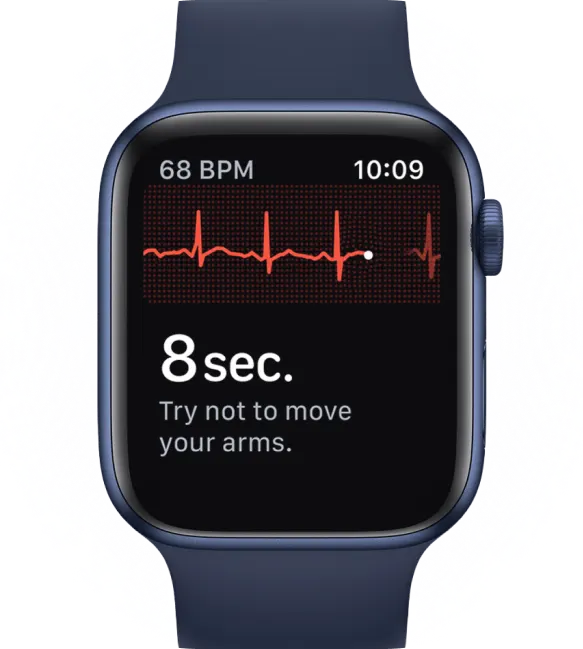
That smartwatch on your wrist is more than just a fancy step-counter or a way to check texts. It is a powerful health tool, a personal ECG that offers incredible insight into your heart's rhythm. The days of needing bulky, intimidating hospital machines to get a read on your heart are quickly fading.
Devices like the Apple Watch, Samsung Galaxy Watch, Fitbit, and KardiaMobile have put this ability right in your hands. But what do you do with the ECG once you have taken it? This is where remote patient monitoring (RPM) becomes so important, bridging the gap between raw data and a real, human answer you can trust.
Think of it this way: your watch captures the electrical "music" of your heart. An RPM service, like Qaly, acts as the expert technician who listens to that music, deciphers every note, and explains what it means in plain English.
Turning Data Into Real-World Answers
We get it, it can be downright scary when something feels "off" with your heart. Let's walk through a few real-world moments where this technology shifts from a cool feature to a source of genuine peace of mind.
Imagine you have had one too many cups of coffee and now you feel palpitations. Instead of worrying for hours, you take a quick ECG. A few minutes later, an expert confirms it is just a few harmless PACs, and your anxiety melts away.
Or perhaps you are out for a run and feel a strange flutter in your chest. You can stop, take an ECG right there on the spot, and see if it was a harmless blip or something worth showing your doctor. It gives you the confidence to stay active.
What about waking up with a strange rhythm in the middle of the night? Instead of a panicked rush to the emergency room, you can capture the event on your watch and get immediate, human-reviewed feedback to help you decide what to do next, calmly.
In every case, the wearable captures the moment, but the RPM service provides the crucial context and reassurance. This is how quick insights lead to major benefits for your health and well-being.
The Power of Immediate, Expert Insight
This blend of wearable tech and expert review is changing the game, especially for those of us who have felt dismissed by the healthcare system. You no longer have to struggle to describe a fleeting symptom to your doctor weeks after it happened. Now, you can show them the exact data.
Having your ECG analyzed by a certified professional within minutes isn't just about speed. It’s about being seen, heard, and taken seriously when you are at your most vulnerable.
This rapid access is becoming the new normal. Picture your Fitbit or Samsung watch flagging a funky QTc interval, and within minutes, you have human-reviewed insights in your hands, all without stepping foot in a clinic. This shift is backed by explosive growth. Virtual physician visits jumped from 14% in 2016 to 80% by 2022. In that same timeframe, the use of monitoring devices more than doubled from 12% to 30%.
These devices demystify what is happening inside your body, and the services that interpret the data give you the confidence to act on that knowledge. If you want to dive deeper, you can read a cardiologist's guide to the smartwatch ECG to fully understand its capabilities. Ultimately, this technology puts the power back where it belongs: with you.
Putting At-Home ECGs Into Practice
Alright, so you have this powerful ECG technology right on your wrist or in your pocket. Now what? Let's talk about how to actually use it in your day-to-day life, so you can feel confident and in control of your heart health.
The real goal here is to turn raw data into real answers. It is about more than just pressing a button; it is about building a more active, informed relationship with your body. It is your chance to take those moments of uncertainty and turn them into clarity.
When Is the Right Time to Take an ECG?
One of the biggest advantages of having an ECG at home is the ability to capture your heart’s rhythm the exact moment you feel something is off. Instead of trying to describe a fleeting feeling to your doctor weeks after it happened, you can catch it in the act.
Here are the most important times to take a reading:
First, when you feel a symptom. This is the big one. If you experience palpitations, a skipped beat, a flutter, dizziness, or shortness of breath, take an ECG right away if you can do so safely.
Second, after a potential trigger. Did that extra cup of coffee or a stressful work meeting make your heart race? Take a reading. This is how you start to learn your body’s unique triggers.
Third, to track medication effects. If you have just started a new heart medication, your doctor might ask you to take regular ECGs. This helps them see how the medicine is affecting your heart's rhythm and important intervals over time.
Finally, during or after exercise. Monitoring your heart during and after physical activity gives you valuable information, especially if you tend to have symptoms with exertion.
By taking ECGs at these key moments, you're essentially creating a detailed diary of your heart's behavior. This is the kind of powerful information that helps you and your doctor make better decisions together.


How to Take a Clear ECG Reading
Getting a clean ECG is crucial for an accurate analysis. Think of it like taking a photo; if it is blurry, you cannot see the important details. A "noisy" ECG full of what's called "artifact" can hide or mimic abnormalities, making it hard to know what's really going on.
A good ECG reading is the foundation of a confident answer. Taking a moment to ensure a clear signal is one of the most powerful things you can do to get the peace of mind you deserve.
Here are a few simple tips to get the best possible recording from your device:
- Be Still and Relax: Find a comfortable seat. Rest your arms and hands on a flat surface, like a table or your lap, to minimize muscle tremors that can create noise.
- Ensure Good Contact: Make sure your fingers are making solid, consistent contact with the device's sensor or crown. Do not press too hard, but do not be too light either. Find that just-right pressure.
- Stay Quiet: Talking or moving around during the 30-second recording will almost always create interference. Try to stay as still and quiet as possible until it's done.
- Check Your Skin: Dry skin can sometimes lead to a poor electrical connection. If you're having trouble getting a good signal, lightly moistening your fingertips can often help.
These small steps can make a massive difference in the quality of your ECG. They give the technicians who review it the clearest possible picture of your heart's activity. If you want to learn more, you might find our guide on the portable electrocardiogram monitor and how to use it effectively helpful.
Making Sense of Your Results
So you have taken your ECG and sent it in for analysis. Now comes the most important part: understanding the results. This is where a service like Qaly really shines. Instead of a vague, computer-generated label like "Unclassified," you get a detailed interpretation from a certified human expert.
This report will typically break down several things. You will get a rhythm identification, which is a clear explanation of what the technician saw, like "Normal Sinus Rhythm with PACs" or "Atrial Fibrillation." You will also see your key interval measurements, such as your PR, QRS, and QTc intervals measured in milliseconds. Tracking these numbers is vital for monitoring certain conditions and the effects of medication. Finally, the report gives you actionable insights, turning confusing data points into something you can actually understand and confidently share with your own doctor.
This process is what transforms a moment of worry into a moment of understanding. It is your practical, supportive tool for taking an active role in managing your heart health, right from your own home.
How Qaly Enhances Your Experience
We have talked about how powerful at-home ECGs are, but having all that data without clear answers can feel like having a book in a language you can't read. This exact problem is why Qaly was created. It was born from a simple but powerful idea: you deserve to understand what your heart is telling you, right when you need to know.
This is not just another app; it is the missing piece of the puzzle. For too long, people with wearable devices have been left with confusing, machine-generated results that only create more questions and anxiety. We built a service to solve that.
Qaly delivers the one thing technology alone cannot offer: a reassuring human touch. It is all about bridging the gap between your device and your peace of mind.
The Human Experts Behind Your ECG
What really makes Qaly different is our team of CCT-certified cardiographic technicians. These are the same professionals who analyze ECGs in hospitals, and they are the heart of our service. They provide the crucial human analysis that turns a confusing ECG strip into a clear, understandable report.
When you send an ECG through the Qaly app, it is not fed into a cold algorithm. It is reviewed by a trained expert who looks at every detail of your heart’s rhythm.
They provide narrative reports written in plain English, explaining exactly what they see. These are reports you can actually use and share directly with your doctor, making your next appointment far more productive. It is a core benefit of remote patient monitoring when done right.
"I've used Qaly on and off for several years. Not only did Qaly successfully capture several AFib rhythms that my EP accepted and successfully ablated earlier this year, but just last week it also picked up my VT. When I initially read about this non-sustained episode in the review, I brought it to my doctor and was placed on a monitor. With the evidence Qaly provided, I was taken seriously, and I've since had several sustained episodes—all safely documented in the hospital on their monitors." - Qaly Member
This commitment to human expertise is why our service is trusted and even endorsed by cardiologists from institutions like Stanford. They recognize the value of having a reliable, expert-reviewed record of your heart’s activity between visits.
Features Designed for Your Peace of Mind
Beyond single interpretations, the Qaly app is built to give you a deeper understanding of your heart health over time. We know that many heart rhythm issues are not a one-time event, so we have designed features that help you see the bigger picture.
You can track your heart rhythm trends. The app lets you see your history at a glance, so you can track how often you experience palpitations or other symptoms. This historical view is incredibly valuable for both you and your doctor.
You can also monitor important intervals. You get instant access to your PR, QRS, and QTc interval measurements with every reading. This allows you to monitor how these numbers change over time, especially if you're taking medication.
Finally, Qaly works with your device. It is designed for flexibility. It is compatible with all major wearable and at-home ECG devices, including Apple Watch, Samsung, Fitbit, and Kardia. If you use a Kardia device, our guide on how to export your ECGs from Kardia can help you get started easily.
This continuous oversight provides assurance to users concerned about conditions such as WPW or frequent palpitations, as it may result in fewer emergency room visits and improved long-term health outcomes. Qaly's round-the-clock analysis of over 500,000 ECGs is part of a significant trend. The growth of the global RPM software market is influencing healthcare significantly. You can discover more insights about these RPM market statistics and see how this growth is affecting healthcare.
Navigating Data Privacy and Device Limitations
We get it. When it comes to your health data, trust is non-negotiable. It is natural to feel a little hesitant about sharing personal information, especially when healthcare can sometimes feel impersonal or even skeptical of data from new technologies. That's why we believe in being completely upfront about both the power and the boundaries of remote patient monitoring.
Let’s tackle your concerns head-on. Protecting your personal health information is not just a feature for us; it is a fundamental promise. Any reputable RPM service operates under strict privacy laws like HIPAA, using encryption and secure servers to shield your data. Think of it as a digital vault, where your ECGs are protected by multiple locks, and only you and the certified technicians you authorize have the key.
Understanding Your Data and Its Protections
You should always feel in control of your information, period. When you use a service to get your ECGs analyzed, the entire process is built from the ground up with your security and privacy at its core.
Here is what that protection looks like in practice. Data encryption is key, so from the moment it leaves your watch to the moment it is reviewed, your health data is scrambled. This makes it unreadable to anyone without permission. Anonymization is also important, so whenever possible, your personal details (like your name and email) are separated from your health data, adding another strong layer of privacy. Finally, secure platforms are used, and these systems are constantly tested and updated to defend against the latest security threats.
This intense focus on privacy is not just a local trend; it is a global standard. Despite some hurdles, the real-world benefits of remote monitoring, such as obtaining quicker responses and engaging in more informed discussions with your doctor, are advancing it worldwide. This shift is assisting individuals globally in tracking their health and sharing it confidently with their physicians. You can read more about these findings and RPM's global growth on Pharmiweb.com.
Knowing the Limitations
Being transparent also means being honest about what remote monitoring cannot do. Your wearable ECG is an incredible tool for staying on top of your heart's activity, but it is not a replacement for emergency medical care.
A wearable ECG is your proactive partner in health, not an emergency lifeline. If you are experiencing a true medical crisis, like chest pain or severe shortness of breath, the right and only choice is to call 911 immediately.
This technology is designed to be one powerful piece of your overall health plan. It gives you the information you need for non-emergency situations, helping you track symptoms and have far more productive talks with your doctor. By understanding these limits, you can use RPM smartly, turning it into a source of reassurance without ever putting your safety at risk.
Frequently Asked Questions About Remote Patient Monitoring
Jumping into new health technology can bring up a lot of questions. It's natural to be curious, and maybe even a little cautious, especially when it comes to your heart. Let's tackle some of the most common questions we hear to help you feel confident about remote patient monitoring.
How Accurate Are Wearable ECGs?
While the ECG on your watch is not a 12-lead ECG from a hospital, it's remarkably good at identifying your heart's underlying rhythm. For picking up on rhythm changes like Atrial Fibrillation (AFib), studies have shown these devices are highly effective.
The real power comes from what happens next. A clear ECG recording, reviewed by a certified technician, gives a trustworthy snapshot of your heart's electrical activity in that exact moment. This makes it an amazing tool for catching those fleeting symptoms that never seem to happen when you're actually at the doctor's office.
What Is the Difference Between RPM and a Regular Doctor Visit?
Think of them as partners working together for your heart health. A doctor’s appointment is for your physical exam, in-depth tests, and building your overall treatment plan. It is a vital, periodic check-in.
Remote patient monitoring, on the other hand, tells the ongoing story of your health between those appointments. It fills in all the gaps, giving your doctor real-world data about your symptoms and heart rhythms over time. This makes your visits far more productive, since you arrive with detailed, expert-reviewed information already in hand.
An office visit is a single chapter; remote patient monitoring is the whole book. It gives your doctor the full context they need to provide the best possible care for you.
Do I Need a Prescription to Get Started?
Nope. You do not need a prescription to use a service like Qaly. You can start monitoring your heart with your own ECG device and our app whenever you're ready.
This is all about putting you in the driver's seat. It gives you direct access to expert insights without waiting for a referral. If an analysis flags a potential issue, you can then take that clear, professional report straight to your doctor to talk about what's next. It empowers you to find answers on your own terms and be an active partner in your own healthcare.

Ready to turn your ECG data into clear, actionable insights? Qaly provides human-powered analysis of your smartwatch ECGs in minutes, 24/7.



.png)
.png)