




Key Takeaways

User Profile
Hello Heart Hero. We know hearing the term "coronary artery disease" can feel unsettling. If you're feeling a bit lost or even skeptical about navigating the healthcare system, you're not alone. We created this guide to be your trusted, empathetic resource.
Your Journey to Understanding Heart Health Starts Here

Our goal is to pull back the curtain on coronary artery disease (CAD), breaking it down into clear, simple pieces without the confusing medical jargon.
It’s helpful to think of CAD not as a single, sudden event, but as a gradual process that happens over many years. This is actually good news because it means there are opportunities all along the way to take meaningful action for your health.
We want to give you the knowledge to understand what's happening in your body, ask the right questions at your appointments, and feel like a true partner in your own care. This guide is all about moving from feeling unheard or unsure to feeling confident and in control.
What You Will Discover
This isn't just a dry list of medical facts. Think of this as a roadmap, created with your personal journey in mind. We'll walk through each step together with clarity and support.
Here's what we'll explore:
- A Simple Definition: We’ll start with the basics, explaining what coronary artery disease actually is using analogies that are easy to grasp.
- Your Body's Signals: You'll learn how to recognize the common and not so common warning signs your body might be sending you.
- The Diagnostic Path: We’ll demystify the tests doctors use to diagnose CAD and clarify the role your own smartwatch ECG can play in monitoring your heart.
- Taking Action: We’ll cover the powerful lifestyle changes and effective treatments that can help you manage CAD and protect your heart.
Your health journey is uniquely yours, and feeling empowered is the first step toward making a positive change. This guide aims to give you the tools and confidence to navigate your path, turning uncertainty into proactive partnership with your care team.
From spotting the earliest symptoms to understanding modern treatment options, think of us as your supportive companion. We believe a well informed patient is an empowered one, and that journey starts right now. You have the strength to face this, and we're here to help you along the way.
What Is Coronary Artery Disease
Let's break down exactly what coronary artery disease is, using simple terms that make sense. It can feel like a big, scary diagnosis, but understanding the mechanics behind it is the first step toward taking back control.
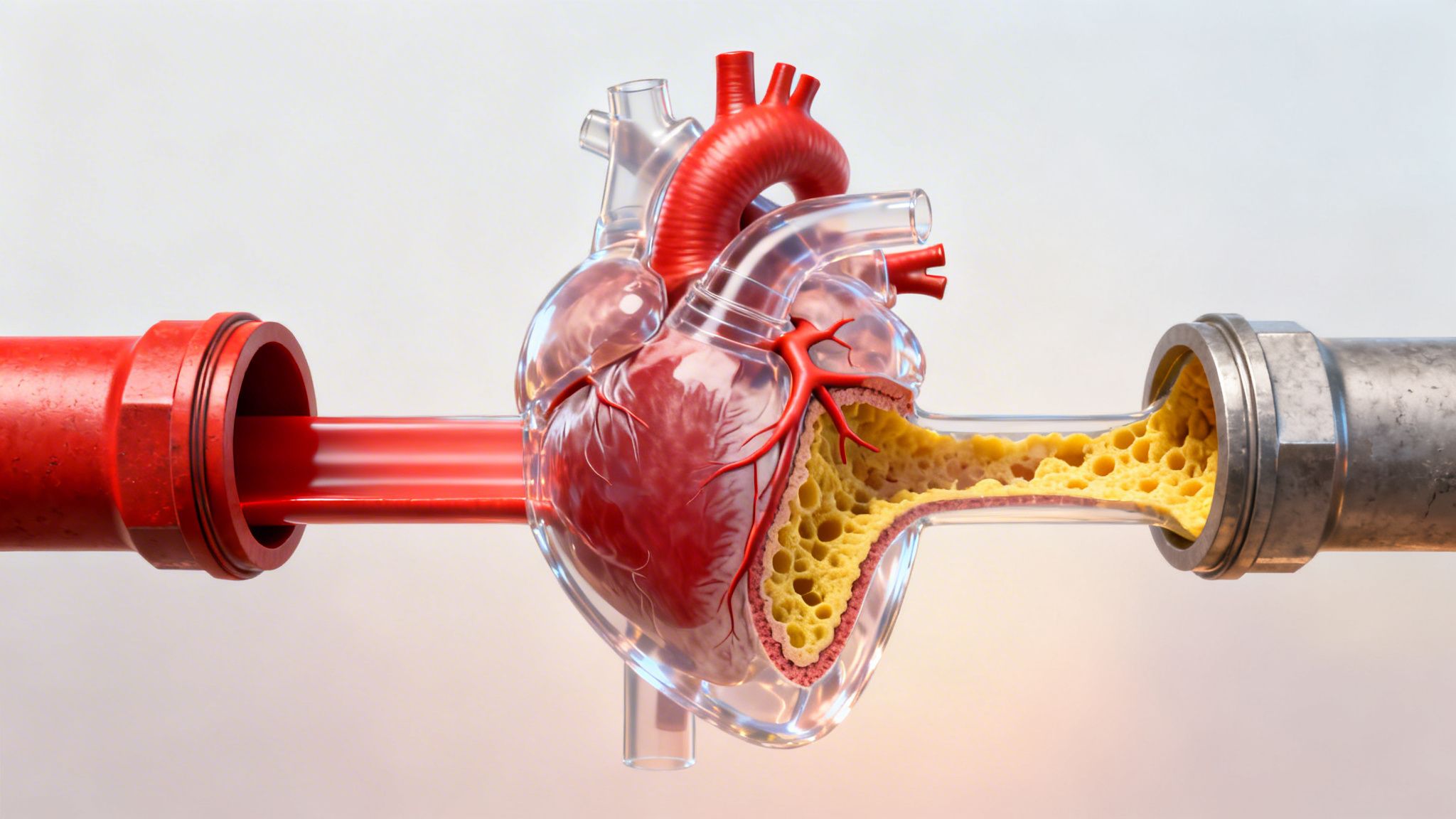
Imagine your heart is a house and the coronary arteries are the plumbing pipes that supply it with water. But instead of water, these special arteries deliver essential, oxygen rich blood to keep your heart muscle healthy and strong. Without that steady flow, the heart simply can’t do its job.
Now, picture a slow, stubborn clog forming inside those pipes over many years. This is basically what happens with coronary artery disease.
The Slow Buildup of Plaque
This "clogging" process has a medical name: atherosclerosis. It begins when a sticky substance called plaque, a mix of cholesterol, fats, and other things in your blood, starts to build up on the inner walls of your arteries.
Think of it like limescale building up inside an old water pipe. At first, the buildup is small and doesn't cause any issues. But over years and even decades, it can grow, making the artery narrower and narrower. This narrowing, or stenosis, makes it much harder for blood to get through.
This isn’t something that happens overnight. Coronary artery disease is a progressive condition, meaning it develops gradually. That slow timeline is important because it offers many opportunities to step in and slow the process down.
It’s a widespread issue, too. In the United States, about 1 in 20 adults aged 20 and older lives with coronary artery disease. This is why understanding it is so critical for so many of us.
When Blood Flow Is Restricted
So, what happens when those arteries become too narrow? When your heart is resting, it might still get enough blood to function just fine. But when you exert yourself, like when you're walking up a hill or feeling stressed, your heart needs more oxygen to keep up.
If the narrowed arteries can’t deliver that extra blood, your heart muscle becomes starved of oxygen. This state is called ischemia.
This oxygen shortage is what causes the symptoms we commonly associate with coronary artery disease.
Key Takeaway: Coronary artery disease is not a sudden failure of your heart. It's the long term result of plaque building up and narrowing the arteries that supply blood to the heart muscle, a process known as atherosclerosis.
The most common symptom is a type of chest discomfort called angina. People describe angina in many different ways, but it often feels like:
- Pressure or squeezing in the chest
- Tightness or heaviness
- Aching or burning
This discomfort can also radiate to your shoulders, arms, neck, or jaw. Recognizing these feelings for what they are, your body's signal for help, is incredibly important. The next section will dive deeper into all the warning signs you should know.
Recognizing Your Body's Warning Signs
When you're told you might have coronary artery disease, one of the first questions you'll likely have is, "What should I be looking out for?" Your body has its own ways of sending out an S.O.S. when something isn't right, and learning to read those signals is one of the most powerful things you can do for your health.
It’s important to realize that the warning signs of CAD are rarely like the dramatic, chest clutching "Hollywood heart attack" we see in movies. In reality, many people have symptoms that are easy to brush off as something else entirely, like indigestion, muscle strain, or just feeling a bit run down.
This is where becoming an expert on your own body is key. You know what's normal for you, and paying attention to any new or changing feelings is your first and best line of defense.
The Most Common Signal: Angina
The classic symptom of coronary artery disease is something called angina. But even that word can be a little confusing. Many people think it means a sharp, stabbing pain, but angina often doesn't feel like that at all.
Instead, people more commonly describe it as a feeling of:
- Pressure: Like a heavy weight is sitting on your chest.
- Squeezing: A sensation of tightness, like a band is constricting around you.
- Fullness: An uncomfortable feeling of being "stuffed" in the chest.
- Burning or Aching: This is the one that often gets mistaken for heartburn.
This discomfort usually crops up during physical activity or moments of high stress, times when your heart needs more oxygen rich blood than your narrowed arteries can deliver. The feeling typically fades away once you rest.
And that discomfort might not be limited to your chest. Your body can be surprisingly creative in how it signals distress. You might also feel these sensations in your shoulders, arms (especially the left one), neck, jaw, or back.
Beyond Chest Discomfort: Less Obvious Signs
Not everyone with coronary artery disease gets that classic angina. Your body might be sending different, more subtle clues that are just as crucial to pick up on. Knowing what these are can help you connect the dots much sooner.
You might start noticing things like:
- Unusual Shortness of Breath: Getting winded from activities that used to be a breeze, like walking up a flight of stairs or bringing in the groceries.
- Extreme Fatigue: This isn't just feeling tired. It's a profound, persistent exhaustion that a good night's sleep doesn't fix.
- Dizziness or Lightheadedness: A sudden, fleeting feeling that you're unsteady or about to faint.
It's especially important to know that symptoms can show up differently in men and women. While men more often report the classic chest pain, women are more likely to experience these other signs, like unusual fatigue, shortness of breath, and pain in the back or jaw.
Recognizing this wider spectrum of signals is vital. If you're experiencing any of these, it’s not a reason to panic. But it is a clear message from your body that it’s time to have a conversation with your doctor.
Stable vs. Unstable Angina: When to Seek Help
It’s also really helpful to understand the difference between two kinds of angina. One is a predictable warning sign, and the other is a true medical emergency.
Stable Angina is predictable. It shows up when you exert yourself, follows a familiar pattern, and goes away within a few minutes after you rest or take your prescribed medication. While it's something you definitely need to manage with your doctor, it's not usually an emergency situation.
Unstable Angina is a major red flag. It’s unpredictable and signals that your coronary artery disease has suddenly gotten worse. You'll know it's unstable angina if:
- It happens even when you’re resting.
- It feels more severe or lasts longer than your typical angina.
- It doesn't get better with rest or your usual medication.
Unstable angina is a medical emergency because it could mean a piece of plaque has broken open, putting you at immediate risk for a heart attack. If you ever have symptoms that sound like unstable angina, you should call 911 immediately. Knowing the difference can empower you to act quickly and confidently when it counts the most.
How Doctors Find Coronary Artery Disease
Figuring out if you have coronary artery disease isn't a one and done test. It's a process that starts with a conversation and builds from there. Let's pull back the curtain on how doctors connect the dots.
It all begins with you sharing your story. Your doctor will want to know about your symptoms, your family's health history, and your daily lifestyle. This is followed by a physical exam, where they'll check your blood pressure and listen to your heart. This first step is crucial and guides everything that comes next.
Starting with the Basics
Your doctor will likely start with a couple of foundational, non invasive tests to check for the most common clues.
- Blood Tests: A simple blood draw is incredibly revealing. It's used to check your cholesterol (both "good" HDL and "bad" LDL), triglycerides, and other markers in your blood. High levels of these substances are a known risk factor for the plaque buildup that causes CAD.
- Electrocardiogram (ECG or EKG): This is a quick, painless test that records your heart's electrical activity. A standard 12 lead ECG done in the clinic can show if your heart muscle has been damaged by a previous heart attack or if it's currently struggling to get enough blood.
Putting Your Heart to the Test
If those initial tests raise questions, the next step is often a stress test. The goal here is simple: see how your heart holds up when it has to work a little harder.
During a stress test, you’ll walk on a treadmill or ride a stationary bike while hooked up to an ECG monitor. As the intensity increases, the medical team watches for any changes in your heart's rhythm or signs of distress that only appear when your heart is under demand.
If you can't exercise, don't worry. A medication can be used to safely mimic the effects of exercise, allowing doctors to see if your coronary arteries are delivering enough blood when your heart needs it most.
For an even more detailed look, some tests can directly visualize the arteries themselves. You can learn more about how a cardiac CT scan for coronary artery disease can create highly detailed images of your heart's plumbing.
What About Your Smartwatch ECG?
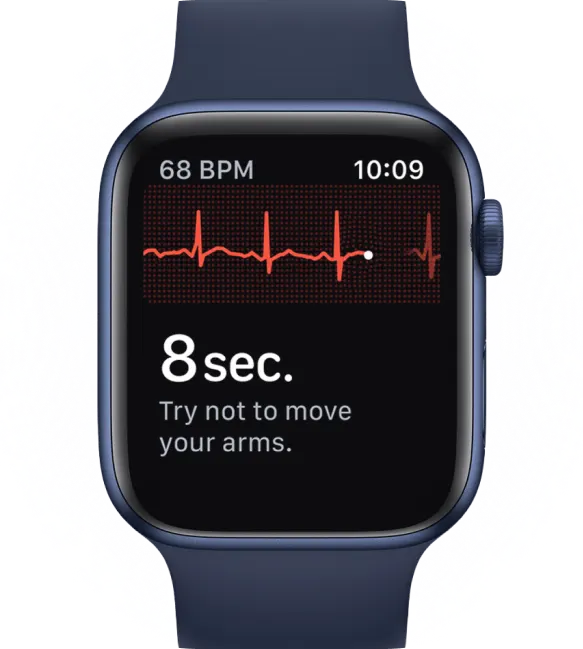
With so many of us wearing a device that can take an ECG, like an Apple Watch, Fitbit, or Kardia, it's natural to wonder if it can help diagnose CAD. This is a really important point to clarify.
It's critical to understand what these single lead ECGs are designed for.
Your watch ECG is an excellent tool for detecting abnormal heart rhythms, like Atrial Fibrillation (Afib). It cannot, however, diagnose coronary artery disease. CAD is a "plumbing" issue of blocked arteries, not an "electrical" issue that a rhythm focused ECG is built to find.
Think of it this way: your watch is a rhythm specialist, not a blockage detector. While it can't tell you if you have plaque buildup, the ECGs you record are still immensely valuable.

If you ever feel palpitations or an irregular beat, capturing it on your watch gives your doctor a real time snapshot of what happened. Sharing that data helps them build a more complete understanding of your heart's overall health and makes you a true partner in your own care.
Many people consider wearing smartwatches for health monitoring. If you're wondering about the overall value of these devices for peace of mind, you can learn more about whether smartwatches are worth it.
Taking Control With Lifestyle and Treatment
Getting a diagnosis of coronary artery disease can feel like a lot to take in. But this is also the moment you get to take the wheel and steer your heart health in a better direction. You have a surprising amount of power to influence how things go from here.
Think of the next steps not as a list of restrictions, but as a partnership with your doctor. You’re in the driver's seat, and these changes are powerful ways to care for yourself and your heart. Let’s walk through the steps you can take to manage CAD.


The Power of Positive Lifestyle Choices
The good news is that some of the most powerful tools for managing CAD are tied to your daily habits. It might feel like a big shift at first, but every small, positive change you make adds up to a stronger, healthier heart.
These aren't just suggestions, they're proven strategies that can directly improve the health of your arteries.
- Focus on a Heart Healthy Diet: This is all about adding more of the good stuff. Think plant based foods like fruits, vegetables, whole grains, and legumes. They're loaded with nutrients that help reduce inflammation and keep your arteries in good shape.
- Move Your Body, Gently and Often: You don’t need to train for a marathon. Simple activities like a brisk walk, a swim, or a bike ride for about 30 minutes on most days can make a huge difference in strengthening your heart and improving blood flow.
- Find Your Calm: Chronic stress is tough on the heart. Finding ways to manage it is just as important as diet and exercise. Even simple practices like meditation, deep breathing exercises, or just spending quiet time in nature can help.
- Quit Smoking for Good: If you're a smoker, quitting is the single best thing you can do for your heart. The benefits kick in almost right away, as your blood pressure and heart rate start to normalize.
Understanding Medical Treatments
While your lifestyle is the foundation, think of medical treatments as powerful backup. Your doctor might recommend medications or even a procedure to help manage your CAD, and it helps to know what they do.
The data paints a hopeful picture here. Between 2000 and 2020, there's been an approximately 50% decline in coronary artery disease mortality. This is partly thanks to better treatments and more people quitting smoking, proving that being proactive truly works.
Your doctor might talk about a few common types of medication:
- Statins: These are designed to lower your LDL, or "bad" cholesterol, which is the main ingredient in the plaque that clogs arteries.
- Beta Blockers: These help by lowering your blood pressure and slowing down your heart rate, which means your heart doesn't have to work quite so hard.
- Aspirin or Other Blood Thinners: These medications make it harder for blood clots to form, which lowers your risk of a heart attack.
Think of medications not as a setback, but as a support system working alongside your lifestyle efforts to keep your heart protected.
In some situations, a procedure might be the best way to get blood flowing freely again. The most common one is called an angioplasty. It's a bit like a plumber clearing a clogged pipe. A doctor guides a very thin tube with a tiny balloon on the end to the blocked spot in your artery.
Inflating the balloon pushes the plaque aside. Often, a small mesh tube called a stent is left behind. This stent acts like a tiny scaffold, propping the artery open to make sure blood can flow through to your heart muscle. These procedures are incredibly effective at relieving symptoms like chest pain and giving you your quality of life back.
Your Partner in Heart Monitoring
After a diagnosis or while managing risk factors for coronary artery disease, you might feel a new sense of awareness about your body. It's common to wonder how you can stay proactive and gain some reassurance day to day. This is where modern tools, like your smartwatch, can offer valuable support.
Your Personal Rhythm Interpreter
Your watch is excellent at monitoring for arrhythmias, like Atrial Fibrillation, which can sometimes be associated with coronary artery disease. But what do you do with that information? This is where a service like Qaly can provide a crucial layer of clarity and support.
Think of it as having your own personal interpreter for your heart’s electrical data. When you record an ECG on your Apple Watch, Fitbit, or Kardia device, you can get it reviewed by certified technicians. This gives you human expertise, helping you understand what that tracing means in minutes.
This isn't about diagnosing CAD at home. It's about getting reassurance and creating better, more informed conversations with your care team about your heart’s rhythm.
Having this expert analysis can make all the difference between anxiety and understanding. It helps you make sense of palpitations or other strange feelings you might experience. You get a clear, professional report that you can confidently share with your doctor.
Fostering a Better Doctor Partnership
When you walk into your doctor's office with clear, well documented ECG reports, you change the conversation. Instead of just trying to describe a fleeting symptom you had last week, you can show them exactly what happened. This provides a more complete picture of your heart health over time.
This proactive monitoring helps you in several ways:
- It provides peace of mind: Getting a quick, expert review of a concerning ECG can calm anxiety and prevent unnecessary worry.
- It creates a valuable record: You build a personal history of your heart's rhythm, which can be incredibly useful for your doctor.
- It helps you be prepared: You have clear data to share, making your appointments more efficient and productive.
By using your watch wisely and pairing it with a human analysis service, you add a valuable tool to your health monitoring setup. It’s all about being an active, informed partner in your own care.
Your Coronary Artery Disease Questions Answered
Getting a diagnosis of coronary artery disease can feel overwhelming. It's completely natural for a flood of questions and worries to surface as you begin to process what this means for you and your future.
We want to tackle some of the most common concerns head on. Think of this as a conversation to clear up confusion and empower you with the knowledge you need to move forward confidently.
Can Coronary Artery Disease Be Reversed?
This is often the very first question people ask, and it comes from a place of hope. While we can't magically "scrub" the existing plaque from your artery walls, the answer is still incredibly positive.
Through dedicated lifestyle changes and the right medical treatments, you can absolutely stop or dramatically slow down the progression of plaque buildup. In fact, aggressive management has been shown to shrink some plaques, which helps to improve blood flow.
The most important takeaway is this: you have the power to halt the disease in its tracks. This significantly lowers your risk of a future heart attack and can dramatically improve symptoms like chest pain, giving you back your quality of life.
Is It Safe to Exercise With CAD?
For the vast majority of people, the answer is a resounding "yes!" In reality, getting regular physical activity is one of the most powerful things you can do to manage CAD. Exercise makes your heart muscle stronger, improves circulation, and helps control risk factors like high blood pressure and stress.
However, and this part is critical, it is absolutely crucial to talk with your doctor first. They are your partner in this journey and will help you build an exercise plan that is both safe and effective for your specific situation.
Your doctor will help you figure out:
- The right type of activity: This might be brisk walking, swimming, cycling, or other forms of gentle aerobic exercise.
- The appropriate intensity: They'll help you find that "sweet spot" where you're challenging your heart safely, without overdoing it.
- Any warning signs to watch for: Knowing when to slow down, take a break, or stop is a key part of exercising with confidence.
Does CAD Mean I Will Definitely Have a Heart Attack?
No, a diagnosis of coronary artery disease is not a guarantee that you will have a heart attack. It’s much more helpful to think of it as a serious warning sign, but one that gives you a golden opportunity to take control.
Your diagnosis is your chance to step in and change the story. By actively managing your CAD, you can live a long, healthy, and fulfilling life. This means partnering with your healthcare team, committing to heart healthy lifestyle changes, and taking your medications as prescribed. By doing this, you can dramatically reduce your risk of ever having a heart attack. You are in the driver's seat.

Monitoring your heart's rhythm at home can provide valuable peace of mind and data for your doctor. Qaly offers an expert-reviewed analysis of your smartwatch ECGs in minutes.



.png)
.png)