


Key Takeaways

User Profile
Hello Heart Hero. When you feel a flutter, a skipped beat, or a racing sensation in your chest, it can be pretty unnerving. It often leaves you with more questions than answers, especially when those symptoms seem to vanish the moment you try to get a doctor's attention.
If that sounds familiar, you're in the right place. We understand it can feel like you're navigating a confusing healthcare system on your own, and this guide is here to offer some clarity and support.
Your Journey to Understanding Your Heart Rhythm
That journey can feel isolating. It's completely normal to feel frustrated when you know something isn't right, but every test comes back inconclusive. You're not imagining things; those fleeting moments are real, and getting to the bottom of them is the first step toward peace of mind.
A cardiac event monitor is a portable device that records your heart's electrical activity (your ECG) right when you're experiencing symptoms like palpitations or dizziness. Unlike a test at the doctor's office that just captures a single, brief snapshot in time, this monitor stays with you for days or even weeks to catch those sneaky, infrequent events as they actually happen.
Why Capturing Fleeting Symptoms Matters
Here’s the biggest challenge with heart rhythm issues: they’re unpredictable. They don’t operate on a 9-to-5 schedule and rarely show up on command during a doctor's appointment. This is precisely why a cardiac event monitor can be such a game-changing tool.
Think of it as your personal heart detective, always on the case. It’s designed specifically to catch those elusive moments and provide the hard evidence you and your doctor need. By recording your heart's activity at the exact time you feel a symptom, it turns a confusing, scary sensation into clear, understandable data.
The real purpose of an event monitor is to bridge that frustrating gap between when a symptom happens and when you can finally get it checked out. It empowers you to capture the exact evidence needed for an accurate diagnosis.
Modern technology puts more power into your hands than ever before. From prescribed monitors to the smartwatch on your wrist, you have tools to actively participate in your own health journey. These devices help ensure that the next time you feel that strange flutter, you won't just be left wondering. You'll have a recording of exactly what your heart was doing.
You can learn more about what defines these episodes by reading our guide on what is a cardiac event.
Putting You Back in Control
Feeling in the dark about your health is a heavy burden. The goal of using a cardiac event monitor is to shine a light on the unknown, giving you and your doctor concrete answers that lead to real, effective next steps.
This process transforms you from a passive patient into an active partner in your own healthcare. It’s about taking control, armed with information. By understanding how these tools work, you can better advocate for yourself and work with your doctor to build a clear path forward, leaving all that uncertainty behind.
What Is a Cardiac Event Monitor?
If your doctor has brought up a cardiac event monitor, it’s completely normal to have a flood of questions. You might be feeling a mix of hope and worry, especially if you’ve been dealing with confusing symptoms that come and go whenever they please. Let's walk through exactly what this device is and why it's such a game-changer on your health journey.
Think of a cardiac event monitor as a detective assigned to your heart. Its only job is to figure out what’s happening during those quick, fleeting moments when you feel a flutter, a skipped beat, or a wave of dizziness.
A Detective for Your Heart
Unlike the standard electrocardiogram (ECG) you get in a doctor's office, which only records about 10 seconds of your heart's activity, a cardiac event monitor sticks with you for much longer. We're talking several days, or even up to a month. This longer timeframe is everything.
The entire point is to catch symptoms that don't show up on a neat schedule. If your palpitations only pop up every few days, a quick in-office test will almost certainly miss them. The monitor closes that frustrating gap, making sure that the next time a symptom hits, you have a way to record it.
A cardiac event monitor is like giving yourself a "record" button for your heart. When you feel something isn't right, you can capture the exact evidence your doctor needs to see.
This is a massive leap forward from just trying to describe your symptoms later. Instead of telling your doctor, "I felt a weird flutter Tuesday afternoon," you can hand them the precise ECG data showing what your heart rhythm was doing at that very moment.
Why Your Doctor Might Recommend One
Doctors usually recommend a cardiac event monitor when a patient reports intermittent symptoms that need a closer look. It's the best way to connect what you're feeling with what's actually happening electrically in your heart.
Common reasons for using one include:
- Recurring Palpitations: That feeling of a racing, pounding, or fluttering heart that seems to start out of nowhere.
- Unexplained Dizziness or Lightheadedness: Episodes where you feel faint or unsteady, which could easily be tied to an irregular heart rhythm.
- Syncope (Fainting): Investigating why someone has passed out, since a sudden change in heart rhythm is a common culprit.
- Evaluating Treatment: Checking if medications for an arrhythmia are actually working as intended over time.
The monitor’s goal is to find the "why" behind these hard-to-pinpoint events. By wearing it through your normal daily life, you give it the best chance to capture an arrhythmia that would otherwise go completely unnoticed. Getting an accurate diagnosis is the critical first step toward the right treatment plan and, just as importantly, your peace of mind.
To get a broader perspective, you can read also about the basics of cardiac monitoring and what it entails. This will help you see how different tools fit together to create a full picture of your heart's health.
Comparing Different Types of Heart Monitors
Trying to figure out the world of heart monitors can feel a little confusing. With so many different names and gadgets, it’s easy to get them mixed up.
Let's break it down with an analogy. Imagine you're trying to find a slow, sneaky pipe leak somewhere in your house. You know it drips, but you can never seem to catch it in the act. Each type of heart monitor is basically a different tool you'd grab to solve this plumbing mystery.
The Holter Monitor: Your 24-Hour Surveillance Camera
A Holter monitor is like setting up a video camera and letting it run nonstop for 24 to 48 hours, pointed right at where you think the pipe is leaking. The goal is to record everything, hoping the drip happens while the camera is on.
This approach is fantastic for catching symptoms that happen often, maybe a few times a day. If your heart flutters frequently, a Holter has a great shot at recording it because it never stops listening. The catch? It only runs for a short time. If your symptoms are unpredictable and only show up once or twice a week, the Holter might finish its job before they ever appear.
The Cardiac Event Monitor: Your On-Demand Record Button
Now, let's look at the cardiac event monitor. This is more like a smart camera with a big "record" button. You don't have to search through hours of boring footage. Instead, the moment you hear that drip, you hit the button, and it saves a recording of what just happened and the moments leading up to it.
This is the key difference and the biggest advantage of an event monitor. You wear it for a much longer period, usually up to 30 days. It’s the perfect tool for those sneaky symptoms that might only pop up every few days or once a week. Because you're the one triggering the recording, you directly link the physical sensation you felt to the electrical activity in your heart at that exact moment.
The cardiac event monitor is designed for one primary purpose: to capture infrequent but significant heart rhythm symptoms that a shorter test would almost certainly miss.
This targeted approach gives your doctor the precise data they need without them having to wade through weeks of perfectly normal heart activity. It puts you in the driver’s seat.
Consumer Wearables: Your Pocket Camera
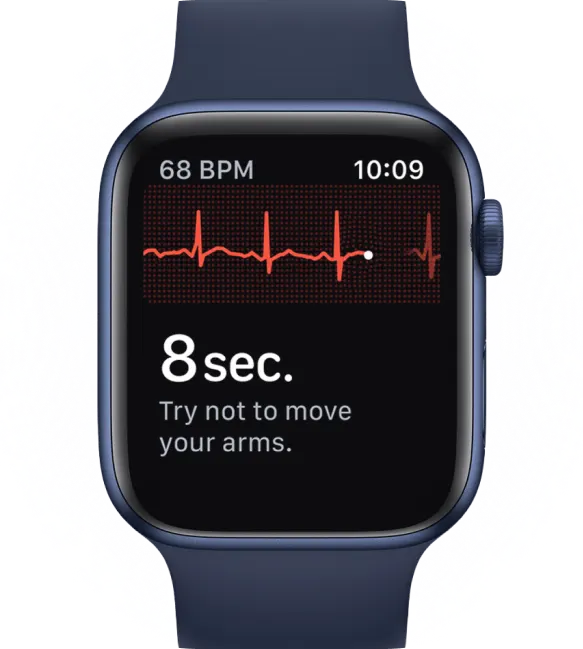
Finally, think of your smartwatch (like an Apple Watch or Fitbit) or a personal ECG device (like KardiaMobile) as a handy camera you keep in your pocket. You can pull it out any time you suspect there's a problem, point it at the pipe, and take a quick snapshot.
These devices are incredibly powerful for on-the-spot checks. If you feel a palpitation, you can get an ECG reading in just 30 seconds, providing immediate, valuable information. You can learn more about how they work in our guide to the portable electrocardiogram monitor. The only limitation is that they can't record what they don't see; you have to be feeling the symptom and actively take a reading for it to be captured.
The growth in this space has been massive. The entire cardiac monitoring market, which includes event monitors, was valued at $10.06 billion in 2025 and is expected to grow to $21.72 billion by 2035. This boom is largely driven by an aging population and the increasing demand for more accessible monitoring tools, which is why we’re seeing so many patch-style monitors and mobile ECG devices hit the market.
Ultimately, the best tool always depends on the job. A Holter is for frequent issues, your smartwatch is for instant spot-checks, and a cardiac event monitor is the specialist you call in to catch those hard-to-pinpoint symptoms over a longer stretch of time.
What to Expect When Using an Event Monitor
Getting hooked up to a medical device for the first time can feel a little weird. It's totally normal to have some questions or even feel a bit anxious. You're probably wondering how it'll fit into your daily life, if it’s going to be uncomfortable, or if you might do something wrong. Let's walk through what the day-to-day experience is really like, so you can feel confident right from the start.
The whole process is much simpler than you might think. A healthcare professional will show you exactly how to attach the monitor, which is usually a small, lightweight device. It connects to your chest with a few sticky patches, called electrodes, that adhere right to your skin.
These patches are what listen in on your heart's electrical signals. The monitor itself is designed to be pretty discreet and is worn under your clothes, so you can go about your day without it getting in the way.
Living with Your Cardiac Event Monitor
One of the first questions people ask is: "Can I live my life normally?" The answer is a big, resounding yes. In fact, that's the whole point. The cardiac event monitor is there to capture what your heart is doing during your regular activities, whether you're at work, relaxing at home, or out running errands.
You'll be able to do almost everything you normally do, but there are a few simple things to keep in mind:
- Showering: Most monitors aren't waterproof. You'll probably need to disconnect the device and take off the patches before you shower, then put on a fresh set afterward. The monitoring company will give you plenty of extra supplies for this.
- Sleeping: Yep, you'll wear the monitor to bed. It might take a night or two to find the most comfortable position, but most people adjust really quickly. Sleeping on your back or side often works best.
- Exercise: You should be able to stick with your usual exercise routine. Actually, capturing symptoms that pop up during physical activity provides incredibly valuable information for your doctor. Just be mindful of super sweaty activities, as a lot of sweat might loosen the adhesive on the patches.
The most important part is to just live your days as you normally would. This gives your doctor the most realistic and useful picture of what might be triggering your symptoms.
Capturing an Event: The Most Important Step
This is where you become a key player in your own diagnosis. While the monitor is always listening, it needs you to flag when something important happens. When you feel a symptom, a flutter, a moment of dizziness, a skipped beat, your job is simple.
You press a button on the device. That’s it.
Pressing that button tells the cardiac event monitor to save the ECG recording from the moments just before, during, and after your symptom. This simple action creates a direct link between what you felt and what your heart's electrical system was doing at that exact time.
Think of it like this: You are the director of this investigation. By pressing the button, you’re pointing and saying, "This is it! This is the feeling I've been trying to explain." This is the most powerful part of the whole process.
Along with pressing the button, you'll be asked to keep a simple diary. This doesn't need to be a detailed novel.
For each event you record, just jot down:
- The date and time it happened.
- What you were doing (e.g., "sitting at my desk," "walking up the stairs").
- A quick description of what you felt (e.g., "heart fluttered," "felt lightheaded").
This diary adds crucial context. When a technician later reviews your ECG, they can match the rhythm strip directly to your notes. A "racing heart" while you were resting on the couch looks very different from a racing heart while you were jogging on a treadmill. This context helps paint a much clearer diagnostic picture, giving your doctor the exact evidence needed to finally get some answers.
How Your ECG Data Provides a Clearer Picture
So, you've worn the monitor, dutifully pressed the button during those strange moments, and kept notes on what you were feeling. What happens next? This is where your effort starts paying off and those unsettling feelings begin to translate into real answers. It might feel like you've just sent a message in a bottle, but your data is actually on a direct path to a team of experts.
Once your monitoring period is over, all the data from your cardiac event monitor is sent securely to a specialized monitoring center. It doesn't just get filed away until your next doctor's visit. Instead, it’s immediately reviewed by certified cardiac technicians who are trained to analyze every single heartbeat.
Connecting the Dots Between Data and Symptoms
This is exactly why your symptom diary is so important. The technicians don't just stare at the squiggly ECG lines in a vacuum; they match each recording you flagged with the notes you took. Was it that "fluttering" feeling you had while relaxing on the couch? Or was it the "dizziness" you felt after climbing the stairs?
This combination of precise ECG data with your real-life experience is what lets them connect the dots. They can see exactly what your heart rhythm was doing at the very moment you felt something was off. This human-led analysis is critical because it adds a layer of context and understanding that a machine by itself just can't replicate.
This process isn't just about finding a problem. It's about giving your doctor the concrete evidence needed to either rule things out or confirm a diagnosis, finally moving you from a place of uncertainty to a place of action.
Identifying the Specific Culprit
After a thorough review, the technicians pinpoint any abnormalities in your heart rhythm. They're on the lookout for specific patterns that point to different kinds of arrhythmias. This analysis can finally put a name to what you've been feeling all this time.
Some of the most common findings from a cardiac event monitor include Atrial Fibrillation (AFib), an irregular and often rapid heart rate that can increase the risk of stroke; Premature Ventricular Contractions (PVCs), those extra, abnormal heartbeats that can feel like a "skipped" or "pounding" beat; and Supraventricular Tachycardia (SVT), a very fast heart rhythm that begins in the heart's upper chambers.
Think about this: in 2022, cardiovascular diseases were responsible for a staggering 19.8 million deaths across the globe, making up about 32% of all deaths. This statistic highlights why devices like cardiac event monitors are so vital, especially for people dealing with palpitations. They're designed to catch those fleeting events that a standard checkup would likely miss, allowing for earlier detection of conditions like atrial fibrillation, which affects over 59 million people worldwide and significantly raises stroke risk if untreated. You can find more on these global health stats in this comprehensive HDIN Research report.
From a Report to a Plan
The monitoring center then compiles all of these findings into a detailed report for your doctor. This report summarizes every significant event, provides examples of the ECG strips, and links them directly to your diary entries. If you're curious about what those strips actually show, take a look at our guide on how to read an ECG.
Armed with this clear, evidence-based report, your doctor can finally sit down with you to map out a personalized treatment plan. This could involve medication, simple lifestyle changes, or maybe some further tests. But the most important thing is that you're no longer in the dark. You have answers, a path forward, and the peace of mind that comes from knowing exactly what’s going on with your heart.


Taking Control with At-Home ECG Monitoring
While a prescribed cardiac event monitor is a vital diagnostic tool, your journey toward understanding and managing your heart health doesn't stop when the official monitoring period ends. Today, we have more tools at our fingertips than ever before, giving you the power to stay informed and proactive between doctor visits. This isn't about second-guessing your doctor's advice; it's about enriching it.
It’s about having the power to check in with your heart on your own terms. This ability can go a long way in reducing the anxiety that builds while you're waiting and wondering. This ongoing awareness helps you become a more confident and knowledgeable partner in your own health.

Bridging the Gap with Modern Technology
Feeling a strange flutter in your chest and then facing a weeks-long wait for a doctor's appointment can be incredibly stressful. This is precisely where services like Qaly come into play, closing the gap between owning a personal ECG device and getting real, clinical-grade insights from it.
Now, you can take an ECG with your smartwatch or a handheld device like Kardia and have it analyzed by a certified cardiac technician, anytime, day or night. In just minutes, you receive a detailed, human-verified report explaining what your heart was doing at that exact moment. This immediate feedback provides real peace of mind when you need it most.
Beyond specialized medical monitors, many personal devices now offer at-home ECG monitoring. These give you another powerful way to understand your heart's rhythm. For example, using a device like the Fitbit Sense for at-home ECG monitoring lets you capture a reading the instant you feel a symptom.
Building Your Personal Heart Health Diary
Think of this process as creating a detailed diary of your heart's activity. Each ECG you take and get analyzed becomes another entry, building a continuous log that is incredibly valuable for both you and your doctor.
By tracking your heart's patterns over time, you can start to connect the dots. You might identify potential triggers for your symptoms or see how your rhythm responds to different activities and lifestyle changes. Armed with this data, your conversations with your healthcare provider become far more productive.
Instead of just trying to describe a fleeting sensation, you can show them a detailed history of your heart's electrical activity. This changes the entire dynamic, paving the way for a more collaborative and data-driven approach to your care.
You transition from being a passive passenger to an active co-pilot on your own health journey. That level of personal involvement is incredibly empowering and can significantly lessen the feeling of helplessness that often comes with heart rhythm concerns.
You Are Your Own Best Advocate
Ultimately, taking charge of your at-home monitoring is about building confidence. When you have access to clear, understandable information about your own body, you're better prepared to ask the right questions and make informed decisions with your doctor.
This proactive approach comes with several key benefits:
- Reduced Anxiety: Getting quick answers about a potential arrhythmia can calm your fears and provide immediate reassurance.
- Better Doctor Visits: You arrive at your appointments with a detailed log of events, making your time with your doctor more focused and effective.
- Informed Self-Care: Understanding your heart’s unique patterns can help you make lifestyle choices that truly support your overall well-being.
This is about much more than just collecting data. It’s about transforming that data into knowledge, and then using that knowledge to live a healthier, more secure life. You have the ability to be an active, informed participant in your own care, and that's a powerful step toward lasting peace of mind.
Common Questions About Cardiac Event Monitors
Getting the news that you might need a cardiac event monitor can definitely bring up a lot of questions. It's completely normal to feel a bit unsure or even a little anxious. We’ve put together some answers to the most common concerns to give you some quick, clear information and hopefully put your mind at ease.
Will Wearing a Cardiac Event Monitor Hurt?
The short answer is no. The monitor itself is a small, lightweight device that doesn't cause any pain. It attaches to your chest with a few electrode patches that use a gentle adhesive.
Most people find it comfortable enough to go about their daily lives, including sleeping, without much bother. That said, some people do experience minor skin irritation from the adhesive after a few days. The device is really designed for minimal disruption, but if you notice any significant rash or discomfort, it's always a good idea to call the monitoring company or your doctor’s office for advice.
How Do I Get a Monitor and Will Insurance Cover It?
A cardiac event monitor is a medical device, so it always has to be prescribed by a doctor. If you've been dealing with symptoms like heart palpitations, dizzy spells you can't explain, or fainting, your doctor will weigh whether this kind of monitoring is the right next step for you.
Here's the good news: in most situations where a monitor is prescribed for a clear medical reason, it is covered by health insurance. Of course, your specific coverage and any out-of-pocket costs will depend on your individual health plan.
Can I Just Use My Smartwatch Instead?
While personal devices like an Apple Watch or Fitbit are amazing for grabbing a quick, on-the-spot ECG, they aren't a direct substitute for a prescribed cardiac event monitor. There's a key difference: a medical monitor is worn for a much longer, continuous period, often for weeks, and is typically connected to a 24/7 clinical service that keeps a constant eye on the data.
However, using your smartwatch is a fantastic way to be proactive about your heart health. It empowers you to capture valuable information that you can, and should, share with your doctor.

Need expert eyes on your ECG between doctor visits? Qaly's human technicians analyze your wearable ECGs in minutes.



.png)
.png)