





Key Takeaways

User Profile
You take diphenhydramine because your allergies are flaring, your skin is itchy, or you just want to sleep. Then your body feels different in a way you didn't expect. Maybe your mouth gets dry. Maybe you feel oddly heavy and foggy. Maybe your heart suddenly feels louder than usual, and that's the part that sends you searching for answers.
That reaction can be unsettling, especially when the medicine is so common that people talk about it like it's no big deal. But a familiar over the counter drug can still have real effects on the brain, nerves, bladder, eyes, and heart. If you're feeling confused, you're not overreacting. You're paying attention to your body.
Hello Heart Hero Understanding Diphenhydramine
A lot of people meet diphenhydramine in a very ordinary moment. You're standing in the pharmacy aisle, tired, congested, itchy, or sneezing, and you pick up something that seems simple. Later, instead of just feeling allergy relief, you feel sleepy, wobbly, or strangely aware of your heartbeat.
That gap between expectation and reality is where anxiety often starts.
Diphenhydramine is the active ingredient in some allergy and sleep products. It's well known for making people drowsy, but that's only part of the story. It can also affect balance, concentration, vision, urination, and heart rhythm. So if you took it and thought, “Why does this feel stronger than I expected?” that question makes sense.
Why this medicine can feel surprisingly intense
One reason people get caught off guard is that the most basic side effects are tied to how the medicine works. It isn't just calming allergy symptoms in one narrow part of the body. It also acts on the brain and on nerve signals that help control everyday functions.
The result can feel like your body is running in “low power mode.” You may feel sleepy, dizzy, or unsteady. The NHS describes diphenhydramine as a “drowsy (sedating) antihistamine” that usually starts working in about 30 minutes and can make people feel sleepy, dizzy, or unsteady on their feet with difficulty concentrating, as summarized in the NCBI overview of diphenhydramine adverse effects.
You don't have to choose between brushing symptoms off and assuming the worst. Most of the time, understanding the pattern brings the panic down.
What worries people most
For some readers, the scariest part isn't dry mouth or sleepiness. It's the moment their chest feels fluttery, fast, or off rhythm. That can be hard to interpret because diphenhydramine can cause common side effects that feel dramatic, while also having the potential to affect the heart in more serious ways in some situations.
That's why it helps to separate what is common from what deserves closer attention. Once you know which effects fit the expected pattern and which ones are red flags, things feel a lot less mysterious.
How Diphenhydramine Works in Your Body
Diphenhydramine is a first-generation antihistamine. “Antihistamine” means it blocks histamine, which is one of the chemicals involved in itching, sneezing, watery eyes, and hives. The “first-generation” part matters because these older antihistamines are more likely to reach the brain, which is why they often make people sleepy.
The key and wrong lock idea
Diphenhydramine can be pictured as a key that fits more than one lock. You want it to block the “histamine lock” because that helps with allergy symptoms. But it also blocks some “acetylcholine locks,” and that creates side effects in parts of the body that weren't the original target.
That second effect is called anticholinergic action. The term sounds technical, but the everyday results are familiar. Less saliva. More dryness. Slower bladder emptying. More mental fog. More sleepiness.
Authoritative labeling describes diphenhydramine's important side effects as a mix of central nervous system depression plus anticholinergic toxicity, including sedation, sleepiness, dizziness, disturbed coordination, confusion, restlessness, blurred vision, convulsions, dry mouth, difficult urination, and urinary retention in the Pfizer labeling for diphenhydramine.
Why this matters in real life
Once you understand that “master key” effect, the medication makes more sense. A pill meant to calm allergy symptoms can also make your brain feel slower, your eyes less focused, and your balance less reliable. That's not your imagination. It matches the drug's biology.
This also explains why some people compare different allergy medicines and feel very different on each one. If you've ever wondered why one antihistamine feels calm and another feels sedating or fluttery, this article on whether Zyrtec can cause heart palpitations offers a helpful comparison point.
Practical rule: If a medication changes how alert, steady, and coordinated you feel, treat that as a whole body effect, not just an allergy fix.
Why the brain is such a big part of the story
Diphenhydramine's side effects often feel “mental” before they feel physical. You might notice grogginess, poor focus, or a strange disconnected feeling. That happens because the medicine doesn't stay confined to your nose or skin. It affects signaling in the brain too.
That's why even a standard dose can interfere with driving, working, climbing stairs, or anything that depends on quick reaction time. When people say this medicine “knocks them out,” they're describing the same mechanism that can also leave them dizzy or unsteady.
Common Side Effects You Might Experience
You take diphenhydramine hoping for relief, then an hour later your mouth feels dry, your eyelids feel heavy, and walking down the stairs takes more concentration than usual. That experience can feel unsettling, especially if you were expecting “just an allergy pill.” In many cases, these effects are common and temporary.
The side effects people notice first
The usual pattern is fairly recognizable. Diphenhydramine can make you feel sleepy, dizzy, less coordinated, dried out, and a little visually off. Some people also notice constipation or trouble emptying their bladder.
Here's what that can look like in everyday life:
- Drowsiness and heavy eyelids. Your brain can feel wrapped in cotton, and simple tasks may take more effort.
- Dizziness or lightheadedness. Standing up, turning quickly, or walking in the dark may feel less steady than usual.
- Dry mouth. Your tongue may feel sticky, and you may keep wanting small sips of water.
- Blurred vision. Reading fine print, looking at screens, or judging steps can become harder.
- Constipation or sluggish digestion. Your gut can slow down along with the rest of you.
- Trouble peeing. It may feel harder to get started or fully empty your bladder.
A helpful way to understand this is to picture several body systems being turned down a notch at the same time. Your alertness, tear production, saliva, gut movement, and bladder function can all be affected together.
Why these symptoms often show up as a group
These side effects are connected, not random. Diphenhydramine affects the same chemical signals in different parts of the body, so dry mouth, fuzzy thinking, blurry vision, and poor balance often arrive as a package.
That “cluster effect” can make a normal day feel strangely hard.
The overlap can also be confusing if you already live with anxiety, medication sensitivity, or attention symptoms. A person may wonder, “Am I sleepy from the medicine, keyed up because I feel strange, or both?” That gray zone is real. If that sounds familiar, this practical guide for ADHD treatment discusses the same kind of symptom overlap many people struggle to sort out.
Some people become especially anxious when a body sensation feels unfamiliar. Blurry vision, dizziness, and a dry mouth can create a “something is wrong” feeling even when the reaction is a known medication effect. If your heart starts to feel more noticeable too, it helps to know that some medicines can affect heart rhythm pathways, including drugs that can prolong the QT interval. That does not mean every flutter or odd sensation is dangerous. It means context matters, and paying attention calmly is better than guessing.
What usually helps
A few simple steps can make this stretch easier:
- Stand up slowly. Give your body a moment if you feel woozy or off balance.
- Skip driving or risky tasks. Slower reaction time and blurred vision can sneak up on you.
- Use small, steady hydration habits. Sipping water or using sugar-free lozenges can ease dry mouth.
- Notice the timing. If symptoms started after the dose and gradually fade, that pattern is useful information.
- Watch for urinary trouble. If you cannot urinate, that deserves prompt medical attention.
Your reaction does not have to match someone else's. One person feels mildly sleepy. Another feels very foggy from the same dose. That difference is common, and it does not mean you are overreacting.
Serious Heart Related Diphenhydramine Side Effects
You take diphenhydramine to settle an allergy or help with sleep, then an hour later your chest feels fluttery or your heart seems louder than usual. That moment can trigger a fast fear spiral. Is this anxiety, a harmless medication effect, or something you should take seriously?
The honest answer is that diphenhydramine can affect the heart in some people, especially at higher doses or in people who are already more sensitive to rhythm changes. The goal is not to panic. The goal is to know what deserves attention.
What palpitations can feel like
“Palpitations” means your heartbeat becomes noticeable in a way that feels unusual. People describe it in several ways:
- Fluttering. Like a brief vibration in the chest
- Skipping. A pause followed by a harder beat
- Pounding. The heartbeat feels forceful
- Racing. Faster than expected while resting
- Irregularity. The beats do not feel evenly spaced
This symptom is important because diphenhydramine can sometimes cause a fast or uneven heartbeat. The tricky part is that panic can feel similar. Both can create a pounding chest, shakiness, and a sense that something is off.
That overlap is why many people second-guess themselves.
Why the heart can react
Your heart runs on a carefully timed electrical system. It works a bit like traffic lights coordinating cars through busy intersections. When the timing stays orderly, each beat follows the next in a smooth pattern. When a medicine interferes with that timing, the rhythm can speed up, feel uneven, or become less efficient.
Diphenhydramine can affect those electrical signals, particularly in overdose situations, but sometimes at lower doses in susceptible people. Medical reviews describe problems such as tachycardia, QRS widening, bundle branch block, and QT prolongation. If you want a plain-language explanation of that timing problem, this guide to medications that can prolong the QT interval may help.


The terms that sound scarier than they need to
A few heart terms can sound overwhelming at first glance. Here is what they mean in everyday language:
- Tachycardia means a heart rate that is faster than normal.
- Arrhythmia means the heart rhythm is abnormal.
- QT prolongation means the heart is taking longer than usual to reset electrically between beats.
You do not feel “QT prolongation” itself. What you may notice is fluttering, racing, dizziness, near-fainting, or the uneasy sense that your heartbeat is not following its usual pattern.

When not to brush it off
A brief odd heartbeat sensation does not always signal danger. A persistent or chaotic feeling deserves more respect.
Get urgent medical help if you have:
- A fast heartbeat that does not settle
- An irregular heartbeat that keeps happening
- Chest pain
- Shortness of breath
- Fainting or feeling close to fainting
- Confusion
- Seizure-like activity
Higher-than-recommended doses raise the risk of serious complications, including dangerous rhythm problems. If too much diphenhydramine may have been taken, do not wait to see whether it passes.
A strange heartbeat can be unsettling. A strange heartbeat with chest pain, fainting, breathing trouble, or repeated irregular beats needs urgent care.
If your main symptom is “my heart feels weird,” that feeling is worth paying attention to. You do not need to diagnose it on your own in real time. You just need to notice the pattern, respect warning signs, and get help when the symptoms move beyond mild and brief.
How to Monitor Your Heart on Diphenhydramine
One of the hardest parts of medication-related palpitations is the uncertainty. By the time you decide whether to worry, the feeling may already be gone. That's why wearable tools can be helpful. They give you a way to capture what happened instead of relying only on memory.

Why monitoring helps calm the spiral
A key problem with diphenhydramine is that fast or irregular heartbeat sensations can be mistaken for anxiety or other side effects, which leaves people unsure whether a racing heart deserves an ECG review. The NHS-based summary in this discussion of diphenhydramine side effects and palpitations highlights exactly that gap.
That uncertainty is where many people get stuck. You feel something real, but you can't tell whether it's harmless, expected, or a warning sign.
A simple step by step approach
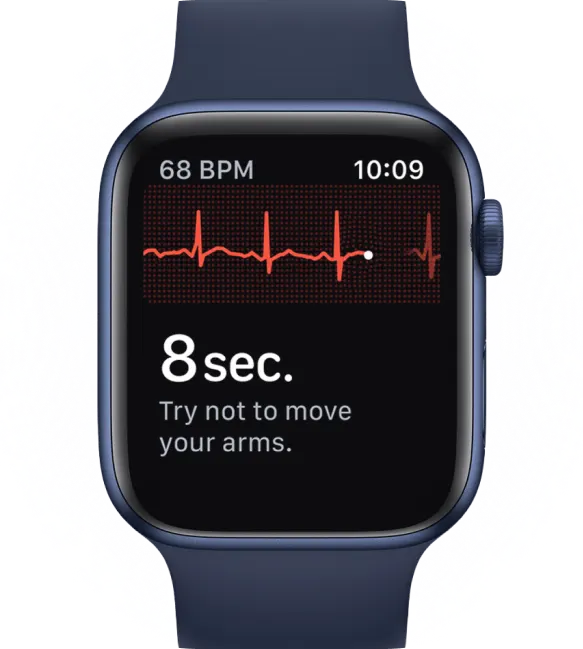
If you use an Apple Watch, Fitbit, Samsung watch, Kardia device, or another wearable ECG tool, this is a practical way to respond:
- Pause and notice the symptom
Ask yourself what you're feeling. Fluttering, racing, pounding, skipped beats, dizziness, or shortness of breath all point to slightly different possibilities. - Record the moment if your device allows it
If your wearable can capture an ECG, do it while the symptom is happening. If it only gives heart rate, note whether the rate looks higher than your usual resting pattern. - Write down the timing
Note when you took diphenhydramine and when the symptom started. That timing link can be very useful later. - Check for red flags
If symptoms include fainting, chest pain, severe shortness of breath, confusion, or a very abnormal feeling heartbeat, don't wait around trying to decode it yourself. - Save the recording
Even if the watch gives an unhelpful label, the strip itself may still matter.
If you're new to this kind of tracking, this guide to a portable electrocardiogram monitor explains what these devices can and can't tell you.
What your watch can and can't do
Wearables are excellent at catching a snapshot. They are not perfect interpreters of medication effects. A smartwatch may tell you “sinus rhythm,” “high heart rate,” or “inconclusive,” but it won't always explain why you felt a dramatic flutter.
That doesn't mean the data is useless. It means context matters.
Bring the story with the strip. The recording shows the rhythm. Your notes show the situation.
A helpful note template
When symptoms happen, keep it simple:
- What I took
Diphenhydramine - When I took it
Approximate time - What I felt
Fluttering, pounding, racing, skipped beats, dizziness - What my wearable showed
Heart rate, ECG, or watch alert - How long it lasted
Brief, repeated, or ongoing
That kind of note can make a doctor visit much more productive and can also help you notice patterns, like symptoms only happening after nighttime use.
Your Next Steps and When to See a Doctor
By this point, the side effects of diphenhydramine usually sort into two buckets. One bucket is uncomfortable but expected, like sleepiness, dry mouth, dizziness, blurred vision, constipation, or feeling unsteady. The other bucket is more concerning, especially when the heart feels fast, irregular, or persistently wrong.
If your symptoms fit the common pattern, the safest move is often to avoid risky activities, let the medicine wear off, and pay attention to how strongly you reacted. If your symptoms feel chest-centered, repeat, or don't match your usual anxiety pattern, trust that instinct. It's worth documenting.
You should seek medical help right away if you have chest pain, severe shortness of breath, fainting, severe confusion, seizure-like symptoms, or a heartbeat that feels chaotic or won't settle. If symptoms are less severe but recurring, don't keep guessing. This guide on heart palpitations and when to see a doctor can help you decide when it's time to escalate.
The reassuring part is that you don't need to solve everything in one moment. You just need to recognize the pattern, note what happened, and respond to the level of risk in front of you.
Frequently Asked Questions About Diphenhydramine
How long do the side effects last
The timeline is different for different people. Some notice the strongest effects for a few hours, while others still feel groggy, foggy, or off balance the next morning. That delayed, hungover feeling can happen because the medication keeps affecting the brain even after the main reason you took it has faded.
Can diphenhydramine make you feel anxious instead of calm
Yes. A medicine can make your body feel sleepy while your mind feels unsettled, and that mismatch can be surprisingly unnerving.
Some people feel physically jittery, mentally foggy, or unusually aware of their heartbeat. In children, the reaction can sometimes go in the opposite direction of sedation and look more like agitation or hyperactivity, as noted earlier. That does not mean the medicine is dangerous every time. It means your nervous system may be reacting in a way that feels uncomfortable rather than soothing.
Is it normal to feel sleepy and dizzy at the same time
Yes. Diphenhydramine can affect alertness and balance together, so feeling tired and woozy at the same time is a common pairing. It helps to move slowly, stand up carefully, and avoid driving or other tasks that need quick reactions.
What if I have dry mouth and trouble peeing
That combination fits the medicine's anticholinergic effects. A simple way to understand that is this. Diphenhydramine can dial down some of the body's automatic functions, including saliva production and bladder emptying.
If urinating becomes painful, very difficult, or barely happens at all, contact a healthcare professional.
Should you take diphenhydramine every night for sleep
Using it once in a while is different from depending on it night after night. Regular use can leave some people with next-day grogginess, poor concentration, constipation, or a hungover feeling that chips away at sleep quality instead of improving it.
If you keep reaching for it, or you notice palpitations, a racing heart, or odd heart rhythm alerts on a smartwatch, bring that up with a clinician. A wearable ECG cannot diagnose every symptom on its own, but it can give you a clearer record of what your heart was doing in the moment, which often lowers anxiety and makes the conversation with your doctor much more concrete.
Can alcohol make side effects worse
Yes. Alcohol and diphenhydramine both slow reaction time and can worsen dizziness, sleepiness, and poor coordination.
The combination can also make it harder to tell whether you are sedated or having a stronger reaction than expected.

Odd heart reading after diphenhydramine? Qaly provides human-reviewed ECG analysis you can actually understand.



.png)
.png)