





Key Takeaways

User Profile
Hello Heart Hero. You use your rescue inhaler because your breathing feels tight, and then your chest starts pounding. Your pulse feels loud. Your mind jumps to, “Is this my heart?”
That reaction is understandable. A fast heartbeat after albuterol can feel alarming, especially when you were trying to solve one urgent problem and a new one seems to appear.
Many people get told this is “normal,” but that rarely feels helpful in the moment. If you want a clear explanation of albuterol heart palpitations and practical ways to track what’s happening, this guide can help. You can also compare the broader pattern of common albuterol side effects if you want more context around what your body may be reacting to.
Your Guide to Albuterol Palpitations
A common pattern is simple: someone takes albuterol, breathing improves, and within minutes they notice a racing or pounding heartbeat. They stop, put a hand on their chest, and wonder whether the inhaler caused a heart problem.
In many cases, this is a known medication effect, not a sign that the heart is failing. That distinction matters, because fear can escalate quickly when breathing symptoms and heart sensations happen close together.
If you want more than “don’t worry,” focus on a few basics: why this happens, what the usual pattern looks like, and when it may need medical follow-up.
Practical rule: A symptom can feel intense and still be a predictable side effect.
Albuterol palpitations usually follow a pattern. They often start soon after use, feel fast or forceful, and then fade. That doesn’t mean every episode should be ignored. It means the pattern gives you clues.
Ask yourself:
- Timing: Did it start shortly after the inhaler?
- Rhythm: Does it feel fast but steady, or irregular?
- Duration: Is it easing up, or lasting longer than usual?
- Context: Were you anxious, short of breath, dehydrated, or using more albuterol than normal?
Those questions can turn panic into observation and help you describe the episode more clearly to a doctor.
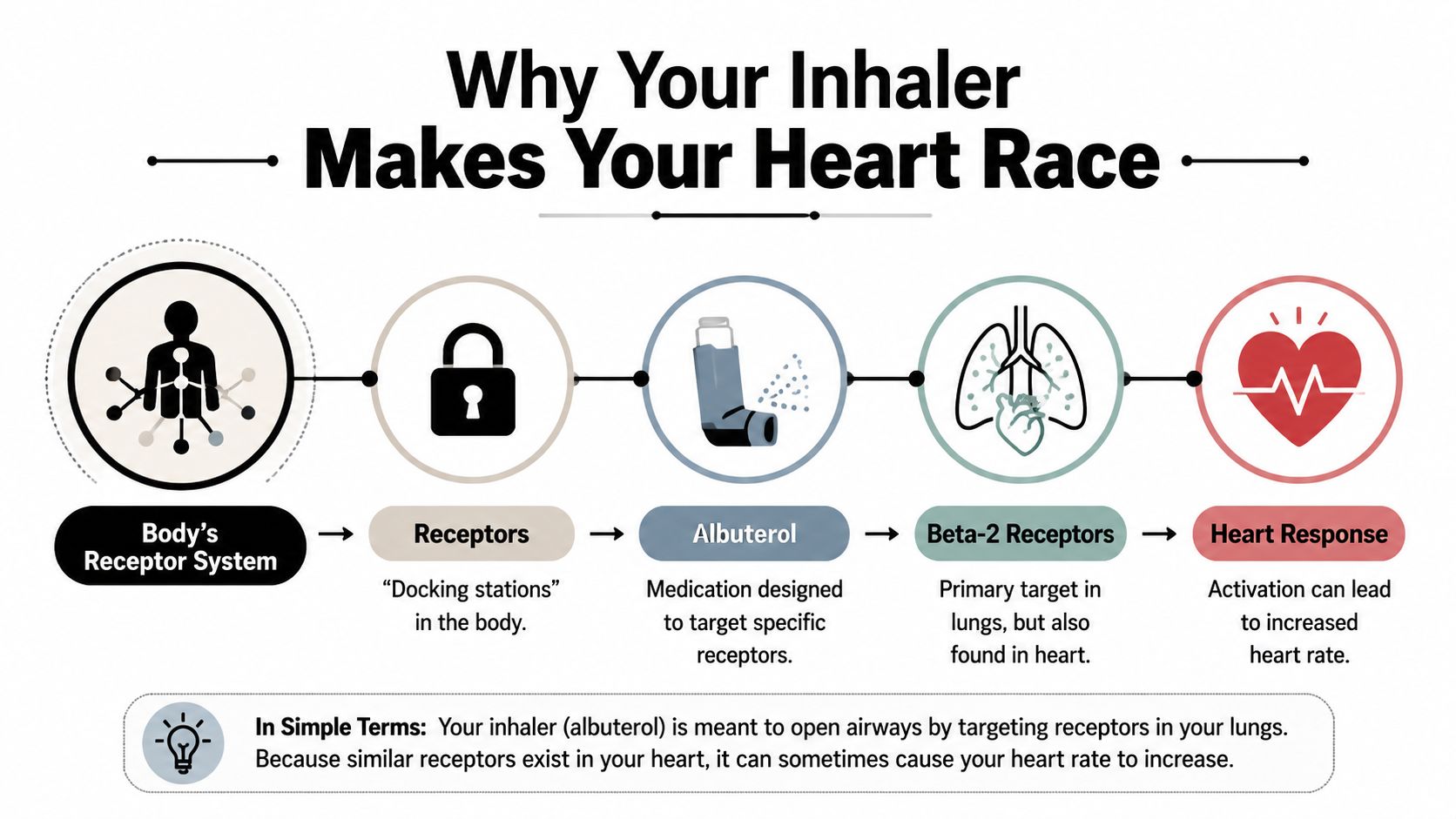
Why Your Inhaler Makes Your Heart Race
Albuterol is designed to open tight airways, but it can also stimulate the heart.
A simple way to picture it: your body has receptors, and albuterol is meant to act mostly on the beta-2 receptors in the lungs. That relaxes airway muscles so you can breathe more easily. But it can also partly affect beta-1 receptors tied to heart rate and how forcefully the heart beats.
The lock and key problem
Think of albuterol as a key made for one lock that can also jiggle a similar second lock. Its main target is the lung’s beta-2 receptors, but it can partly bind to beta-1 receptors that influence heart rate and contractility.
That spillover can cause:
- A faster pulse
- A pounding chest
- A revved-up feeling
- Greater awareness of each heartbeat
This is a direct medication effect. It is not just stress or imagination, and it does not automatically mean something dangerous is happening.
What the numbers actually show
Albuterol consistently raises heart rate by 4.4 to 6.7 beats per minute in adults, with the effect usually peaking within 30 to 60 minutes and lasting 2 to 4 hours, according to this review of albuterol's heart rate effects. The same source notes that with standard use, heart rates generally stay under 120–130 bpm.
That helps explain why the sensation can feel dramatic even when the measured increase is modest. If you are already tense, short of breath, or hyper-aware, even a moderate bump can feel big.
A pounding heartbeat after albuterol is often a drug effect, not proof of heart damage.
Why dose matters
Palpitations are often more noticeable when more albuterol gets into your system. Higher doses, repeated use close together, nebulizer treatments, or other situations that increase delivery can make the effect stronger.
That is why one dose may barely affect you while another leaves you shaky and wired.
Is It Just the Albuterol or Something More
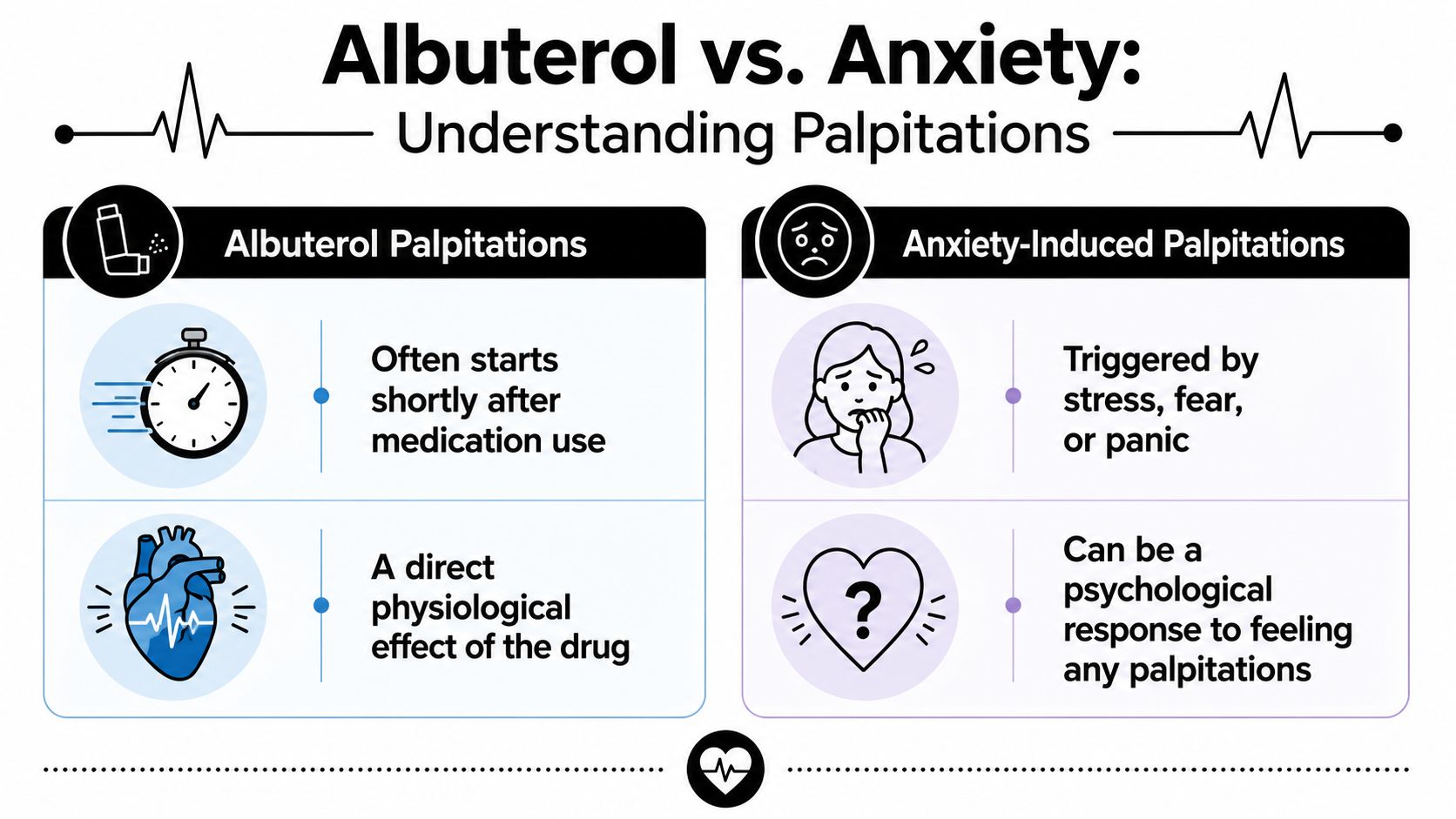
The confusing part is that albuterol, anxiety, and arrhythmias can all cause “heart weirdness,” but they do not usually feel the same. The difference is often the pattern, not just the speed.
When it’s likely the medication
Albuterol often causes a fast but regular heartbeat. Many people say it feels like they climbed stairs or drank strong coffee on an empty stomach. The rhythm may feel forceful, but steady.
That pattern is often sinus tachycardia. In plain English, the heart is following its usual rhythm, just at a faster rate.
When anxiety joins the mix
Anxiety can feel very similar, especially if you were already struggling to breathe. Shortness of breath can trigger fear. Fear can make your heart pound harder. Feeling the pounding can then create more fear.
Signs anxiety may be adding to the episode include panic, trembling, sweating, or a sense that something terrible is happening. But anxiety and albuterol can happen together, which is why the experience can feel so intense.
When to think about an arrhythmia
An arrhythmia is different because the rhythm may feel irregular, not just fast. People often describe fluttering, skipped beats, sudden thumps, or a chaotic rhythm.
Clinical studies suggest that standard albuterol doses do not significantly increase arrhythmias in asthmatic patients without heart disease. In one study, extrasystoles per hour were 6.55 with albuterol versus 8.37 with placebo, which was not a meaningful difference, according to the PubMed study on therapeutic-dose albuterol and arrhythmias.
If you want a broader comparison of different triggers, this guide on what causes heart palpitations can help sort medication effects from other possibilities.
Fast and regular is usually different from fast and chaotic.
A simple way to sort the feeling
Use this quick check:
- Albuterol pattern: starts after use, feels fast or pounding, rhythm seems steady
- Anxiety pattern: comes with dread, sweating, shakiness, or spiraling thoughts
- Arrhythmia pattern: feels irregular, fluttery, skipped, or jarring
This will not diagnose you, but it can help you decide whether the episode fits your usual side-effect pattern or something different.
How to Track Your Heart with a Wearable ECG
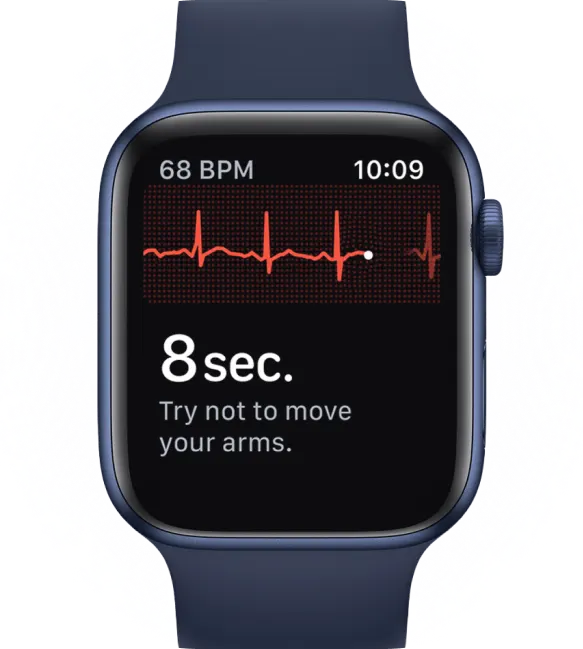
When symptoms are brief, memory gets messy. A wearable ECG can make the moment more concrete.
If you use an Apple Watch, Fitbit, Samsung watch, Kardia device, or similar tool, try to capture a recording while the palpitations are happening or just after they begin.

What to record in the moment
Keep it simple. You are collecting evidence, not trying to interpret every squiggle yourself.
Write down:
- The time you used albuterol
- How many puffs you took
- When the palpitations started
- Whether the rhythm felt steady or irregular
- How long the episode lasted
If your wearable can save an ECG or rhythm strip, keep that too.


Why this helps
A wearable recording can show whether your heart was simply beating fast in a regular pattern or doing something more irregular. That distinction is often the main point of confusion.
Instead of saying, “My inhaler did something scary,” you can say, “I took my inhaler, symptoms started soon after, and this is what my watch captured.” That leads to a much more focused conversation.
You can also learn more about heart rhythm monitoring with wearable devices if you are trying to figure out when a home recording is worth saving.
The most useful recording is the one taken during symptoms, not hours later when everything feels normal.
What not to do
Do not stare at your watch every few seconds waiting for disaster. That usually feeds anxiety. Use the device as a notebook, not a threat detector.
The goal is to turn a vague sensation into a documented pattern. If the pattern keeps repeating after albuterol, that is useful information. If the rhythm looks irregular, that is useful too.
Practical Tips for Managing Albuterol Palpitations
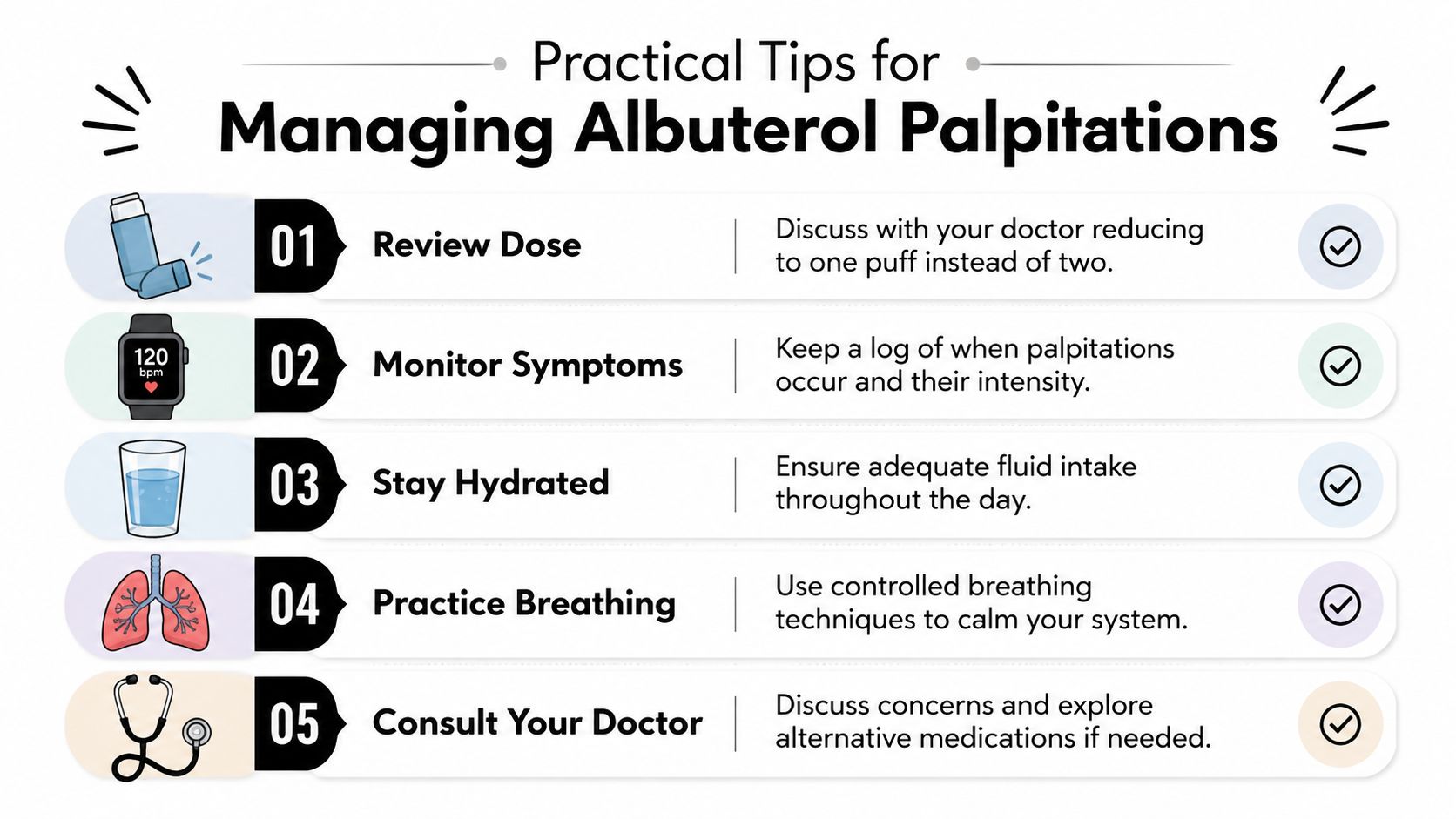
It helps to have a plan. Albuterol palpitations can be unsettling, but there are practical ways to reduce the stress and bring better information into a medical visit.
Start with the simplest adjustments
The severity of palpitations is dose-dependent, and side effects usually resolve within two to six hours. For some people, levalbuterol can provide similar breathing relief with fewer cardiac side effects, as explained in Mayo Clinic's guidance on albuterol side effects.
Useful questions for your clinician:
- Could one puff work instead of two? If your doctor says that is safe for you, a lower dose may mean fewer side effects.
- Is your current inhaler the best fit? Some people are more sensitive to standard racemic albuterol and may want to ask about levalbuterol.
- Would a different delivery method help? Mayo Clinic notes that switching from nebulizer treatments or pills to a metered-dose inhaler can reduce tachycardia and palpitations because less drug reaches the bloodstream.
What you can do at home
A few habits can make episodes easier to ride out:
- Sit down and pause: Stop moving around for a minute.
- Use steady breathing: Slow breaths can reduce the extra adrenaline that comes with panic.
- Stay hydrated: It will not cancel the drug effect, but it may help you feel less rattled.
- Avoid stacking stimulants: Caffeine, nicotine, and decongestants can make the episode feel stronger.
Keep a symptom log that a doctor can actually use
Many appointments go nowhere because the details are fuzzy. A short log works better than a dramatic memory.
Track:
- Medication timing
- Number of puffs
- How the heartbeat felt
- How long it lasted
- Whether you were anxious, sick, or already short of breath
- Any saved wearable ECGs
This helps you and your doctor see whether the pattern is stable, worsening, or connected to overuse.
When to Call Your Doctor About Heart Palpitations
Most albuterol-related palpitations are uncomfortable but manageable. Still, there are times when waiting is not the right move.
High-dose albuterol inhalation, especially when delivery is enhanced, has been documented to trigger supraventricular arrhythmias such as atrial fibrillation, even in healthy people. Reported symptoms can include palpitations lasting over an hour, nausea, and sweating, based on this clinical discussion of rescue inhaler side effects and heart racing.
Red flags that deserve follow-up
Contact a clinician promptly if you notice:
- Palpitations that do not settle down: especially if they last for hours or are stronger than your usual pattern
- Skipped beats or fluttering: an irregular sensation matters more than a simple fast pulse
- Chest pain or pressure: do not shrug this off
- Dizziness or feeling faint: this changes the urgency
- Breathing that gets worse instead of better: your rescue inhaler should help, not leave you more distressed
Trust a pattern change
Many people delay care because they do not want to be dismissed. That hesitation is understandable. But when a symptom is different from your normal experience, that difference matters.
If your usual reaction is “my heart pounds for a bit and then settles,” and now it feels chaotic, prolonged, or tied to nausea and sweating, pay attention to that change. If you want a clearer sense of timing and urgency, this guide on when to see a doctor for heart palpitations can help.
If it feels different from your usual albuterol reaction, treat that difference seriously.
You do not need proof that something is wrong before asking for help. A changed pattern is reason enough to check in.

Capture your symptoms, get a human-reviewed ECG, and go to your next appointment with more confidence.



.png)
.png)