


Key Takeaways

User Profile
Hello Heart Hero. You might be reading this after a long workday, a tense family conversation, or a moment when your Apple Watch, Fitbit, or Kardia strip made your stomach drop. Your heart fluttered, skipped, or raced, and now you're stuck with the question that keeps so many people awake at night: is this just stress, or is something wrong with my heart?
That uncertainty is exhausting. It gets worse when you feel brushed off, told it's "probably anxiety," or handed vague advice that doesn't match what your body is doing. If you're skeptical, that makes sense. People deserve clearer answers than "try to relax" when their chest feels strange.
Your Guide on Stress and Your Heartbeat
One common story goes like this. You finish a hard meeting, your shoulders are tight, your mind is still replaying what happened, and then your heartbeat suddenly feels off. Maybe it's one hard thump. Maybe it's a flutter. Maybe it feels like your heart is trying to run ahead of you.
That experience is real. It isn't weak, dramatic, or "all in your head." Stress can change what you feel in your chest, and in some people it can also change the heart's rhythm itself.
Why this feels so confusing
Part of the problem is that stress and heart rhythm symptoms overlap. Anxiety can make you more aware of your pulse. A real rhythm change can also trigger anxiety. Those two things often happen together, which is why so many smart people end up doubting themselves.
If you've been wondering whether anxiety can be tied to rhythm changes, this guide on can anxiety cause arrhythmia addresses that question directly.
You don't need to choose between "it's stress" and "it's my heart" too early. Sometimes stress is affecting your heart, and that's exactly why the symptoms deserve careful attention.
What you need most right now
You need a calm explanation. You need to know what stress induced arrhythmia means in plain language. And you need a way to think clearly about your symptoms without spiraling every time your device records something unfamiliar.
Your heart has an electrical system. Stress can disturb that system. But once you understand the pattern, the fear usually softens. Clarity doesn't erase every symptom, but it does help you respond with confidence instead of panic.
How Stress Triggers an Irregular Heartbeat
Stress changes your heartbeat through your body's built-in alarm system. When your brain detects a threat, even an emotional one, it activates the fight-or-flight response. That response releases stress chemicals that tell your heart to beat faster and harder.
A car engine suddenly pushed toward redline offers a useful comparison. The engine may still run, but its timing can become sloppy. Your heart's electrical system can behave the same way under enough stress.
What stress hormones do inside the heart
At the cell level, stress induced arrhythmias are not mysterious. A review in QJM explains that stress-related rhythms are driven by excessive beta-adrenergic stimulation, which alters cardiac electrical behavior and can generate early after-depolarizations, the extra electrical sparks that can show up as ectopic beats or build into more complex arrhythmias (QJM review on stress and arrhythmias).
In simpler language, stress chemicals can make heart cells more jumpy. They also make the timing of recovery across the heart less uniform. Instead of each area recharging in a coordinated way, some areas recover a little earlier and some a little later. That uneven timing creates the conditions for extra beats, racing rhythms, or more chaotic electrical loops.
Why a palpitation can feel so dramatic
A single abnormal beat can feel huge even when it lasts only a moment. That's because your chest, throat, and stomach are all sensitive to changes in pressure and rhythm. One early beat, followed by a stronger beat, can feel like a drop, a flip, or a punch.
This is also where confusion starts. Some stress sensations are just a faster normal rhythm. Some are true arrhythmias. Your body can't always tell you which one it is by sensation alone.
If you're also noticing changes in your recovery after stress, sleep, or workouts, learning about heart rate variability can add another useful layer of context.
Practical rule: Stress doesn't have to "damage" your heart in the moment to disrupt its rhythm. Sometimes it just has to push an already sensitive electrical system past its threshold.
Common Heart Rhythms Caused by Stress
Stress doesn't produce one single rhythm problem. It can trigger several patterns, and each tends to feel a little different in your body.
PVCs and PACs
A premature ventricular contraction, or PVC, often feels like a skipped beat, a thump, or a brief chest drop. The beat comes early from the lower chambers of the heart. Because it arrives too soon, it may not pump much blood, and the next beat can feel extra forceful.
A premature atrial contraction, or PAC, can feel more like a flutter or quick hiccup in the rhythm. This early beat starts in the upper chambers instead. To many people, PACs and PVCs feel similar, which is why a wearable ECG can be so useful when symptoms are brief.
Sinus tachycardia and SVT
Sometimes stress causes sinus tachycardia, which means your natural pacemaker is still in charge, but it's running fast. This often feels like a strong, regular racing heartbeat. It can happen during panic, pain, sleep loss, dehydration, or after stimulants.
Supraventricular tachycardia, or SVT, is different. People often describe it as a switch flipping on. The rate suddenly jumps and may stay fast until it stops just as suddenly. Stress can help trigger SVT in a heart that's already susceptible.
A fast heartbeat isn't always dangerous, and an irregular heartbeat isn't always severe. The pattern matters more than the drama of the sensation.
Atrial fibrillation and emotional triggers
Atrial fibrillation, or AFib, often feels irregular rather than merely fast. Some people notice chaotic fluttering. Others feel weakness, breathlessness, or a vague internal shakiness. Some feel almost nothing at all.
The stress connection proves especially important. A landmark study found that an episode of acute anger was linked to a five-fold increase in the likelihood of an AF episode in the moments that followed (Lampert and colleagues on anger and AF). That doesn't mean every angry moment causes AFib. It means emotional stress can act as a true trigger in vulnerable hearts.
If AFib is the rhythm you're worried about, this deeper look at AFib from stress may help you compare what you're feeling with what clinicians watch for.
Recognizing the Signs and Red Flags
The hardest question is usually the simplest one: when should you worry?
Many stress-related palpitations are brief and self-limited. They may happen during conflict, caffeine use, poor sleep, heavy workload, or after a burst of fear. But you should not assume every symptom is benign just because stress is present.
Signs that deserve prompt medical attention
Get urgent medical care if an irregular heartbeat comes with any of these:
- Fainting or near-fainting
- Chest pain or chest pressure
- Severe shortness of breath
- Marked dizziness
- New confusion or extreme weakness
- A sustained fast rhythm that doesn't settle
Those symptoms don't automatically mean the worst, but they move the situation out of the "watch and wait" category.
Anxiety or arrhythmia
Here's the nuance many people never hear. Anxiety can absolutely heighten your awareness of your heartbeat. But that doesn't mean anxiety is harmless in every case.
Acute stress can increase not just the frequency of ventricular arrhythmias but also their lethality, and stress-related sympathetic surges can trigger dangerous rhythms such as ventricular tachycardia even in structurally normal hearts. That distinction matters because it separates a benign stress surge from a potentially serious electrical event, as discussed earlier in the QJM review.
So what should you do with that information? Don't panic. Use it to sharpen your judgment.
A benign stress response often feels fast but steady, and it tends to improve as your body settles. A concerning rhythm may feel abrupt, very irregular, associated with collapse symptoms, or disconnected from what your mind is feeling.
If your symptoms feel worse than "just anxiety," trust that instinct enough to document the event and seek proper evaluation.
A simple way to think about urgency
Ask yourself three questions:
- Did I only feel a sensation, or did my whole body react?
Chest pain, faintness, and breathlessness matter more than awareness alone. - Did it pass quickly, or did it keep going?
Duration changes the level of concern. - Was the rhythm regular and stress-linked, or chaotic and unfamiliar?
A strange new pattern deserves attention, even if stress was part of the day.
From a Wearable ECG to a Clear Diagnosis
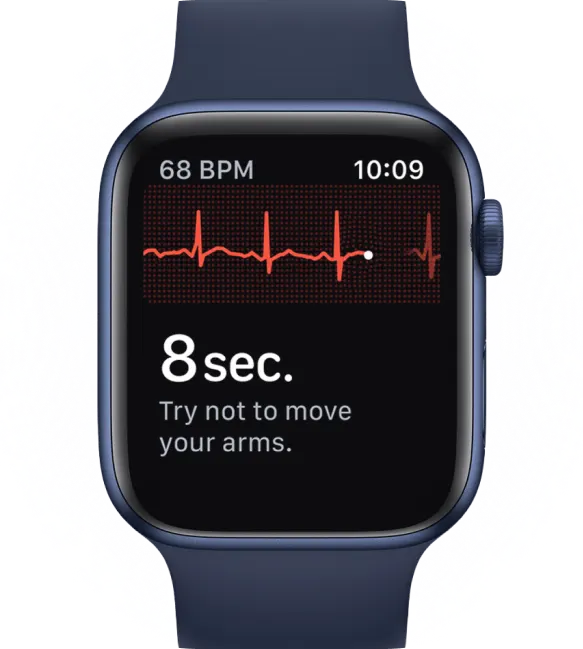
A symptom diary helps, but a rhythm strip is better. If you use an Apple Watch, Samsung watch, Fitbit, Kardia, or another wearable ECG, you're carrying a real diagnostic clue in your pocket or on your wrist.
The trap is relying only on the device's headline result. "Normal" doesn't always explain symptoms. "Possible AFib" can sometimes create more worry than clarity. The deeper value is in the waveform and the intervals.
The intervals that matter
Three measurements are especially useful:
- PR interval tracks how long the signal takes to travel from the atria toward the ventricles.
- QRS duration shows how quickly the ventricles activate.
- QTc interval reflects how long the ventricles take to reset electrically, corrected for heart rate.
Those numbers are not just technical details for cardiology reports. They can reveal how your body is responding to stress over time.
A Frontiers review highlights an overlooked point: mental stress can prolong QTc and shorten PR intervals before palpitations even begin, which means interval trends may offer an early clue that stress is affecting your heart's electrical behavior (Frontiers review on mental stress and ECG interval changes).


Why trend tracking matters more than one strip
A single wearable ECG is a snapshot. Trend tracking turns snapshots into a story.
If your PR interval tends to shorten on days with conflict, sleep loss, or intense work stress, that's useful. If your QTc appears longer during periods when you feel keyed up and symptomatic, that matters too. A device alert may miss those subtler changes because it's built to flag broad rhythm categories, not nuanced shifts in your baseline.
This is why many people get stuck. Their watch doesn't flag a dramatic event, but they still feel something real. Human review can catch patterns that automation may not explain well.
If you want a plain-language primer on what your watch is recording, this smartwatch ECG guide from a cardiologist's perspective is worth reading.
What to bring to your appointment
Bring more than a screenshot. Bring a pattern.
- Record timing: note stress, sleep, caffeine, alcohol, illness, and exercise.
- Save symptom strips: especially those captured during the actual sensation.
- Track intervals if available: PR, QRS, and QTc trends can add valuable context.
- Write the feeling clearly: skipped, fluttering, pounding, racing, or chaotic.
That kind of evidence helps you move from "I think something is wrong" to a more useful clinical conversation.
Your Action Plan for Managing Stress Arrhythmias
Relief starts when you stop treating stress as a vague lifestyle issue and start treating it as a heart trigger you can influence. You may not be able to remove every stressor, but you can lower the electrical impact of stress on your body.

Start with the triggers you can change
A 2024 report highlighted that work-related stress from high job strain and effort-reward imbalance was linked to up to a 97% increased risk of developing atrial fibrillation (American Heart Association newsroom summary of the 2024 work stress and AF study). If your worst symptoms cluster around work, that's not a character flaw. It may be a genuine physical trigger.
That means practical changes count. They are not "soft" solutions.
- Protect sleep: poor sleep raises stress reactivity and makes palpitations feel louder.
- Lower stimulant load: caffeine, nicotine, and some pre-workout products can combine badly with stress.
- Use gentle movement: walking, easy cycling, and light strength work often calm the nervous system better than all-out exercise during a flare.
- Respect recovery: dehydration, illness, and overtraining can make your rhythm more irritable.
Calm the nervous system on purpose
When symptoms begin, simple techniques work best because you can use them in real life.
Try this sequence:
- Exhale longer than you inhale. Slow exhalation helps reduce the body's alarm state.
- Sit down and label the sensation. "Fast and regular" is different from "irregular and chaotic."
- Capture an ECG if you can. Data often reduces panic.
- Remove extra triggers. Skip the second coffee, nicotine hit, or intense workout that day.
Your goal isn't to become perfectly calm. Your goal is to make the next electrical surge less likely.
Know when treatment goes beyond lifestyle
Some people need more than stress reduction. They may benefit from therapy, medication review, treatment for sleep apnea, blood pressure control, or direct rhythm treatment from a cardiology team.
If your doctor ever discusses procedures for a persistent arrhythmia, it helps to know what recovery can look like. This overview of understanding ablation recovery gives a practical picture of that process.
The key point is simple. Stress management is not separate from heart care. For many people with stress induced arrhythmia, it is part of heart care.
Using Modern Tools for Peace of Mind
Technology can either calm you down or trap you in endless checking. The difference is context.
A wearable ECG is most helpful when you use it as a pattern tracker, not a fear machine. If you only stare at the app after every skipped beat, your anxiety may rise faster than your understanding. If you capture symptoms, compare strips over time, and pay attention to interval trends, the device becomes much more useful.
What modern monitoring does best
Wearables shine in two situations:
- During brief symptoms that would be gone before you reached a clinic
- Over time, when small rhythm or interval changes repeat under similar stress conditions
That second use is commonly missed. A human-reviewed look at your ECGs can help separate a benign stress response from a rhythm that deserves more urgent follow-up. That matters when the question isn't just "Did my watch detect AFib?" but "What is stress doing to my PR, QRS, or QTc over weeks of symptoms?"
Data alone doesn't create peace of mind. Interpreted data does.
You don't need to become your own cardiologist. You just need a better system for noticing patterns, capturing events, and bringing cleaner information into your care. That's how uncertainty starts to loosen its grip.

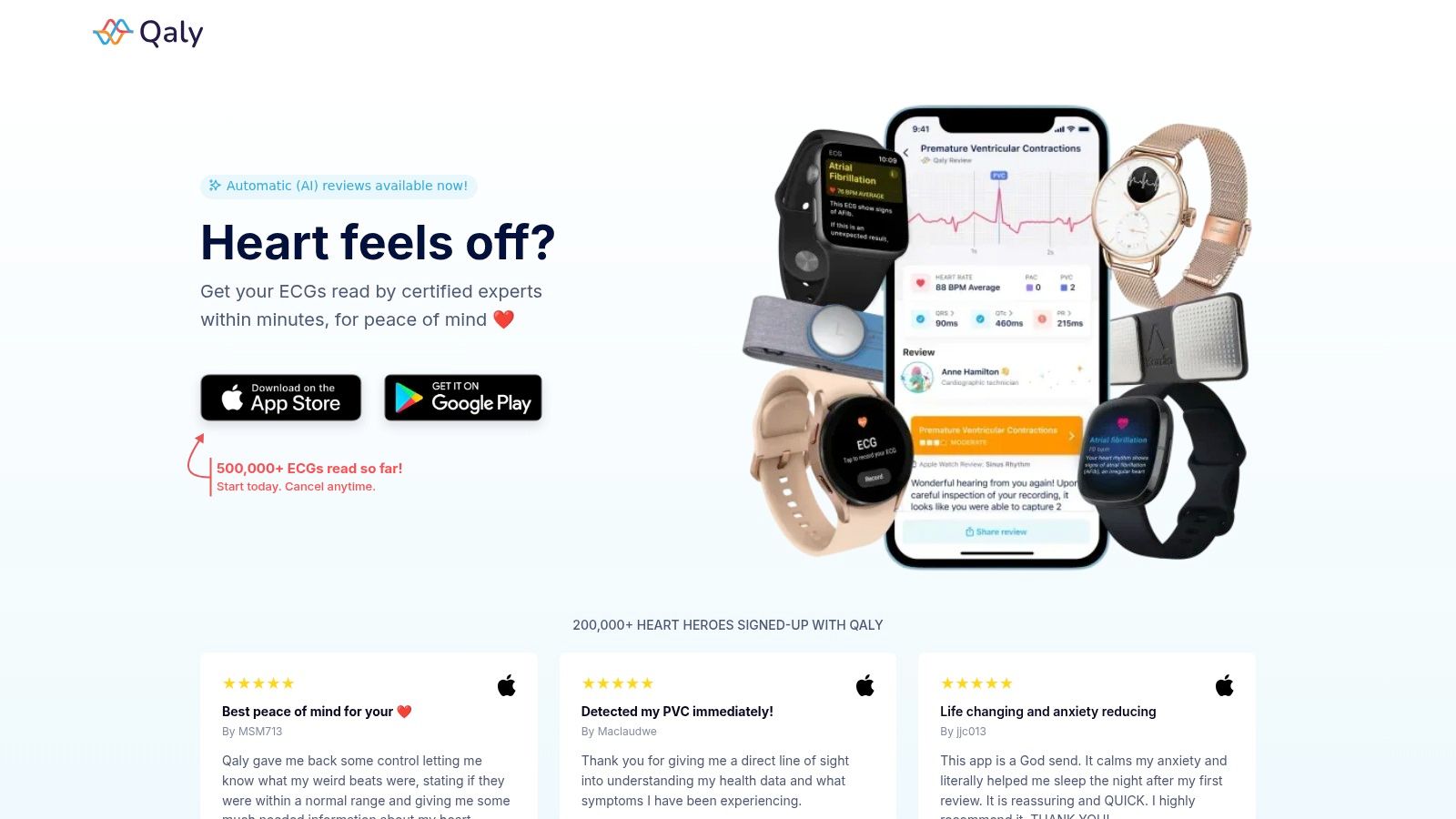
Confused by your ECG strip? Qaly connects your Apple Watch, Fitbit, Samsung, or Kardia recordings to certified cardiographic technicians for human-reviewed analysis



.png)
.png)