


Key Takeaways

User Profile
Hello Heart Hero.
You may be here because the fever is gone, the antibiotics are finished, and everyone expects you to be getting better, but your body still feels off. Maybe you're still short of breath walking to the kitchen. Maybe your chest feels heavy. Maybe your cough sounds “better” on paper, yet your energy has crashed and your heart feels like it's working too hard.
That question in the back of your mind is reasonable: can pneumonia cause congestive heart failure? In some people, yes, it can strain the heart enough to trigger heart failure or uncover a heart problem that was already brewing. That doesn't mean every lingering symptom is heart failure. It does mean your concern deserves a serious look.
If you've felt brushed off with “it's just part of recovery,” your skepticism makes sense. Pneumonia is often treated like a lung problem only, but your lungs and heart work as a team. When one struggles, the other can get dragged into the fight.
Your Guide to the Pneumonia and Heart Health Connection
A common situation goes like this. Someone gets diagnosed with pneumonia, rests, takes treatment, and expects a steady climb back. Instead, they notice swelling in the ankles, trouble lying flat without feeling breathless, or a pounding heartbeat after small efforts. They start wondering if they're anxious, out of shape, or just healing slowly.
Sometimes it is a slow recovery. Sometimes it's not.
Pneumonia can have effects beyond the lungs. In a large Italian study of hospitalized pneumonia patients, 32% experienced a cardiovascular complication within 30 days, and among those, 24% specifically developed heart failure according to this Clinic Barcelona summary. That's one reason persistent breathing trouble after pneumonia shouldn't be dismissed automatically as “just the lungs.”
If you're also trying to understand what kind of infection may have started this whole spiral, this plain language guide from VirusFAQ on viral pneumonia can help you sort out the basics. And if you want a broader refresher on the condition people often mean when they say CHF, this overview of congestive heart disease is a useful starting point.
Practical rule: If your pneumonia symptoms are improving but your breathing, swelling, or chest pressure seems to be getting stranger instead of steadily better, it's worth asking whether the heart is involved too.
You don't need to panic. You do need a clearer mental model of what your body may be doing.
How Pneumonia Puts Stress on Your Heart
The simplest way to understand it is this: your lungs load oxygen into the blood, and your heart delivers that blood to the rest of the body. When pneumonia inflames the lungs, that whole handoff gets messy.

The oxygen problem
Healthy lungs act like a clean sponge with lots of open space for oxygen exchange. Pneumonia fills parts of that sponge with inflammatory fluid and debris. Less oxygen gets into the bloodstream. Doctors may call this hypoxemia, but the plain English version is simple: your blood isn't carrying oxygen as efficiently as usual.
When that happens, the heart often tries to compensate. It may beat faster. It may work harder. If the heart already has weak spots, that extra demand can become too much.
Imagine a car engine pulling uphill with a clogged air filter. It can still move, but it has to strain.
The inflammation problem
Pneumonia doesn't stay politely inside the lungs. The immune system launches a body-wide response to fight the infection. According to TCTMD's coverage of this mechanism, pneumonia can induce new-onset congestive heart failure through systemic inflammation and hypoxemia. The surge in pro-inflammatory cytokines triggers a response that can lead to myocardial ischemia and reduced contractility, lowering the heart's oxygen supply while increasing its demand.
That sentence is dense, so let's unpack it.
- Systemic inflammation means the body's alarm system is switched on broadly, not only in the lungs.
- Myocardial ischemia means the heart muscle may not get enough oxygen-rich blood for what it needs.
- Reduced contractility means the heart may not squeeze as strongly as it should.
The result is a bad combination. The heart needs more support at the exact moment it's getting less.
Why symptoms can change after the infection starts to improve
People often get confused by the assumption that if the infection is fading, all danger is fading too. But heart strain can show up while the body is still recovering. The fever may settle before fluid balance, oxygen levels, or heart workload fully normalize.
When the lungs are injured, the heart often has to do extra work in the background. You may feel that as fatigue, breathlessness, or a racing pulse before anyone says “heart failure.”
If you've also heard about heart inflammation after infections, that's a related but separate issue. This explanation of myocarditis can help you understand the difference between direct heart muscle inflammation and the broader strain pattern pneumonia can create.
Understanding Who Is Most at Risk
Not everyone who gets pneumonia will develop congestive heart failure. Still, some groups need to stay more alert than others.
People who already have heart failure
If you already live with heart failure, pneumonia is more than an annoying infection. It can be a major destabilizer. In patients with preexisting heart failure, the risk of developing pneumonia is nearly three times greater, and they face a fourfold greater risk of death once infected according to this Hospitalist report.
That helps explain why a person with known heart failure may suddenly “fall off a cliff” during what first looked like a straightforward respiratory illness. A little less oxygen, more inflammation, and fluid shifts can push an already stressed heart into a tougher situation.
People who thought their heart was fine before pneumonia
This is the part many readers don't expect. Even if you didn't have diagnosed heart failure before, pneumonia can still be a meaningful turning point.
The same report notes that the 10-year risk of developing new heart failure after a pneumonia event was approximately 12%, a 50% relative increase compared to controls in the study it discusses. That doesn't mean pneumonia guarantees future heart failure. It means the infection can act like a stress test your body didn't ask for.
Sometimes pneumonia seems to reveal a heart problem that had been silent. In other cases, the infection itself appears to contribute to later heart trouble.
Risk isn't all or nothing
People often think in extremes. Either “I'm fine” or “this is a disaster.” Real life sits in the middle.
A more useful way to think about your risk is to ask:
- Do you have prior heart issues? Existing heart failure, valve problems, rhythm issues, or prior cardiac injury raise concern.
- Did recovery stall? If the cough is fading but breathlessness, swelling, or exercise intolerance is lingering, pay attention.
- Did the illness hit hard? More severe infections can put more strain on the heart, though milder cases still deserve respect.
- Are your symptoms changing pattern? New nighttime breathlessness, trouble lying flat, or sudden fatigue can matter.
What to remember: Risk is real, but it isn't destiny. Awareness helps you act early instead of waiting until symptoms become dramatic.
If you're someone who tends to downplay symptoms because you don't want to be “that patient,” this is one of those moments to be observant rather than stoic.
The Challenge of Overlapping Symptoms
In these instances, the healthcare system can lose people. Pneumonia and heart failure can look alarmingly similar, especially at the beginning or during recovery.
A cough can happen in both. So can shortness of breath. So can fatigue. Even chest discomfort can be hard to sort out. If you've ever felt like the label on your chart didn't fully match what your body was saying, you're not imagining the challenge.
According to the American Heart Association's patient story and discussion, the overlap in symptoms is a major issue; heart failure can mimic pneumonia symptoms like coughing and shortness of breath. This can create a dangerous feedback loop where patients are treated for 'pneumonia' while an underlying heart condition worsens, delaying critical ECG monitoring and treatment.


Why the confusion happens
Pneumonia can make breathing noisy and labored. Heart failure can do that too because fluid can back up into the lungs. To a patient, both can feel like “I can't get enough air.” To a clinician, especially early on, both can deserve consideration.
The trouble starts when one explanation gets locked in too early.
If the original diagnosis was pneumonia, later symptoms may get interpreted as slow recovery when they signal fluid buildup or heart strain. On the flip side, some people are told they have pneumonia when the bigger issue is heart failure presenting like a chest infection.
Clues that should raise your suspicion
No home observation gives a diagnosis by itself, but these patterns should make you ask sharper questions:
- Breathing that worsens when lying flat can fit heart failure more than a routine chest infection.
- New leg or ankle swelling points attention toward fluid retention.
- Sudden weight gain from fluid can matter if it appears alongside breathlessness.
- A cough that feels “wet” without clear infection improvement deserves another look.
- Fast heartbeat or fluttering may suggest the heart is under stress, not just the lungs.
A blood marker called BNP or NT-proBNP is one tool clinicians use when they're trying to tell heart failure apart from other causes of shortness of breath. If you want a plain language reference point before discussing it with your doctor, this guide to NT-proBNP normal levels can help.
How to advocate for yourself without sounding combative
You don't have to accuse anyone of missing something. You can stay calm and specific.
Try language like this:
“My pneumonia may be improving, but I'm still short of breath in a way that feels different. Could we also consider whether my heart is under strain?”
Or this:
“I know these symptoms can overlap. What findings make you confident this is only pneumonia recovery and not heart failure or an arrhythmia?”
That approach tends to open doors. It shows you're paying attention and gives the clinician a fair chance to explain their reasoning.
Using Your Wearable ECG for Post Pneumonia Monitoring
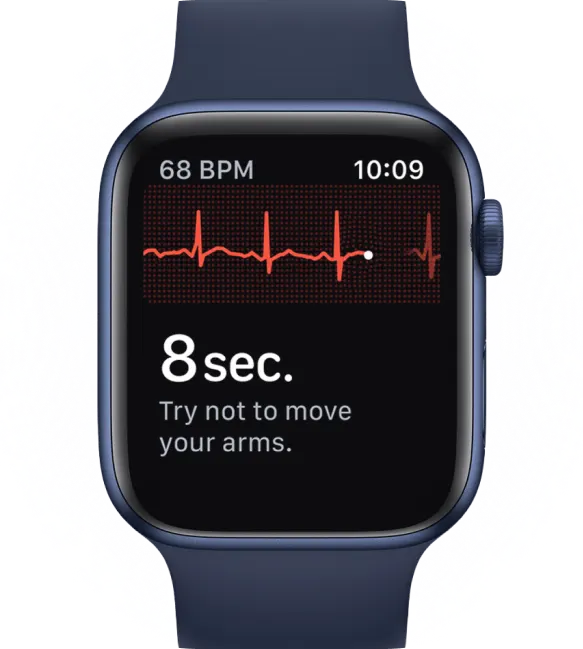
If you use an Apple Watch, Kardia, Fitbit, Samsung watch, or another wearable ECG device, this is one area where your home tools can become more than reassurance gadgets. They can help you document changes when you feel that something isn't right.
What your ECG can and can't do
A wearable ECG cannot diagnose pneumonia. It also can't prove congestive heart failure on its own. What it can do is flag rhythm changes or electrical clues that strengthen the case that your heart needs closer evaluation.
That matters because vague statements like “I feel off” are easy for busy systems to minimize. A saved rhythm strip showing a new irregularity is harder to wave away.
What to watch for after pneumonia
Use your device when symptoms happen, not only when you feel calm and normal. If your watch or handheld monitor allows repeated recordings, compare how things look during rest, after walking, and during episodes of breathlessness or palpitations.
Keep an eye on patterns such as:
- New irregular rhythm alerts such as atrial fibrillation notifications or beats that feel chaotic rather than just fast.
- A persistently high resting heart rate that stays raised compared with your usual baseline, especially after the fever has settled.
- Palpitations with shortness of breath that weren't happening before you got sick.
- More frequent skipped or extra beats if your device or symptoms suggest that pattern.
- Changes that cluster with fever or dehydration since illness can amplify heart rate and rhythm changes. This guide on fever and high heart rate can help you think through that relationship.
A simple tracking routine
Don't overcomplicate it. The most useful data is often the cleanest and most consistent.
- Record at the same times each day
Morning and evening checks can help you notice trends instead of random blips. - Capture symptoms in the moment
If you feel fluttering, chest pressure, lightheadedness, or sudden breathlessness, record then. - Write one sentence beside each tracing
Examples: “Walking to bathroom, very winded” or “Lying flat, cough worse.” - Notice trend, not perfection
One odd tracing may mean little. Repeated changes tied to symptoms matter more.
Your wearable doesn't replace clinical care. It helps you bring your doctor a timeline instead of a foggy memory.
When home data becomes especially useful
Wearable ECG monitoring is most helpful when symptoms are intermittent. In the clinic, your rhythm may look normal because the episode already passed. At home, you can catch the moment.
That can be valuable if pneumonia recovery seems to come with:
- sudden fluttering,
- heart racing out of proportion to activity,
- unexplained dips in stamina,
- or episodes where breathing feels worse and your pulse feels chaotic.
You're not trying to self-diagnose congestive heart failure from a watch. You're gathering evidence that your recovery may need a deeper cardiac look.
Your Path Forward with Confidence
The short answer to can pneumonia cause congestive heart failure is yes. It can strain the heart directly, and it can also expose a heart problem that wasn't obvious before. Just as important, pneumonia and heart failure can imitate each other, which is why some people leave an illness feeling confused about what's really driving their symptoms.
That uncertainty doesn't mean you're powerless. It means your next steps should be observant, organized, and grounded.
One important point from the research is that hospitalization for pneumonia is independently linked to a significantly higher risk of new-onset heart failure in the intermediate and long-term, even among elderly adults with no prior history and in cases of non-severe pneumonia. In plain language, even a case that doesn't seem extreme can deserve follow-up attention if recovery isn't going smoothly.
Red flags that need urgent medical attention
Seek urgent care right away if you have:
- Severe shortness of breath at rest
- Chest pain or pressure
- Blue lips or a grayish color
- Fainting or near fainting
- Sudden confusion
- Rapid swelling in the legs or abdomen
- A feeling that you cannot breathe lying down
What a steady, smart response looks like
For less dramatic but still concerning symptoms, do the basics well.
- Track the pattern with notes on breathing, swelling, sleep position, and pulse.
- Use your wearable ECG thoughtfully when symptoms appear.
- Bring specific questions to your appointment instead of hoping someone connects the dots for you.
- Ask whether both lung and heart causes have been considered if your recovery feels stalled.
You don't need to choose between trusting your body and trusting medical care. The best outcomes usually come from using both.
Being proactive isn't overreacting. It's how people catch important problems sooner, especially when symptoms overlap and recovery gets muddy.

Spot rhythm changes before they become a worry: Qaly connects your Apple Watch, Kardia, Fitbit, or Samsung ECG recordings to certified technicians for rapid human review.



.png)
.png)