





Key Takeaways

User Profile
Hello Heart Hero. We know that feeling a flutter in your chest, worrying about shortness of breath, or just feeling completely exhausted can be incredibly unsettling. If you're looking for clear answers that you can trust, you've come to the right place. This guide is here to walk you through one of the most important blood tests for your heart's health: the NT-proBNP test. Medical tests can sound complicated, but we're going to break this one down in simple, friendly terms.
Your Guide to Understanding the NT-proBNP Test
Think of the NT-proBNP test as a stress gauge for your heart muscle. It's a simple blood test that measures the level of a substance called N-terminal pro-B-type natriuretic peptide. Your heart releases this peptide when it's being stretched or working harder than usual, like when it has to pump against high pressure.
Doctors often order this test when you show up with symptoms like fatigue, swelling in your legs, or difficulty breathing. The results are a crucial clue that helps them figure out if your symptoms are coming from a heart issue or something else, like a lung problem. It's a key piece of the diagnostic puzzle, giving you a clearer picture of what's going on inside your body.
What This Test Really Measures
When your heart chambers feel stretched, they release a larger molecule called a prohormone. This prohormone quickly splits into two smaller pieces: the active hormone BNP and an inactive fragment, NT-proBNP.
While labs can measure both, the NT-proBNP test is often preferred. Why? Because the NT-proBNP molecule is more stable in your bloodstream, giving doctors a more reliable snapshot of your heart's condition over a longer period.
This test is incredibly useful for a few key reasons:
- Diagnosing Heart Failure: A high NT-proBNP level can be a strong signal of heart failure, helping doctors make a quick and accurate diagnosis.
- Gauging Severity: The higher the number, the more strain your heart is likely under. This gives your doctor insight into how severe the condition might be.
- Tracking Treatment: Your doctor can monitor your NT-proBNP levels over time to see if a treatment plan, like medications or lifestyle changes, is successfully reducing the strain on your heart.
Your NT-proBNP level isn't just a number; it's a direct message from your heart about its workload. Understanding what it means can empower you to take a more active role in your health.
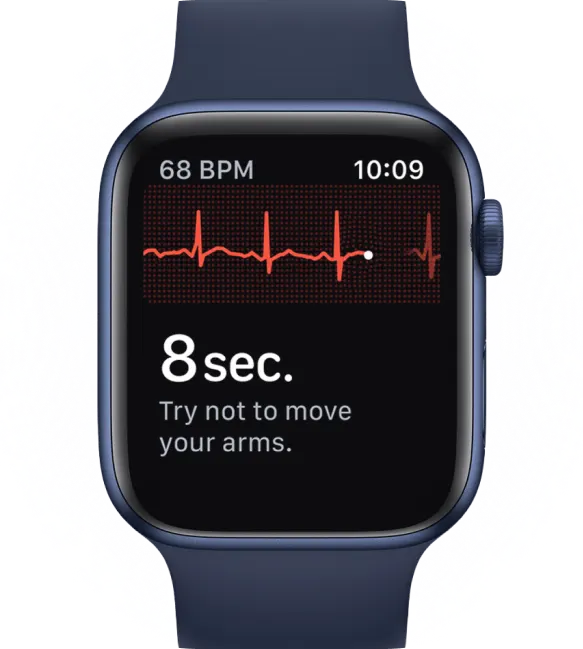
Our goal is to give you the knowledge you need for more confident conversations with your healthcare team. This is especially vital if you're already keeping an eye on your heart with a wearable device like a smartwatch. Pairing the ECG data from your watch with a lab result like NT-proBNP gives you and your doctor a much more complete picture.
While the NT-proBNP test measures heart muscle strain, other blood tests look for different things, like the troponin test, which signals heart muscle damage. Understanding how these tests work together helps you and your doctor make the best decisions for your health journey.
What Are Normal NT-proBNP Levels
Let’s get right to the numbers. When you're worried about your heart, clear, straightforward answers are what you need most. The good news is that your NT-proBNP result isn't as cryptic as it might look on a lab report.
For a quick point of reference, a result below 300 picograms per milliliter (pg/mL) is a really good sign. In an emergency setting, this number is incredibly useful because it can confidently rule out acute heart failure. Think of it as a green light. It tells doctors that significant, sudden heart muscle strain is highly unlikely.
But here’s the crucial part: interpreting NT-proBNP isn't a one-size-fits-all deal. The single biggest factor that shifts the goalposts is your age. As we get older, it's completely normal for these levels to creep up a bit, even in perfectly healthy people.
How Age Adjusts the Numbers
Your doctor isn’t just looking at one number; they're looking at your result in the context of your age group. This is key. A level that might raise a red flag for a 40-year-old could be perfectly normal for an 80-year-old. This smart, nuanced approach prevents a lot of unnecessary worry.
Here’s a breakdown of the typical age-adjusted guidelines clinicians use to make sense of NT-proBNP levels. For adults under 50, a level below 450 pg/mL is generally considered the target. Anything higher might trigger a closer look. For adults aged 50 to 75, the normal threshold moves up. Here, a result below 900 pg/mL is typically seen as normal. For adults over 75, the expected range is higher still. Doctors are often looking for levels below 1,800 pg/mL in this group.
These numbers give a much clearer picture than a single, universal "normal" value. They help your doctor figure out what’s right for you, not just what’s average.
The Power of a Low Result
Let's say you’ve been using your watch ECG to track those odd palpitations that have been bothering you. This is where an NT-proBNP test can bring powerful reassurance.
A normal level below 300 pg/mL carries a massive 99% negative predictive value for ruling out acute congestive heart failure. In plain English, if your result is under this threshold, there's practically no chance your symptoms are from sudden heart failure.
It's crucial to remember that these are just guidelines. Your personal health history, kidney function, and other factors all play a role in how your doctor interprets your specific NT-proBNP level.
Seeing your number fall within the normal range for your age is an excellent sign. It strongly suggests your heart isn't under the kind of mechanical stress that comes with heart failure. This knowledge is incredibly empowering, turning a confusing lab value into a clear piece of information that helps you move forward with confidence.
Why Your NT‑proBNP Levels Might Be High
Seeing a high NT‑proBNP number on a lab report can feel like a punch to the gut. It’s only natural for your mind to jump to the worst-case scenario. But please know that while this number is important, it’s just one piece of a much larger puzzle, not a final diagnosis on its own.
Think of your NT‑proBNP level as your heart’s smoke alarm. When it goes off, it signals that there’s stress, but it doesn’t immediately tell you the size or source of the fire. The primary reason doctors run this test is to investigate potential heart failure, a condition where the heart muscle is strained and struggles to pump blood effectively. But that's far from the only reason your levels might be up.
The Main Culprit: Heart Failure
When heart failure is the cause, the NT‑proBNP level often mirrors the severity of the condition. The more the heart is struggling, the higher the number climbs. It’s a direct reflection of the mechanical stress placed on the heart's pumping chambers.
For instance, clinical data shows a clear pattern. In one study, patients with mild heart failure had median NT‑proBNP levels around 377 pg/mL. That number jumped to 1,223 pg/mL for those with moderate symptoms and soared to 3,130 pg/mL for individuals with more severe heart failure. This is why the test is so valuable. It helps diagnose heart failure and also provides a benchmark to track if treatments are working to reduce that strain. Recognizing the Symptoms of Heart Failure in Elderly is also a critical part of this picture.
Other Conditions That Can Raise Levels
It’s vital to understand that other health issues can also set off your NT‑proBNP alarm. Your heart is part of an interconnected system, and problems elsewhere in the body can put extra stress on it, leading to higher levels.
Here are some of the most common non-heart-failure causes.
- Atrial Fibrillation (AFib): When the heart's upper chambers beat chaotically in AFib, the heart has to work harder and less efficiently. This leads to ventricular stretch and a rise in NT‑proBNP.
- Kidney Disease: Your kidneys are responsible for filtering waste products, including NT‑proBNP, from your blood. If they aren’t working well, the peptide can’t be cleared as quickly, causing it to build up and produce a higher reading.
- Pulmonary Embolism: This is a serious condition where a blood clot gets lodged in the lungs. The blockage forces the right side of your heart to pump much harder, causing acute strain and a spike in NT‑proBNP.
- High Blood Pressure (Hypertension): Uncontrolled high blood pressure means your heart is constantly pumping against high resistance. Over time, this chronic strain can lead to elevated NT‑proBNP levels.
Remember, an elevated NT‑proBNP level is a signal for a conversation, not a conclusion. It tells your doctor, "Look closer here," prompting them to investigate the root cause.
Even advancing age can cause a natural, gradual increase in your baseline NT‑proBNP, which is why age-adjusted ranges are so critical. This knowledge is especially powerful if you're using a wearable device to monitor your heart, as it provides essential context for what your body might be telling you.
Decoding the Difference Between NT‑proBNP and BNP
When you're looking at heart health tests, your doctor might bring up two names that sound almost identical: NT‑proBNP and BNP. It’s easy to get them confused, but knowing what sets them apart can make you feel a lot more in control of the conversation. The difference is actually pretty simple.
Think of it like this: when your heart muscle is stretched or under strain, it releases a large molecule. Almost immediately, that molecule splits into two pieces, like a cookie snapping in half. One piece is the active hormone, BNP (B-type natriuretic peptide). The other is its inactive partner, NT‑proBNP.
Both fragments enter your bloodstream in equal amounts, so either one can signal to your doctor that your heart is working overtime. The real difference is in how they behave once they're floating around in your body.
Why Doctors Often Prefer the NT‑proBNP Test
The main reason your doctor might choose one test over the other comes down to one word: stability.
The active BNP hormone has a very short "shelf life" in your blood. It breaks down incredibly fast, making it sort of like a message written in disappearing ink. It's there, but it's hard to catch.
NT‑proBNP, on the other hand, sticks around much longer. This stability makes it a more reliable marker for labs to measure, giving a clearer and more consistent picture of your heart's condition over the last few hours, rather than just a fleeting glimpse.
The bottom line: Both tests measure the exact same thing: heart strain. NT‑proBNP is just a more stable messenger, which is why it's so commonly used.
This difference in stability is also why the numbers on your lab report will look so different. Because NT‑proBNP lasts longer in your system, its levels will naturally be much higher than BNP levels. So, don't be alarmed by a number like 1,000 pg/mL on an NT‑proBNP test; the equivalent BNP value would be a whole lot lower.
What the Numbers Tell Us in Practice
The longer "half-life" of NT‑proBNP is a big deal in the clinic. It lasts for about 120 minutes in your blood, while BNP is gone in just 20 minutes.
This is why NT‑proBNP levels are usually about six times higher than BNP levels, even though they start from the same place. This stability helps doctors set clear diagnostic thresholds. For instance, a level below 300 ng/L is an excellent way to rule out acute heart failure with over 90% accuracy.
But your kidneys can change the rules. If your kidney filtration rate is low, that rule-out number might be adjusted up to 1,200 ng/L. You can learn more about these clinical guidelines and how they are applied.
In the end, whether your doctor orders a BNP or an NT‑proBNP test, they're looking for the same information about heart strain. You haven't received the "wrong" test. They've just chosen the tool they find most dependable for your specific situation.
How Wearable ECGs and NT proBNP Work Together
If you're using a device like an Apple Watch, Fitbit, or Kardia to keep an eye on your heart, you're already taking a huge step in managing your health. This is about connecting the dots between the data from your wearable and your NT‑proBNP lab results, turning two separate pieces of information into one, much clearer story.
Let's use an analogy. Think of your wearable ECG as a skilled electrician. It listens to your heart's electrical signals, flagging rhythm issues like atrial fibrillation or other arrhythmias. Its job is to check the spark.
The NT‑proBNP test, on the other hand, is like a structural engineer. It measures the physical, mechanical stress on your heart muscle, how much strain the walls of your heart are under. It's focused on the engine. When you put the electrician's report together with the engineer's assessment, you get a complete picture of your heart's health.
Weaving the Data Together for a Clearer Picture
This combined view provides incredible context and can be deeply reassuring. For example, your watch might frequently detect palpitations, which can be worrying. But if your NT‑proBNP test comes back normal for your age, it's strong evidence that despite the electrical hiccups, your heart muscle itself isn't under significant strain right now. That kind of insight can turn anxiety into informed calm.
Conversely, the data can act as a crucial early warning system. Let's say you have a known condition like AFib and you notice your NT‑proBNP levels are slowly creeping up over time. That’s a clear signal to bring up with your doctor. It suggests the arrhythmia might be starting to put more stress on your heart, and your treatment plan may need another look.
This synergy between wearable tech and lab tests moves you from simply gathering data to truly understanding what it means. It empowers you to have much more specific and productive conversations with your doctor.
Instead of just saying, "I feel palpitations," you can say, "My watch detected AFib three times this week, and I know my last NT‑proBNP was 500 pg/mL. Should we recheck it?" This level of detail helps your doctor make better decisions, faster. You can find more details about how these devices work in our guide to the portable electrocardiogram monitor.


Turning Your Results into Actionable Insights
Knowing your NT‑proBNP normal levels is key to making sense of these results. Different health systems use slightly different thresholds to decide when to investigate further. For instance, UK guidelines often use a level over 400 ng/L to trigger a follow-up echocardiogram, while European guidelines are more sensitive, using a cutoff of 125 ng/L. However, a UK study found that even levels below 400 ng/L could signal early issues. In patients with early-stage diastolic impairment (a common finding in people over 60), the median NT‑proBNP was 325 ng/L, highlighting how the test can pick up subtle strain. You can discover more insights about these diagnostic values on BJCardio.
Here’s how you can use both sets of data together:
- Scenario 1: Normal ECG + Normal NT‑proBNP: This is the best-case scenario. It offers strong peace of mind that your heart's electrical system and muscle are both in good shape.
- Scenario 2: Abnormal ECG + Normal NT‑proBNP: Your heart might have an electrical issue like PVCs, but this combination suggests it’s not yet causing significant strain on the heart muscle. It's still vital to discuss with your doctor, but it provides important context.
- Scenario 3: Abnormal ECG + High NT‑proBNP: This is a clear call to action. It signals that an arrhythmia or other issue is likely putting stress on your heart muscle, warranting a thorough evaluation with your physician.
This combined view helps you and your doctor see the full picture, ensuring you get the right care at the right time.
What to Do After You Get Your Results
Getting any medical test result can stir up a lot of emotions, quickly followed by the big question: "So, what now?" Whether your NT-proBNP level is high, low, or somewhere in the middle, this isn't a moment for panic. It’s a moment for clarity and informed action.
If your results fall right in the normal range for your age, take a deep, reassuring breath. That's fantastic news. It’s a strong sign that your heart isn't under the kind of mechanical strain that doctors worry about with heart failure. Think of this as a green light to double down on all those heart-healthy habits to keep things running smoothly.
When Your Results Are High
It's completely natural to feel concerned if your NT-proBNP level comes back elevated. But it's important to remember that this number isn't a diagnosis all by itself. Think of it as a crucial piece of information, a signal from your body telling your doctor, "Hey, it's time to look a little closer." This knowledge is your power, letting your care team build a specific plan just for you.
Your doctor will almost certainly want to investigate further to understand the "why" behind that number. The most common next step is a non-invasive imaging test. You can get a good idea of what to expect by reading our guide on the transthoracic echocardiogram. This is basically an ultrasound for your heart that helps doctors see its structure, check how well the chambers are pumping, and spot any potential issues causing the strain.
The flowchart below illustrates how the data from your at-home ECG and your NT-proBNP result work together, giving your doctor a much more complete picture of your heart's health.
This visual really brings it home: your heart's electrical data (the ECG) and its mechanical stress data (the NT-proBNP) are two sides of the same coin, creating a full picture for diagnosis and monitoring.
Preparing for Your Follow-up Appointment
Walking into your next appointment armed with good information can make a world of difference. When you're prepared, you can have a much more productive conversation with your doctor.
Here are a few simple steps you can take:
- Gather Your Data: Bring a log of any symptoms you've had, noting when they happen and what they feel like. If you use a wearable device, have your ECG readings ready to share.
- Write Down Questions: It's so easy to forget what you wanted to ask in the moment. Make a list of everything on your mind, like, "What do you think is causing this?" or "What are our next steps?"
- Be Ready to Discuss Your History: Your doctor will want to know about your personal and family medical history, along with any medications or supplements you're currently taking.
Understanding your NT-proBNP level is a huge, positive step toward taking charge of your heart health. This number, whether high or normal, empowers you and your doctor with the insights needed to protect your most vital organ.
Frequently Asked Questions About NT-proBNP Levels
Let's tackle some of the most common questions we hear about the NT-proBNP test. Knowing the right questions to ask and understanding the answers is a huge step in managing your heart health. We want to cut through the medical jargon and give you clear, straightforward information you can use in your next doctor's visit.
Can I Do Anything to Lower My NT-proBNP?
Yes, you absolutely can. Since high NT-proBNP levels are a sign of heart strain, the best way to lower your numbers is to address whatever is causing that stress. This is a team effort between you and your doctor, usually involving a mix of medication and smart lifestyle choices.
For instance, if high blood pressure is the culprit, sticking to your medication schedule and adopting a heart-healthy diet can make a huge difference. If heart failure is the underlying issue, taking your medications as prescribed, cutting back on salt, and staying active (with your doctor's okay) are your most powerful tools. Think of it as lightening the load on your heart.
Do Other Conditions Affect My Results?
They sure do. While heart failure is often the main concern with this test, it's far from the only thing that can raise your NT-proBNP. It's crucial to look at your result as just one piece of your overall health puzzle.
Several other factors can nudge your numbers higher.
- Kidney Disease: Your kidneys are responsible for filtering NT-proBNP out of your blood. If they aren't working at 100%, the peptide can accumulate, giving you a higher reading even if your heart strain hasn't changed.
- Age: It’s perfectly normal for NT-proBNP levels to creep up as we get older.
- Certain Arrhythmias: Conditions like atrial fibrillation (AFib) can make the heart pump less efficiently, which in turn increases strain and raises NT-proBNP levels.
When Should I Be Worried About My Result?
Let’s walk through a common scenario. Say you’re 55, you’ve been feeling more winded than usual on walks, and your watch just flagged an irregular rhythm. An NT-proBNP test is a fantastic tool to figure out if this is due to new heart strain or if you're just a bit out of shape.
In an urgent situation with new symptoms, a level under 300 pg/mL is very reassuring. It makes significant heart failure highly unlikely. This is a powerful "rule-out" number, especially for anyone at home monitoring palpitations like PVCs or SVT.
It's also vital to know the age-adjusted nt probnp normal levels. A result below 450 pg/mL is generally considered normal for people under 50, but that threshold goes up to 900 pg/mL for those over 50. You can dig deeper into these clinical guidelines from resources like StatPearls from NCBI. Instead of worrying, think of your result as a valuable piece of information that guides the next conversation with your doctor.

When you need clarity on what your wearable ECG is telling you, Qaly is here to help. Get your ECGs analyzed by certified heart rhythm experts in minutes, giving you the peace of mind.



.png)
.png)