





Key Takeaways

User Profile
Hello Heart Hero. If you've ever heard the term "troponin levels" mentioned, maybe in a doctor's office or on a medical show, and felt a little lost, you're in the right place.
Think of troponin as a special protein that acts like a silent alarm for your heart. It's only released into your bloodstream when your heart muscle is under significant stress or has been damaged. Getting a handle on what this test means is a huge first step toward feeling more empowered in your own health journey.
Your Guide to Understanding Troponin Levels

We get it. Anything involving your heart can feel scary, and trying to decipher medical jargon only adds to the anxiety. This guide is here to be a calm, clear resource, breaking down what you need to know in simple, easy to understand terms. Our goal is to arm you with knowledge.
We'll walk through what troponin is, the reasons a doctor might order the test, and what the results could mean. Understanding the "why" behind the test helps you have more confident, productive conversations with your healthcare team.
What Is Troponin Exactly?
At its most basic, troponin is a group of proteins that live inside your heart and skeletal muscle cells. They're crucial players in muscle contraction, helping your heart beat strongly and pump blood where it needs to go.
While there are three types of troponin, two of them are unique to the heart:
- Troponin I (TnI)
- Troponin T (TnT)
Because TnI and TnT are found almost exclusively in the heart, they make for incredibly specific biomarkers. When heart muscle cells are injured, say, during a heart attack, they break open and spill these proteins into the bloodstream. A troponin blood test is designed to detect them.
This simple but powerful concept is the cornerstone of modern cardiac care. When doctors check your troponin, they're looking for direct, physical evidence of heart muscle injury, which helps them make critical decisions fast.
The History Behind the Test
This vital test didn't just appear overnight. The story begins back in 1965 when Professor Setsuro Ebashi first discovered troponin in Japan, a breakthrough that paved the way for a new era in cardiology. A few years later, scientists pinpointed its three distinct parts, TnC, TnI, and TnT, which gave us a much deeper understanding of how our muscles work.
This journey from a scientific finding to a routine emergency room test is a perfect example of how medical knowledge grows to give us better, faster tools for patient care. For anyone wanting to learn more about heart health in general, it's always helpful to explore health and wellness articles that cover a wide range of related topics.
What Troponin Is and Why Doctors Measure It
Let’s break down troponin in a way that actually makes sense. Think of your heart as a powerful engine and its muscle cells as the intricate parts that make it run. Inside each of these cells, you'll find a special protein called troponin. Its main job is to help your heart muscle contract and relax with every single beat, a tiny, critical switch for a life sustaining function.
Under normal circumstances, troponin stays tucked away inside these heart cells, doing its work behind the scenes. It doesn't just float around in your bloodstream. That's why, in a healthy person, the amount of troponin in the blood is typically so low it's almost impossible to detect.
So, what happens when a heart cell gets damaged? Imagine the heart muscle cell is like a water balloon. If you poke a hole in it, the contents start to leak out. When heart muscle cells are injured, usually from a lack of oxygen during a heart attack, they become "leaky." The troponin inside spills out and enters the bloodstream.
This is exactly why doctors measure your troponin levels.
A Specific Clue for Your Heart
A troponin test is a straightforward blood draw, but the information it gives doctors is priceless. When they see elevated troponin levels, it’s a direct and very specific signal that some kind of heart muscle injury has happened.
While other markers can come from different parts of the body, two types of troponin, cardiac troponin I (cTnI) and cardiac troponin T (cTnT), are found almost exclusively in the heart muscle. This makes the test an incredibly reliable clue for your medical team.
- High Specificity: Because these proteins are unique to the heart, a positive test points the finger directly at the heart as the source of the problem.
- High Sensitivity: Today's troponin tests are so sensitive they can pick up on even microscopic amounts of damage, which helps doctors diagnose problems much earlier than they could in the past.
This direct link, leaky protein equals heart cell injury, is what makes the troponin test a cornerstone of modern heart care.
The Role of a Medical Detective
When you arrive at the hospital with symptoms like chest pain, your doctor essentially becomes a detective. Your troponin level is one of the most vital clues they collect, but it's never the whole story. They use it alongside other pieces of information to assemble a complete picture of what's going on.
Your doctor will look at your troponin result in combination with your physical symptoms, your medical history, and an electrocardiogram (ECG) to make an accurate diagnosis. It's the combination of these clues that tells the full story.
For example, a clear pattern of rising troponin levels over several hours is a classic sign of an ongoing heart event. This is why doctors often order "serial testing," drawing your blood more than once to track the changes. This careful approach helps them understand the timing and scale of the heart muscle stress, pointing them toward the best way to help you. It's a key piece of the puzzle in protecting your heart.
A Timeline for Troponin Levels After a Heart Event
When you’re dealing with a potential heart issue, time can feel like it’s moving in slow motion. Understanding the timeline of what’s happening inside your body can bring a sense of clarity during a confusing and stressful time. It’s not just about a single troponin test result; it’s about the pattern these levels create over hours and days, which tells a very specific story about your heart’s health.
When heart muscle is damaged, it doesn’t release all its troponin at once. Think of it as a slow, steady leak that follows a predictable path. This timeline is what helps doctors understand what’s happening and when it started.
The Initial Rise in Troponin Levels
The first moments after a heart event begins are critical. Thanks to modern high sensitivity cardiac troponin (hs-cTn) tests, doctors can now detect even tiny amounts of troponin in the blood.
These incredibly sensitive tests can pick up the first signs of heart muscle injury in less than one hour after symptoms begin. This rapid detection is a game changer, allowing medical teams to confirm a diagnosis and start treatment much faster than was ever possible with older tests. The sooner they can intervene, the better the chances of preserving heart muscle.
The Peak and Slow Decline
After the initial release, troponin levels don’t just stay flat; they continue to climb. This rise is a key indicator that an injury has occurred. The levels typically reach their highest point, or peak, somewhere between 12 and 48 hours after the event.
Once they peak, the levels begin a slow and gradual decline. However, they don’t just disappear overnight. Troponin can remain elevated in the bloodstream for several days, sometimes for as long as one to two weeks. This extended window is incredibly helpful, as it allows for a diagnosis even if someone waits a day or two before seeking medical help.
This helpful infographic visualizes the timeline of troponin levels after a heart event, showing when they become detectable, when they peak, and how long they can stay elevated.
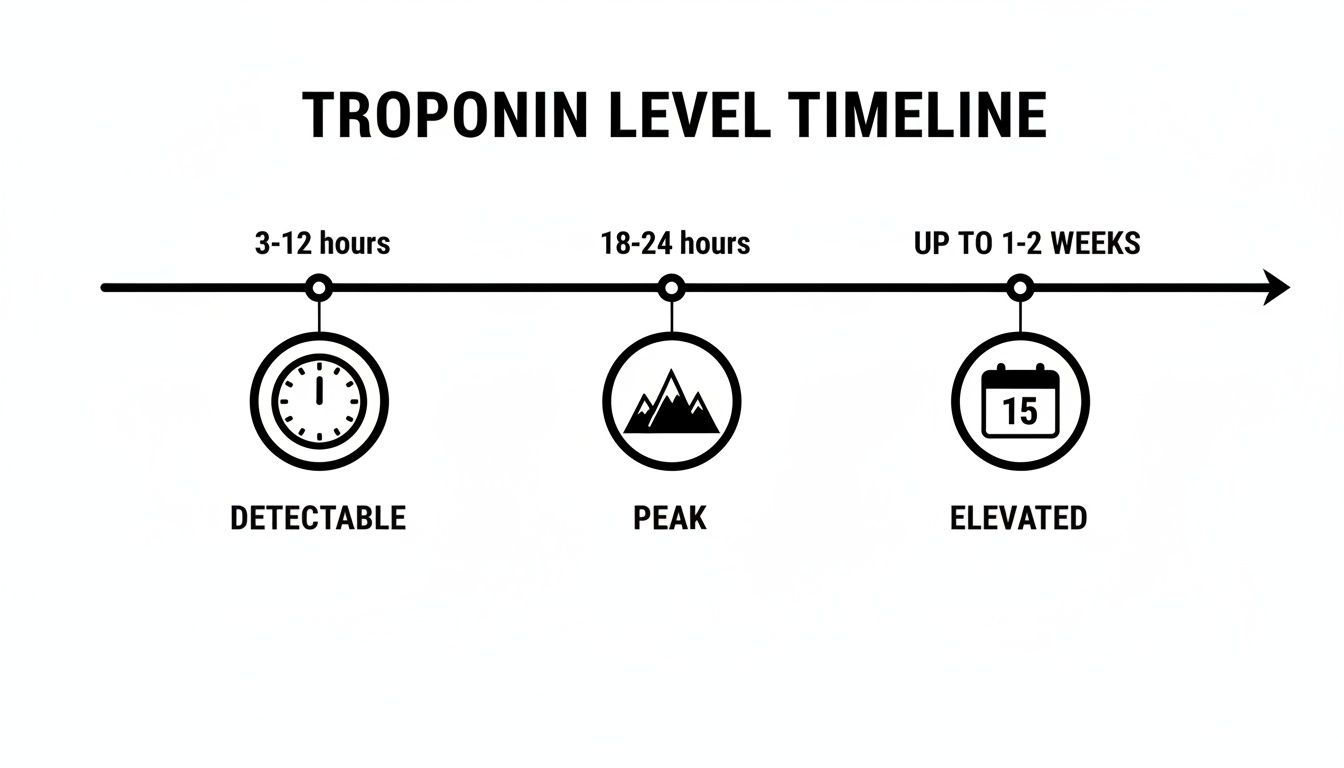
As you can see, the changing levels over time provide a much clearer picture than a single snapshot could.
Why Doctors Perform Serial Testing
Because the pattern of troponin levels is so important, you’ll find that doctors rarely rely on a single test. Instead, they will likely perform what’s called “serial testing,” which simply means they’ll take several blood samples over a period of a few hours.
By comparing the results from these serial tests, your care team can see if your troponin levels are actively rising, have peaked, or are beginning to fall. This dynamic "rise and fall" pattern is the classic signature of an acute heart event like a heart attack.
This approach helps them distinguish a new heart injury from a chronic condition that might cause slightly elevated troponin all the time. The context provided by this timeline is everything. For instance, the timing of a heart attack and the subsequent care are crucial parts of the recovery journey. For more on what to expect after a cardiac event, you might be interested in our guide on the heart attack recovery timeline.
The ability to track these changes so precisely has made troponin testing an indispensable tool. With modern tests, troponin begins appearing in the blood 4 to 10 hours after a cardiac event, peaks between 12 and 48 hours, and stays high for 4 to 10 days, giving a much longer diagnostic window than older markers.
Why High Troponin Does Not Always Mean a Heart Attack
Hearing that your troponin levels are high can be a jarring experience. It's completely natural for your mind to jump straight to the most serious conclusion: a heart attack. While a heart attack is certainly the most common reason for a big spike in troponin, it’s so important to understand that it’s not the only one.
This part of our guide is here to offer some reassurance and clarity. Think of your doctor as a detective. An elevated troponin level is a major clue, but it’s just one piece of a much larger puzzle. Their job is to look at this clue alongside your symptoms, your ECG, and other test results to see the whole picture.


When the Heart Is Under Stress
Any condition that puts the heart under significant strain can cause minor damage to its muscle cells, which leads to a troponin leak. It doesn't always have to be a blocked artery. The heart is a hardworking muscle, and just like any other muscle, it can show signs of strain when pushed to its limits or affected by illness elsewhere in the body.
Grasping this concept is key. A rise in troponin signals heart muscle injury, but the cause of that injury can vary widely.
For example, several conditions can lead to elevated troponin levels without being a classic heart attack:
- Severe Infections or Sepsis: A major infection can put the entire body, including the heart, under immense stress, sometimes causing a temporary rise in troponin.
- Pulmonary Embolism: A blood clot in the lungs forces the right side of the heart to work much harder to pump blood, which can strain the heart muscle.
- Extremely Strenuous Exercise: Pushing your body to its absolute physical limits, like running a marathon, can sometimes cause a temporary and reversible increase in troponin levels.
Other Medical Conditions and Troponin
Beyond acute stress, certain chronic health issues can also be associated with persistently, slightly elevated troponin levels. This is different from the sharp rise and fall pattern you’d see in a heart attack.
Chronic Kidney Disease is a primary example. When your kidneys aren't filtering your blood effectively, they have a harder time clearing troponin from your system. This can lead to a baseline troponin level that is higher than normal, which doctors need to account for when interpreting results.
Another major cause is Congestive Heart Failure. In this condition, the heart muscle is often chronically overworked and strained as it struggles to pump blood efficiently. This constant stress can lead to a slow, steady release of troponin over time. If you want to better understand this condition, check out our guide on understanding heart failure and what it looks like on your ECG.
The important takeaway is this: a high troponin number is a signal to investigate further, not an automatic diagnosis of a heart attack. Your medical team will use the pattern of your troponin levels over time, not just a single number, to understand the story your heart is telling.
Research has shown just how broad the causes can be. While troponin is very specific to heart injury, that injury can stem from many sources. For instance, elevated levels are seen in 80 to 95% of cases of acute decompensated heart failure and in up to 50% of massive pulmonary embolisms. You can discover more insights about the many causes of elevated troponin to see how these different conditions can affect the heart.
Ultimately, your healthcare providers are trained to put all these clues together. A high troponin level is a call to action, prompting them to find and treat the root cause of the strain on your heart, whatever that may be.
How Wearable ECGs Relate to Troponin Tests
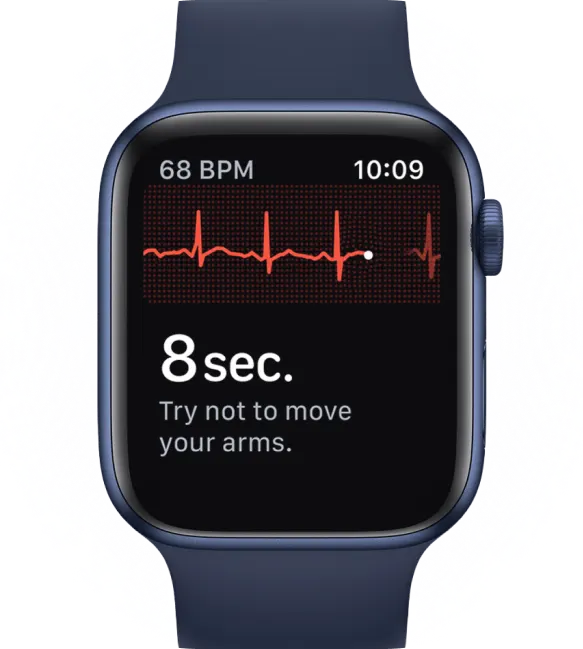
Many of us are taking charge of our health with incredible tools like smartwatches that can record an electrocardiogram (ECG) right from our wrists. This is a huge step toward being more aware of what’s going on with our hearts.
But it’s really important to understand where this amazing technology fits in with standard clinical tests, like one that measures your troponin levels.
Think of your watch's ECG and a troponin test as two different, yet complementary, tools for understanding your heart's health. They don't measure the same thing, but their findings can be used together to create a much clearer picture of what's going on.
Your Watch Measures Electrical Signals
A wearable ECG, like the one on your watch, is designed to measure your heart's electrical activity. Its main job is to track the rhythm and rate of your heartbeat.
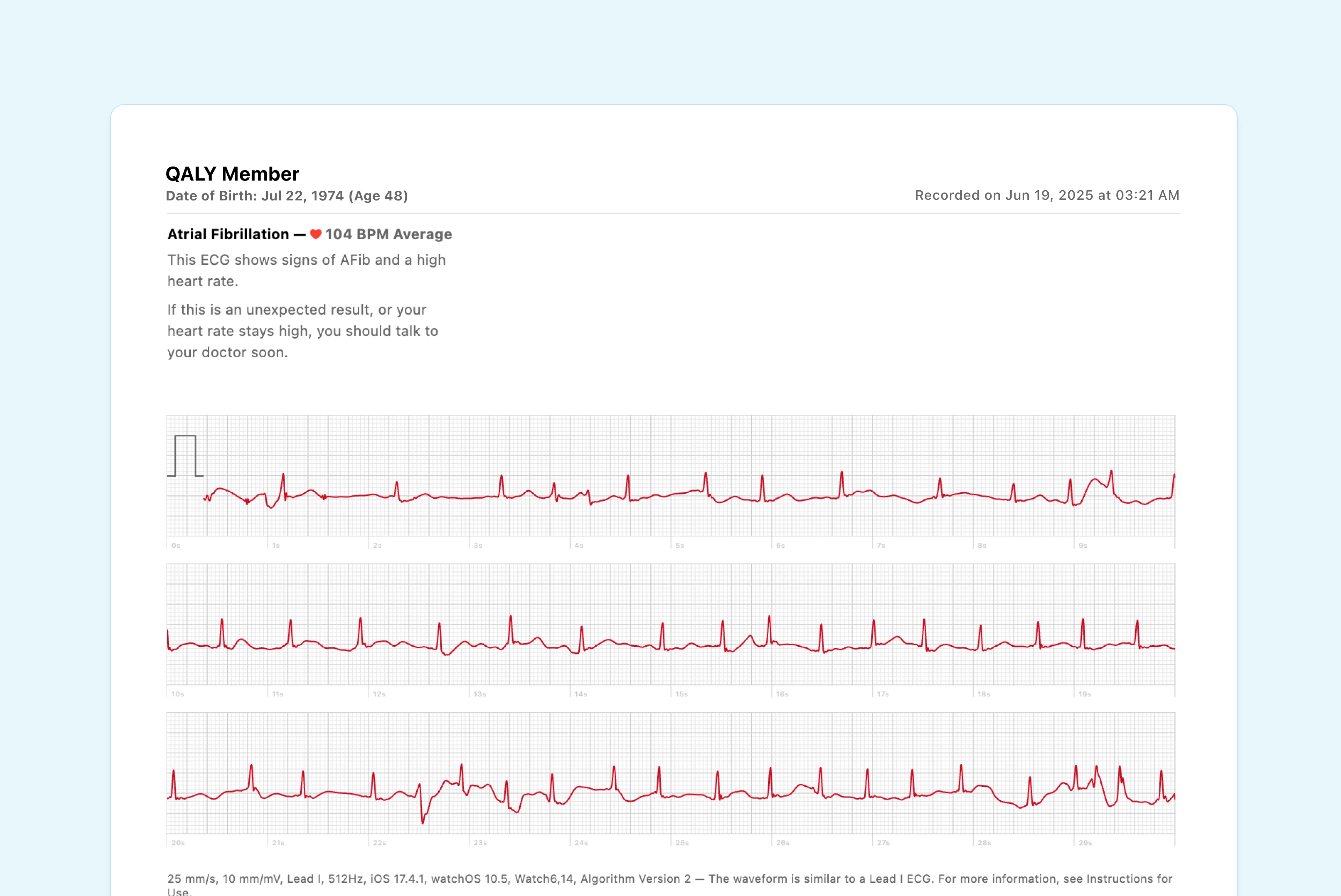
This is exactly how it can detect potential rhythm problems, such as Atrial Fibrillation (AFib), which is a common type of irregular heartbeat. Your watch is essentially listening for static or skips in the heart’s electrical wiring. An alert from your watch is a signal that something might be off with your heart’s rhythm, prompting you to pay closer attention or seek a professional opinion.
A wearable ECG is your personal rhythm monitor, checking the "music" of your heartbeat. A troponin test, on the other hand, is a blood test that checks for physical strain or damage to the heart muscle itself.
It's a common point of confusion, so let's be crystal clear: your wearable device cannot measure your troponin levels. This is a crucial distinction. A troponin test requires a blood sample that can only be drawn and analyzed in a clinical setting by healthcare professionals. Your watch is an electrical sensor, not a blood lab.
Troponin Tests Measure Physical Damage
While your ECG looks at electrical patterns, a troponin test looks for physical evidence of injury. As we've discussed, troponin is a protein that leaks from heart muscle cells when they are damaged or under severe stress.
Seeing elevated troponin levels in a blood test is a direct biochemical sign that the heart muscle itself has been strained.
So, how do these two tests work together?
- An abnormal ECG from your watch could be the first sign that something is wrong, encouraging you to see a doctor.
- When you get to the doctor, they will use your symptoms and the ECG reading as initial clues.
- If they suspect a heart event like a heart attack, they will almost certainly order a troponin test to see if there has been any actual muscle damage.
In this way, your wearable ECG acts as a valuable early warning system. It can alert you to a potential problem, and the troponin test can help doctors confirm the nature and severity of that problem. Understanding this relationship can help you use your device more effectively. If you're looking to get the most out of your device, our cardiologist's guide to the smartwatch ECG offers deeper insights into interpreting its readings.
The key is to see them as partners in your health journey. Your wearable provides valuable real time data about your heart’s rhythm, while the troponin test gives doctors a clear, biological view of your heart muscle's physical condition.
When You Should Seek Urgent Medical Care
Knowing when to act is probably the most critical part of managing your health. This section is all about giving you clear, direct guidance on the signs that you should absolutely never ignore.
It's so easy to second guess yourself, especially if you've ever felt dismissed in a medical setting before. But when it comes to your heart, trusting your body is the most important thing you can do. If something feels seriously wrong, it's always better to get checked out than to wait and wonder.
Recognizing the Classic Signs
A heart attack doesn't always look like it does in the movies. While chest pain is the most famous symptom, the signs can be surprisingly varied and sometimes subtle. It's vital to know the full range of signals your body might be sending.
Pay close attention to these classic signs:
- Chest Discomfort: This isn't always a sharp pain. It can feel like pressure, squeezing, fullness, or an ache in the center of your chest that lasts more than a few minutes, or that goes away and comes back.
- Pain in Other Areas: Discomfort isn't always confined to the chest. It can radiate out to one or both arms, your back, neck, jaw, or even your stomach.
- Shortness of Breath: You might find yourself struggling to breathe, and this can happen with or without any chest discomfort. You can learn more about what causes shortness of breath in our detailed guide.
- Other Symptoms: Be on alert for other strange feelings, like breaking out in a cold sweat, feeling nauseous, or becoming lightheaded.
It's also crucial to understand that symptoms can show up differently between men and women. Women are sometimes more likely to experience the non chest pain symptoms, like unusual fatigue, shortness of breath, and pain in the back or jaw.
Your body knows when something is truly off. The single most important piece of advice is to listen to that inner voice. An alert from your wearable device combined with any of these symptoms is a powerful signal to call for emergency services immediately.
Don't ever feel like you are overreacting or being a bother. Emergency medical teams would much rather see you and find that everything is okay than have you wait too long at home. Taking swift action is the best way to protect your heart and ensure you get the care you need, right when you need it most.
Your Troponin Questions Answered
We get it. Navigating health information can feel like learning a new language, and it's completely normal to have questions. To help clear things up, here are a few of the most common questions we hear about troponin, with simple, direct answers.
Can Stress or Anxiety Cause High Troponin Levels?
This is a really common concern. While everyday emotional stress and anxiety won't directly cause your troponin levels to rise, they can certainly put a strain on your heart over time. It’s helpful to think of the feeling of anxiety as separate from the physical marker of heart damage.
That said, there's a very rare condition sometimes called "broken heart syndrome" that can be triggered by extreme emotional or physical stress. This can cause a temporary weakening of the heart muscle, which in turn releases troponin. For most people, though, anxiety itself won't elevate troponin. If you're worried about your symptoms, the best first step is always to get checked out by a doctor.
What Is Considered a Normal Troponin Level?
This is a fantastic question, but the answer isn't a single magic number. What's considered "normal" depends entirely on the specific high sensitivity test a hospital lab is using. Each machine has a slightly different reference range.
For healthy individuals, troponin is usually present in such tiny amounts that it’s often undetectable or in the low single digits. Doctors interpret your result based on something called the 99th percentile cutoff for that particular test. This just means your level is compared to what’s considered normal for 99% of a healthy population.
The most important thing to remember is not to fixate on a specific number you might find online. Your medical team is trained to interpret your troponin levels within the full context of your health, symptoms, and the exact test they used.
Does a High Troponin Level Mean My Heart Is Permanently Damaged?
Not necessarily. An elevated troponin level is a clear signal that some heart muscle cells have been injured, but that doesn't automatically mean the damage is permanent or severe. The extent of the damage really depends on the cause and how quickly it was treated.
Think of it like this: in a heart attack, getting fast treatment to restore blood flow can save heart muscle and significantly limit any long term damage. In other situations, like when the heart is under temporary strain from a severe infection, your troponin might rise and then fall as you recover, with little to no lasting effect on your heart's overall function. Your healthcare team will use other tools, like an echocardiogram (an ultrasound of the heart), to get the full picture of how well your heart is pumping.

While a troponin test shows you what's happening with the heart muscle, services like Qaly provide expert analysis of your wearable ECG readings within minutes.



.png)
.png)