




Key Takeaways

User Profile
Hello Heart Hero. If you've ever felt your heart flutter, race, or skip a beat after eating something sweet, you're not alone and you've come to the right place.
That unsettling feeling can be worrying, so let’s get right to it. The short answer is yes, for some people, sugar can absolutely trigger heart palpitations.
Your Guide to Sugar and Heart Palpitations
It can be alarming to feel your heart doing gymnastics after a meal. Many people are understandably skeptical about conventional medical advice that might dismiss their symptoms, but your experiences are valid. Exploring the connection between your diet and heart health is a powerful step toward taking control of your well-being.
Think of this guide as a trusted resource on your journey. We'll gently explore the science behind why that candy bar or sugary drink might be making your heart act up. The goal is to give you practical, reassuring advice to help you feel more in control, focusing on what you can do today without feeling overwhelmed.
The Growing Link Between Sugar and Heart Rhythm
The connection between high sugar intake and heart issues is becoming clearer all the time. More and more research highlights how what we eat and drink can directly impact our heart's rhythm.
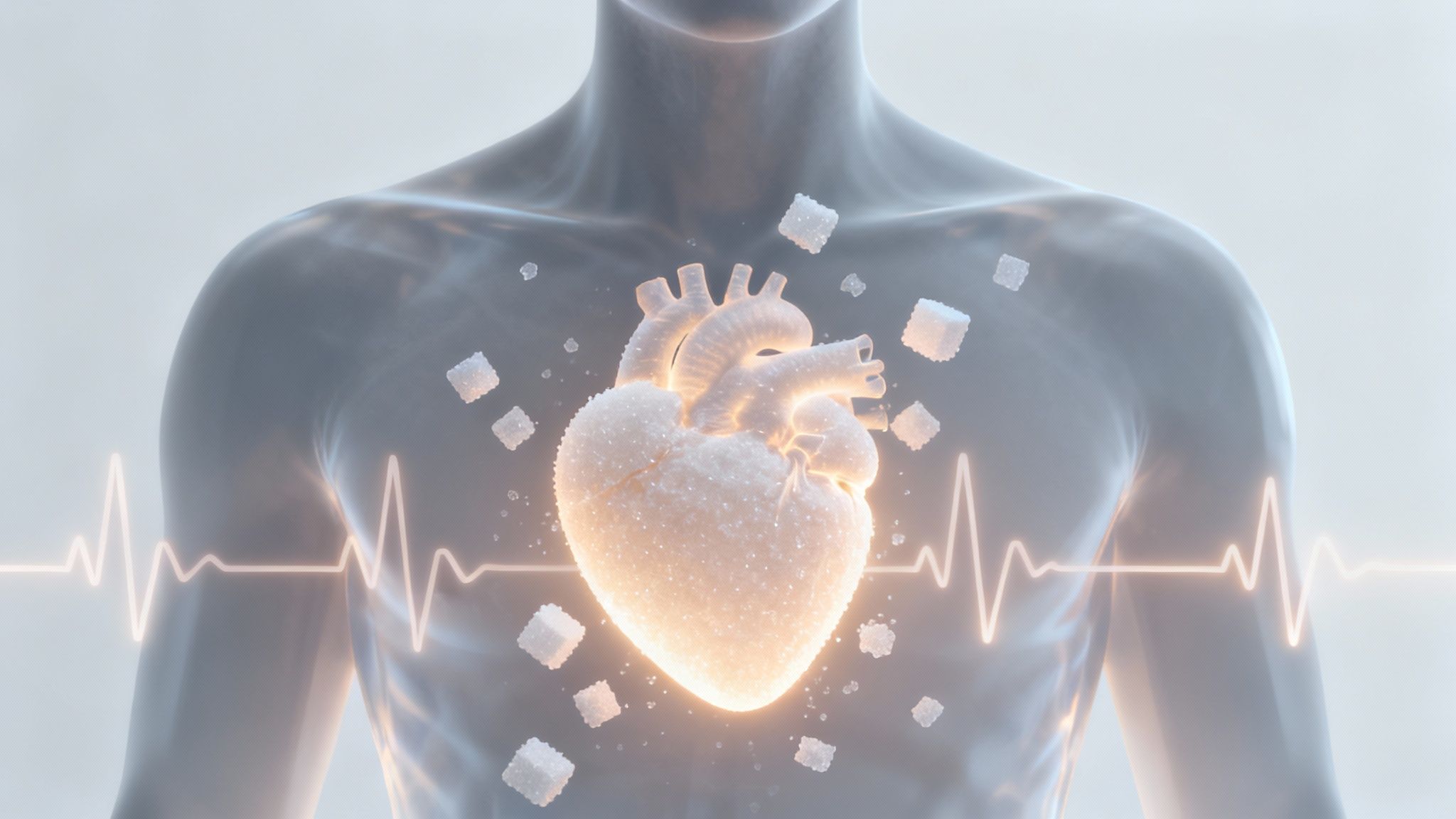
A groundbreaking study revealed that drinking just two liters of sugar-sweetened beverages per week ups the risk of atrial fibrillation (AFib) by 10% compared to those who skip them entirely. Even more concerning, the risk jumped to 20% for those drinking the same amount of artificially sweetened drinks. You can read more about these findings on heart.org.
This doesn't mean every sweet treat will cause a problem, but it does show a clear pattern between high consumption of sweetened drinks and heart rhythm disturbances. It really underscores the importance of being mindful of not just sugary foods but sugary liquids, too.
To better manage your sugar intake, checking out an ultimate guide to the best low sugar snacks can be a huge help. Making informed choices about what you eat is a foundational step in supporting a steady, calm heartbeat and putting your mind at ease.
How Sugar Can Affect Your Heartbeat
Ever wonder how a sweet treat can suddenly make your heart do a little tap dance? It's not just one thing, but a whole cascade of events happening inside your body.
Think of your body as a finely tuned car engine. Slamming it with a huge dose of sugar is like flooding the engine with a high-octane fuel it wasn't expecting. This sudden jolt can throw a few of your body's systems off balance, and your heart is often the first to feel the turbulence.
As you can see, sugar can put you on a real rollercoaster, starting with a spike and ending with a crash. Both of which can be triggers for palpitations.
The Blood Sugar Rollercoaster Ride
When you down something loaded with sugar, like a soda or a handful of candy, that sugar floods into your bloodstream. This sends your blood glucose levels soaring.
Your body flags this as a red alert and immediately kicks into gear, releasing hormones like adrenaline. Adrenaline is your body's "fight or flight" chemical. Its job is to get you ready for action, partly by ramping up your heart rate. That hormonal surge is often why you feel your heart suddenly beating faster or fluttering.
But what goes up, must come down. To deal with all that glucose, your body pumps out insulin. The problem is, sometimes it overdoes it, causing your blood sugar to nosedive a couple of hours later.
The Crash That Can Cause Palpitations
This sharp drop in blood sugar is what many call a "sugar crash," or more technically, reactive hypoglycemia. When your blood sugar gets too low, your body sees this as another emergency. It releases even more adrenaline to try and bring your glucose levels back up to a stable place.
This second adrenaline dump can set off another wave of palpitations. It's why you might feel shaky and notice your heart racing long after that sweet snack is a distant memory. For many, this explains why they experience heart palpitations after eating, sometimes hours later.
It's just like a rollercoaster. The sugar spike is that initial climb, giving you a quick rush. But the steep, fast drop that follows is the crash, which can be just as jarring for your heart rhythm.
It's also worth noting that not all sugars are created equal. Some research suggests that certain types, like fructose, might have a more pronounced effect on elevating heart rate and blood pressure, potentially creating the perfect storm for palpitations.
Keeping your body's systems in harmony is crucial for a steady heartbeat. For example, maintaining a proper balance of electrolytes is fundamental to your heart's electrical signaling. A major sugar rush can sometimes disrupt this delicate balance, adding another layer to the palpitation puzzle.
Why Not All Sugars Affect Your Heart Equally
It’s tempting to think of all sugars as the same, but when it comes to your heart, where that sugar comes from makes a world of difference. Your body processes sugar in wildly different ways depending on its source.
Think of it like this: the sugar in a can of soda is a drag racer, while the sugar in an apple is a steady family sedan.
That sugary drink sends a huge, lightning-fast dose of refined sugar straight into your system. It's the drag racer peeling out, causing a massive spike in your blood glucose. This triggers a hormonal jolt that can easily make your heart feel like it's racing. And often, these drinks are double trouble, packing caffeine that acts as an amplifier, making those palpitations feel even more intense.
Processed foods aren't much different. Things like pastries, candy, and even white bread are full of refined carbs that your body converts to sugar almost instantly, sending you on that same jarring roller-coaster ride.
The Hidden Sugars in Your Diet
One of the trickiest parts of managing sugar is that it hides in places you’d least expect. You might be carefully avoiding obvious sweets but still get palpitations because of sugars lurking in everyday foods.
Many savory items are the biggest offenders. Keep an eye out for these:
- Sauces and Dressings: Ketchup, barbecue sauce, and a surprising number of salad dressings are loaded with high-fructose corn syrup or other added sugars.
- Canned Soups and Frozen Meals: Convenience often has a hidden cost. Sugar is frequently added to improve flavor and texture in these products.
- Yogurts and Granola Bars: Even foods marketed as "healthy" can pack as much sugar as a dessert, throwing your blood sugar out of whack.
Becoming a savvy label-reader is your best defense. Once you start spotting these hidden triggers, you regain control over what goes into your body and how your heart responds. You might be shocked to find that simply switching your go-to sauce is all it takes to calm things down.
The real takeaway here is that how quickly sugar hits your bloodstream is often more important than the sugar itself. Fast absorption is what creates the hormonal chaos that can trigger palpitations.
Why Whole Fruits Are Different
This is where our family sedan comes into play. The sugar found in whole fruits like berries, apples, and oranges comes naturally packaged with fiber, water, and vital nutrients. This makes all the difference in how your body handles it.
Fiber essentially acts like a brake, slowing down how quickly your body digests and absorbs the sugar. This means you get a gentle, gradual rise in blood glucose, not a dramatic spike. By preventing that sudden adrenaline surge, whole fruits are far less likely to cause heart palpitations.
Understanding how your body processes different foods is key, especially if you're exploring different dietary paths. For instance, you can learn more about how another popular diet might affect heart rhythm by reading about the connection between the keto diet and heart palpitations.
Understanding Your Personal Risk Factors
While anyone can feel their heart flutter after a big dessert, some of us are simply more sensitive to sugar's effects. The key is to understand your own body's unique reactions. Knowing your personal risk factors is a powerful first step in connecting the dots between what you eat and how your heart behaves.
Think of it this way: if your body is already under a bit of strain, a sudden sugar rush can be the one thing that pushes it over the edge and triggers palpitations. This isn't about blame; it's about empowerment.
Are You More Susceptible to Sugar-Induced Palpitations?
Certain health situations can make your body's response to sugar far more dramatic. You might be more likely to feel that skip, flutter, or pound if you have:
- Underlying Blood Sugar Issues: If you're dealing with conditions like reactive hypoglycemia or metabolic syndrome, your body already has a tough time keeping blood glucose levels stable. For you, a sugary snack isn't just a treat; it’s a major event for your system to manage.
- High Stress or Anxiety: When you’re stressed out, your body is already swimming in adrenaline. Piling a sugar-induced adrenaline spike on top of that can easily kickstart a racing heart. It’s like adding gasoline to an already roaring fire.
- Dehydration and Electrolyte Imbalances: Sugary drinks can sometimes make dehydration worse. When you're low on fluids and essential minerals like potassium, your heart's electrical signaling system can get easily disrupted, making palpitations much more likely.
Your body is a complex, interconnected system. A sensitivity to sugar might just be a signal that another area, like your stress levels or hydration, needs a little extra support.
Recognizing these factors helps you see the whole picture. It’s not just about the sugar itself, but how it interacts with your unique physiology. By understanding your personal risk factors, you can take much more targeted steps to support your heart. For example, ensuring your mineral levels are in balance is crucial, and you can learn more about potassium and your heart to better understand this important connection.


Practical Steps to Calm Your Heart Rhythm
When your heart feels like it's beating out of control, it can be really unsettling. The good news? You don't need to adopt some drastic, joyless diet to get back in the driver's seat.
It's all about making small, sustainable changes that can make a huge difference. Think of it as gently guiding your heart back to its natural, calmer rhythm.

Smart Strategies for Stable Blood Sugar
You can still enjoy a sweet treat. The key is to soften its impact on your system. The goal is to slow down how quickly that sugar hits your bloodstream, which helps you avoid the dramatic spike-and-crash cycle that often triggers palpitations.
Here’s a simple but incredibly effective trick: pair your sugar with protein and fiber.
Let's say you're having an apple. Eat it with a handful of almonds. The protein and healthy fats in the nuts slow down your body's absorption of the fruit's sugar. This simple pairing turns a potential trigger into a much gentler experience for your body.
By combining foods this way, you create a buffer against a rapid glucose surge. This helps keep your hormones stable and your heart beating calmly, making it much less likely that sugar will cause heart palpitations.
This mindful approach doesn't mean giving up foods you love. It's about enjoying them in a way that supports your health, putting you firmly in control.
More Gentle Ways to Support Your Heart
Beyond what you eat, a few other simple habits can help your heart feel steady and strong. These small adjustments work together, creating a solid foundation of well-being.
Try weaving these practices into your daily routine:
- Stay Hydrated with Water: Even mild dehydration can throw off your body's electrolyte balance, making palpitations more likely. Sipping water throughout the day is one of the easiest and most effective ways to support your heart's electrical system.
- Practice Deep Breathing: When you feel that fluttery sensation, it’s natural to get anxious, but that can just make things worse. Taking a few slow, deep breaths is a powerful way to calm your nervous system. Sometimes, it can stop palpitations right in their tracks.
- Incorporate Gentle Movement: You don't need to run a marathon. Regular, gentle exercise like walking or yoga helps your body use sugar more efficiently and lowers overall stress levels. When it comes to a happy heart, consistency is what really matters.
Using Modern Tools to Understand Your Heart
In the past, trying to explain a fleeting heart palpitation to a doctor often felt like describing a dream. By the time you tried to explain it, the feeling was gone, leaving you with just words and a growing sense of frustration. Today, incredible technology has put the power to understand your heart right on your wrist.
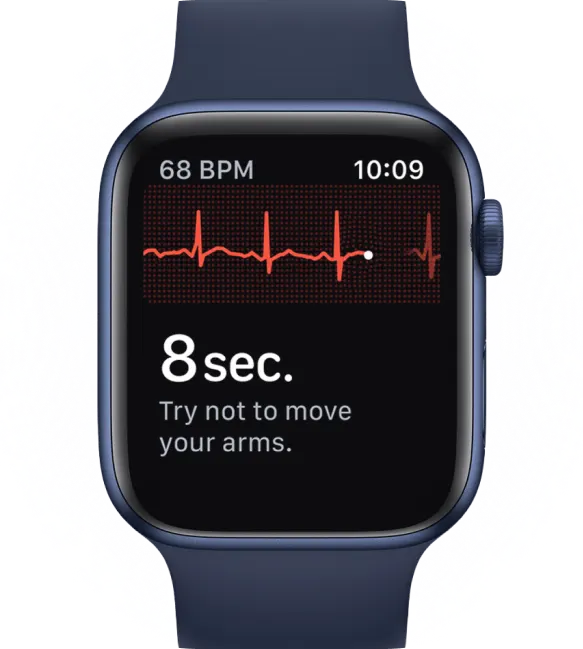
This is where you can take back control. Wearable devices with electrocardiogram (ECG) capabilities act as your personal heart monitor, ready to capture what’s happening in that exact moment.
Capturing Real Data When It Matters Most
Picture this: you’ve just had a sugary soda, and a few moments later, you feel that familiar flutter in your chest. Instead of just worrying and wondering, you can capture a medical-grade ECG right then and there. That simple action transforms a vague, unsettling sensation into concrete, objective data.
This process is incredibly empowering. It helps demystify your symptoms and can reduce the anxiety that often comes with palpitations. You’re no longer just describing a feeling; you’re an active participant in your own care, armed with valuable information.
By capturing an ECG during an episode, you turn a confusing sensation into clear insight. This data can help you and your care team see if a real pattern exists between your diet and your heart's rhythm.
Having this information provides a much clearer picture for everyone involved. This is especially true given what we know about the impact of sugar on heart health. A massive study in Nature found that sugar-sweetened beverages were linked to 1.2 million instances of cardiovascular disease in 2020 alone. These are the kinds of conditions that can fuel irregular rhythms felt as palpitations. You can discover more about these global health findings from Baptist Health.
Turning Your Wearable into a Powerful Health Tool
Modern smartwatches from brands like Apple, Samsung, and Fitbit have made this technology accessible to pretty much everyone. Instead of waiting weeks for a doctor's appointment or a traditional Holter monitor, you can start gathering insights immediately.
These devices allow you to:
- Record Instantly: Capture an ECG the second you feel a palpitation, so you never miss an important event.
- Track Patterns: Log your ECGs alongside your meals and activities. This helps you identify potential triggers and see if sugar can cause heart palpitations for you personally.
- Share with Experts: Easily send your detailed ECG reports to your doctor or use services that provide expert analysis, giving them a much clearer window into your heart’s behavior.
Taking these steps helps build a solid bridge between your personal experiences and the medical advice you receive. For a deeper dive into how this all works, you can learn more about using an ECG for your Apple Watch in our detailed guide. It’s a powerful way to make sure your concerns are seen, understood, and addressed with real data.
Common Questions About Sugar and Palpitations
It's completely normal to have questions when you're trying to connect the dots between your diet and how your heart is behaving. We’ve pulled together some of the most common ones to give you clear, straightforward answers.
How Long After Eating Sugar Can Palpitations Start?
Palpitations can pop up anywhere from 30 minutes to a few hours after you've had something sugary. If your body is reacting to the immediate blood sugar spike and adrenaline rush, you might feel that flutter happen pretty quickly.
But if it’s tied to the infamous "sugar crash," known as reactive hypoglycemia, the palpitations could kick in 2 to 4 hours later. This is when your blood sugar dips too low, prompting your body to release another wave of adrenaline to bring things back up. Paying close attention to the timing of your symptoms and meals can help you uncover your own personal pattern.
The timing often depends on which part of the sugar rollercoaster your body is reacting to. Is it the quick spike, or is it the delayed crash?
Can Natural Sugars Like Honey or Fruit Cause Palpitations?
Yes, they absolutely can, but the source makes a world of difference. Natural sweeteners like honey and maple syrup are still simple sugars. If you have too much at once, they can cause the same rapid blood glucose spike as table sugar.
Whole fruits, on the other hand, are a different story. The sugar in a berry or an apple comes packaged with a crucial sidekick: fiber.
Fiber slows everything down, digestion and the absorption of sugar into your bloodstream. This creates a much gentler rise in blood sugar, making whole fruits far less likely to trigger palpitations compared to the "free sugars" found in juice, honey, or candy.
Are Artificial Sweeteners a Safe Alternative?
This is a tricky one, and the answer isn't a simple yes or no. While it's true that artificial sweeteners don’t directly raise your blood sugar, some fascinating research suggests they might not be the heart-healthy solution many believe them to be.
The UK Biobank study we mentioned earlier was quite revealing. It found that artificially sweetened drinks were associated with a 20% higher risk of atrial fibrillation, a common cause of palpitations. That was an even greater risk than from sugar-sweetened drinks. While researchers are still digging into the exact reasons, it suggests that switching to diet soda may not be the simple fix it appears to be.
When Should I See a Doctor About My Palpitations?
While palpitations after eating sugar can often be harmless, it's really important not to self-diagnose. You should always talk to your doctor if your palpitations are:
- Happening frequently
- Lasting for more than just a few minutes
- Paired with other symptoms like dizziness, shortness of breath, chest pain, or fainting
This is where a wearable device can be a game-changer. Capturing an ECG during an episode gives your doctor invaluable, concrete information to help them make a more accurate diagnosis and give you peace of mind.

If you're looking for an expert analysis of your ECGs from your Apple Watch, Fitbit, or other device, Qaly can help. Get clear insights from certified technicians, right from your phone.



.png)
.png)