





Key Takeaways

User Profile
Hello Heart Hero. Your relationship between potassium levels and heart function is one of the most important, yet often overlooked, connections in your body. Think of potassium as the master conductor for your heart's electrical orchestra, making sure every beat is steady, strong, and in rhythm. When this crucial mineral is perfectly balanced, everything just works.
Your Heart's Unsung Hero: The Potassium Connection
Welcome to your guide on one of the most vital players in your cardiac health. We get it, thinking about heart issues can be unsettling, especially when it feels like you're navigating it alone. Many people are rightfully wary of a healthcare system that can feel distant and confusing. This guide is meant to be different, offering clear, empathetic information to empower you.
Imagine your heart's cells are like tiny batteries. Potassium is the key electrolyte that helps these batteries charge and discharge correctly, creating the electrical signals that tell your heart to contract and pump blood. When your potassium levels are just right, these signals are crisp and orderly.
But when that delicate balance is thrown off, it can feel like your heart’s rhythm is faltering. This can lead to those unsettling feelings you might be familiar with, such as:
- Unexpected heart flutters or palpitations
- A sensation of skipped or extra heartbeats
- A general feeling of weakness or fatigue
This guide will gently demystify the connection between potassium levels and heart health. Our goal is to reassure you that understanding this relationship is the first powerful step toward regaining control and peace of mind.
Why This Balance Is So Important
Getting the right amount of potassium isn't just a minor detail; it's fundamental to your well-being. Both too little potassium (hypokalemia) and too much potassium (hyperkalemia) can disrupt your heart’s electrical stability. These disruptions are often the root cause of arrhythmias that can be detected on an ECG.
This section will explain in simple terms why maintaining this balance is so essential for your cardiac wellness, setting the stage for a deeper dive into what’s normal and what’s not. For a more detailed look into how different minerals impact your heart's electrical signals, you might be interested in our guide on electrolyte imbalance and your ECG.
We're here to walk you through how your body uses this mineral, what can cause an imbalance, and how you can become a more informed advocate for your own heart. Knowledge is your greatest tool, and you've already taken the most important step by seeking it out.
Finding Your Potassium Goldilocks Zone
When we talk about potassium and heart health, the best analogy is the story of Goldilocks: you don't want it too high or too low. You want it just right. This isn’t just a fairy tale, it’s a crucial aspect of your heart’s electrical stability. Staying within this sweet spot, your personal “Goldilocks Zone”, is one of the most important things you can do for your heart.
The typical "normal" range for potassium in a blood test is between 3.5 and 5.0 millimoles per liter (mmol/L). Think of this range like the ideal tire pressure for your car. Too low, and the car handles poorly. Too high, and you risk a blowout. Your heart's electrical system is just as sensitive.
Even small drifts outside this range can affect your heart's rhythm, sometimes without you feeling a thing. This is why just being "in the normal range" might not tell the whole story, especially if you have an existing heart condition.
The U-Shaped Risk of Potassium Imbalance
It’s easy to think more of a good thing is always better, but potassium doesn't work that way. Research shows there's a U-shaped risk curve when it comes to potassium and heart problems. This means your risk goes up when your levels are either too low or too high, with the safest spot being right in the middle.
A major study involving over 13,000 heart failure patients really drove this point home. While the vast majority, 93.3% of them, had potassium levels in the standard 3.5 to 5.0 mmol/L range, those outside this zone faced significantly higher risks. The researchers even pinpointed that the absolute safest level for these patients was 4.2 mmol/L. You can read more about these important findings in the full study on heart failure and potassium.
As you can see, a balanced level helps maintain a steady, healthy heartbeat, whereas levels that are too high or too low can lead to dangerous irregularities.
Why Your Specific Number Matters
Knowing your exact number from a lab report is empowering. It turns a confusing medical data point into something you can act on. When you know that a target like 4.2 mmol/L is linked to the lowest risk, you have a solid goal to discuss with your doctor.
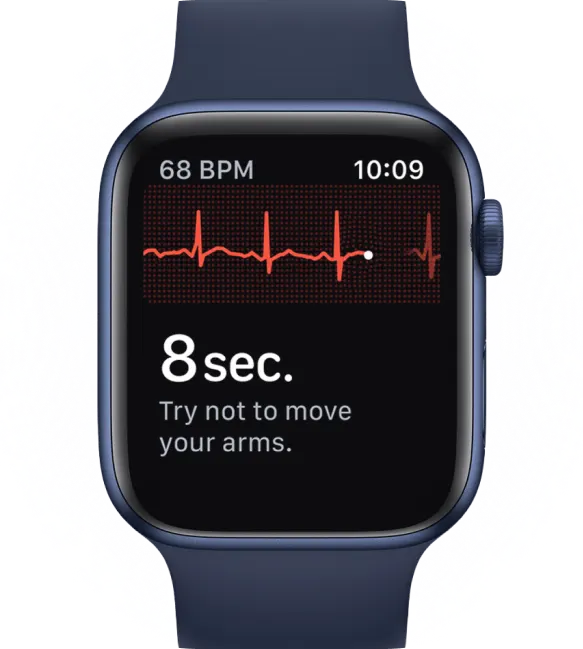
This becomes especially useful if you're monitoring your heart with a wearable device. Your watch's ECG can't measure your potassium, of course, but it can spot the arrhythmias that an imbalance might trigger, like atrial fibrillation or PVCs.
-samsung.webp)
Pairing your ECG readings from home with your latest potassium lab results gives you, and your doctor, a much richer, more complete view of your heart health. It’s a powerful combination of data.
In the end, keeping an eye on this one number can be a game-changer. It helps you understand the "why" behind your doctor's advice and lets you be a true partner in managing your health. By aiming for your personal Goldilocks Zone, you’re taking a proactive step to keep your heart's electrical orchestra playing in perfect harmony.
What Happens When Potassium Levels Are Too Low
If you've been feeling weak, crampy, or noticing more heart flutters, you might be dealing with hypokalemia, the medical term for low potassium. It’s natural to feel anxious about these symptoms. This guide will walk you through what happens when your potassium dips below the safe zone and how that can affect your heart.
Low potassium often comes from common, manageable factors. Things like certain medications (especially diuretics, or “water pills”) can flush potassium out of your system too quickly. It can also be triggered by diet, dehydration, or bouts of vomiting or diarrhea.
Common Culprits For Low Potassium
So, what exactly pushes potassium levels down? It's often a combination of things, but here are some of the usual suspects:
- Diuretics: Often called "water pills," these are used for blood pressure or fluid balance but can cause you to lose too much potassium through your kidneys.
- Digestive Loss: A nasty bout of vomiting or diarrhea can strip potassium and other electrolytes from your body much faster than you can replace them.
- Inadequate Diet: Not getting enough potassium-rich foods like bananas, spinach, or avocados can slowly deplete your body's reserves.
- Dehydration: When your body loses a lot of water through sweat or illness, it often takes electrolytes like potassium right along with it.
- Hormonal Disorders: Less common conditions, like hyperaldosteronism, can cause your body to excrete too much potassium.
It's important to remember that these risk factors can overlap. For instance, being dehydrated while also taking a diuretic can speed up potassium loss and make symptoms feel much worse.
When potassium levels are low, your heart's muscle cells become more electrically excitable. Think of your heart cells as tiny batteries that need a steady potassium charge to fire correctly. When your levels drop below 3.5 mmol/L, these little batteries can start to misfire.
It's a bit like having frayed electrical wiring in your house. A bad wire can cause sparks and short circuits. In your heart, low potassium creates a similar unstable environment, making irregular heartbeats more likely.
“Hypokalemia increases electrical irritability in the heart, which can lead to arrhythmias if not corrected.”
ECG Clues You Might Spot
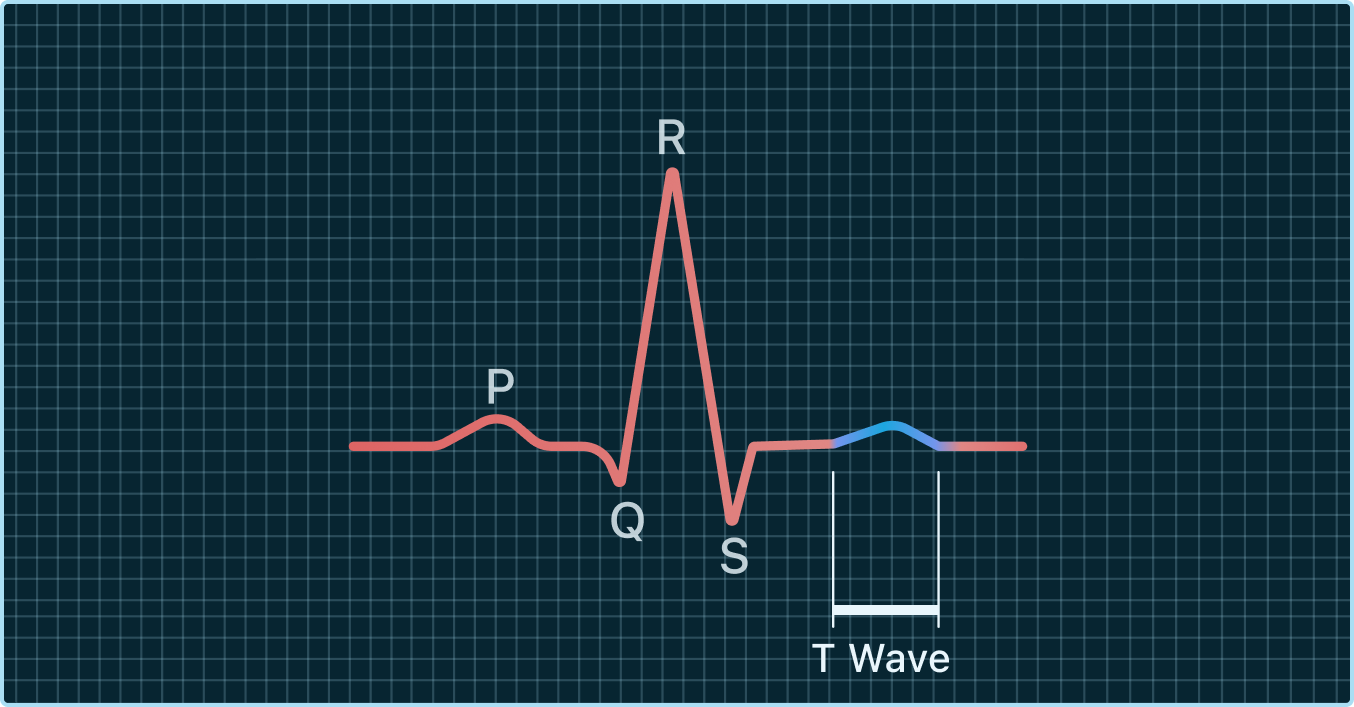
On an ECG from your watch, low potassium can create subtle but distinct changes in the waveforms. You might notice your T waves looking flatter and less rounded than usual. You might also see U waves, a small upward bump that appears after the T wave, become more obvious.
- Flattened T Waves: The T wave, which represents your heart’s lower chambers "recharging," may look much smaller or less peaked.
- Prominent U Waves: A clear U wave can pop up right after the T wave, which can be a classic sign of low potassium.
- ST Segment Depression: You might also spot a slight dip in the line between the tall QRS spike and the T wave.
A wearable ECG device is a great tool for catching these clues right at home. The certified technicians at Qaly can review your single-lead ECG strips and flag these specific signs for you, often within minutes. To see how these irregular beats might appear, check out our guide on Premature Ventricular Contractions.
When To Talk To Your Doctor
It's critical to act if you experience severe symptoms or see alarming changes on your ECG. While mild hypokalemia might just cause some fatigue or cramps, a serious imbalance can lead to dangerous heart rhythms.
Look out for these red flags:
- Sudden, extreme weakness
- Persistent chest discomfort
- Fainting or feeling like you're about to faint
- Severe muscle cramps or pain
- A very rapid or very slow heartbeat
If you notice any of these, contact your healthcare provider right away. Being able to share your wearable ECG data alongside your blood test results gives your doctor a much clearer picture of what's going on.
Managing Your Potassium Safely
Keeping your potassium in a healthy range is usually about small, consistent steps. Regular checkups and paying attention to your nutrition can provide a lot of peace of mind.
- Balanced Diet: Focus on including fruits and vegetables known for their potassium content, but remember that balance is key.
- Routine Lab Tests: Follow your doctor’s advice on how often you should get your potassium levels checked with a blood test.
- Medication Review: Talk to your doctor about all your prescriptions to understand how they might be affecting your electrolyte levels.
With an app like Qaly, you can easily track trends in your ECG alongside your lab results. This combined view helps you spot shifts in your heart's electrical behavior early on.
That's what empowers you to act promptly and confidently.
This information is here to help you connect the dots between your symptoms and a potential cause, reducing anxiety along the way. When you pair this knowledge with Qaly’s human-reviewed ECG reports, you get the clarity and confidence to have a productive conversation with your clinician.
What Happens When Potassium Levels Are Too High
We've talked about the risks of low potassium, but what happens when the pendulum swings the other way? High potassium, or hyperkalemia, is a less common but serious threat to your heart.
It’s a condition that can sneak up on you, especially if you have kidney issues or are on certain heart medications. Understanding it is a key part of advocating for your own well-being.
If low potassium makes your heart's electrical system overly excitable, high potassium does the opposite. It acts like a brake, slowing down the electrical signals that tell your heart to beat. In mild cases, you might not feel a thing. But as levels climb, this braking effect can become dangerous, leading to a dangerously slow heartbeat or even severe arrhythmias.
It can feel frustrating to learn that something so essential for your heart can also harm it. We get it. The goal here isn't to cause alarm, but to empower you with the knowledge to stay in that safe, balanced zone.
The Silent Threat of High Potassium
One of the biggest challenges with hyperkalemia is that it often doesn't have obvious warning signs until it's pretty advanced. You might feel a little tired, weak, or experience some numbness or tingling, but these symptoms are easy to dismiss or blame on something else.
This is especially true for the 3.5 million people in the U.S. living with chronic kidney disease or heart failure, who are at a much higher risk. Your kidneys are the main filter for potassium, so if they aren't working at full capacity, potassium can build up in your blood. Certain common medications, like ACE inhibitors or ARBs for blood pressure and heart failure, can also cause your body to hold onto too much potassium.


How High Potassium Shows Up on Your ECG
Your wearable ECG is a powerful ally here. While it can’t measure potassium in your blood directly, it can spot the tell-tale electrical changes that high potassium causes. These are the red flags that something is off.
A key sign of hyperkalemia on an ECG is a change in the T wave. Instead of its usual gentle, rounded hill, the T wave can become tall and sharply peaked, almost like a narrow tent. This is often one of the very first signs a trained eye can spot. You can learn more about what a normal and abnormal ECG T wave can look like.
As potassium levels continue to rise, other changes can appear on your ECG trace:
- A Widening QRS Complex: The main spike of your heartbeat (the QRS) gets wider. This shows that the electrical signal is traveling more slowly through your heart's lower chambers, the ventricles.
- A Longer PR Interval: The time it takes for the signal to get from the top of your heart to the bottom increases.
Services like Qaly are designed to help you catch these subtle but critical changes. Certified technicians can analyze your ECG recordings, measure these intervals precisely, and alert you to trends that need a closer look. This data gives you something concrete to share with your doctor.
To help you connect the dots between how you're feeling and what your watch might be seeing, here’s a simple breakdown of the symptoms and potential ECG changes for both high and low potassium.
Potassium Imbalance Signs And ECG Clues
Here’s a look at the symptoms and potential ECG changes you can monitor with your wearable device for both low and high potassium.
For Low Potassium (Hypokalemia), common symptoms include weakness, fatigue, muscle cramps, constipation, and heart palpitations. Potential ECG clues on a wearable device are flattened or inverted T waves, prominent U waves, or more frequent PACs or PVCs.
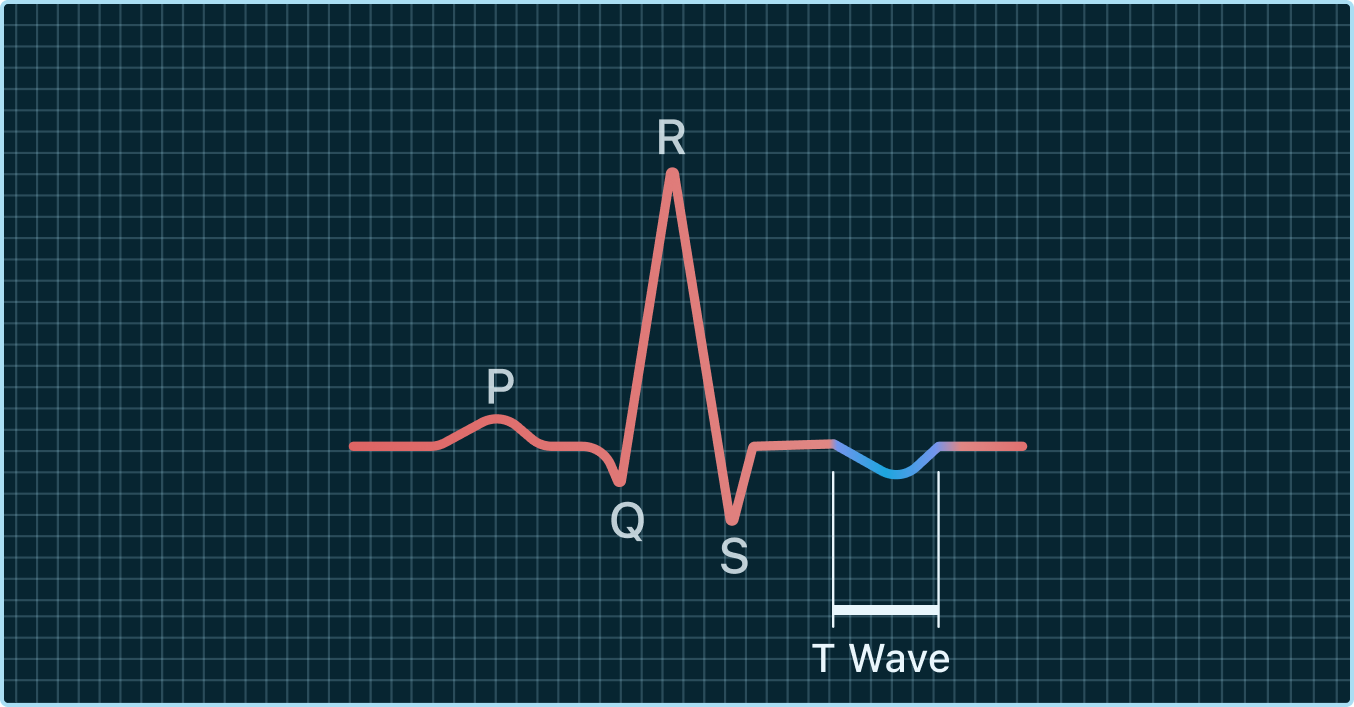
For High Potassium (Hyperkalemia), there are often no symptoms until it becomes severe. When they do appear, they might include muscle weakness, numbness, tingling, or a slow heartbeat. Potential ECG clues on a wearable device are tall, peaked T waves, a wider QRS complex, or a longer PR interval.
Remember, these ECG changes are clues, not diagnoses. They are powerful starting points for a conversation with your doctor, who can confirm your potassium levels with a simple blood test.
You might think high potassium is only a concern for those who are already sick, but landmark research shows it can affect seemingly healthy people too. Understanding these risks is a vital step in proactive heart care.
The famous Framingham Heart Study, which followed thousands of healthy individuals for years, found a startling connection. Even a slight, otherwise "normal" increase in potassium was linked to a higher risk of cardiovascular events.
Subsequent analyses published in JAMA Internal Medicine revealed that people with potassium levels of 4.5 mEq/L or higher had a significantly increased risk of death compared to those with levels in the middle of the normal range.
This information isn't meant to scare you, it's meant to empower you. By knowing what to look for on your ECG and understanding your own risk factors, you can turn your wearable device from a simple fitness tracker into a vital health monitor. It's about preventing a crisis before it ever has a chance to happen.
Using Your Wearable ECG To Stay Safe
That smartwatch on your wrist is more than just a cool gadget; it’s a powerful tool for your well-being. It's time to see it as a partner in your heart health journey, helping you take a more proactive role. We know it can feel like you're navigating your health alone, but this technology, used the right way, helps you become your own best advocate.
Your smartwatch can’t directly measure the potassium in your blood, but it can do something incredibly important. It can spot the subtle electrical changes that potassium imbalances create in your heart’s rhythm. This is how you can connect the dots between how you're feeling and the hard data your doctor needs to see.
Beyond The Algorithm: Human Expertise Matters
This is where a service like Qaly becomes so valuable. While your watch's built-in algorithm is a great first check, it can miss nuanced changes. Qaly connects your ECG recordings to certified cardiographic technicians who provide a level of analysis an automated system just can’t replicate.
These human experts aren't just looking for obvious arrhythmias. They meticulously measure the critical intervals on your ECG strip, including:
- The PR Interval: This shows how long it takes for the electrical signal to get from your heart’s upper chambers to its lower chambers.
- The QRS Interval: This measures how quickly that signal spreads through your heart's main pumping chambers.
- The QTc Interval: This represents the time it takes for your heart muscle to squeeze and then fully recover.
Tracking trends in these numbers over time can be a vital early warning system for the electrical effects of shifting potassium levels and heart function. You can get a much deeper understanding by reading a cardiologist's guide to the smartwatch ECG.
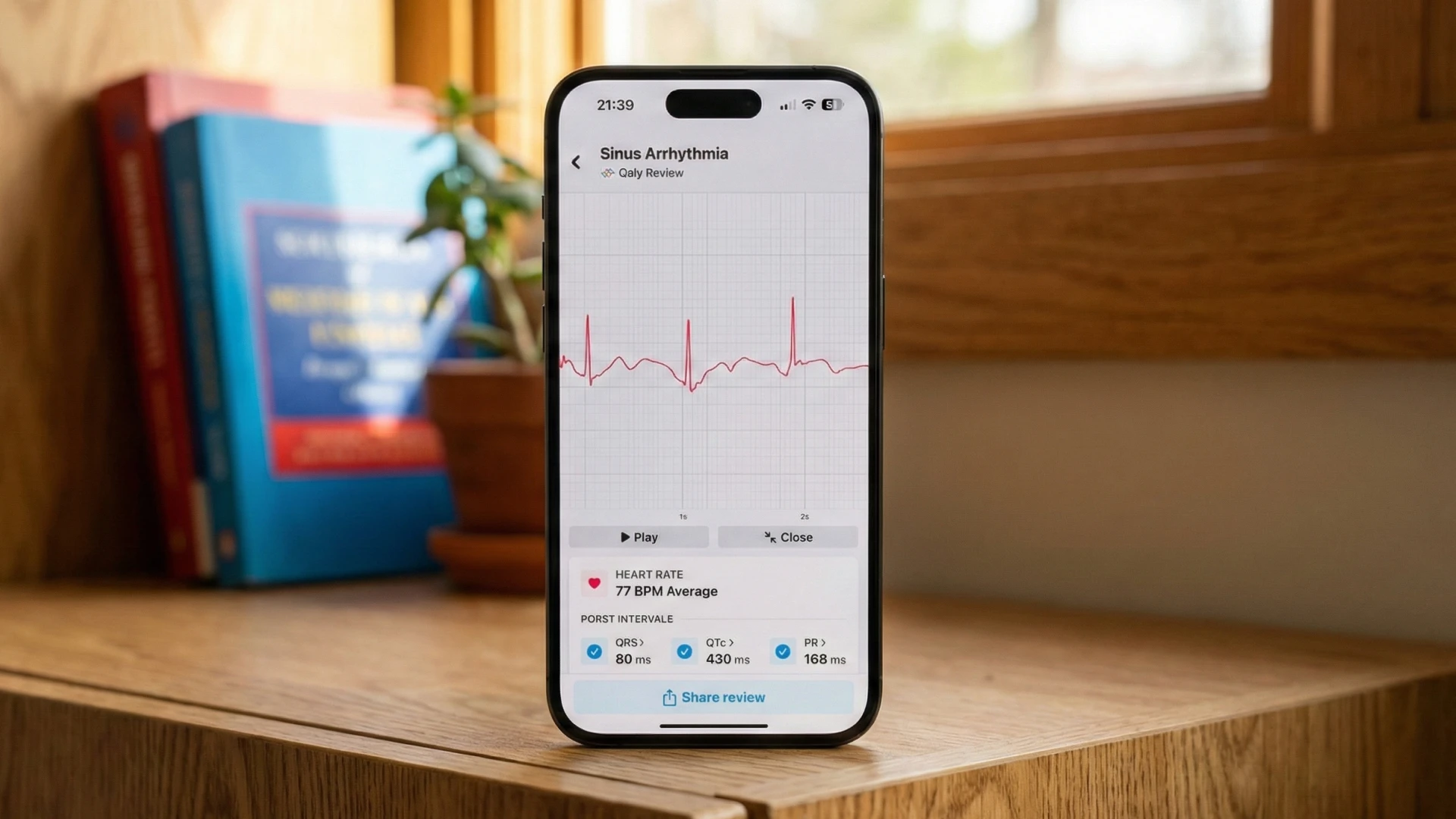
The information from an expert-reviewed ECG, presented in a clear report, becomes a powerful and credible conversation starter for your next doctor's appointment. It closes the gap between the data you collect at home and the clinical action you need.
From Palpitations To A Proactive Plan: A Real-World Example
Think about this scenario, which is a common one for many people. Sarah, who has a history of heart failure, started noticing more frequent palpitations. Feeling anxious, she took several ECGs with her watch and sent them to Qaly. The algorithm on her watch simply said "inconclusive," which only made her worry more.
Within minutes, a Qaly technician analyzed her strips. The report they sent back didn't just identify the palpitations as Premature Ventricular Contractions (PVCs); it also noted a slight widening of her QRS interval compared to her previous ECGs.
Armed with this detailed report showing a clear trend, Sarah made an appointment with her cardiologist. Instead of just saying, "I've been having flutters," she showed her doctor the actual ECGs and the precise interval measurements. This specific data prompted her doctor to order a blood test, which revealed her potassium had crept up into a dangerous zone. This led to a timely adjustment in her medication, likely preventing a more serious cardiac event.
Why This Monitoring Is So Critical
The link between potassium swings and serious outcomes is stark. In one study of patients admitted for acute heart failure, mortality rates were heavily influenced by their potassium levels on arrival. For instance, 90-day mortality shot up to 38.3% for patients with potassium levels over 5.5 mmol/L. For those in the ideal range of 3.6 to 4.2 mmol/L, the mortality rate was much lower, between 7.3% and 8.1%.
This data highlights just how important at-home monitoring can be. Unstable potassium can trigger arrhythmias that Qaly's human experts are trained to spot across the more than 500,000 ECGs they've analyzed.
By catching these small electrical clues early, you turn your wearable device from a simple tracker into a true guardian for your heart, helping you and your doctor stay one step ahead.
Common Questions About Potassium and Heart Health
It's completely normal to have questions as you learn more about the deep connection between potassium levels and your heart health. Feeling uncertain is a natural part of taking charge of your well-being, especially when it feels like you're trying to figure it all out on your own. This section is here to give you clear, reassuring answers to some of the most common concerns we hear.
We want you to feel confident and empowered with practical knowledge you can actually use. Let's walk through some of these questions together, so you can leave with clarity and a stronger sense of control over your health journey. Remember, you are your own best advocate, and having the right information is your most powerful tool.
What Foods Can Help Me Manage My Potassium Levels?
This is a great question, and it shows you're thinking proactively about your health. While diet is a huge piece of the puzzle, it’s something that must be handled with care and always in partnership with your doctor. This is especially true if you have an existing heart or kidney condition that puts you at a higher risk for imbalances.
Many people know about potassium-rich foods like bananas, oranges, spinach, and sweet potatoes. These are wonderful, healthy options for many people. However, if your body has trouble filtering potassium, eating too much of these foods can accidentally push your levels too high.
The best approach isn't to fixate on one or two specific foods, but to aim for a balanced diet rich in whole foods. The single most important step is having an open conversation with your healthcare provider about what's right for you. They can help create a plan that fits your personal health needs, making sure your diet supports your heart without creating new risks.
Can My Medications Affect My Potassium Levels?
Yes, absolutely. It's very common for medications, especially those used to treat heart conditions, to have a direct impact on your potassium levels. This is something your doctor is very aware of and monitors closely, but it's important for you to understand the "why" behind it.
Think of it this way: some medications act like a gatekeeper for potassium.
- Diuretics (often called "water pills"): These are frequently prescribed for high blood pressure or heart failure. They help your body get rid of excess salt and water, but in the process, they can also flush out too much potassium, leading to low levels.
- ACE Inhibitors and ARBs: These are powerful medicines that protect the heart and kidneys. However, they can cause your body to hold onto potassium, which can lead to levels creeping up over time.
This might sound a little scary, but please be reassured that these are well-known effects. Your doctor manages these risks by scheduling regular blood tests to keep an eye on your levels. It is incredibly important that you never stop or change your medication dosage without first talking to your doctor. They prescribed these for a reason, and making sudden changes can be dangerous.
When Should I Be Worried And Seek Urgent Medical Care?
This is perhaps the most critical question of all. Your at-home monitoring with a wearable device is a fantastic tool for tracking trends and spotting subtle changes over time. However, it is never a substitute for emergency medical care when you're experiencing severe symptoms. You must always trust your body and act quickly.
Please seek immediate medical attention if you experience any of the following "red flag" symptoms:
- Sudden or severe chest pain or pressure
- Significant shortness of breath
- Fainting or feeling like you are about to pass out
- Sudden, unexplained muscle weakness or paralysis
- A heartbeat that feels dangerously slow, chaotic, or extremely rapid
- New numbness or tingling in your face, arms, or legs
Your health and safety are the top priority. While your wearable ECG provides valuable data for non-urgent analysis and doctor's visits, severe symptoms demand an immediate, in-person medical evaluation. Don't ever hesitate to call for help.
How Often Should My Potassium Levels Be Checked?
The right frequency for blood tests is completely unique to your individual health situation. There isn't a one-size-fits-all schedule, which is why a strong partnership with your doctor is so essential.
For a generally healthy person with no known heart or kidney issues, potassium might only be checked as part of a routine annual physical. It’s just one of many markers they look at to get a baseline of your overall health.
However, the situation is very different for someone with a specific health condition. If you have heart failure, chronic kidney disease, or are taking medications that affect potassium, your doctor will recommend a much more frequent monitoring schedule. This could be every few months, or even more often if your medications are being adjusted or your levels have been unstable.
The best thing you can do is ask your doctor directly: "Based on my health and my medications, what is the right schedule for me to have my potassium checked?" This shows you are an engaged partner in your care and helps ensure nothing slips through the cracks. It's your health, and you have every right to be part of the planning process.

Navigating the complexities of your heart's electrical health can feel overwhelming, but you don't have to do it alone. With Qaly, you can get your wearable ECGs reviewed by certified experts in minutes, any time of day.



.png)
.png)