


Key Takeaways

User Profile
Hello Heart Hero. If you’ve ever felt your heart suddenly race or flutter right when you’re also feeling dizzy, weak, or shaky, you’ve come to the right place. It’s a common question we hear: “Can hypoglycemia cause palpitations?” The answer is a definite yes. That unsettling heart sensation isn't just in your head; it’s a very real, physical response to low blood sugar.
Understanding the Link Between Low Blood Sugar and Palpitations
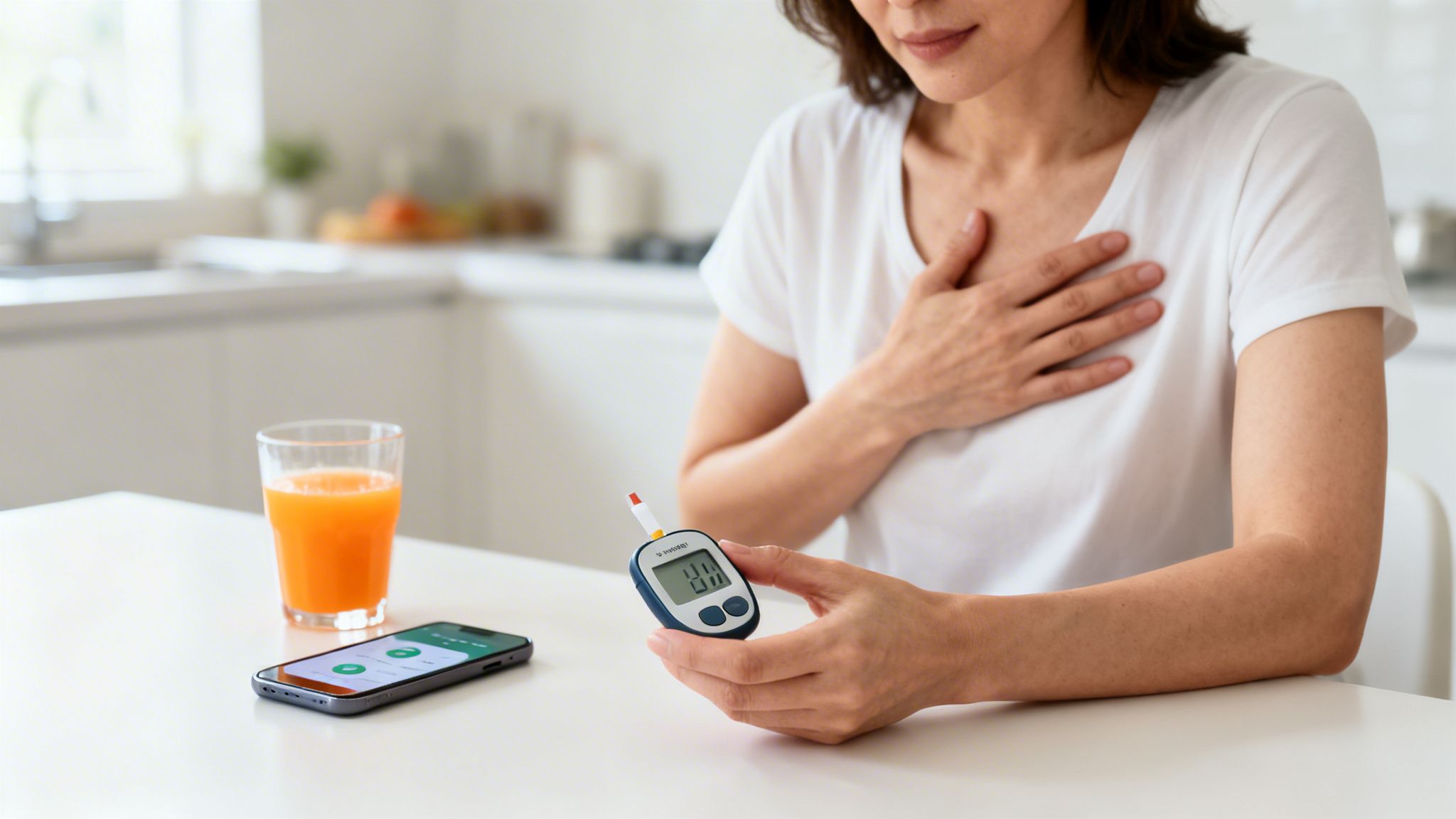
It’s completely understandable why feeling your heart pound or skip beats is so frightening, especially when you already feel unwell. We also know how hard it can be to get clear answers about your health. Our goal here is to cut through the confusion and replace the anxiety these episodes cause with clarity and confidence.
Think of this guide as your personal roadmap. We'll walk through what’s actually happening inside your body, without all the dense medical jargon, so you can feel more in control.
Why Your Body Reacts This Way
Picture your body as a finely-tuned engine that runs on a specific fuel: glucose, or sugar. When the fuel level in your blood drops too low, a condition called hypoglycemia, your body’s internal alarm system kicks into high gear. This is purely a protective measure.
To quickly fix the low fuel problem, your body floods your system with stress hormones like adrenaline. This powerful hormonal surge is what directly causes many of the symptoms you feel, including those startling heart palpitations. While the connection might seem strange, it’s a logical survival response. To learn more, you might find our guide on how sugar can increase your heart rate helpful.
The key takeaway is that palpitations during a low blood sugar episode are a sign your body is trying to fix a problem. They are a side effect of its own emergency response system.
What This Guide Will Cover
We're going to explore this from every angle to give you a complete and practical understanding. Here’s what you can expect to learn:
- The specific biological chain reaction that links low blood sugar to a racing heart.
- How to tell the difference between palpitations from hypoglycemia versus those from anxiety or another heart issue.
- Actionable strategies for what to do in the moment and how to prevent it from happening again.
By the time you finish this article, you’ll have a clear picture of why hypoglycemia can cause palpitations and know exactly what steps you can take to manage your heart health with confidence.
Why a Drop in Blood Sugar Can Trigger Heart Palpitations
To get why a dip in blood sugar can make your heart feel like it's doing gymnastics, it helps to picture your body as a finely tuned car. The main fuel for that car is glucose, which is just a fancy word for sugar. When that fuel gauge gets dangerously low, a whole set of internal alarms start blaring. This state is called hypoglycemia, and your body treats it like the serious emergency it is.
When this alarm goes off, your adrenal glands get the signal to release a rush of stress hormones, most notably adrenaline. This is the exact same hormone behind that "fight or flight" feeling you get when you're suddenly scared or in danger. In this case, its mission is to signal your liver to dump its stored glucose into your system, fast, to bring your blood sugar levels back up.
The Adrenaline Surge and Your Heart
While adrenaline is on its emergency mission to fix your body's fuel crisis, it has some powerful side effects, especially on your heart. Adrenaline is a major stimulant, and it essentially shouts at your heart muscle to beat harder and faster.
This hormonal surge is the direct reason hypoglycemia can cause palpitations. The forceful, rapid heartbeats you feel are your cardiovascular system reacting to the body's own emergency alert.
Think of your heart as a drum. Adrenaline is like a drummer suddenly kicking into a frantic, high-speed solo. That's the pounding or racing sensation you feel in your chest.
This process can also make your heart’s electrical system a bit more twitchy. The flood of adrenaline can sometimes irritate the heart cells, making them more prone to firing off extra, premature beats. This is what can cause that fluttering or "skipped beat" sensation, which are also types of palpitations.
More Than Just a Sugar Crash
The reasons for hypoglycemia aren't always as simple as just skipping a meal. Other factors can come into play. For example, it's important to understand the connections between eating disorders and depression, as these conditions can sometimes lead to serious nutritional imbalances that cause blood sugar to drop.
So, to recap, the key effects of adrenaline on your heart during a hypoglycemic episode include:
- Increased Heart Rate: Your heart speeds up (tachycardia) to push that newly released glucose around your body more quickly.
- Stronger Contractions: Your heart pumps with more force, which you feel as a distinct pounding.
- Heightened Electrical Sensitivity: The heart's own pacemaker can get "irritable," which can lead to premature beats like PACs or PVCs.
This whole chain reaction doesn't happen in a vacuum. That same hormonal rush can mess with your electrolytes, the minerals that are absolutely critical for your heart's electrical stability. To see what that can look like, you can check out our guide on how an electrolyte imbalance can show up on your ECG. It all shows how a simple drop in your body's fuel can set off a cascade of symptoms that are often noticeable and pretty unsettling.
Distinguishing Between Hypoglycemia, Anxiety, and Arrhythmias
When your heart is pounding and you feel shaky and lightheaded, the last thing you want to do is play detective. We get it.
It's a confusing and frightening whirlwind of sensations. The symptoms of low blood sugar, an anxiety attack, and a separate heart rhythm issue can all feel remarkably similar, leaving you unsure of what's truly happening inside your body.
The common thread here is that adrenaline rush we've been talking about. It’s your body's "fight or flight" response to both a drop in blood sugar (hypoglycemia) and intense fear or stress (anxiety). This is exactly why both conditions can bring on a racing heart, sweating, and trembling, making them tough to tell apart in the moment.
Spotting the Subtle Differences
While the physical feelings can overlap, there are often subtle clues that can point you in the right direction. Paying close attention to these small details can offer some much needed clarity.
- Hypoglycemia Clues: This often comes with a distinct, almost desperate feeling of hunger. You might also notice blurred vision, confusion, or a headache. Crucially, these symptoms typically get better quickly after you eat or drink something sugary.
- Anxiety Clues: An anxiety or panic attack is often kicked off by a specific thought, situation, or an overwhelming feeling of dread that comes first. The physical symptoms, including the palpitations, tend to follow that emotional trigger.
- Arrhythmia Clues: Sometimes, palpitations can happen without any clear trigger at all. If you feel skipped beats, flutters, or a chaotic rhythm that doesn't just feel like a simple fast heartbeat, it could point toward an underlying arrhythmia that is separate from both anxiety and low blood sugar.
From Fear to Fact-Based Action
Trying to diagnose yourself in the middle of an episode isn't just stressful; it's often impossible. But this is where you can take back control. Modern tools empower you to move beyond the guessing game and get objective, factual answers about what your heart is doing.
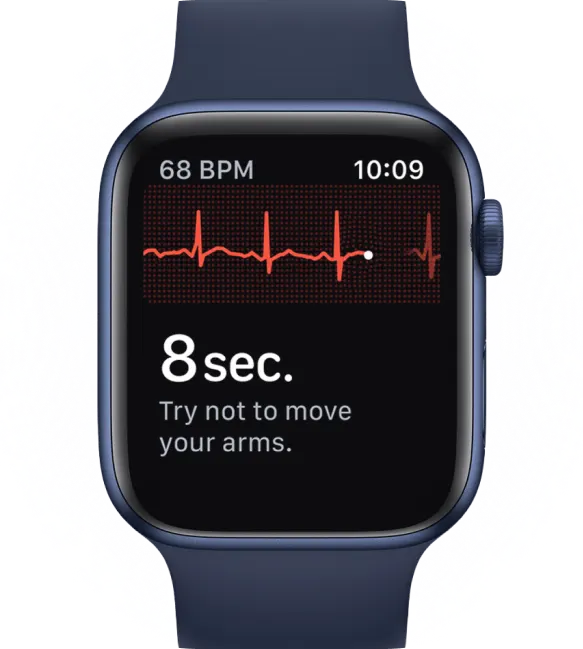
By capturing an ECG on your wearable device like an Apple Watch or Fitbit during an episode, you create a real time snapshot of your heart's electrical activity. This data is invaluable.
Services like Qaly allow you to send that ECG to a certified cardiac technician for analysis, any time of day or night. Within minutes, you can get a report that tells you exactly what’s going on, whether it's a normal fast rhythm (sinus tachycardia) from adrenaline, or a true arrhythmia that needs a doctor's attention. This is a critical distinction, especially since low blood sugar can sometimes provoke more serious rhythm changes. For more on this, you might find our guide on differentiating between a panic attack and heart issues helpful.
In fact, research shows that acute hypoglycemia can prolong the QTc interval on an ECG. This is a change that makes the heart more vulnerable to dangerous arrhythmias. A 2021 study found that during low blood sugar events, extra beats from the ventricles (VPBs) increased significantly in people both with and without diabetes, directly contributing to the sensation of palpitations. You can learn more about these findings and the arrhythmia risks of hypoglycemia.
This whole process transforms a moment of fear into a fact based action plan for your health.
The Hidden Danger of Nighttime Palpitations and Hypoglycemia

Waking up in the middle of the night with a heart that’s pounding out of your chest is a terrifying experience. It can leave you feeling shaken and anxious, wondering what just happened. If this sounds familiar, the culprit might be something called nocturnal hypoglycemia.
This is just a technical term for when your blood sugar levels dip too low while you're asleep. Since you’re not awake, you completely miss the usual warning signs your body sends during the day, like feeling shaky, sweaty, or suddenly ravenous. You can't just grab a snack to fix it.
But even while you’re asleep, your body is on high alert. It senses the dangerously low fuel levels and flips on its emergency alarm system. This means it floods your system with adrenaline to try and bring your blood sugar back up.
When Your Body's Alarm Goes Off at Night
That sudden jolt of adrenaline is often what triggers those startling palpitations that wake you from a dead sleep. Your heart is simply responding to the hormonal command to beat faster and harder, right now. But the story doesn't end with just a racing heart.
These nighttime episodes are linked to a higher risk of more serious heart rhythm problems, known as arrhythmias. Each time this happens, it puts stress on your heart's electrical system, which can make it unstable over time.
The real danger of nighttime low blood sugar is that it can trigger not just fast heart rates, but also dangerously slow ones. These hidden events can put significant stress on your heart while you are completely unaware.
The Risk of Bradycardia and Other Rhythms
For example, studies have shown a surprisingly strong link between nocturnal hypoglycemia and bradycardia, a heart rate that is unusually slow. A 2020 study that monitored people with type 2 diabetes on insulin found something stunning. The incidence of bradycardia (a heart rate below 45 beats per minute) was a staggering eightfold higher during nighttime low blood sugar events compared to nights with normal blood sugar.
Here’s the tricky part: bradycardia can sometimes feel like palpitations. A very slow heart rate can be followed by faster, stronger beats as your heart tries to compensate. This creates that very fluttering or thumping sensation you notice. If you've ever felt heart rate spikes while sleeping, this connection to your blood sugar could be a crucial piece of the puzzle.
This is where a wearable device with an ECG function becomes an essential safety net. By monitoring your heart while you sleep, it can catch these silent events. Reviewing that data in the morning can give you and your doctor powerful insights to manage your health and stop these episodes before they become a bigger problem.
Your Immediate Action Plan for Hypoglycemic Palpitations
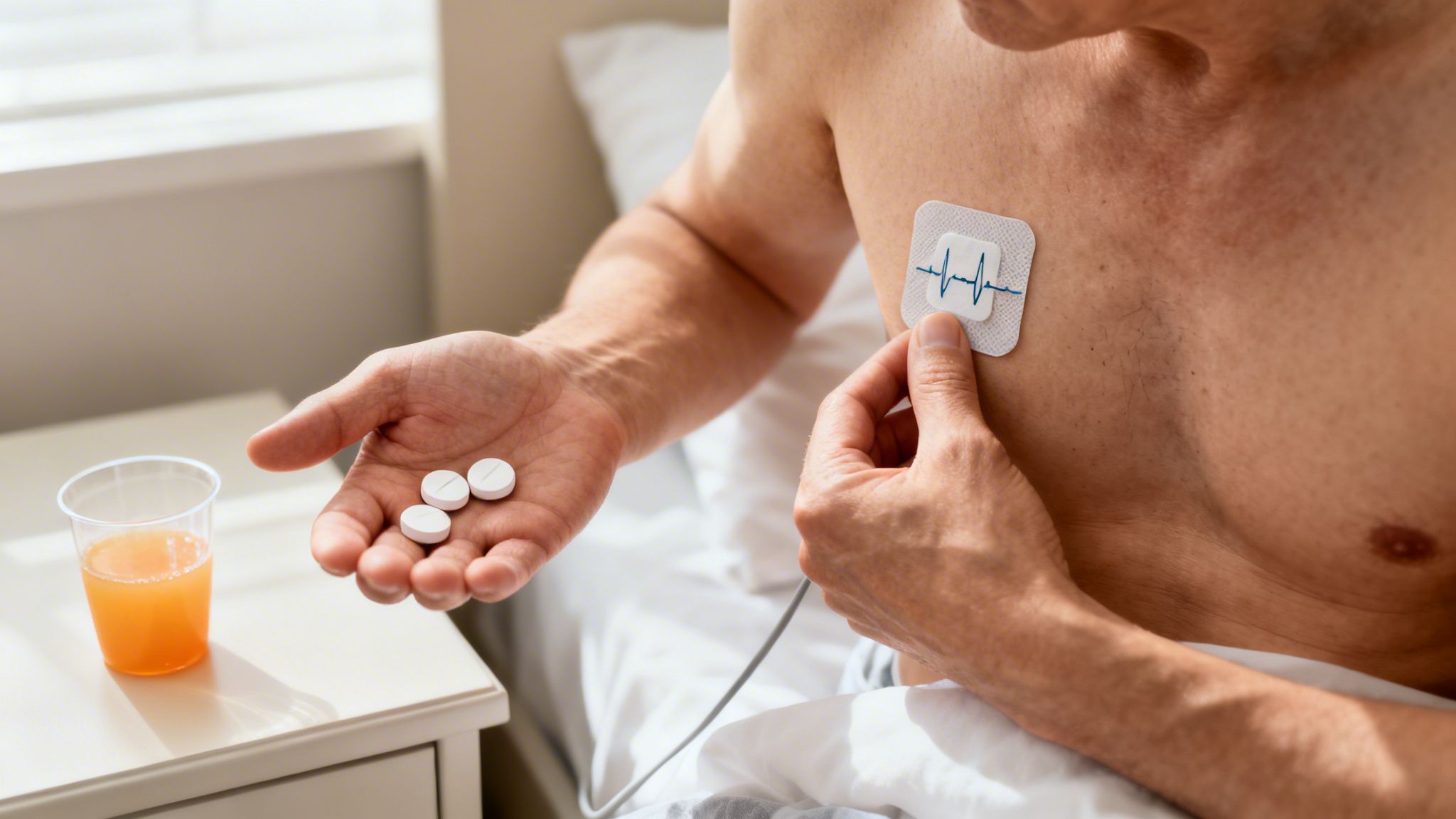
When you feel that dizzy, shaky sensation along with a pounding heart, it’s natural for a bit of panic to set in. But having a clear, simple plan can make all the difference, helping you feel in control instead of helpless. The very first step is to stay as calm as you can and focus on what your body needs most: getting your blood sugar up safely.
The most trusted approach for this is the “Rule of 15.” It's simple to remember and incredibly effective when you're not feeling your best.
First, consume 15 grams of fast-acting carbohydrates. This isn't the moment for a big meal. You need simple sugar that your body can absorb in a flash.
Second, wait 15 minutes. This gives your body a chance to process the sugar and for your levels to start climbing back up.
Third, recheck your blood sugar. If it's still below 70 mg/dL or your symptoms are sticking around, it's time to repeat the process.
So, what are these "fast-acting carbs"? Think simple things like four ounces of fruit juice, a tablespoon of honey, or three to four glucose tablets made specifically for this situation. While you're in that crucial 15-minute waiting period, find a place to sit down and try to take a few slow, deep breaths. This can help calm that adrenaline rush.
Turn Panic into Powerful Data
That 15-minute wait isn't just a timeout; it's a golden opportunity. Instead of simply worrying, you can use this time to gather some really important information about what your heart is doing. This is the perfect moment to grab your wearable device and capture an ECG reading.
This simple action transforms a moment of fear into an opportunity for real insight. By recording your heart’s rhythm during a hypoglycemic event, you’re collecting factual evidence, not just relying on feelings.
Getting this data analyzed by a service like Qaly can reveal whether the palpitations are just a normal, fast rhythm from the adrenaline (sinus tachycardia) or if the low blood sugar has actually triggered a more significant arrhythmia. When you share a verified report with your doctor, you're giving them concrete data, which leads to a much clearer and more productive conversation about your heart health.
Knowing the Red Flags
While most palpitations from hypoglycemia will fade as your sugar levels return to normal, it’s absolutely vital to know when it's time to seek immediate emergency care. If your palpitations come with any of these symptoms, don't hesitate:
- Severe chest pain or pressure
- Fainting or loss of consciousness
- Extreme shortness of breath
- Confusion that doesn't get better after treating your low blood sugar
These could be signs of a serious cardiac event, and your safety always comes first.


How to Proactively Prevent Low Blood Sugar Palpitations
When it comes to palpitations from low blood sugar, the best offense is a good defense. Getting ahead of these episodes by keeping your blood sugar stable is one of the most powerful things you can do for your heart health and your own peace of mind.
This isn’t about making huge, uncomfortable sacrifices. Instead, it’s about creating a smart, consistent routine that helps you avoid those sharp glucose drops that send your body’s adrenaline fueled alarm system into overdrive.
Building a Foundation of Stable Blood Sugar
Think of your blood sugar levels like a calm pond. Foods high in sugar and refined carbs are like tossing a big rock into it. You get a huge splash (a sugar spike) followed by ripples that die down, leaving the water level even lower than before (a sugar crash).
Balanced meals, on the other hand, act like a gentle, steady stream, keeping that water level nice and consistent.
Here’s how you can create that stability for yourself:
- Balance Every Meal: Aim to include a good mix of protein, healthy fats, and fiber in your meals. These nutrients work together to slow down how quickly sugar is absorbed into your bloodstream, which helps prevent the dramatic spikes and crashes that can trigger hypoglycemia and palpitations.
- Don't Skip Meals: Consistency is your best friend here. Eating regular, balanced meals and snacks throughout the day provides a steady supply of glucose for your body to use as fuel, preventing your energy tank from running on empty.
- Smart Snacking: To stay ahead of low blood sugar, especially if you're diabetic, it helps to have good options ready. Checking out resources on the best snacks for diabetics can give you some great ideas. Keeping these on hand can be a real lifesaver.
Uncovering Your Personal Patterns
One of the most crucial parts of any health strategy is learning from your own body’s unique data. We know from research that low blood sugar, particularly at night, significantly bumps up the risk of heart rhythm disturbances.
A key study in the journal Diabetes found that during episodes of hypoglycemia, events like a slow heart rate (bradycardia) and extra heartbeats, which feel just like palpitations, were far more common. What’s really eye opening is that many of these events happen silently. In fact, only a tiny fraction of these episodes were actually noticed by the person experiencing them. You can read the full research about these cardiac risks to see the data for yourself.
This is where you can connect the dots. By correlating your blood sugar trends with your ECG readings from a service like Qaly, you can uncover your personal patterns.
Maybe you notice palpitations popping up after a certain type of workout, or perhaps they consistently show up a few hours after a specific meal. This data isn't just interesting; it's a powerful tool to share with your doctor.
When you can bring them data driven insights, you can have a truly collaborative conversation. This allows your care team to help you fine tune your lifestyle and, if you have diabetes, your medication with incredible precision. This proactive approach is the key to gaining long term control and confidence in your heart health.
Common Questions About Hypoglycemia and Your Heart
Trying to connect the dots between your symptoms can feel overwhelming, especially when you’re doing it alone. We get a lot of questions from the Qaly community about the link between low blood sugar and heart palpitations. Let's walk through some of the most common ones and get you some clear answers.
Can I Get Palpitations From Low Blood Sugar if I Don’t Have Diabetes?
Yes, you absolutely can. It’s a condition often called non-diabetic hypoglycemia or reactive hypoglycemia, and it can catch you by surprise. It might happen a few hours after a meal loaded with simple sugars, or even after a really intense workout session.
What’s happening inside your body is the exact same process a person with diabetes experiences. Your body senses the low sugar and hits the panic button, releasing a wave of adrenaline to get those glucose levels back up. That hormonal surge is what you feel as palpitations, a racing heart, or even that jittery, anxious feeling.
How Can I Best Explain My Palpitations to My Doctor?
The single most effective thing you can do is to show, not just tell. Instead of trying to describe a fleeting sensation from memory, imagine walking into your appointment with concrete data from the exact moment it happened.
Capturing an ECG with your watch right when you feel a palpitation turns a vague complaint into a productive, data-driven conversation with your doctor. This is the key to getting faster, better care.
When you use a service like Qaly to have that ECG analyzed by a professional, you're no longer just a patient describing a symptom. You're bringing a date stamped, technician verified report that shows exactly what your heart rhythm was doing.
Are Palpitations From Low Blood Sugar Dangerous?
For most healthy people, these palpitations aren't immediately dangerous, but that doesn't mean you should ignore them. Typically, they're just a normal, fast heartbeat called sinus tachycardia, driven by that adrenaline rush we talked about. The feeling usually fades as your blood sugar returns to normal.
However, and this is important, for anyone with an underlying heart condition, the stress of a hypoglycemic episode can sometimes be the trigger for a more serious arrhythmia. The only way to know for sure is to see what’s happening. Monitoring your heart rhythm during an episode is the only way to distinguish a benign reaction from a potential red flag that needs a cardiologist's attention.

Wondering if it's an irregular heartbeat? On the Qaly app, human experts will interpret your ECGs for PAC, PVC, and PJC within minutes. Get started today.



.png)
.png)