


Key Takeaways

User Profile
Hello Heart Hero. You took DayQuil because you wanted to feel more normal, get through work, maybe quiet the cough long enough to rest. Then your chest feels fluttery, your pulse seems louder than usual, or your watch throws you an alert, and suddenly the cold isn't the only thing on your mind.
That reaction can feel scary, especially if you've already had palpitations before or you rely on an Apple Watch, Fitbit, Samsung watch, or Kardia device to help you make sense of symptoms. A lot of people end up bouncing between labels, forums, and vague advice, still unsure what counts as a normal medication side effect and what deserves more attention.
The side effects of DayQuil are usually mild, but some ingredients can absolutely make you feel jittery, wired, or aware of your heartbeat. If you've ever wondered whether that sensation is just the medicine, the illness itself, anxiety, or a rhythm issue worth tracking, you're asking a smart question. If you're also trying to avoid piling on caffeine while sick, some people look for sustained energy without coffee so they don't add another stimulant-like trigger to the mix.
If you're not even sure whether what you're felt was a skipped beat, thump, flutter, or racing episode, this guide on what heart palpitations can feel like can help put words to the sensation.
Feeling Jittery After Taking DayQuil?
A lot of people expect a cold medicine side effect to be sleepiness or an upset stomach. DayQuil can do something different. It can make some people feel keyed up, restless, or more aware of their heartbeat.
That doesn't automatically mean something dangerous is happening. It does mean the feeling has a reason.
Why the sensation can feel so intense
When you're sick, your body is already under stress. You may be dehydrated, breathing through your mouth, sleeping badly, and checking your pulse more often because you don't feel right. Add a medication that changes blood vessel tone and cough signaling, and even a normal heart rhythm can suddenly feel dramatic.
A common pattern is this: the heartbeat isn't always abnormal, but it feels more noticeable than usual.
That distinction matters for wearable users. A strong, fast, or pounding heartbeat can feel like an arrhythmia even when the rhythm is still regular. Your watch can help capture that moment, but first it helps to understand what the medicine is doing.
Common side effects people notice first
The official label and consumer drug references describe side effects such as nervousness, dizziness, sleeplessness, nausea, upset stomach, headache, dry mouth, and feeling nervous. Those symptoms can overlap with anxiety, so it's easy to assume the worst when your chest feels off.
A simple way to think about it is this:
- Your cold stresses the body: fever, congestion, poor sleep, and dehydration can all make your pulse feel stronger.
- The medicine can add stimulation: some ingredients may make you feel jittery or alert.
- Your watch adds awareness: once you start checking, every sensation can feel bigger.
If you've felt your heart after a dose of DayQuil and worried that something was "wrong," you're not overreacting. You're noticing a real body signal. The next step is figuring out which ingredient is most likely behind it.
What Is Really Inside Your DayQuil?
DayQuil isn't one medicine doing one job. It's more like a small team, with each ingredient assigned a different cold symptom.
In the standard DayQuil LiquiCap, the active ingredients are acetaminophen 325 mg, dextromethorphan 10 mg, and phenylephrine 5 mg, and the official label says adults should not exceed 4 doses in 24 hours because too much acetaminophen can cause severe liver damage, according to the official DayQuil labeling.

Acetaminophen and pain relief
Acetaminophen is the pain reliever and fever reducer. Think of it as the ingredient handling the aches, sore throat discomfort, and feverish feeling that make a cold feel miserable.
At directed doses, it's generally well tolerated. The problem isn't usually a dramatic immediate side effect. The bigger concern is taking too much across multiple products without realizing it.
Dextromethorphan and the cough signal
Dextromethorphan is the cough suppressant. A simple analogy is that it turns down the "urge to cough" signal. That can be helpful when you're stuck in a dry, nagging cough cycle.
Because it works on the nervous system, it can also matter when you're taking other medicines that affect brain chemistry. That's one reason medication combinations matter so much with DayQuil.
Phenylephrine and nasal congestion
Phenylephrine is the decongestant. It works by tightening swollen blood vessels in the nose so you can breathe more easily. That same blood-vessel effect is why people who feel palpitations often focus on this ingredient.
If you've ever wanted a deeper look at that piece specifically, here's a plain-language guide to the side effects of phenylephrine.
Simple analogy: DayQuil helps by assigning one ingredient to pain, one to cough, and one to congestion. The catch is that each ingredient can affect more than the symptom you're trying to treat.
That's why the side effects of DayQuil can feel scattered. One person notices dry mouth. Another gets nauseated. Another mainly notices a racing or pounding heartbeat.
Why DayQuil Can Affect Your Heart Rhythm
If DayQuil makes your heart feel louder, faster, or uneven, the ingredient most likely behind that feeling is phenylephrine.
DailyMed lists DayQuil Severe Cold & Flu ingredients as acetaminophen 325 mg, dextromethorphan HBr 10 mg, guaifenesin 200 mg, and phenylephrine HCl 5 mg per LiquiCap, with adults told to take 2 LiquiCaps every 4 hours and not exceed 8 LiquiCaps per day. The same product information and consumer references note effects such as nervousness, dizziness, trouble sleeping, palpitations, and fast or irregular heartbeat, as described in the DayQuil Severe DailyMed label.
The nose and heart connection
Phenylephrine is a decongestant. It opens your nose by narrowing blood vessels. That's useful in swollen nasal passages, but blood vessels aren't only in your nose. Your cardiovascular system notices that signal too.
A simple analogy is turning a faucet slightly tighter. Pressure changes. Your body may respond by making your heartbeat feel stronger or faster. For some people, that means a brief jittery feeling. For others, it feels like skipped beats, thumping, or a racing pulse.


What a wearable user might notice
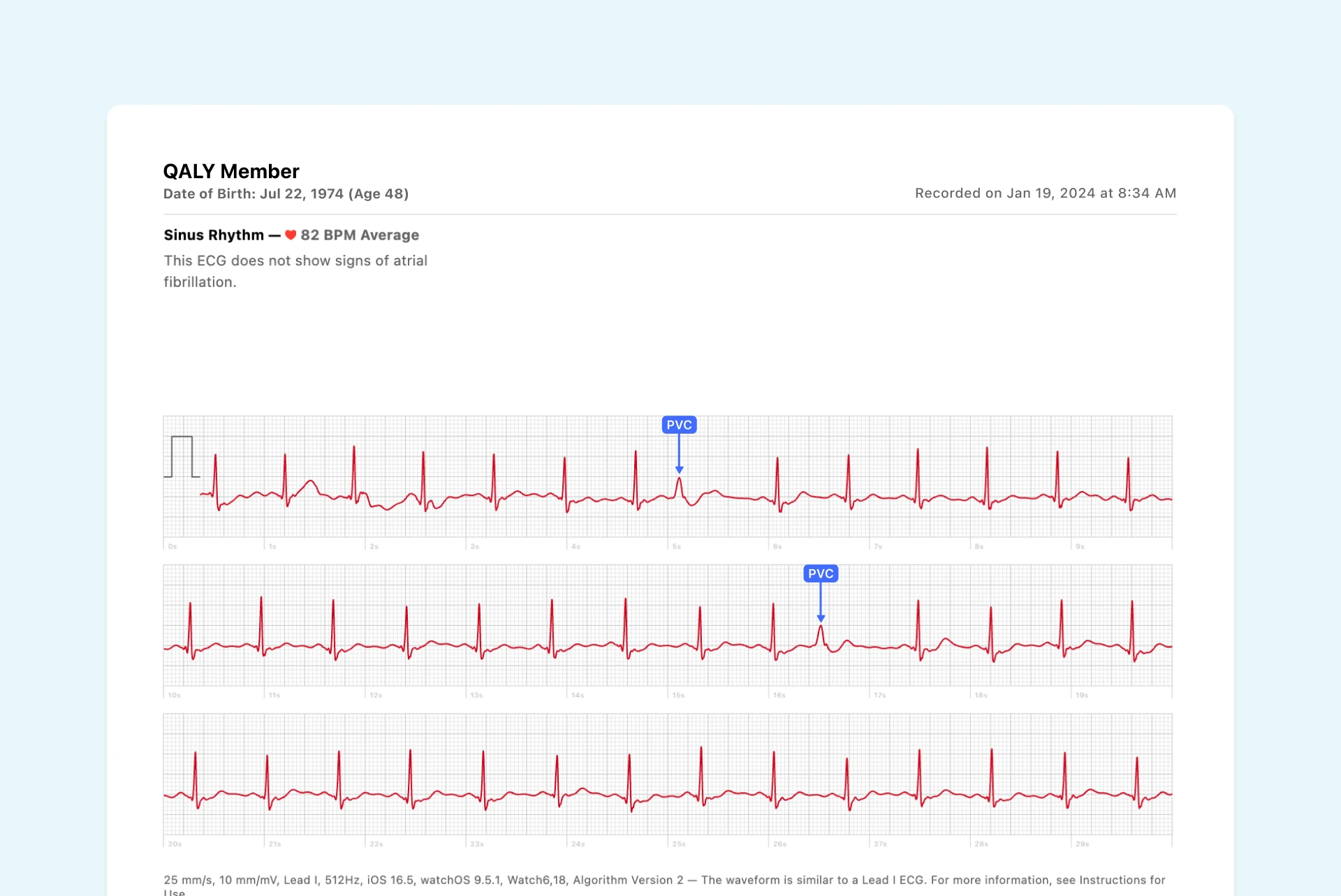
If you use a smartwatch or handheld ECG, there are a few common patterns after taking DayQuil:
- A stronger pulse sensation: your rhythm may still be regular, but each beat feels forceful.
- A faster resting pulse: the number may be higher than your usual sick-day baseline.
- Brief palpitations: a flutter, extra beat sensation, or short run of rapid pounding can happen.
- Sleep-related alerts: if DayQuil makes you restless, poor sleep can make palpitations feel even more noticeable later.
That doesn't mean every symptom is harmless. It means medication effects can mimic rhythm problems closely enough that it's reasonable to want proof.
Practical rule: If a symptom starts after a dose, improves as the medicine wears off, and matches known stimulant-like effects such as nervousness or sleeplessness, DayQuil may be part of the explanation.
Who should be more cautious
Phenylephrine deserves extra caution if you already have heart disease or high blood pressure. If you already notice premature beats, episodes of SVT, or anxiety around your pulse, DayQuil can muddy the picture because it may raise blood pressure and make your heartbeat easier to feel.
The distinction can often be confusing. A medication side effect can be real without being an emergency. But if you have underlying heart issues, the same sensation deserves a lower threshold for review.
Why the symptom feels so convincing
Palpitations are partly electrical and partly sensory. Your heart can beat a little faster, your chest can feel tighter from congestion, and your nervous system can be more alert because you're sick. Put those together, and your body can create a very convincing "something is wrong" signal.
For anxious wearable users, that's not all in your head. It's your body sending a mixed message. The best response is to capture what happened instead of guessing.
How to Monitor Palpitations with Your Watch ECG
The most useful thing you can do during a symptom episode is record it calmly. A wearable ECG won't answer every question, but it can turn a vague memory into something concrete.
What to do when the flutter starts
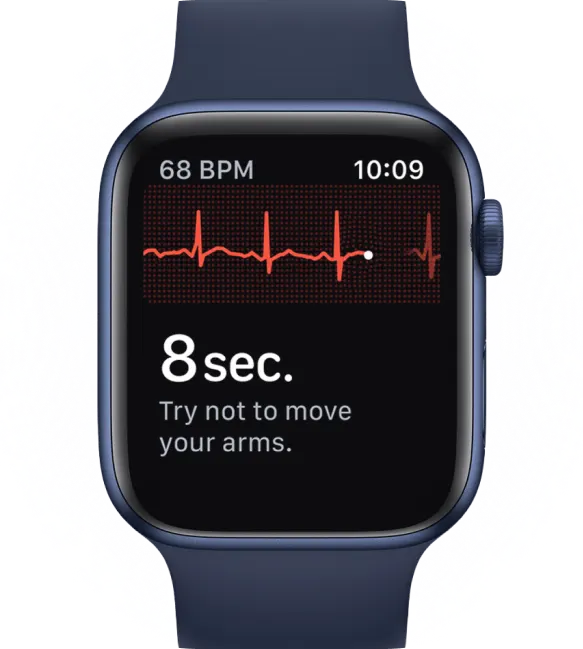
Sit down first. Rest your arm on a table or your lap. If you're standing, walking around, or checking your pulse while tense, motion and muscle tension can make the reading harder to interpret.
Then take a tracing on your device. If you use an Apple Watch, this guide to an ECG app for Apple Watch can help if you're still learning where to find the feature.
Use this sequence:
- Pause and sit still. Give yourself a few breaths before starting.
- Open the ECG feature. Apple Watch, Samsung watch, Fitbit, and Kardia devices each have slightly different steps, but the goal is the same.
- Rest your arm. A steady arm reduces artifact.
- Take the full reading. Don't stop early just because the sensation fades halfway through.
- Add a note. Write something simple like "felt flutter after DayQuil" or "racing heart after cold medicine."
What makes a recording more useful
A good note often matters as much as the tracing itself. If your recording says only "symptoms," you may forget the timing later. If it says "palpitations started shortly after DayQuil dose while resting," that gives context.
Try to note:
- Timing: when you took the medicine and when symptoms began
- Body position: resting, walking, lying down
- What you felt: flutter, pounding, skipped beats, racing
- Anything else going on: fever, dehydration, poor sleep, anxiety
A short teaching video can also help if you want to improve your ECG capture technique:
The best wearable ECG is the one you record during the actual symptom, not the one you take later after the moment passes.
When the watch is reassuring and when it isn't
If your watch shows a normal-looking rhythm while you feel a pounding heart, that can still fit with a medication effect. If the watch repeatedly flags irregularity, or your symptoms keep happening even after the medicine should be wearing off, that's more worth following up on.
The goal isn't to self-diagnose every beat. It's to collect clean, timely information while you feel the symptom.
Safe DayQuil Use and Critical Drug Interactions
If your watch ECG looks calm but you feel shaky, revved up, or "off" after DayQuil, the next question is not just, "Is this my heart?" A better question is, "What else did I take with it?"
That is where DayQuil mistakes often happen. One dose taken as directed is usually not the problem. Trouble starts when someone combines products without noticing they contain the same ingredients, or mixes DayQuil with medicines that do not play well with it.
The acetaminophen problem people miss
Acetaminophen is in many cold medicines and pain relievers. It works like seeing the same ingredient under different labels. If you do not stop and read each box, it is easy to take more than you meant to.
DailyMed warns about severe liver damage if adults take more than 4 doses (30 mL each) in 24 hours, take DayQuil with other acetaminophen-containing products, or use it while drinking 3 or more alcoholic drinks daily, according to the DailyMed DayQuil warning information.
That kind of mistake does not usually show up as an ECG issue first. It shows up as body-wide warning signs such as nausea, vomiting, abdominal pain, jaundice, or dark urine. If those symptoms appear, do not keep taking cold medicine and hope it passes.
Interactions that can mimic anxiety, illness, or a heart issue
Another safety problem is mixing DayQuil with the wrong prescription or over-the-counter drugs. GoodRx notes that DayQuil should not be used with an MAOI or within 2 weeks of taking one. It also explains that dextromethorphan can interact with other serotonergic medicines and contribute to serotonin syndrome, which may cause agitation, confusion, fever, and muscle rigidity, in this GoodRx overview of DayQuil side effects and interactions.
For someone wearing a watch ECG, this can get confusing fast. A pounding heartbeat, tremor, sweating, and restlessness may feel like a rhythm problem. Sometimes the watch is capturing a normal rhythm while the rest of your body is reacting to a medication mix-up.
Symptoms that deserve attention include:
- Mental changes: agitation, confusion
- Body activation: tremor, fever
- Muscle changes: rigidity
- Digestive symptoms: diarrhea
If you already take medications that affect electrical timing in the heart, read more about drugs that can cause a prolonged QT interval. That helps you sort out whether DayQuil is the whole story or just one piece of it.
The safest approach is simple. Use one cold product at a time, and read the active ingredients before adding anything else.
People who should be extra careful
Some people should pause and check with a clinician or pharmacist before using DayQuil, especially if they have heart disease, high blood pressure, diabetes, thyroid disease, glaucoma, or breathing problems, or if they take medicines with interaction risk.
For wearable ECG users, that matters because your symptoms may have more than one driver. A decongestant effect, dehydration, fever, and an existing heart medication can all blur the picture. Reading the ingredient list first is a lot like checking lead placement before trusting an ECG strip. It is a simple step that prevents bad interpretation later.
The practical takeaway is straightforward. Use DayQuil short term, stick to the labeled dose, avoid stacking cold medicines, and check interactions before you take the next product.
When to Stop Taking DayQuil and Seek Help
A cold medicine side effect can feel unsettling. For someone watching heart rate alerts or checking a watch ECG, the harder question is whether the symptom is annoying, or a sign to stop the medication and get help.
A useful rule is to watch for symptoms that are getting stronger, not fading with rest, or showing up in more than one body system at the same time. A brief flutter or mild jittery feeling may pass. Trouble breathing, fainting, or a rhythm that stays fast while you are sitting still belongs in a different category.
Stop taking DayQuil and get medical help right away if you notice:
- Severe allergic symptoms: trouble breathing, or swelling of the face, lips, or throat
- Serious skin reaction: widespread redness, blistering, or a rash that appears after taking it
- Heart warning signs: chest pain, fainting, severe dizziness, or a fast or irregular heartbeat that does not settle while resting
- Possible liver problems: yellowing of the skin or eyes, dark urine, or marked stomach pain with nausea or vomiting
- Concerning neurologic or medication-mixing symptoms: new confusion, high fever, agitation, or muscle rigidity
- A cold that is not improving: fever that lasts for days, or a cough that keeps going instead of easing up, as noted earlier in the product stop-use warnings
If you use a wearable ECG, focus on the whole picture, not just the tracing. A recording can show that your heart rhythm changed, but symptoms such as fainting, chest pain, or shortness of breath matter even more. In that moment, your watch is a tool, not a referee.
One reassuring point is that stopping an over-the-counter medicine because something feels off is a reasonable safety step. It is similar to taking off a blood pressure cuff that is giving painful readings and checking what is really happening before you trust the numbers.

Wondering what your watch ECG recorded after taking DayQuil? Qaly gets your tracing reviewed by certified cardiographic technicians.



.png)
.png)