





Key Takeaways

User Profile
You take a cold medicine because your nose feels blocked, your sleep is wrecked, and you just want relief. Then an hour later your chest feels odd. Maybe your heart seems to pound harder. Maybe it feels like a skipped beat, a flutter, or a strange slowing that makes you suddenly pay attention to your body in a whole new way.
That can be unsettling. It can also make you feel brushed off if someone says, “It's just an over-the-counter medicine.”
You're right to look into it yourself. A common medicine can still create real side effects. And when those side effects involve your heart, your blood pressure, or a sensation you can feel in your chest, it makes sense to want more than a quick one-line answer.
Welcome to Your Heart Health Journey
You take a cold medicine before bed, hoping for a quieter night. An hour later, your nose may be a little clearer, but now you are paying attention to your chest instead of your congestion. If you have ever looked at your watch, opened the ECG feature, and wondered whether you should trust what you feel, you are in the right place.
That reaction makes sense.
A lot of people are told that over the counter medicine is too ordinary to cause much trouble. But your body does not sort drugs into “serious” and “minor” based on where you bought them. If phenylephrine made your heart feel stronger, slower, faster, or different, that is real information.
A useful way to approach this is to treat your body like a dashboard. Symptoms are one signal. Your pulse is another. A wearable ECG can add one more piece of the picture. None of those clues should be used in isolation, but together they can help you notice patterns instead of second-guessing yourself.
Common side effects of phenylephrine are often temporary and not dangerous. Serious side effects can happen too, especially in people with certain health conditions or medication combinations. The hard part is that the line between “annoying but expected” and “needs prompt attention” is not always obvious in the moment.
If you have felt dismissed before, your caution may come from experience. Some readers have been told it is “just anxiety” when they were clearly feeling a physical change. Wanting to check what phenylephrine can do, and wanting to compare your symptoms with what your wearable records, is a reasonable way to protect yourself.
Use this article as a guide for what to watch, what usually settles down, and what should push you to get medical help. The goal is not to make you afraid of one cold medicine. The goal is to help you notice your own warning signs early and respond with more confidence.
How Phenylephrine Works in Your Body
Phenylephrine works by tightening certain blood vessels.
Your blood vessels are like flexible garden hoses. When the hose narrows, less fluid moves through easily. In the nose, that narrowing can shrink swollen tissue and open up airflow, which is why phenylephrine is sold as a decongestant.
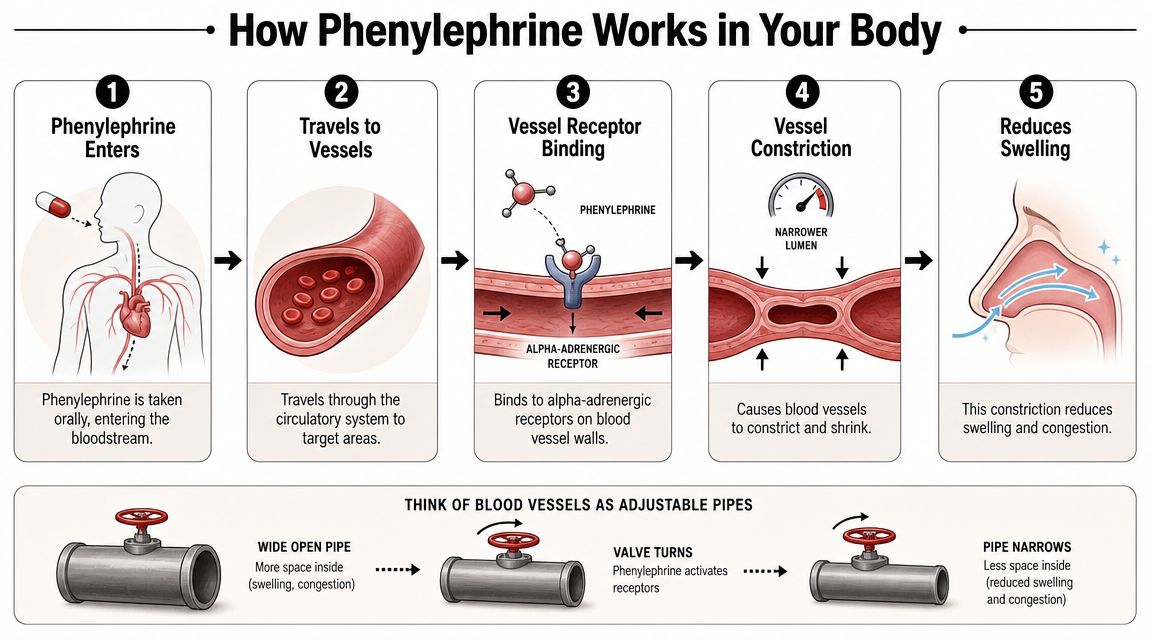
The nose benefit and the bodywide effect
Your body does not keep that vessel-tightening effect neatly limited to your sinuses. Some of the same signal can affect blood vessels in other areas too, and that is where people can start to notice changes that feel surprisingly intense for an over the counter product.
One common result is a rise in blood pressure. That can feel like pressure in the head, a pounding pulse, or a sense that your heart is pushing harder than usual. Those sensations can be unsettling, especially if you already pay close attention to your heartbeat because of past symptoms or because you use a wearable ECG.
A wearable can help here, but it helps to know what question you are asking. Phenylephrine often changes pressure first. The heart may react to that pressure change, so the strange feeling in your chest is not always a dangerous rhythm problem. If you have ever compared this with side effects of Sudafed and similar decongestants, the pattern can feel familiar even though the drugs are not identical.
Why your heart may feel slower, stronger, or just off
Phenylephrine mainly stimulates alpha receptors on blood vessels. When those vessels tighten and pressure rises, your body's pressure sensors may respond by telling the heart to slow down. This reflex can make your pulse feel slower even while each beat feels heavier or more forceful.
That mix is confusing.
A person can feel a hard thump in the chest, check their pulse, and notice it seems slower than expected. Someone else may feel a skipped beat sensation that is really a change in force, timing, or awareness rather than a dangerous arrhythmia. The body is adjusting to a pressure shift, and the sensation can be dramatic even when the rhythm itself is still regular.
This is one reason people sometimes feel brushed off when they say a cold medicine made their heart feel strange. The symptom is real. The challenge is figuring out whether it reflects a temporary blood pressure response, a true rhythm issue, or a warning sign that needs medical attention.
Higher doses can produce a stronger pattern of high blood pressure with a slowed pulse, as noted earlier. At usual doses, many reactions are milder and fade as the medicine wears off. Still, if your symptoms feel new, intense, or clearly different from your normal baseline, it makes sense to pay attention, write down what happened, and compare the timing with what your wearable recorded.
Common and Mild Side Effects Explained
Most side effects of phenylephrine are unpleasant rather than dangerous. They happen because the drug pushes the body in a more stimulated, pressor direction.
That's why people often describe feeling nervous, jittery, restless, headachy, dizzy, or unable to sleep. These symptoms match the drug's overall effect on blood vessels and the nervous system. They can feel uncomfortable, especially if you're already tired, dehydrated, or sensitive to stimulatory medications.
What “common” usually looks like
Mild side effects often show up as sensations like these:
- Nervousness or unease: You feel keyed up, unsettled, or more physically anxious than usual.
- Jitteriness or restlessness: Your body feels “buzzed” even if your mind is calm.
- Headache: This is a well-recognized complaint and can happen as blood vessels and pressure shift.
- Trouble sleeping: Taking a stimulating decongestant too close to bedtime can be a setup for a rough night.
- Dizziness or lightheadedness: Some people notice this when standing, moving quickly, or when the pressure changes feel abrupt.
For readers comparing phenylephrine with similar cold medicines, Qaly has a useful breakdown of side effects of Sudafed, which can help you understand why different decongestants can feel similar but not identical.
What the safety review found
The modern conversation around oral phenylephrine changed because of effectiveness, not because it suddenly became known as a highly dangerous drug. The FDA's information on OTC oral phenylephrine says the agency found very few serious safety cases when oral phenylephrine was taken as directed, even while moving toward removing it from certain over-the-counter nasal-congestion products because it is not effective for that purpose in oral form.
That same FDA page also notes a 2023 systematic review in which oral phenylephrine did not relieve nasal congestion better than placebo, with headache as the most common adverse event and no life-threatening adverse events reported.
That's an important distinction. A medicine can be weak at treating the symptom you bought it for and still be capable of producing side effects you can feel.
If your experience was “I didn't even get much relief, but I definitely felt weird after taking it,” you're not imagining that mismatch.
Serious Side Effects and When to Seek Help
A medical emergency from phenylephrine is not a common occurrence. But some symptoms should move you out of “wait and see” mode.
The biggest reason is simple. A medicine that raises vascular tone can put extra strain on the heart and circulation. In susceptible people, that strain can matter.

Symptoms that deserve urgent attention
Watch for these red flags:
- Chest pain or chest pressure: This is not something to write off as “just congestion.”
- Shortness of breath: Especially if it feels new, sudden, or clearly out of proportion to your cold.
- A very fast, very slow, or chaotic-feeling heartbeat: If it feels dramatically different from your usual palpitations, pay attention.
- Marked blood pressure elevation: If you check your pressure and it's much higher than expected, take that seriously.
- Severe headache or vision changes: A hard-pounding headache with pressure symptoms can signal a more significant blood pressure response.
According to WebMD's phenylephrine drug information, phenylephrine's pressor response can precipitate angina, worsen heart failure, or increase pulmonary arterial pressure in susceptible patients. The same source warns that new-onset palpitations, chest pressure, or marked BP elevation after taking the drug should not be dismissed.
What to do in the moment
If you notice one of the more serious symptoms above, use a calm, practical approach:
- Stop taking the medicine. Don't keep “testing” whether the next dose feels better.
- Sit down and reduce stimulation. Avoid exertion while you assess what's happening.
- Check objective data if you have it. A blood pressure cuff or wearable heart data can help, but don't delay care just to collect numbers.
- Seek urgent help if symptoms are severe. Chest pain, significant breathing trouble, fainting, or severe neurological symptoms deserve emergency evaluation.
- Call a clinician promptly for concerning but non-emergency symptoms. Especially if you have heart disease, high blood pressure, or recurring reactions.
If you're trying to understand how a different OTC decongestant compares, Qaly also explains the side effects of pseudoephedrine, which can help you think more clearly about what kind of drug reaction you may be dealing with.
If a symptom feels cardiac, don't let the words “over the counter” talk you out of common sense.
Who Is at Higher Risk for Side Effects
Not everyone reacts to phenylephrine the same way. The drug's vessel-tightening action matters more when your cardiovascular system is already carrying extra strain.
Conditions that make the reaction more important
Some groups need extra caution:
- People with high blood pressure: If your pressure already runs high, a drug that narrows blood vessels can push it higher.
- People with coronary artery disease or angina: The heart may struggle more when afterload increases.
- People with heart failure: Extra vascular resistance can add stress to a system that's already compensating.
- People with thyroid overactivity: They may already feel more sensitive to stimulatory body states.
- People with diabetes: Medication choices can be more complicated because cardiovascular risk is often part of the bigger picture.
This doesn't mean everyone in these groups will react badly. It means the side effects of phenylephrine are less trivial in these settings because the body has less room to absorb sudden changes comfortably.
Age and body changes matter too
Age can change how people experience medications, even when the label doesn't feel especially dramatic. Blood vessels stiffen, sleep gets more fragile, and baseline health conditions stack up over time. If you're interested in that bigger picture, Understanding Ageing's guide to biological changes gives a helpful plain-language look at how bodies change across the lifespan.
You might also be at higher practical risk if you tend to:
- Use combination cold products: It's easy to miss that multiple ingredients are acting at once.
- Take repeated doses when relief is weak: That's especially relevant with oral phenylephrine's poor effectiveness.
- Ignore early warning signs: A mild first reaction can become a stronger second one.
A skeptical reader might ask, “Why sell these drugs so casually if they can do this?” That frustration makes sense. The safest response is to treat any decongestant like a real medication, not like a harmless convenience item.
Important Drug Interactions to Avoid
Drug interactions matter because phenylephrine doesn't act in isolation. Your body is already balancing blood pressure, heart rate, and nervous system signals. Another medicine can shift that balance enough to make phenylephrine hit harder or behave less predictably.
The interaction people often miss
A major concern involves MAOIs, a class of antidepressants. In simple terms, these drugs can interfere with how the body handles certain chemical signals. If phenylephrine's effects aren't being cleared or buffered normally, the response can become much stronger than expected.
That's why this isn't a “maybe be careful” situation. It's a serious medication review issue.
Another practical problem shows up with blood pressure medicines. One drug may be trying to lower pressure while phenylephrine pushes pressure upward. That tug-of-war can lead to confusion. You may think your usual medication “stopped working,” when in reality the decongestant is pushing in the opposite direction.
A safer way to think before you dose
Before taking phenylephrine, ask:
- Am I on a medicine that affects blood pressure or heart rate? If yes, be cautious.
- Am I taking an antidepressant with significant interaction potential? If you're not sure, ask a pharmacist before taking the decongestant.
- Is this a combination cold product? Multi-symptom products make it easier to miss what you're taking.
If you're sorting through medicines that can provoke rhythm symptoms, Qaly's guide to medications that cause atrial fibrillation is a useful starting point for thinking about the wider medication picture.
For readers who are also weighing cold medicine safety during breastfeeding, especially when infants are part of the household decision-making around cough and cold products, Bornbir has a helpful overview of infant risks of dextromethorphan.
Bring the box, the ingredient list, and your medication list together. That simple step catches a lot of avoidable problems.
Tracking Your Heart with a Wearable ECG
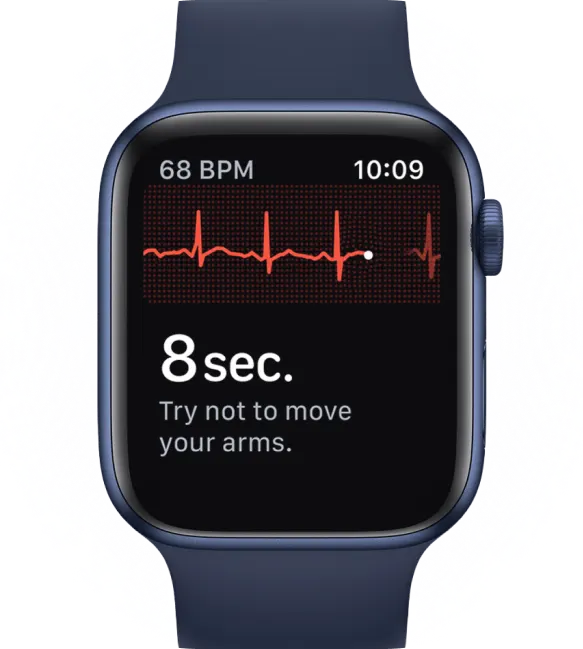
If phenylephrine makes your chest feel strange, your wearable can help you move from guessing to documenting.
That doesn't mean self-diagnosing. It means capturing what's happening while it's happening.
What your watch can do well
An Apple Watch, Samsung watch, Fitbit, Kardia device, or similar tool can be useful when symptoms are brief and hard to describe later. If you feel a flutter, pounding, pause, or racing episode after taking a decongestant, recording an ECG in that moment gives you something more solid than memory.
That matters because symptoms can fade by the time you reach a clinic. A wearable record can help you notice patterns like:
- Symptoms after a dose
- Symptoms at night
- A slow-feeling pulse versus a fast-feeling one
- Episodes that feel scary but pass quickly
If you use an Apple Watch, Qaly has a practical guide to choosing an ECG app for Apple Watch, which can help you think through how to capture episodes more reliably.
How to use the data without spiraling
Try this simple approach:
- Record when symptoms start.
- Note what you took and when you took it.
- Check whether the sensation repeats with later doses.
- Bring the ECG and notes to a clinician if needed.
A wearable won't replace medical care. But it can help you advocate for yourself, especially if you've had the frustrating experience of being told your symptoms are too vague or too brief to matter. Good data doesn't solve everything, but it gives your concerns a clearer shape.


Noticed a strange heart rhythm? Qaly reviews ECGs from Apple Watch, Kardia, Fitbit & more.



.png)
.png)