





Key Takeaways

User Profile
Hello Heart Hero. You take Sudafed because your nose is completely blocked, you finally start breathing a little easier, and then your chest feels oddly busy. Maybe your heart seems louder. Maybe your watch says your heart rate is higher than usual. Maybe you catch a flutter and think, "Was that the medicine, or is something wrong with me?"
That reaction is understandable.
A lot of people looking up the side effects of Sudafed aren't just curious. They're worried. And if you use an Apple Watch, Fitbit, Kardia, or another wearable ECG, the worry can get stronger because now you have data in front of you. A normal cold suddenly feels like a heart mystery.
You're not imagining the connection. Sudafed can affect more than your sinuses, and for people who monitor their rhythm, that matters. The confusing part is that many general medication pages don't really explain what medication-related rhythm changes can look like on a wearable, which leaves people stuck between ignoring symptoms and panicking over every blip.
That Stuffy Nose and a Racing Heart?
It often starts with a simple chain of events. You're congested, tired, maybe not sleeping well. You take Sudafed. An hour later, your nose is better, but your body feels more "on." Your heart beats faster. You notice a skipped beat. Your watch captures something you weren't expecting.
That can be unnerving, especially if you've already had palpitations before or you've spent time trying to understand your rhythm. If that's you, it's worth reading about common causes of heart palpitations because medication is one of several possible triggers, and context matters.
Why this feels so alarming
Part of the stress is that a wearable doesn't tell you intent. It can show a faster rate or an irregular-looking strip, but it doesn't tell you whether that change came from fear, dehydration, poor sleep, illness, or a decongestant you took for your sinuses.
Many Sudafed resources don't really help wearable ECG users sort out whether a rhythm change is a known medication effect or something more concerning, which can create a lot of anxiety, as noted by GoodRx's discussion of Sudafed side effects.
That gap matters. If you're already skeptical of quick medical reassurance that feels dismissive, you probably want a more grounded answer than "it's probably nothing." That's reasonable. You deserve an explanation that connects what you feel with what your device is showing.
A better way to think about it
Try this frame: Sudafed isn't only a "nose medicine." It's a whole-body stimulant for some people. That doesn't mean every flutter is dangerous. It does mean your reaction deserves a calm, informed look.
A few things can be true at once:
- Your symptoms can be real: A pounding heart after Sudafed isn't "just in your head."
- The effect can be medication-related: Not every rhythm change means heart disease.
- Some situations need more caution: If symptoms are intense, new, or paired with chest discomfort, that changes the picture.
When people get scared, they often jump to one of two extremes. Either they ignore it because the medicine is over the counter, or they assume the worst because the watch caught something strange. The safer middle ground is to understand how Sudafed works in the body.
How Sudafed Quiets Your Sinuses but Wakes Up Your Body

Sudafed's main active ingredient is pseudoephedrine. It's a sympathomimetic, which is a technical word for something that acts a bit like your body's stress-response chemicals. In plain English, it can nudge your system toward "fight or flight."
That helps your nose because Sudafed tightens blood vessels in swollen nasal tissue. Smaller, tighter vessels mean less congestion. The problem is that your body doesn't put up a wall around your sinuses and say, "Only work here."
The traffic-controller analogy
Think of your blood vessels like roads. Sudafed acts like a traffic controller who narrows some lanes to reduce the jam in your nose. But the controller is working on the whole road network, not one street. So other parts of the body feel the effect too.
That's why some people feel:
- More alert or jittery
- A faster heartbeat
- Higher blood pressure
- Dryness or restlessness
For some readers, another hidden layer matters. Sudafed can also affect blood sugar. It can raise blood glucose by 10 to 20 mg/dL through effects on insulin release and glycogen breakdown, according to this PubMed-linked source on pseudoephedrine effects. In some people, that shift may make the body feel more stressed overall, and the same source notes that related electrolyte changes can show up on wearable ECGs as QTc extension.

Why your body can feel "sped up"
This is the part that often clears up the confusion. Sudafed isn't trying to make your heart race. It's trying to decongest you by activating pathways that also influence heart rate and blood pressure.
Simple translation: the same body signals that open your nasal passages can also make your pulse feel more noticeable.
If you've ever had caffeine on an empty stomach and felt both sharper and shakier, the idea is similar. Different medicine, different mechanism, but the same broad lesson applies: a drug can help one symptom while making the rest of your body feel more stimulated.
That doesn't automatically make Sudafed unsafe for everyone. It does explain why the side effects of Sudafed can feel much bigger than "just a cold medicine issue."
The Spectrum of Sudafed Side Effects
Not every side effect means danger. Some are expected, some are warning signs, and some are rare enough that they are seldom encountered. It helps to sort them into buckets instead of treating every sensation like an emergency.
What many people notice first
The most familiar effects are the "amped up" ones. People often describe feeling jittery, wired, restless, dry, or unable to sleep. If your body is sensitive to stimulants, these may show up quickly.
A useful question is not just "Do I feel something?" but "What kind of something is it?" Mild restlessness feels very different from true chest pain or near-fainting.
Here are the kinds of effects many readers describe in everyday terms:
- Wired but functional: You feel more awake, maybe a little shaky, but you're able to go about your day.
- Sleep disruption: You take it too late and now your body won't settle down.
- Dry mouth or feeling off: Not dramatic, just uncomfortable.
What deserves more attention
Other side effects are less common but more important to recognize. The main concern for this audience is usually the heart, which we'll unpack fully in the next section. But there are also rare blood-related reactions.
According to StatPearls on adverse reactions, Sudafed's side effects can include rare but severe hematologic problems such as leukopenia and thrombocytopenia, with an incidence of less than 1% in FDA adverse event data from 2000 to 2020.
That sounds technical, so here's the plain version:
- Leukopenia means a low white blood cell count.
- Thrombocytopenia means a low platelet count.
- These aren't the side effects many individuals feel in real time.
- They matter because they remind us that over-the-counter doesn't always mean trivial.
If a medicine is strong enough to change your breathing, it can be strong enough to affect other body systems too.
A calm way to sort symptoms
Try thinking in two lanes.
Lane one is uncomfortable but expected. You feel stimulated, a little restless, maybe your pulse is more noticeable.
Lane two is a sign to pause and reassess. Symptoms feel intense, unusual for you, or involve more than simple jitteriness. That's where it makes sense to stop guessing and look more closely.
This framework helps because fear tends to flatten everything into one category. But the side effects of Sudafed exist on a spectrum, and understanding that spectrum makes you less likely to overreact or underreact.
Why Sudafed Can Make Your Heart Feel Funny
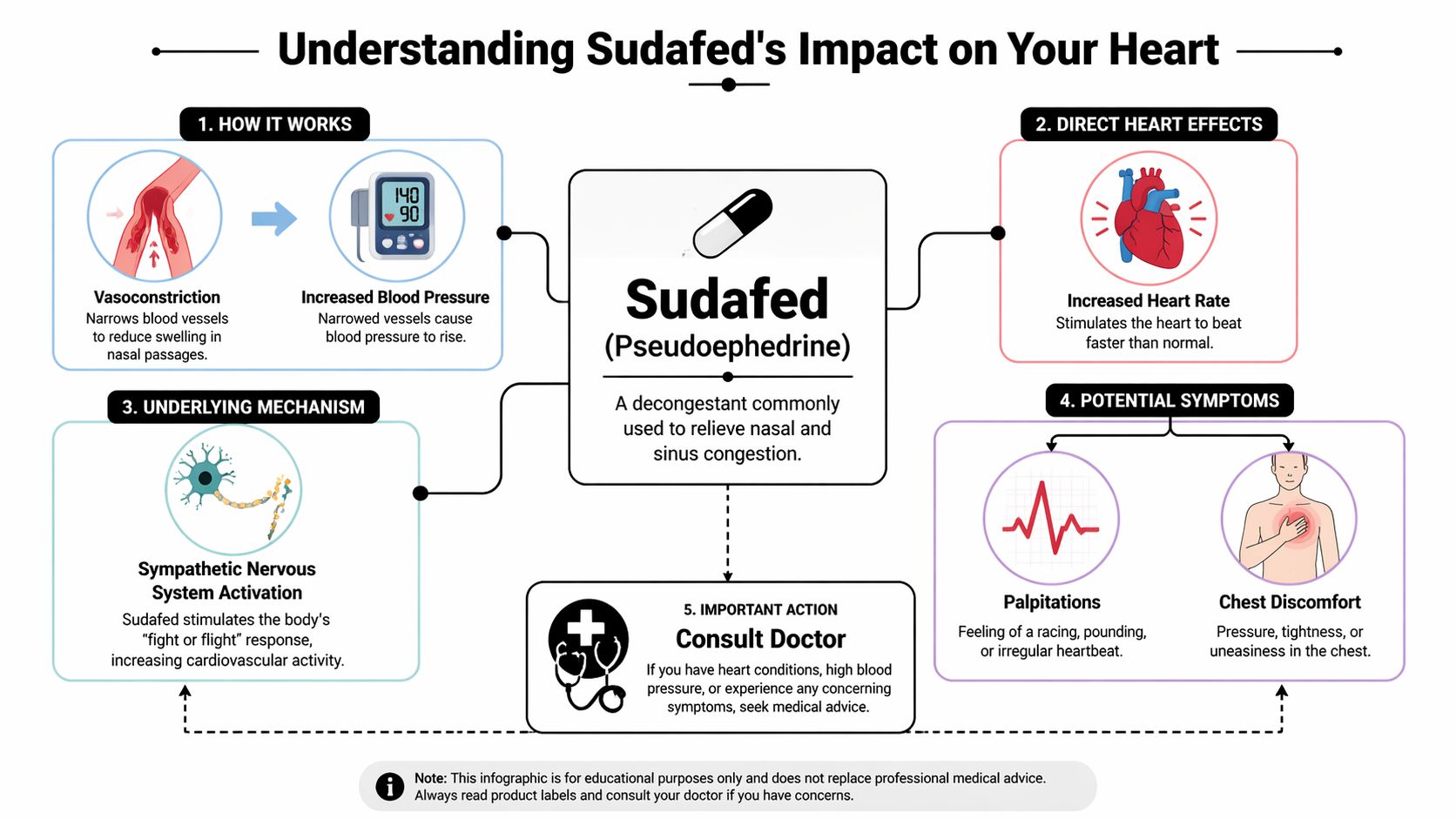
You take Sudafed for a blocked nose, then an hour later your chest feels more noticeable than your sinuses. That can be unsettling, especially if you also wear a watch that suddenly shows a faster pulse.
Pseudoephedrine can do that because it does not stay neatly confined to your nose. It narrows blood vessels in the nasal passages, which helps open the airway, but it can also stimulate the body's "fight or flight" system. In plain terms, the same signal that dries up congestion can also tell your heart to beat a little faster and your blood vessels to tighten.
A good way to picture it is a dimmer switch turned up slightly across the whole system, not just one room. You may feel more alert, more wired, and more aware of each heartbeat.
What you may feel
The sensation is often described as palpitations. That word does not name one single rhythm problem. It means you are noticing your heartbeat in a way you normally would not.
Some people feel:
- a steady but faster pulse
- a pounding heartbeat while resting
- a fluttering feeling in the chest
- an occasional "skip" or extra thump
Those feelings can happen even when the heart is still following its normal electrical path. According to the Harvard Health review on decongestants and blood pressure, pseudoephedrine can raise blood pressure and may affect heart rate, which helps explain why some people suddenly feel their heartbeat more clearly after taking it.
What your watch may show
For wearable users, the useful question is not just "Do I feel something?" It is "What pattern is happening while I feel it?"
A watch ECG may show a fast but regular rhythm, which often fits with sinus tachycardia. That means your heart's usual pacemaker is still in charge, but it is firing faster than usual. If you want to compare that pattern with what you see on your device, this guide to sinus tachycardia on your watch ECG can help.
A watch cannot tell the whole story, though. Most consumer devices are best at showing rhythm pattern, not explaining why it changed. Sudafed, caffeine, poor sleep, anxiety, dehydration, fever, and illness can all push the rate up. Your tracing gives a clue. Your symptoms and timing help complete the picture.

Why the feeling can seem bigger than the risk
The heart is one of the few organs you can feel in real time. A small change can feel dramatic.
That is why Sudafed can be confusing. You may be having a temporary stimulant effect, not a dangerous rhythm. Still, the feeling should not be brushed off if it is strong, new for you, or paired with symptoms like chest pain, faintness, or shortness of breath.
A practical way to read the situation
Use this simple frame:
- Fast and regular: often a stimulant effect, especially if it starts after a dose
- A few isolated extra beats: can feel startling, but may pass on their own
- Irregular rhythm plus feeling unwell: needs more caution
- Symptoms that keep getting worse instead of fading: stop and reassess
The main idea is simple. Sudafed can make the heart feel funny because it stimulates more than your sinuses. For watch users, the most helpful next step is to match the timing of the dose, the way you feel, and the rhythm pattern your device records.


Who Should Be Extra Cautious with Sudafed
Some people can take Sudafed with only mild annoyance. Others should pause before using it at all. The difference usually comes down to what your body is already dealing with.
Conditions that raise the stakes
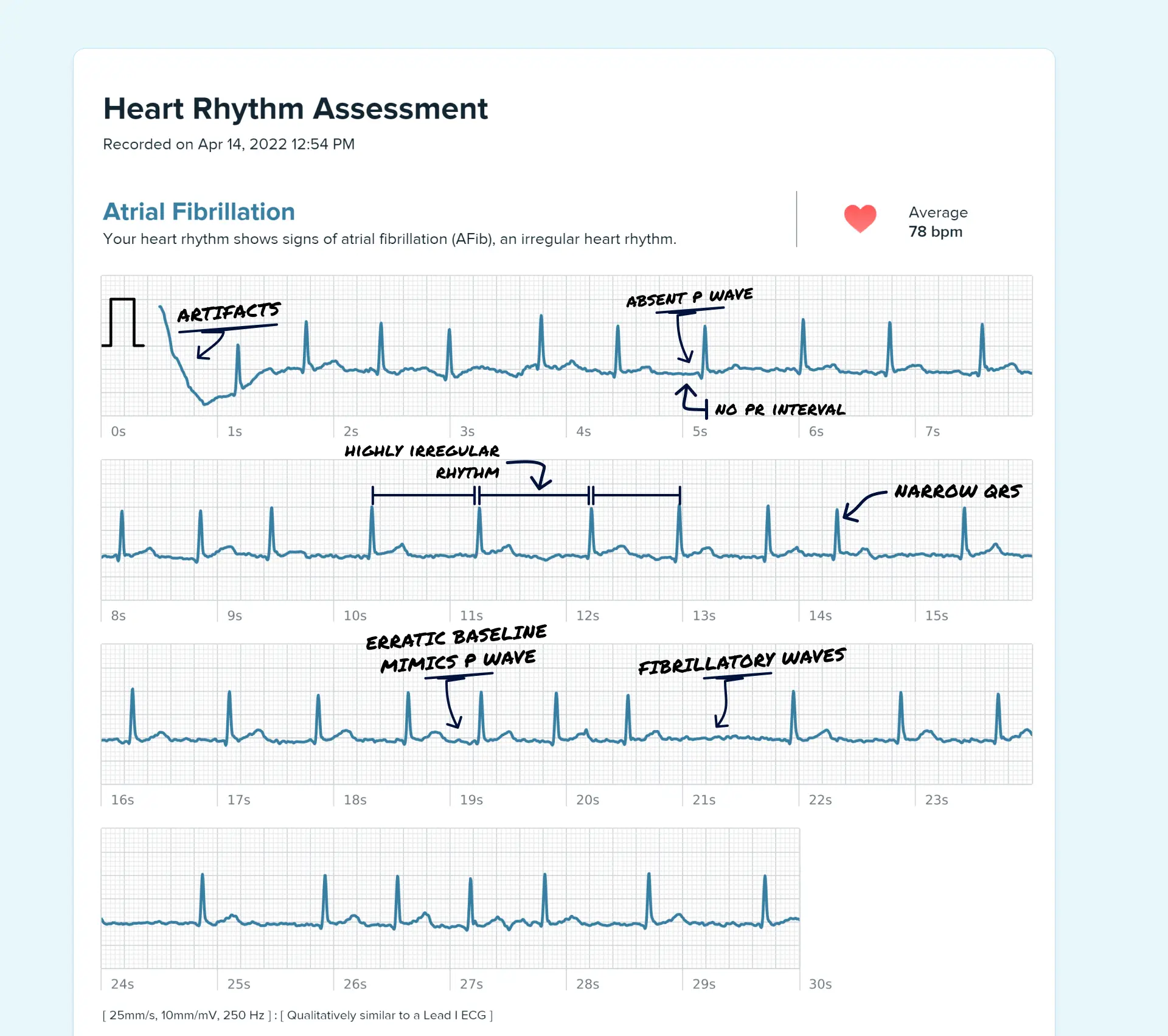
If you already have a heart rhythm issue, adding a stimulant-like medicine may push a sensitive system in the wrong direction. If your heart already tends to run irregularly, a decongestant isn't the most forgiving experiment.
People who should be especially careful include those with:
- High blood pressure: Sudafed can push pressure higher, which may make you feel worse and may not fit well with an already strained system.
- A history of AFib, SVT, or other rhythm problems: Your heart has already shown that it can slip out of its preferred pattern.
- Diabetes or blood sugar instability: As covered earlier, Sudafed can raise blood glucose, which may add stress to the body.
- People recovering from a recent heart event or already tracking frequent palpitations: A new stimulant effect can muddy the picture.
Duration matters too
A lot of people assume that if a medicine is sold over the counter, they can keep taking it as long as symptoms drag on. That's not a safe assumption.
The NHS guidance on pseudoephedrine says it should typically be used for less than 7 days. That matters because longer use can bring cumulative side effects, and there may also be rebound phenomena after stopping, which is especially relevant if you're watching heart rhythm trends.
Questions worth asking before you take another dose
Instead of only asking, "Is my nose still blocked?" ask a fuller set of questions:
- Did the last dose make my heart feel significantly different?
- Did my watch show a clear change from my normal baseline?
- Am I taking it because I need it, or because it's become a habit for lingering congestion?
If the answer to the first two is yes, caution makes sense. If the answer to the third is yes, it's probably time to step back and consider a non-stimulant approach like saline irrigation or simple rest and fluids.
People often want a universal rule. There really isn't one. The safer approach is personal: the more heart-sensitive you are, the less casually you should treat Sudafed.
Using Your Watch ECG to Monitor Sudafed Effects
A wearable ECG can't replace a doctor, but it can help you stop guessing. The goal isn't to stare at your watch all day. The goal is to compare your body before and after Sudafed in a structured way.
Start with a baseline
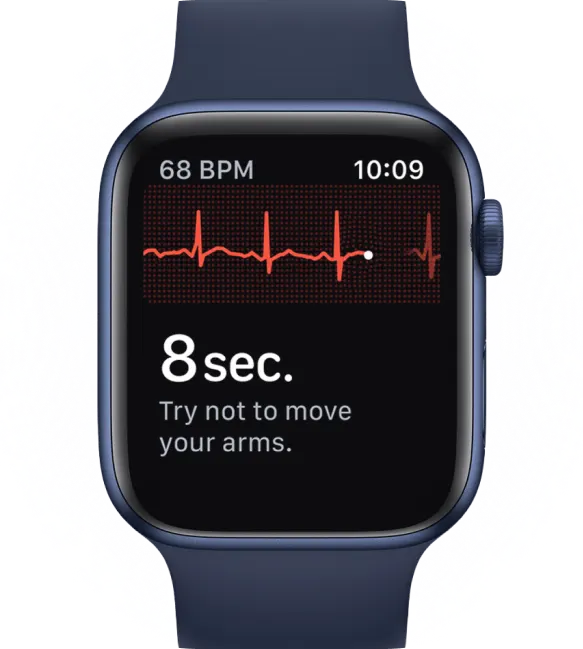
Before taking Sudafed, record how you feel. Then, if your device supports it, capture an ECG while you're sitting still and calm. If you use an Apple Watch, this walkthrough on how to take an ECG with your Apple Watch is helpful if you haven't done it in a while.
Make a few basic notes:
- Your resting heart rate
- Whether the rhythm feels regular
- Any symptoms already present from the cold itself
- Whether you've had caffeine, poor sleep, or dehydration
Those details matter because a bad night's sleep and a fever can also raise your heart rate. Without a baseline, it's easy to blame everything on the medication.
Check again near the likely peak
The verified data in this brief notes that Sudafed's effects often peak within 1 to 2 hours of a standard dose. That's the most useful time to re-check if you feel different.
When you repeat the ECG, focus on pattern, not perfection.
Look for questions like these:
- Is the rhythm faster but still regular?
- Am I seeing occasional extra beats that match the flutters I feel?
- Does the tracing look dramatically different from my baseline?
A watch ECG is most useful when you compare it to your own normal, not to someone else's screenshot online.
Keep the interpretation simple
You don't need to become your own cardiologist. You just need a working filter.
Usually less concerning: your heart rate is up, the rhythm looks regular, and your symptoms are limited to feeling stimulated.
More concerning: new irregularity, symptoms that feel stronger with each dose, or a tracing that looks unusual and matches dizziness, chest discomfort, or shortness of breath.
A short symptom log helps more than people expect. Write down the dose time, when symptoms started, what the watch showed, and when things settled. That turns a scary moment into usable information.
Don't let the device become another source of panic
Checking your ECG repeatedly every few minutes usually doesn't create clarity. It creates noise. A better plan is one baseline check, one follow-up near the expected peak, and then another only if symptoms clearly change.
If you're a person who gets anxious from ambiguous data, structure is your friend. Use the watch like a thermometer for rhythm trends, not like a crystal ball.
When to Stop Taking Sudafed and See a Doctor
Most medication side effects settle after the drug wears off. Some don't deserve a wait-and-see approach.
Stop taking Sudafed and seek medical care if you develop symptoms that feel clearly outside the range of "I feel a bit stimulated." The biggest red flags are symptoms that suggest your heart or circulation isn't tolerating the medication well.
Red flags you shouldn't brush off
- Chest pain or chest pressure
- Shortness of breath
- Severe dizziness or feeling like you may faint
- A very rapid heartbeat that doesn't settle
- A new irregular rhythm on your watch that comes with feeling bad
- Symptoms that worsen with each additional dose
If you've been trying to decide whether your palpitations are still in the "monitor it" category or the "get checked" category, this guide on when heart palpitations mean you should see a doctor can help you think it through.
Trust patterns, not just single moments
One isolated flutter after a decongestant may not mean much. A repeating pattern does. If every dose reliably brings a pounding heart, that medicine may not be a good fit for your body.
Stop trying to "push through" a medicine that keeps giving you the same bad signal.
You don't need to prove you're tough. You need to recover from a cold without creating a second problem.
Being informed doesn't mean becoming fearful. It means knowing that the side effects of Sudafed can include real heart-related sensations, understanding how to observe them with a wearable ECG, and recognizing when the safest move is to stop the medication and get help.

If Sudafed has you watching every heartbeat, Qaly can help. Upload ECGs from your wearable and get human-reviewed analysis from certified cardiographic technicians.



.png)
.png)