


Key Takeaways

User Profile
Hello Heart Hero. You might be here because you took Mucinex while battling a cold, then felt your heart start fluttering, skipping, pounding, or racing. That can feel unsettling, especially when you were just trying to breathe easier and get through the day.
A lot of people assume all Mucinex products are basically the same. They aren't. That small detail matters because when someone asks can mucinex cause heart palpitations, the most honest answer is, sometimes, but it depends on which Mucinex product you took and what else is going on in your body.
If you've ever felt dismissed when bringing up medication side effects, your concern is still valid. Bodies don't read labels the way drug marketing does. They react to ingredients. And if you've also struggled with medication questions in other areas, this overview of PA psychiatric nurse practitioners on Xanax may help you think through another example of how symptom relief and side effects can overlap in real life.
That Unsettling Flutter After Taking Cold Medicine
A cold already puts your body under stress. You're congested, tired, maybe dehydrated, maybe drinking more coffee than usual because you still have responsibilities. Then you take a familiar over the counter medicine, and suddenly your heartbeat feels different.
That experience can trigger a spiral fast. Is this anxiety? Is it the medicine? Is something wrong with my heart? The fear often comes from not knowing which of those answers fits.
What a palpitation can feel like
Some people describe palpitations as a flutter in the chest. Others feel a thump, a flip, a brief pause followed by a hard beat, or a racing pulse that seems stronger than normal. You might notice it most when lying down, sitting still, or trying to sleep.
A helpful way to think about it is this. Your heart is usually like a drummer keeping a steady beat in the background. A palpitation is when you suddenly become aware of that beat because it changes speed, force, or timing.
Palpitations are a symptom, not a diagnosis. They can come from stress, illness, dehydration, stimulants, or a true rhythm problem.
Why this question is more complicated than it sounds
"Mucinex" is a brand name, not one single medication. One box may contain only guaifenesin, while another includes pseudoephedrine or dextromethorphan. Those add-on ingredients can change the heart-related side effect profile quite a bit.
So if you felt a strange heartbeat after taking a cold medicine, the first job isn't to panic. It's to identify the exact product and active ingredients. That's often the difference between a low-risk explanation and a good reason to call your doctor.
Understanding Mucinex's Main Ingredient Guaifenesin
Plain Mucinex contains guaifenesin, an expectorant. Its main job is to loosen and thin mucus so it's easier to cough up, much like adding water to something sticky helps it move instead of staying glued in place.

That matters because guaifenesin itself does not affect blood pressure or heart rate and is considered safe for people with heart problems according to GoodRx's review of guaifenesin side effects. So when someone asks whether Mucinex causes palpitations, plain guaifenesin usually isn't the ingredient people should worry about first.
What guaifenesin does
Guaifenesin helps with chest congestion. It doesn't open your nose. It doesn't suppress coughing. It doesn't act like a stimulant.
That last point is the big one. If your heart started pounding after taking a product labeled "Mucinex," the brand name may be distracting you from the actual culprit.
What guaifenesin usually does not do
It usually doesn't directly speed up the heart. It usually doesn't raise blood pressure. It usually doesn't create the wired, jittery feeling people often associate with decongestants.
Here is where many readers get confused. They remember taking "Mucinex," but the box they bought may have been Mucinex D or Mucinex DM. Those versions contain other ingredients with very different effects.
Simple rule: If the package has extra letters after Mucinex, read the active ingredients before blaming guaifenesin.
A label check can save a lot of confusion
When you're sick, it is easy to grab the wrong box. Many products sit side by side and look similar. A quick ingredient check can answer several important questions:
- If it says guaifenesin only, plain Mucinex is less likely to be the reason for palpitations.
- If it includes pseudoephedrine, you're dealing with a decongestant that can directly affect the cardiovascular system.
- If it includes dextromethorphan, you're taking a cough suppressant that can sometimes contribute to a fast heartbeat.
That distinction is what turns a vague worry into a useful conversation with a clinician.
Why Mucinex D and DM Are the Real Suspects
If plain guaifenesin is the quiet roommate, Mucinex D and Mucinex DM are the versions that can change the mood in the room. The extra letters matter because they signal added drugs with different effects on the nervous system and the heart.
Mucinex D and pseudoephedrine
The D in Mucinex D stands for a decongestant, pseudoephedrine. This ingredient directly affects the cardiovascular system and can cause heart palpitations. It can also increase blood pressure and heart rate, with symptoms that may include an increased heart rate and a pounding heartbeat, as described in Healthline's review of Mucinex D side effects.
This is why some people feel "amped up" after taking it. Pseudoephedrine works by narrowing blood vessels to reduce congestion. That may help a stuffy nose, but the same stimulant effect can make the heart beat harder or faster.
Cleveland Clinic information cited in that Healthline review notes that decongestants can cause palpitations in both healthy people and those with heart disease. In healthier people, skipped beats are often benign. But the risk is more concerning in older adults and in people who already have cardiovascular issues.
Mucinex DM and dextromethorphan
Mucinex DM contains dextromethorphan, often shortened to DXM. This ingredient is used to suppress coughing. It isn't a decongestant, but it can still contribute to palpitations in some people.
According to GoodRx's overview of Mucinex DM, dextromethorphan can cause a racing or fast heartbeat as a recognized less common side effect. At higher doses or in overdose situations, that risk becomes more important. The same review also notes that overdose symptoms can include fast heartbeat, and that combining DXM with certain medications can prolong how long it stays in the body.
The practical takeaway is simple. DM isn't the same risk as D, but it is not automatically heart-neutral in every person.
Why combination products get trickier
A combination product doesn't just give you one effect. It can influence several systems at once. The GoodRx review of guaifenesin-related combination products notes that formulations containing pseudoephedrine can affect the cardiovascular system, neurologic system, and kidneys, which helps explain why some people feel palpitations plus anxiety, tremor, or restlessness after taking them.
Extended-release products can add another layer of confusion because the effects may not wear off as quickly as people expect. You may take the medicine in the morning and still feel "off" later in the day.
If your heart symptoms started after a product with pseudoephedrine or dextromethorphan, the timing matters. Write down when you took it, when symptoms began, and how long they lasted.
A practical comparison
Here is the cleanest way to frame it:
- Plain Mucinex helps loosen mucus. It is not usually the reason for palpitations.
- Mucinex D adds pseudoephedrine, which can increase heart rate and blood pressure and is the strongest suspect when someone feels pounding or racing after a dose.
- Mucinex DM adds dextromethorphan, which can also contribute to a fast heartbeat in some situations.
If you already live with an irregular rhythm, you may also want a broader review of medications that cause atrial fibrillation, since cold medicines are only one part of the bigger picture.
Are You at a Higher Risk for Palpitations
The same medicine can feel very different in two different people. One person takes a dose and feels fine. Another feels shaky, wired, and aware of every heartbeat. That doesn't mean you're overreacting. It means your body may be more sensitive to the ingredients.
People who should be more cautious
Adults over 65 and people with pre-existing cardiovascular conditions have a higher risk with pseudoephedrine-containing products, based on the medical literature summarized in the earlier Healthline source. If you already have high blood pressure, a history of arrhythmias, or another heart condition, your margin for "probably fine" is smaller.
A decongestant can also feel stronger if you're dehydrated, sleep deprived, sick with a fever, or drinking caffeine to push through the day. Those aren't small side notes. They can amplify what you feel.


Other health factors that can muddy the picture
Some readers get confused because the symptom feels cardiac, but the trigger may involve several body systems at once. Think about these possibilities:
- Existing rhythm issues. If you already have episodes of AFib, SVT, PVCs, or unexplained flutters, a stimulating cold medicine may make them easier to notice or more likely to show up.
- Thyroid problems. An overactive thyroid can raise baseline heart sensitivity. If that might apply to you, this guide on hyperthyroidism and heart palpitations can help you sort out overlapping symptoms.
- Medication interactions. Combination cold products can mix poorly with other drugs, especially if you're already taking medications that affect the nervous system.
- Personal stimulant sensitivity. If caffeine already makes you jittery, that can be a clue that decongestants may hit you harder too.
Your risk isn't just about the medicine. It's about the medicine plus your body, your other conditions, and everything else you took that day.
A smarter question to ask yourself
Instead of asking only, "Is this medication safe?" ask, "Is this medication a good fit for me?"
That shift matters. It makes room for your health history, your age, your other prescriptions, and your pattern of symptoms. That's not being dramatic. That's being observant.
How to Document Palpitations with Your Watch ECG
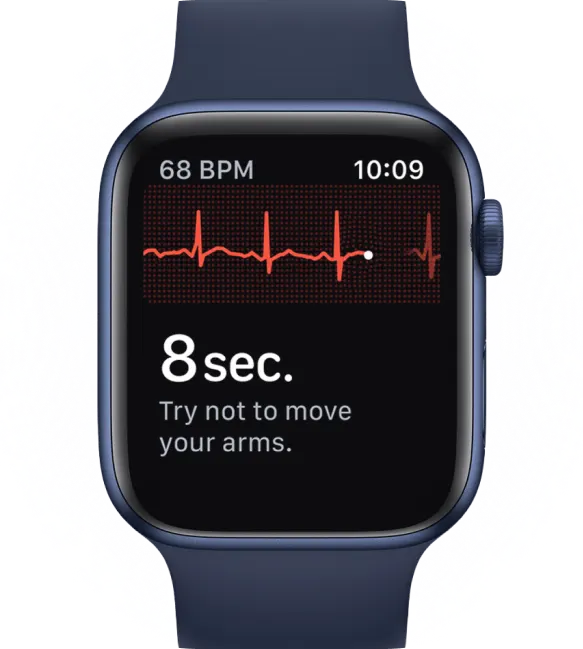
If a palpitation happens, memory alone isn't always enough. By the time you get to a doctor's visit, the feeling may be gone. That is where a wearable ECG can help. It turns "my heart felt weird" into something more concrete.

What to do in the moment
If you use an Apple Watch, Samsung watch, Fitbit, Kardia device, or another wearable with ECG capability, try to record the event while it is happening. Timing is important. A strip captured during the symptom is usually much more useful than one taken much later when your rhythm has settled down.
Use this simple sequence:
- Sit down and stay still. Movement can create noise in the tracing.
- Start the ECG as soon as you feel the flutter or racing. Don't wait to see if it passes.
- Note the time and the medication. Write down the exact product name and when you took it.
- Repeat if symptoms come back. A pattern over several recordings can be more useful than one isolated strip.
If you use an Apple Watch and want a practical guide to getting a cleaner recording, this walkthrough of an ECG app for Apple Watch can help.
What your recording can and cannot do
A wearable ECG isn't the same as a hospital test. It won't answer every question. But it can still be very helpful for catching common rhythm changes around the time of symptoms.
The verified information on dextromethorphan notes a practical use case for wearable ECG users. If palpitations happen after Mucinex DM, users can capture 30-second ECG strips showing rhythms such as PVCs or SVT, then share that information for review through a clinician or rhythm-analysis service.

The same verified data also notes useful thresholds for ECG review in that context, including PR interval above 200 ms and QTc above 450 ms in men or 460 ms in women as findings that may deserve closer medical attention when interpreted by a qualified professional. Those details are not for self-diagnosis. They are reminders that objective rhythm data can sometimes reveal more than a symptom description alone.
How to make your notes more useful
Your doctor doesn't just need the tracing. They need the story around it. Include:
- Which product you took. Mucinex, Mucinex D, or Mucinex DM.
- When you took it. Morning, evening, or overnight.
- What else was going on. Fever, dehydration, caffeine, anxiety, lack of sleep.
- How the symptom felt. Fluttering, pounding, skipping, racing.
- Any other symptoms. Chest discomfort, shortness of breath, dizziness, lightheadedness.
A clean ECG strip plus a short symptom log is stronger than either one alone.
This kind of documentation can make you a much stronger advocate in a healthcare visit. It gives your clinician something specific to respond to instead of asking them to solve a mystery from memory.
When to Stop Wondering and See Your Doctor
Some palpitations are brief and harmless. Others deserve prompt attention. The hard part is knowing which is which when you're in the moment.
A good rule is to look at the whole picture, not just the flutter itself. Duration, associated symptoms, your health history, and the exact medication all matter.
Call a doctor promptly if
Healthline's summary of Mucinex D side effects notes that cardiologists recommend contacting a doctor if palpitations last more than 30 minutes or happen with lightheadedness or shortness of breath, and that serious allergic reactions causing breathing problems or severe heart palpitations occur in less than 1% of Mucinex users according to that same review. Those details help draw a line between "monitor this" and "don't ignore this."
Here are the situations where you shouldn't just wait and hope:
- Symptoms persist. The rhythm still feels off well beyond a brief flutter.
- You feel lightheaded or short of breath. Those pairings matter.
- You have chest pain, fainting, or near-fainting. Get urgent medical care.
- You have known heart disease or are older and the symptoms are new. Be more cautious, not less.
- You suspect you took too much. Overdose and medication mix-ups need real medical advice.
If you want a broader decision guide, this article on heart palpitations and when to see a doctor is a useful companion.
When it may be reasonable to monitor
If the flutter was brief, stopped after you discontinued the medication, and wasn't paired with red-flag symptoms, a non-urgent appointment may be enough. Bring the box or a photo of the ingredients. Bring any wearable ECG recordings. Bring a simple symptom timeline.
That kind of organized reporting can help clinicians take you more seriously. If you like having a structured way to describe side effects, OMOPHub's CTCAE guide is a helpful example of how health professionals think about grading and documenting adverse events.
You don't need to prove that the medication caused the palpitation with total certainty. You only need to clearly report what happened, when it happened, and what changed after you stopped it.
The bottom line
So, can Mucinex cause heart palpitations? Plain Mucinex usually isn't the main concern. Mucinex D and, in some cases, Mucinex DM are more likely suspects. The issue is less about the brand name and more about the extra ingredients hidden behind the letters on the box.
You know your body best. If something felt wrong, it deserves attention.

Noticing an irregular heartbeat? If you've recorded an ECG during palpitations, don't leave it unread. Get a human-reviewed interpretation.



.png)
.png)