





Key Takeaways

User Profile
Hello, Heart Hero. If you've ever felt that sudden, unnerving racing or fluttering in your chest, you know how quickly it can leave you feeling worried and searching for answers. You're not alone in feeling this way, and it’s smart to look for clarity.
This feeling, known as heart palpitations, is a very common signal your body might send when you have hyperthyroidism, a condition where your thyroid gland becomes overactive.
Your Guide to Hyperthyroidism and Heart Palpitations
It's easy to feel lost or anxious when dealing with new symptoms, especially when you feel like you have to navigate the healthcare system on your own. We've designed this guide to give you clear, reassuring information, empowering you to understand what's happening in your body.
Our goal is simple: to make sense of the link between an overactive thyroid and heart palpitations. By the end, you'll feel less anxious and more confident in taking the next steps.
That strange feeling in your chest is not just a random event; it's a direct message. Think of your thyroid as the engine of your body. When it goes into overdrive from hyperthyroidism, it speeds everything up, and your heart is often the first to feel the strain.
What This Guide Will Cover
Having the right knowledge turns uncertainty into action. It transforms worry into a sense of control. We'll walk you through everything you need to know, one step at a time.
Here's what we'll explore together:
- The "Why": We'll break down exactly how an overactive thyroid can throw your heart's rhythm out of sync.
- The "What": You'll learn what those different palpitations actually feel like and what they might mean.
- The "How": We’ll show you how to take an active role in monitoring your own heart health from home.
You're not just a passenger on this journey. By learning about your symptoms, you become a proactive partner in your own health, capable of tracking what you feel and understanding what it means.
This is more true now than ever, thanks to modern tools. Many of us have wearable devices that can record an ECG right from our wrist. We'll explain how to use these tools effectively to capture useful data when you feel a palpitation, and how you can share those recordings with your doctor.
This helps bridge the gap between what you experience at home and what a doctor might see in the clinic, ensuring your concerns are heard and understood.
Why An Overactive Thyroid Makes Your Heart Race
To get to the bottom of that unsettling feeling of a racing or fluttering heart, we need to look at the powerful connection between your thyroid and your heart. It's a direct relationship, and understanding it can take away a lot of the anxiety that comes with these symptoms.
Think of your thyroid gland, that small, butterfly-shaped organ in your neck, as your body’s main accelerator. When it's working right, it releases just enough thyroid hormone to keep your metabolism running at a smooth, steady pace.
But with hyperthyroidism, that accelerator gets stuck to the floor. Your body is suddenly flooded with way too much thyroid hormone.
The Hormone Overload Effect
These extra hormones act like a potent stimulant, directly telling your heart muscle to work harder and faster. It’s like forcing your heart to chug a high-dose energy drink it never asked for. This constant stimulation has a few key effects that lead to hyperthyroidism and heart palpitations:
- Increased Sensitivity: Your heart becomes much more sensitive to adrenaline, your body's "fight or flight" hormone. This means even a little bit of stress or excitement can trigger a dramatic, racing heartbeat.
- Forceful Contractions: It's not just that your heart beats faster; it beats more forcefully. This creates that strong, pounding sensation in your chest that can feel so alarming.
- Electrical Disruption: This non-stop "on" signal can throw off the heart's delicate electrical system, the very thing responsible for coordinating each beat. This can lead to the chaotic, skipped, or fluttering beats you feel as palpitations.
From Fast Heartbeats To Serious Rhythms
For many people, the most noticeable sign is just a consistently fast heart rate, what we call sinus tachycardia. This is when your resting heart rate stays above 100 beats per minute. While this is unsettling on its own, a more serious rhythm disturbance can also develop.
All that constant stimulation can sometimes push the heart's upper chambers into a chaotic and irregular rhythm known as atrial fibrillation (AFib). Instead of a steady, organized beat, the atria just quiver, which you might feel as a rapid, fluttering sensation in your chest. For a deeper look, check out our guide on the broader link between thyroid disorders and your heart.
Studies show that atrial fibrillation, often felt as a chaotic fluttering, affects 10% to 25% of people with overt hyperthyroidism. Meanwhile, palpitations from a fast heart rate (sinus tachycardia) are even more common, affecting up to 76.47% of those with a severely overactive thyroid.
Understanding this mechanism is the first step toward feeling in control. The palpitations are not a sign that your heart is "broken." Instead, they are a predictable response to a hormonal imbalance. By treating the thyroid issue, you're getting straight to the source of the heart symptoms. This is why getting your thyroid levels checked and properly managed is so critical for both your heart's health and your peace of mind.
Understanding Common Thyroid-Related Heart Rhythms
When your thyroid gland kicks into high gear, it doesn't just speed up your metabolism; it can feel like your heart is running a marathon all on its own. It's a common and often unsettling part of living with hyperthyroidism.
That fluttering, racing, or pounding you feel? It’s not just in your head. These are very real, physical responses to the hormonal storm your heart is trying to navigate. Let's break down the most common rhythms you might experience, what they feel like, and what they mean for your heart health.
Sinus Tachycardia: The Constant Race
The most common change you’ll notice is sinus tachycardia. This is not technically an arrhythmia, but rather your heart's normal rhythm just going way too fast. "Tachycardia" simply means a resting heart rate over 100 beats per minute.
It often feels like:
- A persistent, strong, racing heartbeat that just won’t quit.
- You’ve just sprinted up a few flights of stairs, even when you’re sitting perfectly still.
- A constant pounding in your chest that can make it tough to relax or fall asleep.
This happens because the flood of thyroid hormone directly prods your heart's natural pacemaker (the sinus node), telling it to fire much more rapidly than necessary. Your heart is essentially stuck in workout mode, 24/7.

Premature Contractions: The Skipped Beat or Thump
Another very frequent sensation is the feeling of premature contractions. These are extra, early heartbeats that can pop up unexpectedly. They can originate in the heart's upper chambers (Premature Atrial Contractions, or PACs) or the lower chambers (Premature Ventricular Contractions, or PVCs).
These early beats throw off your heart's regular tempo for a moment. After the early beat, there's usually a brief pause as your heart's electrical system resets. The beat that follows this pause is often stronger because the heart had an extra split-second to fill with blood.
You might experience this as:
- A distinct "skipped" beat or a short pause in your rhythm.
- A sudden, noticeable "thump," "flop," or "flutter" in your chest.
- A fleeting sensation that your heart stopped and then restarted with a jolt.
While these can feel very alarming, they are often benign on their own. But when they’re triggered by hyperthyroidism, they serve as a clear sign of the stress your heart is under. If you want to learn more, check out our guide on how to identify these ectopic beats on your watch ECG.

Atrial Fibrillation: The Most Significant Rhythm Disturbance
The most serious arrhythmia tied to an overactive thyroid is atrial fibrillation (AFib). This is a disorganized, chaotic rhythm where the heart's two upper chambers (the atria) give up on beating effectively and just quiver or fibrillate instead.
AFib is a major concern for a couple of reasons. First, the chaotic signals can make the lower chambers (the ventricles) beat rapidly and irregularly. More importantly, because the atria are not pumping blood properly, blood can pool and form clots. If a clot travels to the brain, it can cause a stroke.
In atrial fibrillation, your heart is not just beating fast; it's beating irregularly. The rhythm loses its steady "lub-dub, lub-dub" pattern and becomes a chaotic, unpredictable series of beats. This is a key distinction from the fast but regular rhythm of sinus tachycardia.
What it feels like:
- An intensely chaotic, quivering, or "bag of worms" sensation in the chest.
- A rapid, irregular heartbeat that feels completely "all over the place."
- It can be accompanied by significant shortness of breath, dizziness, or chest discomfort.
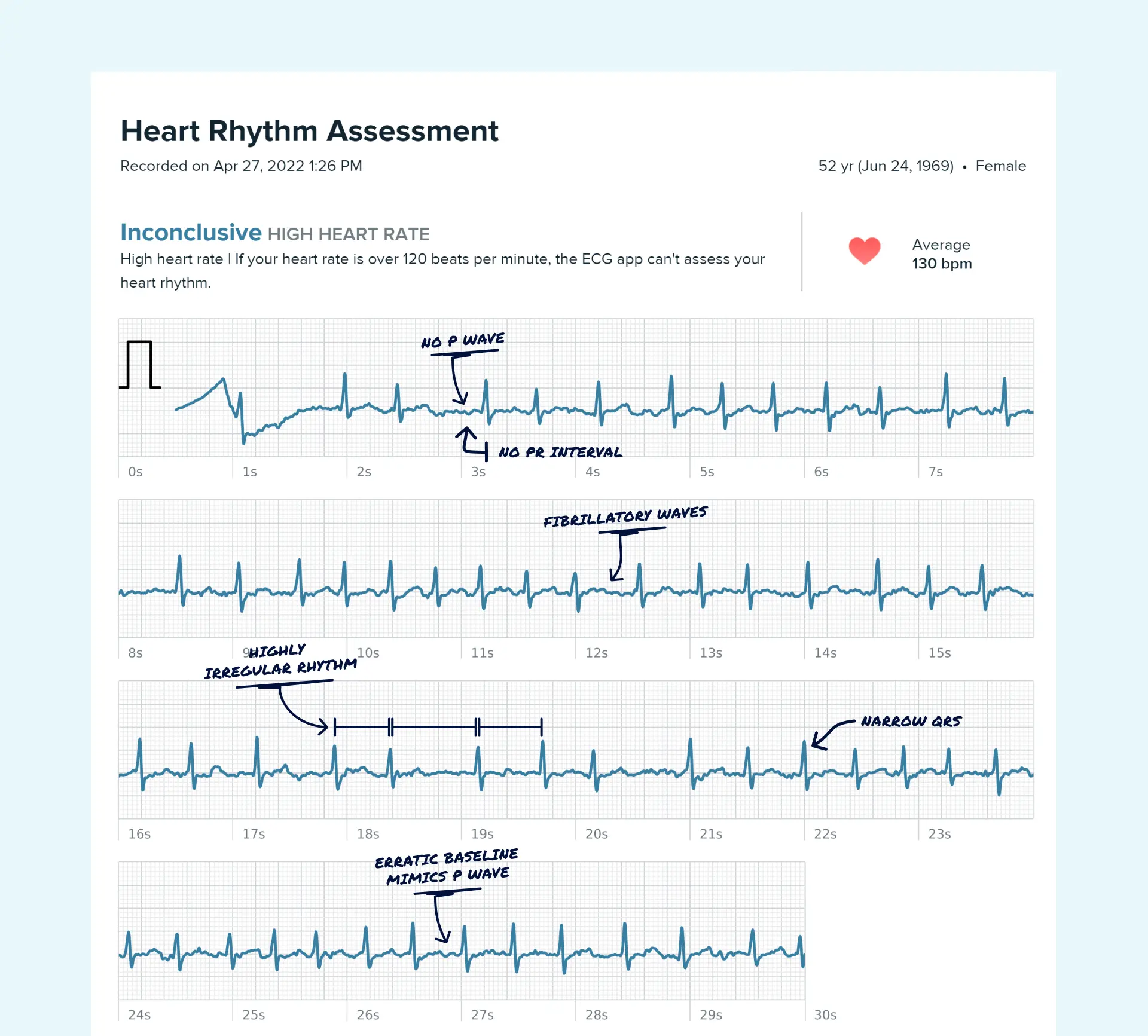
Here’s a quick summary of these common thyroid-related rhythms.
Sinus Tachycardia
- What It Feels Like: A constant, fast, and strong racing heartbeat.
- What It Means: Your heart's natural pacemaker is overstimulated by thyroid hormone, but the rhythm is regular.
Premature Contractions (PACs/PVCs)
- What It Feels Like: A "skipped beat," a brief pause, or a sudden "thump" in the chest.
- What It Means: Extra, early heartbeats are disrupting the normal rhythm, signaling cardiac irritation.
Atrial Fibrillation (AFib)
- What It Feels Like: A chaotic, rapid, and irregular fluttering or quivering sensation.
- What It Means: A serious arrhythmia where the heart's upper chambers are not beating properly, increasing stroke risk.
Learning to identify what you’re feeling is a powerful first step. Describing your symptoms as a "constant race" versus a "chaotic fluttering" gives your doctor invaluable clues, helping them zero in on the problem and get you on the path to feeling better, faster.


How Doctors Diagnose Thyroid Heart Issues
When you feel that unsettling flutter or a sudden racing in your chest, figuring out why it's happening is the most important step toward relief. We know walking into a doctor’s office can be nerve-wracking, especially when you’re worried you will not get the answers you need.
But the diagnostic process is often more straightforward than you might think. It all starts with a simple conversation. Your doctor will want to hear your story, what the palpitations feel like, how often they're happening, and what you’re doing when they start. This initial chat is key, as it helps them connect the dots between your symptoms and potential causes, like an overactive thyroid.
Starting With Simple Blood Tests
After listening to your experience, the first concrete step is usually a set of simple blood tests. These tests are the key to unlocking whether an overactive thyroid is really the culprit behind your heart symptoms. Your doctor will likely order a thyroid panel.
This is just a standard blood draw. The lab will measure a few key hormones:
- Thyroid-Stimulating Hormone (TSH): Think of this as the master signal from your brain's pituitary gland to your thyroid. If your thyroid is in overdrive, your brain tries to pump the brakes by releasing very little TSH. A low TSH level is a classic sign of hyperthyroidism.
- Free T4 and T3: These are the actual thyroid hormones your gland produces. High levels of Free T4 and T3 confirm that your thyroid is making too much hormone, sending your body into a revved-up state.
These blood tests give a clear yes-or-no answer about whether hyperthyroidism is in the picture. If they show an imbalance, your doctor has likely found the root cause.
Investigating Your Heart's Rhythm
Confirming hyperthyroidism is one half of the puzzle. The other half is understanding exactly what's happening to your heart's rhythm. To do this, your doctor will perform an in-office electrocardiogram (ECG). It’s a quick, painless test where small stickers on your chest record your heart's electrical activity for just a few seconds.
An in-office ECG gives a snapshot of your heart rhythm right then and there. It can immediately spot arrhythmias like atrial fibrillation or a fast heart rate (sinus tachycardia) if they happen to be occurring during the test.
But here’s the challenge: palpitations are notoriously unpredictable. They often do not show up on command during your short visit to the clinic.
The problem with a single, in-office ECG is that it only captures a brief moment in time. If you are not having a palpitation right then and there, the ECG could come back perfectly normal, leaving both you and your doctor without the data you need.
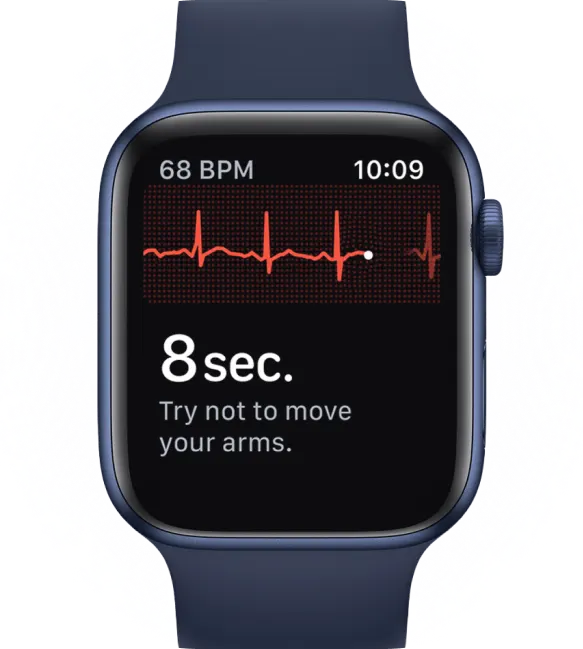
This is where you can take an active role in your own diagnosis. Your at-home ECG device, like the one on your smartwatch, becomes an incredibly powerful tool. It lets you capture your heart’s rhythm the moment you feel a symptom, no matter where you are.
By using a service like Qaly to get your at-home ECGs analyzed by certified technicians, you can show your doctor precisely what’s happening during an episode. Instead of just describing a "flutter," you can walk in with a clear, data-backed report that identifies the specific arrhythmia. This transforms you from a passive patient into an active partner in your care, bringing the evidence needed for a confident diagnosis and an effective treatment plan.
How To Manage Hyperthyroidism And Calm Your Heart
Getting a hyperthyroidism diagnosis can feel like a whirlwind. But think of it this way: it’s the first solid step toward calming the storm you've been feeling in your chest. The focus now shifts to a clear, two-part plan: getting your thyroid levels back to normal and, just as crucial, protecting and calming your heart along the way.
We know how easy it is to feel like just another number in a busy healthcare system. This is where your journey gets personal. Effective treatments are out there, and feeling better is an absolutely achievable goal.
Restoring Your Thyroid Balance
The main strategy for stopping hyperthyroidism and heart palpitations is to go straight to the source, the overactive thyroid gland itself. Once your thyroid hormone levels start to normalize, you'll likely find that many of the most distressing heart symptoms, like that constant racing feeling or sudden flutters, will either improve dramatically or disappear altogether.
Your doctor will talk you through the best game plan for you, which usually involves one of three main approaches:
- Antithyroid Medications: These are pills that work by telling your thyroid to produce less hormone. It's often the first line of defense and can bring your levels back into a healthy range over several weeks or months.
- Radioactive Iodine Therapy: This involves a single dose of radioactive iodine that's absorbed by the overactive thyroid cells. It causes them to shrink and, in turn, produce far less hormone.
- Surgery (Thyroidectomy): In certain cases, like if you have large nodules or if other treatments are not a good fit, your doctor might recommend surgery to remove part or all of the thyroid gland.
Directly Protecting Your Heart
While fixing the thyroid is the long-term goal, your heart needs support right now. Being constantly revved up by excess thyroid hormones is exhausting for your heart muscle. That’s why your doctor will almost certainly prescribe a medication to give you some quick relief.
The most common choice here is a beta-blocker. Think of this medication as a shield for your heart. It does not fix the thyroid problem, but it blocks the effects that both adrenaline and excess thyroid hormone have on your heart cells.
Beta-blockers are fantastic at slowing down a racing heart and reducing the force of its contractions. This can bring almost immediate relief from that pounding, anxiety-inducing sensation, giving your primary thyroid treatment time to kick in.
If you’ve been diagnosed with atrial fibrillation (AFib) because of your hyperthyroidism, your doctor will also probably prescribe a blood thinner. This is a critical step to lower the risk of stroke, which is higher when you have AFib. To learn more, check out our guide on how beta-blockers affect your heart and ECG.
Using Your Wearable ECG To Track Your Progress
Your wearable ECG device is so much more than a gadget; it's a powerful partner in your health journey. When you're dealing with symptoms that come and go, getting immediate medical feedback can feel impossible. Your watch puts a remarkable amount of control right back into your hands.
This is your chance to build a data-backed story of what you're feeling, giving you invaluable peace of mind between doctor appointments. Let's walk through how to capture clear, useful information that can make a real difference in your care.
How To Capture A Clean ECG Recording
When you feel that familiar flutter, race, or thump, your first instinct might be to rush to capture it. But here's a little secret: the key to a good ECG is to be as calm and still as possible. Remember, your watch is incredibly sensitive and can pick up "noise" from simple muscle movements.
To get the cleanest possible recording during a palpitation episode, try this simple routine:
- Sit Down and Get Comfortable: Find a quiet spot where you can sit down in a chair.
- Rest Your Arm: Place the arm with your watch on a table or your lap. This simple step helps relax your muscles and prevents shaking.
- Stay Still and Quiet: Avoid talking or moving while the ECG is recording. Just breathe normally and let your watch do its work.
Following these steps helps ensure your recording is free from interference, making the underlying heart rhythm much easier for you, and your doctor, to see.
Turning Your ECG Data Into Actionable Insights
Capturing the ECG is the first step. The next, and arguably most important, is understanding what it shows. This is where getting a professional analysis can bring real clarity, especially when you're feeling anxious about your hyperthyroidism and heart palpitations.
A human-reviewed interpretation service like Qaly connects you with certified cardiac technicians who analyze your recordings, often within minutes. They're trained to spot the specific rhythm disturbances your doctor needs to know about.
Instead of just seeing a squiggly line and wondering, you'll receive a detailed report that identifies potential arrhythmias. This could be atrial fibrillation or the sinus tachycardia that's so common with an overactive thyroid. You get concrete answers when you need them most.
These experts measure key data points from your ECG, like your heart rate and specific electrical intervals. Tracking these trends over time creates a powerful log of your heart's behavior as you and your doctor manage your thyroid condition. If you want to learn more about a common rhythm, you might be interested in our guide on what sinus tachycardia looks like on your watch ECG.
Sharing Your ECG Story With Your Doctor
Imagine walking into your next appointment not just with a description of your symptoms, but with a folder of neatly organized, technician-reviewed ECG reports. This completely changes the conversation.
You can show your doctor:
- Exactly what your heart was doing during that scary palpitation episode.
- How frequently these episodes are actually happening.
- Data trends that show if your heart rate is responding to your thyroid treatment.
This objective data helps bridge the gap between appointments and ensures your concerns are taken seriously. You’re no longer just telling your doctor what you felt; you’re showing them. This empowers you, validates your experience, and gives your doctor the clear information they need to provide the best possible care.
Frequently Asked Questions About Thyroid Palpitations
Feeling your heart race or skip a beat because of your thyroid can be unsettling, to say the least. It's totally normal to have a ton of questions swirling in your mind. Let's tackle some of the most common ones we hear to give you some clarity and peace of mind.
Can Heart Palpitations From Hyperthyroidism Go Away Completely?
Yes, for many people, they absolutely can. Think of excess thyroid hormone as having your foot stuck on your heart's accelerator pedal. The palpitations are a direct result of that constant stimulation.
The main goal of treatment is to get your thyroid hormone levels back into a normal range. Once your condition is well-managed, whether through medication, radioactive iodine, or surgery, that "accelerator" is lifted off the pedal. As your body rebalances, symptoms like a racing heart and palpitations often fade away completely. For related arrhythmias like atrial fibrillation, treating the thyroid is the most critical step and can sometimes be enough for the heart to return to its normal rhythm.
When Should I Go To The Emergency Room For Palpitations?
While many cases of hyperthyroidism and heart palpitations are not a five-alarm fire, it’s vital to know when to seek urgent medical care. If your palpitations come with other serious symptoms, it's time to head to the emergency room.
Listen to your body and watch for these warning signs:
- Severe chest pain or tightness
- Significant shortness of breath
- Dizziness, lightheadedness, or feeling like you might faint
- Sudden confusion or disorientation
These could be signals of a more serious cardiac event that needs immediate attention. Always trust your gut, it's far better to be safe and get checked out if you feel something is seriously wrong.
What Lifestyle Changes Can Help With Palpitations?
While your doctor's treatment plan is the foundation, certain lifestyle tweaks can make a real difference in managing palpitations day-to-day. These adjustments can help reduce the overall load on your heart while your thyroid levels are getting back on track.
Think of these changes as giving your heart a helping hand. They do not replace medical treatment, but they can make the journey smoother by reducing triggers that add extra stress to your system.
Consider making these habits part of your routine:
- Reduce Stimulants: Caffeine, nicotine, and even some over-the-counter decongestants can act like fuel on the fire, further exciting your already sensitive heart. Cutting back can make a noticeable difference.
- Manage Stress: Stress hormones like adrenaline can make palpitations worse. Simple stress-reduction techniques like deep breathing, meditation, or gentle yoga can help calm your nervous system.
- Stay Hydrated: Dehydration can throw off your body's electrolyte balance, which is crucial for a steady heartbeat. Sipping water throughout the day is a simple but powerful strategy.
As always, chat with your doctor before making any big lifestyle changes to make sure they're a good fit for your overall treatment plan. Your active role in this process is a huge part of your own health journey.

Worried about that irregular heartbeat? Upload your wearable ECG to Qaly and get human-reviewed analysis in minutes.



.png)
.png)