


Key Takeaways

User Profile
Coming home after an ablation can feel strangely quiet. The hospital wristband is off, the procedure is over, and everyone wants to believe the hard part is done. Then you notice a skipped beat, a little fatigue, or a flutter in your chest and your mind starts racing.
That reaction is common. Life after cardiac ablation often brings relief and worry at the same time. You may feel grateful the procedure is behind you, but still unsure how to read your body, when to trust your recovery, and when to call for help.
Welcome A New Chapter for Your Heart
You might be sitting on your bed at home, water bottle nearby, discharge papers on the nightstand, checking your watch every few minutes to see what your heart is doing. Many people do exactly that. They want reassurance, but they also don't want to miss something important.
Recovery rarely feels as neat as the handout makes it sound. A prospective study on AF ablation recovery found that people recovered along different paths, with symptom relief and return to activity varying substantially between patients, and that standard education can create unrealistic expectations for recovery (prospective AF ablation recovery study).
That matters because many people assume one of two things. Either they should feel normal right away, or any symptom means the procedure failed. Neither assumption is very helpful.
Why your experience may not match someone else's
One person feels better quickly and is walking around the block in a few days. Another person has fatigue, intermittent palpitations, and a lot of uncertainty for a while. Both experiences can fit within a normal recovery.
What helps most is understanding the difference between healing signals and warning signals.
Recovery after ablation is often uneven. Better days and off days can exist in the same week.
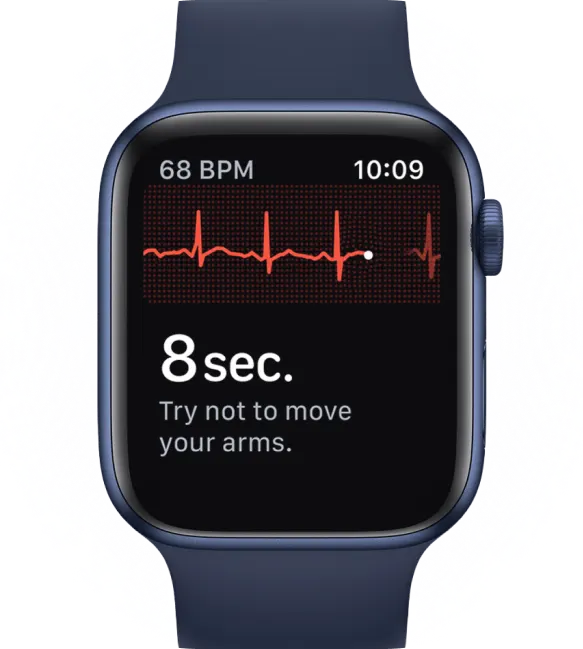
If you're skeptical about the healthcare system, you're not alone. Many patients leave the hospital feeling under-informed. They want practical guidance, not vague reassurance. That includes knowing how to use a smartwatch, Kardia device, or other wearable ECG in a calm, useful way instead of checking compulsively and feeling worse.
What this stage asks of you
You don't need to become your own cardiologist. You do need a simple framework:
- Notice patterns: Don't judge your recovery from one strange heartbeat.
- Write things down: Symptoms are easier to understand when paired with time, activity, and ECG data.
- Stay curious, not panicked: Your body may be healing, not failing.
That's the heart of life after cardiac ablation. You're not just waiting to get better. You're learning how to understand what better looks like for you.
Your First Few Weeks Navigating Immediate Recovery
The first few weeks are usually more about basic healing than dramatic cardiac changes. You may feel tired more easily. You may have some soreness. You may also wonder if every sensation means something serious.
Generally, this procedure has a strong safety profile. A 2019 study found an early mortality rate of 0.46%, or about 1 in 200 people, within 30 days, and for many patients without severe other health conditions, cardiac ablation has one of the safest profiles among cardiac interventions (early mortality data after cardiac ablation).
What often feels normal at home
Ablation is minimally invasive, but your body still went through a procedure. Common early experiences can include:
- Groin tenderness or bruising: The catheter access site may feel sore or look bruised.
- Fatigue: Anesthesia, poor sleep, stress, and the procedure itself can leave you drained.
- Mild chest awareness: Some people feel a little chest soreness or a strange awareness of their heartbeat.
- On-and-off palpitations: A few flutters can happen early and aren't always a sign of trouble.
Those sensations can be unsettling, especially if palpitations were the reason you needed the ablation in the first place.
What to do each day
Keep your routine simple.
- Check the insertion site once or twice a day. Look for increasing swelling, active bleeding, or changes that seem to be getting worse rather than better.
- Walk gently. Short, easy movement helps circulation and confidence.
- Hydrate and eat regularly. Recovery feels harder when you're dehydrated or under-fueled.
- Take medicines exactly as prescribed. Even if you feel well, the plan matters.
If your doctor gave you a monitor or suggested rhythm tracking, learn how it works before you need it in a stressful moment. A good overview of post-procedure rhythm tracking options can help if you're comparing a smartwatch with a patch or other tool, such as this guide to a cardiac event monitor.
Practical rule: In the first couple of weeks, focus on trends like worsening pain, new bleeding, or a steady decline in how you feel. Single odd sensations are often less informative than a pattern.
When to slow down and when to call
Patients often get confused here because "rest" doesn't mean "lie still all day," and "recovery is normal" doesn't mean "ignore everything."
Slow down if your body tells you it needs it. Call your clinician if symptoms are escalating, not settling. Families can help by watching for changes in energy, breathing, color, or comfort level. The early goal isn't to test your limits. It's to create a calm, steady environment for healing.
Understanding Your Body's Healing Timeline
One of the most important ideas in life after cardiac ablation is the blanking period. This is the stretch when your heart tissue is still healing and your rhythm may be unsettled even if the procedure ultimately works well.
Cleveland Clinic notes that the first 2 to 3 months after ablation are treated as a blanking period because arrhythmias can happen as the heart tissue heals, and those early recurrences may resolve on their own rather than signal failure (Cleveland Clinic catheter ablation guidance).

Think of it like a healing burn inside the heart
Ablation creates controlled injury so the abnormal electrical pathway stops causing trouble. That tissue doesn't become quiet overnight. It has to settle, scar, and remodel.
If you've ever had a skin wound that looked irritated before it looked better, you already understand the basic idea. During healing, the area can be sensitive, inflamed, and inconsistent. Heart tissue behaves in its own way, but the principle is similar.
A realistic way to view the first three months
Instead of asking, "Why am I still feeling things?" try asking, "What phase of healing might I be in?"
Early days
Your body is recovering from the procedure itself. Energy may be low. Sleep may be off. You might feel more aware of your heartbeat than usual as you're paying close attention.
Weeks later
This is when many people get frustrated. They expected to feel fully fixed by now, but they still notice bursts of palpitations or odd rhythms. That can happen during healing.
- Short episodes aren't always failure
- Symptom intensity can vary from week to week
- A good day followed by a rough day doesn't erase progress
Closer to the end of the blanking period
By this point, many people have a better sense of whether symptoms are fading, staying the same, or becoming more familiar again. That pattern matters more than one isolated reading.
During the blanking period, the most useful question isn't "Did I feel anything?" It's "What direction are things moving over time?"
Returning to normal life
This part is personal. Some people are back to desk work quickly. Others need more time because of fatigue, anxiety, or a physically demanding job.
Use these practical checkpoints:
- Walking: Usually a good place to rebuild confidence.
- Work: Easier to resume when you can get through a normal morning without feeling wiped out.
- Exercise: Start gently and increase only if your body responds well.
- Sex and driving: Follow your clinician's instructions, especially if symptoms like dizziness were part of your original rhythm problem.
Healing isn't measured by one perfect day. It's measured by whether your body is gradually tolerating more life with less distress.
Using Your Wearable ECG as a Recovery Tool
A wearable ECG can either feed anxiety or support recovery. The difference is in how you use it.
If you check every sensation ten times in a row, your watch becomes a stress amplifier. If you use it with a plan, it becomes a record of what your heart is doing and when it's doing it.
A simple monitoring routine that doesn't take over your day
Wearable users often do best with structure. Try this approach:
- Take one calm baseline reading daily: Choose a quiet time, like morning before coffee.
- Capture symptom moments: If you feel fluttering, racing, or skipping, take a tracing then.
- Log the context: Note whether you were resting, walking, stressed, dehydrated, or lying down.
- Save strips in one place: Keep screenshots or PDFs organized by date.
This gives your clinician something much more useful than, "I felt weird a lot."
Look for trends, not drama
A single tracing can be helpful, but trends tell the fuller story. Ask yourself:
- Are symptoms getting less frequent?
- Do they happen after poor sleep or stress?
- Are they brief and self-limited, or longer and more disruptive?
- Does your resting rhythm look similar most days?
For people using Apple Watch, Kardia, Fitbit, Samsung, or similar devices, it also helps to understand what the device can and can't tell you. This overview, a cardiologist's guide to the smartwatch ECG, explains how to think about consumer ECG recordings more realistically.
Turning data into something your doctor can use
Bring your monitoring into appointments in a clean format. A good symptom log might include:
- Date and time
- What you felt
- What you were doing
- ECG strip if available
- How long it lasted
One option some wearable users choose is Qaly, which analyzes at-home and wearable ECG recordings and provides interval readings and narrative reports that can be shared with clinicians. That kind of organized review can be especially helpful if your own readings leave you unsure what you're seeing.
The goal isn't to prove you're sick or reassure yourself every five minutes. It's to gather enough clear information that your care team can make better decisions.
Medication and Lifestyle for Long Term Success
Many patients feel confused when they're told to keep taking medication after ablation. They think, "If the procedure worked, why do I still need this?" That's a fair question.
The short answer is that rhythm recovery and risk reduction are not always the same thing. Your doctor may keep you on blood thinners, rhythm medication, or rate-control medication for a period of time because your heart is still healing and your overall risk profile still matters.
Why medication may continue even when you feel better
Internal healing can take up to 3 months, even though many people return to normal activities within days. Over time, AF ablation still has a recurrence range of 20% to 50%, which is why long-term monitoring is more useful than relying on one-off checks (cardiac ablation recovery guide with recurrence discussion).
That doesn't mean your ablation failed. It means recovery and long-term rhythm control require follow-through.
Here are the usual reasons a medication plan continues:
- Blood thinners: These may be used to lower clot-related risk while your care team reassesses your rhythm and overall stroke risk.
- Antiarrhythmic drugs: Sometimes used temporarily to help calm the heart during recovery.
- Rate-control medicines: These can reduce strain and improve symptom control if the heart becomes fast or irregular.
Never stop a heart medication just because your watch gave you one normal-looking tracing.
Lifestyle habits that support the procedure you already had
Ablation treats abnormal electrical pathways. It doesn't erase the effect of sleep loss, heavy alcohol use, ongoing stress, inactivity, or untreated blood pressure issues.
Think in terms of maintenance, not perfection.
- Move consistently: Gentle walking often becomes the bridge back to confidence. If you need ideas for rebuilding movement safely after a procedure, even resources outside cardiology can help with pacing and body awareness, such as MedAmerica Rehab Center orthopedic rehab.
- Protect sleep: Poor sleep can make palpitations feel louder and recovery feel slower.
- Know your triggers: Some people notice more symptoms with alcohol, dehydration, or large amounts of caffeine.
- Build heart-healthy routines: This guide on atrial fibrillation lifestyle changes gives practical ways to make those habits more sustainable.
Long-term success is usually quiet
Success after ablation doesn't always feel dramatic. Often it looks like this: fewer episodes, less fear, better stamina, and more trust in your body. Medications and lifestyle changes help protect that progress.


Navigating the Emotional Ups and Downs
People talk a lot about physical recovery after ablation. They talk far less about what happens in your mind. Yet for many patients, the emotional part is one of the hardest parts of life after cardiac ablation.
You may feel jumpy when your chest sensations change. You may wake up at night and check your pulse. You may wonder if you're overreacting or not reacting enough. That tension is exhausting.
Cardiac anxiety is not weakness
When your heart has scared you before, it makes sense that you listen for danger. Your nervous system learned that chest sensations might matter. It doesn't instantly unlearn that after a procedure.
That means recovery often includes two jobs at once. Your heart heals, and your sense of safety has to heal too.
Some patients don't need more tests. They need more support learning how to feel a sensation without immediately assuming the worst.
What helps in real life
You don't need a perfect mindset. You need a few steady practices.
- Name the feeling clearly: "I'm having anxiety about this flutter" is more grounding than "Something is terribly wrong."
- Use a pause before rechecking: Sit down, breathe slowly, notice whether the feeling changes over a few minutes.
- Talk out loud with family: Tell them what helps and what doesn't. Some people want reassurance. Others want quiet and space.
- Get mental health support if fear is taking over: If every symptom sends you into panic, structured counseling can help. This resource on holistic support for health anxiety may be useful if you're trying to understand that pattern.
Give yourself permission to recover emotionally
It is possible to be medically stable and still feel unsettled. It is possible to be grateful and scared at the same time. If your emotions feel big right now, that doesn't mean you're failing recovery. It means you're human.
Partnering With Your Doctor for Ongoing Care
The best follow-up care happens when you and your clinician both bring useful information to the table. You bring patterns, questions, and records. Your clinician brings interpretation, medical judgment, and a plan.
That partnership matters even more if you've felt dismissed by the healthcare system before. You don't need to walk into appointments apologizing for being observant. Organized patients are easier to help.
Know what needs urgent attention
Not every symptom is an emergency, but some changes shouldn't wait. Urgent concerns generally include symptoms that feel severe, sudden, or clearly worse than your usual recovery pattern, especially if they involve breathing trouble, fainting, major bleeding, or sustained distress.
For non-urgent issues, document first. A concise log often tells the story better than memory does.
How to prepare for a stronger appointment
Bring specifics. Clinicians can do more with "I had three episodes this week while walking upstairs, and here are the strips" than with "I don't know, my heart just feels off."
Useful things to bring include:
- A symptom timeline: Dates, times, duration, and what you were doing
- Wearable ECG strips: Labeled and easy to scan
- Medication list: Include any recent changes
- Your questions in writing: This prevents the blank-mind effect in the exam room
If you want help organizing what to ask, this list of questions to ask a cardiologist can make visits more productive.
Build a wider monitoring picture
Follow-up isn't only about rhythm strips. General cardiovascular tracking matters too. Some people find it helpful to review broader heart-health basics, including blood pressure, labs, and routine monitoring, through practical resources such as Lola professional phlebotomy blood services.
Bring evidence, not just fear. A short log, a few ECGs, and clear questions often lead to a better visit than a long story told from memory.
A calmer way to think about long-term care
You don't have to choose between blind trust and total self-management. The middle ground is better. Learn your recovery pattern. Track what matters. Ask direct questions. If something feels off, say so clearly.
That is what a life with greater agency after cardiac ablation looks like. Not perfect certainty. Just growing confidence, better data, and a more active role in your own care.

Confused by your ECG recordings? Qaly provides human-reviewed analysis from wearable and home devices.



.png)
.png)