





Key Takeaways

User Profile
Hello Heart Hero.
You took a cold medicine to clear your nose. Then your chest started fluttering, your heart felt louder than usual, or your watch showed a higher heart rate than you expected. That combination can feel very unsettling, especially when you're already tired, congested, and trying to decide whether this is a harmless medication effect or something you shouldn't ignore.
You're not overreacting. Pseudoephedrine can help congestion and still make the rest of your body feel more alert, more wired, or more "switched on" than you'd like. If you use an Apple Watch, Fitbit, Kardia, or another wearable ECG device, that weird feeling often gets magnified because now you have data staring back at you.
Your Guide to Navigating Pseudoephedrine with Confidence
A lot of people searching for side effects pseudoephedrine aren't casually browsing. They're trying to answer a very specific question: "Did this medicine just cause what I'm feeling?"
That question matters because pseudoephedrine isn't just a nose medicine. It can affect your heart rate, blood pressure, sleep, and sense of calm. For some people, that means mild jitters. For others, it means a pounding heartbeat that feels impossible to ignore.
Why this feels so alarming
Your heart is one of the few organs you can feel in real time. A small change can feel huge. Add a wearable notification, a bad night's sleep, and the background stress of being sick, and it's easy to spiral.
What helps is separating three things:
- What the medicine is designed to do
- What side effects are common and expected
- What symptoms deserve fast medical attention
Practical rule: If a sensation starts after a dose of pseudoephedrine, timing matters. It doesn't prove the medication caused it, but it does make the connection worth taking seriously.
What your wearable can do well
A wearable ECG device won't diagnose every rhythm issue. But it can help you capture what your heart is doing while you're feeling symptoms. That's useful because memory gets fuzzy fast. "It felt strange for a few minutes" is less helpful than a recorded strip taken during the event.
Use your device as a notebook for your heart, not a judge.
A good recording can help you tell the difference between a heart that's beating faster and one that may be beating irregularly. That distinction is a big deal with pseudoephedrine. Many people feel a stimulant effect that is uncomfortable but temporary. A smaller group develops symptoms that shouldn't be brushed aside.
A calmer way to approach this
You don't need to choose between ignoring your symptoms and panicking over them. A better middle path is this:
- Notice the timing.
- Check how you feel.
- Use your wearable thoughtfully.
- Know the red flags.
That's how you turn a scary moment into something you can assess clearly.
How Pseudoephedrine Calms Your Nose but Alerts Your Body
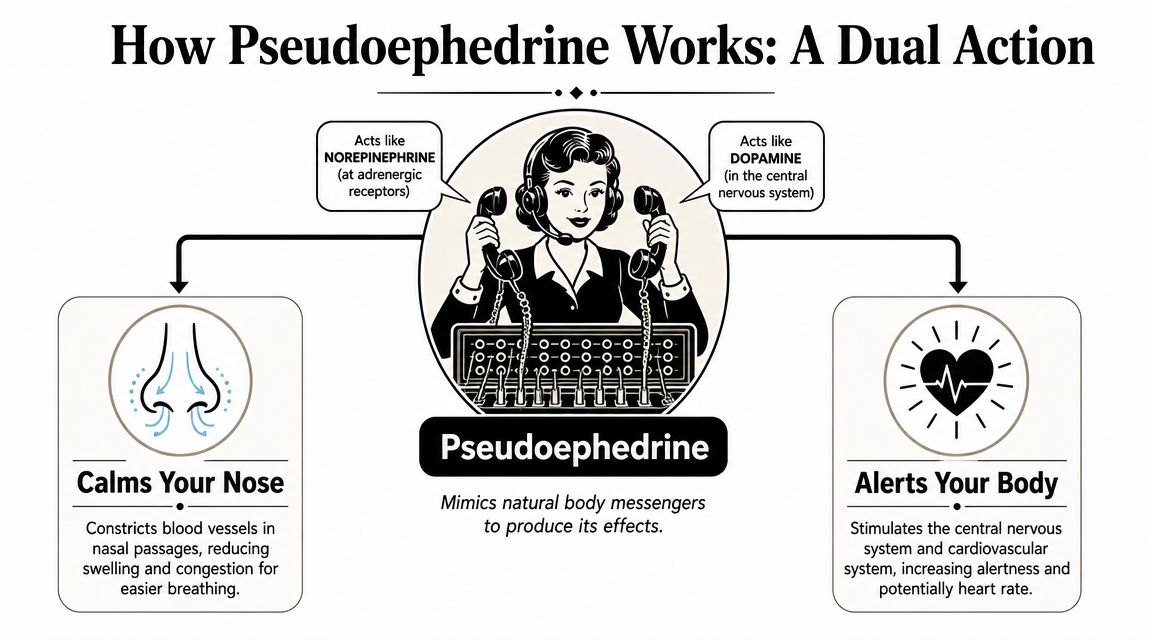
Pseudoephedrine is a sympathomimetic decongestant. In plain language, that means it acts a bit like your body's stress-response chemicals. According to the NHS explanation of pseudoephedrine side effects, its key effects come from stimulating the cardiovascular system and central nervous system, which is why effects can include tachycardia or palpitations, increased blood pressure, restlessness or anxiety, and insomnia.
Think of pseudoephedrine like a switchboard operator taking calls across the body.
One call goes to your nose. The message is, "Tighten those swollen blood vessels." That helps reduce congestion and opens the airway.
Another call can spill over to the rest of the system. Your brain may feel more alert. Your body may feel tense. Your heart may beat faster or more forcefully.
Why a decongestant affects more than your sinuses
Your body doesn't build a fence around your nasal passages and tell the drug to stay there. Once absorbed, pseudoephedrine can influence multiple tissues that respond to adrenergic stimulation.
That's why a medicine meant to help breathing through your nose can also make you feel:
- More awake: You may feel keyed up rather than relaxed.
- More restless: Sitting still feels harder.
- More heart-aware: A normal heartbeat becomes more noticeable.
- More sensitive to bedtime dosing: Taking it later in the day can interfere with sleep.
The fight or flight connection
The easiest analogy is caffeine, though pseudoephedrine isn't the same thing. Both can make the body feel stimulated. If you're already sick, dehydrated, anxious, or short on sleep, even a modest stimulant effect can feel amplified.
A clearer nose and a busier chest can happen from the same medication. That isn't contradictory. It's the same body-wide signal showing up in different places.
For people with wearable ECGs, this matters because a higher heart rate after pseudoephedrine may reflect the drug's stimulant effect rather than a brand-new heart problem. That doesn't mean every change is harmless. It means context matters, and timing matters.
The Common Ups and Downs Jitters Insomnia and More
Before getting to the heart-specific effects, it helps to normalize the symptoms many people notice first. Pseudoephedrine has a classic stimulant-style side effect pattern. Some reactions are uncomfortable. They aren't pleasant, but they are recognized.
A major review found that central nervous system stimulation and sleep disturbances can occur in more than 30% of users, and dry mouth, nose, or throat can occur in more than 15% of users taking pseudoephedrine, according to this review of pseudoephedrine safety and adverse effects.
What these common effects often feel like
If you're having trouble sleeping after taking it, you're not alone. If your mouth feels dry and you can't settle down, that's also a known pattern.
Common experiences include:
- Jitters or nervousness: You feel internally revved up, even if you're physically tired.
- Restlessness: Your body feels like it doesn't want to fully relax.
- Trouble sleeping: Your brain feels "on" when you're trying to wind down.
- Dryness: Mouth, nose, or throat can feel uncomfortably dry.
- Headache or dizziness: Some people feel off-balance or headachy rather than energized.
Why readers get confused here
People often assume an over-the-counter cold medicine should feel mild. So when pseudoephedrine causes sleeplessness or a shaky feeling, they think something unusual is happening.
But pseudoephedrine isn't acting like a soothing medicine. It's acting like a decongestant that also stimulates parts of the nervous system. Once you understand that, these reactions make more sense.
If the medicine makes you feel "wired," that doesn't automatically mean something dangerous is happening. It often means your body is sensitive to adrenergic stimulation.
What usually helps
If symptoms are mild, practical steps often matter:
- Take stock of timing: A dose taken late in the day is more likely to disturb sleep.
- Reduce extra stimulation: Coffee, tea, and energy drinks can make the experience feel worse.
- Hydrate: Dryness and feeling generally "off" can feel more intense when you're under-hydrated.
- Pause and reassess: If each dose makes you feel more uncomfortable, that medication may not be a good fit for you.
The important distinction is this. Feeling wired is very different from feeling medically unstable. The next section is about how to tell when your heart is giving you a known stimulant response and when the pattern deserves closer attention.
Why Your Heart Flutters on Pseudoephedrine
The heart reacts quickly to adrenergic signals. That makes it one of the most noticeable places where pseudoephedrine side effects show up.
Pseudoephedrine can raise heart rate and blood pressure, and rare but serious events such as tachycardia, arrhythmias, hypertension, and even stroke have been reported, as summarized in this overview of pseudoephedrine and its adverse effects. For a person who already uses a wearable ECG, that matters because the feeling of a medication side effect can look and feel like a new heart problem.
What a palpitation actually means
"Palpitations" doesn't name one specific rhythm diagnosis. It means you're aware of your heartbeat in a way you normally aren't.
That awareness can feel like:
- A fast steady beat
- A pounding beat
- A flutter
- An occasional skip or extra thump
- A beat that feels stronger than usual
Some people assume a strong heartbeat must mean an arrhythmia. Not necessarily. A stimulant can make a normal rhythm more noticeable.
Fast versus irregular
This is where wearables help.
A heart that's fast but regular often suggests the normal pacemaker is still in charge, just firing more quickly. That's commonly called sinus tachycardia. It can happen with pseudoephedrine, caffeine, fever, dehydration, anxiety, or poor sleep.
A heart that's erratic or clearly irregular is a different story. A wearable may not tell you the exact diagnosis, but it can show a pattern worth taking seriously. If you want broader background on what can trigger these sensations, this guide on what causes heart palpitations is useful context.
Why healthy people can still feel this
You don't need to have known heart disease to notice heart-related side effects from pseudoephedrine. Even short-term use can create a stimulant effect in people who are otherwise healthy.
The key question isn't just "Do I feel my heart?" It's "What pattern is happening, and how bad do I feel with it?"
A pounding heartbeat while you otherwise feel okay is different from a rapid, irregular sensation with chest symptoms or shortness of breath.
Using Your Watch ECG to Understand Palpitations
If you feel palpitations after taking pseudoephedrine, your wearable can help you capture the moment without turning the situation into a panic spiral.

A simple check-in routine
Start with your body, not the screen.
- Sit down and get still. If you're standing, walking, or talking, your heart rate may be up for reasons that have nothing to do with rhythm trouble.
- Notice the symptom clearly. Is it fast, pounding, fluttering, skipping, or uneven?
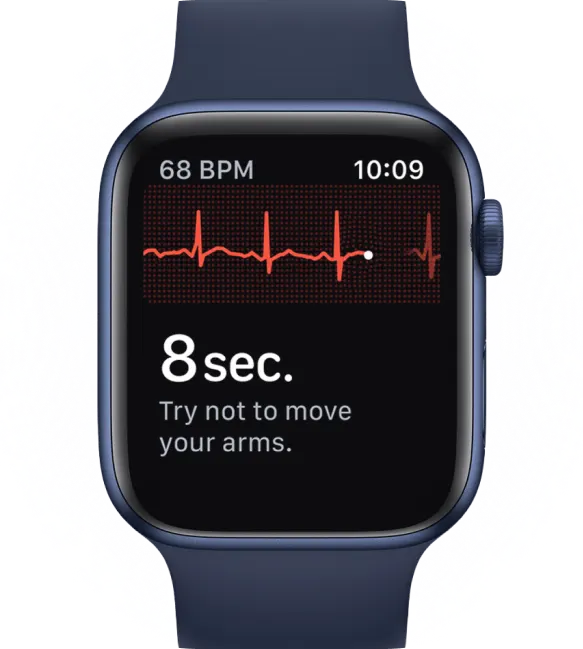
- Take an ECG recording on your device. Apple Watch, Fitbit, Kardia, and similar tools work best when your arms are supported and you stay relaxed.
- Label the recording. Use a note like "Palpitations after pseudoephedrine" so the context doesn't get lost later.


What to look for on the tracing
You don't need to become your own cardiology lab. You just want a basic pattern check.
Look for these broad categories:
- Fast and regular: This often fits a stimulant effect such as sinus tachycardia.
- Regular but forceful feeling: Your rhythm may be normal, but you're noticing each beat more.
- Irregular-looking pattern: This deserves more caution, especially if symptoms feel stronger.
- Unreadable recording: Sweat, motion, poor contact, or anxiety can produce messy strips. Take another calm recording if needed.
A single wearable ECG doesn't explain the cause by itself. It becomes more useful when you match the strip to your symptoms and the timing of the dose.
Don't over-check
One of the biggest traps is checking every few minutes. That usually increases anxiety and gives you a pile of noisy data.
A steadier approach works better:
- Take one recording during symptoms
- Take another only if the feeling clearly changes
- Compare with your usual baseline if you have one
If you want help interpreting a wearable strip, one option is Qaly's ECG app for Apple Watch, which lets users submit wearable ECGs for human review. That can be useful when the tracing looks unusual, the rhythm seems chaotic, or you want a second set of trained eyes on a medication-related episode.
A practical example
Say you take pseudoephedrine for congestion. An hour later, your watch shows a higher heart rate, and you feel your heart beating hard.
If the ECG shows a fast, even rhythm and you otherwise feel okay, that often fits a medication-triggered stimulant response. If the tracing looks obviously irregular and you also feel dizzy, breathless, or unwell, that's a different category and shouldn't be shrugged off.
When to Stop and Call for Help Immediately
Most pseudoephedrine side effects are unpleasant, not catastrophic. But some symptoms belong in the emergency lane, not the wait-and-watch lane.
The European Medicines Agency has linked pseudoephedrine to rare but serious conditions affecting brain blood vessels, including PRES and RCVS, and advises that people with symptoms such as sudden severe headache, confusion, seizures, or vision changes should stop the drug and seek urgent care, according to the EMA safety communication on pseudoephedrine risks.
Red flags that need urgent action
Stop taking pseudoephedrine and get immediate medical help if you have:
- Chest pain or chest pressure: Especially if it is persistent, intense, or paired with a fast heartbeat.
- Shortness of breath: A feeling that you can't catch your breath isn't something to watch casually.
- Fainting or near-fainting: Severe lightheadedness changes the situation.
- Sudden severe headache: This is especially important if it feels abrupt or unusual for you.
- Confusion, seizures, or vision changes: These are neurological warning signs.
- A rapid or irregular rhythm that doesn't settle: Particularly if you also feel weak, dizzy, or unwell.
What your wearable can and can't decide
A watch can support your decision-making, but it should never overrule severe symptoms. If you feel bad, act on the symptoms first.
If you want a clear framework for deciding when palpitations cross the line from annoying to medically important, this guide on heart palpitations and when to see a doctor can help you think through that threshold.
Severe symptoms beat uncertainty. You don't need a perfect ECG strip before seeking help.
Staying Safe A Checklist for High Risk Groups and Interactions
Some people tolerate pseudoephedrine without much trouble. Others should be much more cautious before taking it.
The NHS notes that pseudoephedrine is usually for short-term use, typically less than 7 days, and warns that it can raise blood pressure and heart rate, making it a poor fit for some people with heart problems. It also notes adult dosing limits for some formulations and that certain extended-release forms are not recommended for children under 12, as outlined in the NHS guidance on pseudoephedrine use.
Who should pause before using it
Extra caution makes sense if you have:
- High blood pressure: Pseudoephedrine can push it higher.
- A history of heart rhythm issues: A stimulant can muddy the picture if you already deal with palpitations.
- Heart disease or frequent pounding beats: Even predictable side effects may feel more significant in this setting.
- Kidney disease or major blood pressure instability: Regulators have called out these groups as needing added caution.
If you don't know your usual blood pressure, it may be worth getting your blood pressure monitored before you keep using a stimulant decongestant, especially if you're getting headaches, pounding heartbeats, or unusual flushing.
Interactions people often miss
Pseudoephedrine doesn't act in isolation. What you take with it matters.
Combining pseudoephedrine with caffeine can intensify nervousness, shaking, and irritability. More seriously, mixing it with MAOIs, a type of antidepressant, can cause a severe hypertensive crisis, according to this review of pseudoephedrine interactions.
That means the "medicine side effect" you blame on one tablet may be a stacked effect from:
- Coffee or energy drinks
- Another cold medication
- A prescription antidepressant
- Your own baseline sensitivity to stimulants
A practical safety checklist
Before taking another dose, ask yourself:
- Do I really need it right now? A mildly stuffy nose may not be worth a pounding heartbeat.
- Did the last dose make my heart feel clearly different? Repeated reactions matter.
- Am I adding stimulants on top of it? Caffeine can make the whole experience rougher.
- Do I have a rhythm history? If yes, medication effects deserve more respect.
- Am I watching a strange rhythm pattern? Medication triggers can overlap with real arrhythmias. This overview of medications that cause atrial fibrillation gives broader context on that issue.
The most useful mindset is simple. Use pseudoephedrine for the shortest appropriate time, stay within labeled dosing, and pay attention to how your own body responds. Over-the-counter doesn't mean one-size-fits-all.

Seeing irregular rhythms on your ECG wearable? Qaly offers human review of recordings from Apple Watch, Kardia, Fitbit, Samsung, and more.



.png)
.png)