





Key Takeaways

User Profile
Heart palpitations can feel like a fluttering, pounding, or flip-flopping sensation in your chest, neck, or throat. You might also feel as though your heart has briefly skipped a beat, which is often followed by a more forceful thud. These feelings can happen at any time, whether you're active or at rest.
Hello Heart Hero. If you've ever felt a strange thump, flutter, or race in your chest, you’re in the right place. That sudden, hyper-awareness of your own heartbeat can be unnerving, and it's easy to feel worried or alone when it happens. Many people feel that their concerns aren't fully heard when they talk about these fleeting feelings, which is why finding clear answers on your own is so important.
This guide is here to walk you through it calmly and clearly. We'll break down what heart palpitations actually feel like, why they happen, and what they might mean. The goal is to replace that anxiety with knowledge, so you feel more in control.
What Are These Strange Feelings?
Everyone experiences palpitations a little differently, but most of those sensations fall into a few common categories. Learning to recognize and describe them is the first step.
- A Flutter or Quiver: This can feel like a butterfly is trapped in your chest. It’s usually a light, rapid sensation.
- A Skipped Beat: This often feels like a distinct pause in your rhythm, immediately followed by a single, hard thud as your heart catches up.
- A Flip-Flopping Sensation: Some people describe this as if their heart is doing a somersault or turning over inside their chest.
- A Pounding or Racing Heart: This is a forceful, heavy, and fast heartbeat, similar to how your heart feels after a sprint, except you could be sitting perfectly still.
These feelings might last for only a few seconds or stick around for minutes. They’re often harmless, triggered by everyday things like stress or caffeine, but they can also be your body's signal that something else deserves a closer look.
The crucial first step is to simply notice and acknowledge what you are feeling without immediate panic. By learning to describe these sensations, you're gathering valuable information that empowers you to have a more productive conversation about your health.
You Are Not Alone in This Experience
Picture it: you’re trying to fall asleep when suddenly you feel it, a chaotic thumping in your chest. A pause, a hard kick, then a rapid beat. This is a classic description of palpitations, and it’s an experience shared by millions.
In fact, heart rhythm disorders are becoming more common. Atrial Fibrillation, one of the most well-known causes of palpitations, affected 33.5 million people globally in 2010. By 2019, that number had jumped to 59 million, and it's projected to keep rising. This isn't to scare you, but to show you that many others are navigating these same sensations and looking for the same answers. You can read more about the global surge in heart rhythm disorders here.
Decoding the Sensations Your Heart Might Be Telling You
Trying to describe a heart palpitation can feel a bit like trying to explain a dream. The feelings are often strange, fleeting, and just plain hard to put into words. This uncertainty is a big part of why palpitations can be so unsettling, but putting a name to these sensations is a powerful first step toward understanding what’s happening in your chest.
Think of your heart as a skilled drummer, usually holding down a steady, reliable beat. But every so often, even the best drummer can miss a beat or suddenly speed up the tempo. Getting familiar with these different rhythms can help you feel more in control and have a much clearer conversation with your doctor, especially when you feel like you have to prove what you're feeling.
This visual gives you a quick breakdown of the most common ways people experience palpitations, linking each feeling to a simple icon.
As the map shows, the single experience of "palpitations" can branch out into very different physical feelings, from a light flutter to a heavy, hard-hitting pound.
The Famous Skipped Beat or Thump
One of the most frequent descriptions is the feeling of a skipped beat. It usually plays out like this: you feel a brief pause where you expect a heartbeat, immediately followed by an unexpectedly forceful THUMP in your chest.
That sensation can really catch you off guard. It's like the drummer in a band missing a single beat, then hitting the next one extra hard to get back in rhythm. This experience is very often linked to something called a Premature Ventricular Contraction (PVC).
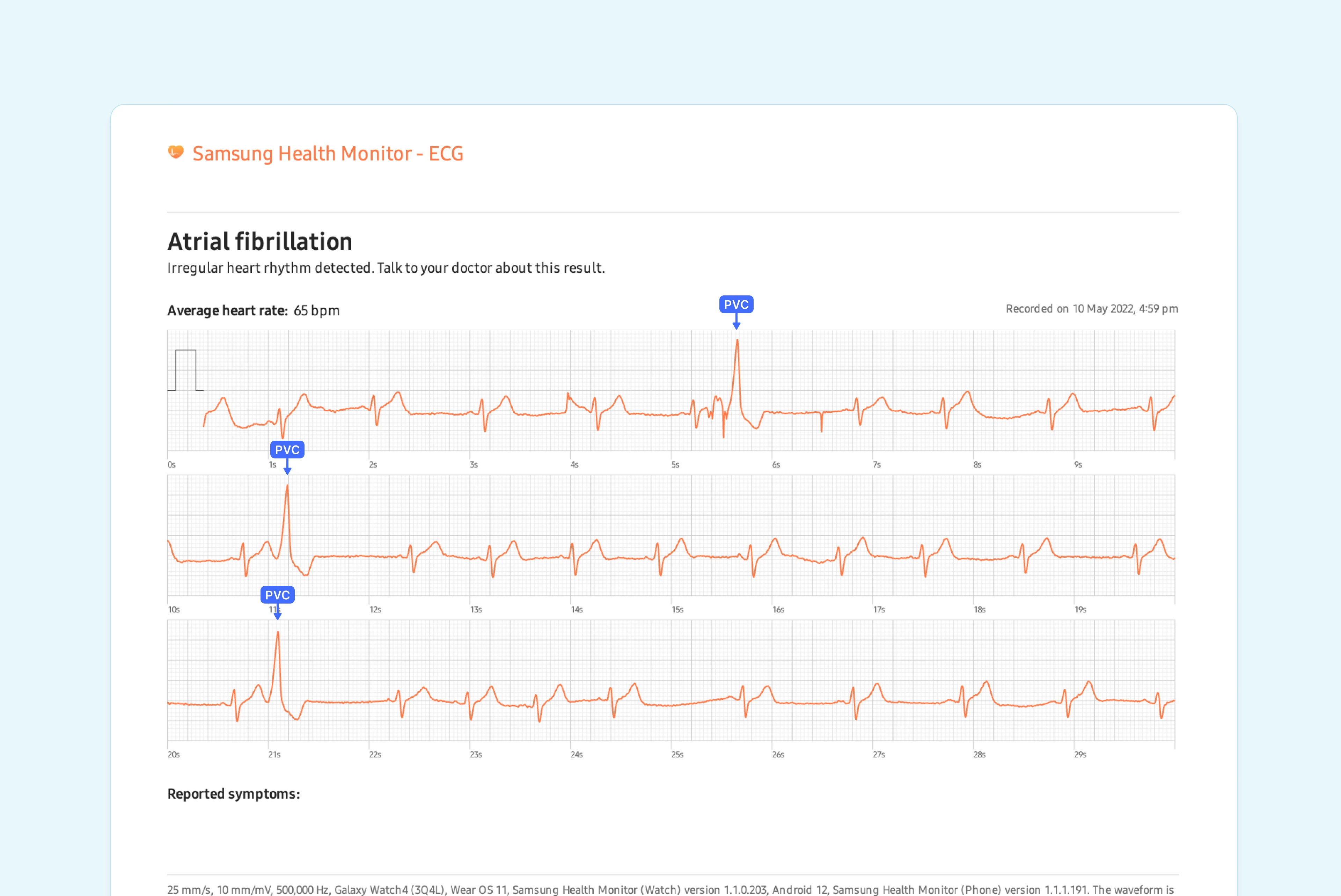
A PVC is an extra heartbeat that starts in one of the heart’s lower chambers (the ventricles) but fires a little earlier than it should. That noticeable pause you feel is your heart's electrical system resetting itself. The strong beat that follows happens because your heart's chambers had an extra split-second to fill with more blood, resulting in a more powerful contraction. While PVCs are often benign, tracking how frequently they pop up gives you and your doctor useful information.
For a deeper look, check out our guide on skipped heart beats and what they mean.
The Sudden On-and-Off Race
Ever felt your heart suddenly kick into high gear for no reason at all, beating incredibly fast and steady, only to stop just as abruptly? This isn't the gradual increase in heart rate you get from exercise; it's more like someone flicking a switch on and off.
-example.webp)
This sensation is a classic sign of Supraventricular Tachycardia (SVT). In SVT, an electrical signal in the heart’s upper chambers gets stuck in a short circuit, causing the heart to race, sometimes up to 150 to 250 beats per minute. Then, just as suddenly as it started, the circuit breaks, and your heart returns to its normal rhythm.
An episode of SVT can feel alarming because of its suddenness, but the key feature to notice is its abrupt start and stop. It’s a very distinct feeling from a heart rate that slowly climbs due to anxiety or exertion.
A Chaotic Quiver or Flutter
A different kind of rapid heartbeat feels less like a steady race and more like a disorganized, chaotic quivering. People often describe this sensation as a "bag of worms" or a "fish flopping around" in their chest. The rhythm isn't just fast; it’s completely irregular and unpredictable.
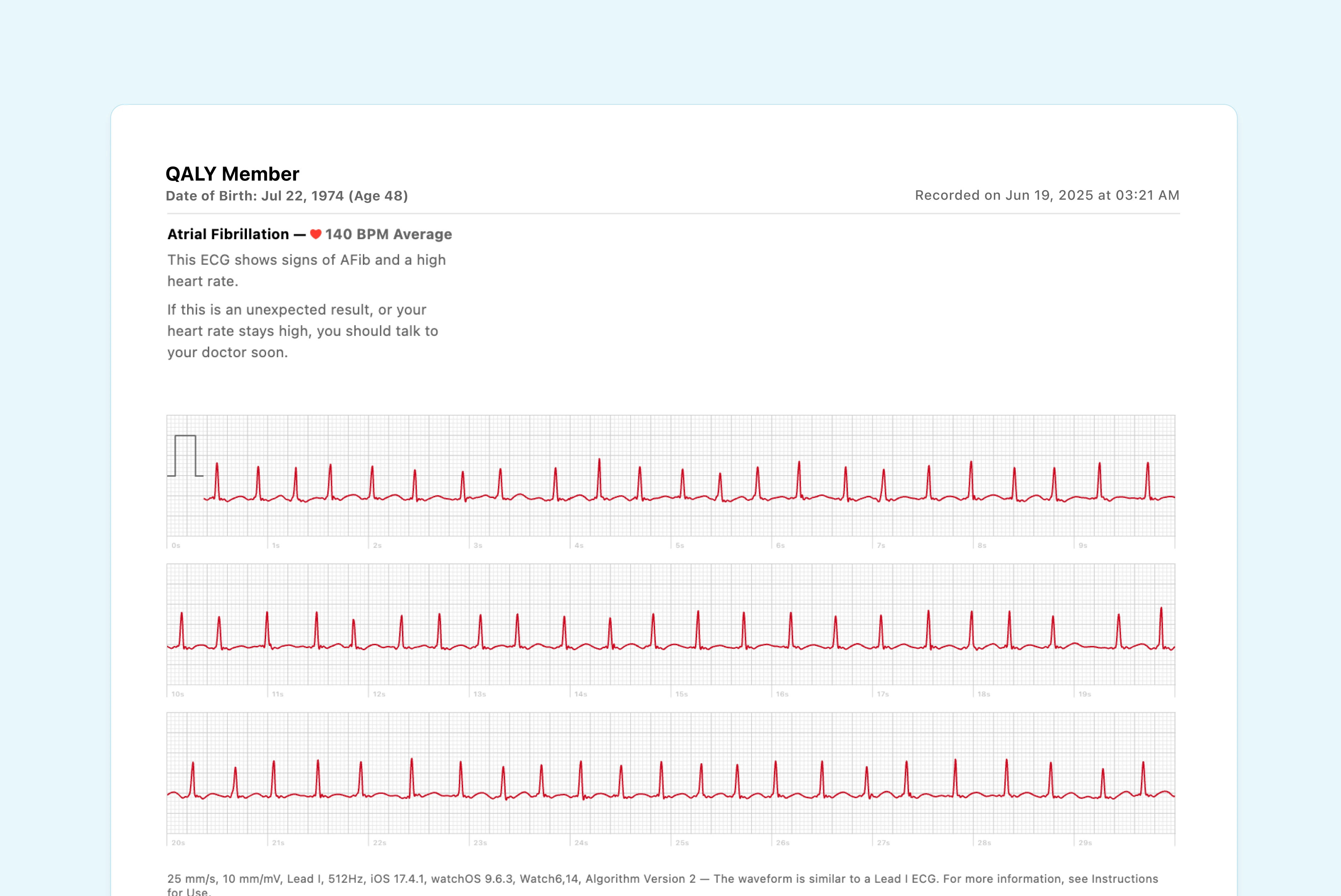
This feeling is often associated with Atrial Fibrillation (AFib), the most common type of irregular heartbeat. During an AFib episode, the heart's upper chambers (the atria) beat chaotically instead of contracting effectively. This sends irregular signals to the lower chambers, causing an erratic and often rapid pulse. Recognizing this specific sensation is important, as AFib is a condition that benefits greatly from early detection and management.


When Everyday Triggers Cause a Pounding Heart
Finally, sometimes what you feel isn't a specific arrhythmia but simply your heart beating harder and faster due to outside influences. You might feel a heavy, strong pounding in your chest that is perfectly in rhythm, just much more noticeable than usual.
Several common factors can bring this on:
- Stress and Anxiety: When you're stressed, your body releases adrenaline. This "fight or flight" hormone naturally makes your heart beat more forcefully.
- Caffeine: Stimulants like coffee, tea, and energy drinks can directly affect your heart's electrical system, making it more sensitive and prone to that pounding feeling.
- Dehydration: When you're low on fluids, your blood volume can decrease. This forces your heart to work harder and pump more forcefully to circulate blood through your body.
- Medications: Some over-the-counter cold medicines and even certain prescription drugs can list heart palpitations as a side effect.
Learning to connect these pounding sensations to your daily habits can be incredibly empowering. It helps you pinpoint your personal triggers and make small adjustments that can bring you significant peace of mind.
When to Pay Closer Attention And When to Seek Help
While most heart palpitations are fleeting and harmless, it’s completely natural to wonder if that strange flutter or thump is a sign of something more serious.
Think of it like a smoke alarm going off. Most of the time, it's just some burnt toast. But you still need to know the difference between that and a real fire. Learning to recognize your body's own "fire alarms" is an act of empowerment, not fear.
The key often isn't the palpitation itself, but what comes with it. A lone flutter is usually just a brief electrical hiccup. But when palpitations show up with other symptoms, it’s your body’s way of saying, "Hey, we might need some help here."
Red Flag Symptoms to Watch For
If your heart palpitations happen alongside any of the following feelings, it’s a clear signal to get medical advice right away. These symptoms suggest your heart may not be pumping blood as effectively as it should be.
- Dizziness or Feeling Lightheaded: This can happen if an irregular rhythm causes a temporary drop in blood pressure, which means less blood flow to your brain.
- Fainting (Syncope) or Almost Fainting: This is a more serious version of dizziness and is always a reason to get checked out immediately.
- Significant Shortness of Breath: If you feel like you just can't catch your breath, especially without exerting yourself, it can be a sign your heart and lungs are struggling.
- Chest Pain, Pressure, or Discomfort: Any pain or tightness in your chest during a palpitation episode should be taken very seriously.
If you experience chest pain along with palpitations, it’s important to understand the different potential causes. In some cases, chest pain can be a sign of a heart attack, which may be reflected in your troponin levels during a medical evaluation.
When Anxiety and Palpitations Overlap
Sometimes, the intense physical sensations of a rapid, pounding heartbeat can be so overwhelming that they trigger intense fear. This creates a confusing cycle where it's hard to tell what came first, the palpitation or the anxiety.
The symptoms can feel very similar to those of a serious heart issue. It's helpful to understand if what you're feeling might be related to a panic attack, which often involves a racing heart, shortness of breath, and dizziness. Differentiating between the two can be difficult in the moment, which is why capturing data during an episode is so valuable for getting a clear answer later.
Ultimately, you are the leading expert on your own body. Trust your gut. If a palpitation episode feels different, lasts longer than a few minutes, or is happening more often, it’s always the right decision to speak with a professional. Acting on these signals is a sign of strength, ensuring you get the care and peace of mind you deserve.
Using Wearables to Capture Your Heart's Story
It's one of the most frustrating parts of dealing with palpitations: they almost seem to disappear just before you walk into the clinic. You're left trying to describe a fleeting, invisible feeling from memory, which can feel incomplete or even make you second-guess what you felt. This is where many people feel dismissed by the healthcare system.
But what if you could capture that exact moment your heart acts up and show it to your doctor?
This is where devices like the Apple Watch, Fitbit, Samsung Galaxy Watch, and personal ECG monitors like Kardia can make a world of difference. They put powerful health tools right on your wrist, empowering you to move beyond simply telling your doctor what you felt and instead showing them the data.
The real breakthrough here is the ability to record an electrocardiogram, or ECG, the very moment you feel a palpitation. It’s not about diagnosing yourself. It's about collecting clear, objective evidence that bridges the gap between a vague symptom and a concrete answer.
Taking Action in the Moment
The next time you feel that familiar flutter, skip, or pound, you have an opportunity to record what's happening. The process is designed to be quick and straightforward, right when symptoms strike.
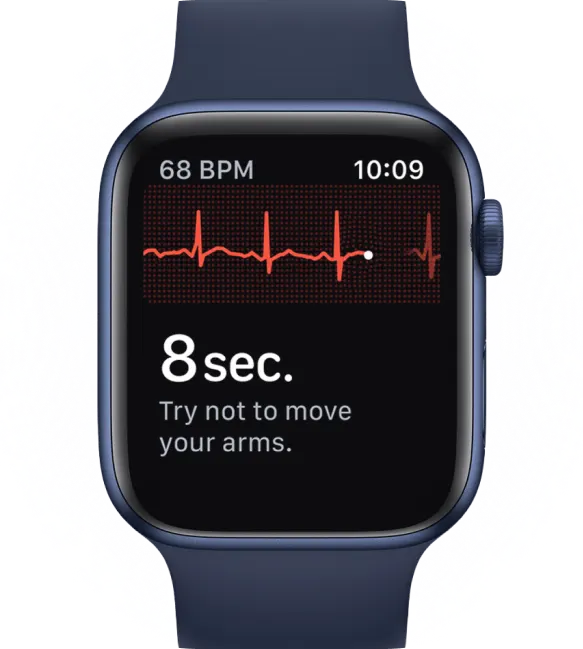
For example, learning how to take an ECG with your Apple Watch is a simple process that only takes 30 seconds. You just open the app, rest your arm on a table, and place a finger on the watch's crown. That's it. In less than a minute, you have a medical-grade recording of your heart’s electrical activity during the exact event that worried you.
This immediate action turns you from a passive patient into an active partner in your own healthcare. You’re gathering crucial evidence that was previously impossible to get outside of a hospital or a specialized heart clinic.
More Than Just a Heartbeat
Capturing the ECG is the most important step, but the context surrounding it is just as vital. Think of yourself as a detective gathering clues for your own case file. After you record your ECG, take a moment to add a few notes.
The data from your wearable is powerful, but your personal experience completes the picture. A simple note about what you were doing and how you were feeling provides the context a doctor needs to make a more accurate assessment.
Just ask yourself a few quick questions:
- What was I doing? (Sitting at my desk, walking upstairs, lying in bed?)
- What did I just have? (A large coffee, a big meal, alcohol?)
- How was I feeling? (Stressed about work, anxious, perfectly calm?)
- What did it feel like? (A flutter, a skipped beat, a hard pound?)
This extra bit of information transforms a simple rhythm strip into a detailed account of the episode. It helps your healthcare provider see the bigger picture, giving them a much richer understanding of your personal triggers and patterns.
Of course, making sure your device is ready when you need it is key. For those with an Apple Watch, for example, finding comfortable and compatible bands for your Apple Watch can help ensure a good fit so it's always secure and ready to capture data. By taking these small steps, you build a powerful record for your own health, filled with both objective data and personal insights.
Getting Clear Answers from Your ECG Data
You’ve done it. You felt that strange flutter, grabbed your watch or handheld device, and captured a 30-second ECG. But now you’re looking at a screen full of squiggly lines with a label that might say "Normal Sinus Rhythm," "Inconclusive," or even "Possible Atrial Fibrillation."
While this is a huge step forward, it can feel like trading one type of uncertainty for another. What do these labels really mean? And what if the reading says "unclassified"? This is where the frustration often kicks in. You've captured the data, but the automated interpretation can feel vague, leaving you with more questions than answers.
This is where a modern approach comes in, one designed to bridge the gap between your personal device and a real human expert who can interpret what your heart is actually doing.
Beyond the Automated Guess
Services like Qaly connect you with certified cardiographic technicians who are trained to analyze ECGs from any wearable device. This isn't an algorithm making its best guess; it's a real, trained professional looking at your specific heart rhythm.
The process is simple. You upload the ECG you just took, and within minutes, you get a detailed interpretation from an expert. This happens 24/7, whether your palpitation strikes in the middle of a busy workday or wakes you up at 3 a.m.
This approach gives you a few powerful advantages:
- Speed and Accessibility: You get answers in minutes, not days or weeks, which can really help reduce the anxiety that comes with waiting.
- Human Expertise: A certified technician can spot nuances and patterns that an automated system might miss, providing a much more reliable analysis.
- Comprehensive Screening: The analysis screens for dozens of different arrhythmias, going far beyond the limited capabilities of most built-in watch apps.
Think of it like this: your watch’s built-in algorithm is like a spell checker. It’s great at catching common, obvious errors. A human technician, on the other hand, is like a professional editor who understands grammar, context, and nuance. They provide a much deeper and more accurate review of your heart’s story.
Unlocking Deeper Insights from Your Data
A true expert analysis does more than just apply a label like "PVCs" or "SVT." It gives you the raw data points that doctors actually use to assess heart function. This means getting the crucial measurements from your ECG waveform.
These are known as heart rate intervals, and they measure the timing of your heart's electrical signals. You’ll receive precise readings for key intervals like:
- PR Interval: This measures how long it takes for the electrical signal to travel from your heart's upper chambers (atria) to the lower chambers (ventricles).
- QRS Interval: This shows how quickly the signal travels through your heart's lower chambers.
- QTc Interval: This measures the total time it takes for your heart's lower chambers to contract and then fully recharge before the next beat.
These numbers might seem technical, but they are incredibly valuable. Tracking them over time allows you to see if there are any subtle changes or trends developing. It moves you from simply reacting to palpitations to proactively monitoring your heart health in a detailed, measurable way. If you're curious about the fundamentals, our guide on how to read an ECG offers a great starting point.
This level of detail completely transforms the conversation you have with your doctor. Instead of just saying, "I sometimes feel a flutter," you can walk in with a detailed, shareable report. You can show them a series of human-reviewed ECGs, complete with interval measurements, that document exactly what do heart palpitations feel like for you, backed by concrete data. This turns a conversation about vague feelings into a productive discussion based on real evidence, empowering you to take a leading role in your own care.
Your Next Steps Toward Peace of Mind
Dealing with heart palpitations can be a bit unnerving, but just by reading this, you’ve already taken the biggest step: seeking to understand what’s going on. Knowing that feeling a flutter, skip, or pound is an incredibly common experience is your starting point for moving forward with clarity instead of anxiety.
You don’t have to be stuck in that cycle of worry, guessing what every little sensation means. The path to getting answers is actually pretty straightforward. It’s all about creating a simple, clear plan so you can be your own best health advocate.
Your Four-Step Action Plan
Think of this as your personal roadmap for turning those strange feelings into solid information. Each step builds on the last, helping you create a clear picture of your heart health to share with your doctor.
- Notice and Name Your Feelings. First, just pay attention. When a palpitation hits, what does it actually feel like? Is it a quick skip followed by a hard thud? Or more of a chaotic, fast flutter? Also, make a mental note of any other symptoms that tag along, like feeling dizzy or a bit breathless.
- Capture the Moment. The next time you feel an episode start, grab an ECG on your watch or wearable device. This simple action turns a fleeting, subjective feeling into a piece of objective data that can actually be analyzed. It's like taking a snapshot of the evidence right as it happens.
- Get an Expert Interpretation. Don't let an "inconclusive" or confusing automated reading be the final word. Use a service you trust to have a certified human expert look at your ECG. This gets you a fast, clear interpretation of what your heart's rhythm was actually doing at that exact moment.
- Share Your Story with Your Doctor. Walk into your next appointment feeling prepared. When you have a detailed, human-reviewed report in hand, you can have a much more productive, focused conversation. You’re no longer just trying to describe a feeling; you’re showing them clear data.
This simple process completely changes the dynamic. You go from being a passenger, anxiously waiting for answers, to being in the driver's seat of your own health journey, equipped with the tools and information to find your way.
By following these steps, you’re building a bridge between what you feel in your body and the medical expertise you need. It's a powerful way to make sure your concerns are heard, understood, and addressed with the clarity you deserve. That’s the real path to peace of mind.
Frequently Asked Questions About Heart Palpitations
It's completely normal to have questions when your heart does something you don't expect. The sensations are strange, and the "what if" can be the hardest part. Here are some straightforward, human answers to the questions we hear all the time.
Can Stress And Anxiety Really Cause Physical Heart Palpitations?
Yes, absolutely. The connection between your mind and your heart is incredibly powerful. When you feel stressed, anxious, or are suddenly startled, your body kicks into "fight or flight" mode. This floods your system with hormones like adrenaline.
Think of adrenaline as flooring the gas pedal on your heart. It instantly makes your heart beat faster and more forcefully to get your body ready for action. For you, this sudden, noticeable pounding in your chest feels exactly like a heart palpitation.
While it’s always a good idea to rule out an underlying heart rhythm issue with your doctor, many people find that managing their stress significantly cuts down on these feelings. Using your watch to grab an ECG right when you're feeling anxious can be a game-changer, helping you and your doctor see if it's truly anxiety or a specific arrhythmia.
Why Do I Notice My Heart Palpitations More At Night?
This is something we hear all the time, and there are a couple of simple reasons why it happens. First, when you lie down to sleep, your world gets quiet. The constant noise and distractions of your day finally fade away.
Without all that external stimulation, you suddenly become much more aware of your body’s internal orchestra, including the rhythm of your heartbeat. A flutter or a skip that you might not even register during a busy afternoon can feel loud and impossible to ignore in the silence of your bedroom.
On top of that, your sleeping position can play a role. Lying on your left side, in particular, can sometimes physically press on the heart or stimulate the vagus nerve. This is a major nerve that helps control your heart rate, and for some people, this pressure or stimulation can be enough to trigger palpitations.
My Watch's ECG Result Says It Is Inconclusive. What Should I Do?
Seeing an "Unclassified" or "Inconclusive" result on your watch ECG can be really frustrating. It simply means the watch's built-in algorithm couldn't confidently name the rhythm it saw.
This can happen for a few reasons. Your heart rate might have been too high (over 120 bpm) or too low (under 50 bpm), which is outside the algorithm's programmed limits. There could also have been too much motion or electrical "noise" in the recording, or you might have a heart rhythm that the algorithm just isn't designed to recognize.
This is exactly where having a human expert look at your ECG makes all the difference. That same "Unclassified" ECG can be uploaded for a professional analysis. A certified human technician can see the subtle patterns and nuances that an automated system misses, giving you a clear, reliable interpretation, often in just a few minutes.

Feeling unsure about what your watch's ECG is telling you? With the Qaly app, you can send any ECG from any device to a certified expert for analysis in minutes, 24/7.



.png)
.png)