


Key Takeaways

User Profile
Hello Heart Hero.
You took a cough medicine because you wanted one simple thing. Relief. Then an hour later, your chest feels a little off. Maybe it's a flutter. Maybe your pulse feels faster than usual. Maybe your Apple Watch keeps drawing your attention back to your heart rate, and now you're wondering whether this is a harmless medication effect or something you shouldn't ignore.
That kind of moment can feel very unsettling. It gets worse when you've already had experiences where your symptoms were brushed aside or explained too vaguely to be useful. If that's where you are, your concern makes sense.
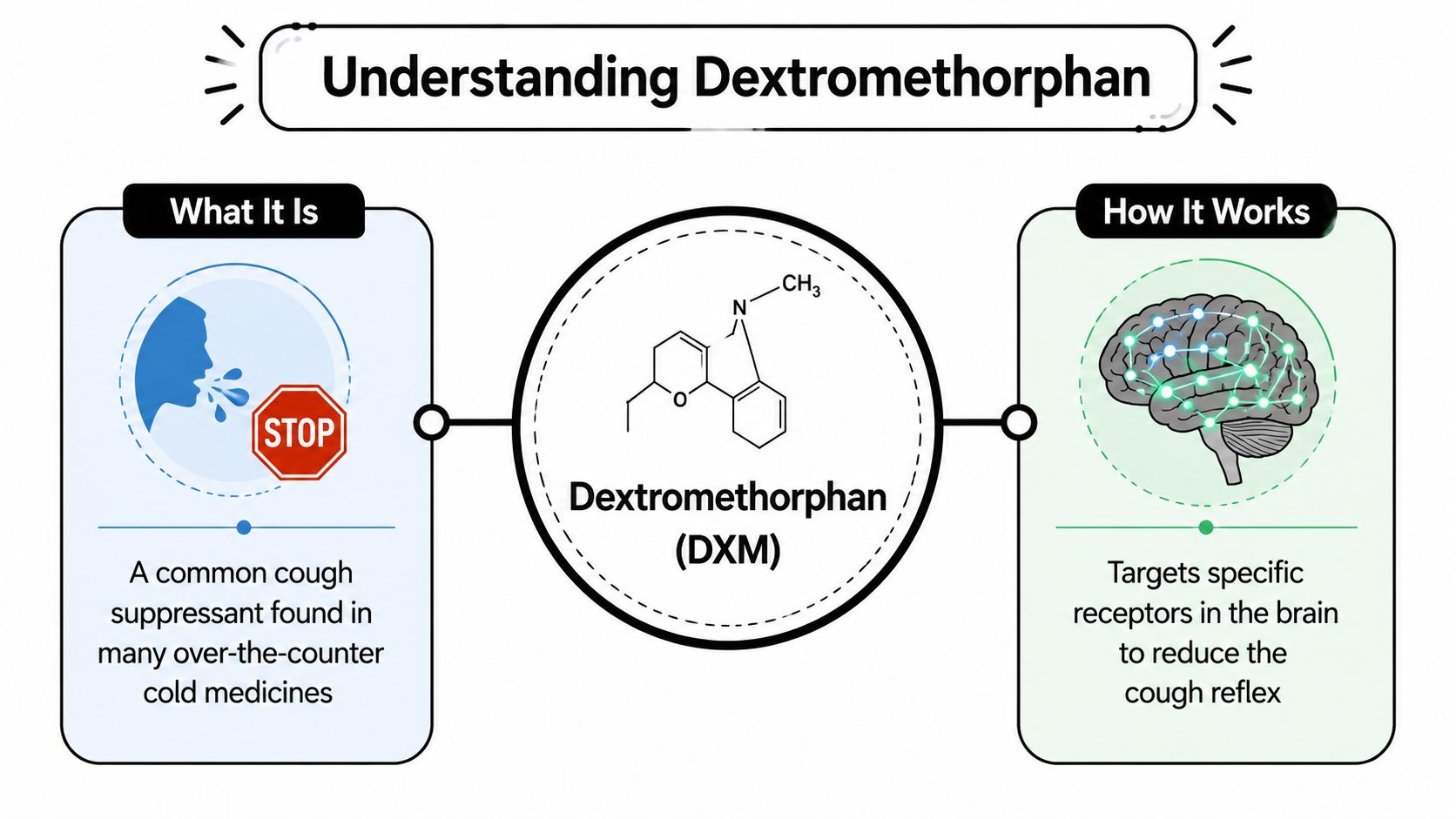
Dextromethorphan, often shortened to DXM, is a common cough suppressant found in many over-the-counter cold medicines. It helps many people when used as directed, but it can also cause side effects that affect the brain, stomach, and heart. Some are mild and temporary. Others deserve much closer attention.
An Introduction to Dextromethorphan and Your Heart
A lot of people don't realize they took dextromethorphan at all. They just grabbed a nighttime cold syrup, a cough gel cap, or a multi-symptom flu medicine from the pharmacy shelf. Then later they notice a racing heartbeat or a strange chest sensation and assume something is seriously wrong.
Sometimes it's not dangerous. Sometimes it needs urgent care. The hard part is that palpitations can feel dramatic even when the rhythm is still simple sinus tachycardia, and they can also feel subtle when something more meaningful is happening. That uncertainty is what creates so much anxiety.
If you've ever searched for what causes heart palpitations, you've probably seen how many different things can trigger the same sensation. Stress, dehydration, fever, lack of sleep, caffeine, and medications can all overlap. A cold itself can raise your heart rate. The medicine you took for that cold can add another layer.

You don't need to panic every time a medication changes how your heartbeat feels. But you also shouldn't ignore a new symptom just because the medicine was sold over the counter.
The side effects of dextromethorphan sit on a spectrum. At one end are the common, expected effects like drowsiness or mild dizziness. At the other end are overdose symptoms, medication interactions, and heart-related warning signs such as fast heartbeat, chest discomfort, or a rhythm that doesn't feel right.
For people who already monitor their heart with an Apple Watch, Fitbit, Samsung watch, Kardia, or another wearable ECG, this can become a strength instead of another source of worry. If you know what to look for, your device can help you document what happened, when it happened, and whether your rhythm stayed stable.
What Is Dextromethorphan and How Does It Work
Dextromethorphan is a cough suppressant. Its main job is to quiet the cough reflex, which is why it's included in so many cold and flu products. It doesn't treat the infection itself. It reduces the urge to cough.
A simple way to think about it is this. DXM acts like a key. At normal doses, it fits the lock involved in suppressing cough. That's the intended effect. But that same key can interact with other brain pathways too, especially when the dose gets higher.
Why one cough medicine can cause so many different feelings
DXM works in the brainstem to reduce coughing, but it also has effects that can change perception, alertness, coordination, and mood. That helps explain why one person feels only a little sleepy while another feels dizzy, wired, detached, or uncomfortable in their body.
At higher doses, the effects can become much more serious. According to StatPearls on dextromethorphan toxicity, doses of 600 mg or higher can lead to complete dissociation and coma. The same source also summarizes a dose-based pattern from a review in which 1.5 to 2.5 mg/kg caused perceptual changes, 2.5 to 7.5 mg/kg caused motor and cognitive impairment, 7.5 to 15 mg/kg produced intense hallucinations and dissociation, and doses above 15 mg/kg were associated with violent behavior and possible death from cardiac or respiratory arrest.
Why the dose matters so much
Often, readers become confused. They think, "If high doses can do all that, does one normal dose mean I'm in danger?" Usually, no. The key point is that DXM effects are strongly dose dependent.
That means the side effects of dextromethorphan aren't all equally likely at every amount. Normal labeled use is very different from taking too much, repeating doses too soon, or combining multiple products that each contain DXM.
Practical rule: If you're taking any cold medicine, always check the active ingredients before adding a second one. The risk isn't only "too much cough syrup." It's accidentally stacking the same ingredient twice.
Common and Mild Dextromethorphan Side Effects
Individuals who use dextromethorphan as directed don't develop severe problems. They feel a bit off for a while, then improve as the medicine wears off. That's not pleasant, but it is different from a dangerous reaction.
The most common mild effects tend to involve the nervous system and balance. You might feel sleepy, groggy, lightheaded, or slightly dizzy. Some people describe it as feeling less steady on their feet or a little disconnected in a way that's annoying but not extreme.
What mild side effects can feel like
These are the kinds of symptoms people often notice first:
- Drowsiness: You feel slower, less sharp, or more ready for sleep than expected.
- Lightheadedness: Standing up or moving around may feel strange for a short time.
- Mild dizziness or unsteadiness: You may feel wobbly or less coordinated.
- Upset stomach: Nausea can happen, and some people may vomit.
Those effects can feel alarming if you weren't expecting them, especially if you're already sick, dehydrated, or anxious. But on their own, mild symptoms don't automatically mean harm.
How to tell expected effects from a red flag
A mild side effect is usually temporary, limited, and not rapidly worsening. You may dislike it, but you're still oriented, breathing comfortably, and able to function. Your heart might feel a little more noticeable, but not wildly irregular or accompanied by chest pain, fainting, or confusion.
A more concerning pattern is when symptoms cluster together and intensify. For example:
- A simple mild reaction might be sleepiness and slight dizziness after one labeled dose.
- A concerning reaction might be agitation, sweating, a pounding pulse, chest discomfort, and confusion after taking more than one cold product.
If a symptom feels new but mild, it's reasonable to pause, sit down, hydrate, and watch the trend. If it feels intense, escalating, or paired with breathing trouble or major mental changes, treat it differently.
This distinction matters because people often dismiss all symptoms as "just side effects" or assume every symptom means emergency. The truth sits in the middle. A lot of side effects of dextromethorphan are mild. A smaller set should never be shrugged off.
Serious Heart-Related Side Effects to Watch For
If you came here because your chest feels strange, this is probably the section you needed most.
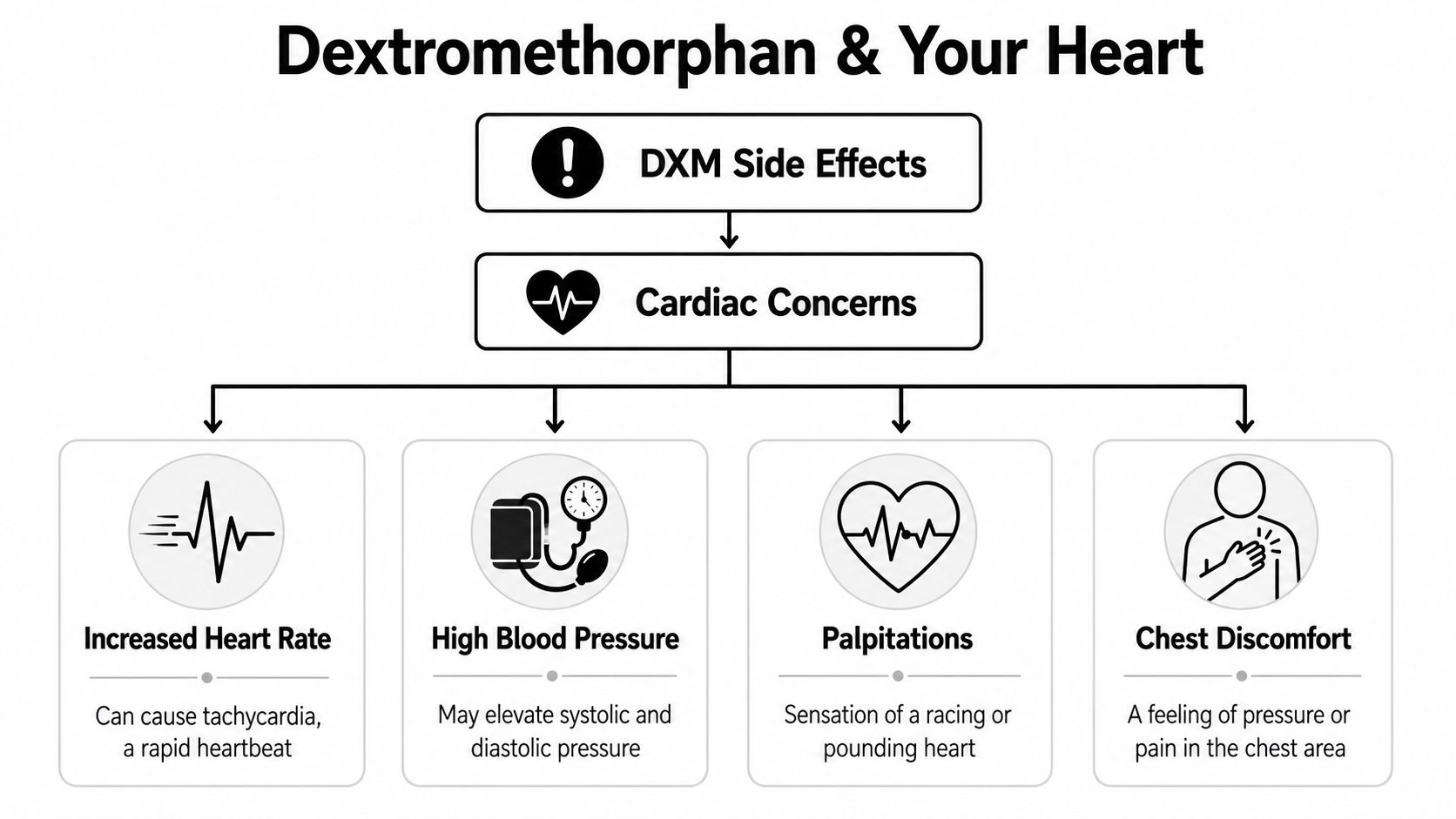
Dextromethorphan can affect the cardiovascular system, especially when the dose is high, when the product is combined with other stimulating ingredients, or when your body is already under stress from illness, fever, dehydration, or another medication. The symptom many people notice first is a fast heartbeat.
MedlinePlus and WebMD list fast heartbeat, dizziness, and unsteadiness among side effects or overdose symptoms, and the American College of Medical Toxicology notes that DXM toxicity can progress from stimulation to tachycardia, hyperthermia, seizures, and shock, as summarized on MedlinePlus drug information for dextromethorphan.
What tachycardia and palpitations can feel like
Tachycardia means a heart rate over 100 beats per minute. In real life, it may feel like pounding, racing, or your heart beating harder than it should for the situation. If you're lying still and your pulse suddenly feels quick and strong, that's often what people are noticing.
Palpitations are a sensation, not a diagnosis. They can feel like:
- Fluttering: a light rapid vibration in the chest
- Skipped beats: a pause followed by a thump
- Pounding: each beat feels heavy or forceful
- Racing: the whole rhythm feels accelerated
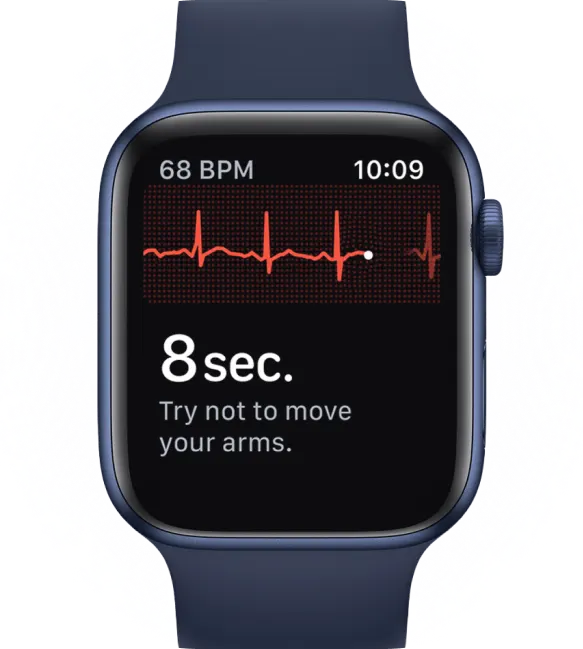
A wearable ECG can help separate feeling from rhythm. Sometimes the sensation is strong, but the tracing still shows sinus rhythm. Other times the wearable catches ectopic beats or a faster rhythm that deserves follow-up.

What wearable ECG users should pay attention to
If you use an Apple Watch, Kardia, Fitbit, Samsung watch, or another home ECG tool, try to capture a tracing during symptoms instead of only checking your pulse after the feeling has passed.
Look for patterns, not one isolated number:
- Rate trend: Is your heart rate briefly increased, or staying fast while you're resting?
- Symptom timing: Did the episode start soon after a dose?
- Rhythm regularity: Does the tracing look steady and regular, or erratic and unusual?
- Associated symptoms: Are you also feeling chest pressure, near-fainting, marked shortness of breath, or severe dizziness?
People also worry about whether a medicine could affect the heart's electrical recovery phase. That's where QT-related concerns enter the picture. If you've heard about that before, this overview of drugs that cause QT prolongation can help you understand why medication reviews matter when a new symptom appears after taking a cold remedy.
When chest discomfort is not something to brush off
Chest discomfort from medication can be vague. It may feel like pressure, tightness, ache, or just "my chest doesn't feel normal." Some cases turn out to be anxiety, reflux, muscle tension from coughing, or a brief increase in heart rate. But you shouldn't self-diagnose chest pain if it is significant, persistent, or paired with other warning signs.
Get urgent medical attention if the chest symptom comes with:
- Breathing difficulty
- A very rapid or clearly irregular heartbeat
- Fainting or near-fainting
- Severe weakness or confusion
That doesn't mean every flutter is dangerous. It means heart symptoms deserve respect, especially when they are new, escalating, or hard to explain.
Dangerous Drug Interactions and Serotonin Syndrome
One of the most important things to know about dextromethorphan is that the risk isn't always solely from the medicine itself. Sometimes the problem is the combination.
DXM can interact with medications and substances that also affect serotonin. That includes certain antidepressants. It can also become risky when someone takes more than one cold product without realizing both contain dextromethorphan.
GoodRx and the American College of Medical Toxicology identify serotonin syndrome as a serious risk with dextromethorphan, and note that it can range from mild tremors to severe seizures, hyperthermia, and shock, as described in GoodRx's review of dextromethorphan side effects.


Real-world combinations that trip people up
Confusion often arises in everyday life. Someone is already taking an antidepressant. They get sick, buy a cold medicine after work, and don't think much about the ingredients. Or they take a cough syrup at home, then later take a nighttime flu product that contains DXM too.
Common risky situations include:
- DXM plus an antidepressant: Especially medicines that increase serotonin
- Two cold products at once: One for cough, one for "multi-symptom relief," both containing DXM
- Alcohol plus DXM: This can worsen sedation and impairment
- MAOI use with DXM: This is a combination that needs extra caution
If you're on an antidepressant and trying to think through your medication list, this article on the side effects of Prozac can help you recognize how serotonergic medicines may overlap with other drugs.
What serotonin syndrome can look like at the start
The earliest symptoms aren't always dramatic. That's why people miss them. A person might just feel oddly restless, sweaty, shaky, keyed up, or mentally uncomfortable. Their heart may beat faster. They may assume it's anxiety or that the cold medicine "hit them weird."
Then the picture can intensify. Concerning features include:
- Agitation or marked restlessness
- Tremor or muscle twitching
- Heavy sweating
- Fast heartbeat
- Confusion
- High fever
- Seizures
Serotonin syndrome is one of those conditions where "wait and see" can become the wrong move if symptoms are building quickly.
The practical safety habit that matters most
Read the active ingredients section every single time, even if the brand name looks familiar. That's the simplest way to avoid accidental stacking.
A few practical checks help:
- Check your daily medication list: If you take an antidepressant, don't guess about compatibility.
- Avoid duplicate symptom products: A cough syrup plus a "cold and flu" liquid may overlap more than you think.
- Ask a pharmacist when sick and tired: The label is easy to misread when you're exhausted.
For many people, the danger isn't intentional misuse. It's a very ordinary sequence of small decisions made while feeling miserable.
Understanding Dextromethorphan Overdose Risks
The difference between a normal dose and an overdose is not subtle. The side effects can change from uncomfortable to dangerous very quickly.
Poison Control reports that DXM abuse leads to about 6,000 emergency room visits each year, and about half involve people aged 12 to 25. The same source also notes that DXM is found in more than 120 over-the-counter cough and cold products, and that high doses can cause hallucinations, fast heart rate, high blood pressure, psychosis, seizures, coma, and even death. It also notes that many severe deaths occur when DXM is combined with other drugs rather than from DXM alone. You can review those details on Poison Control's dextromethorphan page.
How overdose symptoms escalate
At lower misuse levels, a person may seem stimulated, euphoric, clumsy, or mentally altered. As the amount rises, the effects can become much more severe.
Possible overdose features include:
- Confusion or agitation
- Slurred speech or impaired coordination
- Hallucinations or dissociation
- Fast heart rate
- High blood pressure
- Seizures
- Coma
One reason overdose can be missed at first is that the early stage doesn't always look like a classic poisoning emergency. It may look like someone is just acting strangely, intoxicated, or detached.
Why "more" is especially risky with DXM
People sometimes redose because the first dose didn't seem to help enough. Others combine products without realizing how much DXM they have already taken. That is where trouble starts.
A useful overview is below.
The most important safety habit is simple. Follow the labeled dose exactly and avoid duplicate products. If someone may have taken too much, especially with confusion, chest symptoms, breathing changes, seizures, or severe agitation, don't wait for it to pass on its own.
When to Seek Medical Care and How to Monitor Your Heart
At home, your job isn't to diagnose every rhythm. It's to recognize patterns, spot red flags, and collect useful information.
Mild symptoms like temporary drowsiness, slight dizziness, or feeling a little off may only need rest, hydration, and time. A more serious symptom cluster needs a different response.
Get urgent help if these show up
Seek prompt medical care if you develop:
- Difficulty breathing
- A very rapid or clearly irregular heartbeat
- Chest pain or strong chest pressure
- Confusion, hallucinations, or severe agitation
- High fever
- Seizures
- Fainting or near-fainting
If you took dextromethorphan along with an antidepressant or another serotonergic medicine and now feel sweaty, agitated, shaky, and tachycardic, don't minimize it. That combination deserves urgent attention.
How to use your wearable ECG wisely
A wearable ECG is most helpful when you use it during symptoms, not hours later when everything has settled down. If your watch or handheld device allows a rhythm recording, sit still and capture the tracing while the sensation is happening.
Then note a few basics:
- Time of episode: Write down when the symptom started.
- Dose timing: Record when you took the medicine.
- What you felt: Flutter, pounding, chest discomfort, skipped beats, dizziness.
- Context: Were you resting, walking, feverish, dehydrated, or anxious?
This kind of symptom log can be more helpful than memory alone. If you want a practical framework, this guide on how to check heart health at home gives a good starting point for wearable users.
A clean symptom timeline often helps more than a vague story. "I felt weird" is hard to interpret. "Twenty minutes after taking a cough syrup, my resting heart rate increased and I recorded an ECG during the episode" is much more useful.
What to watch over the next several hours
If the symptom seems mild and you're staying home, watch for trajectory. Is your heart rate settling? Are you more comfortable after rest and fluids? Or are symptoms spreading into chest pain, worsening dizziness, confusion, tremor, or breathing trouble?
Those changes matter more than one scary moment.
If you have a known rhythm issue, a history of medication sensitivity, or a wearable tracing that looks unusual to you, don't be afraid to seek review sooner rather than later. Trusting your data and your body at the same time is often the best approach.

Not sure if your palpitations are medication-related? Submit your Apple Watch, Fitbit, Kardia, or Samsung ECG recording reviewed by certified experts within minutes.



.png)
.png)