





Key Takeaways

User Profile
Hello Heart Hero. You took NyQuil because you wanted a quiet night. Your throat hurt, your nose wouldn't stop running, and sleep sounded like the best medicine. Then an hour later, instead of drifting off peacefully, you noticed something strange. Maybe your chest felt fluttery. Maybe you got lightheaded when you stood up. Maybe your body felt tired but your mind suddenly felt alert and worried.
That mix can feel unsettling fast.
A lot of people expect NyQuil to make them sleepy and nothing more. So when they feel dizzy, dry-mouthed, jittery, or extra aware of their heartbeat, they wonder if something is seriously wrong. If you're skeptical about rushing to a clinic every time something feels off, that makes sense. It's common to want calm, clear guidance first.
One of the hardest parts is that cold symptoms, poor sleep, anxiety, and medicine side effects can overlap. A pounding heart can feel like panic. Dizziness can feel like danger. Grogginess can make every body sensation seem louder than usual. If your brain starts spiraling, this guide on how to stop overthinking and worrying may help you settle enough to think clearly.
Feeling off after taking NyQuil doesn't automatically mean you're having an emergency. But it does mean it's worth slowing down, checking what you took, and paying attention to the pattern.
That Unsettling Feeling After Taking NyQuil
You might be in bed right now replaying the last few hours. You took the dose on the label. You drank some water. You expected relief. Instead, your body feels unfamiliar.
That experience is more common than many people realize. NyQuil is a combination medicine, not just a simple sleep aid. When several ingredients act on your body at once, the result can feel different from person to person.
Why the sensation feels so confusing
Part of the confusion is timing. Cold symptoms often get worse at night. Fatigue makes people more sensitive to body sensations. Then NyQuil adds a medicine effect on top of that. It can become hard to tell which feeling comes from the illness and which comes from the medication.
People also tend to focus on the heart when anything feels sudden. A skipped beat, a flutter, or a wave of lightheadedness can pull your full attention there. That doesn't mean your heart is in danger. It means your nervous system noticed something and hit the alarm button.
What helps in the moment
If you're trying to sort out what's happening, keep it simple:
- Check the product name: Different NyQuil formulas exist, so the ingredient mix may differ.
- Look at the timing: Did the sensation start shortly after the dose, or hours later?
- Notice the pattern: Is it brief and fading, or getting stronger?
- Avoid piling things on: Don't add alcohol, extra cold medicine, or another sleep aid.
Those basic observations can make the next step much clearer.
Understanding NyQuil's Three Active Ingredients
NyQuil can feel confusing because it is really three medicines in one bottle. Each ingredient handles a different symptom. Your body feels the combined effect, much like hearing three instruments at once instead of a single note.
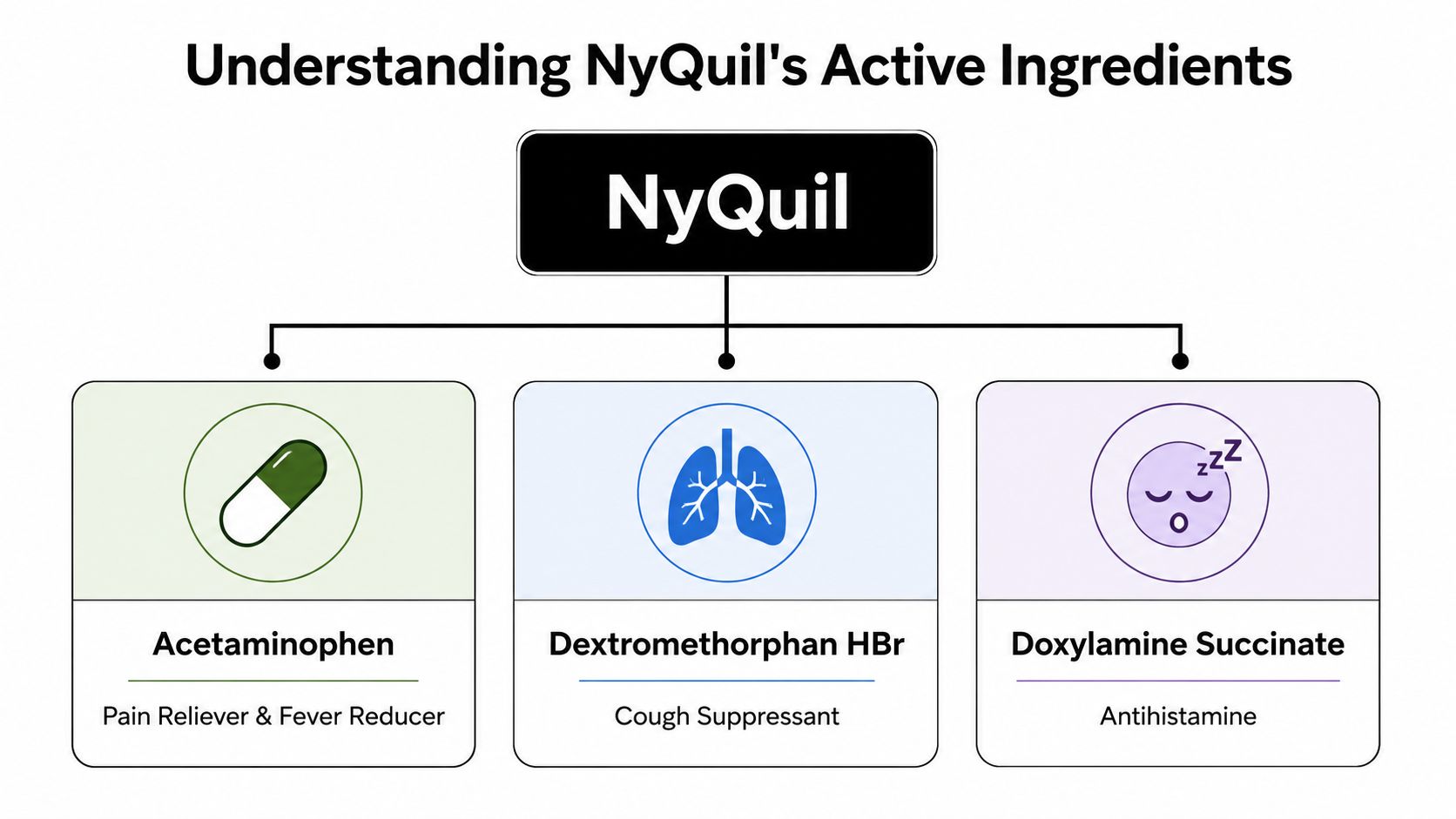
That matters if you are trying to figure out whether a sensation is expected, whether it might affect your heart rhythm, or whether it is worth checking on your watch ECG.
Acetaminophen helps with pain and fever
Acetaminophen eases fever, body aches, headache, and throat pain. It is not the ingredient that usually makes people feel sleepy or wired.
Its main safety issue is dose stacking. If you take NyQuil and then add another cold medicine or pain reliever that also contains acetaminophen, you may get more than you meant to. In NyQuil Cold and Flu LiquiCaps, each capsule contains 325 mg of acetaminophen. The same label lists 15 mg of dextromethorphan and 6.25 mg of doxylamine per LiquiCap, and warns that taking more than 8 LiquiCaps in 24 hours can cause severe liver damage due to the acetaminophen content, according to the DailyMed product label.
Dextromethorphan quiets the cough reflex
Dextromethorphan lowers the urge to cough by acting on the brain's cough center. For a nighttime cold, that can be helpful.
It can also change how your nervous system feels. Some people notice a floaty feeling, mild restlessness, or a sense that their body does not feel quite normal. If you are already focused on your heartbeat, that shift can be mistaken for a heart problem, even when the main effect is coming from the brain and nerves rather than the heart itself.
Doxylamine causes most of the sleepiness
Doxylamine is the ingredient that usually makes NyQuil feel like a bedtime medicine. It is a sedating antihistamine, and it also has anticholinergic effects, which means it can dry out the mouth and eyes and slow things down a bit.
For some people, "slowed down" does not feel calm. It feels heavy, foggy, or slightly off balance. Others notice that the dry mouth, dizziness, or groggy feeling makes them more aware of every heartbeat. If your watch ECG shows a normal rhythm during that moment, that can be reassuring. It helps separate a strong medicine effect from a rhythm problem.
Practical rule: If NyQuil feels unusually strong or sedating, doxylamine is often a major reason.
Why the combination can feel so different from person to person
These three ingredients do different jobs at the same time. One lowers pain and fever. One turns down coughing. One adds sedation and drying effects.
Put together, they can relieve cold symptoms while also creating sensations that are easy to misread, especially at night. That is one reason people sometimes check their pulse, notice a flutter, and wonder if NyQuil is affecting their heart. Understanding which ingredient is most likely behind which feeling makes those moments less mysterious.
Common and Expected NyQuil Side Effects
Many side effects of NyQuil are expected rather than alarming. The most important pattern is sedation. Official drug information for the acetaminophen, dextromethorphan, and doxylamine combination lists drowsiness, dizziness, dry mouth, constipation, fatigue, and headache among the usual adverse effects, and warns that because NyQuil contains acetaminophen, severe liver damage may occur if more than 4 doses are taken in 24 hours, according to the DailyMed drug information.
The key idea is this. A lot of what feels "weird" after NyQuil is really the medicine's nighttime design showing up in your body.
What common side effects usually feel like
Here are some examples people often notice:
- Drowsiness: Heavy eyelids, slower thinking, or that "I need to lie down now" feeling.
- Dizziness: A slight spin, wobble, or off-balance feeling when standing or walking.
- Dry mouth: Your mouth and throat may feel sticky even if you've had water.
- Constipation: Your system may feel slowed down.
- Fatigue or headache: You may feel wrung out, especially if you're already sick.
These effects can feel stronger if you're dehydrated, haven't eaten much, or took the medicine when already exhausted.
Why expected doesn't mean ignore it
Expected side effects still matter if they're intense. A medicine can be behaving as designed and still be too much for your body. That's especially true if you feel so sleepy or dizzy that walking feels unsafe.
If you've ever reacted strongly to other antihistamines, you may recognize the pattern. This overview of diphenhydramine side effects can help you compare how sedating cold and allergy medicines can affect alertness and body sensations.
The liver safety rule matters
The biggest mistake many people make is stacking products without realizing it. NyQuil is not the only medicine that may contain acetaminophen. If you add another pain reliever or another cold product with the same ingredient, you can unintentionally exceed the label directions.
Mild sleepiness and dry mouth are usually expected. Exceeding the daily limit is not.
So if you're feeling bad after NyQuil, don't assume taking more will "push it through." Check the label first.
NyQuil's Link to Heart Palpitations and Anxiety
The question people often ask in the middle of the night is simple. Can NyQuil make my heart feel weird?
It can create sensations that feel heart-related, even when the main issue is a medication effect on the nervous system.

NyQuil can cause nervousness or excitability, restlessness, and confusion from its dextromethorphan and antihistamine components. Those effects can be misread as a worsening cardiac episode rather than a medication effect. People often want to know whether feeling jittery, lightheaded, or unusually fast-skipping heartbeats is a normal reaction or a warning sign, as discussed in this GoodRx overview of NyQuil side effects.


Why palpitations can feel worse at night
Nighttime is the perfect setup for overinterpreting body signals. It's quiet. You're lying still. You can feel every beat more clearly. If your body also feels dry, dizzy, sedated, or restless, your brain may lock onto the sensation and magnify it.
Palpitations are an awareness of your heartbeat. Some people describe pounding. Others say fluttering, thumping, racing, or skipping. That feeling can happen with stress, lack of sleep, illness, or medicines. The sensation itself doesn't tell you the cause.
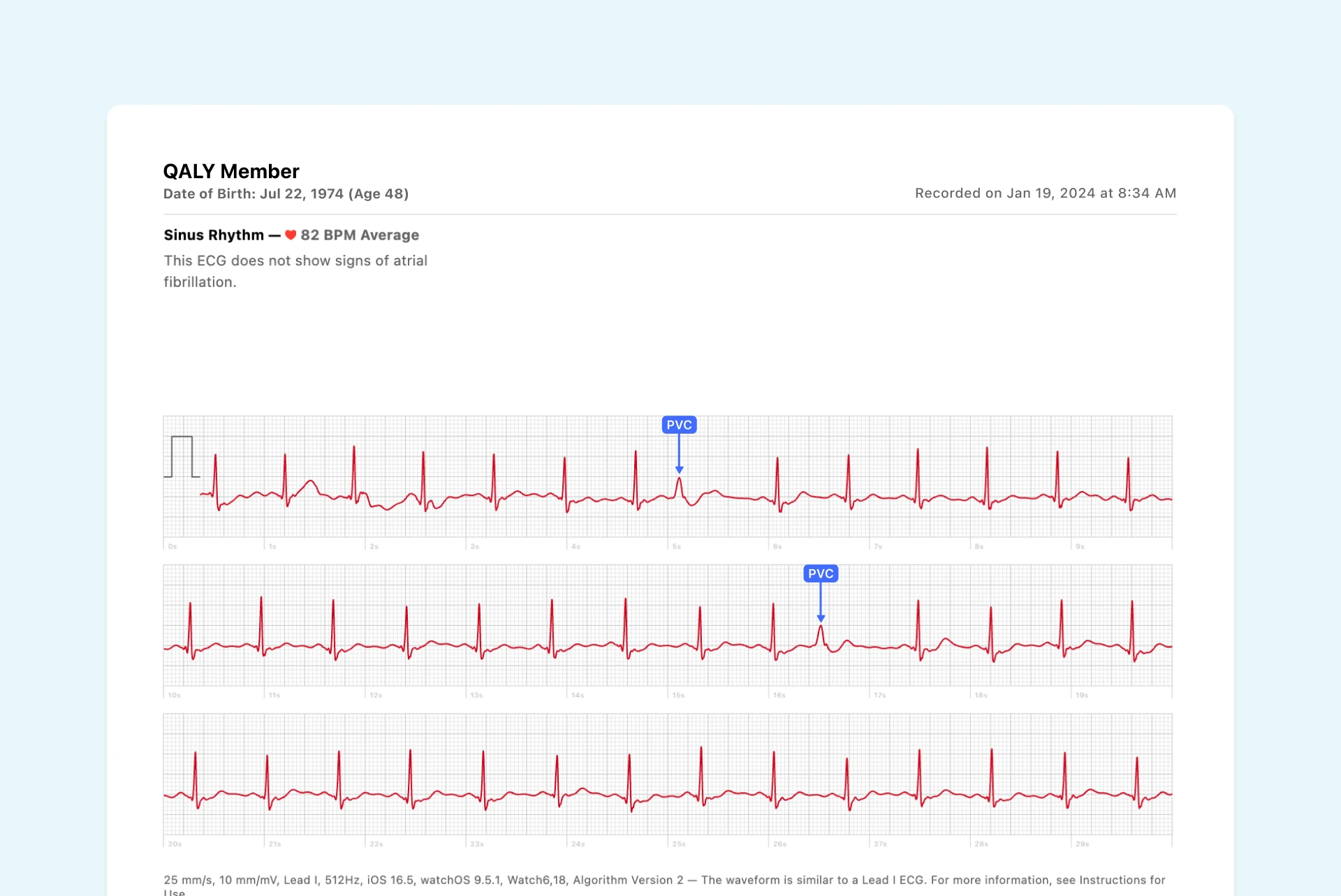
Medication effect versus heart emergency
A medication-related reaction often looks like this:
- The timing fits: Symptoms show up after taking NyQuil.
- The feeling fluctuates: It comes in waves rather than steadily worsening.
- Other side effects are present: Dry mouth, sedation, dizziness, or restlessness show up too.
A more serious concern usually feels less ambiguous. Chest pain, severe shortness of breath, fainting, or a major change in mental status deserve urgent attention.
If your symptom loop is part heart awareness and part anxiety, this practical guide to easing anxiety may help you calm the body while you observe what the rhythm is doing.
A related issue comes up with other cold medicines too. This explanation of pseudoephedrine side effects is useful because decongestants are another common trigger for racing or pounding sensations.
A simple way to think about it
This can be compared to a false fire alarm versus an actual fire. The alarm is real. You do feel the flutter, skip, or rush in your chest. But sometimes the trigger is the medicine and your nervous system, not a dangerous rhythm problem.
Guidance for Special Groups and Drug Interactions
A lot of NyQuil questions come down to one issue. The same nighttime dose can feel mild for one person and much stronger for another.
NyQuil combines ingredients that can slow you down, dry you out, and blur the usual signals your body gives you. That matters most in people who are already more sensitive to sedation, already taking other medicines, or already watching for heart rhythm symptoms. If you use a watch ECG, this is the stage where context matters. A flutter after one medicine can mean something different from a flutter after three overlapping products.
Cleveland Clinic lists common effects from the acetaminophen, dextromethorphan, and doxylamine combination such as drowsiness, dizziness, nausea, constipation, dry mouth, and blurred vision. It also points out more serious problems like confusion, trouble passing urine, sudden vision changes, and signs of liver injury in its acetaminophen, dextromethorphan, and doxylamine guidance.
Older adults and anyone prone to falls
For older adults, side effects are often less about comfort and more about safety. A medicine that causes sleepiness, slower reaction time, or blurry vision can turn a simple walk to the bathroom into a fall risk.
Confusion can be subtle too. A person may look "extra tired" when they are having trouble processing where they are, what they took, or why they feel off. If you are also checking a wearable ECG for palpitations, keep in mind that shaky hands, poor balance, and grogginess may come from the medicine rather than the heart itself.
Pregnancy, breastfeeding, and existing heart concerns
Pregnancy and breastfeeding are good times to pause before taking combination cold medicines. A pharmacist or clinician can help you sort out whether each ingredient makes sense for your situation instead of treating the box as one simple product.
The same caution applies if you have an arrhythmia, frequent palpitations, high blood pressure, or a history of panic symptoms. NyQuil does not automatically mean danger, but it can muddy the picture. Sedation, restlessness, and a racing feeling can overlap enough that it becomes harder to tell whether your heart is changing rhythm or your body is reacting to the medication. Your watch ECG can help later, but choosing the right product first often prevents that uncertainty.
Combinations to avoid
The biggest problems usually come from stacking medicines with similar effects.
- Alcohol plus NyQuil: This combination raises concern because acetaminophen and alcohol both put stress on the liver, and alcohol can also worsen sleepiness and poor coordination.
- Other acetaminophen products: Accidental double-dosing is common, especially if you take a daytime cold medicine, a pain reliever, and NyQuil without checking labels.
- Other sedatives: Sleep aids, some anti-anxiety medicines, opioids, and antihistamines can intensify grogginess, confusion, and slowed reaction time.
- Medicines that affect serotonin: Some antidepressants and cough medicines can interact with dextromethorphan in ways that increase the risk of agitation, sweating, tremor, or a fast heartbeat.
If you are in recovery or trying to understand why acetaminophen deserves extra caution in some situations, this piece on understanding Tylenol risks in recovery offers helpful context.
Cold products also vary more than many people realize. One brand may lean sedating, while another adds a decongestant that is more likely to feel stimulating. If you are comparing labels because of pounding, racing, or jittery sensations, this overview of phenylephrine side effects in cold medicine can help you spot why one formula feels very different from another.
A simple rule helps here. Before you blame your heart, audit the full stack: cold medicine, pain relievers, sleep aids, alcohol, supplements, and prescriptions. That quick review often explains why symptoms showed up and helps you interpret any watch ECG recording with much more confidence.
How to Monitor Palpitations With Your Watch ECG
When your heart feels fluttery after NyQuil, uncertainty is often the worst part. A wearable ECG can help you move from "I think something is happening" to "This is what my rhythm looked like right then."
You don't need to become your own cardiologist. You just need a calm method.
A simple five-step routine
- Pause and sit down
If you're dizzy or anxious, sit with your feet supported. Rest for a minute so the reading is less likely to be shaky. - Open the ECG feature on your device
On an Apple Watch, Samsung watch, Fitbit, Kardia device, or similar tool, go straight to the ECG app rather than guessing from pulse alone. - Take the recording during the symptom
The best tracing is the one captured while you feel the flutter, skip, or racing sensation. If the episode passes, note the time anyway. - Review the tracing for quality
A useful ECG is usually still, clean, and free of as much motion artifact as possible. If your hands were trembling, take another if the symptom returns. - Save it for comparison
One recording is helpful. A pattern across several episodes is even more useful when you talk with a clinician.
How to get a cleaner tracing
Small details make a big difference:
- Rest your arms: Put your forearms on a table or pillow.
- Stay still: Don't talk during the recording.
- Warm your hands if needed: Cold fingers can make contact worse.
- Label the moment: Write down "after NyQuil," "felt flutter," or "lightheaded."
A wearable ECG can't replace emergency care, but it can make an unclear symptom much more concrete.
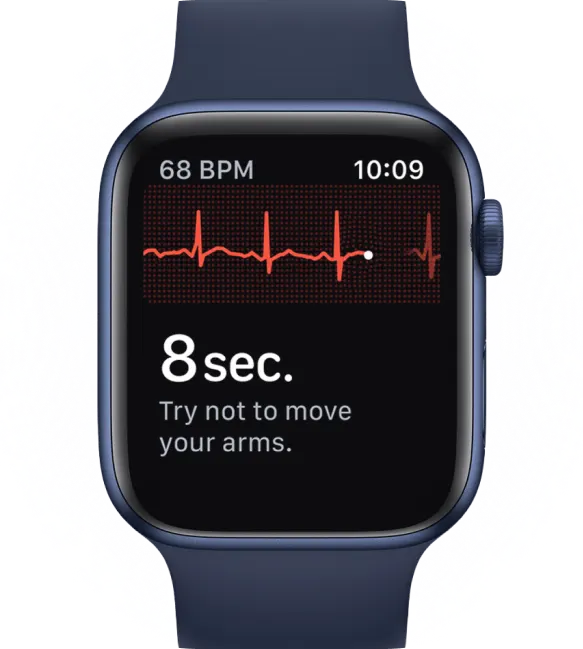
If you use an Apple Watch, this guide on how to take an ECG with your Apple Watch walks through the mechanics in a simple way.
What your watch can and can't tell you
A watch ECG is best for capturing rhythm during symptoms. It's especially useful when palpitations come and go. It can help distinguish "my heart felt odd" from "my rhythm looked irregular at that moment."
But it has limits. A normal recording doesn't explain every sensation. And a weird-looking recording can still need expert review, especially if there was motion or poor contact.
That said, data often lowers panic. Even if the episode turns out to be benign, having something recorded can make your next conversation with a healthcare professional much more productive.
When to Relax and When to Seek Emergency Care
Some side effects of NyQuil are reasonable to monitor at home. Mild drowsiness, a dry mouth, brief dizziness, and a passing sense of feeling off can fit the expected profile for a nighttime cold medicine. A short-lived flutter that settles, especially without other severe symptoms, may also be something to watch rather than panic over.
Home monitoring makes more sense when the pattern is mild, improving, and clearly tied to the timing of the medicine. Rest, hydration, avoiding more sedating products, and writing down what you felt can go a long way.
Get urgent help right away if you have these red flags
- Chest pain
- Shortness of breath
- Fainting or feeling close to fainting
- Severe confusion
- Trouble breathing or swelling that suggests an allergic reaction
- Sudden vision changes
- Trouble passing urine
- Symptoms that are rapidly getting worse rather than settling
If something feels dramatically different from your usual palpitations, trust that signal. It's better to get checked than to explain away a true emergency.
You don't need to choose between panic and denial. The better path is informed observation.
The side effects of NyQuil can be real, uncomfortable, and still not dangerous. Understanding the ingredients, knowing the expected reactions, and paying attention to symptom timing can help you respond with a steadier mind.

Experiencing palpitations? Qaly nalyzes ECG recordings from Apple Watch, Kardia, Fitbit, Samsung, and more, reviewed by certified cardiographic technicians.



.png)
.png)