




Key Takeaways

User Profile
Hello Heart Hero. We get it, seeing an unusual heart rate pop up on your watch can be unnerving, especially if you're managing Atrial Fibrillation (AFib). We know how skeptical you might feel about the usual healthcare runaround, and we’re so glad you’re here looking for clear, straightforward answers. You’re not alone in feeling this way.
Your Guide to Understanding AFib and Heart Rate
Think of this guide as your personal translator for what your heart rate numbers really mean. We'll walk through what makes a heart rate dangerous in AFib, whether it's too fast or too slow, and we'll break down the complex medical jargon into simple, easy-to-grasp concepts.
Our goal here is to arm you with knowledge, dial down the anxiety, and show you practical ways to keep an eye on your heart health right from home. For a baseline, you can also learn more about what a normal cardiac rate looks like in our detailed guide.
This understanding will help you have more informed, confident conversations with your doctor and feel more in control of your health. Let's start this journey together.
Defining a Dangerous AFib Heart Rate
Let's get right to the heart of the matter. When we talk about a "dangerous" heart rate in AFib, we're not just looking at a single number. It's really about a sustained speed that puts your heart under serious, prolonged strain.
The biggest concern is usually a heart rate that stays stubbornly high, even when you're resting. This condition has a name: Atrial Fibrillation with Rapid Ventricular Response (RVR).
Basically, this means your resting heart rate is consistently above 100 to 110 beats per minute (bpm). Imagine leaving your car engine revving in the red zone for hours on end; that kind of constant high speed is going to cause some major wear and tear. It's the same idea with your heart.
Critical Heart Rate Thresholds
So, what numbers should you watch for? In AFib, a resting heart rate that consistently hangs out over 110 bpm is a red flag. Medical guidelines show that when the heart beats this fast for too long, the muscle can get overworked and strained, sometimes leading to a weaker pump over time. You can learn more about how experts analyze your heart rate from an ECG in our other guide.
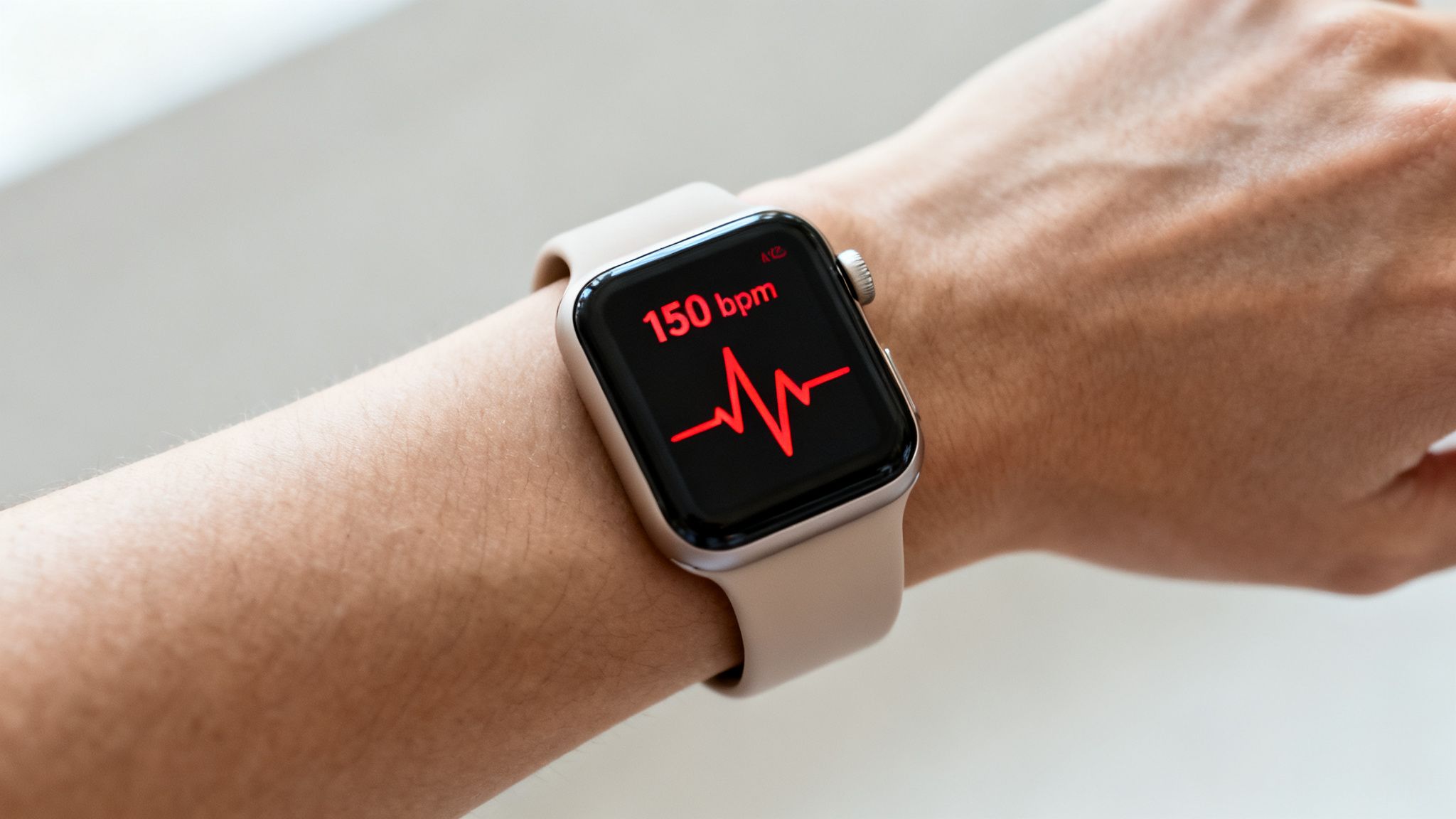
A sustained heart rate of 150 bpm or higher isn't just a warning sign. It is a clear medical emergency. This requires immediate attention because it dramatically increases the risk of acute heart failure or the formation of dangerous blood clots.
But it’s not just about speed. A very slow heart rate (bradycardia), typically below 50 to 60 bpm while you're awake and moving around, can also be a serious problem. This is especially true if it's causing symptoms like severe dizziness, lightheadedness, or fainting.
Knowing these critical thresholds, both high and low, is a crucial first step in managing your AFib with confidence.
Recognizing High and Low Heart Rate Symptoms
Your body is an incredible communicator. When your heart rate veers into a dangerous zone with AFib, it often sends out some pretty clear signals. Learning to listen to these signals is one of the most powerful things you can do to manage your health with confidence.
These physical feelings are your body’s way of saying the heart is either working way too hard or not hard enough to get blood where it needs to go. It’s so important to connect these symptoms with the data you see on your watch, because that combination gives you the full story of what's happening.
Symptoms of a Dangerously High Heart Rate
When your heart rate in AFib gets dangerously fast, it's a condition called Rapid Ventricular Response (RVR). The symptoms are often much more than just a quick pulse. You might feel a very distinct fluttering, pounding, or racing in your chest, what we call palpitations. It can feel like your heart is literally trying to jump out of your chest.
This rapid, chaotic beating means your heart's chambers aren't filling up completely with blood before they try to pump. Because of that, your body and brain might not be getting the oxygen-rich blood they desperately need.
This inefficiency can set off a cascade of other symptoms you'll definitely notice:
- Shortness of Breath: You might feel winded or out of breath without doing anything at all. It can feel like you just ran up a flight of stairs while sitting perfectly still.
- Lightheadedness or Dizziness: When less blood gets to the brain, it can leave you feeling unsteady, dizzy, or like you're about to faint.
- Deep Fatigue: A profound sense of exhaustion can wash over you, making even simple daily tasks feel like climbing a mountain. This isn't just being tired; it's a deep, bone-weary fatigue.
In more serious cases, a very high heart rate can cause chest pain, tightness, or pressure. This is a critical warning sign that your heart muscle is under extreme strain and needs immediate medical attention. Never write off chest pain as just anxiety; it's always better to be safe.
Symptoms of a Dangerously Low Heart Rate
On the flip side, a dangerously slow heart rate, or bradycardia, can be just as alarming. Think of it like a car engine idling too low. A heart beating too slowly isn't pumping enough oxygenated blood out to the body. This is typically a concern if your heart rate drops below 50 to 60 bpm while you're awake and not in a state of deep relaxation or sleep.
It's important to understand that a slow heart rate isn't always a problem, especially for athletes or during sleep. The real concern arises when a slow rate is accompanied by symptoms, which indicates your body isn't getting what it needs.
When your heart rate is dangerously low, your body will let you know. The symptoms are usually tied to the brain and other organs being starved of adequate blood flow.
Common signs of a dangerously slow heart rate include:
- Extreme Tiredness or Weakness: Much like a high heart rate, bradycardia can cause profound fatigue because your body is struggling to get the energy it requires.
- Confusion or Brain Fog: You might find it hard to concentrate, feel disoriented, or even notice some memory problems.
- Dizziness or Fainting Spells (Syncope): A significant drop in blood flow to the brain can cause severe lightheadedness or even cause you to lose consciousness.
- Shortness of Breath: Your body might struggle to get enough oxygen, which can also lead to breathlessness.
By learning to recognize these two distinct sets of symptoms, for both high and low heart rates, you can move from a place of uncertainty to one of empowerment. You'll be far better prepared to understand what your body and your ECG are telling you, so you know exactly when it’s time to act.
The Hidden Risks of an Irregular Rhythm
When your heart is racing, it’s only natural to fixate on the heart rate. But with Atrial Fibrillation, some of the biggest dangers are the ones you can't feel. This is often called "silent" AFib. Your heart is stuck in that irregular rhythm, but you don't have any of the classic symptoms like palpitations or dizziness.
This is exactly why at-home monitoring with a device like a Fitbit or Apple Watch has become so important. These watches give you a window into what your heart is doing, even when you feel perfectly fine. An irregular rhythm, even at a heart rate that seems normal, can create serious long-term health problems if it flies under the radar.
The Danger of Silent AFib
When your heart's upper chambers are just quivering chaotically in AFib, blood doesn't flow through them as smoothly as it should. This slowdown can cause blood to pool in a small pouch of the heart called the left atrial appendage, creating the perfect storm for blood clots to form.
If a piece of one of these clots breaks off, it can travel straight through your bloodstream to the brain, block a critical artery, and trigger a devastating stroke. And here's the crucial part: this risk is there even if your heart rate is under control and you feel completely normal.
The real danger of an uncontrolled irregular rhythm is not always about the speed. It’s about the persistent chaos that allows blood clots to form, significantly increasing your stroke risk over time.
Forcing the heart to pump against this constant, disorganized rhythm also puts a tremendous strain on the heart muscle. Over time, this can lead to the muscle weakening, a serious condition known as heart failure. This is why consistent monitoring is about so much more than just catching a high heart rate; it’s about managing the underlying irregularity itself.
What the Research Shows Us
The hidden dangers of AFib, especially the episodes that go completely unnoticed, have been confirmed by major research studies. These findings really highlight why wearable tech is so valuable.
For example, a landmark study looked at over 20,000 people with pacemakers or defibrillators and found something startling. A full 30% of them had at least one AFib episode detected by their device that they likely never even felt. The results showed that those with any AFib had a 29% increased risk of death after two years compared to those without AFib. That risk jumped to 39% for people whose AFib was persistent for over a week. You can see more insights about these hidden AFib dangers from the Northwestern University study.
This "subclinical" AFib, which is often invisible without monitoring technology, drives home a critical point. Just checking your pulse when you feel unwell isn't enough. Consistent, proactive monitoring helps you and your doctor see the complete picture of your heart's health.
Protecting Yourself from Hidden Risks
Understanding these risks isn't meant to scare you, it's meant to empower you. Knowledge is your best defense for managing AFib effectively and protecting your long-term health. The two main strategies for tackling these hidden risks boil down to rhythm control and stroke prevention.
Managing the irregular rhythm itself can involve:
- Medications: Your doctor might prescribe drugs to help your heart stay in a normal sinus rhythm.
- Procedures: In some cases, procedures like a cardioversion or catheter ablation may be recommended to reset and restore a regular rhythm.
Because of the high stroke risk, many people with AFib are prescribed blood thinners. These medications are absolutely crucial because they prevent those dangerous clots from forming in the first place. You can learn more about how blood thinners for AFib work to protect you in our dedicated guide.
Ultimately, the key is consistent awareness. By using your at-home ECG device to regularly check your rhythm, you're not just looking for a dangerous heart rate. You are actively watching for the underlying irregularity that poses the greatest long-term threat.


How to Effectively Monitor Your Heart Rate at Home
That little device on your wrist or in your pocket is a powerful health partner. It's easy to feel overwhelmed by the data, but these tools can actually put you in the driver's seat of your health, helping you move past the anxiety of not knowing what's going on with your AFib.
Knowing how to use your device effectively is the key. It can transform it from a source of stress into a genuinely valuable ally. This guide will walk you through getting the most out of your at-home ECG monitor, so you can feel confident in what the readings are telling you.
Taking a Reliable ECG Reading
Getting a clean, accurate ECG is the foundation of good home monitoring. Think of it like taking a clear photograph. If the camera is shaky, the picture will come out blurry. The same principle applies here.
To make sure your readings are as reliable as possible, follow these simple steps:
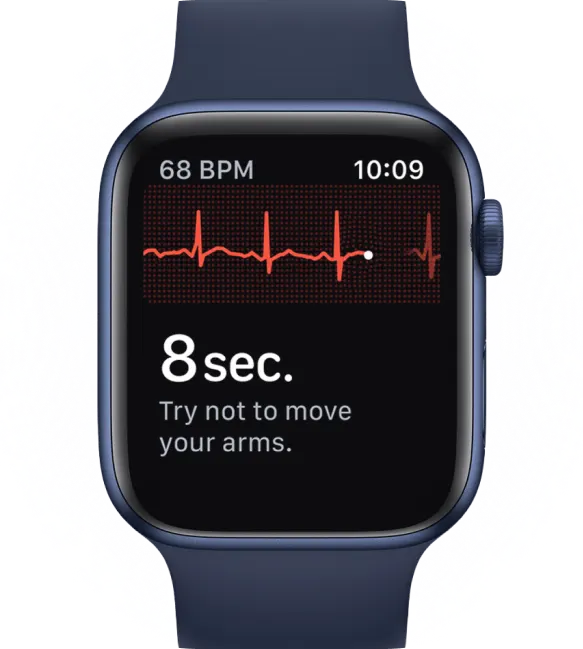
- Be Still and Calm: Find a comfortable spot to sit down and rest your arm on a flat surface, like a table or even your leg. Try not to talk or move around while the reading is in progress, since muscle movements can create "noise" or interference.
- Ensure Good Contact: For a watch, this means making sure it's snug on your wrist. If you're using a handheld device, your fingers need to be properly placed on the sensors. Good contact is essential for a clear signal.
- Stay Hydrated: You might be surprised to learn that dehydration can sometimes affect the quality of an ECG signal. Sipping water throughout the day can actually help you get better results.
Establishing a Consistent Monitoring Routine
When it comes to monitoring AFib, consistency is your best friend. Taking readings at random times can give you a chaotic and confusing picture of your heart's activity. But if you create a simple, repeatable routine, you'll establish a clear baseline. That makes it much easier to spot when something is truly off.
A great routine to start with is taking a reading at three key moments during the day:
- When you wake up: This gives you a baseline resting heart rate before the day's stress and activity kicks in.
- Before you go to bed: This shows you how your heart is doing after a full day.
- Whenever you feel symptoms: This is the most critical one. Capturing an ECG during palpitations, dizziness, or shortness of breath provides invaluable data for both you and your doctor.
Think of it this way: Taking an ECG at these specific times helps you build a personal health journal. Over time, you’ll start to see patterns that connect your lifestyle, your symptoms, and your heart rhythm, giving you a much deeper understanding of your own body.
Looking Beyond Just the Number
The heart rate number is important, but it’s only one piece of the puzzle. The real power of your at-home ECG is its ability to show you the rhythm. When you look at your reading, you’re not just checking for a dangerous heart rate with AFib; you’re looking at the regularity of the beats.
Many people use smartwatches, like the Apple Watch, which have advanced health tracking that can help with this. Your device will typically try to classify the rhythm for you. Understanding these classifications is key:
- Normal Sinus Rhythm: This is the one you want to see. It means your heart is beating in a regular, consistent pattern.
- Atrial Fibrillation (AFib): This reading means your heart rhythm is irregular and chaotic, the hallmark of AFib.
- Inconclusive or Unclassified: This can happen if there was too much interference during the reading, or if the rhythm is something the device’s algorithm doesn’t recognize.
Don’t panic if you get an “Inconclusive” reading. It happens all the time. Just take a moment, rest for a few minutes, and try taking another one. You can learn more about how to interpret these results and can Apple Watch detect AFib in our more detailed article. By focusing on both the rate and the rhythm, you get a far more complete picture of what's going on with your heart.
One of the most stressful parts of living with AFib is that moment of uncertainty: Is this an emergency, or should I just call my doctor? That feeling can be overwhelming, but knowing how to react with confidence is a skill you can learn. Let’s create a clear, practical framework for making that decision so you can feel prepared and in control.
It all boils down to understanding the difference between a situation that just needs your doctor's input and a true medical emergency. Having a clear action plan ready helps keep panic at bay and makes sure you get the right care when you need it.
When a Phone Call to Your Doctor Is the Right Move
Not every concerning reading is a crisis. In many cases, a calm call to your clinician's office is the best first step. This gives your care team the chance to assess what's happening, look at your medical history, and give you guidance without a stressful and potentially unnecessary trip to the hospital.
Think of your doctor as your long-term partner in managing your health. They know your specific condition and can help you make sense of new patterns or symptoms as they come up.
A call to your doctor is usually the best approach if you experience situations like these:
- A Persistently High Resting Heart Rate (Without Severe Symptoms): If your heart rate stays above 110 bpm while you're at rest but your symptoms are mild, maybe some minor fatigue or light palpitations, it's important to let your doctor know. This isn't typically an emergency, but it's a clear signal that your treatment plan might need a tweak.
- A New Pattern of AFib Episodes: Maybe you’re noticing your AFib is happening more often, or the episodes are lasting longer than they used to. This is crucial information for your doctor to have.
- Mild but Worsening Symptoms: If your usual symptoms, like shortness of breath or fatigue, are gradually getting worse over a few days or weeks, it’s time to check in.
When You Need to Go to the Emergency Room
Some situations are clear medical emergencies. When these happen, hesitating can be dangerous. The goal is to get immediate medical help to stabilize your heart and prevent serious complications. Calling 911 is the safest and fastest way to get the care you need.
If you are ever in doubt, it is always better to be safe and seek emergency care. Never dismiss severe symptoms as "just anxiety" or wait to see if they go away on their own.
You should go to the ER or call 911 immediately if you experience any of these red flag symptoms:
- A Very High Heart Rate with Severe Symptoms: A heart rate that jumps to 150 bpm or higher, especially when combined with symptoms like chest pain, severe shortness of breath, or dizziness, is a medical emergency.
- Symptoms of a Stroke: This is the most critical emergency tied to AFib. Be on the lookout for sudden numbness or weakness (especially on one side of the body), confusion, trouble speaking, vision problems, or a sudden, severe headache.
- Chest Pain or Pressure: Any new or severe chest pain, tightness, or pressure could be a sign of a heart attack and requires immediate medical attention.
- Fainting or Loss of Consciousness: Losing consciousness, even for just a moment, is a serious warning sign that your brain isn't getting enough blood.
Managing AFib is all about understanding these critical distinctions. For example, syncing data from a Withings device or Holter monitor to an app like Qaly can give you rapid insights if your heart rate crosses into a danger zone, such as staying over 120 bpm or dropping below 50 bpm while you're awake. While a normal rate is 60-100 bpm, AFib can spike it to 100-200 bpm, increasing the risk of fatigue, heart failure, or stroke.
Statistics from the CDC show there are over 454,000 hospitalizations each year in the U.S. with AFib as the primary diagnosis, which really underscores how serious this condition can be. You can find more details about when your heart rate becomes dangerous on The Heart Care Center.
Your Questions About AFib Heart Rate, Answered
We get it. Living with AFib comes with a lot of questions, and getting straight answers is key to your peace of mind. Let's tackle some of the most common things people wonder about when it comes to AFib and heart rate.
Is One High Heart Rate Reading a Big Deal?
Not necessarily. It’s perfectly normal for your heart rate to jump up for a bit because of exercise, stress, or even your morning coffee. The real concern in AFib is a heart rate that is persistently high when you're at rest.
When we say "persistently high," we mean a rate that hangs out above 100 to 110 bpm for a long time without an obvious reason. That’s what really puts a strain on your heart muscle. So, if you see a single high number, the first thing to do is sit down, take a few deep breaths, and check it again in a few minutes. If it’s still high, that’s when you should start paying closer attention.
What Does It Mean if My Watch ECG Says "Inconclusive"?
Seeing an "inconclusive" or "unclassified" result on your device can be unnerving, but it’s an incredibly common message. It usually doesn't signal a problem. It could be something as simple as moving your arm too much during the reading, the sensors not having good skin contact, or your heart rhythm doing something the device’s algorithm just isn't programmed to recognize.
An inconclusive reading isn’t a diagnosis. More often than not, it just means the technology couldn't get a clean signal to analyze. This is a perfect scenario where having a human expert review the ECG can cut through the confusion and tell you if the rhythm itself is actually concerning.
Can I Actually Lower My Heart Rate With Lifestyle Changes?
Absolutely. The habits you build every day can be a powerful part of managing your AFib. Making some positive changes can make a real difference in keeping your heart rate in check and even reducing how often you have AFib episodes.
Here are a few areas that have a big impact:
- Manage Stress: Simple things like meditation, deep breathing exercises, or even some gentle yoga can help calm your whole system down.
- Avoid Triggers: Pay attention to stimulants. Cutting back on caffeine and alcohol can make a huge difference for many people.
- Hydrate Well: It sounds basic, but being properly hydrated is surprisingly important for your heart to function smoothly.
- Move Your Body: Once you have your doctor's okay, regular, moderate exercise is fantastic for strengthening your heart.
Think of these habits as your support team. They don't replace medical treatment, but they work right alongside your doctor's plan to boost your overall heart health.

On the Qaly app, human experts will interpret your ECGs for Atrial Fibrillation within minutes. Get started today.



.png)
.png)