





Key Takeaways

User Profile
Hello Heart Hero. Feeling your heart flutter or race while taking levothyroxine can be really unsettling, but I want you to know you're not alone in this. This guide is here to offer some reassurance and clarity.
Levothyroxine is a cornerstone medication for keeping your thyroid in check, but sometimes it takes a little trial and error for your body to find that perfect balance. My goal here is to explain why these palpitations happen, what your body might be trying to tell you, and the practical steps you can take. We're going to replace that feeling of uncertainty with solid understanding, helping you feel more in control of your health journey.
Your Guide to Levothyroxine and Heart Flutters
Feeling an unexpected flutter, a sudden pound, or a skipped beat in your chest is alarming. It's especially confusing when you're on a medication that's supposed to make you feel better. If you've noticed heart palpitations on levothyroxine, it's simply a sign that your body is communicating with you.
It's a surprisingly common experience, and one that often brings a lot of anxiety with it. You might feel worried or even a bit isolated, wondering if something is seriously wrong. We hear you, and those feelings are completely valid. So many people in your exact situation have felt the same way.
This guide is different. It’s built to give you the information you need, without all the confusing medical jargon. We'll walk through this together, exploring why this happens and what you can do about it.
What You Will Learn in This Guide
My purpose is to give you a clear roadmap. Instead of feeling lost, you’ll gain a better sense of direction and feel more prepared to have confident conversations with your doctor. Here’s what we’ll cover:
- Why It Happens: We'll break down the common-sense reasons levothyroxine can sometimes affect your heart’s rhythm.
- What's "Normal" vs. Not: You’ll learn how to tell the difference between a minor flutter and a symptom that needs a doctor's attention right away.
- Actionable Steps: We will go over practical tips you can use today to help manage and hopefully reduce those palpitations.
- Empowering Tools: You’ll discover how modern technology, like wearable ECGs, can help you track your symptoms and work more effectively with your healthcare provider.
Think of this as your personal resource for turning concern into confidence. By understanding the link between your medication and your heart, you can take an active role in fine-tuning your treatment and getting back to feeling your best.
Understanding Why Levothyroxine Affects Your Heart
If you’ve ever felt that sudden flutter or racing in your chest, it can be pretty unnerving, especially when it’s caused by a medication that's supposed to be helping you. So, let’s get into why levothyroxine can sometimes trigger heart palpitations.
A simple way to think about it is to picture levothyroxine as the accelerator pedal for your body's engine.
When you have hypothyroidism, your body's engine is essentially idling too low. Levothyroxine is designed to give it just the right amount of gas to get it running smoothly. But if the dose is a tiny bit too high, it’s like pushing that accelerator down just a little too hard. Your engine revs up, and you feel that shaky, racing sensation in your heart.
This doesn't mean the medication is harmful, it just means a small tweak might be all that's needed to find your body’s perfect cruising speed. More often than not, palpitations are simply a sign of this delicate balancing act.
When Your Dose Is a Little Too High
The most common culprit behind heart palpitations on levothyroxine is a dose that's slightly stronger than what your body needs. This can nudge you into a state of mild, or "subclinical," hyperthyroidism. In plain English, your body is getting more thyroid hormone than it needs to function at its best.
When this happens, your metabolism kicks into overdrive. This directly affects your heart, causing it to beat faster and sometimes with an irregular rhythm. It's really just your body’s way of saying, "Hey, this is a bit too much fuel for me right now!"
This is exactly why regular check-ins with your doctor are so critical. A simple blood test can check your thyroid levels and help your provider fine-tune your dose, which often resolves the palpitations entirely.
"When all systems are constantly in 'go mode,' your whole body may spin out of control. You might feel nervous, anxious and jittery… Feel like your heart is pumping too fast, skipping a beat or fluttering, even when you’re not exercising? You could be having heart palpitations, a sign of too much thyroid hormone flooding your system."
The Initial Adjustment Period
Sometimes, heart palpitations pop up when you first start taking levothyroxine or right after a dose change. Think of it like waking your body up after it’s been sluggish for a long time. The sudden reintroduction of normal thyroid hormone levels can be a bit of a shock to the system.
Your heart, along with the rest of your body, has to get used to this new, faster pace. This adjustment period is usually temporary, and the palpitations often fade as your body adapts over a few weeks. Patience is key here, but it’s still important to keep your doctor in the loop.
Interactions That Affect Your Dose
What you eat and what other supplements or medications you take can have a big impact on how your body absorbs levothyroxine. If that absorption isn't consistent, your hormone levels can bounce around, leading to palpitations. Some common culprits include:
- Supplements: Calcium and iron supplements are well-known for interfering with levothyroxine absorption. It's crucial to take them at least four hours apart from your thyroid medication.
- High-Fiber Foods: Things like walnuts, soybean flour, and cottonseed meal can also get in the way.
- Certain Medications: Antacids and some cholesterol-lowering drugs can also reduce absorption.
Making a habit of taking your levothyroxine on an empty stomach, at least 30 to 60 minutes before your first meal, helps ensure you get a stable, consistent dose every single day. This simple routine can make a world of difference. You can dive deeper into this connection in our article on the link between thyroid disorders and your heart.
It's well-documented that higher doses can increase cardiac risks, especially in older adults. For example, one study found that individuals aged 66 and older on levothyroxine had a 16.1% incidence of atrial fibrillation episodes. Doses over 0.075 mg/day were linked to nearly 30% higher odds of developing atrial fibrillation. This happens because excess thyroid hormone can ramp up the heart rate and increase its workload, creating an environment where irregular rhythms are more likely to take hold.
Knowing When a Flutter Is More Than Just a Flutter
It’s one thing to understand the why behind palpitations, but it’s another thing entirely to actually feel them. That sudden flutter, pound, or skip in your chest can be unnerving, leaving you wondering what’s normal and what isn’t. Let's build a clear mental roadmap so you can confidently tell the difference between a minor blip and something that needs your doctor's attention.
Most of the time, the palpitations you feel are brief and completely harmless. Think of them as your body's way of signaling that a small tweak might be needed in your treatment. These often feel like:
- A quick fluttering sensation, almost like butterflies in your chest.
- A brief skipped beat, where it feels like your heart just paused for a second.
- A momentary pounding or racing feeling that vanishes as quickly as it started.
These feelings, while unsettling, are often just a sign that your levothyroxine dose and your body are still finding their perfect balance.
Spotting the Red Flags
While most flutters are benign, you need to know which symptoms are your body's way of saying, "Hey, pay attention to this." Think of these not as reasons to panic, but as important signals that it's time to have a conversation with your doctor.
As you can see, feeling a palpitation is often the starting point for a conversation with your doctor to investigate your dose, absorption, or other adjustment factors.
The key is to notice what happens along with the palpitations. Here are the specific red flags to watch for:
- Chest Pain or Discomfort: Any feeling of pressure, tightness, or actual pain in your chest that comes with the palpitations.
- Significant Shortness of Breath: Getting winded or finding it hard to catch your breath when the palpitations hit.
- Dizziness or Lightheadedness: A sensation that you might faint or that the room is spinning.
- Fainting: Actually losing consciousness, even if just for a moment.
- A Constantly Erratic Pulse: A heart rate that feels consistently fast and chaotic for more than a few seconds.
If you experience any of these symptoms alongside your heart palpitations, it's time to contact your doctor right away. For a more detailed breakdown, our guide on when to see a doctor for heart palpitations offers even more clarity.
Understanding the Underlying Risk
It's also useful to know about the connection between high thyroid hormone levels and more serious arrhythmias. Research has shown that when free T4 (fT4) levels climb too high from overtreatment, the risk for conditions like atrial fibrillation (AFib) goes up.
Interestingly, this risk was tied specifically to fT4 levels, not TSH levels, which really highlights how important it is for your doctor to check a full thyroid panel. To get a better sense of what a "flutter" might mean and separate it from normal variations, it helps to know what a normal sleeping heart rate looks like.
Knowing the difference between a harmless flutter and a warning sign is empowering. It transforms anxiety into action, giving you a clear plan and putting you back in control of your health journey.
By arming yourself with this knowledge, you can feel more confident. You’ll know when it’s okay to simply monitor your symptoms at home and when it’s time to team up with your doctor to make a change.
Practical Steps to Manage and Reduce Palpitations
Feeling that flutter in your chest can be unnerving, but the good news is you have a surprising amount of control over it. By making a few intentional tweaks to your daily routine, you can often dial down, or even eliminate, the heart palpitations on levothyroxine.
Let's walk through some real-world, practical steps you can start taking today. Think of these not as strict rules, but as simple tools to get your body and medication working together in harmony.
Master Your Medication Routine
When it comes to thyroid health, consistency is king. Your body thrives on a predictable schedule, and this is especially true for levothyroxine. If your routine is all over the place, your hormone levels can swing up and down, which is a classic trigger for palpitations.
The single most important habit to build? Take your levothyroxine at the same time every single morning on an empty stomach. Then, wait at least 30 to 60 minutes before you eat, drink your coffee, or take any other pills. This simple act gives your body the best shot at absorbing the same amount of hormone each day, creating the stability your heart is looking for.
Creating a consistent morning ritual for your medication is one of the most powerful steps you can take. It’s a small change that delivers a big impact on how you feel throughout the day.
Mind the Gap with Supplements and Food
Did you know that some common supplements and even certain foods can block your body from fully absorbing your levothyroxine? This interference can cause your thyroid levels to dip, followed by a potential spike later on, a perfect recipe for triggering palpitations.
The two biggest offenders are calcium and iron supplements. The fix is simple: create a buffer zone.
- Rule of Thumb: Wait at least four hours after taking levothyroxine before you take any calcium or iron supplements.
This spacing strategy ensures your thyroid medication gets a clear runway for full absorption. The same principle applies to high-fiber foods and some antacids, so just be mindful of your timing.
Embrace Simple Lifestyle Adjustments
Your overall lifestyle plays a huge role in how your heart handles levothyroxine. You'd be surprised how much of an impact small changes can make.
- Moderate Caffeine: As a stimulant, caffeine can make your heart more prone to palpitations. You might not need to quit cold turkey, but try cutting back a bit and see if you notice a difference.
- Stay Hydrated: Dehydration makes your heart work harder and can be a sneaky trigger for palpitations. Simply sipping water throughout the day is an easy and effective way to support your heart.
- Manage Stress: Anxiety is a major cause of palpitations for almost everyone. Gentle activities like a daily walk, deep breathing exercises, or yoga can work wonders to calm your nervous system and, in turn, your heart. For more ideas, check out our guide on top relief tips for stopping heart palpitations.


The Importance of Regular Blood Work
At the end of the day, you can't manage what you don't measure. Regular blood tests are the only way to be sure your dose is right for your body. Your doctor will usually check your TSH (Thyroid-Stimulating Hormone) and often your Free T4 levels.
These numbers give your doctor the hard data needed to see if your dose is a little too high, which could be causing that "revved up" feeling. A TSH level that's too low is a clear signal your dose might need a small downward adjustment. Think of it as a regular tune-up for your thyroid treatment, ensuring everything is running just right.
How Wearable Technology Can Empower Your Health Journey
Trying to describe a fleeting heart palpitation to your doctor can be incredibly frustrating. You know exactly what you felt, but the moment is gone, leaving you with just a memory to share. This is where modern technology becomes your most powerful ally, turning those confusing, invisible symptoms into clear, useful data.
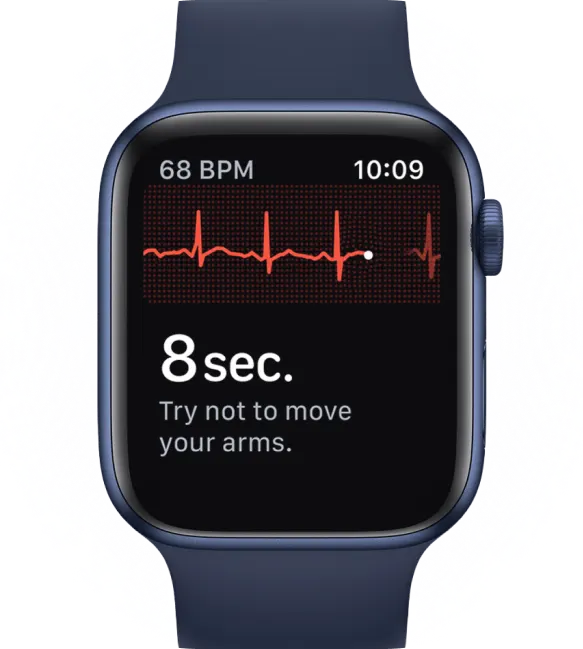
Wearable devices with ECG (electrocardiogram) capabilities, like many of today's smartwatches, are completely changing the game. They give you the power to capture a medical-grade snapshot of your heart’s electrical activity at the exact moment a palpitation hits. This isn't about diagnosing yourself at home; it's about collecting valuable, concrete evidence to share with your healthcare provider.
Instead of saying, “I felt a weird flutter yesterday,” you can now say, “I captured an ECG during that flutter, and here’s what my heart rhythm looked like.” This simple shift transforms the conversation from subjective and vague to data-driven, paving the way for a much more productive discussion about your levothyroxine treatment.
Turning Anxiety into Action
The anxiety that comes with unexplained heart symptoms is often the worst part. You feel a flutter, and your mind immediately jumps to the worst-case scenario. Having a tool right on your wrist that can capture what's happening provides an immediate sense of control.
By recording an ECG, you are actively doing something about your symptom instead of passively worrying. This simple action can significantly reduce the anxiety loop that often accompanies heart palpitations on levothyroxine. It empowers you to become an active participant in your own healthcare, gathering the clues your doctor needs to help solve the puzzle.
"Capturing an ECG during a palpitation episode is like taking a photo of a rare bird you’ve been trying to describe. It provides undeniable proof and valuable data that is often missed during a routine clinic visit, leading to faster, more accurate insights."
How Wearable ECGs Work for You
Think of your wearable device as a personal health detective. Its job is to help you gather clues. Here’s how it can support you on your health journey:
- Capture in the Moment: When you feel a palpitation, you can immediately record a single-lead ECG. This is crucial because palpitations are often brief and unpredictable.
- Document and Track: Your recordings are saved, creating a detailed log of when your symptoms occur. You can also add notes about what you were doing at the time, helping you and your doctor identify potential triggers.
- Share with Your Doctor: You can easily share these recordings with your doctor, giving them a much clearer picture of what your heart rhythm is doing outside the clinic walls.
This process bridges the gap between your appointments. It provides a continuous stream of information that a standard in-office ECG, which only records for a few seconds, could easily miss. You can get a better handle on the technology by reading our cardiologist's guide to the smartwatch ECG, which explains these concepts in more detail.
Preparing for Your Doctor's Appointment
Walking into your doctor's office to talk about heart palpitations can be intimidating. It's easy to worry that you won't be taken seriously or that you'll forget something important. But a little bit of prep work can make all the difference, helping you feel more in control and turning the appointment into a real conversation with your doctor.
Think of your doctor as a detective trying to solve a puzzle, and you have all the most important clues. Their job is to piece together the story of your symptoms to figure out what's causing the heart palpitations on levothyroxine you're feeling. Giving them clear, specific information is the best way to help them help you.
What Your Doctor Will Want to Know
To get to the bottom of things, your doctor needs the details. It's surprisingly easy to forget the specifics once you're in the exam room, so think through these questions beforehand:
- When do they happen? Is there a pattern? Maybe right after you take your pill in the morning, or perhaps when you're trying to relax at night?
- How long do they last? Are we talking about a quick, single flutter that's over in a flash, or does the feeling stick around for several minutes at a time?
- What do they feel like? Try to find the right words. Is it a skipped beat? A fish flopping in your chest? A hard thumping or a rapid-fire racing?
- Are there any triggers? Do they pop up more after your morning coffee, during a stressful meeting, or when you exercise?
A great tip is to just jot down your answers in a notebook or the notes app on your phone. It’s a simple move that ensures you cover all your bases during the appointment.
The Tests They Might Run (and What They Mean)
If your doctor wants to dig a little deeper, they have a few standard tools they can use. These tests aren't scary; they're just ways to get a clearer picture of what's going on with your heart and thyroid.
Think of these diagnostic tests as a 'look under the hood.' They give your doctor the hard data needed to see how your body's engine is running and make sure your levothyroxine dose is dialed in just right.
Here’s what you can likely expect:
- Blood Work: This is almost always the starting point. A simple blood test will check your TSH (Thyroid-Stimulating Hormone) and Free T4 levels. These numbers are the fastest way to see if your levothyroxine dose might be too high.
- In-Office ECG: An electrocardiogram (ECG or EKG) is a quick and painless snapshot of your heart's electrical activity. It only takes a few seconds and can catch any obvious rhythm problems happening right then and there.
- Holter Monitor: If your palpitations are more of a hit-or-miss thing, an in-office ECG might not catch them. In that case, your doctor might send you home with a Holter monitor, a small, wearable ECG you keep on for 24 to 48 hours to record your heart's rhythm as you go about your day.
Your Pre-Appointment Checklist
Want to walk into your appointment feeling totally prepared and empowered? Gather these items to bring with you. It helps you paint the full picture for your doctor.
- A Symptom Log: Even a simple diary of when your palpitations happen, what you were doing, and how they felt.
- Your Medication and Supplement List: Be specific! Include the exact dose of your levothyroxine and absolutely everything else you take, including vitamins or over-the-counter meds.
- ECG Recordings: If you have a smartwatch or other wearable that can take an ECG, bring any recordings you've captured during an episode. This is incredibly valuable, real-world data for your doctor.
- Your Questions: Write down anything you're wondering about. No question is too small.
When you come prepared, it shows you’re an active partner in your own health. It helps you and your doctor work together as a team to find the perfect balance for your treatment and your body.
Frequently Asked Questions
When you're dealing with a new health issue, questions are bound to pop up. It's completely normal, and getting clear answers is a big part of feeling back in control. Here, I'll tackle some of the most common questions people have about heart palpitations on levothyroxine. My goal is to give you straightforward answers that bring a little more peace of mind.
Will These Palpitations Ever Go Away Completely?
For most people, the answer is a big yes. Once you and your doctor dial in the exact levothyroxine dose your body needs, the palpitations often just fade away. Think of it as a sign that your body's "engine" is no longer revving too high and has found its smooth, steady rhythm.
It's also worth remembering that small lifestyle tweaks can make a real difference. Things as simple as cutting back on that extra cup of coffee or finding healthy ways to manage stress can have a surprisingly calming effect on your heart. It all comes down to consistent communication with your doctor to find that sweet spot where you feel your absolute best.
Finding the right balance with levothyroxine is a partnership between you and your doctor. With patience and proper adjustments, a calm and steady heartbeat is a very achievable goal.
Can I Stop Taking Levothyroxine if I Get Palpitations?
This is a really important one: you should never stop or change your levothyroxine dose on your own. Always talk to your doctor first. I know the palpitations can be unsettling, but that medication is doing a vital job managing your hypothyroidism.
Stopping it suddenly can bring back all those tough hypothyroid symptoms like fatigue, brain fog, and weight gain. Over time, it could even lead to more serious health problems. The palpitations are a signal that your dose might need a tune-up, not a sign to quit the medication altogether.
How Long Until Side Effects Go Away After a Dose Change?
Patience is key here, especially when it comes to thyroid medication. It can take several weeks for your body to fully adapt to a new dose of levothyroxine and for side effects like palpitations to settle down. Your system simply needs time to get used to the new hormone levels.
This is why your doctor will usually wait about six to eight weeks after a dose change before re-checking your thyroid levels with a blood test. This waiting period gives a much more accurate picture of how your body is truly responding, helping to confirm if the new dose is the right one for you. So, try to give your body the time it needs to find its new equilibrium.

If you're looking for a way to turn confusing heart symptoms into clear, actionable data for your doctor, Qaly can help. By capturing an ECG on your smartwatch the moment you feel a palpitation and having it expertly reviewed within minutes,



.png)
.png)