




Key Takeaways

User Profile
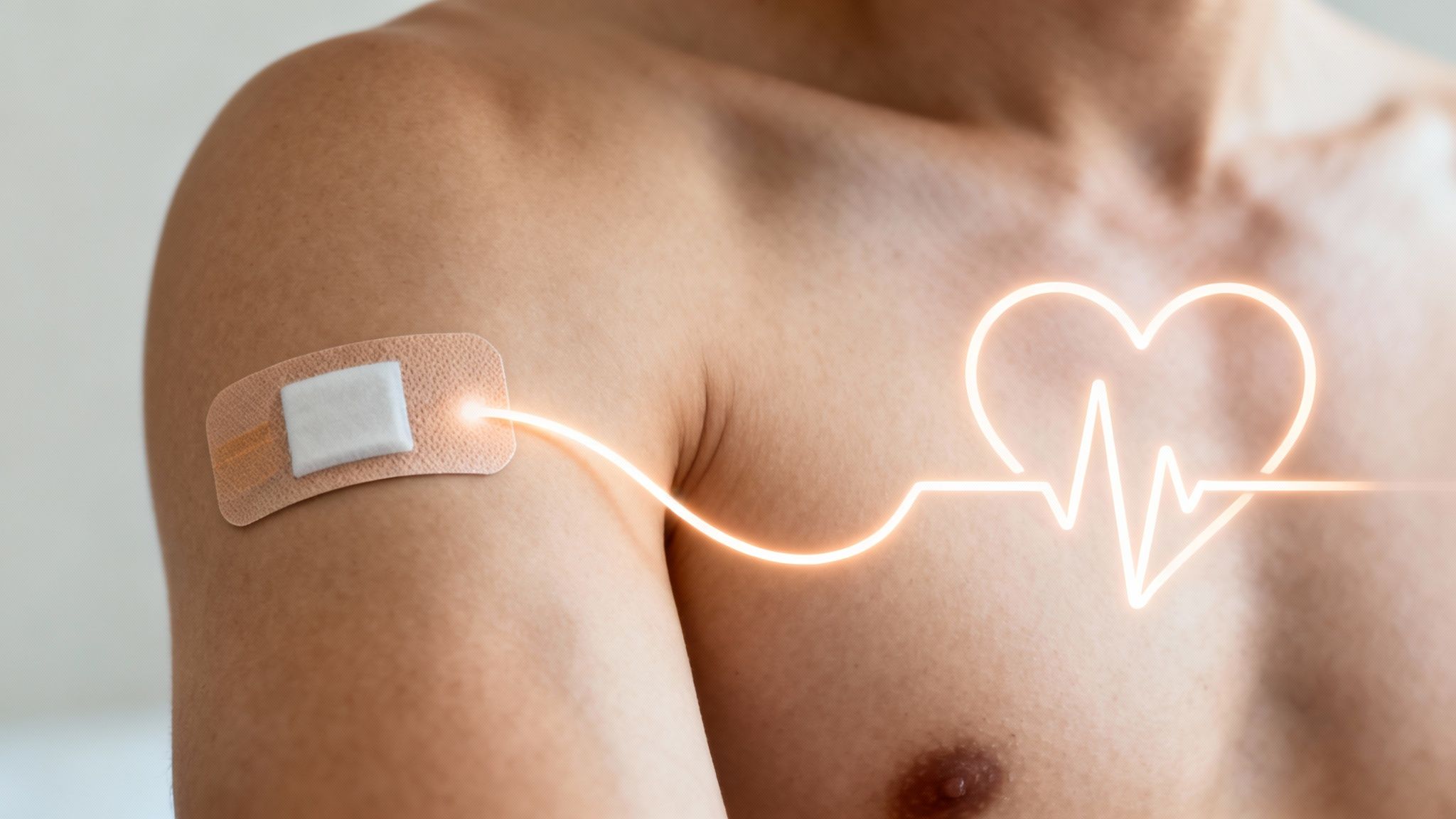
Hello Heart Hero. Deciding to use a nicotine patch to quit smoking is a massive win for your heart, but it's totally normal to wonder about the side effects. Most people might notice things like mild skin irritation, vivid dreams, or headaches. Less common, but still possible, are effects like heart palpitations.
What to Expect on Your Smoke-Free Journey
First off, welcome. Choosing to quit smoking is one of the best things you can do for your health, and the fact that you're exploring tools like the nicotine patch shows you're serious about it. We get it, you might be a little cautious, looking for real answers that go beyond generic advice. It's smart to have questions.

Think of this guide as a supportive conversation, not a stuffy clinical manual. Our goal is to pull back the curtain on what you might experience, from the everyday stuff to the less common reactions. This isn't about scaring you; it's about arming you with knowledge so you feel prepared and in charge of your health.
A Quick Look at What We'll Cover
We’re going to walk through the range of reactions your body might have as it gets used to this new normal.
Here's what you can expect:
- Common Reactions: We'll touch on things like skin redness at the patch site and the simple trick of rotating where you put it.
- Heart-Related Concerns: We’ll dive into palpitations and heart rate changes, explaining exactly why a stimulant like nicotine can make you feel that way.
- Sleep and Dreams: The patch can sometimes mess with your sleep or give you some wild dreams. Understanding the various effects of sleep deprivation on your health can be really useful as you figure out a new routine.
- Practical Self-Care: You’ll get simple, actionable tips to manage these side effects, so you can stay comfortable and keep your eyes on the prize.
Your body is adjusting to a new reality, one without the cocktail of chemicals in cigarette smoke. The patch delivers nicotine in a slow, steady stream, which is a world away from the intense, addictive hit you get from lighting up.
This Is a Holistic Journey
Quitting smoking is a huge piece of the heart-health puzzle, but it’s just one piece. As you make this incredible change, it's the perfect time to look at the bigger picture of your well-being. By learning about lifestyle changes for heart disease, you can build a more complete and powerful strategy for a healthier future. This isn't just about ditching one habit; it’s about embracing a whole new set of healthier ones.
We want this guide to give you the confidence you deserve. When you understand the potential side effects of a nicotine patch, you're better prepared to manage them if they show up, making sure nothing gets in the way of your new, smoke-free life. Let's get started.
Understanding Common Nicotine Patch Side Effects
When you first start using a nicotine patch, it’s completely normal for your body to take some time to adjust. Think of it as a significant shift in how you're getting nicotine, so don't be alarmed if you notice a few changes right off the bat.
The most common thing people run into is a bit of skin irritation right where the patch sits. It's a lot like the reaction you might get from a new brand of bandage. You might see some redness, feel a little itching, or notice some minor swelling. This is usually just your skin reacting to the adhesive or the concentration of nicotine in one spot.
Luckily, this is usually an easy fix. The best trick is to simply rotate where you put the patch every day. Stick it on a clean, dry, and hairless part of your upper body, like your arm, chest, or back, and just pick a new spot the next day. This simple routine gives your skin a much-needed break and can dramatically cut down on irritation.
Beyond Skin Reactions
While skin sensitivity is the most common complaint, a few other side effects can show up as your body gets used to the patch. The good news is that they're typically mild and tend to fade away within the first week or two.
You might experience one or more of these:
- Vivid Dreams: Nicotine can mess with your sleep cycles, sometimes leading to some seriously intense or memorable dreams. If they start to bother you, taking the patch off before you go to bed is a common solution.
- Trouble Sleeping: Some people find it a little harder to fall or stay asleep. This makes sense, since nicotine is a stimulant, and a 24-hour patch is delivering it around the clock.
- Headaches: A mild headache can happen as your body adapts to a steady, lower dose of nicotine instead of the sudden jolts from smoking.
- Nausea or Dizziness: Feeling a bit queasy or lightheaded can also be a sign of your body adjusting. This often occurs if the patch dose is a little too high compared to your old smoking habits.
It’s important to remember these feelings are almost always temporary. They're signs that your body is recalibrating, moving away from the thousands of chemicals in cigarettes to a cleaner, more controlled nicotine source.
Putting Common Side Effects into Perspective
Knowing how common these experiences are can be reassuring. For example, research consistently shows that nausea and skin issues are at the top of the list. One major review found that about 52% of nicotine patch users reported at least one side effect. Nausea was three times more likely for patch users compared to a placebo group, and skin irritation was nearly twice as likely. You can read more about the research on nicotine patch adverse effects to get a deeper look at the numbers.
Think of these initial side effects as your body's "check engine" light coming on during a major upgrade. It's just signaling that a big, positive change is underway. Most of the time, these lights dim as your body gets comfortable with its new, healthier operating system.
It's also worth remembering that sometimes, what feels like a side effect might actually be related to nicotine withdrawal. Headaches and irritability, for instance, are classic withdrawal symptoms. The patch is designed to reduce them, but it might not eliminate them completely, especially at first.
If you ever feel a flutter in your chest, it's natural to worry. While this can be a side effect, it helps to understand the usual triggers. You can learn more about what causes heart palpitations in our detailed guide. This knowledge can help you tell the difference between a temporary adjustment and something that might need a closer look.
A Closer Look at Heart-Related Side Effects
Any concerns about your heart can feel unsettling, especially when you’re in the middle of a major health change like quitting smoking. Let's talk directly about the heart-related side effects of nicotine patches, so you can separate fact from fear.
It's true that some people notice a faster heartbeat or a fluttering feeling in their chest, often called heart palpitations. Others might see a temporary bump in their blood pressure. While these feelings can be alarming, there’s a pretty straightforward reason they happen.
Nicotine, even from a patch, is a stimulant. Just think of it like your morning cup of coffee. It can gently activate your body's "fight or flight" response, which naturally leads to a short-term increase in your heart rate and blood pressure. For most people, this is a mild and brief reaction as their body gets used to the patch.


Why Your Heart Reacts to Nicotine
When nicotine enters your bloodstream, it prompts the release of adrenaline, the very same hormone that kicks in when you’re excited or under stress. This is what causes your heart to beat a little faster and your blood vessels to narrow slightly, which in turn can raise your blood pressure.
This response is a whole lot less intense than the sudden jolt you get from smoking a cigarette, which floods your system with nicotine in seconds. The patch delivers a slow, steady dose, which is why its effects are usually much milder. The key is simply to understand your body's signals and know what's a normal adjustment versus what isn't.
This simple flowchart can help you decide what to do if you experience a common side effect.
As you can see, for many mild reactions, a simple action like changing the patch's location is often the first and most effective step.
Palpitations and When to Be Aware
Heart palpitations might feel like a skipped beat, a flutter, or a brief pounding in your chest. While they're often harmless, these sensations definitely deserve your attention. If you're new to the patch, you might notice them more in the first few days.
It’s helpful to know what to watch for:
- Brief and Infrequent: A flutter that lasts a few seconds and only happens once in a while is often just part of the adjustment period.
- Accompanied by Other Symptoms: If palpitations come along with dizziness, shortness of breath, or chest pain, that's a signal to get professional advice.
- Persistent Feelings: If your heart feels like it's racing or beating irregularly for long stretches, it's wise to check in with your doctor.
Understanding these distinctions is crucial. You can get more familiar with the range of sensations by reading about the different types of heart arrhythmia symptoms, which can empower you to describe exactly what you're feeling.
The goal is not to ignore these feelings but to understand them. Your body is communicating with you, and learning its language is a powerful part of taking control of your health.
Putting Heart-Related Risks in Context
It's easy to jump to the conclusion that any heart-related symptom is a sign of something serious. However, it's reassuring to know that major cardiovascular events like a heart attack are not significantly increased with proper nicotine patch use.
Research paints a clear picture here. While nearly 20% of users might experience minor skin irritation, more serious issues are rare. That said, studies do show that patch users are about twice as likely to report palpitations or chest pains compared to people who aren't using them. This just highlights why it's so important to be mindful of these specific symptoms.
Special Caution for Pre-Existing Conditions
If you already have a known heart condition, using a nicotine patch requires extra mindfulness and a conversation with a health professional you trust.
Situations that call for particular care include:
- A recent heart attack (within the last few weeks)
- Unstable angina (chest pain that is new or getting worse)
- A history of serious arrhythmias (irregular heartbeats)
In these cases, the stimulant effect of nicotine, even from a steady-dose patch, could potentially add stress to a vulnerable heart. This doesn't automatically rule out using the patch, but it absolutely means a personalized plan is essential for your safety. Making this a collaborative decision ensures you can quit smoking in the safest way possible for your specific situation.
How You Can Monitor Your Heart Health at Home
Feeling in control is a powerful part of any health journey. If you’re noticing heart-related side effects from the nicotine patch, like palpitations, you don't have to just sit and wonder what they mean. Today's technology gives you the tools to monitor your heart right from home, putting valuable information in your own hands.
This new level of awareness can be incredibly reassuring. It moves you from a place of uncertainty to one of empowerment, making you an active partner in your own healthcare.
Introducing Personal ECG Monitoring
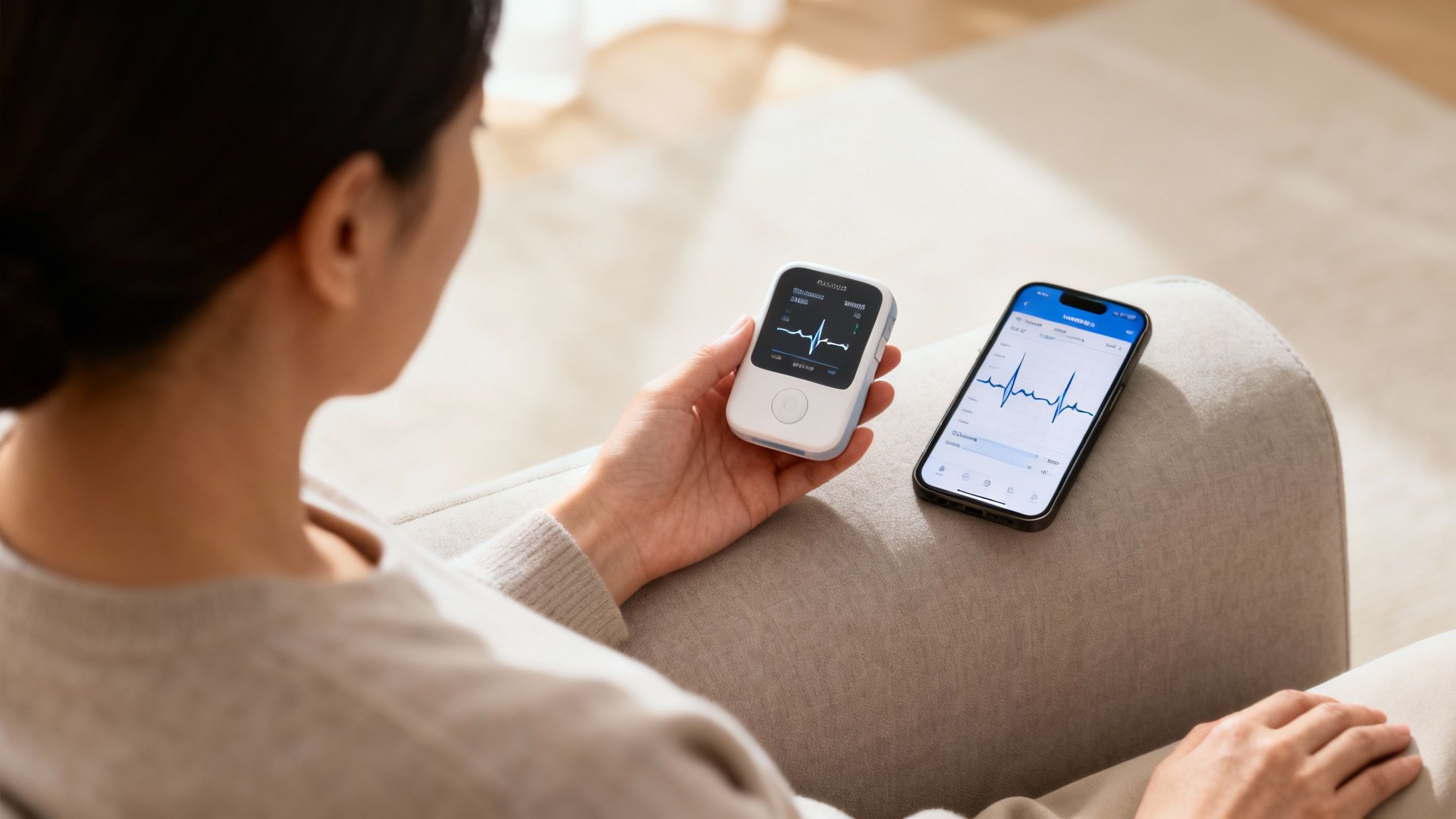
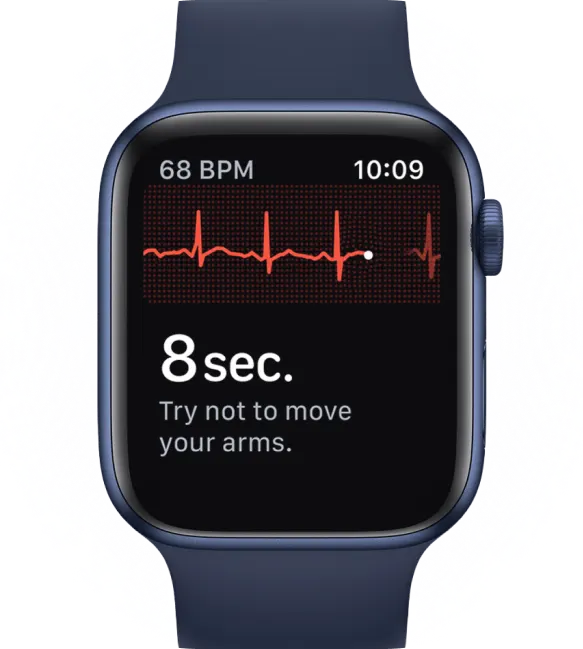
One of the most direct ways to keep tabs on your heart is with a personal electrocardiogram (ECG or EKG) monitor. These are devices, often built into smartwatches or available as small handheld gadgets, that can record your heart’s electrical activity on the spot.
Imagine this: you feel a sudden flutter in your chest after putting on a nicotine patch. Instead of just worrying, you can take a quick ECG reading in that exact moment. This captures a snapshot of what your heart was doing, giving you concrete data instead of just the memory of a feeling.
Services like Qaly take this a step further. You can send your ECG recording directly from an app and have a certified expert review it, often within minutes. This gives you a clear, professional interpretation of that specific event, helping you understand if it was a harmless flutter or something that needs more attention.
How At-Home ECGs Provide Peace of Mind
The biggest benefit of these tools is the immediate feedback they offer. Waiting for a doctor's appointment while you’re anxious about a new symptom is incredibly stressful. Home monitoring helps bridge that gap.
Here’s how it helps you stay in control:
- Capture Symptoms in Real-Time: Heart palpitations can be fleeting. Being able to record an ECG the moment a symptom happens is crucial for figuring out the cause.
- Track Patterns Over Time: You can start to see if certain activities or times of day trigger your symptoms. Does your heart rate only spike right after applying a fresh patch? Your data will show you.
- Get Expert Interpretation: An app like Qaly connects your raw data to a human expert. This means you’re not just guessing what the squiggly lines mean; you’re getting a professional analysis.
- Prepare for Doctor Visits: You can walk into your next appointment with a detailed log of your symptoms, complete with ECG recordings. This leads to a much more productive and informed conversation.
Think of it like having a heart expert on call. Instead of letting anxiety build, you can capture the data, get a quick analysis, and gain clarity on what’s happening inside your body.
Making Your Data Actionable
Collecting data is one thing, but using it to improve your health is what really matters. An at-home ECG provides more than just your heart rate. It measures important details like your PR, QRS, and QTc intervals. These are specific measurements of your heart's electrical waves, and tracking them can be very important, especially when starting something new like a nicotine patch.
This information empowers you to have much better conversations with your healthcare provider. For instance, you can show them exactly how your heart rate responded during a palpitation, or provide a log of how your QTc interval has trended over several weeks.
This level of detail transforms your role from a passive patient to an informed collaborator in your own health. If you’re curious about other ways you can track your heart’s performance, our guide on how to check heart health at home offers even more great insights. Ultimately, being able to monitor the side effects of a nicotine patch with real data helps ensure your journey to a smoke-free life is as safe and stress-free as possible.
Navigating Patches with Existing Heart Conditions
If you're quitting smoking while also managing a heart condition, you’re already a champion for your health. But this journey requires a bit more awareness, especially when using tools like the nicotine patch. Let’s talk about how the patch might interact with medications you’re already taking.
When you use a nicotine patch, the nicotine can sometimes change how your body responds to certain heart medications. Think of it like this: your blood pressure medicine works to relax and widen your blood vessels, making it easier for blood to flow. Nicotine, a stimulant, does the opposite, it can cause those same vessels to temporarily tighten.
This doesn't mean you can't use the patch. It just means there's a potential tug-of-war happening inside your circulatory system, where the patch might make your medication work a little harder to get the same result. This is why having a conversation with your doctor before you start is such a powerful first step.
How Nicotine Interacts with Heart Medications
Understanding these interactions doesn't need to be complicated. The goal is simply to give you the knowledge to use the patch safely and confidently.
Here’s a simple breakdown of what might happen:
- Blood Pressure Drugs: As we just touched on, nicotine can cause vasoconstriction (tightening of blood vessels), which may slightly counteract medications designed to lower your blood pressure.
- Heart Rhythm Medications: For drugs that control your heart rate or rhythm, the stimulant effect of nicotine could potentially interfere, though this is less common with the patch’s slow, steady delivery.
- Chest Pain (Angina) Medications: Medications for angina often work by improving blood flow to the heart. Nicotine's effect on blood vessels could theoretically make these less effective during exertion.
The key takeaway is awareness, not alarm. Knowing about these potential interactions allows you to be an informed partner in your own health, able to spot any changes and discuss them effectively with your doctor.
This is especially important in the first few weeks of using the patch as your body adjusts. The long-term safety profile, however, is reassuring. A major study found that extending patch use to six months or even a year did not increase the risk of negative side effects compared to shorter-term use. You can discover more insights about the safety of long-term nicotine therapy and see how it was well-tolerated over extended periods.
Red Flags to Watch For
While using the patch, your body will give you signals if something isn't quite right. Being attuned to these signs is your best tool for staying safe.
Pay close attention to these red flags:
- Increased Chest Pain: You notice your angina symptoms appearing more frequently or with less exertion than usual.
- New or Worsening Palpitations: While some fluttering can be a normal adjustment, persistent or severe irregular heartbeats need attention.
- Dizziness or Lightheadedness: This could signal that your blood pressure is fluctuating more than it should be.
- Unusual Shortness of Breath: You find yourself getting breathless from activities that are normally easy for you.
If you experience any of these symptoms, it's a clear signal to remove the patch and talk with your doctor. This isn't a sign of failure in your quit attempt. Instead, it’s a sign that you're listening to your body and taking smart, proactive steps to protect your health.
Frequently Asked Questions About Nicotine Patches
Embarking on a smoke-free journey is a huge step, and it's natural to have questions. In fact, asking questions shows you're taking your health seriously. We’ve pulled together some of the most common queries about nicotine patch side effects to give you clear, straightforward answers.
Can a Nicotine Patch Cause a Heart Attack?
This is one of the biggest worries people have, and it's a completely fair question. For most people, the short answer is no, using a nicotine patch as directed isn't linked to an increased risk of a heart attack.
While the patch can have mild stimulant effects, like a slightly faster heart rate, this is worlds away from the cascade of events that triggers a heart attack. Think about it: smoking floods your system with hundreds of toxic chemicals, whereas the patch delivers only nicotine in a slow, controlled dose. The health risks of continuing to smoke are vastly greater than those from nicotine replacement therapy.
That said, some situations call for extra caution.
If you've had a recent heart attack, experience severe or unstable angina, or have a history of serious heart rhythm problems, it’s absolutely essential to talk to your doctor before starting the patch. They can help make sure your quit plan is safe and right for your heart.
What if My Skin Becomes Very Irritated?
It’s hard to focus on quitting when your skin is driving you crazy. If you're getting more than just a little redness from the patch, don't worry, there are a few simple things you can do.
First and foremost, rotate the application site daily. This gives each spot a full 24-hour break. Always stick to clean, dry, hair-free areas on your upper body, like your upper arm, chest, or back. And never, ever apply a patch to broken or already irritated skin.
If the itching and redness persist, try these tips:
- Use Hydrocortisone Cream: After taking a patch off, you can apply a small amount of an over-the-counter 1% hydrocortisone cream to the area to calm the irritation. Just be sure never to apply cream before putting on a new patch, as it won't stick.
- Switch Brands: Sometimes the culprit isn't the nicotine but the adhesive in a specific brand. Simply trying a different brand can often solve the problem.
- Look at Alternatives: If you develop a severe reaction with blisters or significant swelling, stop using the patch. This isn't a failure, it's just a sign that you need to explore other options like nicotine gum or lozenges after a quick chat with your doctor or pharmacist.
How Long Do Nicotine Patch Side Effects Last?
For most people, side effects are most noticeable in the first few days. Your body is making a big adjustment, switching from the intense, erratic nicotine hits of a cigarette to the slow, steady supply from the patch.
Minor issues like mild skin irritation, a slight headache, or even a bit of nausea usually fade within the first week or two. If they stick around longer, it might be a clue that your dose is a bit too high for your former smoking habit. For instance, a light smoker who starts on the highest-strength patch is more likely to feel these effects.
Listen to your body. If the side effects are persistent and making you miserable, it's perfectly fine to move to a lower-strength patch sooner than the package recommends. The goal is to find a dose that beats back your cravings without causing other problems.
Can I Wear the Patch at Night if I Have Weird Dreams?
Yes, those wild, vivid dreams are a real and well-known side effect! It happens because a 24-hour patch continues to deliver nicotine while you sleep, which can mess with your sleep cycles and dream patterns.
The good news is, you have a simple fix. If the dreams are bothering you, just take the patch off before bed and put a new one on in the morning. Many patches are designed for 16-hour use for this exact reason.
The only trade-off? You might wake up with stronger morning cravings, since your body has gone all night without nicotine. You'll have to see what works for you. Some people happily trade morning cravings for a good night's sleep, while others find that 24-hour coverage is essential to keep from lighting up.

Monitoring your body's response is a crucial part of your health journey. With the Qaly app, you can track heart palpitations and other symptoms from your smartwatch ECG in minutes.



.png)
.png)