




Key Takeaways

User Profile
Hello, Heart Hero. Starting a new medication like the timolol drug can feel like a big step, especially when you're already managing your health so carefully. We put this guide together to be your clear and reassuring resource, breaking everything down in simple terms.

Your Guide to the Timolol Drug
Trying to make sense of prescription medications can feel overwhelming, and it’s completely normal to have questions or even feel a bit skeptical. We get it. Many people are navigating a healthcare system that can be confusing and are looking for straightforward information they can trust from other sources.
That’s exactly why we created this guide. We believe understanding your treatment is the first step toward feeling empowered and in control of your health journey.
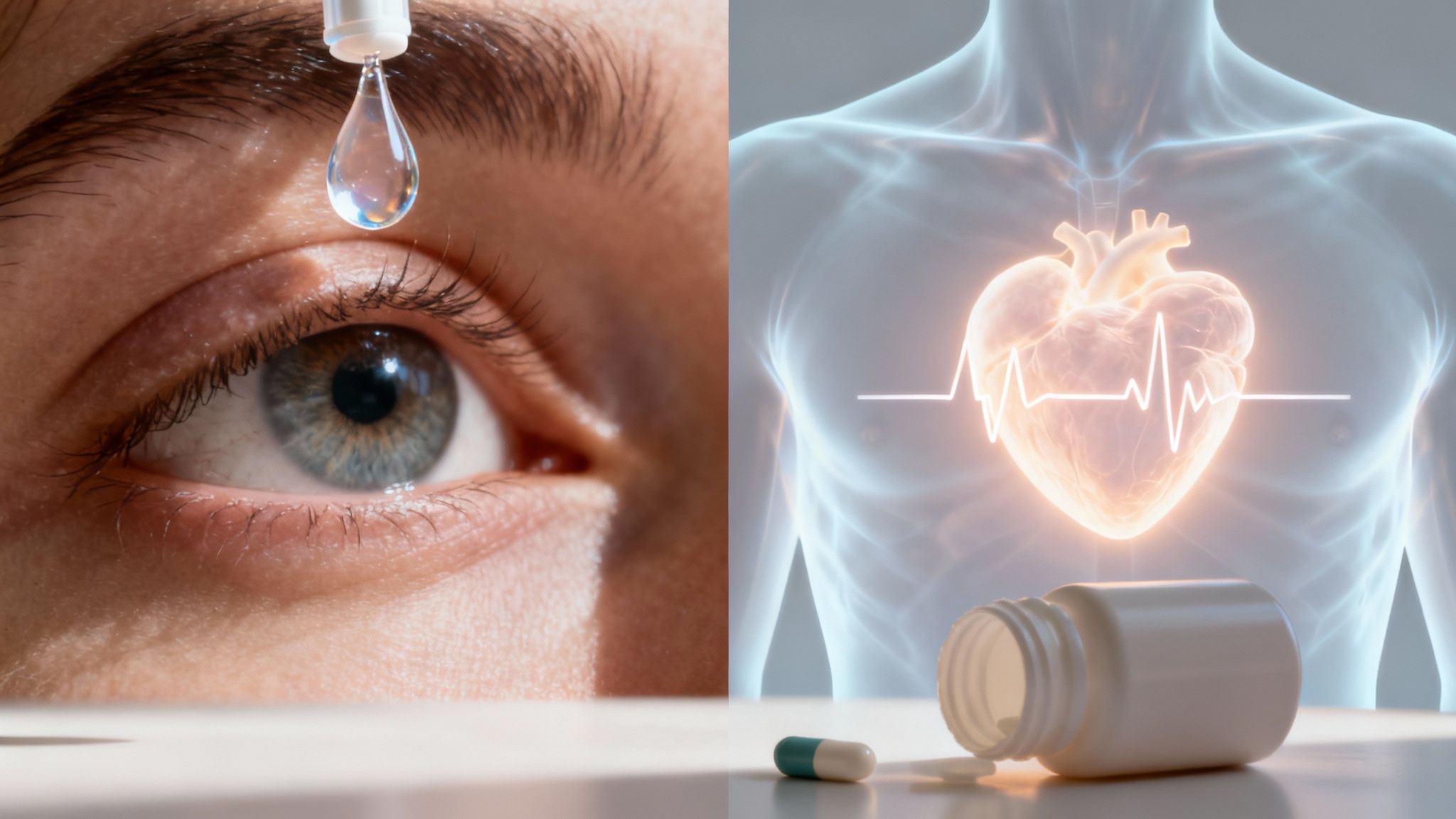
This guide will walk you through everything you need to know about the timolol drug, covering its dual role in treating both eye conditions, like glaucoma, and heart-related issues, such as high blood pressure.
What You Will Learn
Our goal is to give you practical, supportive insights that help you feel confident. We'll explore several key areas:
- How Timolol Works: A simple explanation of what it does for both your heart and eyes.
- Potential Side Effects: A clear look at what to expect and what to watch out for.
- Monitoring Your Health: How you can use at-home tools to keep an eye on your progress.
- When to Contact Your Doctor: Specific guidance on symptoms that mean it's time to call your healthcare team.
Taking an active role in your treatment is one of the most powerful things you can do. By learning about your medication, you're not just a patient; you're an informed partner in your own healthcare.
Timolol is a type of medication known as a beta-blocker, a class of drugs that has been trusted for a long time. For those interested in a deeper dive, you can learn more about the long-term effects of beta-blockers in our related article.
Let’s begin this journey together, armed with clarity and confidence.
How Timolol Works Inside Your Body

Let's pull back the curtain on how timolol actually works its magic, without needing a medical degree. Understanding what a medication is doing inside your body can make the whole process feel a lot less mysterious and a lot more empowering.
To start, think of your body as having tiny receivers, or docking stations, on your cells. These are called beta-receptors. Hormones like adrenaline latch onto these stations to send out "go-faster" signals to various parts of your body, especially your heart.
When adrenaline connects, your heart speeds up, your blood pressure can rise, and even the fluid pressure inside your eye can increase. This is where timolol comes into play.
The Gentle Guard for Your Heart and Eyes
Imagine timolol as a polite but firm security guard that stands right in front of those docking stations. It doesn't eliminate adrenaline, but it does block it from delivering its high-intensity message.
By occupying these beta-receptors, timolol essentially turns down the volume on those "go-faster" signals. This simple action has two huge benefits, depending on what you’re using it for:
- For Your Heart: By blocking the signals, your heart can beat a little slower and with less force. This is like giving your heart a much-needed break, helping to lower blood pressure and easing the overall strain on your cardiovascular system.
- For Your Eyes: In the eye, this very same blocking action reduces how much fluid (called aqueous humor) your eye produces. This is the key to lowering the dangerously high internal pressure linked to glaucoma.
This dual-action capability is what makes timolol so effective. It’s been a cornerstone treatment since its FDA approval back in 1978, and it gets to work fast, often reducing eye pressure within just 20 minutes.
The real beauty of timolol is its simplicity. It’s not introducing some foreign process; it’s just gently calming down a natural system that has become a bit overactive. It helps your body find its balance again.
What This Means for You
So, what does this actually feel like? If you have high blood pressure, it might feel like a sense of calm as your heart isn't constantly in overdrive. If you're managing glaucoma, it’s the quiet reassurance that the pressure in your eyes is under control, protecting your vision for the long run.
Understanding this mechanism is a powerful first step. It demystifies how this medication partners with your body to get you to a healthier place. To see how this blocking action shows up on an ECG, check out our guide on how beta-blockers affect your heart and ECG.
Up next, we’ll dive into the different forms of timolol and why your doctor might choose one over another for your specific needs.
Understanding Timolol for Your Eyes Versus Your Heart
When your doctor prescribes a timolol drug, it's important to understand that it comes in different forms, each with a very specific job. The choice between them boils down to your health needs, but the two you'll most likely see are ophthalmic (eye drops) and oral (pills).
It might seem odd that the same medication can treat such different parts of the body, like eyes and the heart. But it all comes back to its core job: blocking those "go-faster" signals from adrenaline, just in different locations.
The Two Faces of Timolol
Let's break down how each form is used. Knowing the difference can help you feel more confident about your treatment plan.
- Ophthalmic Timolol (Eye Drops): This is the most common version, used almost exclusively to treat glaucoma. When you put the drops in, the medicine works right there on the eye. It reduces how much fluid your eye produces, which in turn lowers the high internal pressure that can damage the optic nerve.
- Oral Timolol (Tablets): When you take timolol as a pill, it works systemically. That means it travels through your bloodstream to affect your entire body. Doctors prescribe it this way to lower high blood pressure, prevent migraines, or to help protect the heart after a heart attack.


Can Eye Drops Affect Your Heart?
Here’s a crucial point that catches many people by surprise: even when used as eye drops, a small amount of the timolol drug can sneak into your bloodstream. This is called systemic absorption.
While the amount is tiny, it can still have effects beyond your eyes.
This is exactly why it’s so important to give your doctor your full health history, especially any heart conditions, before you start timolol eye drops. Even a small systemic effect could be a big deal for someone with a pre-existing issue like a slow heart rate.
This connection really highlights why following your prescription to the letter is so important. Using the right dose gets you the benefits you need while keeping potential risks to a minimum.
Its widespread use is a testament to how well it works. In the United States, timolol remains a go-to for glaucoma and hypertension, with an estimated 2.95 million prescriptions filled in a single recent year. This shows just how trusted it is in treatment plans and its major role in the global glaucoma market. You can explore more about glaucoma treatment trends and their market impact in this detailed report.
For a deeper dive into how timolol fits into overall eye health, especially for conditions like glaucoma, this guide to Glaucoma Plus Eye Care offers some great insights.
Navigating Potential Side effects with Confidence
Seeing the long list of possible side effects that comes with any new medication can feel a little daunting. That's completely normal.
But here’s the good news: most people who take timolol have only mild side effects, if any at all. This section is here to walk you through what you might expect, so you feel empowered by knowledge, not worried by the what-ifs.
Timolol is a trusted medication used worldwide by many individuals to manage conditions such as glaucoma and high blood pressure. For those interested in the data supporting its widespread use, detailed statistics are available in [this report](https://www.cognitivemarketresearch.com/timolol-market-report).
Now, let's unpack some common side effects and then focus on the heart-related ones that might be on your mind.
Common and Milder Side Effects
When your body adjusts to a new medication, it sometimes has a few things to say about it. With timolol, you might notice:
- Fatigue or Drowsiness: This is one of the most common effects, especially when you first start. Since timolol's job is to slow down certain body processes, it makes sense that you might feel a bit more tired than usual.
- Cold Hands and Feet: Timolol can slightly reduce blood flow to your extremities. This isn't usually a cause for alarm, but it's a sensation worth knowing about.
- Dizziness or Lightheadedness: As the medication does its work of lowering your blood pressure and heart rate, you might feel a little dizzy. This often happens if you stand up too quickly.
These effects often fade as your body gets used to the medication. Simple tricks, like getting up slowly from a chair, can make a real difference.
Remember, you are the expert on your own body. The goal of any medication is to improve your quality of life. If any side effect, no matter how small, is bothering you, it's always worth mentioning to your doctor.
Understanding the Cardiac Effects
Because timolol is a beta-blocker, its main stage of action is the heart. This is where most of the questions and concerns come up, so let's clear the air.
The most significant thing timolol does is slow down your heart rate. For many people, that's exactly the point, it's how it helps lower blood pressure. But sometimes, it can slow things down a little too much. This is a condition called bradycardia.
So, what does bradycardia feel like? You might experience:
- Unusual or extreme tiredness that just doesn't go away.
- Significant dizziness or feeling like you might faint.
- Shortness of breath, even with minimal effort.
Think of these as important signals from your body. They're telling you that your heart rate might have dropped too low. While this isn't the most common side effect, it's one of the most important to be aware of. Knowing these symptoms helps you stay in tune with your body and recognize when it's time to get professional advice. We’ll cover exactly when to call your doctor a bit later on.
Using Home Tools to Monitor Your Heart Health
Taking charge of your health doesn't just happen in the doctor's office anymore. Today, you have some impressive tools right in your own hands that can help you become an active partner in your care, especially when you're taking a medication like the timolol drug.
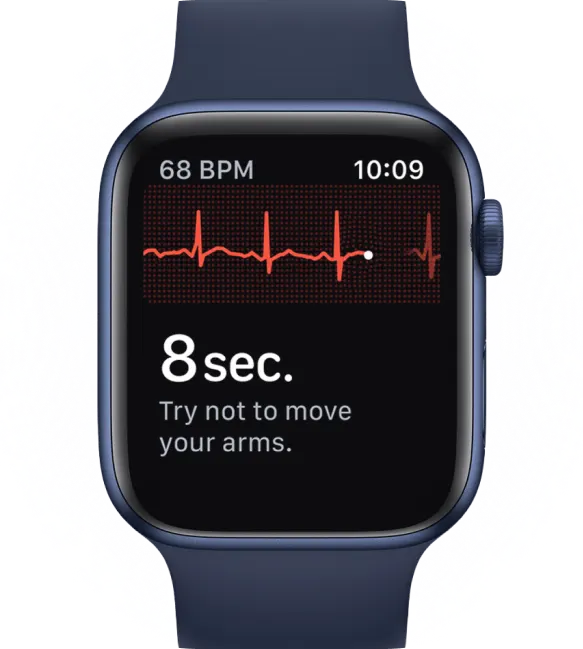
Smartwatches and at-home ECG monitors can be incredible allies. They give you data and insights that, not too long ago, were only available in a clinic.
This isn't about replacing your doctor, of course. It's about empowering yourself so you can have smarter, more productive conversations with them. By tracking key metrics, you can spot trends over time and bring real, concrete data to your appointments.
What to Watch for With Your Wearable
One of the most useful things you can track is your resting heart rate. Since timolol is designed to slow your heart down, keeping an eye on this number helps you and your doctor see if it's staying in a healthy, effective range.
What you're looking for is a consistent trend. If you notice your resting heart rate is regularly dipping below 50 beats per minute (a condition known as bradycardia), that's something worth mentioning to your healthcare provider. A single low reading isn't usually a big deal, but a consistent pattern is what matters.
Many wearables also track your heart rate while you sleep. This can offer even more insight into how the timolol drug is affecting your body's natural rhythms when you're completely at rest.
Making Sense of At-Home ECGs
At-home ECGs, like the ones on a smartwatch or a portable monitor, offer an extra layer of reassurance. They can detect certain irregularities, but it's important to understand what they are, and what they aren't.
An at-home ECG is a fantastic screening tool, not a diagnostic one. It can spot potential issues like atrial fibrillation or give you a snapshot of your heart rhythm, but it doesn't replace a full, 12-lead clinical ECG from your doctor's office.
Think of it as an early-warning system. It’s perfect for capturing those fleeting symptoms that never seem to happen when you're actually at the clinic. You can record that moment in time and then share it with a professional for a proper interpretation.
For a deeper dive, you can learn more about how to check heart health at home with these modern devices. Using this technology wisely turns you from a passive patient into an informed advocate for your own health.
Knowing When to Talk to Your Doctor
It can be tough to know when to pick up the phone and call your doctor. You don't want to seem like you're overreacting, but you also don't want to brush off something serious. Let's cut through the guesswork and create a clear action plan for staying safe while taking the timolol drug.
Your body is pretty good at telling you when something’s not right. The real skill is learning to listen. While you're on timolol, there are some very specific signals that mean you should get in touch with your clinician right away.
Urgent Reasons to Call Your Doctor
These symptoms can be a sign that your heart rate or blood pressure has dipped too low, and they need prompt medical attention. Don't second-guess yourself, reach out if you experience any of these:
- Feeling extremely dizzy or lightheaded, almost like you're about to pass out.
- Actually fainting or losing consciousness, even for a moment.
- Unusual shortness of breath that happens with little to no physical activity.
- A significant, sustained drop in heart rate that you see on your home monitoring device (for instance, if it’s consistently below 50 beats per minute).
Trust your gut. If something just feels wrong, it's always better to make the call. You're your own best advocate, and your concerns are always valid.
There are also less urgent, but still important, reasons to check in with your medical team. Think of things like persistent fatigue that gets in the way of your daily life, ongoing dizziness, or any other side effects that just make you feel unwell. These are all perfectly good reasons to have a conversation.
Likewise, if you start noticing new or different heart palpitations, it's a smart move to seek advice. You can learn more about when to see a doctor for heart palpitations in our detailed guide.
Common Questions About the Timolol Drug
Starting a new medication always stirs up questions. That's completely normal, being curious and informed is a huge part of taking control of your health. Let’s walk through some of the most common things people ask about the timolol drug to get you the clear answers you need.
Knowledge is empowering, so let's tackle what's on your mind.
Can I Stop Taking Timolol Suddenly?
This is a really important question, and the short answer is no. You should never stop taking timolol abruptly without talking to your doctor first.
Suddenly stopping a beta-blocker like timolol can trigger a "rebound effect," which could cause a sharp spike in your heart rate or blood pressure. If you and your doctor decide it's time to stop, they'll set up a plan to gradually lower your dose. This tapering process lets your body adjust smoothly, avoiding any shocks to your system.
Think of it like slowly easing your foot off the brake instead of slamming on it. A gradual stop is much safer and smoother for your body.
Does Timolol Interact with Other Medications?
Yes, timolol can definitely interact with other drugs. This is exactly why it’s so important to tell your doctor about everything you're taking, that includes other prescriptions, over-the-counter medications, vitamins, and even herbal supplements.
Some of the key interactions to be aware of are with:
- Other blood pressure medications, which could drop your blood pressure too low.
- Certain antidepressants or allergy medications.
- Drugs that affect your heart's rhythm.
Think of your doctor and pharmacist as your personal safety team. They'll review everything to make sure your treatment plan is both safe and effective.
Will I Need to Take Timolol for Life?
Whether you'll be on the timolol drug long-term really depends on why it was prescribed for you. For chronic conditions like glaucoma or high blood pressure, timolol is often a lifelong treatment designed to keep things under control.
However, if it’s prescribed for something like migraine prevention, the timeline might be different. This is a crucial conversation to have with your healthcare provider so they can create a plan that’s tailored specifically for you.

With Qaly, you can get your at-home ECGs from devices like Apple Watch, Kardia, and Fitbit reviewed by certified experts in minutes, any time of day.



.png)
.png)