





Key Takeaways

User Profile
Hello Heart Hero. If you've ever felt your heart flutter during a stressful day and wondered if the two are connected, the answer is a definitive yes. The relationship between atrial fibrillation and stress is powerful and very real, turning emotional pressure into a physical reaction that can feel deeply unsettling and confusing.
Unpacking the Connection Between AFib and Stress

Welcome to a safe space where we can explore this link without confusing medical jargon. Many people feel dismissed when they bring up stress, but your experience is valid. Let's be clear: stress isn't just a feeling in your head. It’s a physical force that directly influences your heart's rhythm.
Think of your heart's electrical system like a calm pond. Most days, the surface is smooth and predictable. But stress is like a stone tossed into the water, creating ripples that disrupt that natural calm. For someone with atrial fibrillation, or AFib, stress can be the very thing that starts those chaotic ripples.
Why This Guide Is for You
This guide is designed to give you knowledge and practical tools. We know that navigating the healthcare system can be frustrating, especially when you feel like your concerns aren't being fully heard.
Our goal is to provide clarity and support by focusing on:
- Gentle Explanations: We use clear language and relatable analogies to help you understand the 'why' behind your symptoms.
- Empathetic Insights: We acknowledge the anxiety and uncertainty that come with AFib, helping you feel seen and understood.
- Actionable Steps: We will explore how you can manage the link between AFib and stress, putting you back in control.
You are not alone in this experience. Recognizing that stress is a physical trigger, not just an emotional response, is the first and most crucial step toward managing your heart health more effectively.
Throughout this guide, we'll gently unpack how stress works inside your body, why it can lead to that fluttering sensation, and what you can do about it. By the end, you'll have a much clearer picture of your own heart health, feeling more confident and less anxious about the road ahead.
How Stress Physically Triggers Atrial Fibrillation

To really get how AFib and stress are linked, we need to peek under the hood at what happens inside your body during a stressful moment. Your body has a built-in threat management system called the autonomic nervous system. Think of it as having a gas pedal and a brake.
When you're stressed, your body floors the gas pedal. This is the classic "fight-or-flight" response, and it unleashes a flood of stress hormones like adrenaline and cortisol. These hormones are meant for quick, decisive action, like getting out of a dangerous situation, fast.
The problem starts when that stress becomes chronic, essentially getting the gas pedal stuck to the floor. This constant rush of adrenaline can directly irritate your heart's sensitive electrical wiring, making the chaotic rhythm of AFib much more likely to kick in.
The Conductor and the Orchestra
Imagine your heart's natural pacemaker, the sinus node, as a skilled orchestra conductor. Their job is to keep a perfect, steady tempo, making sure every section of your heart beats in flawless harmony.
Now, picture stress as a sudden, blaring noise that rips through the concert hall. The conductor flinches, losing the tempo. The musicians fall out of sync, creating a chaotic jumble of sound instead of music. That's exactly what's happening in your chest during a stress-induced AFib episode. It’s a physical chain reaction, not just an emotional one. You can learn more about how emotional states like anxiety can cause arrhythmia in our detailed guide.
This isn't just a theory. A major study found that people reporting high levels of stress had 60% increased odds of having AFib compared to those with no stress. Even moderate stress was tied to a 27% increase, showing a crystal-clear relationship between what's going on in our minds and what's happening with our hearts.
Long-Term Damage from Chronic Stress
The connection between stress and AFib goes deeper than just immediate triggers. Over time, living in a state of constant stress creates an environment inside your body that practically rolls out the welcome mat for AFib.
Here's how that happens:
- Inflammation: Chronic stress fuels low-grade inflammation throughout your body. This can slowly damage heart tissue and mess with its delicate electrical signaling.
- High Blood Pressure: Those stress hormones constrict blood vessels, making your heart work harder and driving up your blood pressure, a huge risk factor for developing AFib.
- Structural Changes: After years of strain from high blood pressure and inflammation, the heart's chambers can physically change shape, making them more prone to falling into irregular rhythms.
Understanding this physical process is the first step toward regaining control. Your feelings of stress are creating real, measurable changes in your body, and acknowledging this empowers you to seek solutions that address both your mind and your heart.
The Vicious Cycle of Stress and Heart Anxiety
An AFib episode can be a terrifying experience, and that raw fear is a powerful stressor all on its own. This can plunge you into a difficult feedback loop, a confusing and exhausting cycle where the symptom and the reaction feed each other. It’s a classic chicken-or-egg problem that can feel impossible to escape.
Here’s how it often plays out: an AFib episode strikes, triggering a spike of intense anxiety. That anxiety then floods your body with the very same stress hormones that can provoke another AFib episode. This creates a vicious pattern, leaving you feeling trapped between a physical symptom and your emotional response to it.
Living in this state of high alert can make you hyper-aware of every little beat, flutter, and thump in your chest. It’s a phenomenon sometimes called cardiac anxiety, where the fear of a potential heart event becomes a constant, draining worry that keeps you from enjoying your life. You might find yourself avoiding activities you once loved, all because of that nagging "what if" fear.
Breaking the Cycle: From Fear to Understanding
So, how do you step out of this overwhelming cycle? The most powerful tool you have is knowledge. Shifting from a place of fear to a place of understanding is the key to dismantling the anxiety that fuels the loop.
When you can identify what’s happening in your body during those moments, you start to regain a sense of control. This doesn’t mean the physical sensation disappears, but your emotional reaction to it can change dramatically. The fear of the unknown is often far worse than the reality. If you're wondering about the specific connection between these feelings, you can learn more about how anxiety can cause heart palpitations in our other guide.
This journey is all about gaining clarity and confidence. The more you understand the triggers and sensations of your own body, the less power they hold over you.
The goal is to interrupt the feedback loop. By reducing the anxiety component, you directly reduce one of the major triggers for your AFib. This is a huge step toward finding relief and reclaiming your peace of mind.
Ultimately, breaking this cycle isn't about ignoring your symptoms. It's about meeting them with information instead of fear, which is the first step toward building a calmer, more predictable relationship with your heart.
How a Stressful Job Impacts Your Heart Rhythm
For so many of us, the workplace is ground zero for chronic, day-in-day-out stress. If you've ever felt your heart flutter during a tense meeting or after a particularly grueling week, you're not just imagining things. There's a direct and powerful line connecting job strain to atrial fibrillation.
This isn't just about "feeling stressed." We're talking about a genuine physical response to high-pressure work environments. The pressure you feel at your desk can absolutely show up as physical symptoms, including heart palpitations and even full-blown AFib episodes.


When Your Job Puts Your Heart Under Strain
Two kinds of work environments are especially tough on the heart. Many people find themselves in one or both of these situations, often without realizing the toll it's taking.
- High-Demand, Low-Control Jobs: This is the classic scenario where you're facing constant pressure and tight deadlines but have very little say in how you get the work done. Picture a call center employee who has to handle back-to-back calls with no control over the pace or the outcome.
- Effort-Reward Imbalance: This describes that sinking feeling of pouring your all into your work but getting little recognition, reward, or job security in return. It’s the deep frustration that builds when your hard work feels invisible or unappreciated.
When you're stuck in these kinds of jobs, your body can get locked into a constant state of high alert. This sustained stress keeps those fight-or-flight hormones pumping, which, over time, can directly irritate your heart's delicate electrical system.
It’s critical to validate your own experience. If your job leaves you feeling powerless and undervalued, the resulting stress is a real, physiological event that can directly impact your heart rhythm.
The data backs this up in a big way. One compelling analysis showed that high job strain alone can raise AFib risk by a staggering 83%. When you combine that with an effort-reward imbalance, the risk skyrockets to 97%. You can explore the full findings about workplace stress and irregular heart rhythms on heart.org.
The Workplace Stress Feedback Loop
It's easy for workplace stress to spill over and feed into that anxiety cycle we talked about earlier, creating a feedback loop that’s hard to break.
This visual shows exactly how an AFib episode can trigger anxiety, which in turn fuels more AFib.
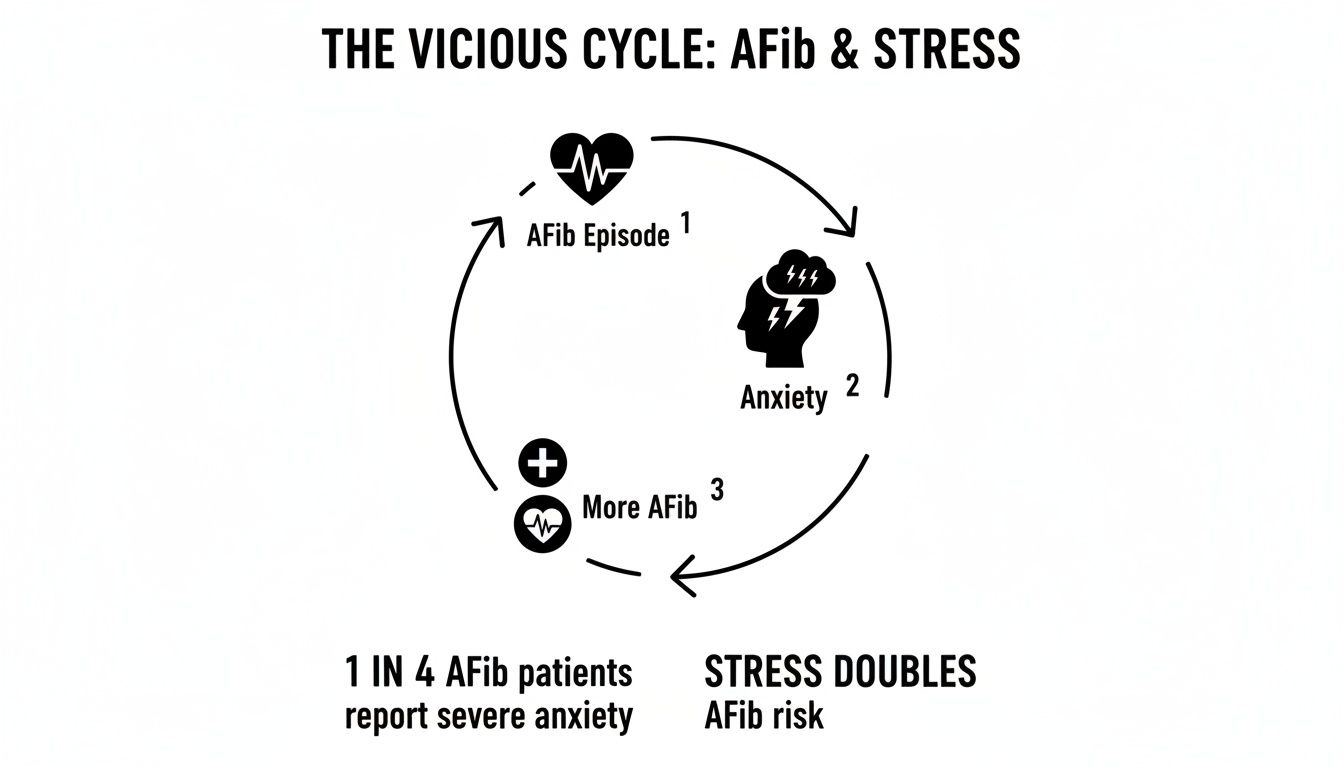
This cycle makes it clear: the stress from your job doesn't just stay at the office. It follows you home and can directly influence your physical health and emotional well-being.
Practical Ways to Manage Stress for Heart Health
Understanding the link between your heart and your mind is a huge first step. But taking gentle, consistent action is where you truly start to reclaim your sense of calm and control.
The good news? You don't need to make drastic, overwhelming changes. Managing the connection between AFib and stress is all about building a personal toolkit of small, sustainable habits that actually feel good to you.
The goal isn't to eliminate stress completely, that's impossible. Instead, it’s about learning how to dial down your body's "fight-or-flight" response so your heart isn't constantly in overdrive. This helps create a calmer internal environment where AFib is less likely to be triggered.
Simple Techniques to Soothe Your Nervous System
Let's start with your breath. It's the most powerful and portable stress-relief tool you own.
When you feel that familiar wave of overwhelm, try this: inhale slowly through your nose for a count of four, hold it for four, and then exhale slowly through your mouth for a count of six. This simple action is like hitting the brakes on your nervous system. Learning to control your breath can have a profound impact on your stress levels; you can even explore effective breathing techniques that also promote core stability.
Here are a few other gentle habits you can start weaving into your life:
- Mindful Movement: You don't need an intense, heart-pounding workout. A short, 15-minute walk outside can work wonders. The combination of gentle movement and fresh air helps lower blood pressure and clear your head.
- Prioritize Sleep: A consistent sleep schedule is non-negotiable for heart health. Aim for 7-8 hours per night, and try to go to bed and wake up around the same time, even on weekends.
- Journaling: Worries can feel much bigger when they're just swirling around in your mind. Getting them down on paper helps you process them and can provide a surprising amount of relief.
The most effective stress management plan is the one you will actually stick with. Choose one or two small things from this list and practice them consistently. Small steps are the key to lasting change.
The connection between severe stress and your heart rhythm is undeniable. For instance, one major study found that a new diagnosis of PTSD, a severe, chronic stress disorder, significantly increased the risk of developing atrial fibrillation. These strategies are part of broader lifestyle changes that can help manage atrial fibrillation.
How Monitoring Your ECG Can Reduce Your Anxiety
When you feel that strange flutter in your chest, the uncertainty is often the hardest part. Your mind starts racing: Is this just anxiety, or is it an AFib episode? This guessing game is a powerful stress trigger all by itself.
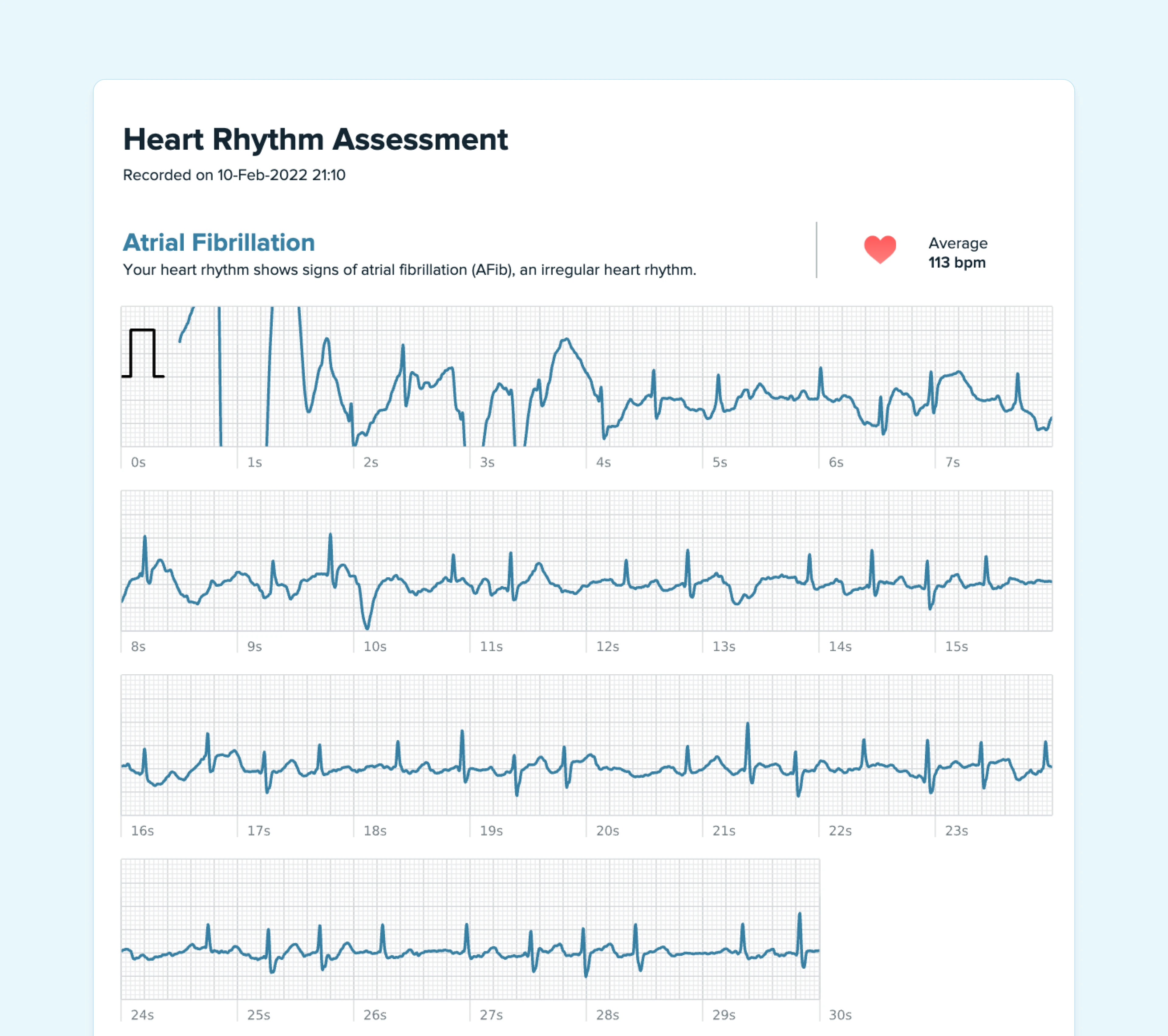
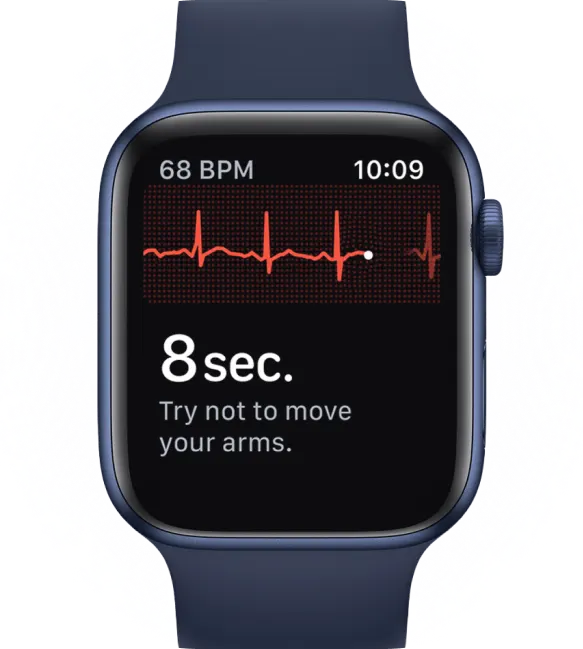
This is where having clear, reliable information becomes a profound source of comfort. The simple act of at-home ECG monitoring with a wearable device can turn that anxiety into empowerment. It shifts you from a place of passive worry to one of active understanding.
Turning Uncertainty into Clarity
Knowledge is power, especially when it comes to your heart. When you feel a symptom, you can take an ECG right then and there. But what good is a recording if you can't understand what it says?
This is where a service like Qaly closes the loop. It connects you to a certified human expert who interprets your ECG and sends you a clear analysis within minutes, day or night. This immediate clarity is a game-changer for breaking the anxiety cycle.
Instead of spending hours or days worrying about an unexplained flutter, you can get a trustworthy answer in minutes. This rapid reassurance helps calm your nervous system and stops the feedback loop of AFib and stress before it can gain momentum.
Empowering Your Doctor Visits
Having a record of your heart's activity gives you a whole new level of confidence. When you can track your rhythm over time and see expert-reviewed reports, your conversations with your doctor become far more effective.
Instead of trying to describe a fleeting feeling, you can present them with concrete data. This leads to a more collaborative partnership and a care plan that truly reflects what you're experiencing. For an in-depth look, our guide on the benefits of a portable electrocardiogram monitor can provide more details.
This whole process gives you profound peace of mind, knowing you are taking proactive steps and are no longer just a passenger on this journey.
Your Questions About Afib and Stress Answered
Trying to understand AFib can feel like navigating a maze, and it's perfectly normal to have a ton of questions. It’s frustrating when you’re looking for straight answers but keep hitting dead ends. This space is for you, here are some clear, straightforward responses to the biggest questions about the link between stress and AFib.
You deserve to feel in control and knowledgeable about your health. Let's walk through these common concerns together.
Can Stress Cause Afib for the First Time?
Yes, it absolutely can. While it’s more common for stress to trigger an episode in someone who already has AFib, a period of intense or prolonged stress can be the straw that breaks the camel's back, kicking off a first-time event.
Think of your heart's electrical system as having a certain threshold. You might already have some underlying risk factors simmering below the surface. A constant flood of stress hormones can irritate the heart's electrical pathways, creating the perfect storm for AFib to finally show up.
How Can I Tell if Palpitations Are From Stress or Afib?
This is one of the most common and most nerve-wracking questions out there. The feeling can be incredibly similar, but there are often subtle clues. Palpitations from anxiety typically feel like a rapid, forceful, but regular heartbeat. It might feel like your heart is just pounding away in your chest.
AFib, on the other hand, is defined by its irregularity. People often describe it as chaotic, quivering, fluttering, or like a "fish flopping around" in their chest. Because the symptoms can be so tricky to distinguish, the only way to be certain is to capture your heart rhythm on an ECG while it's happening.
Will Reducing Stress Cure My Afib?
Reducing stress is a powerful, non-negotiable part of managing AFib, but it isn't considered a cure by itself. AFib is a complex medical condition, often with multiple contributing factors that need a comprehensive treatment plan.
What stress management does is pretty remarkable: it can significantly reduce the frequency and severity of your episodes. It helps you reclaim your quality of life and makes the treatments your doctor prescribes even more effective.
Think of it this way: managing stress is a foundational pillar in your overall health strategy. It works hand-in-hand with medication and your doctor's advice to give you the best possible outcome and put more control back in your hands.

When you need to know right now if a strange heart rhythm is something to worry about, Qaly provides expert ECG interpretations from certified technicians in minutes.



.png)
.png)