


Key Takeaways

User Profile
Hello Heart Hero.
You start an antibiotic because you want to feel better. Then later that day, or maybe on day two, your chest feels different. Your heart seems to beat faster. Maybe it flutters. Maybe your watch shows a resting heart rate that looks higher than usual.
That can feel unsettling fast.
A lot of people in this moment ask the same question: can antibiotics increase heart rate? The honest answer is yes, some can. But the full answer is more nuanced, and that nuance matters because a faster heartbeat while you are sick is not always coming from the medication itself.
Your Heart Rate, Antibiotics, and Finding Answers
A common real-life version of this goes like this. Someone gets a sinus infection or chest infection, starts an antibiotic, and then notices palpitations while lying in bed that night. They check their Apple Watch, Kardia, Fitbit, or Samsung Watch. The number is higher than expected, and that makes everything feel more serious.
The hard part is that several things may be happening at once. The infection itself can stress the body. A fever can make the heart beat faster. Dehydration can do the same. Anxiety can pile on top of both. And in some cases, the antibiotic really can affect the heart’s electrical rhythm.
That mix is why people often leave these situations feeling unheard. They know something changed, but they do not know what caused it.
A calmer way to approach it is to separate the possibilities instead of lumping them together.
- One possibility: your body is reacting normally to illness.
- Another possibility: the antibiotic is nudging your heart rate or rhythm.
- A third possibility: the antibiotic is interacting with another medication you already take.
Key takeaway: A fast heartbeat during an antibiotic course is worth paying attention to, but it is not automatically a sign of danger.
What helps most is clear observation. When did the symptom start? Does it happen after each dose? Is your temperature up? Are you drinking enough fluids? Did your watch ECG still show a steady rhythm, or did the tracing look unusual?
Those details can turn a vague fear into useful information.
Understanding the Link Between Antibiotics and Heart Rate
Yes, some antibiotics can increase heart rate or affect rhythm, but not all antibiotics do this, and not all people are equally sensitive to it.
The three main pathways
Think of this like three roads leading to the same symptom.
- Direct effect on the heart’s electrical system
Some antibiotics can change how electrical signals move through heart cells. That can show up as palpitations, a faster heartbeat, or rhythm changes. - Indirect effect from being sick
If you have a fever, poor sleep, low appetite, or dehydration, your heart may speed up even if the antibiotic is not the true cause. - Medication interaction
This is one of the most important and most overlooked issues. A drug that mildly affects rhythm on its own can become much more relevant when combined with another medicine that also affects the QT interval.

Why the risk discussion can sound confusing
People often hear two messages that seem to conflict. One is, “These drugs are commonly used and usually safe.” The other is, “Some antibiotics are linked to serious rhythm problems.”
Both can be true.
A large meta-analysis covering over 20 million patients found that macrolide antibiotics were linked to 118 additional serious ventricular tachyarrhythmias or related deaths per one million treatment courses, which works out to about 1 in 8,500 treated patients facing a serious arrhythmic event (American College of Cardiology press release on the 2015 meta-analysis).
That does not mean every person taking a macrolide should expect a heart problem. It means there is a real but relatively uncommon risk, and that risk matters more in certain people and certain medication combinations.
A practical way to think about it
Coffee is a decent analogy. One person drinks a cup and feels nothing. Another feels shaky and alert. The same medication can affect different bodies differently, especially when age, electrolyte balance, and other drugs enter the picture.
If your heart rate changes during antibiotics, the useful question is not just “Is this normal?” It is also:
- Which antibiotic am I taking?
- Am I also taking other QT-prolonging drugs?
- Did this start with the infection, the medication, or both?
How Some Antibiotics Directly Affect Your Heart Rhythm
Your heart runs on electricity. Not the kind from a wall outlet, but tiny currents moving in and out of heart cells in a precise rhythm.
Think of the heart like a metronome
A metronome keeps time in music. Your heart has its own built-in timing system. Each beat depends on ions moving through channels in the heart muscle at the right moment.
Some antibiotics can interfere with that timing.
One of the most discussed effects is QT interval prolongation. The QT interval is a measurement on an ECG that reflects part of the heart’s electrical reset process. If that reset takes longer than it should, the rhythm can become less stable in some people.
You do not need to memorize the physiology. The main idea is simple. A few antibiotics can slightly delay part of the heart’s electrical cycle.
What that means in real life
Sometimes the result is subtle. A person may notice palpitations. Another may see a resting heart rate that seems oddly elevated. Someone else may feel brief flutters that come and go.
In healthy people, those changes may remain mild. But if someone already has a prolonged QT, low potassium, low magnesium, or another QT-affecting medication on board, the same antibiotic matters more.
If you want a plain-language background on this type of rhythm effect, this guide on drugs that cause prolonged QT interval gives useful context.
A direct example from a fluoroquinolone
Moxifloxacin is a good example because researchers have measured its effect directly. In clinical studies of healthy volunteers, people with a baseline heart rate of around 61 bpm had an average increase of 5 to 10 bpm during treatment, enough to be recognized as relevant in cardiac safety trials (PMC review of moxifloxacin and heart rate effects).
That is important because it shows the answer to “can antibiotics increase heart rate” is not theoretical. In at least some antibiotics, the effect has been observed directly.
Practical tip: If your watch shows a new rise in resting heart rate shortly after starting an antibiotic, note the timing. The pattern matters.
Why symptoms and ECG findings are not always the same
A person can feel a pounding heartbeat and still have sinus tachycardia, which means a fast but otherwise normal rhythm. Another person can feel only a brief flutter and be having extra beats such as PACs or PVCs.
That is why symptoms alone do not always tell the full story. A wearable ECG can add useful detail by showing whether the rhythm stayed orderly or whether intervals and ectopic beats changed.
-kardia.webp)
Common Antibiotics Known to Affect Heart Rate
If you are trying to sort this out, the most useful starting point is knowing which antibiotic families are more often linked with rhythm concerns.
The two groups people hear about most
Macrolides include drugs such as azithromycin and clarithromycin. These are among the best-known antibiotics discussed in relation to QT prolongation and arrhythmia risk.
Fluoroquinolones include drugs such as moxifloxacin and levofloxacin. These can also affect cardiac electrical behavior, though the pattern and degree can vary by drug.
On the other hand, many common antibiotics such as amoxicillin are not typically the ones that raise this particular concern.
Why interactions matter so much
The antibiotic is not always the whole story. The combination can be the primary issue.
In a study involving 4,282,570 patients, people taking azithromycin together with another QT-prolonging drug had up to a 40% increased odds of a cardiac event compared with those taking amoxicillin. Palpitations accounted for 22.5% of these events (large cohort findings summarized here).
That makes medication review very important. Even if your antibiotic would be low-risk for one person, it may be a poorer fit for someone taking another rhythm-affecting drug.
If azithromycin is the antibiotic you were prescribed, this overview of azithromycin side effects may help you frame better questions for your clinician.
A short checklist before you panic
Ask yourself:
- What exact antibiotic am I taking? Brand names and drug families both matter.
- Do I take any other medications for nausea, mood, infection, rhythm, or sleep? Some of these can also affect QT.
- Did I already have a heart rhythm issue before this prescription?
- Have I ever been told I have a long QT or abnormal electrolytes?
What many people miss: The same symptom, like palpitations, can mean very different things depending on the drug combination behind it.
This is also where skepticism about the healthcare system sometimes becomes understandable. People are often handed a prescription without a clear explanation of interaction risk. If you feel unsure, asking for a medication review is reasonable. It is not overreacting.
When It's Not Just the Antibiotic Causing Palpitations
A lot of antibiotic-related heart worries turn out to be partly about the illness, not only the pill.
The infection itself can push heart rate up
When your body fights an infection, it works harder. You may run a fever, sleep badly, eat less, and lose fluids. Any one of those can make your heart race. Together, they can create a very noticeable change.
That is why timing matters so much. If your heart rate was already rising before the first antibiotic dose, the infection is probably playing a major role.
Common non-drug reasons you may feel a pounding heart
- Fever: Higher body temperature often makes the heart beat faster.
- Dehydration: When you are low on fluids, the heart may work harder to maintain circulation.
- Stress and anxiety: Once you notice a strange sensation, adrenaline can amplify it.
- Poor sleep and reduced food intake: Both can make you feel shaky, weak, and more aware of your heartbeat.
If you want a broader overview, this guide on what causes heart palpitations covers many of the non-medication triggers people commonly overlook.
When to think about allergy instead
A severe allergic reaction can also involve a rapid heart rate, but usually not by itself. More concerning signs include swelling, hives, wheezing, or trouble breathing.
Those symptoms call for urgent medical attention.
A simple reality check
If your watch says your heart rate is up but your symptoms improve with fluids, rest, and fever control, that leans more toward your body reacting to illness. If the symptoms appear sharply after each dose, especially if flutters or skipped beats feel new, the medication deserves closer attention.
Neither pattern should be ignored. They just point in different directions.


How to Use Your Watch ECG for Peace of Mind
You start an antibiotic, then later that day your watch shows a faster pulse than usual. That can send your mind racing. A wearable helps most when you use it like a notebook with sensors, not like an alarm you check every few minutes.
Start by building a simple record
Your goal is to catch a pattern. Patterns are often what separate a harmless temporary rise in heart rate from something your clinician should review.
Write down the day and rough time you started the antibiotic. Then keep a short log of:
- Your resting heart rate trend
- Any flutters, pounding, skipped beats, or dizziness
- The time of each antibiotic dose
- Sleep, fluids, fever, and other medications
This works like putting timestamps on a map. Once the timing is clear, it becomes much easier to see whether the changes cluster around each dose, show up only during fever, or happen randomly.
Record ECGs at the right moments
If your device can record an ECG, try to capture one during symptoms and another when you feel normal. That comparison matters. It gives you a before-and-after view instead of a single isolated strip.
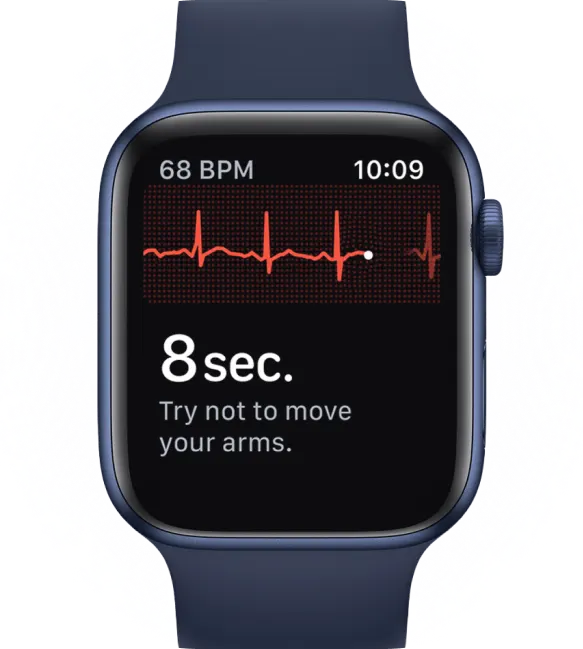
If you need help with the setup, this guide shows how to take an ECG with your Apple Watch.
Try to sit still, rest your arms, and record in similar conditions each time. Small details help. A tracing taken while walking across the room is much harder to compare with one taken at rest.
What your watch can help you spot
A wearable ECG is best at showing changes over time. It is less useful as a one-word verdict.
Look for patterns like these:
- A resting heart rate that shifts upward after you began the medication
- Symptoms that repeatedly appear after a dose
- Episodes that come with lightheadedness, near-fainting, or fainting
- Interval changes your device or reviewer can measure, including QTc if available
For azithromycin, one practical step is to log when you started it and watch for a meaningful QTc increase from your usual baseline. A change of more than 60 ms is commonly treated as worth discussing with a healthcare professional (Wiley review on azithromycin, hERG blockade, and QT risk).
A helpful way to think about it is this. Your watch is less like a final judge and more like a camera. One photo may not answer everything, but a series of clear snapshots can show whether something is changing.
When expert review adds clarity
Single-lead ECGs can show a lot, but they do not explain themselves. A fast rhythm may be simple sinus tachycardia. It may also include extra beats or an interval change that is easy to miss if you are reading it on your own.

For this, an option like Qaly can help review wearable and at-home ECG recordings with certified cardiographic technicians, including interval measurements such as PR, QRS, and QTc along with rhythm interpretation. That gives you something more concrete to bring to your doctor, especially if your watch reading feels concerning but not clearly urgent.
This is the unique advantage of using your wearable well. You are not just collecting numbers. You are gathering timed ECG evidence that can be reviewed by experts instead of guessing from symptoms alone.
Get urgent care for red-flag symptoms
Do not keep recording if you feel seriously unwell. Get urgent medical help if a fast or irregular heartbeat comes with chest pain, fainting, severe shortness of breath, or signs of an allergic reaction.
Taking Control of Your Heart Health Journey
A faster heartbeat during an antibiotic course can feel like your body is suddenly unpredictable. Usually, it is more understandable than it first appears.
Sometimes the explanation is the infection. Sometimes it is dehydration or anxiety. Sometimes a specific antibiotic, or a medication interaction, is affecting the heart’s electrical timing. The key is not guessing too quickly.
What helps most
- Know the drug name: Macrolides and fluoroquinolones deserve more attention than many other antibiotic classes.
- Track the timeline: Symptoms before the first dose suggest one story. Symptoms tied to each dose suggest another.
- Use your wearable wisely: Heart rate trends and ECG snapshots can provide real clues.
- Escalate when needed: Fainting, chest pain, severe breathlessness, and allergic symptoms need prompt medical attention.
A calmer way to move forward
You do not need to choose between blind reassurance and panic. There is a middle path. Notice the pattern, document what changed, and bring that information to a clinician who can assess the bigger picture.
That approach tends to work better than trying to push through symptoms while wondering if they are “all in your head.”
Bottom line: Yes, antibiotics can increase heart rate in some situations. The smartest response is careful monitoring, not fear.
If you already own a wearable ECG device, you have more tools than people used to have. Used thoughtfully, that data can make your next medical conversation far more precise.

Upload ECG recordings from wearables to Qaly for professional review and measurements you can share with your doctor.



.png)
.png)