


Key Takeaways

User Profile
Hello Heart Hero. Seeing "prolonged PR interval" on your wearable ECG can feel confusing, but you're in the right place to understand what it means.
There are many potential causes of a prolonged PR interval, often ranging from natural processes like aging to the expected effects of common medications. This is frequently just a slight delay in your heart's electrical messaging system, and understanding why it happens is the first step toward feeling in control.
Your Guide to Understanding a Prolonged PR Interval
We get it. Seeing technical terms from your smartwatch or ECG device can be intimidating. You might be feeling a little skeptical about the usual healthcare runaround and just want clear, honest answers you can trust. This guide is built to do exactly that, empowering you with information to help you feel confident about your heart health.
A Simple Analogy for the PR Interval
Think of your heart's electrical system like a mail carrier delivering an important letter. The PR interval is simply the time it takes for that "letter" to travel from the upper chambers of your heart (the atria) to the central sorting hub (the AV node), before being sent out to the main delivery routes (the ventricles).
A prolonged PR interval just means this delivery takes a predictably longer route. The message still gets there safely, but there’s a consistent, minor delay in the system. This finding is also known as a first-degree AV block, which is the mildest and most common type of signal delay in the heart.
This guide is here to demystify this technical term. We want to show you that while it deserves your attention, it's often a manageable and understandable finding on your ECG. Our goal is to turn that confusion into confidence.
.png)
What We'll Explore Together
We're going to walk through the most common reasons you might see a prolonged PR interval. Our journey will cover:
- How natural processes, like your fitness level or aging, can slow down your heart's wiring.
- Why medications you're taking for other conditions might be the simple explanation.
- The role your own body plays, from electrolyte balance to your autonomic nervous system.
By the end, you'll have a much clearer picture of what this ECG finding might mean for you, helping you feel more prepared for any next steps.
What a Prolonged PR Interval Means for Your Heart
Let's dive into what this ECG finding really means. Seeing a technical term pop up on a health report can be a little unsettling, especially when you’re just trying to get a handle on your well-being. Our goal is to give you knowledge that empowers you, not confuses you.
Think of your heart’s electrical system like a perfectly timed relay race. The PR interval is the time it takes to pass the baton from the first runner (the P wave, when your atria contract) to the second runner (the QRS complex, when your ventricles contract). A prolonged PR interval just means that handoff is taking a little longer than usual.
A Slight Delay in Your Heart's Rhythm
This slight delay is measured in tiny fractions of a second. A PR interval is generally considered "prolonged" when it lasts longer than 200 milliseconds (or 0.2 seconds). It's an incredibly small amount of time, but your watch is sensitive enough to pick up on it.
This finding is very common and has a clinical name: first-degree atrioventricular (AV) block. Now, the term "heart block" can sound pretty serious, but first-degree AV block is the mildest form and is often nothing to worry about. It simply means that every single electrical signal from the top of your heart makes it to the bottom. It just takes a slightly longer, but very consistent, route to get there.
The delay happens at a specific checkpoint in your heart’s electrical system called the atrioventricular (AV) node. Picture it as a gatekeeper that holds the signal for just an extra moment before letting it pass through. Every signal gets through, just with a predictable pause.
What This Means for You
For the vast majority of people, a prolonged PR interval doesn't cause any symptoms and is considered a benign finding. It’s not a sign that your heart is weak or failing. In fact, it's commonly seen in athletes and many perfectly healthy individuals.
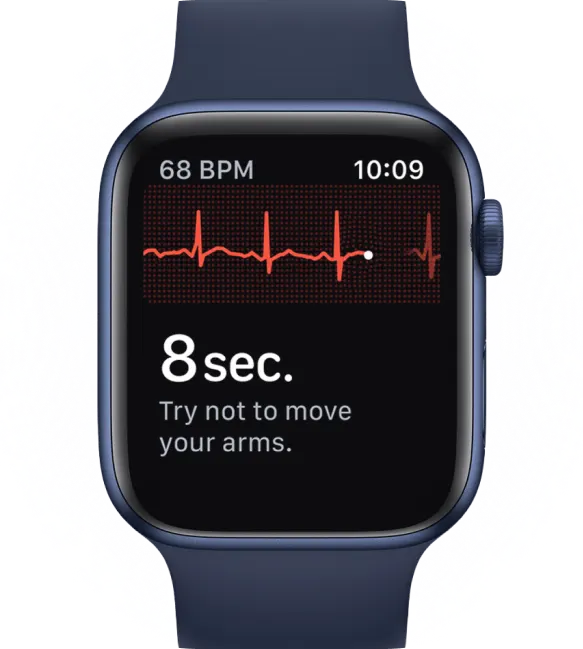
However, understanding this reading is a great first step in being proactive with your health. Your watch has given you a valuable piece of information. While it’s usually not a cause for immediate alarm, it's something worth monitoring. You can learn more about how your watch ECG detects this in our detailed guide.
Tracking this measurement over time helps you and your doctor understand what's normal for your heart. It's all about building a solid foundation of knowledge, so you can feel more confident on your health journey.
The Most Common Causes of a Prolonged PR Interval
It's completely normal to feel a little unsettled when your wearable device flags something like a "prolonged PR interval." You're looking for clear answers, not complicated medical jargon, and you've come to the right place. We're going to walk through the 'why' behind this ECG finding, breaking down the most common causes in a way that actually makes sense.
First off, seeing a prolonged PR interval doesn't automatically mean something is wrong. In fact, many of the reasons for it are perfectly normal, expected, or even reversible.

This diagram shows the journey of your heart's electrical signal. It starts with the P wave, pauses briefly at the AV node, and then triggers the main heartbeat, the QRS complex. That little pause is key. A prolonged PR interval simply means that pause at the AV node is lasting just a fraction of a second longer than usual. Let's explore why that might happen.
The Natural Aging Process
One of the most frequent reasons for a prolonged PR interval is simply the natural process of aging. Think of your heart's electrical system like the wiring in a well-loved classic house. After decades of faithful service, the insulation can wear down a bit, and signals might not travel quite as zippily as they used to.
This is exactly what can happen in the heart. As we get older, the AV node, the heart's electrical gatekeeper, can develop tiny bits of fibrous tissue. This is a normal, age-related change that can gently slow down the electrical signal, resulting in a longer PR interval.
So, if your Apple Watch or Kardia device flags a PR interval over 200 milliseconds, it’s often tied to these natural changes. A landmark study highlighted that while this can be a part of healthy aging, it's a signal worth noting. It found that individuals with a PR interval over 200 ms had double the risk of developing atrial fibrillation and a three times higher risk of needing a pacemaker later in life. You can discover more insights about these findings on Droracle.ai.
High Levels of Athletic Conditioning
Here’s a surprising one: being in excellent physical shape can also cause it. Elite athletes and very active people often have a very strong vagal tone. Think of the vagus nerve as your heart’s built-in brake pedal, helping it stay calm and efficient when you’re at rest.
A strong vagal tone naturally slows down the heart rate, and it also slows the electrical signal's trip through the AV node. For an athlete, a prolonged PR interval is often a sign of a very well-conditioned heart, not a problem.
Common Heart Medications
This is a big one. Many medications prescribed for things like high blood pressure or controlling a fast heart rhythm are specifically designed to slow down the heart's electrical signals. That’s how they work their magic.
If you’re taking a medication like a beta-blocker or a calcium channel blocker, a prolonged PR interval might be an expected and even intended side effect. It’s a sign the medicine is doing its job.
Electrolyte Imbalances
Your heart's entire electrical system runs on a delicate balance of minerals in your blood, known as electrolytes. The main players here are potassium, calcium, and magnesium.
An imbalance, especially high levels of potassium (hyperkalemia), can interfere with the heart's signaling and slow down conduction through the AV node. The good news is that this is often completely reversible once your electrolyte levels are back in the normal range. You can learn more about how electrolytes affect your ECG.
Seeing a new alert on your watch ECG can be unsettling, but you've come to the right place for clear answers. We know it's easy to feel overwhelmed by health data, but this guide is here to give you the knowledge and confidence to take charge of your health journey.
How Common Medications Can Affect Your PR Interval
If you're on medication for a heart condition, you might be wondering if it's connected to the readings you're seeing on your wearable. The short answer is: absolutely, and it’s often by design.
Many of the most common heart medications are a primary cause of a prolonged PR interval. Understanding this can help turn that feeling of worry into one of reassurance.
Think of it this way: certain drugs for high blood pressure or a fast heart rate are specifically made to "put the brakes" on your heart's electrical signals. That’s how they work. They intentionally slow the signal as it travels through your AV node, that crucial delay station we've talked about.
Because of this, a prolonged PR interval is often an expected and even intended side effect. It’s not a sign of something new and scary, but rather proof that your medication is doing exactly what it's supposed to do.
Common Drugs and Their Effects
Two main classes of medication are well-known for this. If you’re taking one of these, it’s probably the simplest explanation for what you're seeing on your ECG.
- Beta-Blockers: These drugs, like metoprolol or atenolol, are go-to treatments for high blood pressure, chest pain (angina), and irregular rhythms. They work by blocking adrenaline's effects on the heart, which slows both your heart rate and the electrical conduction through the AV node.
- Calcium Channel Blockers: Medications like diltiazem and verapamil also work to slow the heart rate and electrical signaling. They're often prescribed for high blood pressure and to keep certain arrhythmias in check. If you'd like to learn more, check out our guide on the side effects of verapamil.
Why Tracking Is Still Important
Even if a prolonged PR interval is expected, it’s still important to keep an eye on it. This is where your wearable becomes an incredibly powerful tool for tracking trends over time. Sharing this information with your doctor gives them valuable insight into how you’re responding to your treatment plan.
For example, your watch ECG and a Qaly tech analysis might show a prolonged PR interval. This is very common with beta-blockers, which are used by over 40% of adults over 65 in the US. While these drugs are a frequent and reversible cause, some long-term studies suggest that a consistently prolonged PR interval could be linked to a higher risk of other heart rhythm issues later on. You can read the full research about these long-term outcomes from JAMA.
By tracking your PR interval, you're not questioning your treatment. You're gathering data to help your doctor make sure your medication dose is perfectly tuned for you. If the interval gets too long, it might just mean a simple dose adjustment is needed.
This proactive approach helps you partner with your healthcare provider, armed with the best possible information. It’s all about working together to keep you safe and healthy.
Using Your Wearable ECG to Monitor Your Heart Health
If you've ever felt like getting clear answers from the healthcare system is a challenge, you're definitely not alone. The great news is that your wearable device, whether it's an Apple Watch, Kardia, or Samsung Watch, can be an incredible partner in understanding your heart and taking back some control.
These devices give you the power to monitor your heart right from your own home. This becomes especially handy when you’re trying to understand the potential causes of a prolonged PR interval. Let's explore how you can use this technology to your advantage.
From Data Points to Real Insight
Seeing an alert for a "prolonged PR interval" on your watch can be jarring. It’s natural to feel a bit of panic over that single reading. But the real power of your device isn't in one isolated event; it's in tracking trends over time. A single high reading might just be a blip, but a consistent pattern is information you and your doctor can work with.
This is where a service like Qaly can make a huge difference. Instead of leaving you with raw, confusing numbers, Qaly connects you with certified cardiographic technicians who personally analyze your ECG. They then provide a human-reviewed report that explains exactly what your readings mean in plain English.
This transforms your wearable from a simple data collector into a truly meaningful health tool. You're no longer just staring at a number; you're getting an expert interpretation that helps you understand the story your heart is telling.


Making the Most of Your At-Home ECG
The first step is getting a clear and accurate ECG from your watch. A "clean" tracing, one without a lot of fuzzy or squiggly lines (known as "artifact"), is much easier for an expert, or an algorithm, to analyze correctly.
Here are a few tips to get the best possible reading:
- Sit still and relax. Find a quiet spot, take a seat, and rest your arm on a stable surface like a table or even your lap.
- Don't talk or move. Even small movements or speaking can create noise in the signal and make your ECG difficult to read.
- Ensure good skin contact. Make sure the watch is snug on your wrist and your finger is making solid, steady contact with the crown or sensor.
How to Track and Share Your Results
Once you get a good ECG, the next step is to look for patterns. Is the prolonged PR interval there all the time, or does it only pop up now and then? Tracking this helps you and your doctor get a much clearer picture of its behavior.
Services like Qaly can automatically track your PR interval over time, displaying it in easy-to-read trend charts. This visual data is incredibly valuable. If you want to take a deeper dive into the fundamentals of the PR interval, you can learn more in our guide to understanding PR intervals on an ECG.
When you walk into your next doctor’s appointment, you won’t just be describing a vague feeling. You’ll be able to show them a credible, technician-reviewed report along with your trend data. This helps you have a more productive, confident, and informed conversation about your heart health.
When to Talk to Your Doctor About Your PR Interval
Understanding your ECG data is one thing, but knowing when to act on it is another. While a prolonged PR interval is often a harmless finding, especially in athletes or during sleep, certain situations definitely call for a chat with your doctor. The goal isn't to create anxiety, but to give you the confidence to know when it’s time to seek a professional opinion.
So, when should you pick up the phone? The clearest signal is when you start feeling new symptoms. If you're seeing a prolonged PR interval on your watch ECG and also begin experiencing dizziness, lightheadedness, unusual shortness of breath, or serious fatigue, it’s time to get it checked out.
Actionable Triggers for a Doctor's Visit
Even though many causes of a prolonged PR interval are benign, there are specific signs that tell you a professional's input is needed. Think of these as clear triggers to move from simply watching your ECGs to acting on them.
Here are a few scenarios where scheduling an appointment is a smart move:
- You're experiencing new symptoms. Dizziness, fainting spells (syncope), significant fatigue, or shortness of breath should never be brushed aside.
- The PR interval is getting progressively longer. If your trend data shows your PR interval is slowly but consistently increasing over weeks or months, it's worth bringing up.
- The reading is exceptionally long. A PR interval that is consistently over 300 milliseconds (ms) points to a more significant delay and should always be reviewed by a clinician.
Remember, the point of monitoring isn't to diagnose yourself. It's to gather high-quality information to share with your doctor, making your appointments more focused and productive.
Having this data ready makes your conversation much more direct and efficient. Your wearable device, especially when paired with a service like Qaly for technician-reviewed reports, provides you with credible information to share. Instead of just saying, "I feel dizzy sometimes," you can show your doctor the exact ECG and trend data from those moments. This changes your role from a passive patient to an active, informed partner in your own healthcare.
Frequently Asked Questions About Prolonged PR Interval
As you dig into what a prolonged PR interval means, it's natural for a few questions to pop up. Let's tackle some of the most common ones we hear to give you a clearer picture.
Can a Prolonged PR Interval Go Away on Its Own?
Yes, in many cases, it absolutely can. If the longer PR interval is tied to something reversible, like a new medication or a period of intense athletic training, it will often shorten back to its previous length once that factor is changed or removed.
For example, if your doctor adjusts a medication that's known to slow heart conduction, you might see the PR interval shorten right on your next ECG.
On the other hand, if the cause is something more permanent, like the natural aging of the heart's conduction system, the finding might stick around. This is exactly why tracking the measurement over time is so valuable. It helps you and your doctor understand its behavior and what's normal for your heart.
Is First-Degree AV Block Dangerous?
For the vast majority of people, first-degree AV block (which is just another name for a prolonged PR interval) is considered a benign finding. It doesn't cause any symptoms, and many people live their entire lives with it without ever knowing.
While it’s typically not dangerous on its own, it’s important to monitor because it is sometimes associated with a higher risk of developing other heart rhythm issues later in life, like atrial fibrillation. This is why tracking it proactively is such a great step for your health.
Does Stress or Anxiety Cause a Prolonged PR Interval?
This is a great question, but stress and anxiety are not direct causes of a prolonged PR interval. In fact, they usually do the opposite. The "fight or flight" response triggered by stress typically speeds up your heart rate and electrical conduction, which would actually shorten the PR interval.
However, stress can definitely cause other sensations like palpitations or a racing heart, making you more aware of your heart's rhythm in general. An ECG analysis is the best way for you and your doctor to see what's really going on and distinguish between stress-related feelings and a specific electrical finding like this one.

Qaly provides human-reviewed analyses from certified technicians in minutes. Gain clarity and confidence in managing your heart health.



.png)
.png)