




Key Takeaways

User Profile
Hello Heart Hero. If you’ve ever felt your heart suddenly skip a beat, race, or pound in your chest right around the middle of your menstrual cycle, you’re not alone. These sensations are often called heart palpitations during ovulation, and for many, they’re a completely normal response to the body’s natural hormonal shifts, not a sign of something more serious.
Why Your Heart Flutters During Ovulation

It’s one thing to know palpitations can happen, but it’s another thing to feel them. That sudden flutter or thump can be unsettling, and it's common to feel anxious or even dismissed when trying to explain these fleeting symptoms. What you’re experiencing is very real, and there’s a clear biological reason for it.
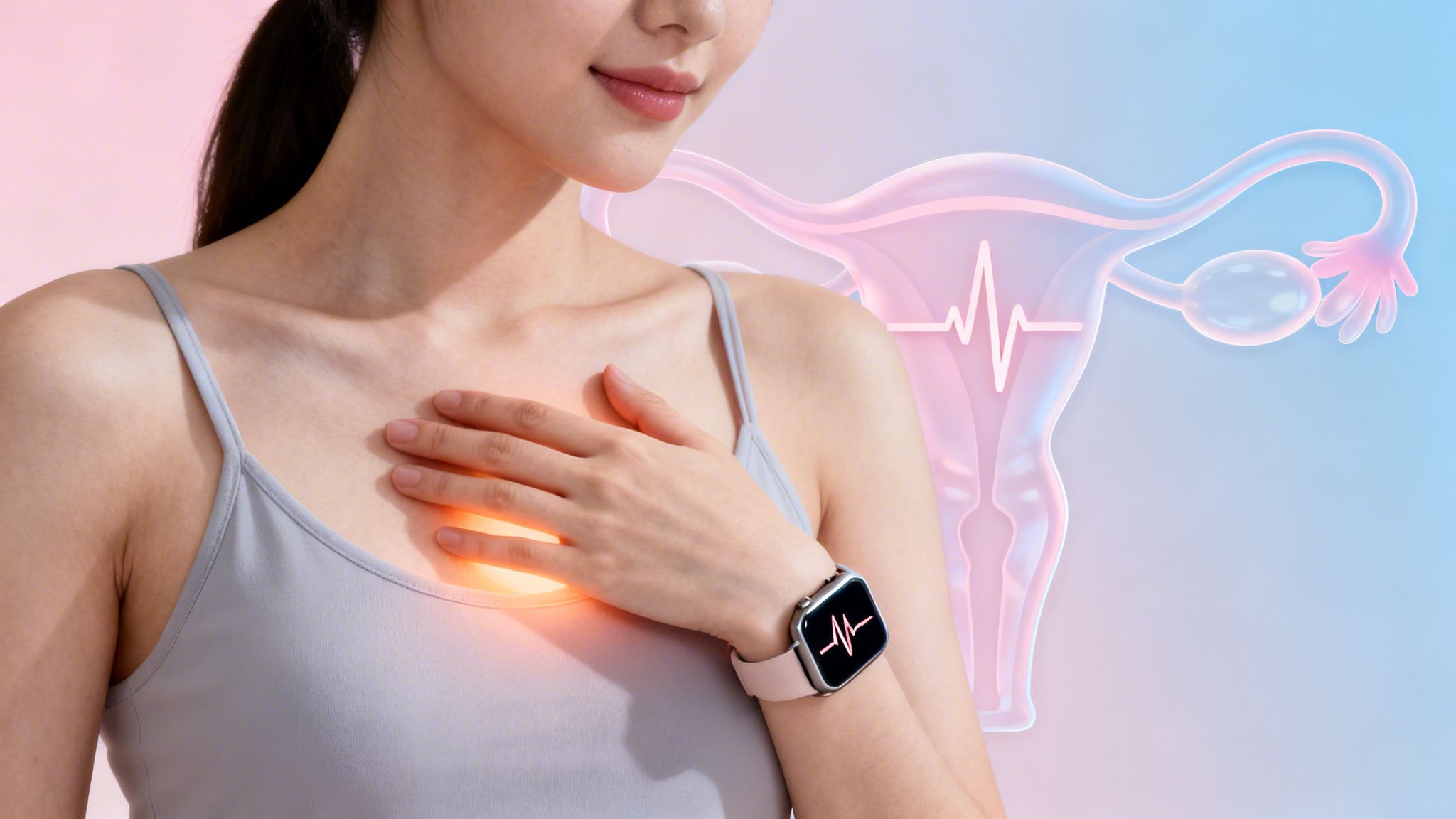
The most common culprit behind heart palpitations during ovulation is the intricate dance of hormones that directs your monthly cycle. Think of your menstrual cycle as a biological orchestra. Around the middle of the month, the hormone estrogen takes center stage, surging to its peak level to trigger the release of an egg.
The Estrogen Effect
This spike in estrogen is often the main conductor behind those heart flutters. Estrogen has a direct effect on your heart's electrical system, making it slightly more sensitive or "excitable" for a short period. This can lead to a faster heart rate or even trigger harmless extra heartbeats that feel like a skip, a pause, or a flutter.
This temporary excitability is why palpitations often seem to appear like clockwork each month. It’s simply your cardiovascular system responding to the powerful hormonal cues that govern your reproductive cycle.
We know that navigating health concerns can feel isolating, especially when the symptoms come and go. Many of us have felt overlooked or unheard by the healthcare system, which is why we look for our own answers. This guide is here to give you clear explanations and practical steps so you can feel more in control of your health.
Here’s what we’ll cover:
- How your hormones can directly influence your heart's rhythm.
- The difference between harmless flutters and signs that warrant a check-up.
- How to use devices you might already have to capture proof of your palpitations.
- Practical steps for managing your symptoms and talking to your doctor with confidence.
How Hormones Influence Your Heart's Rhythm
It can be really unsettling when your heart suddenly starts fluttering or skipping beats. If you’ve noticed this happens around the middle of your menstrual cycle, you’re not alone, and there’s a clear biological reason for it. Understanding the "why" can be incredibly reassuring.
Think of your hormones as a complex signaling network. Most of the month, the signals flow at a steady, predictable pace. But right around ovulation, the system sends out a major alert.
This alert is driven by a surge in estrogen, which spikes to its highest level to trigger the release of an egg. This powerful hormonal shift doesn't just impact your reproductive system; it has a direct line to your heart's electrical system, too. This can make your nervous system a bit more sensitive, tipping it toward a "fight or flight" state and making your heart more reactive.
The Heart and Hormone Connection
So, what does this estrogen surge actually do to your heart? It can make your heart's electrical wiring more "excitable." This might lead to a slightly faster resting heart rate and increase the chances of those noticeable flutters or skipped beats. These are often harmless extra heartbeats called premature ventricular contractions (PVCs).
-kardia.webp)
This isn't just a theory; it's a well-documented connection. Research published in the PACE journal has shown that women can have significantly higher average heart rates during ovulation compared to other parts of their cycle. This is a direct result of hormonal peaks influencing how the heart's rhythm is regulated.
The key takeaway is that your body isn't malfunctioning. It's responding predictably to powerful hormonal signals. For many women, heart palpitations during ovulation are a normal sign that your cycle is working just as it should.
Of course, everyone's body is different, and your individual sensitivity to these hormonal swings can vary. Several factors can play a role in whether you feel these palpitations:
- Baseline Stress Levels: If you're already stressed, your "fight or flight" system is on higher alert, making you more likely to notice every little flutter.
- Dietary Factors: Things like caffeine and alcohol are stimulants that can make your heart's electrical system even more prone to extra beats. Low magnesium levels can also contribute.
- Sleep Quality: A bad night's sleep can throw your whole nervous system out of whack, increasing the likelihood of palpitations.
While a spike in estrogen is often the main trigger, it's helpful to understand the full hormonal picture. Sometimes, issues can arise when levels are too low, as well. You might find it useful to read our article on the symptoms of low estrogen to see how both highs and lows can affect your body.
Distinguishing Normal Flutters From Warning Signs
Knowing that your body is just responding to hormones can be reassuring, but it's equally important to understand when a little flutter might be a signal for something more. Learning to tell the difference between a harmless palpitation and a potential warning sign puts you in control. This knowledge can help quiet the anxiety that often comes with these sensations and empower you to act confidently when you need to.
Most heart palpitations you feel around ovulation are harmless. They’re often just your heart’s brief, sensitive reaction to the hormonal rollercoaster we’ve talked about. Think of it like a quick sputter from a car engine, it’s a momentary hiccup, not a sign of major trouble.
What Benign Palpitations Feel Like
Harmless palpitations tied to your cycle usually share a few common traits. They are typically:
- Brief: Lasting only a few seconds, or maybe a minute or two, before your heart settles back into its normal rhythm all on its own.
- Infrequent: You might notice them a few times around ovulation, but they don’t stick around all day, every day.
- Isolated: The flutter or pound happens without any other scary symptoms. You might feel a little anxious from the sensation itself, but you don't feel seriously unwell.
If your experience lines up with this description, it’s very likely that what you’re feeling is just a normal part of your body's monthly rhythm, a physiological response, not a red flag.
Still, you should always trust your intuition. It’s crucial to recognize which symptoms should push you to get a professional opinion. If your palpitations feel different or show up with other signs, it's time to listen closely to what your body is telling you.
Red Flags That Need Attention
While most ovulation-related flutters are nothing to worry about, you should never ignore palpitations if they come with other concerning symptoms. These are clear signals from your body that it’s time to connect with a doctor.
Seek medical advice if your palpitations are accompanied by any of the following:
- Severe chest pain or a feeling of intense pressure
- Significant shortness of breath or having a hard time breathing
- Dizziness, lightheadedness, or feeling like you might faint
- Actually fainting (also known as syncope)
Any of these symptoms could point to an issue that needs a proper medical evaluation. When it comes to your heart, it's always better to be safe and get clarity. For a more detailed breakdown, you can check out our guide on when to see a doctor for heart palpitations. Acting on these signs isn’t about panic; it’s about smart, proactive self-care.
Capturing Your Heart's Rhythm With A Wearable ECG
Feeling a palpitation is one thing, but having actual proof is another. It can be incredibly frustrating to try and describe a fleeting symptom to your doctor, only to have it dismissed because it wasn't happening at that exact moment. This is where you can turn from a passive worrier into an active partner in your own healthcare.
Luckily, modern technology puts the power to capture these moments right on your wrist. Personal ECG devices, including many popular smartwatches, let you record your heart's electrical activity the second you feel that flutter, skip, or pound.
How To Capture A High-Quality ECG
When you feel that familiar sensation, it's go-time. Your goal is to get a clean, clear recording that a professional can actually use. Think of it like taking a sharp photograph instead of a blurry one, the more detail, the more information it provides.
To get the best possible reading from your device, whether it's an Apple Watch, Fitbit, Samsung Watch, or a KardiaMobile device, just follow these simple steps:
- Stay Still and Calm: Find a place to sit down and try to relax. Any movement or even muscle tension can create static or "noise" in the recording, making it difficult to interpret.
- Rest Your Arm: Place the arm with your watch (or the hand holding the device) on a steady surface, like a table or even just your lap. This simple trick helps to minimize those tiny muscle movements that can interfere with the signal.
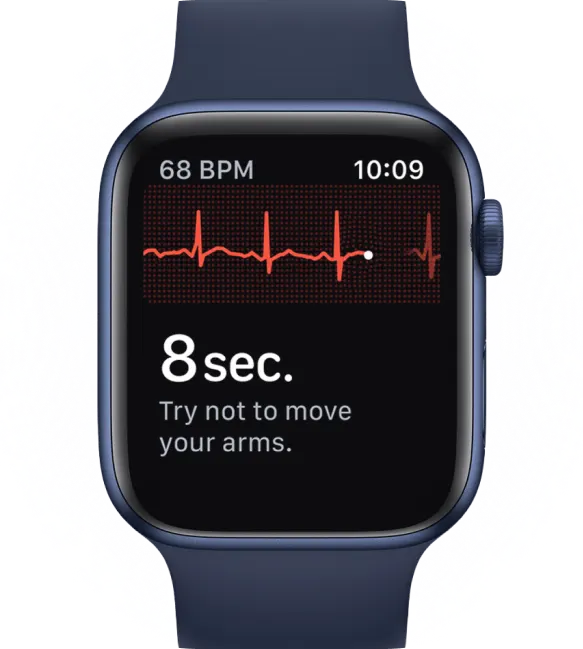
- Follow the Instructions: Open the ECG app on your device and do exactly what the on-screen prompts say. This typically involves resting a finger from your opposite hand on the watch's crown or sensor for about 30 seconds.
This process, shown below, makes it simple to go from just feeling a flutter to capturing real, objective data.
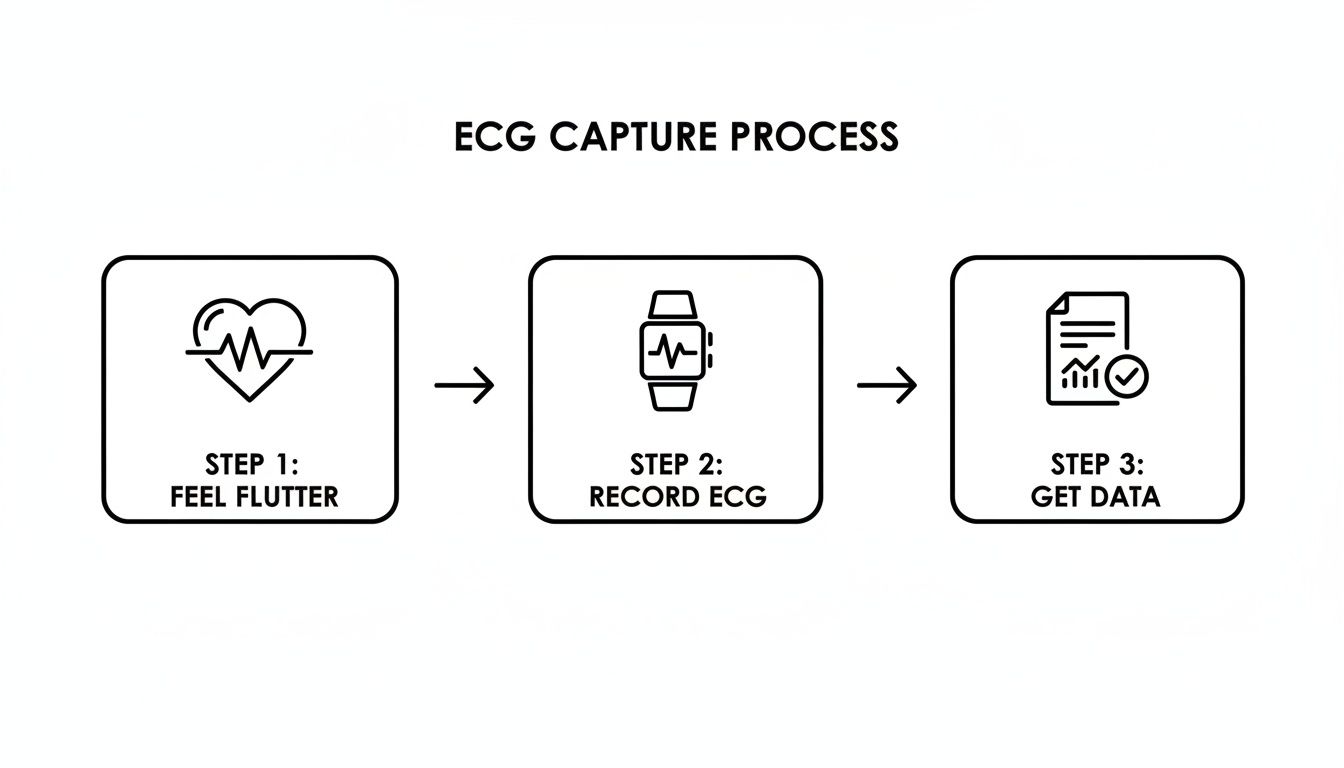
In less than a minute, you can turn a passing, subjective feeling into a concrete piece of evidence.
An ECG captured during an event is far more powerful than describing the feeling to a doctor days or weeks later. It provides concrete evidence of your heart's rhythm at the exact moment you felt the symptom.
This recording becomes a vital part of your health story. It’s a factual record you can use to get clear answers and have much more productive conversations with your doctors. To learn more about what makes these devices so helpful, check out our guide on the benefits of a portable electrocardiogram monitor. This data truly empowers you to advocate for yourself with confidence.
Getting Expert ECG Analysis In Minutes
So, you’ve managed to catch that flutter on your wearable device. That's a massive first step. But what do you do with that squiggly line? An ECG recording is just data until an expert can tell you what it actually means. This is where you can get clear answers quickly, without waiting weeks for a doctor's appointment.
Instead of spiraling down an internet rabbit hole trying to decipher your own ECG, you can connect directly with a human expert. With the Qaly app, you can upload an ECG from any major wearable, like an Apple Watch, Fitbit, Samsung Watch, or KardiaMobile, and have it sent to a real, certified cardiographic technician for immediate review.
This isn't an automated guess from a computer. It's a professional analysis from a trained human, available 24/7.


From Data to Diagnosis
Imagine the peace of mind that comes from knowing exactly what that palpitation was. Within minutes, you can get a detailed report explaining whether that flutter was a harmless extra beat, like a premature ventricular contraction (PVC), or something that needs a closer look.
This process closes the loop between feeling a symptom, capturing the evidence, and finally understanding it. It gives you the power to know what's happening in your body, providing both reassurance and a clear path forward.
This is especially powerful for the many women who notice rhythm changes tied to their menstrual cycle. In places like the US and Europe, 25% to 30% of women of reproductive age report these kinds of irregular rhythms. A tool like Qaly's ECG analysis is a game-changer. Our technicians have already evaluated over 500,000 ECGs, delivering human-reviewed reports on key cardiac intervals in minutes. This helps you distinguish benign hormonal palpitations from more serious issues, which can go a long way in reducing anxiety and empowering you to have a more productive conversation with your doctor. You can explore more about this connection in this in-depth research.
A Report You Can Trust
The analysis you get back is much more than a simple "normal" or "abnormal" tag. It's a full report written to be easily understood by you, but also incredibly useful for your doctor.
Your Qaly report will break down the following:
- A Clear Interpretation: It will name the specific rhythm found, such as "Normal Sinus Rhythm with PVCs."
- Key Measurements: You'll see important data points like your PR, QRS, and QTc intervals, which are crucial for building a full clinical picture.
- A Professional Summary: The technician provides a short summary explaining the findings in plain English.
This is a document you can confidently take to your next doctor’s visit. It completely changes the conversation from, "I sometimes feel a flutter," to, "Here is an ECG of the flutter I felt last Tuesday," making sure you get the answers and care you deserve.
Your Action Plan for Managing Ovulation Palpitations

While understanding the "why" behind your palpitations is a huge step, the next part is taking action. Creating a simple, practical toolkit of lifestyle adjustments can make a world of difference in how often and how intensely you experience heart palpitations during ovulation.
These strategies are all about supporting your body’s natural rhythm, especially during those sensitive hormonal shifts. Think of them as straightforward ways to help you feel more stable and in control.
Simple Lifestyle Adjustments
Many women find that small, consistent changes are enough to significantly dial back their symptoms. The best part? You can start making these adjustments today.
- Hydrate, Hydrate, Hydrate: When you're dehydrated, the electrolytes in your blood become more concentrated. This can put stress on your heart, making it more prone to those flutters and skips. Aim to sip water steadily all day long.
- Limit Stimulants: Caffeine and alcohol are well-known triggers for palpitations in many people. Try cutting back, especially in the days leading up to ovulation when your body is already on high alert.
- Prioritize Magnesium: This mineral is a quiet hero for your heart, helping to regulate its electrical system. You can easily add more magnesium to your diet with foods like leafy greens, nuts, seeds, and even a little dark chocolate.
The menopause transition can amplify these issues. In fact, 42% of perimenopausal women report palpitations. Hormonal swings during this time can cause electrical disruptions in the heart that feel a lot like arrhythmia symptoms. This is where a service like Qaly, which analyzes wearable ECGs for precise arrhythmia detection, becomes an invaluable tool.
Track Your Symptoms and Build Your Case
Beyond daily habits, one of the most powerful things you can do is track your symptoms. A detailed log transforms vague feelings into concrete, usable data.
For a few months, make a note of when your palpitations happen. What did they feel like? What were you doing at the time? And, crucially, where were you in your menstrual cycle? When you pair this log with ECG reports from an app like Qaly, you create an undeniable record of your experience.
This simple preparation allows you to walk into your doctor's office with confidence. Instead of just saying you feel a "flutter," you can show a clear pattern backed by expert-reviewed ECGs. This paves the way for a more productive, data-driven conversation about your heart health.
For more immediate strategies, check out our guide on how to stop heart palpitations with top relief tips. And remember, since the mind-body connection is strong, regulating stress and anxiety for improved well-being can also be a key part of your management plan.
Answering Your Top Questions About Your Cycle And Heart
When you start noticing new patterns in your body, like heart flutters that seem to follow your monthly cycle, it's completely normal to have questions. Getting clear, direct answers is the first step toward understanding what’s going on and feeling back in control.
Let’s tackle some of the most common questions we hear about heart palpitations around ovulation.
Can Birth Control Pills Affect These Palpitations?
Yes, they can, and the effect can go either way. Hormonal birth control works by changing your body’s natural rhythm of hormone ups and downs. For some women, this creates a more stable hormonal environment, which can actually quiet down or even stop cycle-related palpitations.
For others, especially when first starting a new type of birth control, the body's adjustment to the new hormone levels might temporarily trigger palpitations. If you notice a change after starting or switching your pill, a great first step is to track the flutters with your wearable ECG and show the pattern to your doctor.
Your body's response is your own personal story. What helps one person might not be right for another, which is exactly why tracking your own experience is so powerful.
Are Palpitations During Ovulation Related To Perimenopause?
There’s a very strong link here. Perimenopause is famous for its unpredictable hormone swings, which can make heart palpitations show up more often or feel stronger than they used to. In fact, palpitations are one of the most common symptoms women report during this major life transition.
Keeping a record of these episodes is incredibly helpful. It provides both you and your doctor with solid data to see if your symptoms line up with this natural phase of life.
Could My Thyroid Be The Cause Instead Of My Cycle?
This is a fantastic and important question to ask. An overactive thyroid gland, a condition called hyperthyroidism, is a well-known culprit behind heart palpitations, a racing heart, and even feelings of anxiety.
Because these symptoms can look a lot like the hormonal shifts from your menstrual cycle, it's definitely something to rule out. Your doctor can check your thyroid function with a simple blood test, a wise move, especially if your palpitations are happening all the time and not just around ovulation.

With Qaly, you can get your ECGs reviewed by a certified cardiographic technician in minutes, any time of day or night.



.png)
.png)