




Key Takeaways

User Profile
Hello, heart hero. If you've ever felt your heart flutter, race, or skip a beat around your period, you're not alone, and what you're feeling is very real. There’s a powerful connection between your menstrual cycle and your heart's rhythm, and it's often driven by completely natural hormonal shifts. This guide is here to walk you through it and give you the trusted answers you deserve.
Understanding Your Heartbeat and Your Cycle
That sudden pounding in your chest or the weird sensation of a skipped beat can be unsettling, especially when it seems to appear out of nowhere. When these feelings sync up with your monthly cycle, it’s only natural to feel confused and maybe a little anxious.
Maybe you’ve even brought it up to someone, only to feel like your concerns were dismissed or not taken seriously.
Let’s be clear: feeling heart palpitations around your period is a valid experience shared by many women. It’s not "just in your head." In fact, it's often a direct physical response to the complex and powerful hormonal changes your body navigates every single month.
Our goal here is to create a space where your experiences are validated. We'll explore the science behind this connection, breaking it down into simple, reassuring explanations. You’ll learn exactly why these flutters happen and gain the confidence that comes from understanding your own body better.
What You Will Discover Here
This guide is designed to empower you with knowledge and practical steps. We'll move beyond the uncertainty and toward clarity, giving you the tools to feel more in control of your health journey.
Here’s a quick look at what we’ll cover together:
- The Hormonal Connection: We’ll explain exactly how hormones like estrogen and progesterone can influence your heart’s rhythm.
- Other Common Causes: We’ll explore other factors like anemia from heavy periods, stress, and even certain lifestyle habits that can contribute to palpitations.
- Actionable Guidance: You’ll get practical advice on tracking your symptoms and having more productive, confident conversations with your doctor.
Your body communicates in subtle ways. Learning to interpret its signals is the first real step toward advocating for your own well-being. A heart flutter linked to your cycle is one of those signals, inviting you to pay closer attention.
Throughout this guide, we'll also touch on what a normal heart rate feels like, so you can better understand your body's baseline. For a deeper dive, you can check out our guide to a normal cardiac rate, which offers some great context. By the end, you'll have a much clearer picture of what’s going on and feel more confident in managing your health.
Why Hormones Can Affect Your Heart Rhythm
It can be unsettling when your heart suddenly flutters or skips a beat, especially when you notice it happens around your period. Rest assured, you’re not just imagining things. There's a very real connection between your hormones and your heart's rhythm, and getting to the bottom of it can bring a lot of peace of mind.
Think of your hormones, especially estrogen and progesterone, as conductors orchestrating your body's monthly symphony. They influence everything from your mood to your energy levels. But right before your period starts, the levels of these hormones plummet. This sudden shift can throw the heart's rhythm section a little off-key, causing those flutters you feel.
This hormonal drop doesn't just happen in a vacuum. It can also kick your sympathetic nervous system, the "fight or flight" response, into a higher gear. When this happens, your heart muscle becomes more sensitive and excitable. The result? You might notice heart palpitations on period as your heart reacts to these powerful chemical messages.
The Estrogen and Progesterone Rollercoaster
Beyond managing your reproductive cycle, estrogen and progesterone also play a protective role for your heart.
- Estrogen: This hormone helps keep your blood vessels relaxed and flexible, which is great for maintaining stable blood pressure. When estrogen levels drop before your period, your blood vessels lose some of that relaxing effect, which can tweak your heart's rhythm.
- Progesterone: This hormone has a naturally calming, almost sedative effect on the body. When its levels also dip, you might feel more on edge or anxious, making you much more aware of every little beat and flutter.
This completely natural fluctuation is a huge reason why heart palpitations often seem to peak during the premenstrual phase (the luteal phase). In fact, research points to a clear clustering of arrhythmia episodes right before menstruation begins. Some studies have found that certain irregular heartbeats can be up to twice as frequent in the days leading up to a period, showing a direct link between falling estrogen and an increase in these events.
As you can see, the sharp hormonal shifts that happen as your cycle moves toward menstruation line up perfectly with a period of increased sensitivity in your heart's rhythm.
Beyond Hormones: Other Key Factors
While the pre-period hormone dip is often the main culprit, other cycle-related factors can team up with it, creating a perfect storm for palpitations.
Understanding that multiple factors can be at play is empowering. It means you have several avenues to explore for finding relief, from diet to stress management.
It’s worth noting that many women experience similar hormonal shifts and heart rhythm changes during other major life stages. To see how this compares, you might be interested in our guide on heart palpitations in pregnancy.
Anemia From Heavy Periods
If your periods tend to be heavy, you might be losing more iron than your body can easily replenish. Over time, this can lead to iron-deficiency anemia, a condition where you don't have enough healthy red blood cells to ferry oxygen around your body effectively.
When your blood is low on oxygen, your heart has to work much harder and pump faster to make up for the shortfall. That extra effort can easily feel like a racing heart or pounding palpitations. It's a clear physical sign that your heart is working overtime just to meet your body's basic needs.
Thyroid and Autonomic Nervous System Links
Your menstrual cycle can also have a subtle influence on your thyroid function. The thyroid gland is like your body's thermostat, regulating your metabolism, and even tiny changes can impact your heart rate. An overactive thyroid (hyperthyroidism) is a well-known cause of a rapid heartbeat.
At the same time, the autonomic nervous system which is the unconscious command center that controls things like your heartbeat and breathing, is highly sensitive to hormonal changes. The premenstrual drop in hormones can disrupt the delicate balance between its two main branches:
- Sympathetic System (Fight or Flight): This side becomes more active, pushing your heart rate up.
- Parasympathetic System (Rest and Digest): This side becomes less active, making it harder for your body to calm your heart down.
This imbalance makes your heart more prone to firing off extra, premature beats. By looking at all these connected pieces, the picture becomes much clearer, and those mysterious flutters start to make a lot more sense. To dive deeper into how specific nutrients can support your body, check out this practical guide to hormone balance supplements for women.
Distinguishing Normal Flutters From Warning Signs
One of the most stressful parts of having heart palpitations during your period is the flood of "what if" questions that can race through your mind. Is this just a harmless flutter, or is it something more serious? That uncertainty can quickly turn a brief physical sensation into a prolonged bout of anxiety.
Let's clear up that confusion. This section is all about giving you the clarity to calmly assess your symptoms. When you understand what benign, hormone-driven palpitations usually feel like, you can sidestep unnecessary panic while also knowing exactly when it's time to seek medical care.
Most of the time, period-related palpitations are completely harmless. They're simply your body's physical reaction to the dramatic hormonal shifts happening inside. These benign flutters usually share a few common traits.
They are typically:
- Brief: Lasting just a few seconds at a time.
- Infrequent: Popping up only occasionally, not constantly.
- Isolated: Not accompanied by other severe symptoms.
- Predictable: Often appearing around the same point in your cycle each month.
You can think of it like a random muscle twitch. It's a noticeable and sometimes annoying feeling, but it resolves quickly on its own and doesn't stop you from going about your day.
Knowing the Red Flags
While most flutters are benign, it's absolutely crucial to know which symptoms are not normal and require immediate medical attention. Your heart is an incredible organ, but you have to listen when it sends out a true warning signal. Think of these as your non-negotiable signs to get checked out.
Pay close attention if your heart palpitations ever come with any of the following symptoms. These are the red flags that mean it's time to call your doctor or seek immediate care.
Here is a simple checklist of those red flags:
- Severe Dizziness or Lightheadedness: Feeling like you might faint or that the room is spinning.
- Fainting (Syncope): Any loss of consciousness, even for a moment, is a serious sign.
- Significant Chest Pain or Pressure: This isn't just a mild ache; it feels like tightness, squeezing, or a heavy weight on your chest.
- Trouble Breathing: Feeling winded or unable to catch your breath when you haven't been exerting yourself.
If you ever experience these symptoms alongside palpitations, it’s essential to treat them seriously.
Trust your intuition. You know your body better than anyone. If a sensation feels dramatically different, more intense, or more frightening than your usual pre-period flutters, it’s always the right decision to have it evaluated.
Since heart palpitations can sometimes be a symptom of more intense anxiety episodes, learning how to manage panic attacks can also be a helpful tool for regaining a sense of calm.
Why Your Cycle Is a Clue to Your Heart Health
Beyond the immediate symptoms, simply paying attention to your menstrual cycle's regularity can offer powerful insights into your long-term cardiovascular health. An irregular cycle isn't just a scheduling inconvenience; it can sometimes be an early indicator of underlying health patterns that affect your heart.
Research has shown that women with irregular menstrual cycles face a significantly higher risk of cardiovascular issues, including arrhythmias that cause palpitations. A landmark 2023 study found that women with cycles outside the typical 22- to 34-day range had a 19% greater risk of cardiovascular disease. That same study revealed that shorter cycles were linked to a staggering 38% higher risk for atrial fibrillation (AFib). You can discover more about these findings from the American Heart Association.
This doesn't mean an irregular cycle guarantees heart problems. But it does highlight the powerful connection between your reproductive and cardiovascular systems. By tracking your cycle and your heart symptoms together, you're not just managing monthly discomfort. You're gathering vital data about your overall health.
How to Track Symptoms for a Clearer Diagnosis
Walking into a doctor's office and feeling like you're not being heard is one of the most frustrating experiences, especially when you can feel that something isn't quite right. A lot of the time, this isn't because your symptoms aren't real, but because they're tough to pin down and describe. This is your moment to become your own best health advocate by getting methodical about tracking what you feel.
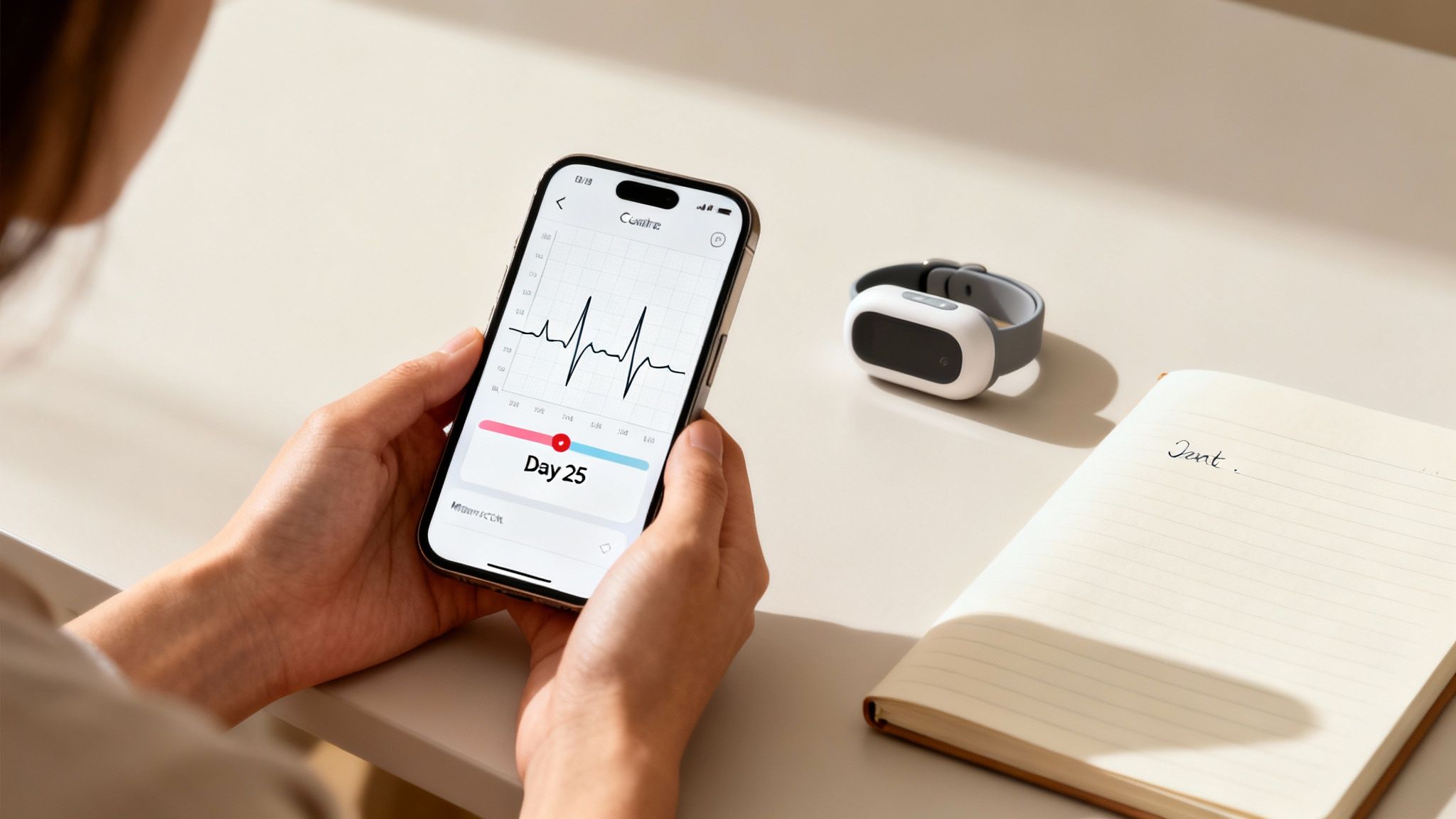
When it comes to heart palpitations on your period, solid data can completely change the conversation with your doctor. It moves you from a vague, "I sometimes feel a flutter," to a confident, "Here's exactly what I experienced on day 25 of my cycle." This kind of clear information bridges the gap between your lived experience and a medical diagnosis.
What to Record in Your Symptom Journal
Keeping a detailed log is probably the single most powerful thing you can do before your next appointment. It doesn't have to be fancy. A simple notebook or the notes app on your phone works perfectly. The idea is to grab a clear snapshot of each episode right when it's happening.
For every palpitation you feel, try to jot down these key details:
- Date and Time: Get as specific as you can. This is how you'll spot patterns tied to meals, certain activities, or even time of day.
- Sensation: What did it actually feel like? Use descriptive words like fluttering, pounding, racing, skipping, or flip-flopping.
- Duration: Did it last for just a few seconds, a full minute, or even longer?
- Your Cycle Day: This is the most important piece of the puzzle for this specific issue. Make a note of where you are in your cycle (for example, "Day 26, two days before my period").
- Activity: What were you up to just before and during the episode? Were you resting on the couch, walking the dog, in the middle of a workout, or feeling stressed out?


Capturing the Bigger Picture
Your heart doesn't exist in a vacuum. A lot of other lifestyle factors can nudge its rhythm, especially when your hormones are all over the place. Adding this context to your journal gives your doctor a much richer set of clues to work with.
Try to add these notes alongside your symptom entries:
- Caffeine and Alcohol Intake: Did you have any coffee, tea, or an alcoholic drink recently?
- Sleep Quality: How did you sleep the night before? Mention any insomnia or if you woke up a lot.
- Stress Levels: Rate your stress on a simple 1-to-10 scale. Was there something specific making you anxious?
- Diet: Did you just eat a big, heavy meal? Or maybe you skipped lunch and were dehydrated?
By meticulously documenting these details, you are no longer just a patient describing a feeling. You become a research partner, presenting a well-organized case file that helps your doctor connect the dots with you.
This level of detail makes it so much easier to figure out if the palpitations are truly tied to your cycle or if another trigger is playing a role. It puts you and your doctor on the same team, working toward a real solution.
Using Modern Tools for Objective Data
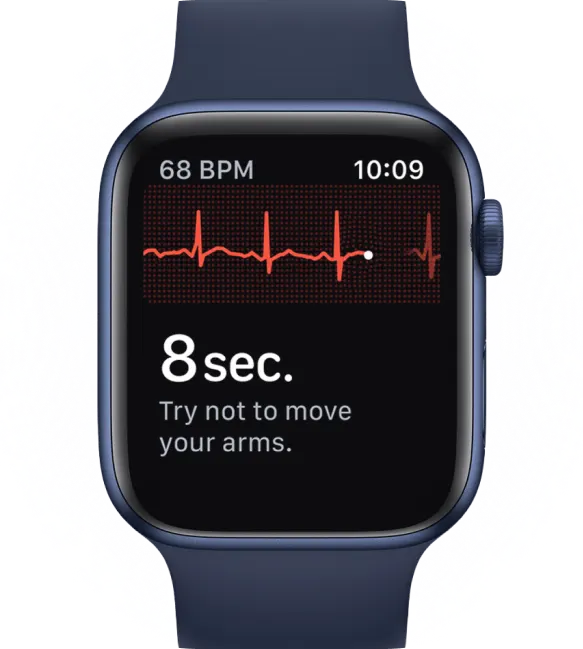
While a symptom journal is incredibly powerful, today's tech gives you a way to capture objective, medical-grade data right from your own home. Wearable devices with ECG (electrocardiogram) capabilities have been a game-changer for diagnosing heart rhythm issues that come and go.
Watches and devices like the Apple Watch, Fitbit, Samsung Galaxy Watch, or a dedicated device like KardiaMobile let you record an ECG the very moment you feel a palpitation. Capturing an episode as it happens is priceless because it gives your doctor actual electrical data from your heart during the event. This is something that's nearly impossible to catch in a clinic since the feeling is often gone by the time you get there.
An at-home ECG provides hard evidence of what you're experiencing. This data can quickly confirm a benign arrhythmia or flag something that needs a closer look, turning a vague description into a specific rhythm strip for your doctor to analyze.
On top of that, services like Qaly can provide a human-reviewed interpretation of your wearable ECGs in just minutes. A certified technician can look at the rhythm, measure important intervals like your PR and QTc, and give you a clear report to share with your doctor. This adds a layer of professional insight to your personal tracking, making sure your concerns are backed by data that's both credible and easy to understand.
Lifestyle Strategies to Soothe Your Heart
While getting medical advice for heart palpitations is always the first and most important step, there's so much you can do in your day-to-day life to find relief and feel more in control. Think of these strategies as small acts of self-care. They are simple adjustments that honor your body’s monthly rhythm and help calm the flutters.
Making a few gentle lifestyle changes can make a real difference in how you experience heart palpitations around your period. It’s all about creating a supportive routine that works with your body, not against it.
Nourish Your Body for a Calmer Heart
What you eat and drink has a direct line to your heart’s rhythm, especially in the days leading up to your period when your body is naturally more sensitive. Focusing on a few key nutrients can provide a strong foundation for stability.
- Boost Your Iron: If you tend to have heavy periods, you might be running low on iron. This can make your heart work overtime to pump oxygen around your body, which often feels just like palpitations. Try adding iron-rich foods like spinach, lentils, beans, and lean red meat to help replenish your stores.
- Embrace Magnesium: This powerful mineral is famous for its calming effect on the nervous system and its crucial role in maintaining a steady heartbeat. You can find it in foods like almonds, avocados, bananas, and even dark chocolate. To learn more about how this mineral supports your rhythm, check out our guide on magnesium supplements for heart health.
- Stay Hydrated: This one's easy to overlook, but dehydration can throw your electrolytes out of whack, a common trigger for palpitations. Make it a habit to sip water consistently throughout the day to keep your system humming along smoothly.
Manage Your Triggers Wisely
Certain things can act like fuel on the fire for an already sensitive heart, especially when your hormones are in flux. Just being mindful of them can significantly cut down on those unwanted flutters.
It’s not about cutting everything out cold turkey. It's more about noticing how your body reacts. Many women find that a cup of coffee that feels totally fine on day 10 of their cycle can cause jitters and palpitations on day 26.
You might find that simply reducing your caffeine and alcohol intake in the week before your period is enough to bring real relief. It’s a small tweak that can have a surprisingly big impact on how you feel.
Think of it as a simple experiment in self-awareness. Try scaling back and see if your heart feels calmer. The goal is to find a balance that works for you, without feeling like you're missing out.
Calm Your Nervous System
Stress is a huge trigger for palpitations, and that connection is deeply biological. Before your period, hormonal shifts can directly ramp up your body's "fight or flight" response, creating a physical reaction similar to an adrenaline rush. When estrogen and progesterone drop, it can alter your autonomic tone, making your nervous system much more reactive.
Here are a few gentle practices to get you started:
- Deep Breathing: The moment you feel a flutter, try the 4-7-8 breathing technique. Inhale through your nose for 4 seconds, hold your breath for 7 seconds, and then exhale slowly through your mouth for 8 seconds. This simple exercise can quickly calm your vagus nerve and slow your heart rate down.
- Mindfulness Meditation: Even just five minutes a day can help train your brain to respond to stress with less of a jolt. Apps like Calm or Headspace have fantastic guided meditations that are perfect for beginners.
- Gentle Movement: Activities like yoga, tai chi, or even just a slow walk in nature can be incredibly soothing for your nervous system. The key here is gentle, rhythmic movement, not intense exercise, which can sometimes be a trigger itself.
How to Have a Productive Talk With Your Doctor
It's one of the most frustrating feelings: walking into a doctor's office with real concerns, only to feel dismissed or like you're not being heard. If that sounds familiar, you're far from alone. The good news is that having a productive, validating conversation is entirely possible, and it usually starts with a little prep work before you even walk through the door.
Think of your appointment as a partnership. You're not just a patient with a list of symptoms; you're bringing valuable, hard-earned data to the table. Your goal is to work with your doctor to uncover what's going on. By presenting clear information and asking the right questions, you can make sure your concerns about heart palpitations on your period are taken seriously.
Prepare Your Evidence Before You Go
Walking in with organized information can completely change the dynamic of your visit. Instead of simply describing a vague "fluttering" feeling, you're presenting concrete evidence. This makes it so much easier for your doctor to recognize the patterns you've been living with.
Before your appointment, pull together these key items:
- Your Symptom Log: Bring the detailed journal you've been keeping. Don't be shy about highlighting the clear link you've noticed between your palpitations and your menstrual cycle.
- Wearable ECG Recordings: If you've managed to catch any of these episodes on a device like an Apple Watch or KardiaMobile, have those recordings cued up and ready to show. This is objective data that gives your doctor a direct look at what your heart is doing.
- A Quick Summary: Jot down one or two sentences that get straight to the point. Something like, "I've been experiencing heart palpitations that show up like clockwork in the few days leading up to my period."
Questions to Guide the Conversation
Having a handful of specific questions ready can keep the discussion focused and moving forward. It shows you're invested and have been paying close attention to your body, making you an active participant in your own healthcare. This approach is all about getting the clarity you need to build a solid diagnostic plan.
Your voice and your data matter. When you present your experience clearly and confidently, you are no longer just a patient with a complaint; you are a partner in your own diagnosis.
Consider asking questions like these:
- "Looking at my symptom log, do you think there could be a connection between these heart palpitations and my menstrual cycle?"
- "What are your thoughts on these ECGs I recorded on my watch?"
- "What kind of diagnostic tests would you recommend to look into this further? Would something like a Holter monitor be a logical next step?"
- "Should we consider doing some blood work to rule out things like anemia or a thyroid imbalance?"
Asking direct questions like these opens the door for a real conversation and gets you that much closer to the peace of mind you deserve. For more ideas on how to feel fully prepared, check out these additional questions to ask your cardiologist to make sure all your bases are covered.
Frequently Asked Questions
We’ve walked through a lot of information, and it's completely normal to still have some questions floating around. Here are some clear, reassuring answers to the most common ones we hear about palpitations and your cycle.
Can Birth Control Pills Affect My Heart Palpitations?
Yes, it’s definitely possible. Hormonal birth control works by directly managing your body’s hormone levels, which can absolutely have an effect on palpitations. For some people, this is a good thing. It smooths out the dramatic hormonal peaks and valleys that were triggering flutters, leading to a big improvement.
For others, though, it can be the opposite, especially with certain types of progestin that might make palpitations more noticeable. It's a very personal reaction. If you see a shift in your palpitations after starting, stopping, or changing your birth control, that's a really important pattern to track and bring up with your doctor.
Is It Normal For Palpitations To Get Worse During Perimenopause?
It is incredibly common for palpitations to ramp up or even show up for the first time during perimenopause. This whole transition is defined by wild and unpredictable hormone swings, especially with estrogen. These chaotic shifts can have a real impact on both your heart’s electrical signaling and the balance of your nervous system.
The result? More frequent or more intense palpitations. While it’s a shared experience for many, it's still crucial to get them checked out by a doctor to make sure there isn't another underlying heart issue at play.
Think of the anxiety-palpitation connection as a feedback loop. The physical sensation sparks fear, and that fear releases adrenaline, which in turn can cause more physical sensations. Breaking this cycle is key to finding relief.
Can Worrying About Palpitations Actually Make Them Worse?
Absolutely. It’s a frustrating and exhausting cycle that so many people get caught in. You feel one little flutter, and it immediately triggers a jolt of anxiety. That anxiety floods your system with adrenaline, a stress hormone that naturally kicks your heart into a higher gear, which can then spark even more palpitations.
This is exactly why stress-management skills are a game-changer. Learning how to ground yourself and stay calm during an episode, even with something as simple as deep breathing, can help you break that cycle. Over time, this can reduce both how often the palpitations happen and how intense they feel.

Get peace of mind by having certified professionals review your recordings, so you can walk into your doctor's office with clear, reliable information.



.png)
.png)