




Key Takeaways

User Profile
Hello Heart Hero.
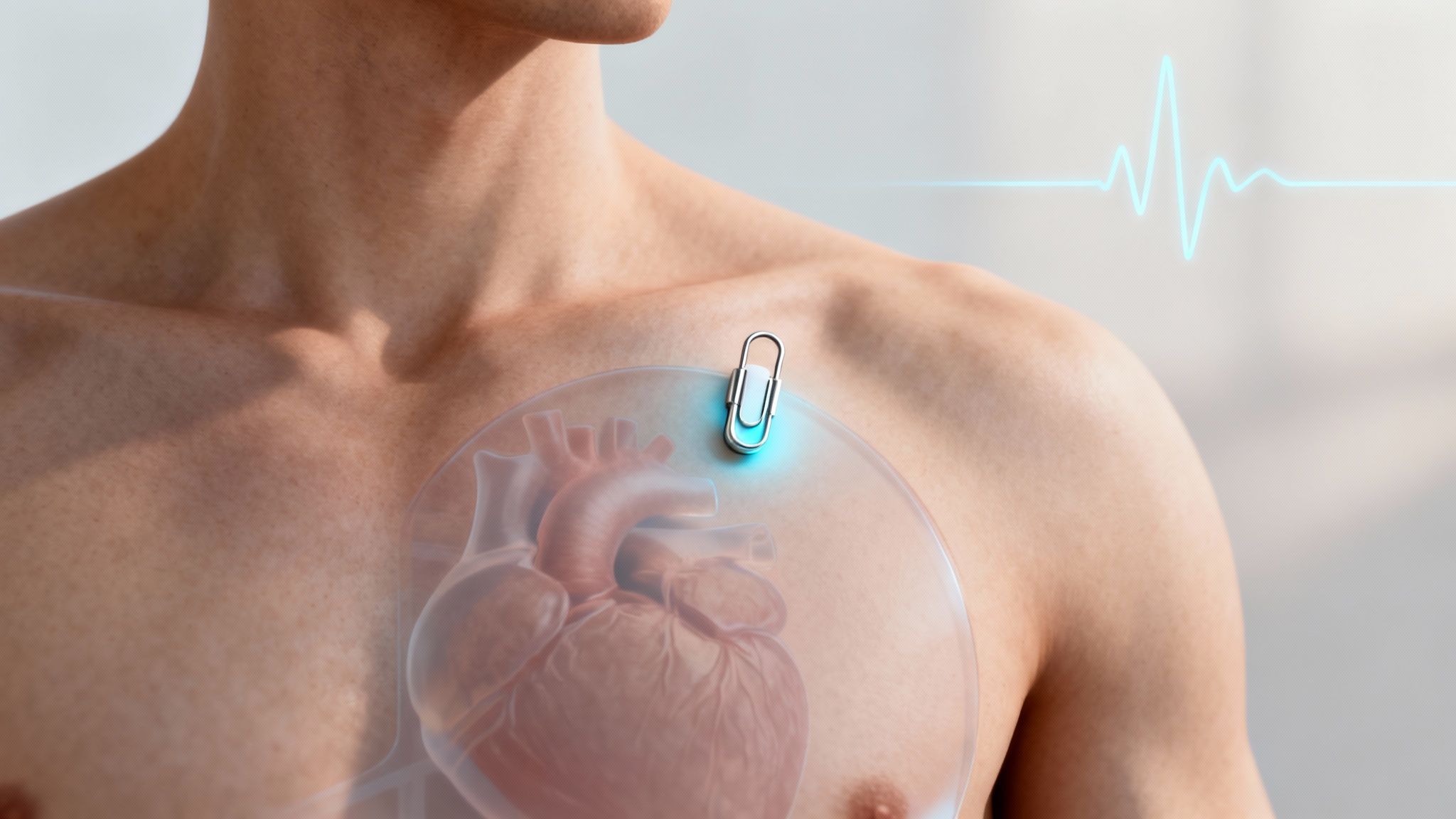
An internal loop recorder is a tiny heart monitor, about the size of a paperclip, that’s placed just under the skin on your chest to keep a continuous watch over your heart's rhythm. Think of it as a long-term detective, working 24/7 to catch those sneaky heart rhythm issues that shorter tests often miss.
Your Guide to Understanding Your Heart Better

If you've found your way here, it's likely because you or someone you care about has been dealing with some puzzling symptoms. Things like unexplained fainting, dizzy spells, or the feeling of a fluttering or racing heart can be really unsettling.
We know that navigating the healthcare system for answers can feel overwhelming, confusing, and at times, isolating. It’s completely normal to feel skeptical or frustrated when clear answers are hard to come by.
This guide is meant to be your straightforward, reassuring resource. We're here to cut through the medical jargon and give you the clear information you need.
What You Will Discover Here
We’re going to walk through exactly what an internal loop recorder is, why a doctor might suggest one, and what the whole experience is like, from start to finish. Our goal is to empower you with knowledge so you can feel more confident and in control of your health journey. This tiny device is a huge step forward in diagnosing those tricky, on-again-off-again heart conditions.
Think of this as a conversation where we’ll explore:
- The Purpose: Why this specific device is often recommended over other monitors.
- The Process: What to expect during the simple insertion procedure.
- The Payoff: How it can provide the long-awaited clarity you’ve been looking for.
The ultimate goal of an internal loop recorder is to connect your symptoms directly to your heart's activity. This vital link is often the key to unlocking a definitive diagnosis and finding the right path forward.
Consider this guide your partner in demystifying the process. We want to help you understand what this technology means for your peace of mind and your journey toward feeling better. You aren't alone in this, and clear answers are within reach.
What Exactly Is an Internal Loop Recorder
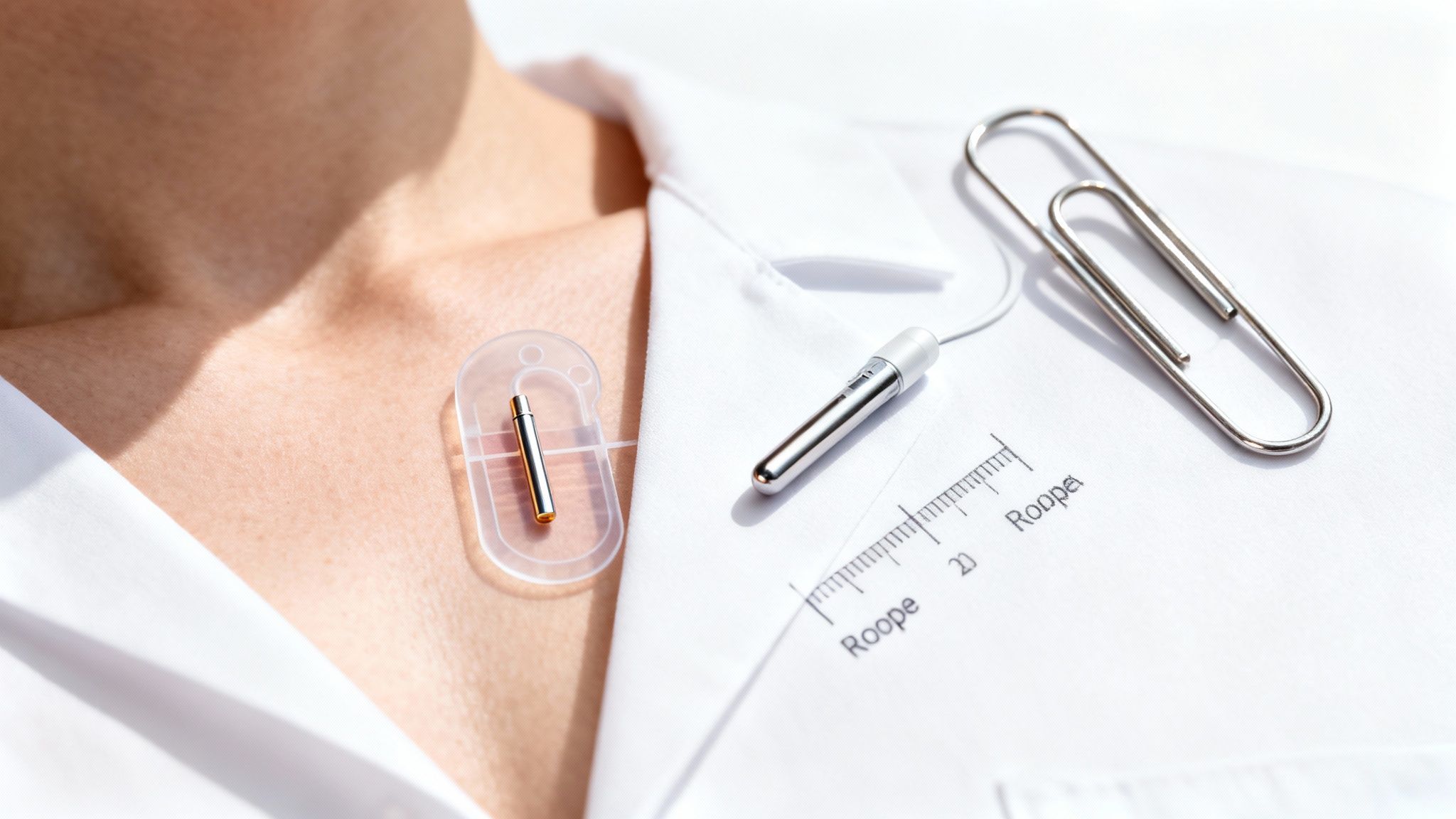
So, what is an internal loop recorder (ILR) in plain English? Think of it as a tiny, dedicated detective for your heart, working around the clock to catch any suspicious activity.
That's probably the best way to describe it. An ILR is a slim device, often no bigger than a paperclip, that a doctor places just under the skin of your chest. Its one and only job is to continuously monitor your heart's electrical rhythm.
This isn't just a 24-hour test. The device can stay in place and record data for up to three to five years, which is exactly what makes it such a powerful tool.
A Security Camera for Your Heart
You can also think of an internal loop recorder as a high-tech security camera pointed directly at your heart, giving your doctor an uninterrupted view of its rhythm, day and night.
Many other heart tests, like a standard ECG or even a 24-hour Holter monitor, only capture a brief snapshot in time. If your symptoms don't happen to pop up during that short window, the test comes back normal, and you’re left without any real answers.
The internal loop recorder solves this problem by sticking around. It’s incredibly good at catching those fleeting, infrequent rhythm problems that other tests almost always miss. You can learn more about the different monitoring options in our guide on what is cardiac monitoring.
How It Bridges the Gap to a Diagnosis
This constant observation is what finally allows your doctor to connect the dots. When you feel a symptom like dizziness or palpitations, the device has already recorded exactly what your heart was doing at that precise moment.
An internal loop recorder is designed to provide definitive proof. It replaces guesswork with concrete data, offering a clear path to a diagnosis when other methods have come up short.
This technology is becoming more and more common as doctors recognize the need for long-term monitoring. The global market for these devices was valued at around USD 1.77 billion and is expected to grow to USD 4.45 billion as more people get the diagnostic clarity they need. This isn't just a niche device; it's a widely accepted tool that has brought peace of mind to countless people stuck in a cycle of uncertainty.
Why an Internal Loop Recorder Might Be Recommended
If you're wondering why your doctor would suggest this tiny device over other heart monitors, it all comes down to its unique talent for solving some of the toughest diagnostic puzzles. An internal loop recorder has two powerful features that work hand-in-hand to give you and your doctor the clarity you've been looking for.
First, it’s always on the job. The device is programmed by your doctor to automatically spot and record abnormal heart rhythms. This means it’s watching over your heart 24/7, even when you’re asleep or don’t feel a thing, catching those silent events that could be medically important.
Second, and this is perhaps its most crucial feature, it empowers you to be an active partner in your own diagnosis. When you feel a symptom, whether it's a flutter in your chest, a sudden wave of dizziness, or a moment of lightheadedness, you use a small handheld activator or a smartphone app to manually trigger a recording.
This simple action is incredibly important. It places a digital bookmark on the data, essentially telling your doctor, "Right here. This is the exact moment I felt something was wrong." This direct link between your physical feeling and your heart’s electrical activity is often the missing piece of the puzzle that other tests just can't capture.


Common Reasons for a Recommendation
While every person's situation is different, doctors who specialize in the heart's electrical system, known as cardiac electrophysiologists, often turn to an internal loop recorder in a few key scenarios. You can learn more about this field in our guide on what is cardiac electrophysiology. These situations usually involve symptoms that are infrequent, unpredictable, and frustratingly hard to catch.
Here are the most common reasons an internal loop recorder might be the right next step for you:
- Unexplained Fainting (Syncope): Have you experienced fainting spells, but initial tests like an EKG or a short-term monitor came up empty? An ILR is often the best tool for the job. Fainting can be caused by a sudden, brief change in your heart rhythm, and a long-term monitor is the most effective way to catch it in the act.
- Recurring Palpitations: That unsettling feeling that your heart is skipping a beat, fluttering, or racing can be tough to pin down. If these palpitations come and go, making them impossible to record on a 24-hour monitor, an internal loop recorder can wait patiently for weeks or months to finally document what’s really happening.
- Suspected Atrial Fibrillation (AFib): Sometimes, a person has a stroke where the cause isn't immediately clear. In these cases, doctors need to hunt for hidden, or "occult," AFib. This is an irregular and often rapid heart rhythm that can cause blood clots. An ILR is perfect for this kind of detective work, as it can keep a lookout for AFib over the long term.
An internal loop recorder is recommended when the diagnostic question isn't if something is happening with your heart, but what is happening. It provides the long-term surveillance needed to catch fleeting events.
The Advantage of Modern Technology
The technology packed into these tiny devices has come a long way, making them more effective and much easier for patients to use. It’s no longer just about recording data; it's about doing so intelligently and efficiently.
Today’s devices are smarter than ever. Innovations like Bluetooth telemetry and AI-based diagnostics are helping doctors manage patient data and pinpoint arrhythmias more quickly. This means faster diagnoses and a smoother process, getting you answers sooner. You can discover more about these cardiac monitoring advancements on Research and Markets.
Ultimately, an internal loop recorder is for anyone who has been living with uncertainty. If you’ve been told "we can't find anything wrong" but you just know something isn't right, this device can provide the concrete evidence needed to finally get a clear diagnosis and an effective treatment plan, bringing you the peace of mind you deserve.
The Simple and Straightforward Implant Procedure

Let's be honest, the word “implant” can sound a little intimidating. If it makes you feel uneasy, that's completely understandable. But we want to walk you through what the procedure to place an internal loop recorder is really like and set your mind at ease.
This isn’t major surgery. It’s a minor, minimally invasive procedure designed from the ground up with your comfort and safety in mind.
The whole thing is typically done right in your doctor’s office or a clinic procedure room. From start to finish, it usually takes only about 10 to 15 minutes.
What to Expect Step by Step
To help you feel more prepared, here’s a simple breakdown of the process. It's incredibly quick, and your doctor and their team will be there to make you feel comfortable the entire time.
- Numbing the Area: First, the doctor will clean a small patch of skin on your upper chest. Then, they’ll use a local anesthetic to completely numb the area. It feels a lot like what a dentist uses before a filling. You might feel a tiny pinch, but the area goes numb almost instantly.
- Making a Tiny Incision: Once you're numb, your doctor makes a very small incision in the skin. And we mean tiny, usually less than half an inch long, which is smaller than the width of a dime.
- Inserting the Device: The doctor then creates a small pocket just under the skin and gently slides the loop recorder into place. Because the device is so slim, this step is very quick and gentle.
- Closing the Incision: Finally, the small opening is closed. Often, there’s no need for stitches. Your doctor will likely use sterile skin glue or maybe a single, small suture. A small bandage is placed over the site, and that’s it, you're done.
The entire procedure is designed to be as simple as possible. The goal is to get this powerful diagnostic tool in place with minimal discomfort and disruption to your life so you can get back to your routine right away.
Your Quick and Easy Recovery
Recovery is usually very fast. Most people go home the same day and can get back to their normal activities almost immediately.
- Minimal Soreness: You might have some mild tenderness or a little bruising around the incision for a few days. This is easily managed with over-the-counter pain relievers, if you even need them at all.
- Simple Aftercare: Your doctor's team will give you simple instructions for the bandage. You'll likely just need to keep the area clean and dry for a few days.
The biggest takeaway here is that this procedure is a world away from the complicated surgery that the word “implant” might bring to mind. It's a quick, straightforward process that opens the door to getting the answers you and your heart deserve.
Living with Your Device and Understanding the Data
Once your internal loop recorder is in place, you might be wondering how much your daily life will actually change. For most people, the answer is very little. We know getting a new medical device can feel like a big deal, but this one is designed to be a silent partner, working quietly in the background without getting in your way.
You can go right back to showering, exercising, traveling, and living your life just as you did before. There’s no daily maintenance to worry about or anything you need to charge. The device simply does its job, giving you the freedom to focus on your life while it keeps a watchful eye on your heart.
How Your Heart Data Reaches Your Doctor
One of the best things about having an internal loop recorder is the remote monitoring. This means your heart rhythm data is sent straight to your doctor automatically, giving you continuous oversight without needing to make endless trips to the clinic.
The whole process is incredibly simple and happens without you even noticing. You’ll get a small transmitter that usually sits on your bedside table. While you sleep, this transmitter wirelessly and securely pulls the data from your device and sends it off to your healthcare team. It's a seamless connection that makes sure your doctor is always in the loop.
This constant, automatic monitoring provides something truly invaluable: peace of mind. You’re no longer just crossing your fingers, hoping to catch a symptom during a short doctor's visit. Instead, you have an expert system watching over you, day and night.
You Are Your Own Best Advocate
Navigating healthcare can sometimes feel like you're just along for the ride, with information being given to you without much context. A lot of people feel like they have to passively accept a single opinion, which can be frustrating, especially when you’re still hunting for answers. It's so important to remember that you have the right to understand what's going on with your own health.
Your internal loop recorder is going to generate a ton of information, creating a detailed diary of your heart's electrical activity. While your cardiologist will be reviewing this, you are not just a bystander in your own health journey. Taking an active role is one of the most powerful things you can do.
Don’t be afraid to ask questions and seek a deeper understanding of your ECG data. True confidence in your care plan comes from feeling informed and heard, not just from following instructions.
Today, there are services that allow you to get a second opinion on your heart data from independent, certified specialists. For example, a service like Qaly can analyze ECG readings from all sorts of devices, helping you make sense of the information. This puts you in a position to feel more confident about your diagnosis and treatment plan.
Making Sense of the Information
The data coming from your internal loop recorder is a form of electrocardiogram, or ECG. Just learning the basics can help you have much more productive conversations with your doctors. You don’t need to become an expert overnight, but understanding what the different lines and waves represent can demystify the entire process.
For anyone interested in taking a more active role, you can get a better handle on the fundamentals by exploring guides on how to read an ECG. This knowledge can transform your doctor's appointments from passive updates into real, collaborative discussions about your health.
Ultimately, living with an internal loop recorder is about gaining control. It’s about swapping uncertainty for data and anxiety for answers. The device itself is just the tool; the real win is the confidence it gives you to move forward, armed with the information you need to advocate for your own well-being and finally get the clarity you deserve.
Benefits, Risks, and Making an Informed Choice
Any medical decision comes down to weighing the good with the bad, and it's completely normal to want a clear, honest picture before moving forward. Deciding on an internal loop recorder is no different.
Let’s walk through the benefits and the very low risks so you can feel confident when you talk with your doctor.
The number one benefit of an internal loop recorder is its incredible diagnostic power. For people who have spent months, or even years, dealing with unexplained symptoms, this tiny device can feel like the final clue in solving a long-running medical mystery. It gives you and your doctor clear, undeniable evidence that links what you’re feeling to what your heart is actually doing.
The Clear Advantages of Long-Term Monitoring
Beyond just getting an answer, the device offers some really practical benefits that make it an effective and convenient tool. Its whole design is centered around making your life easier while it does its important work in the background.
Here are the key benefits:
- Exceptional Diagnostic Accuracy: It’s the gold standard for catching those infrequent but significant heart rhythm issues that other tests just can't seem to find. This is especially true for conditions that cause falls. For example, in patients with unexplained falls, these devices found a cardiac cause in 57% of cases, which led to a huge drop in recurrent falls once the issue was treated.
- Long Battery Life: The device works 24/7 for 3 to 5 years. That gives you and your doctor a massive window to capture any problematic rhythms.
- Unmatched Convenience: Once it's in, it works silently. There’s nothing to wear, nothing to charge, and nothing to remember on a daily basis, so you can just get back to living your life.
This shows how you can keep up with your normal, active life while the device gathers data remotely. It empowers you to seek a second opinion with solid evidence in hand.
Understanding the Minimal Risks
It's just as important to talk about the potential downsides. Thankfully, the risks that come with an internal loop recorder are very low, mainly because the procedure itself is so minor.
The most common concerns are related to the insertion site, not the device's function. In fact, the procedure is less invasive than many common dental procedures.
Potential risks are pretty straightforward:
- A small chance of infection at the incision site.
- Minor bruising or tenderness where the device was inserted.
- Very rarely, the device might shift slightly under the skin.
It's also worth remembering this procedure is far less involved than other cardiac device implantations, like the one we detail in our guide on the heart pacemaker operation.
Ultimately, the goal is transparency. Armed with this balanced view, you can have a productive, confident conversation with your doctor and make a decision that feels right for you.
Common Questions About Internal Loop Recorders
Even after learning about how an internal loop recorder works, it's completely normal to have some practical, day-to-day questions. Feeling fully prepared and confident about what to expect is a huge part of the process. So, let's walk through some of the most common questions that pop up.
Will It Set Off Airport Security Alarms?
This is a very common concern, but you can relax. Your internal loop recorder is highly unlikely to set off airport security alarms. The device is tiny and made with very little metal, so it usually doesn't trigger the large, walk-through detectors.
That said, it’s always a good idea to be prepared. When your ILR is implanted, your doctor will give you a device identification card. Just keep this card with you when you travel. If a security agent uses a handheld scanning wand, you can let them know you have a medical device and show them the card. It's a routine situation for them and won't cause any issues or delays.
Is the Internal Loop Recorder Covered by Insurance?
Yes, in most situations, it is. When an ILR is recommended to diagnose a specific medical issue, like unexplained fainting (syncope) or to look for atrial fibrillation after a stroke, it's considered medically necessary.
Because of this, the device and the implant procedure are typically covered by Medicare and the majority of private insurance plans. Still, it's always a smart move to call your insurance provider directly before the procedure. You'll want to confirm the specifics of your coverage and ask about any out-of-pocket costs, like deductibles or copayments, so there are no surprises down the road.
Can I Have an MRI Scan with This Device?
For a long time, having any kind of implant made MRI scans a major problem, but technology has come a long way. Most modern internal loop recorders are now considered MRI-conditional.
This means you can safely have an MRI scan as long as certain safety guidelines are followed. The most important thing is to inform the MRI staff that you have an ILR well before your appointment. They need to know the specific make and model of your device to make sure the scan is performed safely. Your cardiologist's office can easily give you all of this information.
Answering these practical questions is a key part of feeling in control of your health journey. Knowing what to expect in real-world situations like travel or other medical tests helps remove uncertainty and builds confidence.
How Will I Know When the Battery Is Low?
This is another thing you don't need to worry about tracking yourself. The battery in an internal loop recorder is designed to last for several years, often three to five years, without ever needing to be charged.
Your healthcare team monitors the device’s battery status remotely. Every time your device sends its regular data transmission, it includes an update on the battery life. When the battery starts to get low, your doctor’s office will receive an automatic alert. They'll then get in touch with you to schedule a simple appointment to have the device removed.

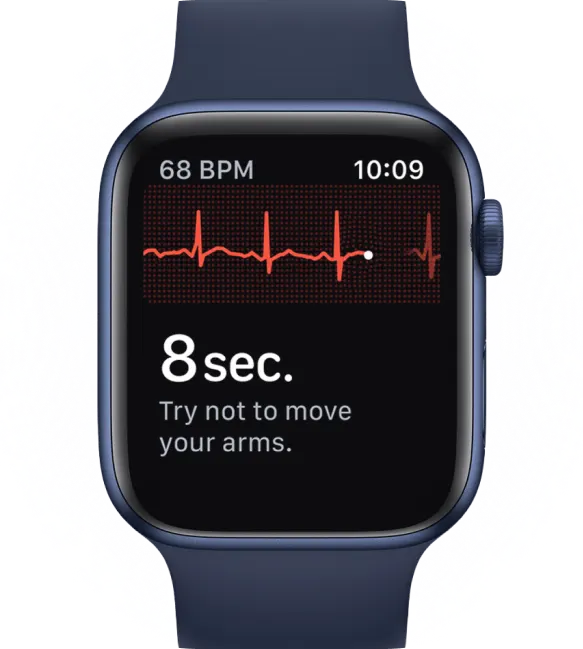
For expert, human-reviewed analysis of your heart data from wearable devices, consider Qaly. Get the clarity and peace of mind you deserve.



.png)
.png)