


Key Takeaways

User Profile
Hello Heart Hero. If you're living with heart failure, you’ve probably heard about the importance of a low sodium diet. It’s one of the most common recommendations, and for good reason. The typical goal is to stay under 2,000 to 3,000 milligrams of sodium per day. This simple change can make a huge difference in how you feel by helping your body avoid extra fluid retention, which eases the workload on your heart and can reduce symptoms like swelling and shortness of breath.
Your Guide to a Low Sodium Diet
Getting a heart failure diagnosis is a lot to take in. The advice that follows, especially about cutting back on salt, can feel just as overwhelming. You might be wondering if it's really necessary or how you could possibly stick to such a strict plan. We get it. It’s tough when healthcare advice feels rigid and impersonal, especially when you might already be skeptical of the system.
That’s why we created this guide. We want to walk you through the ins and outs of a low-sodium diet with clarity and support. We'll dig into what the science actually says, moving past the one-size-fits-all rules to help you understand why sodium matters, how much is too much, and how to make real, lasting changes.
Taking an Active Role in Your Health
We believe knowledge is power. This guide isn't just a list of rules; it’s about explaining the "why" behind the recommendations. When you understand how your body works, you're better equipped to take an active role in managing your health, exploring solutions that feel right for you.
Here’s what we’ll cover to help you feel more in control:
- The Science Behind Sodium: We’ll break down the research, including some of the confusing or conflicting information you may have seen.
- Practical, Real-World Changes: You’ll get straightforward tips for grocery shopping, cooking, and even eating out without giving up the flavors you love.
- Listening to Your Body: We’ll show you how to monitor your body's response to diet changes right from home.
You are the most important person on your care team. Learning about your condition and how lifestyle choices affect it helps you have more confident conversations with your doctors and make decisions that feel right for you.
On top of managing sodium, exploring other general nutrition insights can provide a great foundation for your overall well-being.
Using Technology for Extra Peace of Mind
Diet is a huge piece of the puzzle, but you can also take an active role by monitoring your body's response with modern tools. Using an at-home ECG device, for instance, lets you keep an eye on your heart’s rhythm, giving you valuable information and peace of mind. For a deeper look into the condition itself, you can learn more about understanding heart failure and what it looks like on your ECG.
Remember, changing your diet is a journey, not a sprint. It’s about small, consistent steps that build up over time. We're here to support you with clear, reassuring information every step of the way. Let's start by looking at exactly how sodium affects your heart.
How Sodium Affects Your Heart Health

Let's start by unpacking a simple but powerful idea: the relationship between sodium and your heart. We've all heard the generic advice to "cut back on salt," but if you're managing heart failure, you deserve to know exactly why this matters so much.
Think of sodium as a magnet for water. Wherever sodium goes in your body, water is sure to follow. This is a normal, vital process that helps your body maintain its fluid balance. The trouble starts when your heart isn't pumping as efficiently as it used to.
When you take in too much sodium, your body naturally holds onto extra water to keep everything in balance. This extra fluid increases the total volume of blood circulating in your system. For an already-strained heart, this is a big problem. It now has to work even harder to pump that larger volume of blood throughout your body.
The Problem of Fluid Overload
Imagine trying to bail water out of a boat that has a slow leak. You might keep up for a bit, but if the leak gets worse, you'll quickly get overwhelmed. That’s a lot like what your heart goes through when there's too much fluid in your system.
This condition, known as fluid overload or volume overload, puts immense stress on your heart and is the direct cause of many of the symptoms you might be experiencing.
The core issue in heart failure is that excess sodium leads to fluid retention. This directly increases the workload on your heart, which can cause vascular congestion and symptoms like swelling and shortness of breath.
When this extra fluid has nowhere else to go, it starts to seep out of your blood vessels and into the surrounding tissues, leading to some uncomfortable and often distressing symptoms.
Here are a few common signs of fluid overload to watch for:
- Swelling (Edema): You might notice puffiness in your legs, ankles, feet, or even your belly. Shoes or rings may suddenly feel too tight.
- Shortness of Breath: When excess fluid builds up in the lungs, it can make it hard to breathe, especially when you’re lying down.
- Rapid Weight Gain: Gaining more than 2 to 3 pounds in a day or 5 pounds in a week is almost always a sign of fluid retention, not actual body fat.
- Fatigue: Your heart is working overtime just to keep up, leaving you feeling drained and exhausted.
Finding Your Body's Balance
It seems logical to think that if too much sodium is the problem, then cutting it out completely must be the solution. But the body is a bit more complicated than that. A super-strict approach isn't always the best answer and can sometimes cause new issues.
Think of it like a see-saw. Too much sodium on one side causes fluid overload. But if you tip the see-saw too far the other way by cutting sodium too drastically, you can disrupt your body’s delicate equilibrium. The goal isn't total elimination; it's balance.
While sodium is the main driver of fluid retention in heart failure, other minerals like potassium also play a crucial role. For a closer look at this important mineral, you can learn more about how potassium levels affect your heart.
The truth is, a low-sodium diet for heart failure isn't about deprivation. It's about finding the right amount of sodium that allows your heart to do its job without being overwhelmed. That "right amount" is unique to you and depends on your specific condition, your medications, and your overall health.
In the next section, we’ll dive into the science behind the official sodium recommendations and tackle some of the conflicting information out there. This will help you understand why a personalized plan is so much more effective than a one-size-fits-all rule.
Understanding the Conflicting Science on Sodium
If you’ve been looking into a low-sodium diet for heart failure, you’ve probably run into some conflicting advice. It can leave you feeling more confused than confident.
One article tells you to cut salt drastically, while the next one suggests that might not be the best idea. It’s easy to feel like you’re being pulled in two different directions, especially when the standard advice from the healthcare system can seem so rigid and impersonal.
Let's tackle this confusion head-on. The truth is, the science around sodium has been evolving, and some of the newest research is starting to question what we’ve long believed. It’s not as simple as "salt is bad." The real picture is far more nuanced, and understanding this can empower you to have better, more informed conversations about your health.
The Shift in Scientific Thinking
For decades, the standard advice for heart failure was pretty straightforward: severe sodium restriction. The logic was simple. Since sodium makes your body hold onto water, cutting it should reduce fluid overload and ease the strain on your heart. While this is true up to a point, some recent studies are now suggesting that being too strict might not be beneficial for everyone.
It's not about throwing out all the rules. It's about recognizing that the "right" amount of sodium isn't a universal number. It’s a personal target that depends on your specific condition, other health factors, and how your unique body responds.
This is where your skepticism is not just valid, it's valuable. It pushes for a more personalized approach, moving us away from a one-size-fits-all model that simply doesn't work for every individual. You are your own best advocate, and questioning the standard advice is the first step toward finding a plan that truly works for you.
Questioning the "Lower is Always Better" Rule
So, what's causing this shift? Let’s look at some of the evidence. For example, some research has found that an extremely low sodium intake might activate certain hormonal systems in your body. Over the long term, this could potentially add more stress to your system, which is not exactly ideal when you're managing a chronic condition like heart failure.
One major study published in 2022 followed over 8,000 adults with high blood pressure for nearly 13 years. The results were surprising. Those who consumed less than 2,300 mg of sodium per day actually faced a 42% higher risk of cardiovascular-related death. Even after accounting for other factors, the trend suggested that a very low sodium intake might not be the safest path for everyone. You can explore the detailed findings of this study to understand the data for yourself.
This doesn't mean you should ignore all advice about sodium. Not at all. Instead, it highlights that a low-sodium diet for heart failure needs to be managed carefully. The goal is to find a healthy middle ground, not swing to an extreme that could introduce its own set of problems.
Finding Your Personal Sodium Target
What does this all mean for you? It means the best path forward is a collaborative one. Instead of just accepting a generic number, this is your chance to work with your healthcare provider to find a sodium target that is tailored specifically to you.
This personalized plan should consider several key factors:
- Your Heart Failure Stage: The severity of your condition plays a big role in how sensitive your body is to sodium and fluid shifts.
- Your Symptoms: Are you experiencing a lot of swelling or shortness of breath? Your sodium target may need to be adjusted based on how you feel day to day.
- Your Medications: Certain heart failure medications affect how your body handles sodium and other electrolytes, which has to be factored into your diet.
- Your Overall Health: Other conditions, like kidney disease, can also influence what your ideal sodium intake should be.
This section isn't meant to give you medical advice, but to arm you with knowledge. By understanding that even the science isn’t black and white, you can go into conversations with your doctor with more confidence. You can ask better questions and play an active role in creating a low-sodium plan for your heart failure that feels sustainable, effective, and right for your body.
If you've been diagnosed with heart failure, you've probably been told to cut back on salt. This advice is everywhere, but it can also be confusing. Is it really the right path for you? And how do you even start?
This guide is here to walk you through the science of a low-sodium diet for heart failure, with clarity and empathy. We'll move beyond generic advice to look at what the research actually says. You'll learn why sodium matters, what the right targets are, and how to make changes that stick. We'll also cover how you can play an active role in your own health journey, using tools like at-home ECGs to track your heart's rhythm and give you peace of mind.
Building Your Low Sodium Eating Plan
Making a big dietary change can feel daunting, but it's entirely possible. This section is your hands-on guide to adopting a low-sodium diet for heart failure without sacrificing the flavors and foods you enjoy. It’s time to put the theory into action with real-world tips, food lists, and meal ideas.
You'll learn to be a smart shopper, reading food labels and spotting hidden sodium. We’ll explore tasty salt-free seasonings and simple swaps for your favorite high-sodium foods. This isn't about deprivation, it's about taking control of your health, one meal at a time.
Foods to Enjoy Freely
The easiest way to start is to focus on what you can eat. When you build meals around foods that are naturally low in sodium, the rest falls into place. These are foods in their whole, unprocessed state, without added sauces, seasonings, or solutions.
Try filling your grocery cart with these heart-friendly options:
- Fresh or Frozen Fruits and Vegetables: Nearly all are naturally very low in sodium.
- Unseasoned Fresh or Frozen Meats: Chicken, fish, beef, and pork are great choices, as long as they don't have added broths or saline solutions.
- Dried Beans, Peas, and Lentils: These are nutritional powerhouses and completely sodium-free.
- Whole Grains: Staples like oats, quinoa, brown rice, and pasta are excellent.
- Unsalted Nuts and Seeds: Perfect for a snack or as a topping for yogurt and salads.
By making these ingredients the star of your meals, you'll naturally lower your sodium intake without much effort. This one shift is the cornerstone of a successful low-sodium plan.


High Sodium Foods to Limit
Now, let's look at the foods that pack the biggest sodium punch. A staggering 70% of the sodium we consume comes from packaged, processed, and restaurant foods, not the salt shaker on the table.
Being mindful of these hidden sodium sources is the single most effective way to manage your intake. It's not about perfection but about making smarter choices more often.
Here are some of the main culprits to keep an eye on:
- Processed Meats: Bacon, sausage, hot dogs, and deli meats rely on sodium for preservation and flavor.
- Canned Soups and Frozen Meals: Convenience often comes with a high sodium price tag.
- Salty Snacks: Chips, pretzels, and salted nuts are some of the more obvious sources.
- Sauces and Condiments: Soy sauce, ketchup, salad dressings, and marinades can add hundreds of milligrams of sodium to an otherwise healthy dish.
- Breads and Baked Goods: You might be surprised by how much sodium is in a single slice of bread or a muffin.
A Sample Day of Low Sodium Eating
So, what does this actually look like on a plate? Here’s a simple, flavorful one-day meal plan to give you a starting point.
- Breakfast: A bowl of oatmeal made with water or milk, topped with fresh berries, a dash of cinnamon, and a handful of unsalted walnuts.
- Lunch: A large salad with grilled chicken breast, mixed greens, cucumber, tomatoes, and a simple dressing of olive oil and lemon juice.
- Dinner: Baked salmon seasoned with dill and black pepper, served with a side of steamed asparagus and roasted sweet potato wedges.
- Snacks: An apple with unsalted peanut butter, or a cup of plain Greek yogurt.
This day of eating is both delicious and satisfying while being naturally low in sodium. It proves that a low-sodium diet for heart failure can be full of variety and taste. As you get comfortable with these changes, you might also want to talk to your doctor about whether certain supplements for heart health could complement your new diet.
Monitoring Your Body's Response at Home
As you start changing your diet, your body will give you the most important feedback you can get. Learning to listen to it is a huge part of managing heart failure successfully. This isn’t about being perfect; it’s about understanding the signals your body sends as you find the right balance.
Think of it as becoming a detective for your own health. By tuning into a few key indicators at home, you’ll gain powerful insights into how your new low-sodium plan is affecting your heart and how you feel day-to-day.
Tracking Your Daily Weight for Fluid Clues
One of the simplest yet most effective tools you have is a basic bathroom scale. Your daily weight is one of the best ways to track fluid retention. A sudden jump in weight over just a day or two is almost always from extra fluid, not body fat.
Catching this fluid buildup early is like getting an advance warning. It allows you and your doctor to make quick adjustments before it turns into more serious symptoms like shortness of breath or major swelling.
Here’s how to make your daily weigh-in count:
- Weigh yourself at the same time every morning. The ideal time is right after using the bathroom and before you've had anything to eat or drink.
- Use the same scale every single time. This keeps your measurements consistent.
- Keep a simple log. Just jot down your weight each day. This log becomes an incredibly valuable tool to share with your doctor during appointments.
A good rule of thumb is to call your provider if you gain more than 2 to 3 pounds in one day or 5 pounds in a week. This simple habit helps you and your care team stay ahead of any potential problems.
Paying Attention to Your Heart's Rhythm
As you adjust your diet, you might notice other changes. For instance, lowering your sodium intake can sometimes affect the balance of other electrolytes in your body. This shift can occasionally cause palpitations, which might feel like your heart is fluttering, skipping a beat, or racing.
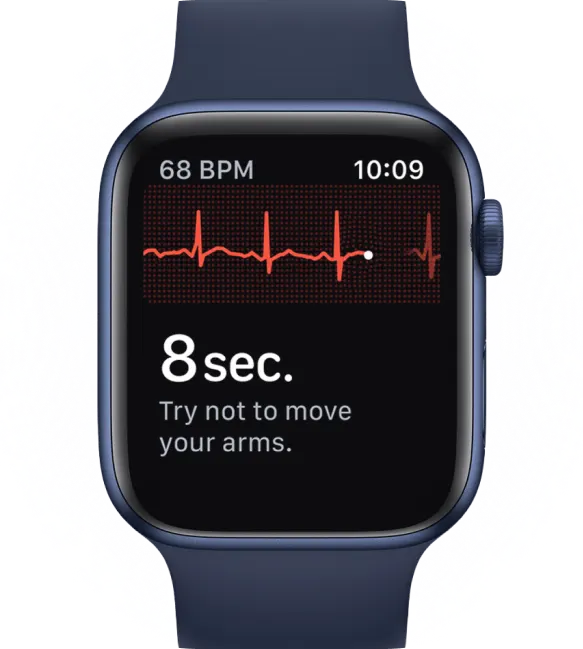
This is where modern technology can be a huge help. If you use a wearable device and feel these palpitations, it's worth paying attention. Some data suggests that sudden, aggressive shifts to a very low-sodium diet might trigger arrhythmias like Afib or PVCs, which are detectable on devices like an Apple Watch or Kardia. A 2012 meta-analysis even found that very low sodium diets in systolic heart failure patients were linked to a 95% spike in overall mortality, showing that cutting back too aggressively can sometimes be counterproductive. You can read more about the complexities of salt reduction in heart failure to better understand the research.
This is exactly why monitoring is so crucial. If you capture one of these events, apps like Qaly can deliver a certified technician-reviewed report on your ECG in minutes, giving you clear answers and peace of mind.
Capturing these moments on your ECG device provides concrete data. Instead of just telling your doctor "I felt a flutter," you can show them exactly what your heart was doing. This information is gold for fine-tuning your treatment plan.
The key takeaway is simple: reading the nutrition label is always your best strategy. But when that's not possible, sticking with whole, unprocessed foods is your safest bet. For more actionable advice on this, you can learn more about how to check heart health at home.
Your Questions About a Low-Sodium Diet, Answered
Stepping into a new way of eating brings up a lot of questions. And when the advice out there feels contradictory or impersonal, it's natural to want clear, sensible answers. This guide is here to address the most common concerns about starting a low-sodium diet for heart failure, so you can move forward with confidence.
How Much Sodium Should I Actually Eat?
This is one of the biggest questions we hear, and the honest answer is: there's no single magic number that fits everyone. You've likely heard a generic target like 2,000 mg a day, but the right amount for you is personal. It depends on your specific health status, your symptoms, and what your lab results show.
The science itself confirms that a one-size-fits-all approach isn't the best way forward. Some studies even suggest that being overly strict with sodium can be unhelpful for certain people. The key is to see the number your doctor gives you not as a rigid rule, but as a starting point for a conversation.
Your goal is to find your body's unique balance, not to chase a generic target. This process is about collaboration between you and your provider to find a sodium level that helps you feel your best.
This personalized approach is what makes the changes you make both safe and effective for your unique situation. It puts you in the driver's seat.
Will My Food Taste Bland Forever?
This is a common and totally understandable fear. The answer is a firm no. At first, as your taste buds adjust away from high levels of salt, food might seem different. Think of it like turning down the volume on a speaker that's been blasting for years. Initially, everything seems quiet, but soon you start noticing all the subtle notes you were missing before.
This is your chance to explore a whole new world of flavor that goes far beyond the salt shaker. You’ll be amazed at how much natural taste is hiding in your food.
Here are a few ways to unlock incredible flavor:
- Embrace Herbs and Spices: Fresh basil, cilantro, oregano, and parsley add vibrant, fresh notes. Spices like cumin, paprika, turmeric, and chili powder bring warmth and depth.
- Use Acidity to Your Advantage: A squeeze of lemon or lime juice, or a splash of vinegar, can brighten up almost any dish, from grilled fish to steamed vegetables.
- Master Roasting and Grilling: These cooking methods caramelize the natural sugars in vegetables and meats, creating a deep, rich flavor that requires very little extra seasoning.
Your palate will adapt surprisingly fast. Many people find that after just a few weeks, their old salty favorites start to taste overwhelming, and they much prefer the fresh, nuanced flavors of their new way of eating.
Is This a “Forever” Thing?
For most people with heart failure, managing sodium is a long-term commitment. But it helps to think of it less as a restrictive "diet" and more as a permanent, positive shift in your lifestyle. The word "diet" often implies something temporary and miserable, which isn't what this is about.
This is about creating a sustainable way of eating that supports your heart for the long haul. The great news is that once you get the hang of it, it becomes second nature. You’ll learn which foods are naturally low in sodium, how to season your meals with creativity, and how to handle social situations with ease.
It’s not about a lifetime of deprivation. It’s about a lifetime of feeling better, having more energy, and taking active control of your health. Your needs may change over time, and your doctor might adjust your sodium target, but the core principles of eating fresh, whole foods will always be your foundation.
Can I Still Eat at Restaurants?
Absolutely. A heart failure diagnosis doesn't mean you're banned from restaurants for life. It just means you’ll become a more savvy diner, which is a great skill for anyone to have. With a little planning, you can enjoy meals out without derailing your progress.
Many restaurants are more than willing to accommodate special dietary requests. Don't be shy about advocating for your health.
Here are some practical tips for dining out:
- Do Your Homework: Check the menu online before you go. Many restaurants now have nutritional information available.
- Call Ahead: A quick phone call can let you know if the chef can prepare a dish with no added salt.
- Keep It Simple: Grilled fish or chicken with a side of steamed vegetables and a plain baked potato is almost always a safe and delicious choice.
- Control the Condiments: Ask for all sauces, dressings, and gravies on the side. This way, you control how much you use, if any at all.
Eating out becomes much less intimidating once you have a game plan. It’s all about making informed choices, not avoiding the social activities you love. A low-sodium diet for heart failure is about living a fuller life, not a more restricted one.

As you make dietary changes, monitoring your heart’s rhythm with your wearable ECG device gives you invaluable insight. Get peace of mind with expert ECG interpretations from certified technicians.



.png)
.png)