


Key Takeaways

User Profile
Hello Heart Hero. Looking into melatonin and heart failure shows you're being proactive about your health, and that's something to be proud of. We understand that navigating the healthcare world can be frustrating, and it's smart to look for your own answers. While many people think of melatonin as just a simple sleep aid, you're right to dig deeper. It turns out the relationship between melatonin and your heart might be more complex than it seems, especially when it comes to long-term use.
Your Guide to Melatonin and Heart Health
If you're living with heart failure or are simply committed to keeping your heart in top shape, you know that every little choice matters. When a good night's sleep feels impossible, it's completely understandable to reach for help. Melatonin often looks like the most harmless, easy-to-get option on the shelf.
But you're smart to question things and find your own answers. We've built this guide with you in mind. Together, we'll sort through the confusing and sometimes conflicting information about melatonin and heart failure, giving you the clarity and support you deserve on your health journey.
Making Sense of the Science
We're going to break down what the latest science actually says in simple terms. We'll explore what that means for someone in your position, and how you can make choices that feel right for you. Sometimes standard medical advice can feel impersonal, leaving you searching for ways to get back in the driver's seat of your own health.
Our goal is to arm you with clear, easy-to-understand information. That way, you can have a more meaningful conversation with your doctor and feel confident on your health journey.
This guide will help you understand:
- The connection between melatonin and your heart.
- The potential benefits and risks that researchers have started to uncover.
- How to approach this conversation with your doctor in a productive way.
Ultimately, this is all about helping you feel prepared and in control. We'll explore the important details, translate the medical jargon, and help light a clear path forward. Your dedication to your heart is the most powerful tool you have, and we're here to back you up every step of the way.
The Real Connection Between Melatonin and Your Heart
When it comes to melatonin, the advice can be confusing. You’ve probably heard it called a natural, heart-healthy antioxidant. At the same time, other headlines warn about the risks, especially for those with existing heart conditions. Let's clear up the mixed messages and get to the bottom of the real connection between melatonin and heart failure.
We’re going to look at melatonin as more than just a sleep pill. It's a powerful hormone that interacts with your entire body, including your heart. To really understand the risks and benefits of taking a supplement, we first have to appreciate how it works in your body naturally.
How Your Body Uses Melatonin
Your body has a brilliant internal system. Every evening, as the light fades, a tiny gland in your brain called the pineal gland gets to work, releasing its own melatonin into your bloodstream.
You can think of this natural release like a gentle, predictable tide. It slowly rises, signaling to every cell that it’s time to wind down and begin the nightly repair process. This hormone is essentially the conductor of your internal orchestra, keeping your sleep-wake cycle in harmony.
This natural rhythm is incredibly precise. It’s a huge part of how your body maintains balance, which is especially critical when your heart is already under stress. For many with heart failure, poor sleep is a constant battle, and it's often more than just feeling tired. It's why conditions like sleep apnea and congestive heart failure are so closely linked.
Introducing a Supplement Changes the Game
Taking an over-the-counter melatonin supplement is a completely different story. It’s like sending a powerful, sudden wave crashing into that gentle, natural tide.
While that wave can certainly push you toward sleep, it can also cause some disruption. A single dose from a typical supplement can spike your blood's melatonin levels to be 20 to 100 times higher than what your body would ever produce on its own.
This isn't just "topping up" a natural substance. It's introducing a very strong, super-sized dose that your system simply isn't designed to handle. This changes the entire equation.
This massive surge does more than just make you sleepy. Melatonin receptors are found all over your body, including directly on your heart muscle and in your blood vessels. Flooding them with such a high concentration of the hormone can trigger effects we are only just beginning to fully understand.
For someone with heart failure, this can be significant:
- Blood Pressure: Your body’s natural melatonin helps manage your blood pressure while you sleep. An external, high-dose supplement can interfere with this delicate regulation.
- Heart Rate: Your heart rate is supposed to slow down at night. Forcing an artificial melatonin schedule could potentially disrupt this essential resting rhythm.
- Vessel Function: Melatonin plays a role in how your blood vessels tighten and relax, a critical process for anyone managing heart failure.
It’s vital to understand this distinction. We aren't talking about a simple sleep aid; we're talking about a potent hormone. The relationship between melatonin and heart failure is complex and demands respect. We need to be aware of how these supplements can disrupt the stable, predictable environment your heart needs to function at its best.
The Surprising Risks of Long-Term Melatonin Use
We need to have an honest talk about melatonin. While it's often reached for as a gentle, natural sleep aid, the conversation around melatonin and heart failure has changed, and it's something you deserve to be aware of.
This isn’t to cause alarm. It’s about sharing the same important information that doctors and researchers are discussing right now, so you can make the most empowered choices for your heart.
A Major Study Raises a Red Flag
Just this year, in 2026, a study presented at a major heart conference made waves in the medical community. Researchers dove into the health records of over 130,000 adults with insomnia to see what effects taking melatonin for a year or longer might have.
What they found was startling. The study uncovered a strong link between long-term melatonin use and a much higher risk of developing heart failure.
The new data showed that people using melatonin for a year or more had nearly a 90% higher chance of being diagnosed with heart failure compared to those who didn't take it.
Here's how the numbers broke down in this large, five-year study:
- 4.6% of long-term melatonin users developed heart failure.
- 2.7% of people who did not use melatonin developed heart failure.
This shows a noticeable jump in risk for the group using melatonin long-term.
What These Numbers Really Mean for You
Seeing a statistic like a "90% higher chance" can sound terrifying. Let's break down what that actually means in a simpler way.
Imagine two groups of people in a race toward a finish line called "heart failure." In this study, the group taking melatonin long-term seemed to get a big head start, making them much more likely to reach that finish line sooner and more often.
Even more concerning was the data on hospital visits. Melatonin users were 3.5 times more likely to be hospitalized specifically for heart failure. That's a serious red flag we simply can't ignore, especially for anyone already managing a heart condition. For a closer look at other treatments, you can explore our guide on common drugs used for heart failure.
Link Versus Cause: A Critical Distinction
It’s really important to understand that this study shows a strong link, not a direct cause. This means that while long-term melatonin use and heart failure are clearly connected in the data, the study doesn't prove that the supplement itself causes the heart to fail.
There could be other factors at play. For instance, people with severe, chronic insomnia might have other underlying health issues (like undiagnosed sleep apnea) that put them at a higher risk for both poor sleep and heart problems. In their search for relief, they might turn to melatonin, making it look like the supplement is the problem when it's actually the pre-existing condition.
Still, a connection this strong is a serious warning. The link between melatonin and heart failure risk is too significant to simply dismiss. It tells us that using melatonin long-term may not be the harmless habit many assume it is. It's a powerful hormone that warrants both caution and a serious conversation with your doctor.
Why Melatonin Was First Seen as a Friend to the Heart
To get the full picture on melatonin and heart failure, you have to look at both sides of the story. It wouldn't be fair to jump straight to the recent warnings without first understanding why melatonin got so popular for heart health in the first place. Before the newer studies raised some red flags, a lot of research painted a much more optimistic view.
It's really important to have this context. It helps us see that melatonin isn't just a "good" or "bad" supplement. Its effects are complex and can be wildly different depending on who's taking it and for what reason.


Melatonin as a Cellular Bodyguard
One of the most talked-about potential upsides of melatonin is its power as an antioxidant. Picture your heart cells as tiny engines, working around the clock. Things like stress, sickness, and just day-to-day life produce "exhaust fumes" called free radicals. Over time, these can cause a kind of rust and wear on your heart muscle, a process we call oxidative stress.
This is where melatonin was thought to step in, acting like a bodyguard for your cells. It’s incredibly effective at cleaning up these free radicals, which could, in theory, shield heart cells from this ongoing damage. This very antioxidant power is what got researchers excited about using melatonin to protect the heart during intense stress, like after a heart attack or while on medications known to be hard on the heart.
This protective quality was the star of the earlier, more hopeful research. Scientists believed they might have found a way to beef up the heart's own defense systems.
Before the recent long-term risk studies came out, the research community was largely focused on melatonin's ability to cut down on immediate damage to cells. This protective effect was seen as a huge plus, especially for a heart already weakened by failure.
Hope for Better Sleep and Recovery
For anyone living with heart failure, a good night's sleep isn't just nice to have; it's a critical part of managing the condition. But as many know, poor sleep is a common and heavy burden. The cruel irony is that some of the most common medications for heart failure, like beta-blockers, can actually mess with your body's natural melatonin production.
This traps you in a tough spot. Your heart desperately needs to rest and recover, but the very treatment helping your heart might be stealing your sleep. This is exactly why researchers started looking into melatonin supplements for people with heart failure. The thinking was twofold:
- Improve Sleep Quality: By topping off melatonin levels, the hope was to restore good sleep, which is fundamental for overall health and just feeling human.
- Support Heart Function: Better sleep often translates to lower blood pressure and a more stable heart rhythm, taking some of the constant strain off a struggling heart.
Early studies showed some real promise. A 2009 clinical trial, for example, was set up specifically to test melatonin in heart failure patients taking beta-blockers, trying to directly counter the drug's sleep-disrupting side effects. Later reviews also suggested melatonin could help limit heart muscle damage after something like a heart attack by keeping inflammation in check. You can dig into the details of these early studies on melatonin's potential benefits for heart failure yourself.
And while supplements can help, don't forget the power of a good sleep setup. For instance, learning about the true advantages of adjustable beds shows how simple physical comfort can make a huge difference in rest and recovery, which is even more vital when you're managing a heart condition.
Understanding this history is key. The interest in melatonin and heart failure wasn't a random fad. It was born from genuine scientific exploration, a search for new ways to protect the heart and improve the lives of people living with this challenging condition.
How to Monitor Your Heart Health with Wearables
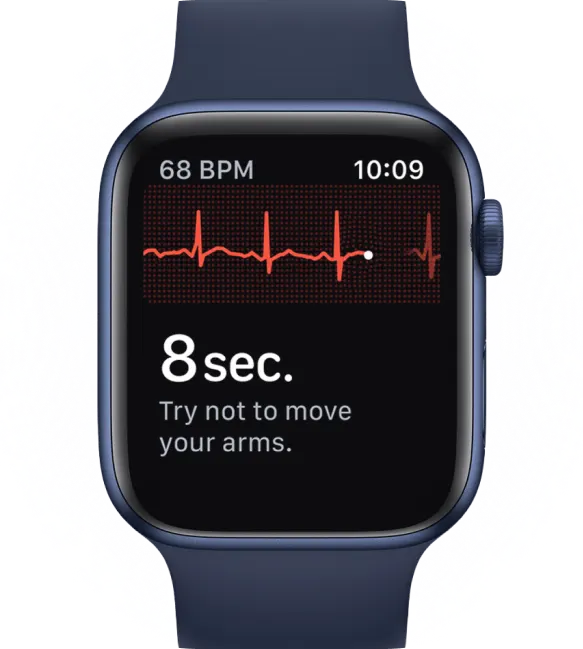
If you're thinking about taking melatonin, or already are, your wearable device can become one of your most valuable allies. Devices like the Apple Watch, Fitbit, or Kardia are much more than just gadgets; they're personal health monitors that can help you stay on top of your heart's activity. This is especially true when introducing anything new that could affect your heart, like a supplement such as melatonin.
Let's walk through how you can use this technology to keep a close eye on your heart health. The goal here isn't to create anxiety. It's about empowering you and your doctor with clear, objective data to work with. Understanding the different types of devices, like the differences between a fitness tracker vs smartwatch, can also help you choose the best tool for your monitoring needs.
What to Watch For on Your ECG
When you start taking melatonin, your at-home ECG becomes an incredibly powerful tool. You’re not just looking for a single, scary event. Instead, you're looking for patterns and subtle changes over time.
This is where an app like Qaly really shines. It helps you move beyond one-off readings and start seeing the bigger picture. Here are the key things to monitor on your ECGs:
- Palpitations like PVCs and PACs: Are you noticing more of those "skipped beats" or "flutters" than usual? An uptick in premature ventricular contractions (PVCs) or premature atrial contractions (PACs) is worth noting.
- New Irregular Rhythms: Keep an eye out for any new patterns of irregularity in your heartbeat that you haven't seen before. This could be a clue that something has shifted.
- Changes in Your Heart Rate: What’s your resting heart rate doing? Is it trending higher or lower than your normal since you started melatonin?
These observations give you something concrete to discuss. Instead of just telling your doctor, "I feel like I'm having more palpitations," you can show them a detailed record. You can find more tips from cardiologists in our detailed guide to the smartwatch ECG.
-samsung.webp)
Tracking Key ECG Intervals with Qaly
With Qaly, you can go even deeper by monitoring specific ECG intervals that offer a window into your heart's electrical function. These numbers can be influenced by your heart condition and any medications or supplements you're taking.
The most important part of monitoring is consistency. By tracking these metrics over time, you establish your personal baseline. This makes it much easier to spot a meaningful change if one occurs.
Here’s what to look at in the app:
- PR Interval: This measures the time it takes for an electrical signal to get from your heart's upper chambers to its lower chambers.
- QRS Duration: This shows how quickly your heart's lower chambers (the ventricles) are contracting.
- QTc Interval: This is a particularly important one. A prolonged QTc interval can increase the risk of dangerous arrhythmias. Since both heart conditions and various substances can affect it, tracking this is crucial.
You can also log your melatonin use right in the app. This feature lets you directly correlate any changes in your ECG readings with your supplement schedule, helping you and your doctor see potential connections more clearly.
Red Flags That Mean It's Time to Call Your Doctor
Monitoring is about empowerment, but it’s also about knowing when you need to act. If you see any of these "red flags" in your Qaly reports or start feeling new symptoms, it's time to stop guessing and share that data with your doctor right away.
- A sudden and sustained increase in PVCs or PACs.
- The appearance of a new irregular rhythm you haven't seen before.
- A consistent, noticeable change in your QTc interval.
- New symptoms like dizziness, lightheadedness, or shortness of breath that happen alongside these ECG changes.
This approach transforms your wearable from a passive tracker into an active partner in your health. It gives you the power to collect meaningful data, making your next conversation about melatonin and heart failure with your doctor a truly collaborative one.
Your Action Plan for Making a Safe Decision
You've just absorbed a lot of complex, and maybe a little unsettling, information about melatonin and heart failure. Now it's time to translate that knowledge into a straightforward, confident plan. This isn't a decision to make in a vacuum, so let's build a simple framework to help you move forward.
The single most important thing you can do is talk to your doctor or cardiologist. You're no longer just showing up with anxiety; you're now equipped to have a real, collaborative discussion. Bringing specific, science-backed points to the table is the best way to partner with them for the best possible outcome.
Questions for Your Cardiologist
Walking into your appointment with a prepared list of questions is a fantastic strategy. It ensures nothing gets forgotten and shows your doctor that you're an active participant in your own care.
Based on the research we've gone over, you might consider asking things like:
- With my specific type of heart failure and my current medications, what are your thoughts on the newer studies that found a link between long-term melatonin use and higher heart failure risk?
- For me, do the potential sleep benefits from short-term melatonin use outweigh the possible cardiovascular risks?
- How do you define "short-term" versus "long-term" use? And what dose would you consider the absolute maximum for someone in my situation?
These questions get right to the heart of the matter. For more ideas on how to get the most out of your appointment, check out our guide on what questions to ask your cardiologist.
Short-Term Help Versus Long-Term Habit
One of the biggest takeaways from all this research is the stark difference between occasional, short-term use and making melatonin a nightly, chronic habit. The studies that raised alarms focused on people taking it for a year or more. We don't have similar data suggesting that using it for a few nights to reset from jet lag carries the same level of risk.
The goal isn't to demonize melatonin. It's to treat it with the respect a powerful hormone deserves. It’s not just a vitamin; it’s a substance with far-reaching effects on your body.
Think of it this way: a powerful pain reliever can be a lifesaver for a bad migraine, but you wouldn't take it every single day "just in case." Applying that same careful, thoughtful approach to melatonin is a smart way to protect your heart.
Partnering for a Solution
You're in a much stronger position now. You understand that your body's natural melatonin release is like a gentle tide, while a supplement can hit like a powerful wave. You also know that while some early research was promising, newer and larger studies have raised serious red flags about long-term use.
This knowledge gives you power. You can now work with your healthcare team to find a sleep solution that actually works for you, without putting your heart at unnecessary risk.
This might mean exploring sleep strategies that don't involve medication, carefully considering very brief melatonin use under guidance, or looking at other medical options. Whatever the path, you can now make that decision together, with confidence.
Frequently Asked Questions About Melatonin and Heart Failure
We get it; when new health information comes out, especially about something as common as melatonin, it can feel confusing. If you have heart failure, you probably have a lot of questions.
Let’s walk through some of the most common ones to give you a clearer picture.
Is Any Amount of Melatonin Safe with Heart Failure?
The recent studies raising a red flag are focused specifically on long-term, chronic use. This means taking it for a year or longer. The same level of risk hasn't been tied to occasional or very short-term use.
But here’s the thing: "safe" isn't a one-size-fits-all term. It really comes down to your personal health history, the other medications you're on, and the current state of your heart. It's absolutely crucial to talk with your cardiologist about any melatonin use, no matter how small. They're the only one who can help you weigh the sleep benefits against the potential heart risks for you.
What Are Safer Alternatives to Melatonin for Sleep?
This is a great question to ask. Many people find they can get great sleep without reaching for a supplement at all. In fact, many experts see Cognitive Behavioral Therapy for Insomnia (CBT-I) as the gold-standard first step for chronic sleep problems.
On top of that, simple habits can make a world of difference. Think of it as sleep hygiene:
- Stick to a Schedule: Going to bed and waking up around the same time every day (yes, even on weekends!) helps train your body's internal clock.
- Create a Sleep Haven: Keep your bedroom dark, quiet, and cool. It should be a sanctuary reserved for sleep.
- Build a Wind-Down Ritual: Give your mind and body time to slow down. Try reading a book, doing some gentle stretching, or listening to calming music before bed.
- Mind Your Intake: Caffeine and alcohol can seriously mess with your sleep quality. It's best to avoid them, especially in the hours before you plan to go to sleep.
Your doctor can be an excellent partner in exploring these strategies and finding what works best for you.
Should I Stop Taking Melatonin Immediately if I Have Heart Failure?
Please, do not make any sudden changes to your supplements or medications on your own. The right first move is to book an appointment with your cardiologist as soon as you can.
When you go, bring this information and any questions you have. This will set you up for a productive chat about what the research means for you personally. Together, you can map out a safe plan, whether that’s tapering off melatonin carefully or deciding it's still the right choice for your unique situation.

Have certified experts review your ECGs for 30+ arrhythmias and monitor your QTc interval.



.png)
.png)