


Key Takeaways

User Profile
When you're managing a condition like congestive heart failure (CHF), it's natural to focus on the things right in front of you, like medications, diet, and exercise. But what about your sleep? It’s one of the most powerful, yet often forgotten, pieces of the heart health puzzle.
We know that navigating the healthcare world and getting straight answers can be frustrating. That’s why we’ve put this guide together. We want to give you clear, expert-backed information about the deep connection between sleep apnea and congestive heart failure, so you can feel more in control.
Your Guide to Sleep Apnea and Heart Failure

Think of your heart as a hard-working engine. Sleep is its essential nightly maintenance time. When that engine is already struggling, as it is with heart failure, any disruption to this maintenance can cause serious issues. This is exactly where sleep apnea enters the picture.
There’s a tricky, two-way relationship between these two conditions: heart failure can lead to sleep apnea, and sleep apnea can make heart failure worse. Understanding this link is a huge step in taking charge of your health.
The Two Sides of the Problem
So, what exactly is sleep apnea? It’s much more than just snoring loudly. It's a condition where you repeatedly stop and start breathing while you sleep. When we talk about heart failure, two main types of sleep apnea are especially important:
- Obstructive Sleep Apnea (OSA): This is the most common kind. It happens when the muscles in your throat relax too much during sleep, physically blocking your airway. Imagine a temporary roadblock on a highway.
- Central Sleep Apnea (CSA): This type is different. It's a communication issue. Your brain momentarily doesn't send the right signals to the muscles that control your breathing. The road is clear, but the driver isn't getting the message to go.
Every time you stop breathing, your body sounds an alarm. Your oxygen levels drop, and a wave of stress hormones is released. This causes your blood pressure to surge and your heart to race, forcing it to work much harder. For a heart already weakened by CHF, this nightly battle puts it under tremendous strain.
This isn't just a coincidence; it's a vicious cycle. The fluid buildup in the lungs from heart failure can trigger or worsen sleep apnea. In turn, the nightly stress from sleep apnea puts more strain on the heart, making the heart failure worse.
Our goal here is to help you see this cycle for what it is. We'll start with the basics, explaining how both OSA and CSA challenge a heart that's already working overtime. To get a better handle on the heart failure side of things, you can also check out our guide on understanding heart failure and what it looks like on your ECG. This knowledge is your first step toward having more informed conversations with your doctor and making proactive decisions for your health.
Navigating your health can feel like you're trying to solve a puzzle, especially when you're connecting the dots between different conditions on your own. This guide is here to shed light on the surprisingly tight relationship between sleep apnea and congestive heart failure.
Think of your heart as an engine and sleep as its nightly tune-up. If the engine is already struggling (that's heart failure), any disruption to that nightly tune-up can cause serious problems. On the flip side, if the tune-up is constantly interrupted (that's sleep apnea), it puts tremendous strain on the engine. We'll explore this connection, breaking down how both obstructive and central sleep apnea challenge a heart that's already working overtime.
How Often Do Sleep Apnea and Heart Failure Overlap?
If you're dealing with either congestive heart failure or sleep apnea, it's easy to think of it as a single battle. The reality is that these two conditions often show up together, making each other worse. Just how often this happens might surprise you.
This link isn't some rare coincidence; it's a well-known and tricky partnership. In many cases, one condition gets diagnosed while the other lurks in the background, quietly making things worse.
The statistics paint a clear picture. A major analysis that combined data from 33 different studies found that an incredible 38.4% of people with heart failure also have obstructive sleep apnea (OSA). For a deeper dive, you can read the full research on the prevalence of sleep apnea in heart failure patients.
A Two-Way Street of Risk
The relationship isn't just one-sided. While almost four out of ten people with heart failure also battle sleep apnea, the risk flows in the other direction, too. That same body of research showed that among patients diagnosed with OSA, the prevalence of heart failure is 12.8%.
What this means is that having one of these conditions significantly bumps up your risk for developing the other. It's a tough cycle where each problem fuels the next. If you're already managing congestive heart failure, the added strain from untreated sleep apnea can be a massive burden on your heart.
This is exactly why being proactive is so important. If you have a heart failure diagnosis, it's wise to think about your sleep. And if you have a sleep apnea diagnosis, keeping a close watch on your heart health is a must. It's also helpful to understand where you stand in terms of your broader heart health risks, which you can learn more about by calculating your risk score for cardiovascular disease.
Why These Numbers Matter for You
Hearing these statistics can be a bit unsettling, but we want you to know that this knowledge is your best defense. These numbers aren't here to scare you; they're here to arm you with information and highlight a common blind spot in healthcare.
The prevalence of all forms of sleep-disordered breathing (SDB), which includes both obstructive and central sleep apnea, is even more striking. It affects somewhere between 50% and 80% of all heart failure patients.
This is especially relevant if you're using a wearable device to keep an eye on your heart. Those strange heart rate spikes or palpitations you see on your ECG in the middle of the night might not be so random after all. They could be your heart’s direct response to the oxygen drops caused by sleep apnea.
By connecting the dots between your symptoms, your wearable data, and your understanding of this link, you can build a much more complete picture of your health. This allows you to have a smarter, more productive conversation with your doctor. You're no longer just managing one condition in isolation; you're looking at the whole system to protect your well-being.
The Vicious Cycle: How Each Condition Worsens the Other
Think of sleep apnea and congestive heart failure as two partners locked in a destructive dance. It’s a tricky two-way street where each condition makes the other worse. Understanding this cycle is the first, most powerful step you can take toward breaking it and reclaiming your health.
Let's start with a surprising fact: a struggling heart can actually cause sleep apnea. When you have congestive heart failure, your heart doesn't pump blood as efficiently as it should. This can cause fluid to back up, especially into your lungs.
When you lie down to sleep, that fluid can shift, putting pressure on your airway and chest. This fluid buildup is a major trigger for central sleep apnea (CSA), the type where your brain simply fails to tell your muscles to breathe. It’s like a temporary short-circuit in your body’s respiratory control center, and it's often a direct result of heart failure.
How Sleep Apnea Harms Your Heart
Now, let's flip the coin and see how sleep apnea attacks your heart. This is particularly true for obstructive sleep apnea (OSA), where your airway physically collapses or becomes blocked while you sleep. Each time you stop breathing, your body panics.
Your blood oxygen levels plummet, and your brain sounds the alarm, flooding your system with stress hormones like adrenaline to jolt you awake just enough to gasp for air. This triggers a dangerous series of events:
- Your blood pressure spikes sharply.
- Your heart rate shoots up.
- The walls of your heart and blood vessels are put under incredible strain.
Imagine this happening not just once, but dozens or even hundreds of times every single night. Year after year, this relentless assault overworks and physically damages your heart muscle. This constant strain is a major factor that can cause or worsen congestive heart failure.
A staggering number of heart failure patients also have sleep apnea, and vice-versa, confirming this dangerous partnership.
The Link to Irregular Heart Rhythms
This nightly battle does more than just weaken the heart muscle; it also messes with the heart's electrical system. The repeated surges of adrenaline and drops in oxygen can make the heart tissue irritable and unstable, dramatically increasing your risk for arrhythmias like Atrial Fibrillation (AFib). If you're using a wearable ECG, these are the very palpitations and irregular rhythms you might be seeing.
The connection is so strong that untreated sleep apnea is now recognized as a major independent risk factor for developing AFib. The constant stress makes it incredibly difficult for the heart to maintain a steady, normal rhythm.
This is a critical piece of the puzzle. That feeling of what causes shortness of breath you might blame solely on heart failure? It can be severely amplified by the oxygen starvation that happens during these breathing pauses.
Leaving this cycle unchecked allows the damage to add up, often silently, over time. It's important to understand all the potential complications of untreated sleep apnea to grasp the full picture. By recognizing how these two conditions feed each other, you're better equipped to fight back and protect your heart.
Alright, let's get you on the right track. Trying to connect the dots between your health concerns can be a confusing and sometimes scary process, especially when you're doing it alone. We're here to clear things up.
Think of it this way: your heart is a powerful engine, and a good night's sleep is its essential maintenance cycle. When that engine is already struggling, as it is with congestive heart failure, any disruption to its nightly upkeep can cause serious problems. On the flip side, if that maintenance is constantly interrupted by something like sleep apnea, it puts a tremendous strain on the engine itself.
We'll break down this two-way street, starting with the basics of how different types of sleep apnea can challenge a heart that's already working overtime. Our goal is to give you the foundational knowledge you need to feel in control of your health journey.
Recognizing Early Warning Signs and Long-Term Risks
It’s incredibly common to write off loud snoring or feeling exhausted all day as just a part of getting older or being stressed. But these can be early warnings of a much bigger problem, especially when it comes to the dangerous link between sleep apnea and congestive heart failure.
These aren't just small annoyances. They're signals from your body that something isn't right. Learning to listen to them is one of the most important things you can do for your long-term health.
The journey from disordered sleep to serious heart trouble often starts years before congestive heart failure is ever diagnosed. It begins with a handful of precursor conditions that quietly put immense pressure on your entire cardiovascular system.
The Domino Effect on Your Heart
Imagine untreated sleep apnea as the very first domino to tip over. Night after night, the repeated pauses in breathing and sudden drops in oxygen throw your body into a constant state of fight-or-flight. This isn't just tiring; it actively creates the perfect storm for conditions that lead directly to heart failure.
Some of the most critical precursor conditions tied to sleep apnea include:
- High Blood Pressure (Hypertension): Every time you stop breathing, your blood pressure spikes sharply. When this happens hundreds of times a night, it leads to chronically high blood pressure, forcing your heart to pump harder 24/7.
- Diabetes: Sleep apnea can mess with your body's ability to use insulin effectively, which is a major risk factor for developing type 2 diabetes. The resulting high blood sugar can damage blood vessels and add even more stress to your heart.
- Metabolic Syndrome: This isn't one condition but a cluster of them: high blood pressure, high blood sugar, excess fat around the waist, and unhealthy cholesterol levels. Sleep apnea significantly raises your risk for this syndrome, a known driver of heart disease.
Seeing these problems as interconnected is key. They aren't isolated issues but pieces of a larger puzzle that often starts with what happens when you close your eyes at night.
It's Not Just an Older Person's Problem
There's a persistent myth that serious heart problems are only a concern for the elderly. But the damage from sleep apnea starts accumulating much earlier than most of us think. In fact, young adults can be surprisingly vulnerable.
Think about it: you're in your 20s or 30s and feel palpitations during a workout. You glance at your smartwatch, see a high heart rate, and assume it's just from the exercise. But it could be a quiet sign that sleep apnea is already setting the stage for heart disease.
A major recent study found that young adults between 20 and 40 with sleep apnea symptoms were 45% more likely to have hypertension and 33% more likely to have diabetes compared to their peers. You can read more about these startling findings over at the UT Southwestern Medical Center newsroom.
Even more shockingly, the study showed that 8.6% of adults with probable sleep apnea symptoms had already suffered a major cardiovascular event, like a heart attack or stroke. This shows just how fast the damage can build up.
This is a critical wakeup call for anyone using a wearable device to monitor their health. Those palpitations might not be so random after all. They could be your heart crying out from the strain sleep apnea is putting on your entire system, years before a diagnosis of congestive heart failure is even on the radar.
By recognizing these early signs, you give yourself the power to act. You can walk into your doctor's office with real data and concerns, push for a diagnosis, and take the steps needed to stop that first domino from falling.
Using Your Wearable ECG to Find Clues
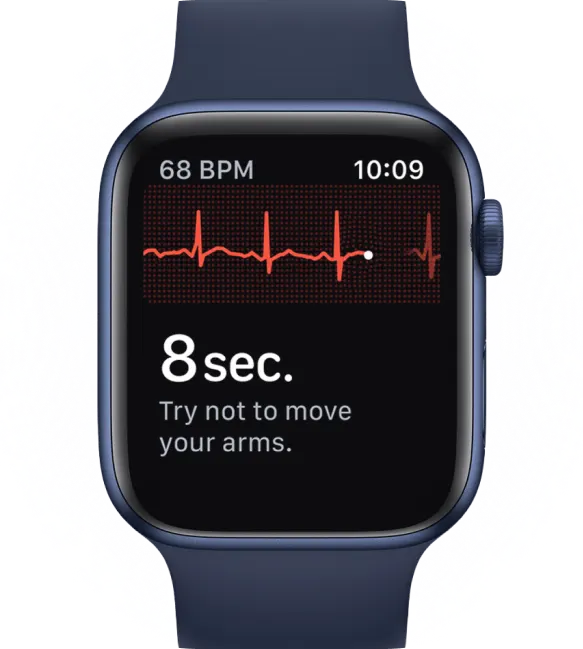
Your smartwatch or wearable ECG isn't just a gadget; think of it as your personal health detective. It gives you the power to collect important clues about how your heart is behaving, especially when dealing with both sleep apnea and congestive heart failure.
Your job isn't to diagnose yourself. Instead, you're gathering high-quality evidence to share with your healthcare team. This approach turns a vague feeling like "I had some palpitations last night" into a concrete, data-backed conversation that can lead to real answers.
What to Look for in Your ECGs
When you're living with both sleep apnea and congestive heart failure, your heart is under a lot of strain, particularly at night. Your watch ECG can capture signs of this stress. These aren't definitive proof of a problem on their own, but they are crucial clues that are absolutely worth investigating with your doctor.
Pay close attention to patterns in your recordings, especially any you take during the night or first thing in the morning. Here are a few key things to watch for:
- Atrial Fibrillation (AFib): Sleep apnea is a well-known trigger for AFib. You might see your wearable flag an irregular rhythm more often at night or after a particularly rough night of sleep.
- Premature Ventricular Contractions (PVCs): These are early, extra heartbeats that can feel like a "skip" or a "flutter" in your chest. An increase in PVCs, especially when they happen in groups, can be a sign that the heart is irritated by low oxygen levels during sleep.
- Bradycardia (Slow Heart Rate): While it's normal for your heart rate to slow down during sleep, a breathing pause can sometimes cause it to drop unusually low as your body struggles for oxygen.
-fitbit.webp)
Using a service that helps you read these recordings can give you a much clearer idea of what these different rhythms mean. You can learn more about how to do this in A Cardiologist’s Guide to the Smartwatch ECG. Understanding what you're seeing ahead of time can make your conversation with your doctor even more productive.
Creating a Powerful Symptom Log
Your ECG data is powerful, but it becomes even more useful when you add context. Keeping a simple symptom log next to your recordings can uncover connections you might have otherwise missed. This doesn't have to be complicated; just a few quick notes can make a huge difference.
Your goal is to connect how you feel with what your heart is doing. This combination of personal symptoms and objective data creates a comprehensive picture that is incredibly valuable for your doctor.
Here's a simple framework you can follow. Each time you take an ECG, especially if you feel like something is off, just jot down a few notes:
- Note Physical Sensations: Did you feel palpitations, fluttering, or a racing heart? Did you just wake up suddenly, gasping for air? Write it down.
- Log Related Symptoms: Are you waking up with headaches? Feeling exhausted during the day even after a "full" night in bed? These are important details.
- Record the Time: Make a note of the time of day or night. Patterns that consistently pop up during sleep are especially important clues when investigating sleep apnea.
When you share this combined log of ECG strips and symptoms with your healthcare provider, you're giving them a rich, detailed story of your health. It helps them see the patterns that connect sleep apnea and your heart, paving the way for a better diagnosis and a more personalized treatment plan.
Finding the Right Diagnosis and Treatment Path
Taking the first step toward a diagnosis can feel like the biggest hurdle, but it's the single most important move you can make for your heart health and your sleep. Let's walk through what the process looks like and how the right treatments can get you back on track.
Getting to the bottom of whether you have sleep apnea usually starts with a sleep study, technically called a polysomnography. It might sound intense, but it's really just an overnight test where sensors monitor what your body is doing while you're asleep. They track things like your breathing patterns, oxygen levels, heart rhythm, and even brain activity. This gives doctors a clear, detailed picture of what’s going on and helps them tell the difference between obstructive and central sleep apnea.


Treatments That Help Your Heart and Lungs
Once a diagnosis is made, the conversation shifts to treatment. The best part is that treating sleep apnea does more than just give you a better night's sleep; it's one of the most direct ways you can protect your heart. The main goal is simple: keep your airway open and your oxygen levels stable all night long. This gives your already-stressed heart a much-needed break.
The most common and effective treatments are:
- CPAP (Continuous Positive Airway Pressure): This is the frontline treatment for most cases of obstructive sleep apnea. A small machine delivers a steady, gentle stream of air through a mask you wear at night. Think of it like a pneumatic splint that keeps your airway from collapsing, allowing you to breathe without interruption.
- ASV (Adaptive Servo-Ventilation): This is a more advanced, "smart" device often reserved for central sleep apnea or more complex cases. It actively monitors your breathing pattern in real-time and adjusts the air pressure it delivers. If it senses you’ve stopped breathing, it provides just enough support to prompt you to start breathing again.
These devices aren't just for stopping snoring. For anyone dealing with both sleep apnea and congestive heart failure, they can be truly life-changing.
How Treating Sleep Apnea Improves Heart Failure
This is where it all clicks into place. By using a device like a CPAP or ASV, you're directly pushing back against that vicious cycle we discussed earlier. Here’s exactly how it helps your heart:
- Reduces Strain on the Heart: By stopping the constant drops in oxygen and the related surges of adrenaline, treatment allows your heart to actually rest at night instead of fighting to keep up. For a heart already weakened by heart failure, lowering that workload is a huge win.
- Lowers Blood Pressure: Consistent therapy is proven to help lower both nighttime and daytime blood pressure, a major factor in heart damage.
- Decreases Arrhythmia Risk: When your oxygen levels are stable and your nervous system is calm, your heart is much less "irritable." This can significantly cut down the frequency of dangerous arrhythmias like AFib.
Have you ever woken up with your heart racing, checked your wearable ECG, and wondered if the data points to a bigger problem? You're not alone. Sleep-disordered breathing affects a staggering 50% to 80% of heart failure patients. Recent data shows that for people with untreated OSA, the risk of mortality is significantly higher due to low nighttime oxygen. You can read more about these crucial findings to understand why taking action is so critical.
It's a powerful combination: treating sleep apnea while also fine-tuning your heart failure therapy. When both are managed together, the results are often far better than tackling either one alone.
This is a partnership between you and your healthcare team. The goal is to land on a treatment plan that fits into your life and gives your heart the maximum benefit. Making this move is an act of empowerment, one that can lead to more energy, better sleep, and a much-improved quality of life.
Frequently Asked Questions About Sleep Apnea and Heart Health
When you're trying to connect the dots between sleep apnea and congestive heart failure, it's easy to get tangled up in confusing medical terms. We get it. You have questions, and you deserve clear, straightforward answers.
Think of this as a conversation, not a lecture. Let's walk through some of the most pressing concerns you might have.
Can Sleep Apnea Actually Cause a Heart Attack?
Yes, the link is very real and it’s something to take seriously. When you have untreated sleep apnea, your body is put through a stressful cycle all night long. Each time you stop breathing, your oxygen levels plummet, which sends a jolt of stress hormones like adrenaline through your system.
Imagine putting that kind of strain on your heart, night after night. Over time, this repeated stress can damage your heart and blood vessels, significantly increasing the risk of a heart attack. It's a silent process, which is why getting sleep apnea under control is so vital for your long-term heart health.
Will My Heart Rhythm Go Back to Normal if I Treat My Sleep Apnea?
For many people, the answer is a very hopeful yes. Treating sleep apnea can often reduce and sometimes even resolve the arrhythmias it triggers. When you begin a treatment like CPAP, you’re finally giving your heart a break from the nightly rollercoaster of low oxygen and stress hormone spikes.
By removing that constant "irritant," the heart is much more likely to settle back into a steady, normal rhythm. While every person's journey is different, many see a dramatic improvement in arrhythmias like AFib or frequent palpitations once their sleep apnea is properly managed.
Is It True That Only Older, Overweight Men Get Sleep Apnea?
This is one of the biggest and most dangerous myths out there. The reality is that sleep apnea can affect anyone, regardless of age, gender, or weight. While being older or carrying extra weight are definite risk factors, plenty of young, fit individuals develop sleep apnea.
It's seen in women, thin people, and even children. Believing the stereotype is risky because it might cause someone who doesn't fit the "classic" profile to brush off their symptoms, delaying a diagnosis that could be life-saving.
The fact is, an estimated 18 million Americans have some form of sleep apnea. It is far more common than most people realize, affecting a wide range of individuals.
Do Sleeping Pills or Alcohol Help With Sleep Apnea?
Absolutely not; in fact, they do the exact opposite and can make the condition much more dangerous. Alcohol and most sleeping pills are sedatives, meaning they cause the muscles in your throat to relax far more than they would during normal sleep.
This extra relaxation makes your airway even more prone to collapsing, which can lead to longer and more frequent breathing pauses. It's like pouring fuel on a fire. To get a better handle on your options for safely managing the condition, exploring various sleep apnea treatment options is a much better path forward.

Qaly is the only app that sends your wearable ECGs directly to certified heart rhythm experts for human analysis in minutes, 24/7



.png)
.png)