


Key Takeaways

User Profile
Hello Heart Hero. Taking charge of your heart health by monitoring it at home is a huge step, and we're here to help you make sense of it all. We get it, diving into health data can feel overwhelming, especially when you're just looking for clear, trustworthy answers outside of a doctor's office that can sometimes feel impersonal. This guide is here to be your friendly and reliable resource, helping you feel confident and in control.
What Is The PR Interval And Why Does It Matter
Let's break down the PR interval without any confusing medical jargon. Think of your heart's electrical system as a perfectly timed relay race. The race kicks off in your heart's upper chambers (the atria), and this first signal creates what’s called the P wave on your ECG.
The PR interval is simply the time it takes for that electrical signal, the baton, if you will, to be passed from the upper chambers down to the lower chambers (the ventricles). This pause is absolutely crucial. It gives the lower chambers a moment to fill up with blood before they pump it out to the rest of your body. It’s a tiny, perfectly coordinated delay that keeps your heart running efficiently.
Measuring The Rhythm Of Your Heart
So, what do the numbers on your wearable’s screen actually mean? The PR interval is measured in milliseconds (ms), which are just thousandths of a second. A typical, or "normal," PR interval is usually between 120 and 200 milliseconds.
Now, this range is more of a guideline than a strict rule. But when your PR interval consistently falls outside this window, it can offer important clues about your heart's electrical health. That's why keeping an eye on it is so valuable.
Think of it like this: If the relay race baton is passed too quickly or too slowly, it can throw off the whole team's rhythm. In the same way, a PR interval that's too short or too long might point to a disruption in your heart's electrical pathway.
Knowing this empowers you. Instead of seeing a number and feeling anxious, you can start building a clear picture of what's normal for you. This foundation is key to having more productive talks with your doctor. If you want to understand all the different parts of your ECG, you can learn more by demystifying PQRST intervals on your watch ECG.
Why A Short PR Interval Is Significant
It’s easy to think that "faster is better," but when it comes to the PR interval, that’s not the case. A consistently short PR interval (less than 120 ms) means the electrical signal is zipping from the atria to the ventricles too quickly. This can sometimes point to an "accessory pathway," which is like an electrical shortcut in the heart that bypasses the normal route.
This isn't just a quirky reading; it can have real health implications. For example, some large studies have shown that a short PR interval can be linked with an increased risk of health issues over time. This shows how at-home monitoring can be a critical tool for spotting these subtle but significant changes early.
What It Means To Have A Long PR Interval
On the flip side, a prolonged PR interval (greater than 200 ms) means the signal is taking a bit too long to travel. This is often called a first-degree AV block. While the name sounds intimidating, it’s often a mild condition, especially if you have no other symptoms.
Several things can cause it. Common causes for a longer PR interval include natural aging, as the heart's conduction system can slow down a bit over time. Certain heart medications, like beta-blockers or calcium channel blockers, are actually designed to slow the heart's electrical signals. Also, highly conditioned athletes sometimes develop a longer PR interval because their hearts have become so efficient.
By understanding what a normal, short, or long PR interval means, you replace uncertainty with knowledge. This is the first step toward using your wearable not as a source of worry, but as a powerful partner in managing your heart health.
What A Long Or Short PR Interval Can Mean
Getting an "abnormal" reading on your watch can be unsettling, but let's break down what these numbers might actually mean before jumping to any conclusions. Think of it this way: knowledge is your best tool for feeling empowered, not fearful. A consistent reading outside the typical 120 to 200 millisecond range isn’t a reason to panic. Instead, it’s a starting point for a more productive conversation with your doctor.
This guide will walk you through the "why" behind those numbers, looking at both prolonged and short PR intervals. Remember, checking your pr interval reviews and data is all about becoming a more informed partner in your own health journey.
Understanding A Prolonged PR Interval
When your ECG shows a PR interval that’s consistently longer than 200 ms, this is often called a first-degree AV block. The word "block" definitely sounds intimidating, but it's crucial to know what it really means here. It simply points to a slight, uniform delay in the electrical signal as it travels from your heart's upper chambers to its lower chambers. The signal still gets through every single time, it just takes a little longer to make the trip.
For many people, especially if they don’t have symptoms like dizziness or fatigue, a first-degree AV block is considered a mild finding. That said, it’s not something to brush off. Long-term studies have shown it can be linked to future heart rhythm issues down the road.
Data from the landmark Framingham Heart Study, a project that has followed thousands of people for decades, uncovered some important trends. It found that individuals with a prolonged PR interval had a significantly higher long-term risk of developing atrial fibrillation and eventually needing a pacemaker compared to those with normal intervals. You can read more about these long-term findings from the study.
This is exactly why tracking your PR interval over time is so valuable. It’s not about fixating on a single reading, but about spotting a consistent pattern you can show your doctor. A human-reviewed service like Qaly can help confirm if you have a first-degree AV block. For more details, you can explore how your watch ECG can help detect it.
What Causes A Long PR Interval
A prolonged PR interval isn't automatically a sign of a problem. Sometimes, it’s actually an expected finding based on other factors.
Here are some common reasons for a longer PR interval:
- Medications: Certain heart medications, like beta-blockers and some calcium channel blockers (think diltiazem or verapamil), are specifically designed to slow the heart's electrical signals. In this case, a longer PR interval can be a sign that the medication is doing its job.
- Being an Athlete: If you’re very physically fit, your heart muscle is often stronger and more efficient. This can lead to a naturally slower heart rate and a longer PR interval, a completely normal adaptation to intense training.
- Natural Aging: As we get older, the heart's electrical wiring can slow down a bit. It’s a natural part of the aging process that can sometimes result in a longer PR interval.
Making Sense Of A Short PR Interval
On the flip side, you might see a consistently short PR interval, which is typically under 120 ms. This tells us that the electrical signal is reaching the ventricles (the lower chambers) faster than it should. Instead of sticking to the normal pathway, the signal might be taking an electrical "shortcut" between the heart's chambers.
This shortcut is known as an accessory pathway. One of the most well-known conditions tied to a short PR interval and an accessory pathway is Wolff-Parkinson-White (WPW) syndrome. With WPW, this shortcut can sometimes allow electrical signals to travel in a chaotic loop, which can trigger episodes of a very fast heart rate.
While not everyone with a short PR interval has WPW, it's a possibility that deserves a closer look. If your wearable ECG is consistently showing a short PR interval, that’s a clear signal to get the reading verified by an expert and to follow up with your doctor for a proper evaluation.
Why Your Wearable's PR Reading Might Be Inaccurate
You’re looking at the ECG from your watch, and a number pops up that you don’t recognize or that looks different from yesterday. It’s natural to wonder: can I even trust this? It's a completely fair question. While these devices are incredibly powerful, they aren’t perfect.
Seeing a strange reading can be stressful, but there are often simple, technical reasons behind it. Let's be open about why your PR interval reading might sometimes be off. Understanding the limitations of your device is the first step toward using it with more confidence and less anxiety.
Most inaccuracies come down to two main culprits: electrical "noise" that messes up the recording, and errors made by the device's software.
The Challenge of Electrical Noise
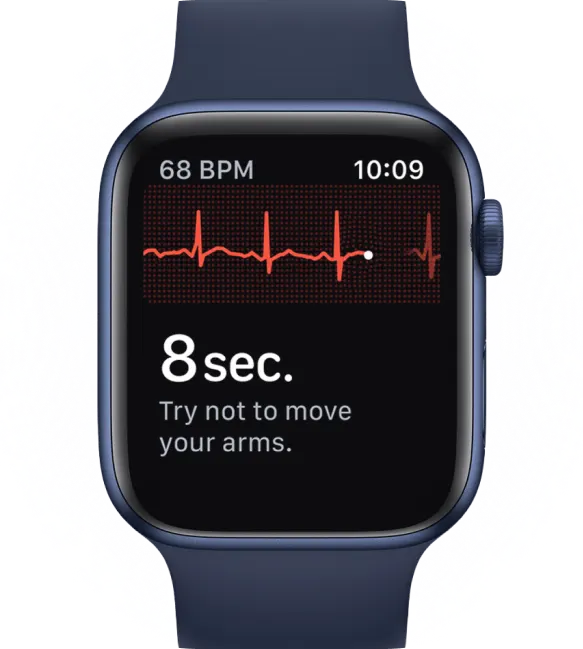
Think of your wearable ECG as a sensitive microphone trying to listen to your heart's very faint electrical whispers. Any other "sound" can interfere with the recording. This interference is called artifact, or electrical noise, and it’s the most common reason for a questionable reading.
This "noise" can come from a few different places:
- Movement: Even small movements like shifting in your chair, talking, or tensing your arm can create electrical signals from your muscles. These signals can easily drown out your heart's tiny P wave.
- Poor Skin Contact: If the watch is too loose, or if your skin is very dry, the sensors can't get a solid connection to pick up the ECG signal clearly.
- External Electronics: Sometimes, being near other electronic devices can cause interference that shows up on your ECG tracing as a fuzzy or messy line.
These noisy recordings are often what people are looking at when they search for pr interval reviews. An algorithm trying to measure a PR interval on a fuzzy ECG is like trying to measure the length of a shadow on a windy day, it's bound to get it wrong sometimes.
You can learn much more about what artifacts look like on your watch ECG in our detailed guide, which helps you spot these common recording errors.
When The Algorithm Gets It Wrong
The second major issue is with the device's software itself. Your watch uses an algorithm to find the start of the P wave and the start of the next big spike (the QRS complex). It then measures the time between them to get your PR interval.
But these algorithms can get confused.
For instance, the P wave is often a very small, subtle bump on the screen. If your heart rate is fast, the P wave can sometimes get buried in the T wave from the previous beat, making it nearly invisible to the algorithm. In other cases, a bit of artifact might look like a P wave, fooling the software into measuring the wrong thing entirely.
This is a key limitation of the single-lead ECG on your watch compared to a 12-lead ECG in a hospital. A 12-lead ECG looks at the heart from twelve different angles, making it much easier to spot the true P wave. Your watch has only one view, which is why a clean, noise-free recording is so vital for getting a reliable measurement.
How Human-Reviewed Reports Provide Peace Of Mind
So, you've taken an ECG on your watch, and the numbers are confusing or, worse, alarming. You're left wondering if it's a real issue or just another glitch. This uncertainty is exactly where a human expert comes in, bridging the gap between automated data and genuine clinical certainty.
When you're trying to understand your health, especially when you're skeptical of a system that can often feel cold and impersonal, having a knowledgeable partner makes all the difference. Services like Qaly offer this partnership by adding a crucial layer of human expertise to your wearable's data.
This human touch helps turn that flicker of anxiety into actionable information, giving you the clarity you need to feel back in control of your health journey.
The Power of A Trained Human Eye
An algorithm is a powerful tool, but it lacks one critical thing: context. It sees numbers and patterns, but it can't understand the nuance that a trained human professional can. This is where services that provide human analysis of your ECGs truly shine.
When you submit an ECG through an app like Qaly, it isn't just fed into another piece of software. It’s analyzed by a certified cardiographic technician, a professional whose entire job is to interpret heart rhythms.
These experts can do what an algorithm often can't. They can easily spot artifacts from movement or poor contact and distinguish them from a genuine arrhythmia. They can also see faint P waves that an algorithm might miss or correctly identify complex rhythm disturbances. Finally, they understand that not every abnormal reading is a sign of impending doom.
For example, a Danish study of over 100,000 emergency department patients found that while 8.9% had a prolonged PR interval, it wasn't independently linked to higher mortality rates after considering other health factors. This highlights that context is key, and an isolated reading doesn't tell the whole story. You can read more about these important research findings and see why expert interpretation is so vital.


From Confusion to Clarity With Plain English
One of the biggest frustrations with automated pr interval reviews is that they often leave you with more questions than answers. You might get a label like "First-Degree AV Block" or just a number, with no explanation of what it means for you.
Human-reviewed reports change this dynamic completely. Instead of a cryptic label, you receive a clear report that explains the findings in plain, easy-to-understand language.
This approach transforms a moment of potential panic into an opportunity for learning. The report can confirm whether a prolonged PR interval is present, note if it appears stable, and suggest that it's something to monitor and share with your doctor, rather than rush to the emergency room for.
This clarity is empowering. It gives you the confidence to know when you should be concerned and when you can be reassured. Having this expert interpretation is also incredibly helpful as technology advances. If you're curious about how AI alone can fall short, you can read our breakdown of what happened when we tested ChatGPT's ECG reader.
A Report You Can Share With Your Doctor
Perhaps the most practical benefit of a human-reviewed ECG report is that it becomes a valuable document you can take directly to your doctor. Instead of just saying, "My watch showed a weird reading," you can hand them a professional analysis.
This accomplishes several important things for your healthcare:
- It Validates Your Concern: It shows your doctor that you've taken a proactive step and have a verified finding to discuss.
- It Provides Specific Data: The report gives your doctor the exact PR interval measurement, notes on rhythm, and other details they need.
- It Fosters a Productive Conversation: You can have a more focused discussion about next steps, whether that's further testing, medication adjustments, or simply continued monitoring.
Ultimately, using a human-reviewed service positions you as an active, informed participant in your own health. It provides peace of mind not by ignoring data, but by making sure it’s interpreted correctly.
Practical Next Steps You Can Take Today
Okay, so we've covered a ton of ground on what the PR interval is and what different readings might mean. But information is only powerful when you know what to do with it. Let's turn all that knowledge into a clear, calm action plan.
This isn’t about causing alarm; it’s about putting you in the driver’s seat of your own health journey. The single most important rule? Look for trends, not just single readings. A one-off strange number could be anything from a bad connection to a hiccup, but a consistent pattern, that's real information you can use.
Track Your PR Interval Over Time
The best way to spot a trend is to start tracking. An app like Qaly is designed for exactly this, letting you save all your ECGs in one place. Over time, you build a personal health journal that shows how your PR interval behaves from week to week or month to month.
When you're doing your pr interval reviews, keep an eye out for these key patterns:
- Consistent Length: Is your PR interval always on the longer side (above 200 ms)? Or is it consistently short (below 120 ms)?
- Changes Over Time: Has your PR interval recently started getting longer or shorter than it used to be?
- Variability: Does it jump around depending on the time of day, after your morning coffee, or post-workout?
Getting a handle on this helps you and your doctor figure out what’s normal for you, not just what’s normal in a textbook.
Know When It Is Time to Consult a Doctor
Seeing a number outside the "normal" range isn't an automatic emergency. Think of it as a flag, a signal to pay closer attention and, in some cases, get a professional opinion.
The real power of at-home monitoring is its ability to flag consistent patterns that warrant a conversation with your healthcare provider. It’s about being proactive, not reactive.
It's a good idea to book an appointment with your doctor if you notice any of these things:
- A consistently short or long PR interval that shows up across multiple, clean ECG recordings.
- A significant change in your PR interval trend over the last few weeks or months.
- Any abnormal reading that comes with symptoms. This is the big one. If you're feeling dizzy, light-headed, getting palpitations, fainting, or feeling short of breath, it's time to seek medical advice.
If your watch ECG raises a concern, getting a professional opinion is a critical next step. For some, it can be helpful to learn how to get a same-day GP appointment to get answers sooner.
Prepare for Your Doctor's Appointment
Walking into your doctor’s office prepared can make a world of difference. It helps you go from having a vague concern to presenting specific, organized data.
This is where human-reviewed reports from a service like Qaly become your best tool. Print them out or have them ready on your phone. These reports don't just show a number; they show that a trained technician has verified your reading.
This completely changes the conversation. You’re no longer saying, "My watch did something weird." Instead, you're saying, "Here is a technician-verified ECG showing a consistent PR interval of 220 ms. What are your thoughts?"
By tracking, observing, and then sharing verified data, you become a true partner in your own healthcare. You give your doctor the high-quality information they need to give you the best possible advice.
Frequently Asked Questions About PR Interval Reviews
We've covered a lot of ground together, but you might still have a few questions popping up. That’s perfectly normal. This final section is here to tackle some of the most common things people ask when they start looking at their PR interval data.
Can My PR Interval Change From Day To Day?
Yes, absolutely. It's perfectly normal for your PR interval to have slight variations from one reading to the next. Think of it like your heart rate, it naturally goes up and down throughout the day.
Things like stress, your morning coffee, how hydrated you are, and even the time of day can cause small shifts. When you’re doing your PR interval reviews, the key is to look at the overall trend, not obsess over a single measurement.
What really matters is the bigger picture. If your PR interval is consistently short (under 120 ms) or long (over 200 ms) across many clean readings, or if you see a big, lasting change from your usual baseline, that's the time to share those findings with your doctor.
My Watch Flagged A Long PR Interval, But I Feel Fine. Should I Worry?
Seeing a "long PR interval" alert on your watch when you feel totally fine can be jarring. The first thing to remember is not to panic. An isolated long reading, especially without any symptoms like dizziness or fatigue, is often just a false alarm or a temporary fluke.
However, you shouldn't just ignore it either. Think of it as an early heads-up from your body. The best first step is to get that ECG reading validated by an expert service. This helps confirm whether the reading is accurate or just a glitch in the recording.
Once it's validated, you can share the report with your doctor. They'll look at it in the context of your complete health picture to decide if any more investigation is needed.
Are App-Based PR Interval Reviews As Good As A Doctor's Review?
This is a great question, and it gets to the heart of how these services work. Reviews from services like Qaly are done by certified cardiographic technicians, real human experts who specialize in reading ECGs. Their analysis provides a crucial layer of validation that an automated algorithm simply can’t offer, giving you a much more reliable result.
It's important, though, to understand their role. These services are for heart monitoring, not for giving a medical diagnosis.
Think of the expert report as a powerful tool you bring to your doctor. It gives them high-quality, verified information to work with. Your doctor then uses this info, along with your medical history and a physical exam, to make a final diagnosis and create a treatment plan. It’s like having an expert partner help you gather accurate data for a much more productive conversation with your doctor.

Get clear, expert-reviewed answers about your ECGs, Qaly is here to help. Get peace of mind by having certified technicians analyze your heart rhythm within minutes.



.png)
.png)