


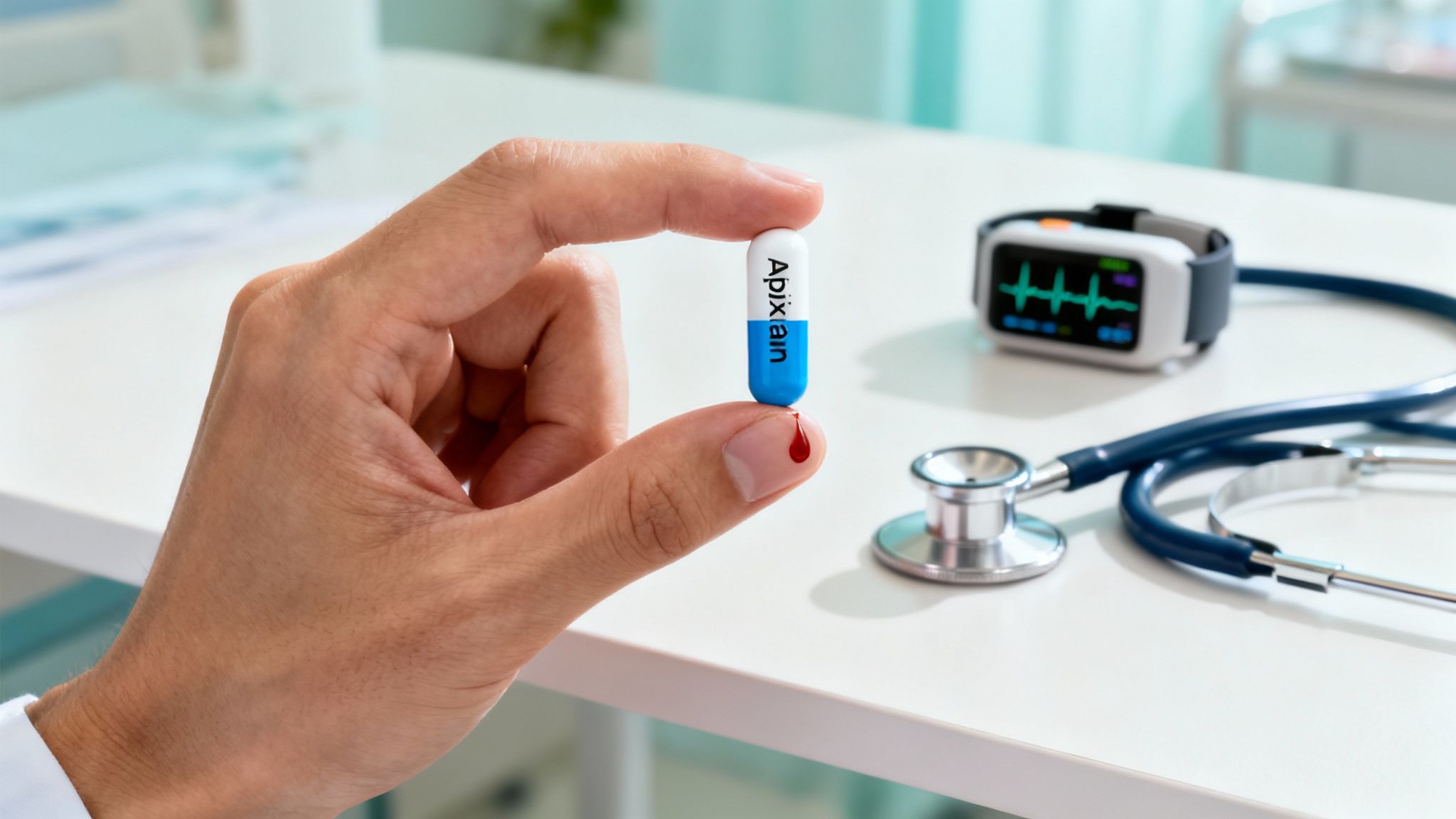


Key Takeaways

User Profile
Hello, heart hero. Starting a new medication like apixaban, also known as Eliquis, can bring up a lot of questions. It's completely normal to want to know what to expect.
When it comes to side effects, the most common ones for apixaban are related to bleeding. This might mean you bruise more easily or get minor nosebleeds. Some people also experience nausea. While these are common, more serious bleeding is also a possibility, which is why understanding the signs is so important.
Your Guide to Understanding Apixaban Safety
We get it. Navigating complex health information can feel overwhelming, especially when you're trying to find clear answers outside of a rushed doctor’s visit. You might even feel a little skeptical about what you've been told, and that's okay. It’s your health, and wanting to fully understand your treatment is a powerful first step.
This guide is here for you. We'll walk through the side effects of apixaban in a straightforward, empathetic way, explaining everything from the common annoyances to the serious red flags.
Our goal is to give you the knowledge you need to feel confident and in control of your treatment. Taking an active role in your healthcare is crucial, and that begins with clear, honest information. Let's cover what to watch for and the practical steps you can take to stay safe and healthy on your journey.
Why Is Apixaban Prescribed?
Apixaban is a type of medication known as a direct oral anticoagulant (DOAC), or more simply, a blood thinner. Its job is to prevent harmful blood clots from forming in your body. Doctors often prescribe it for a few key reasons:
- Preventing strokes in people with nonvalvular atrial fibrillation (AFib), which is a common type of irregular heartbeat.
- Treating blood clots that have formed in the legs (deep vein thrombosis or DVT) or lungs (pulmonary embolism or PE).
- Preventing blood clots after hip or knee replacement surgery, when your mobility is limited and the risk of clotting is higher.
By making it harder for clots to develop, apixaban plays a vital role in protecting your heart and circulatory system. For a deeper look into how these medications work, you can learn more about blood thinners for AFib in our detailed guide.
A Partnership in Your Health
Think of managing your medication as a partnership between you, your doctor, and trusted resources. The advice you get from your healthcare team is guided by tons of research and professional standards. For a better sense of how medical safety and patient care are standardized, you can explore examples of key clinical practice guidelines.
Your peace of mind matters. Feeling informed about your treatment can reduce anxiety and help you focus on what's most important: your health and well-being.
This guide is designed to support that partnership. It gives you the context you need to have more productive conversations with your doctor. Together, we'll explore what you can expect while taking apixaban, helping you manage your health with confidence.
Explaining the Bleeding Risk with Apixaban
Apixaban works by thinning your blood to prevent dangerous clots. But because it's so effective at this job, its main side effect is a higher chance of bleeding. So, what does this actually mean for your day-to-day life?
Think of it this way: apixaban helps keep the traffic in your bloodstream flowing smoothly, preventing major pile-ups (clots). This also means that if there's a small opening, like a papercut, the traffic (your blood) might take a little longer to stop. It's completely normal to feel a bit anxious about this, but understanding the difference between minor bleeding and a serious bleed can give you a great deal of peace of mind.

This section will walk you through the real risks, without the alarm bells. Our goal is to give you a balanced view, acknowledging the risks while reassuring you that for most people, preventing a stroke or major clot is well worth it.
Minor Bleeding: What to Expect
Let's start with what you're most likely to see. Minor bleeding is a very common and usually manageable side effect of apixaban. In a way, it’s a sign the medication is doing what it's supposed to do.
Here are a few examples of what you might notice:
- Bruising More Easily: You might find bruises popping up from bumps you don't even recall. This is simply because the tiny blood vessels under your skin bleed a little more than usual after an impact.
- Nosebleeds: An occasional nosebleed that stops within about 10 minutes is another common thing to see.
- Bleeding Gums: Seeing a little pink on your toothbrush after brushing is pretty typical. Switching to a soft-bristled toothbrush can really help with this.
- Minor Cuts: A small nick from shaving or a kitchen mishap might just take a few extra minutes to stop bleeding. Applying firm, steady pressure is usually all it takes.
These types of bleeding are generally nothing to worry about. They are predictable side effects that you can learn to manage with a little extra caution in your daily routine.
Major Bleeding: The Serious Signs
While much less common, it’s absolutely vital to know the signs of a major bleed. This is the kind of bleeding that is serious and requires immediate medical attention. Think of it as the difference between a minor fender-bender and a major highway closure.
Major bleeding can happen inside your body where you can't see it, so recognizing the symptoms is key.
The annual rate of major bleeding for patients taking apixaban is approximately 1.4%. This rate is not significantly different from aspirin and is notably lower than older anticoagulants like warfarin.
Clinical studies have consistently shown that apixaban has a safer bleeding profile compared to older blood thinners. The landmark ARISTOTLE trial, for example, found that apixaban caused significantly less major bleeding than warfarin. For a side-by-side look, you can read our guide on the side effects of warfarin.
This data is reassuring. While any bleeding risk needs to be taken seriously, it shows that apixaban was a big step forward in balancing clot prevention with safety. You can discover more insights about apixaban’s bleeding risk in clinical studies on ncbi.nlm.nih.gov.
Knowing Your Personal Risk
It's important to remember that everyone's situation is unique. Your doctor considers many factors before prescribing apixaban, carefully weighing the benefit of preventing a stroke against your individual bleeding risk.
Factors that can influence your personal risk include:
- Your age
- How well your kidneys are functioning
- Other medications you're taking
- Your overall health history
Having an open and honest conversation with your doctor about these factors is one of the best ways to feel confident in your treatment plan. They can help you understand your specific risk level and what particular signs you should be watching for.
Other Apixaban Side Effects to Be Aware Of
While we've talked a lot about bleeding, it's worth knowing about the other, less common side effects of apixaban. Thinking about potential side effects can be a source of worry, and that’s a completely natural feeling. Our goal here is to give you a clear picture of what else you might experience, so you can feel prepared and aware, not anxious.
Most of these effects are pretty mild and don't happen to many people. But knowing what they are helps you stay on top of your health and spot anything unusual early on.
Common but Milder Side Effects
Beyond the bleeding risk, some people have other reactions to apixaban. These are generally not severe, but it's good to know what they are.
One of the most reported is nausea. For most, this is a mild, upset stomach feeling that often gets better as your body adjusts to the medication. If it sticks around, taking your dose with food can sometimes make a big difference.
Another one to watch for is anemia. This is when you have a lower-than-normal number of red blood cells, which can leave you feeling tired, weak, or short of breath. It's often linked to the kind of minor, slow blood loss that you might not even notice. If you feel persistently wiped out, it’s definitely worth mentioning to your doctor.
Here's a quick look at other possible side effects and how often they might pop up:
- Bruising or Hematoma: You might notice you're bruising more easily (1% to 2% of patients) or see small collections of blood under the skin called hematomas (1% to 2%).
- Nosebleeds (Epistaxis): These can affect up to 4% of people taking the medication.
- Nausea: Roughly 3% of individuals might experience this.
- Anemia: That feeling of being unusually tired or weak from low red blood cell counts happens in about 3% of patients.
Putting Numbers into Perspective
When you see percentages, it can be hard to know what they really mean for you. Let's put these numbers into context. Globally, large-scale studies have tracked thousands of patients to get a handle on how common these side effects are. While major bleeding gets the most attention, what’s called “clinically relevant non-major bleeding” occurs in about 2% to 4% of patients each year.
The side effects listed above generally fall into this less severe category. Other things people report, like bleeding gums, blood in the urine, or heavier menstrual periods, also occur in about 1% to 2% of people. The key takeaway is that these effects are relatively uncommon, but they are known possibilities. You can find more details in this in-depth review of apixaban’s adverse effects on ncbi.nlm.nih.gov.
Skin Reactions and Allergic Responses
It’s rare, but it's possible to have a skin reaction or an allergic response to apixaban. These are important to recognize because they can sometimes be signs of something more serious.
A simple skin rash or hives could be a sign of hypersensitivity, basically, your body's immune system overreacting to the medication. For more on how different blood thinners can cause reactions, you can check out our guide on the side effects of clopidogrel, which is a different type of antiplatelet drug.
A serious allergic reaction is very uncommon, affecting less than 1% of patients, but it requires immediate medical attention.
If you experience swelling of your face, lips, or tongue, have trouble breathing, or feel chest tightness, it's crucial to seek emergency medical help right away. These are signs of a severe reaction that needs prompt care.
Remember, this information is meant to empower you, not to scare you. By knowing the full range of potential side effects of apixaban, from the common to the rare, you can be a more active and confident partner in your own healthcare. Always share any new or concerning symptoms with your doctor.
A Practical Plan for Handling Side Effects
Knowing what side effects might pop up is one thing, but having a game plan for how to handle them can make all the difference. It's completely normal to feel a bit on edge when you start a new medication and are watching for symptoms. Think of this section as your practical action plan, designed to help you respond calmly and confidently to whatever comes your way.
We'll walk through specific scenarios, from managing minor issues at home to recognizing the serious red flags that mean it's time to get help, fast. The goal here is to trade uncertainty for a clear, straightforward strategy, so you always know what to do next.


What to Do for Minor Side Effects
Most of the time, any side effects from apixaban are minor and totally manageable. These are the kinds of things you can usually handle yourself without needing to call your doctor right away.
Here’s a quick guide for common, minor bleeding events:
- For a Nosebleed: Sit up and lean forward a bit. Then, pinch your nostrils together firmly for a full 10 to 15 minutes without letting go. If it’s still bleeding after that, it's a good idea to give your doctor a call.
- For a Small Cut: Grab a clean cloth or bandage and apply firm, direct pressure. Hold it for several minutes until the bleeding stops. You might notice it takes a little longer to stop than you're used to, that's perfectly normal on this medication.
- For Bleeding Gums: Switch to a soft-bristled toothbrush and be extra gentle when you brush and floss. If your gums are bleeding often, be sure to bring it up with both your dentist and your doctor at your next appointments.
What Happens If I Miss a Dose?
Forgetting a dose happens to the best of us. The most important thing is not to panic. If you realize you missed a dose, just take it as soon as you remember on that same day.
But, if it's already time for your next scheduled dose, simply skip the one you missed and get back on your regular schedule. Never take a double dose to try and "catch up," as this can seriously increase your risk of bleeding. Staying consistent is key, because missed doses can make the medication less effective at preventing clots.
Red Flags That Require Immediate Medical Help
While serious side effects are not common, knowing the warning signs is one of the most powerful things you can do for your health. These symptoms could point to internal bleeding and need immediate attention. When in doubt, it's always better to be safe and get checked out.
Go to the emergency room or call 911 if you experience any of the following: a severe headache that feels different from your usual headaches, dizziness or fainting, coughing up blood or something that looks like coffee grounds, or red or black tarry stools.
These signs are your body's alarm bells telling you something is wrong. Don't ignore them. Other symptoms that need urgent care include:
- Urine that is pink, red, or dark brown
- Unusual or severe pain or swelling in your joints
- Weakness or numbness, especially if it's just on one side of your body
- Vomiting blood
- Any bleeding that is severe, uncontrolled, or just won't stop
It can be helpful to see how different medications that affect bleeding stack up. For example, though it works in a completely different way, you can learn about the risks of another common medication in our article on aspirin side effects. Knowing these red flags ensures you can act fast, getting the right care exactly when you need it.
How to Proactively Manage Your Health on Apixaban
Taking a medication like apixaban isn't just a passive, swallow-a-pill-twice-a-day routine. It's a team effort, and you're the most important player on that team, working alongside your doctor. Feeling in control of your health journey starts with knowing what to watch for and why.
This section is all about giving you the practical knowledge to do just that. Let's walk through the simple, proactive steps you can take to ensure your treatment is both safe and effective, helping you manage your health with confidence.
The Importance of Regular Check-Ups
Think of your regular check-ins with your doctor as a crucial safety net. They're not just a formality. These appointments are the perfect time to bring up any concerns, ask questions that have been on your mind, and confirm that everything is on the right track.
At least once a year, your doctor will likely order a few simple blood tests to check on your kidney and liver function. There's a good reason for this.
- Kidney Function: Your kidneys are your body's master filtration system. Since about 25% of apixaban is cleared out of your body by your kidneys, it's vital to make sure they're working properly. If your kidney function changes, your doctor might need to adjust your dose to prevent the medication from building up.
- Liver Function: Your liver also has a hand in processing apixaban. A quick check on its health confirms that your body is handling the medication just as it should.
These check-ups are a cornerstone of using apixaban safely. They allow your doctor to spot any potential issues early on, long before they could turn into bigger problems.
Navigating Drug and Food Interactions
One of the most common worries people have is accidentally taking something that doesn't mix well with their medication. It's a completely valid concern. The good news is that apixaban has fewer interactions than older blood thinners like warfarin, but there are still a few important ones to be aware of.
You are your own best advocate. Always tell every single healthcare provider, from your dentist to your pharmacist, that you're taking apixaban. This one simple step can head off potentially dangerous interactions.
A great habit to get into is keeping an updated list of all your medications and supplements. It makes these conversations a breeze and ensures everyone on your care team has the full picture.
Over-the-Counter Medications to Watch
Many common over-the-counter (OTC) drugs can bump up your bleeding risk when taken with apixaban. It's so important to talk to your doctor or pharmacist before taking anything new, especially these:
- NSAIDs (Nonsteroidal Anti-inflammatory Drugs): This is a big one. This group includes popular pain relievers like ibuprofen (Advil, Motrin) and naproxen (Aleve). On their own, they can increase the risk of stomach bleeding, and that risk gets amplified when you add apixaban to the mix.
- Aspirin: While some people are prescribed both aspirin and apixaban for specific heart conditions, this should only be done under a doctor's direct supervision. Never start taking aspirin on your own without getting the green light from your physician.
For everyday aches and pains, acetaminophen (Tylenol) is generally considered a safer bet for people on apixaban, but it's always smart to confirm with your doctor first.
Supplements and Foods on Your Radar
It's easy to think "natural" means "harmless," but some herbal supplements can have potent effects and interfere with how apixaban works.
The most well-known interaction is with St. John's Wort. This supplement, often used for depression, can actually make apixaban less effective, which could increase your risk of forming a dangerous clot. Other supplements, like high doses of turmeric, might potentially increase bleeding risk.
When it comes to food, things are much simpler than with older anticoagulants. There's really only one major thing to keep in mind:
- Grapefruit and Grapefruit Juice: This fruit can mess with how your body breaks down apixaban. This could lead to higher levels of the drug in your system and, as a result, a higher risk of bleeding. It's best to just avoid it entirely while you're on this medication.
By being mindful of these key interactions, you're taking an active role in your own safety, helping your treatment work exactly as it's supposed to.
Common Questions About Apixaban Side Effects
When you start a new medication, it's natural to have questions. In fact, asking them is one of the best ways to take an active role in your health. We know it can be tough to remember everything you want to ask during a doctor’s visit, so we’ve gathered some of the most common questions people have about apixaban.
Our goal is to give you clear, honest answers so you can feel more confident and in control of your treatment.
Can I Drink Alcohol While Taking Apixaban?
This is easily one of the most frequent, and important, questions we hear. For some people, light or moderate drinking might be okay, but you absolutely have to discuss this with your doctor first. Your personal health profile is unique, and they're the only one who can give you advice that’s safe for you.
Here’s why it’s a big deal: alcohol can increase your risk of bleeding, particularly in your stomach. When you combine that with a blood thinner like apixaban, the risk gets even higher. For this reason, heavy drinking or binge drinking is always a bad idea while on this medication. Your doctor will help you figure out what's safe based on your overall health.
What Should I Do Before a Dental Procedure or Surgery?
This is all about planning ahead. You must tell your surgeon, dentist, or any other doctor that you're taking apixaban well before any scheduled procedure. Don't wait until the day of.
Because apixaban raises the risk of bleeding, your medical team will almost certainly have you stop taking it for a short time beforehand. This pause is usually for 24 to 48 hours, but it could be longer depending on the type of surgery.
Crucial Safety Note: Never, ever stop taking apixaban on your own. Abruptly stopping can dramatically increase your risk of forming a dangerous blood clot. Your doctor will give you exact instructions on when to stop and when to start it up again.
Are There Any Natural Alternatives to Apixaban?
It's completely understandable to be curious about natural health options. While certain herbs and supplements, like turmeric or ginkgo biloba, are known to have mild blood-thinning effects, none have been proven to be as safe or effective as apixaban for preventing serious events like a stroke from atrial fibrillation.
The problem with these "natural" substances is that they aren't standardized. That means their strength can vary wildly from one batch to the next, and they can have unpredictable interactions with other medications. It's incredibly risky to substitute your prescribed apixaban for a natural alternative without talking to your doctor first, it could lead to a life-threatening clot.
Will I Have to Be on Apixaban for Life?
How long you take apixaban really depends on why you're taking it. It’s not always a lifelong commitment, but for certain conditions, it is.
- For Chronic Conditions: If you have a long-term condition like atrial fibrillation, the risk of stroke is always there. In this case, you'll most likely need to take apixaban for life to stay protected.
- For Temporary Events: On the other hand, if you're being treated for a blood clot (like a DVT or PE) that happened because of a specific event, say, a major surgery or being immobile for a while, your treatment might only be for a few months.
Your doctor will look at your specific situation and risk factors to decide on the right timeline for you. Keeping an open line of communication about how you're doing and any side effects of apixaban you notice is the best way to make sure your treatment plan continues to be the right one for you.

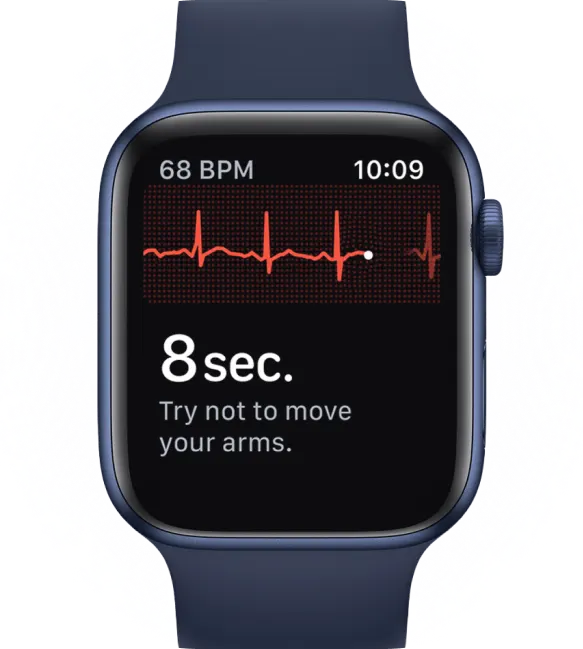
Qaly offers a unique service that puts a certified expert in your corner. Get your ECGs from devices like Apple Watch, Fitbit, or Kardia analyzed by a professional in minutes.



.png)
.png)