





Key Takeaways

User Profile
Hello Heart Hero. We get it. Starting a new medication like escitalopram, also known by the brand name Lexapro, can feel like a big step. It’s often filled with questions and a bit of uncertainty, especially if you’re feeling skeptical about traditional healthcare options. You're looking for real answers, and you've come to the right place.
The good news? The most common side effects are often mild and temporary, like nausea, a headache, some drowsiness, or changes in your sleep. This guide is here to walk you through it all, offering clear, reliable information about what you might experience.
What to Expect When Starting Escitalopram
Taking charge of your mental health is a powerful move, so it’s completely natural to be curious about the side effects of escitalopram. We know you’re looking for straightforward answers, not medical jargon or vague reassurances. Our goal isn't to cause alarm, but to empower you with real knowledge.
When you first start taking escitalopram, your body goes through an adjustment period. You can think of it like breaking in a new pair of shoes. At first, they might feel a little stiff or uncomfortable, but with time, they soften up and become a perfect fit. Similarly, your brain and body need a few weeks to get used to how escitalopram works.
The Initial Adjustment Period
This initial phase, usually the first week or two, is when you’re most likely to notice some changes. It’s actually a sign that the medication is beginning to do its job. The most important thing to remember is that most of these early effects are temporary and tend to fade significantly as your body adapts.
This is a very common experience. Knowing what to expect ahead of time can make the whole process feel much more manageable and less intimidating.
We’ll walk through the most common side effects people report, why they happen, and what’s generally considered a normal part of the process. This helps you understand the signals your body is sending.
Why This Information Matters
Having a clear picture of what might happen allows you to navigate the first few weeks with more confidence and less anxiety. Simply knowing what's typical can provide a huge amount of peace of mind.
This guide is designed to help you:
- Recognize common side effects and understand that they usually don't stick around.
- Feel more in control of your treatment by being well-informed.
- Know the difference between mild, passing symptoms and those that might need a doctor’s attention.
Starting any new medication is a personal journey, and everyone's experience is unique. By breaking down the side effects of escitalopram, we hope to give you the clarity and reassurance you need to move forward with confidence. We’re here to support you with reliable information, helping you feel prepared for what lies ahead.
The Most Common Initial Side Effects

When you first start taking escitalopram, it helps to think of your body as a finely tuned instrument. Introducing a new medication is like making a small adjustment. It takes a little while for everything to find its new harmony. It’s completely normal, and frankly quite common, to feel some temporary effects during this initial phase.
These initial side effects are usually just your body’s way of saying, “Okay, something new is happening here, and I’m getting used to it.” These sensations are typically mild and tend to fade away within the first week or two as your system adapts. Let's walk through what you might notice.
Digestive and Physical Sensations
One of the most common experiences people report is nausea. Think of it like the feeling your stomach gets when you try a new, rich food for the first time; it’s a bit unsettled but usually calms down quickly. A simple tip is to take your dose with a meal, which can often make a big difference.
Headaches are another frequent visitor in the early days. They’re typically mild and often respond to the same gentle care you’d use for any other headache, like staying well-hydrated and getting enough rest.
You might also notice a few other physical changes as your body adjusts:
- Dry Mouth: A sticky feeling or a sense that you don't have enough saliva. Keeping a water bottle handy and sipping throughout the day is a great help.
- Increased Sweating: You might feel a bit warmer or notice you're sweating more than usual, even when you aren't active.
- Fatigue or Drowsiness: It's very common to feel more tired or a bit sleepy, especially during that first week.
Remember, these initial symptoms are not a sign that something is wrong. More often than not, they are a sign that the medication is starting to interact with your system, which is exactly what it’s supposed to do.
Changes in Sleep and Mood
It's not unusual for your sleep patterns to shift temporarily. Some people find it harder to fall asleep (insomnia), while others feel much sleepier than usual (somnolence). This happens as your brain chemistry begins to change, and it almost always levels out once your body finds its new normal.
It's also important to remember that anxiety itself can cause sleep issues, so sometimes it's hard to pinpoint the cause. If this is a concern, you might find our guide on whether anxiety can cause arrhythmia helpful in understanding how the body’s systems are all connected.
Statistically speaking, these effects are quite common. For instance, headaches may affect up to 24% of users, while nausea is reported in about 18%. Other very common side effects include changes in sleep, with insomnia affecting 7% to 12% of people and somnolence impacting 4% to 13%.
Ultimately, these common initial side effects are a temporary hurdle. By understanding what to expect, you can navigate the first couple of weeks with confidence, knowing you're on the right path toward feeling better.
Understanding Heart-Related Side Effects

It’s completely normal to feel a little uneasy when you hear about potential heart-related side effects from any medication, especially one you rely on. Your heart health is obviously a top priority. So, let’s talk openly about what these risks really mean for escitalopram, without any unnecessary alarm.
You’ve probably seen the term QTc prolongation pop up. It sounds incredibly technical, but the core idea is pretty simple.
Think of your heart's electrical system like a camera flash. After it fires, it needs a moment to recharge before it can fire again. The QT interval is that brief recharge time for your heart's electrical system after each beat. QTc prolongation just means this recharge period is taking a fraction of a second longer than it should.
For most people, this tiny delay is so small it doesn't cause any issues at all. But it's still something to be aware of, particularly if you have other heart conditions.
What About Palpitations And Fluttering?
Another common worry is feeling palpitations or a strange fluttering sensation in your chest. It can feel like your heart is skipping a beat, pounding, or racing out of nowhere. It's a really unsettling feeling.
It’s important to remember that anxiety itself is a major cause of these exact sensations. However, the medication can sometimes play a role, too.
Think of these feelings as signals from your body. While they can be scary, they aren’t automatically a sign of something serious. The key is to pay attention to them and keep an open line of communication with your doctor.
If you're interested in learning more, our article on drugs that cause QT prolongation explains how different medications can affect your heart’s rhythm.
The goal here isn't to dismiss your concerns, but to put them into a clearer context. Understanding what these terms actually mean helps you shift from a place of worry to one of informed awareness.


What The Research Really Says
It's easy to get caught up in scary warnings online, but looking at large-scale studies gives us a much more balanced picture. While the risk of QTc prolongation with escitalopram is real, the research shows that the actual risk of a serious heart event is low for most people.
For example, a major review in 2023 analyzed data from many studies involving hundreds of patients. It confirmed that while escitalopram can affect the QT interval, it didn't lead to a significant spike in major cardiovascular events like heart attacks.
Interestingly, outcomes like arrhythmia, palpitations, and chest pain also showed no increased risk when compared to a placebo. You can see the data for yourself and get more details on the findings.
This doesn't mean the risk is zero. But it strongly suggests that for many people, the heart-related side effects of escitalopram are manageable and often not as dangerous as they might sound. This kind of information empowers you to have a more productive, confident conversation with your doctor about your own health.
Rare But Serious Side Effects to Know
While most side effects are mild and fade away, it's smart to be aware of the less common but more serious ones. This section is your safety net, designed to prepare you, not to create worry. Knowing these signs makes you your own best health advocate, empowering you to get help right away if something feels off.
The most talked-about rare side effect is Serotonin Syndrome. It sounds complicated, but you can just picture it as a serotonin "traffic jam" in your brain. When there’s way too much of this chemical messenger floating around, it can trigger a cluster of symptoms.
It's really important to recognize the signs early. This condition is rare, but it can become very serious if it isn't dealt with quickly.
Recognizing Serotonin Syndrome
Serotonin Syndrome typically happens when serotonin levels get dangerously high, often when escitalopram is combined with other medications that also give serotonin a boost. The key is to watch for a sudden combination of symptoms that seem out of the ordinary for you.
Pay close attention to these warning signs:
- Mental Changes: Feeling confused, agitated, or unusually restless and on edge.
- Physical Symptoms: A racing heart, high blood pressure, dilated pupils, and excessive sweating.
- Muscle Issues: Loss of coordination, twitching muscles, or feeling unusually stiff and rigid.
If you experience a mix of these symptoms, especially if they appear suddenly, it's critical to seek medical attention right away. This isn't something to wait and see about.
Knowing what to look for is the most powerful tool you have. Your awareness allows you to act decisively for your own safety, ensuring you get the care you need without delay.
Other Serious Reactions to Watch For
Beyond Serotonin Syndrome, there are a few other reactions that need immediate attention. These are exceptionally rare, but it's important to have them on your radar.
One such issue involves significant changes to your heart's electrical rhythm, which can sometimes be a risk with medications that affect serotonin. If you're interested in the nuts and bolts, you can learn more about the specifics of long QT syndrome in our comprehensive guide.
Keep an eye out for these critical red flags:
- Severe Allergic Reaction: Look for hives, difficulty breathing, or swelling of your face, lips, tongue, or throat.
- Abnormal Bleeding or Bruising: Noticing unusual bruises without a clear cause or bleeding that is hard to stop.
- Seizures: Any seizure activity is a medical emergency and requires immediate help.
- Severe Dizziness or Fainting: While mild dizziness can be a common side effect, actually fainting or feeling like you're about to pass out is much more serious.
This information is here to make you feel secure, not scared. Having this knowledge means you're fully equipped to monitor your health and know exactly when a symptom needs urgent medical attention.
How to Manage Side Effects Effectively
Feeling side effects doesn't mean you're powerless. Think of this adjustment period as a conversation with your body, and you have a lot of say in how it goes. Many simple, practical strategies can make a huge difference in your day-to-day comfort. The goal is to work with your body, not against it.
Simple lifestyle tweaks are often the best place to start. For instance, if you’re dealing with nausea, try taking your dose with a small meal or snack. If drowsiness is dragging you down in the afternoons, ask your doctor about shifting your medication to the evening.
Smart Monitoring With At-Home ECG
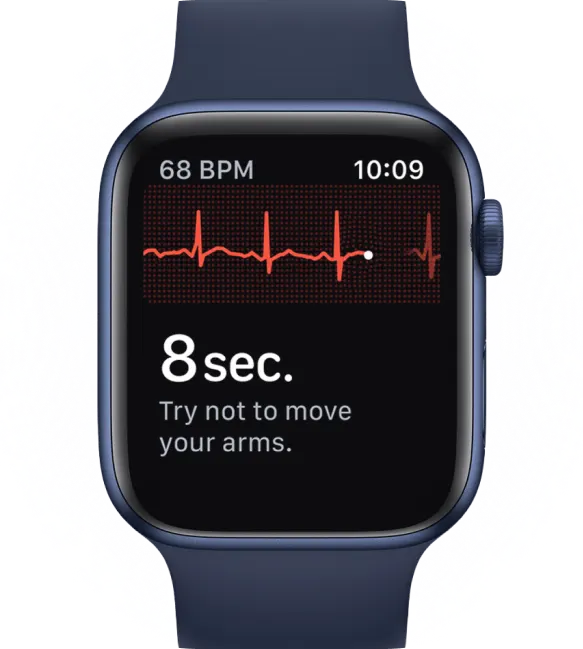
For those of you using a smartwatch or at-home ECG device to keep tabs on your heart, this can be an incredibly reassuring tool. You don’t need to zoom in on every tiny fluctuation, but it’s smart to know which patterns are worth noting.
The key thing to watch for is consistency. An occasional skipped beat might be normal for you, but a consistently irregular rhythm that sticks around for a while is something to bring up with your doctor. If you start seeing new or persistent patterns that feel off from your usual baseline, that’s a signal to start a conversation. Our guide on when to see a doctor for heart palpitations dives deeper into what to look for.
This isn't about becoming hyper-vigilant. It's about using the tools you have to be an informed and proactive partner in your own healthcare. After all, you know your body best.
If headaches are one of the initial side effects you're dealing with, understanding common pain relievers for headache relief can help you manage the discomfort effectively.
Knowing When to Call Your Doctor
Most side effects are minor and manageable, but it's absolutely critical to know the red flags that require a doctor's immediate attention. Your safety is always the top priority, so never hesitate to reach out if something feels seriously wrong.
This decision tree gives you a straightforward visual guide for when to seek immediate medical help for those rare but serious symptoms.
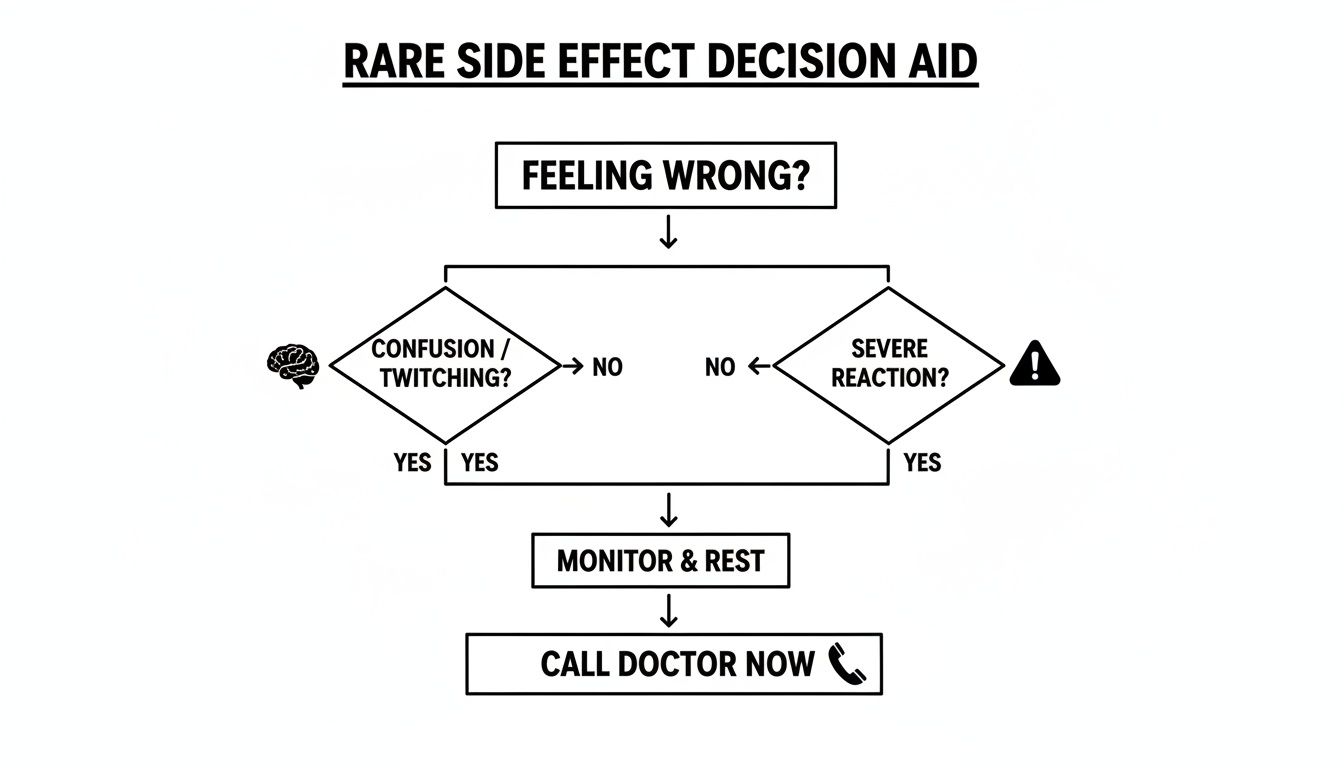
The flowchart helps you distinguish between symptoms that warrant immediate action like confusion or signs of a severe allergic reaction and less urgent issues.
Get in touch with a healthcare professional right away if you experience any of these:
- Signs of an allergic reaction: This includes things like hives, swelling of your face or throat, or any trouble breathing.
- Symptoms of Serotonin Syndrome: Watch for agitation, confusion, a rapid heartbeat, muscle twitching, or a high fever.
- Severe heart-related concerns: Fainting, severe dizziness, or a pounding heartbeat that feels frightening and won't go away are urgent signs.
Always trust your gut. If a symptom feels severe or scary, it's always better to be safe and get it checked out. This plan is here to help you feel confident in knowing exactly what to do.
Common Questions About Escitalopram Side Effects
It's completely normal to have questions when starting a new medication. Being informed and even a little skeptical is a key part of looking after your health. This section is here to give you clear, straightforward answers to bring you some peace of mind.
How Long Do the Initial Side Effects Usually Last?
Think of the first one to two weeks as your body's "getting acquainted" period with escitalopram. During this time, you might notice side effects like nausea or fatigue. For most people, these are temporary and tend to fade away as your system adjusts.
If these initial effects stick around for more than a month or feel particularly intense, that's your cue to have a chat with your doctor.
Can Escitalopram Cause Weight Gain?
This is a very common concern, and there isn't a simple yes or no answer. Weight changes are a possibility with many SSRIs, but it's far from a guarantee. Some people may see a small increase in weight over several months, while many others experience no change at all.
Your appetite, metabolism, and lifestyle all play a big part. If you're worried about this, focusing on a balanced diet and staying active can make a real difference in your overall well-being during treatment.
Is It Safe to Drink Alcohol While Taking Escitalopram?
The general advice here is to be very cautious with alcohol, or better yet, avoid it completely. Alcohol can intensify side effects like drowsiness and dizziness, which isn't just uncomfortable. It can be unsafe by impairing your coordination and judgment.
Even more importantly, alcohol can actually worsen the very symptoms of depression or anxiety you're trying to treat. It can work directly against the medication's benefits. The best approach is always to talk with your doctor about what’s right for you.
Your peace of mind is paramount. Feeling emotionally stable and clear-headed is the ultimate goal, and sometimes that means making temporary lifestyle adjustments to support your treatment.
Will Escitalopram Make Me Feel Emotionally Numb?
This is a really important question. The whole point of a medication like escitalopram is to lift the heavy weight of anxiety or depression so you can feel more like yourself again, not to erase your feelings.
That said, a small number of people do report feeling emotionally "flat" or disconnected. If you start to feel like your personality is dulled or your emotions are blunted, it's crucial to tell your doctor. This doesn't mean you need to give up; often, a simple dose adjustment or trying a different medication can solve the problem.

If you're monitoring your heart with a wearable ECG at home, get your readings interpreted by certified experts within minutes for ultimate peace of mind.



.png)
.png)