





Key Takeaways

User Profile
Hello, Heart Hero. Waking up to the sudden, jarring feeling of a racing heart can be deeply unsettling. It’s an experience that can steal your morning peace and leave you worried before your feet even hit the floor. If you're here, know you're not alone in this, and it doesn't automatically mean something is seriously wrong. This guide is here to walk you through what might be happening.
Your Guide to Morning Heart Palpitations

That jolt of a fast-beating heart first thing in the morning is more than just a physical sensation, it's an emotional one, too. It can hijack your calm and plant a seed of anxiety that follows you through the day. You’ve likely come here searching for answers and, just as importantly, for some peace of mind.
We get it. Navigating health concerns can feel isolating, especially when the healthcare system can seem confusing or even dismissive. You want clear, trustworthy information and practical steps you can take, and that's exactly what we're here to offer.
Think of this guide as a conversation, not a lecture. We'll explore the many reasons your heart might race upon waking. Some are surprisingly simple, while others might signal that it's time for a closer look. Our goal is to empower you with knowledge, so you can feel more in control of your health.
Why This Experience Is So Common
It might surprise you just how many people experience morning palpitations. It’s a frequent concern because the body's transition from sleep to wakefulness is a complex physiological event. Imagine it like an orchestra warming up for the day; sometimes, a few instruments start a little too loud or out of sync.
This feeling doesn't fit neatly into one box, and it can feel different for everyone. If you’re curious about the specific sensations others describe, you can learn more about what heart palpitations feel like in our detailed article. Just understanding the range of experiences can be a comforting first step.
The sensation of a racing heart can be kicked off by a wide range of factors, including:
- Stress and Anxiety: An unsettling dream or immediate worry about the day ahead can trigger a surge of adrenaline, speeding up your heart before you're even fully conscious.
- Lifestyle Choices: Things like caffeine or alcohol too close to bedtime, or simply being dehydrated, can easily disrupt your heart's normal rhythm overnight.
- Sleep Quality: Conditions like sleep apnea put significant strain on your heart as you sleep, which can manifest as a racing heart the moment you wake up.
Waking up with a racing heart is often the body's response to a sudden shift, whether it's hormonal, emotional, or physiological. The key is to listen to your body and understand its signals without immediately jumping to fear.
What You Will Learn Here
Throughout this guide, we’ll break everything down in a clear, straightforward way. We'll explore the normal biological processes that cause your heart rate to rise in the morning and, just as importantly, discuss the red flags that mean it's time to talk to your doctor.
We'll also show you how you can take an active role in finding your own answers. Modern tools like wearable ECG devices have made it easier than ever to capture what's happening in the moment, giving you valuable, concrete data to share with your healthcare provider.
Our promise is to give you a clear path forward, helping you move from a place of uncertainty to one of confident understanding. You deserve to start your day with calm, not concern. Let’s begin this journey together.
Why Your Heart Races When You Wake Up
That sudden flutter or pounding in your chest right as you open your eyes can be unnerving. But more often than not, it has a perfectly natural explanation. Your body has a complex, finely tuned process for shifting gears from deep rest to full-on wakefulness. Knowing a bit about this daily "start-up sequence" can take a lot of the fear out of the sensation.
Think of your body as having two internal operating systems, both managed by your autonomic nervous system. The "rest and digest" system (parasympathetic) is in charge during sleep, keeping you calm and handling background maintenance. Its counterpart is the "fight or flight" system (sympathetic), which gets you ready for action.
When you wake up, there's a delicate handover between these two. The "fight or flight" system steps up to the plate, preparing your body for the day's demands. This switch alone can cause a temporary, and very noticeable, bump in your heart rate.
Your Body's Natural Wake-Up Call
A big part of this morning transition is a surge of hormones. To pull you out of sleep and get you moving, your body releases a cocktail of hormones like cortisol and adrenaline.
This is a completely normal process, often called the "cortisol awakening response." It’s basically your body’s built-in alarm clock, giving you a jolt of energy to get your engine running. These hormones send a direct signal to your heart to beat a bit faster and more forcefully, a sensation you might feel as a racing pulse.
The feeling of a faster heartbeat upon waking is often just your body executing its natural, healthy wake-up routine. It’s a sign that your internal systems are powering on for the day.
This biological design is brilliant, but the physical feeling can be startling if you aren't expecting it. The sudden awareness of your own heartbeat can then kick off a wave of worry, which in turn makes your heart beat even faster. It's a classic feedback loop where the physical sensation and your anxiety fuel each other.
If you notice that worry often makes your heart pound, it might be useful to understand how anxiety can cause heart palpitations and learn some ways to manage it.
Other Common Physical Triggers
Beyond that hormonal wake-up call, a few other simple, physical factors can play a role in waking up with a racing heart. These are usually tied to what your body has been through during a long night of rest.
Let's break down some of the usual suspects:
- Dehydration: You lose a surprising amount of fluid overnight just by breathing and sweating. If you wake up even slightly dehydrated, your blood is a bit thicker. This makes your heart have to work harder and beat faster to pump it around your body.
- Low Blood Sugar (Hypoglycemia): After going all night without eating, your blood sugar is at its lowest point. Your body might release stress hormones like adrenaline to help stabilize your glucose levels, and that can rev up your heart rate.
- Sleeping Position: Believe it or not, your sleeping posture can make a difference. Lying on your left side, for instance, can sometimes put slight pressure on your heart and major blood vessels. For some people, this makes their heartbeat feel more noticeable or forceful.
- Abrupt Awakening: Being jolted from sleep by a blaring alarm, a nightmare, or a sudden noise sends a shockwave through your nervous system. This can throw your "fight or flight" response into immediate overdrive.
Getting familiar with these completely normal biological events helps demystify the experience. It helps you see that a racing heart in the morning isn't automatically a sign of trouble. Often, it's just your body doing exactly what it's supposed to do to get you ready for a new day.
Could Your Sleep Quality Be the Culprit?
We've covered the body's natural wake-up call, but what if something else is going on behind the scenes while you're asleep? The connection between your sleep quality and heart rhythm is incredibly tight, and poor sleep is a major hidden reason for waking up with a racing heart.
Think of sleep as your body's nightly maintenance crew, fixing and resetting everything, including your heart. When that process gets interrupted over and over, it's like a mechanic getting poked every five minutes. The work doesn't get done right, and things can start to go haywire.
One of the biggest saboteurs of a good night's rest is a group of conditions known as sleep-disordered breathing. By far, the most common one is obstructive sleep apnea, or OSA.
The Hidden Stress of Sleep Apnea
Sleep apnea is a whole lot more than just loud snoring. It's a condition where you repeatedly stop and start breathing all night long. Each time your breathing pauses, even for a few seconds, your body flips into emergency mode.
Your brain senses the oxygen level dropping and unleashes a flood of stress hormones, like adrenaline, to jolt your system back into breathing. This can happen hundreds of times a night without you ever fully waking up or realizing it.
Picture this cycle playing out on a loop: you drift off, your airway collapses, your oxygen dips, your brain panics and hits the adrenaline button, and your heart is forced to pound faster to push what little oxygen is left through your body. You then gasp for air, and the whole chaotic process starts again. This puts an enormous strain on your cardiovascular system.
When your body is in a constant cycle of low oxygen and adrenaline surges all night, it's no surprise that you might wake up feeling the effects. That morning racing heart can be the lingering echo of a night spent in a state of recurring panic.
This isn't just a theory. According to the American Heart Association, nearly 1 billion adults worldwide have sleep-disordered breathing. This chronic stress can actually change the heart's physical structure, paving the way for arrhythmias like atrial fibrillation (AFib). In fact, among people who have AFib, the prevalence of sleep apnea skyrockets to between 21% and 74%.
How to Spot the Signs
Connecting the dots between your morning symptoms and your sleep is a huge first step. You might be dealing with sleep apnea if you're experiencing more than just a racing heart when you wake up.
Keep an eye out for these common red flags:
- Loud, persistent snoring: While not all snoring is sleep apnea, it's a classic sign.
- Witnessed pauses in breathing: A partner might tell you that you stop breathing or gasp for air while asleep.
- Excessive daytime sleepiness: Feeling wiped out during the day, even when you think you've had a full night's sleep.
- Morning headaches: Waking up with a headache can be a result of low oxygen levels overnight.
- Waking up with a dry mouth or sore throat: This is often caused by breathing through your mouth all night to get more air.
If this list sounds familiar, it's a strong clue that your sleep quality is the likely culprit behind your morning heart palpitations. Many people have an irregular heartbeat while sleeping and have no idea it’s tied to their breathing.
Taking Steps Toward Better Sleep
The good news? This is a very treatable problem. Improving your sleep often starts with building better habits, and there are many effective sleep hygiene tips for a better night's sleep.
Simple changes like sticking to a consistent sleep schedule, making your bedroom a dark and quiet sanctuary, and avoiding caffeine or alcohol before bed can make a real difference. But if you suspect sleep apnea, the most important thing you can do is talk to your doctor. Getting the underlying breathing issue treated can not only calm your morning racing heart but also protect your heart for the long haul.
When a Racing Heart Signals a Deeper Issue
While most causes are harmless, it's important to know when that feeling might be a clue to an underlying rhythm issue. The goal isn't to create alarm, but to build your awareness. Knowing what to look for empowers you to take proactive steps for your heart health.
Think of your heart’s electrical system like the wiring in your house. Most of the time, it works perfectly, but occasionally, a circuit can get faulty. These electrical glitches are called arrhythmias, and they can cause your heart to beat too fast, too slow, or irregularly.
Some arrhythmias are more likely to appear as we get older. Just like other parts of our bodies, the heart's electrical pathways can change over time. This is a natural part of aging for some people, but it's something worth monitoring.
Common Heart Rhythm Conditions
While there are many types of arrhythmias, a few are frequently linked to a racing heart, especially in the morning. Let's talk about them in simple terms.
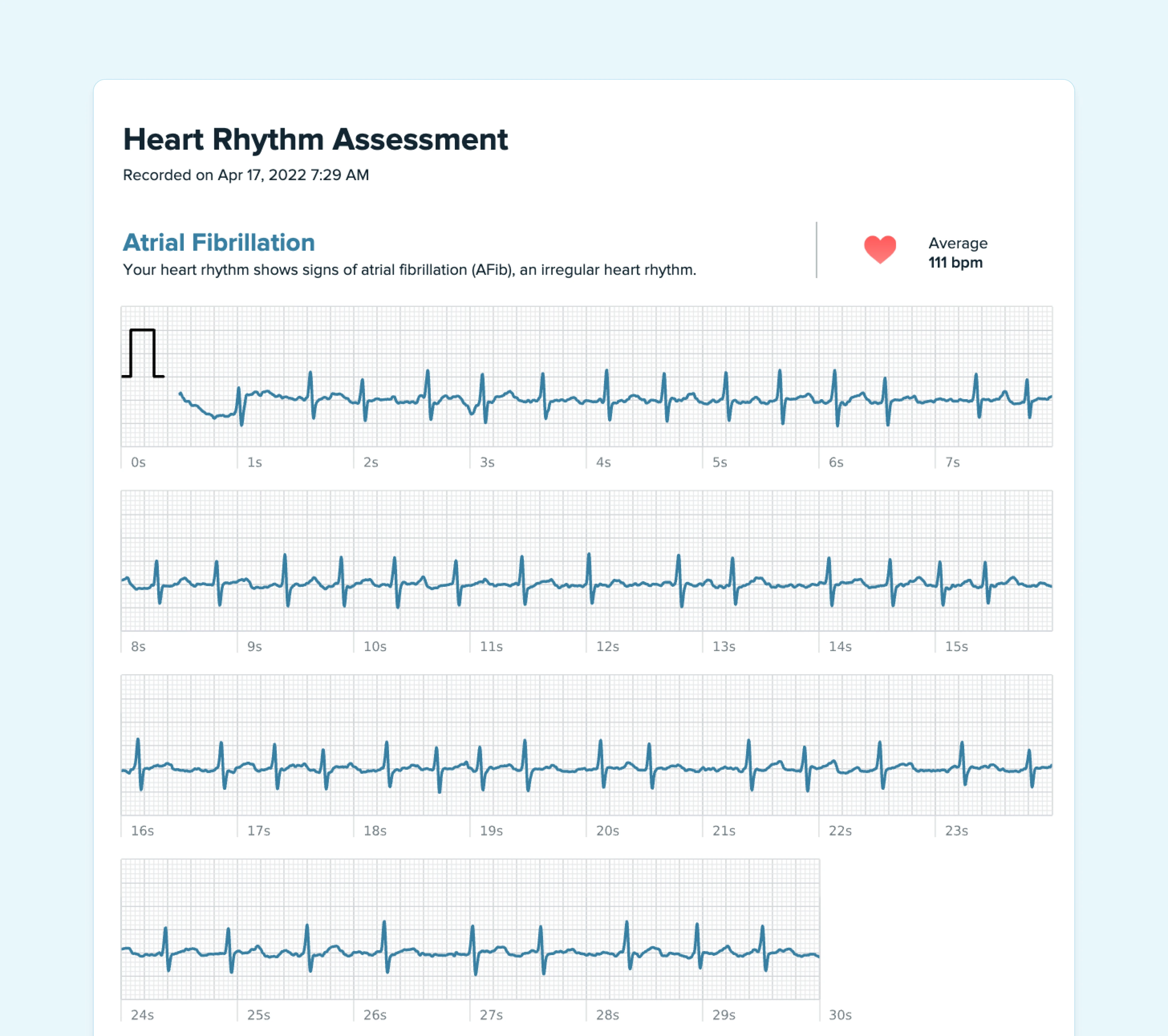
Atrial Fibrillation (AFib): Imagine the top chambers of your heart (the atria) are quivering instead of beating in a coordinated way. This chaotic signaling causes a fast, irregular heartbeat. AFib is one of the most common arrhythmias, particularly as people age.
Supraventricular Tachycardia (SVT): This is a term for abnormally fast heart rhythms that start in the heart's upper chambers. SVT often feels like a switch has been flipped, causing a sudden, very rapid heartbeat that can be just as suddenly resolved.
-2-example.webp)
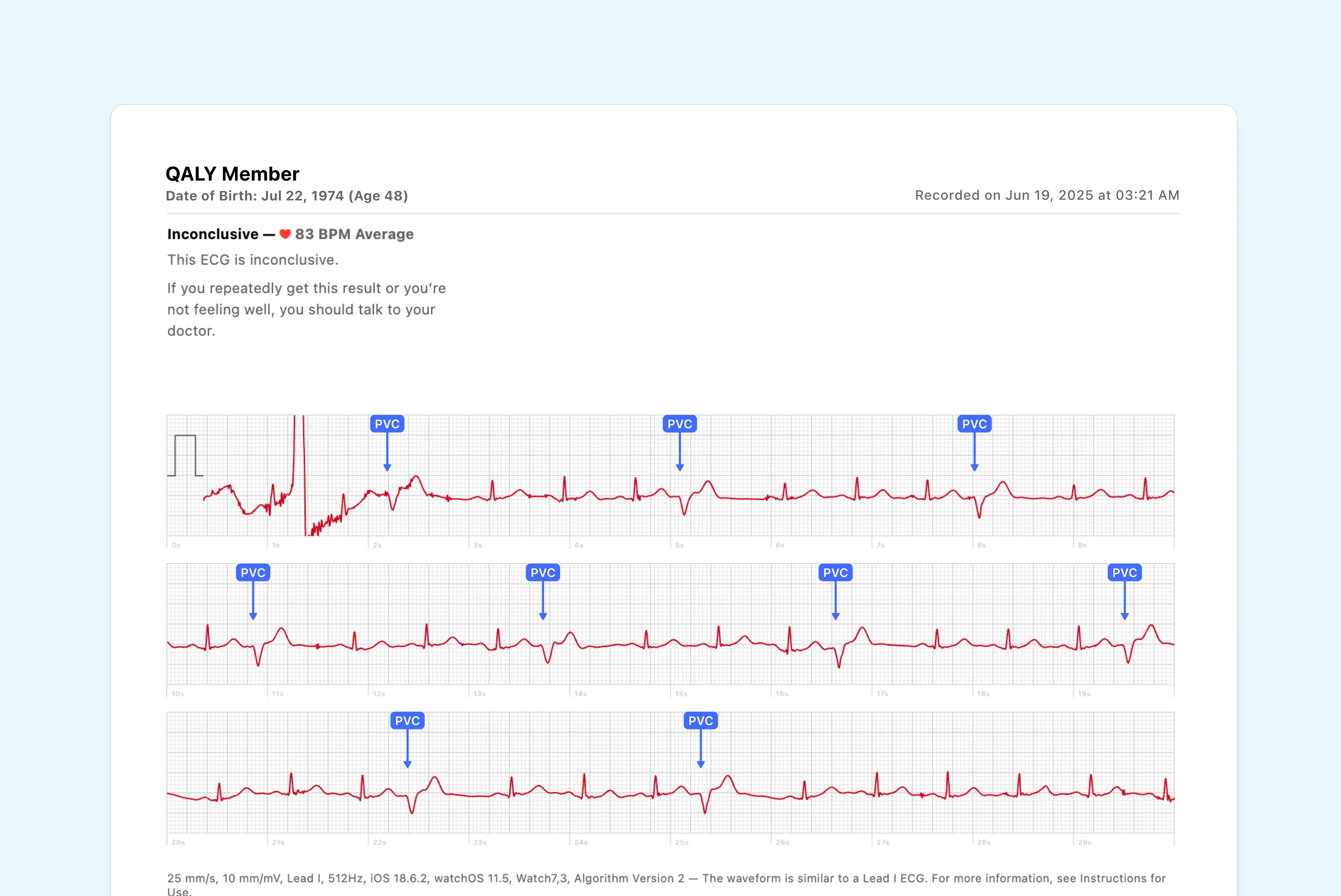
Ventricular Arrhythmias: These rhythms start in the heart's lower chambers (the ventricles). While some, like occasional Premature Ventricular Contractions (PVCs), are often benign, others can be more serious and require medical attention.
The prevalence of these issues tends to climb with age. A study of over 500,000 adults showed that baseline rhythm problems in men increased from 1.28% in those under 55 to 6.56% in men over 65. For AFib specifically, rates jumped from 0.75% to 4.85% in the same age groups. You can explore the findings of this research on arrhythmia prevalence and age to learn more.
Knowing When to Pay Closer Attention
The key takeaway is that these conditions are often very manageable, especially with early detection. The challenge is that they don't always show up during a routine doctor's visit. That's why your awareness of symptoms is so critical.
A morning racing heart on its own is often not a cause for panic. However, if that feeling comes with other symptoms, it’s a clear signal to seek a medical opinion.
Think of these additional symptoms as red flags. They don't guarantee something is wrong, but they do mean it's time to stop guessing and start getting clear answers from a healthcare professional.
Here are some important red flags to watch for:
- Dizziness or lightheadedness
- Shortness of breath
- Chest pain or discomfort
- Fainting or feeling like you might faint
Recognizing these signs doesn’t mean you need to live in fear. It means you’re an active, informed participant in your own health. By monitoring your symptoms and knowing when to reach out, you put yourself in the best possible position to manage your heart health.
How to Understand Your Heart's Rhythm at Home
You've felt it. That confusing and alarming sensation of waking up with a racing heart. But one of the most frustrating parts is trying to explain it to a doctor. These episodes are often sneaky, disappearing long before you can get to a clinic. How can you show them what's really happening?
This is where you can take back some control. You don't have to just describe a fleeting feeling anymore. Modern technology gives us the power to become active partners in our own health, capturing real data the moment something feels off.
Wearable devices are no longer just for counting steps. Smartwatches and personal ECG monitors have become incredibly useful for understanding your heart's rhythm right when you need it most.
Capturing the Moment with Wearable Tech
The real breakthrough here is the ability to record a single-lead electrocardiogram (ECG or EKG) on demand. While it's not a replacement for a full hospital workup, it’s a powerful first step. Think of it as a snapshot of your heart's electrical activity.
Several popular devices offer this feature, including the Apple Watch, Fitbit, Samsung Galaxy Watch, and KardiaMobile. Waking up with a racing heart is the perfect scenario to use one of these. Instead of letting the moment pass and become a fading memory, you can capture the data right then and there.
From Recording to Understanding
Getting the recording is a huge win, but it’s only half the battle. You look at the ECG on your watch, and it might show "Sinus Rhythm," "Inconclusive," or even "Signs of Atrial Fibrillation." What do these results actually mean for you? The automated interpretations are a starting point, but they can sometimes create more questions than answers.
This is where the skepticism many of us feel toward the healthcare system can creep back in. You’ve done your part and captured the data, but getting timely, clear feedback is a challenge. You need a way to bridge the gap between the data on your wrist and a clear, human explanation.
That’s where a service like Qaly becomes a powerful ally. It was designed to solve this exact problem.
Qaly connects the ECG you just took on your watch with a certified human expert who can interpret it for you, often within minutes. It’s like having a heart rhythm specialist on call, 24/7, right from your phone.
How Expert ECG Interpretation Works for You
Instead of waiting weeks for a specialist appointment, you can get near-instant peace of mind. The process is straightforward and built for reassurance.
- Record Your ECG: The next time you wake up with a racing heart, use your Apple Watch, Fitbit, or other device to record an ECG.
- Upload to the App: Open the Qaly app and securely upload the ECG you just saved.
- Get a Human Review: A certified cardiographic technician, the same kind of professional who reads ECGs in hospitals, reviews your recording.
- Receive Your Report: Within minutes, you get a detailed report back. It doesn't just give you a one-word answer; it explains what the technician sees, identifies potential arrhythmias, and provides clarity.
This is about more than just a single result. It's about building a log of your heart's activity over time. When you finally do see your doctor, you're no longer walking in with just a story. You're arriving with a folder full of clear, professionally reviewed data, which helps guide a much more productive conversation. If you're looking for more ways to be proactive, check out our guide on how to check heart health at home.
By taking these steps, you transform from a passive patient into an empowered advocate for your own health, armed with the information you need to get the answers you deserve.
Practical Steps to Manage Morning Palpitations
Having a plan is the first step toward feeling empowered. Being jolted awake by a racing heart can make you feel powerless, but there are gentle, practical steps you can take to manage these episodes and improve your overall well-being. This isn’t about a rigid regimen; it’s about making small, achievable adjustments that can add up to a big difference.
First thing’s first: you are safe. When you wake up with that startling sensation, your gut reaction might be panic, which only tells your heart to beat even faster. Instead of fighting it, try to focus on your breath.
Take a slow, deep breath in through your nose for a count of four, hold it for a moment, and then exhale slowly through your mouth for a count of six. This simple act of diaphragmatic breathing helps to calm your nervous system, signaling to your body that it can stand down from “fight or flight” mode.
Lifestyle Tweaks for Quieter Mornings
Beyond managing stress, several key lifestyle factors can directly influence your heart's rhythm, especially while you sleep.
- Hydrate Before Bed: Dehydration is a surprisingly common culprit. A glass of water an hour or so before bed can help ensure your blood volume is stable, so your heart doesn't have to work overtime.
- Balance Your Blood Sugar: Try to avoid large, sugary meals or snacks right before you turn in. A small, protein-rich snack is a better choice to help prevent a blood sugar crash overnight, which can sometimes trigger an adrenaline release.
- Mind Your Stimulants: Caffeine and alcohol are well-known triggers for many people. It’s a good idea to cut off caffeine by early afternoon and limit alcohol, especially in the hours leading up to bedtime, as it can disrupt your sleep cycles and your heart rhythm.
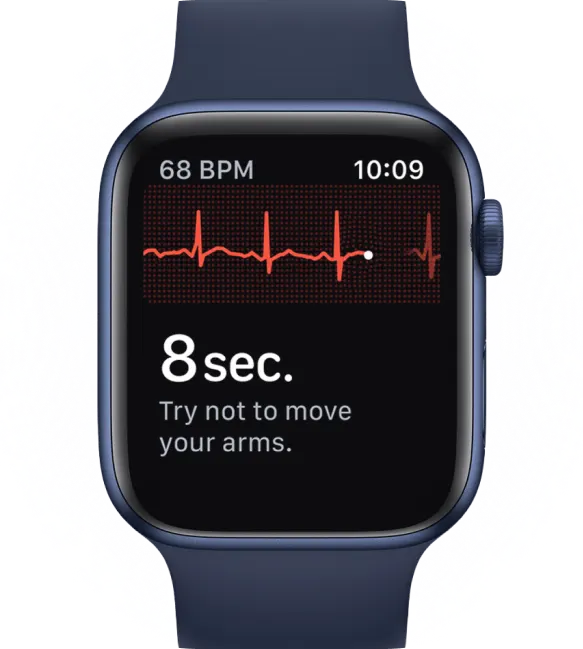
This simple visual shows how you can capture your heart's activity at home the moment you feel an episode.

It’s a straightforward path: you feel the symptom, you record it with your device, and you get it interpreted. This process turns a confusing physical sensation into clear, actionable information.
Frequently Asked Questions
Can Anxiety Alone Cause Me to Wake Up with a Racing Heart?
You bet. Waking up from a nightmare or suddenly remembering a stressful presentation you have later that day can kick your body’s “fight or flight” response into high gear.
That flood of adrenaline is a classic, very common reason for a temporary racing heart right when you wake up.
Should I Go to the ER?
This is a really important question. If your racing heart comes with other scary symptoms like chest pain, feeling like you can't catch your breath, severe dizziness, or fainting, you need to get emergency medical help right away.
But if the episode passes quickly and you feel fine otherwise, the best move is to try and capture it with your watch ECG. Then, make an appointment to go over the recording with your doctor.
How Can I Tell a Normal Fast Beat from an Arrhythmia?
Think of it like music. A normal fast heartbeat, or sinus tachycardia, has a steady, regular rhythm, just sped up. An arrhythmia, on the other hand, often feels chaotic and irregular, like a drum that’s off-beat, with skipped or extra beats thrown in.


The only way to truly know what's going on is to see the electrical signal itself by capturing an ECG during an episode. A service like Qaly gives you a human-reviewed analysis of your watch ECGs in minutes, so you have clear, reliable information to share with your doctor.



.png)
.png)